The Alpine Club of Canada hosted several mountaineering camps at O’Hara, beginning in 1909, and now operates the historic Elizabeth Parker Hut, first built by the Canadian Pacific Railway in 1919. One of the area’s first wardens, Lorenzo “Lawrence” Grassi, was also its most prolific trail builder, enhancing the work of the Alpine Club’s early trail planners to develop O’Hara’s remarkable trails. Future wardens would go on to include the renowned Canadian writer and poet Sid Marty.
And where there are scenes this stunning, there are artists. Among those putting paintbrush to canvas here were Walter Phillips, Peter and Catharine Whyte, and the Group of Seven’s J.E.H. MacDonald, Arthur Lismer, and Lawren Harris. Artworks created over the years not only preserve the region’s beauty but also its changes. An iconic 1924 piece by MacDonald, Lake McArthur, Yoho Park, shows remnants of glaciers that have since melted away.
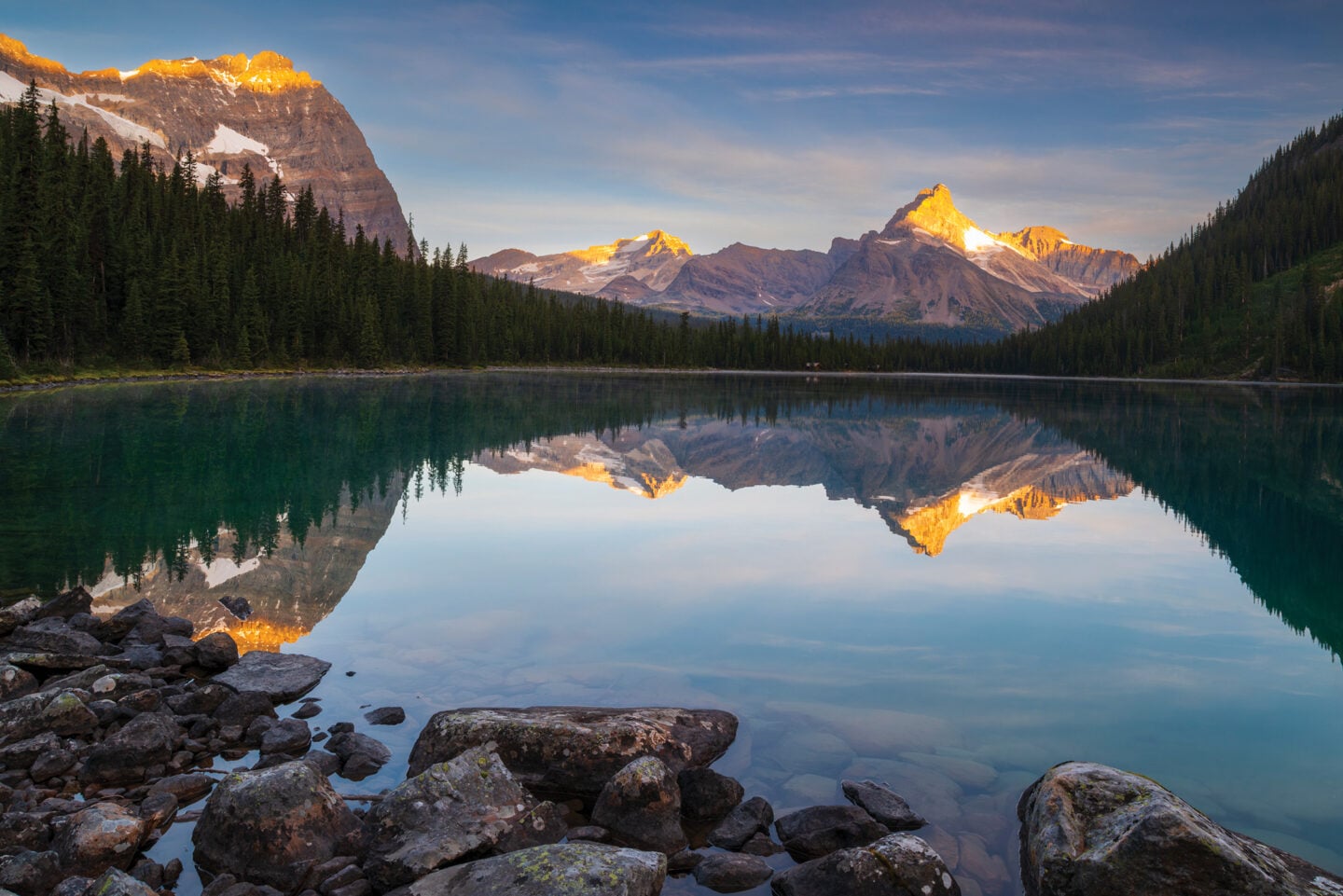
O’Hara is equally inspiring through the lens. Forsyth’s latest book, O’Hara: Secluded Jewel of the Canadian Rockies, features more than 200 photographs. “Although I’ve hiked the trails of Lake O’Hara since 2007, it wasn’t until writing this book that I came to fully appreciate the interesting spirits whose lives have touched upon the O’Hara landscape,” says Forsyth.
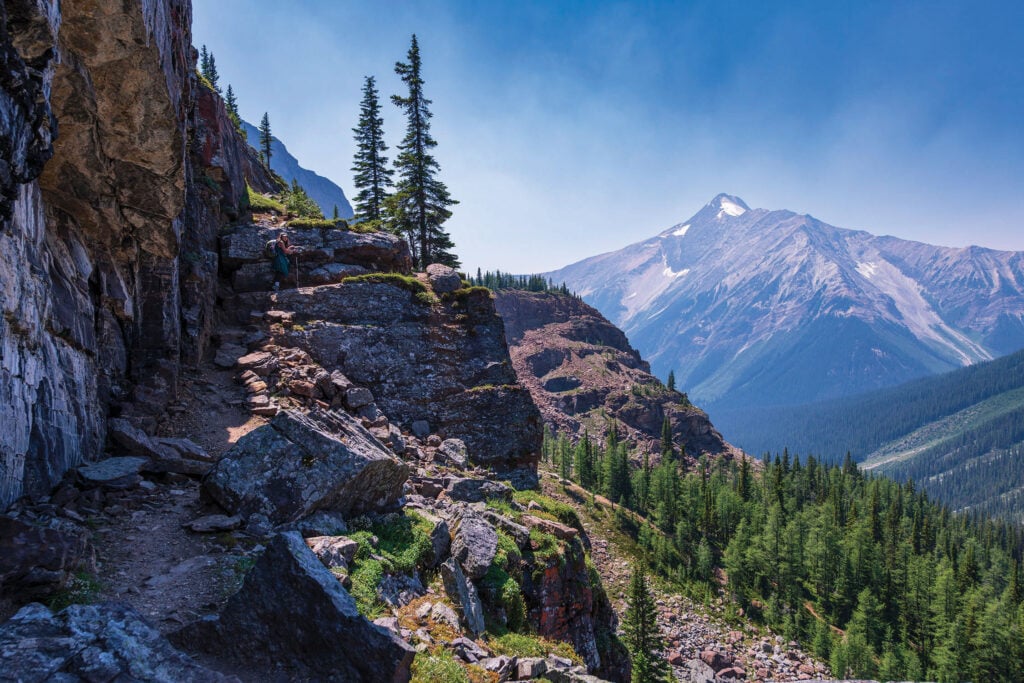
O’Hara has always made visitors work to access it. But what awaits is a place both storied and sacred, where history is not only preserved but actively reclaimed, and where new stories are still being told.