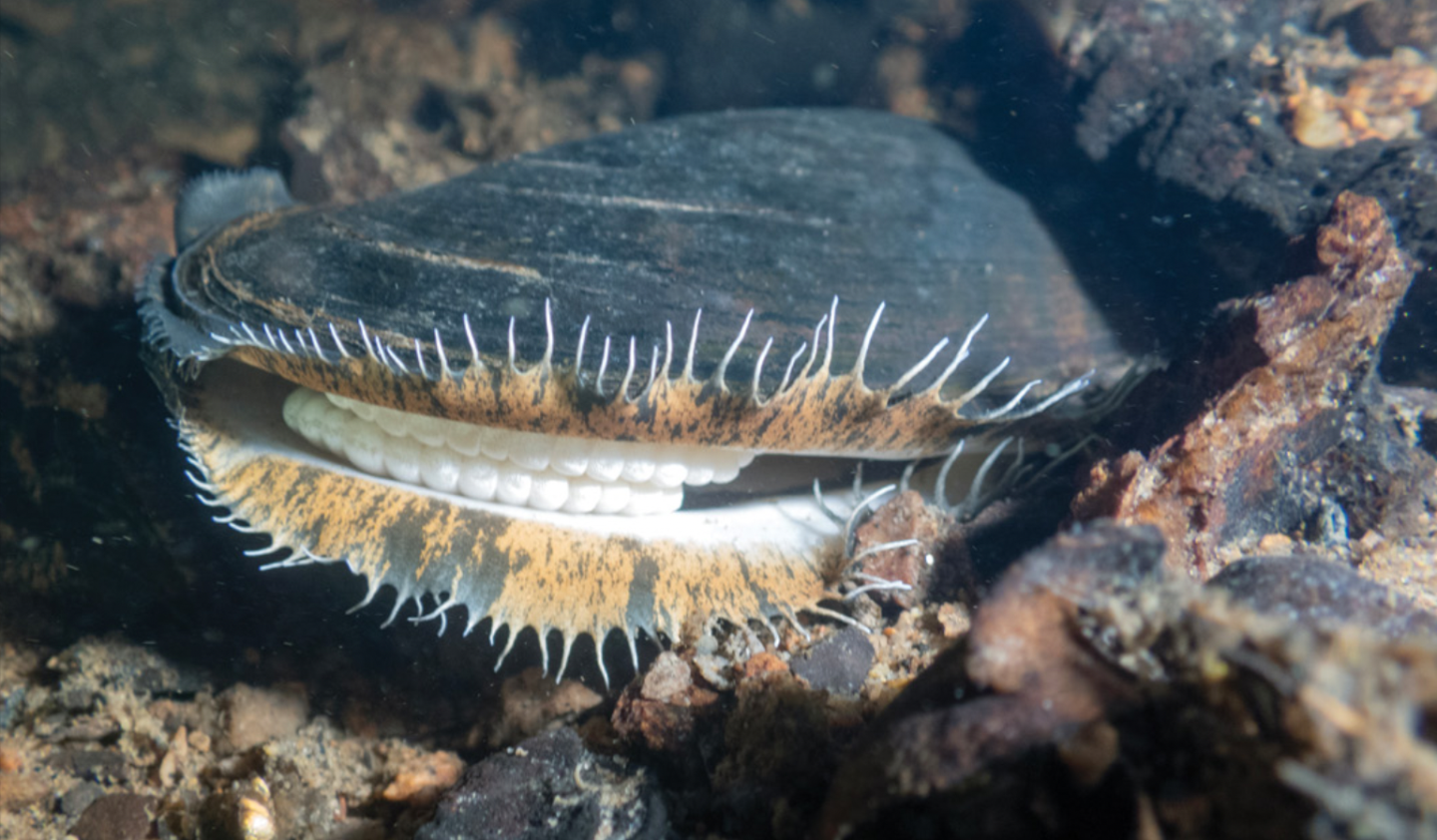
One of the intriguing symbiotic relationships Heinerth is studying in the caves involves their thriving native freshwater mussel population and resident fish. The mussels create a cleaner and healthier environment for the fish; the fish play a crucial role in the mussels’ reproductive life cycle.
Each mussel species has a slightly different strategy for obtaining support from a host fish. In the case of the female pocketbook mussel, it goes like this: Once a year, the mussel grows a lure that looks for all the world like a small fish. Attracted by the wiggling lure, a fish swims in for a closer look at its potential dinner and takes a nip. That’s when the mussel expels her microscopic larvae into its face. The parasitic mussel babies go into the fish’s mouth and latch onto its gills or fins, hitching a ride while being nourished by its blood serum. Once they reach a certain size, the fish’s immune system ejects the juvenile mussels, and they float down and burrow into the silty cave bottom, where they will grow into adults, spending the next decades — or even a century for some species — continuing the cycle of filtering the waters of the Ottawa River.
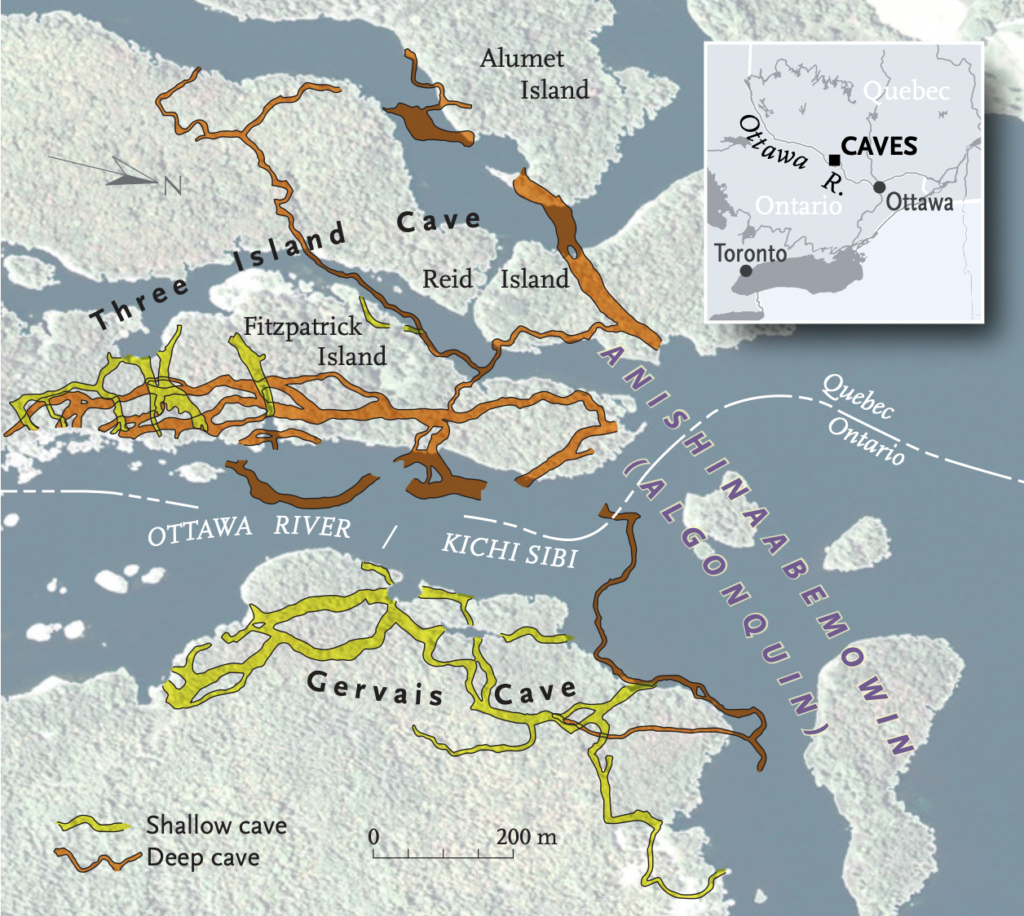
It all adds up to a whole lot going on beneath the surface in the Kichi Sibi watershed, which Jill Heinerth continues to explore, document and draw inspiration from as she works with scientists and Indigenous partners — and inspires the next generation of students, cave divers, citizen scientists and researchers — to study and protect this very special ecosystem.