
Exploration
Finding Quest
Inside the expedition that found famed explorer Sir Ernest Shackleton’s famed last ship
- 3600 words
- 15 minutes
Exploration
At Finse 1222, this six-day polar expedition pushes travellers into stark landscapes while teaching Arctic survival skills, testing physical and mental endurance and strengthening resilience

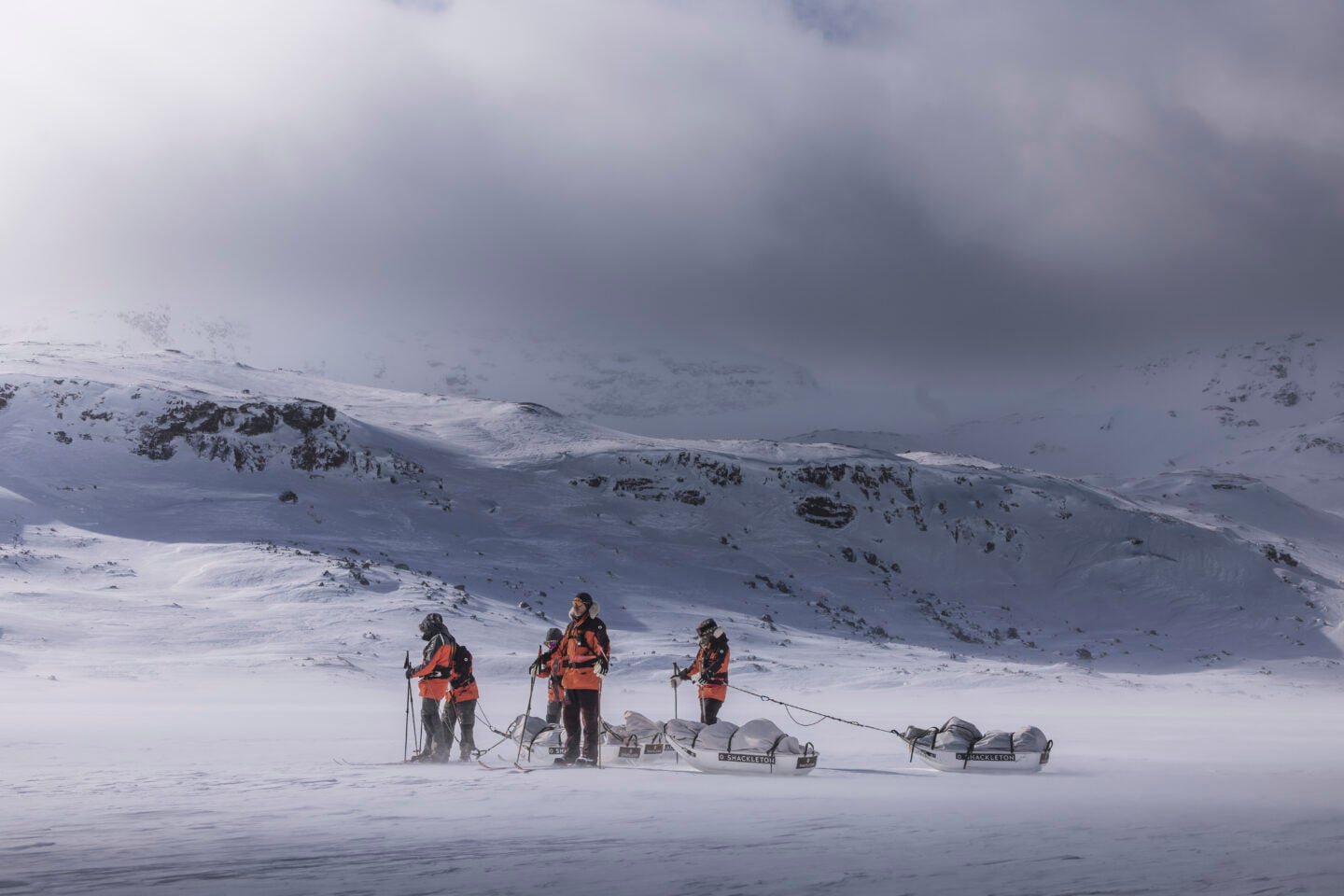
I fight back tears beneath my goggles as I inch my skis up an icy 45-degree incline in Finse, Norway, dragging an approximately 50-pound pulk (Nordic sled) behind me. The landscape is so austere that polar explorers have used it as an analog for Antarctica since the so-called Heroic Age in the early 20th century. Norwegian explorer Roald Amundsen, renowned British navy officer Robert Falcon Scott and Sir Ernest Shackleton, the famed Anglo-Irish explorer, all trained here.
Now it’s my turn.
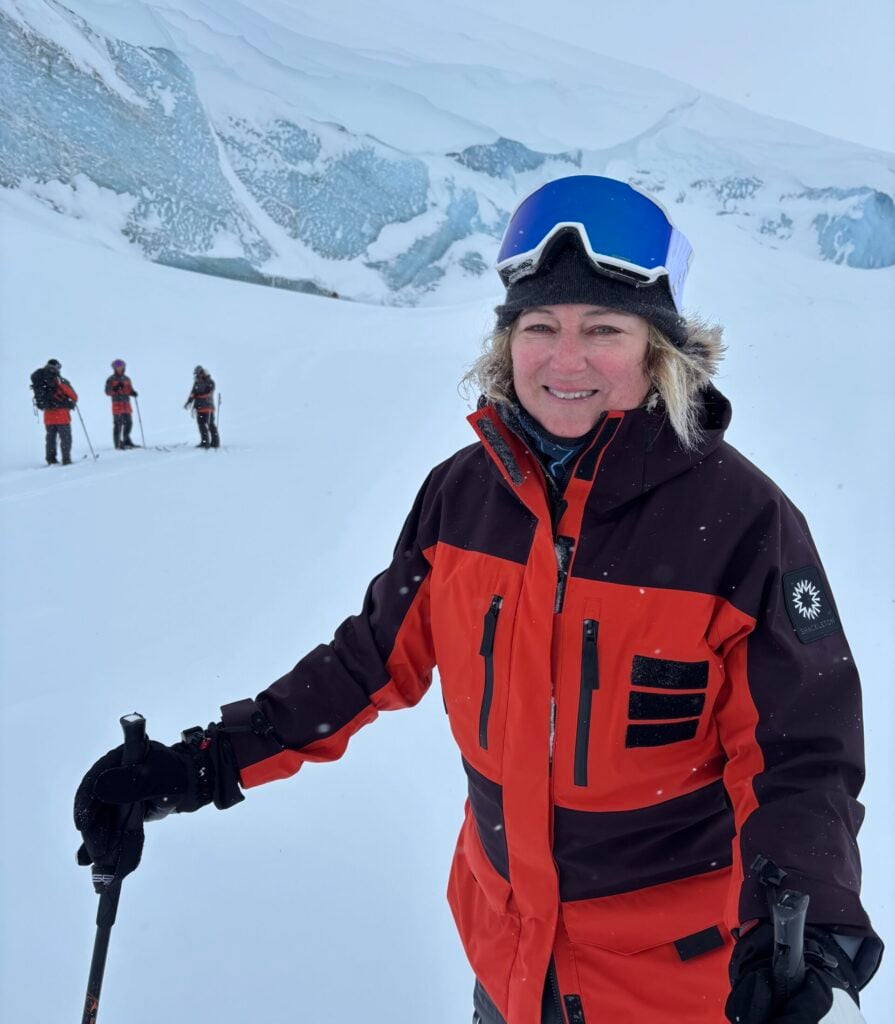
It is minus seven Celsius with 35 km/h winds sweeping across the snowfields, sending veils of powder uphill in long, silvery tendrils that lift and dance in the air before dissipating. My expedition skis are longer than I’m accustomed to for a weekend at Blue Mountain, Ont., and the face of Amundsen on their tips, intended to inspire greatness, proves insufficient. I am struggling and admit to falling more than once.
Finally, I reach the top and am rewarded with a spectacular view of the Norwegian high plateau and the Hardangerjøkulen glacier. It is both stark and mesmerizing — a harsh Arctic landscape where sky, snow, and wind merge into an almost otherworldly beauty.
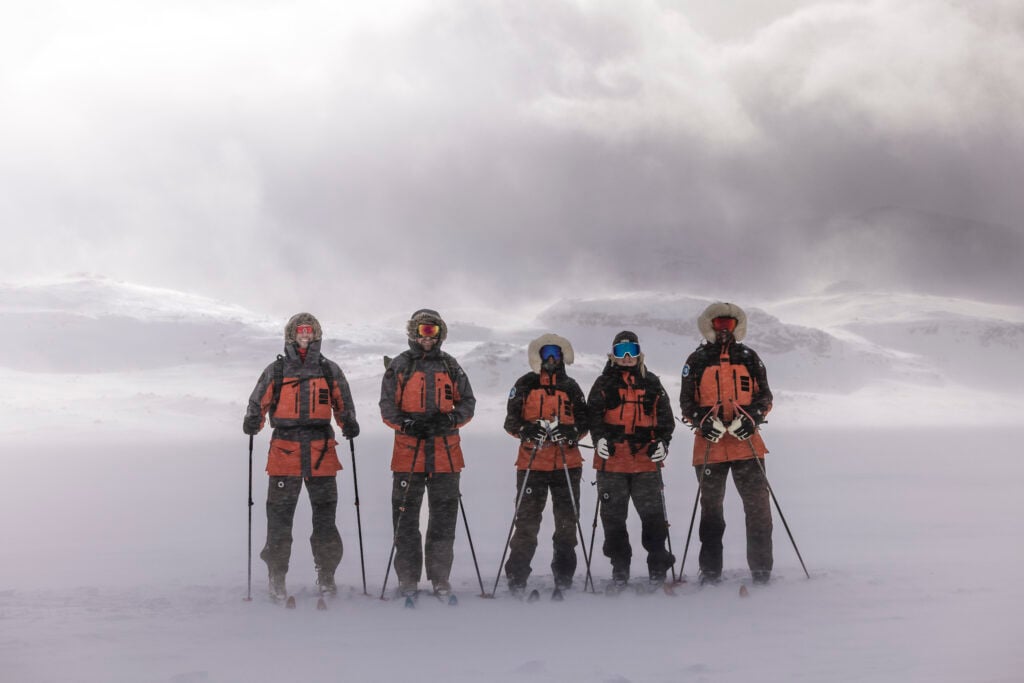
I am here in Finse with four other participants on a six-day Shackleton Challenges, skiing and camping in the wilderness, while learning basic survival skills needed, if not for an assault on the Pole, then at very least for some lessons in resilience.
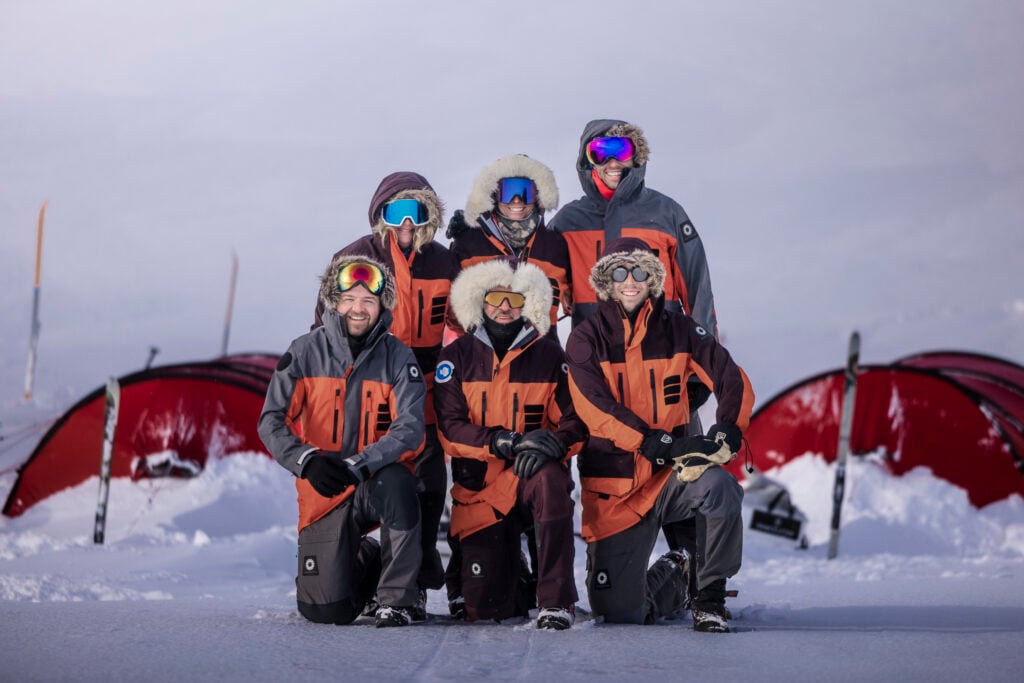
I have the best of all possible guides: Louis Rudd, OBE, a former Royal Marine who served tours in both Afghanistan and Iraq, and later became the first Briton to ski solo and unassisted across Antarctica. His wife, Amelia Wendy Rudd, an endurance athlete, inspirational speaker and polar explorer, is also leading us.
“Come on, Marina. Crack on,” says Louis, his steely authority and unflinching gaze honed by years of commanding unruly ranks of soldiers and, latterly, travellers.
Louis is Shackleton’s director of expeditions, an adventure-grade clothing company based in London, U.K., that offers epic challenges in some of the planet’s most inhospitable environments: Antarctica, Svalbard, the Arabian Desert, and the Greenland ice sheet, to name a few.
“It is humbling to think we are training where Shackleton and Amundsen did back in the day. This is the spiritual heart of the exploration community,” says Louis.
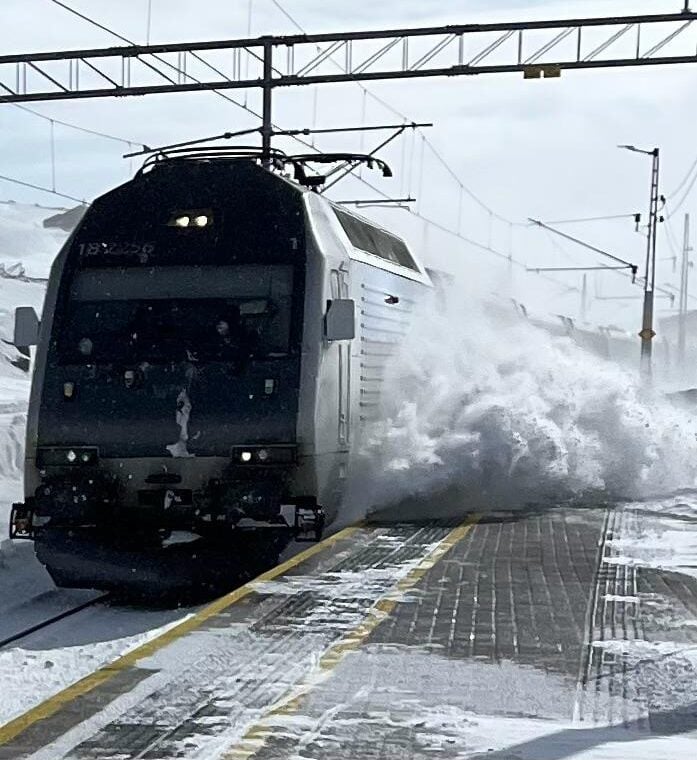
Nothing can truly prepare you for Finse — a car-free hamlet with a population of nine residents total, accessible only by snow train on Norway’s Bergen train line — but Shackleton guests benefit from a 12-week training course focused on physical fitness and nutrition.
As a late joiner, I had only two weeks to prepare. To train, I slogged up and down the biggest hill in my Toronto neighbourhood and invested in essential gear: headtorch, tent boots, category 4 ski goggles.
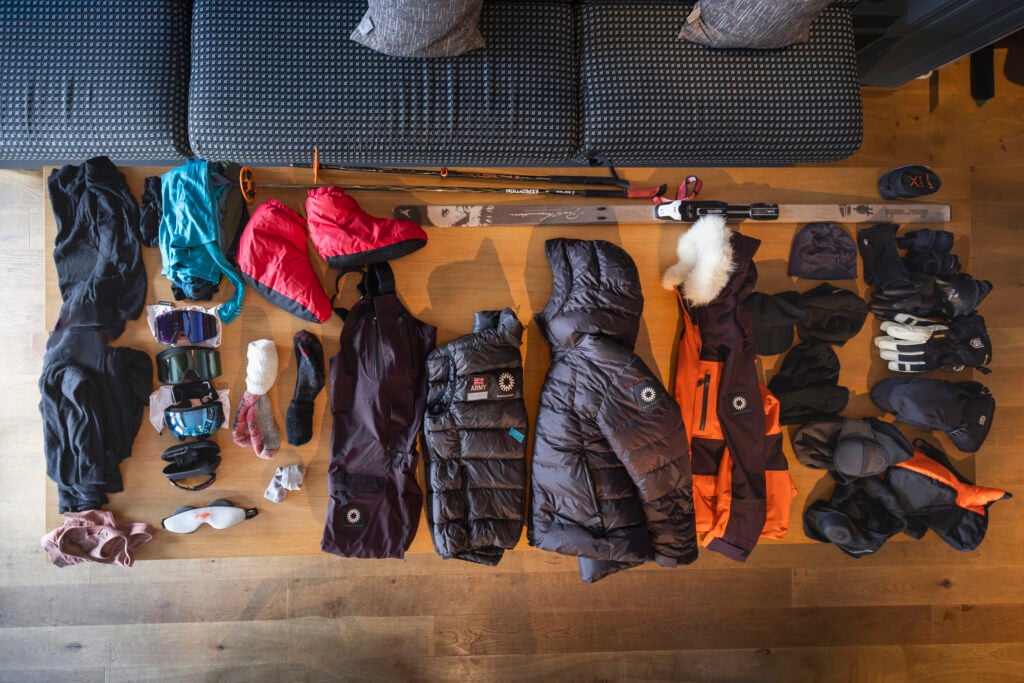
Shackleton provides the salopettes — waterproof ski pants with suspenders and side zippers — as well as a specially designed expedition pulk jacket, skis, boots and the Titan jacket, a fortress of warmth against winter’s siege. (Though I resemble the Stay Puft Marshmallow Man, it is my favourite piece of kit.)
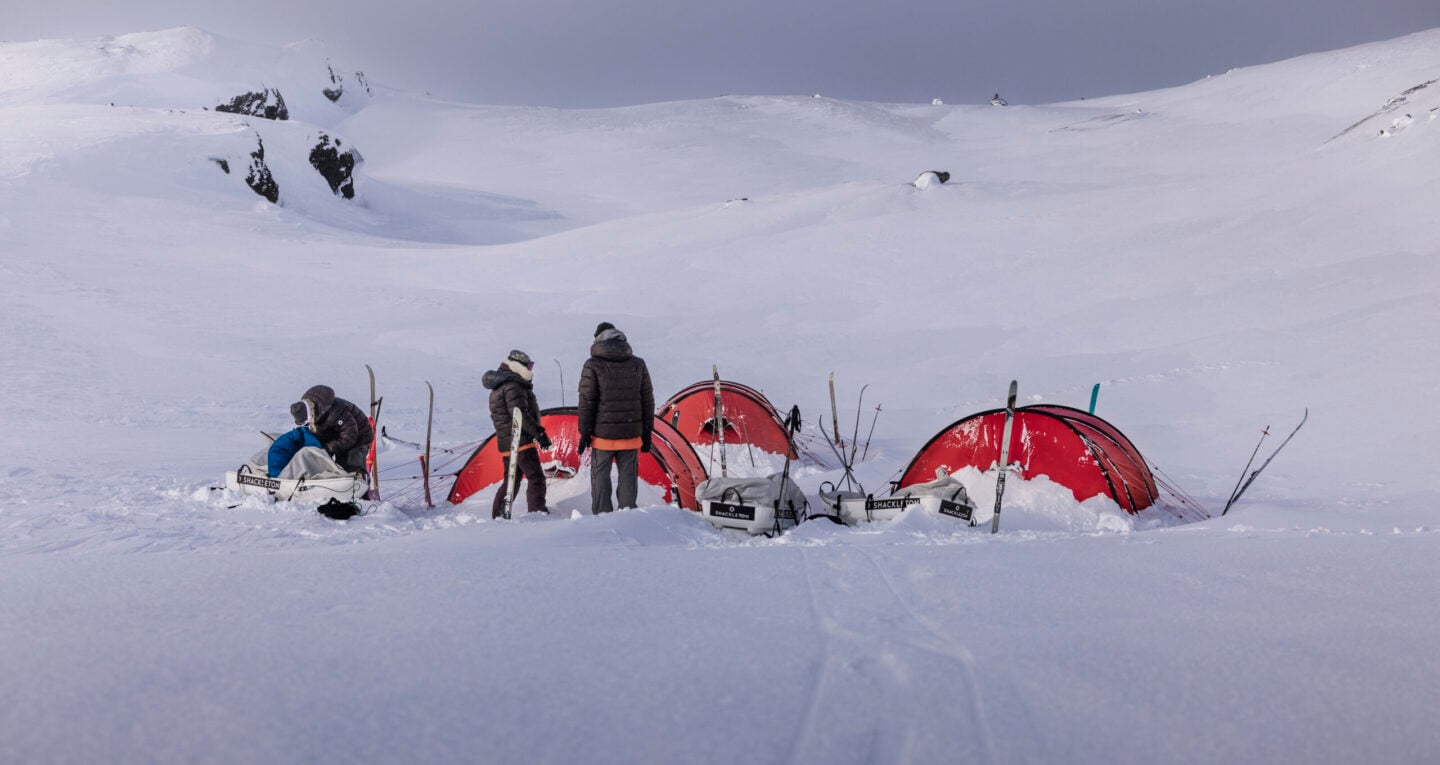
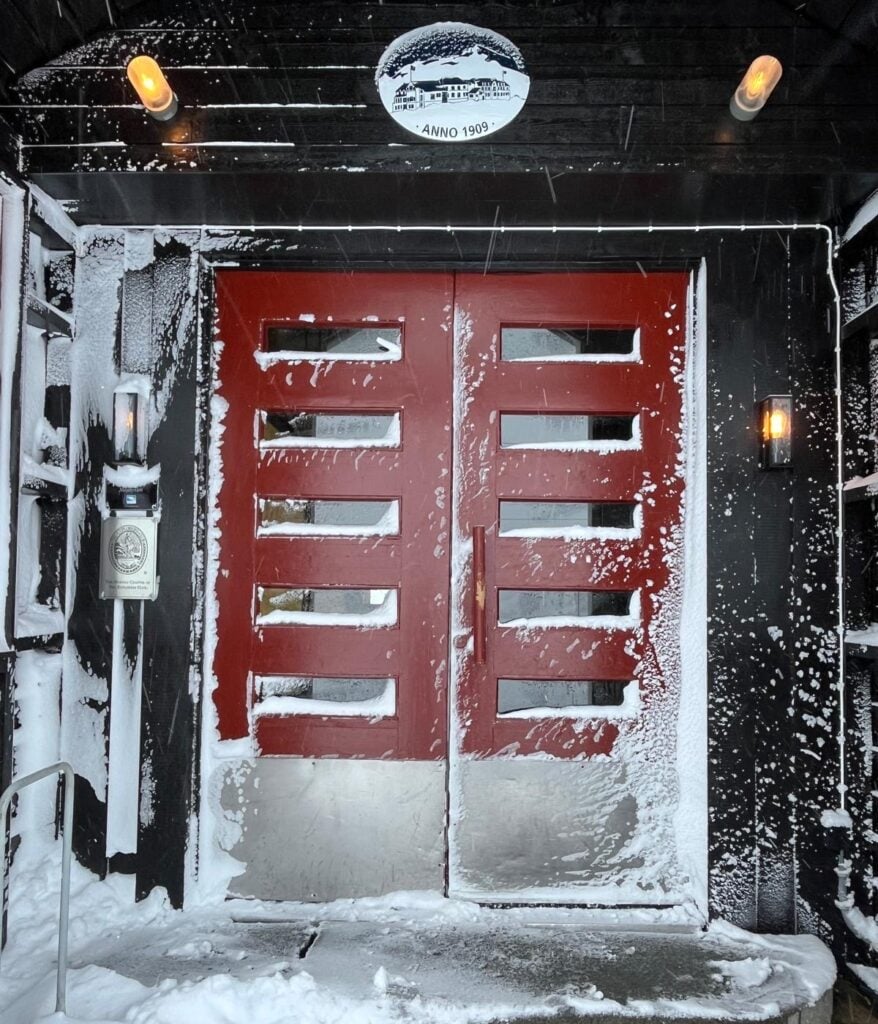
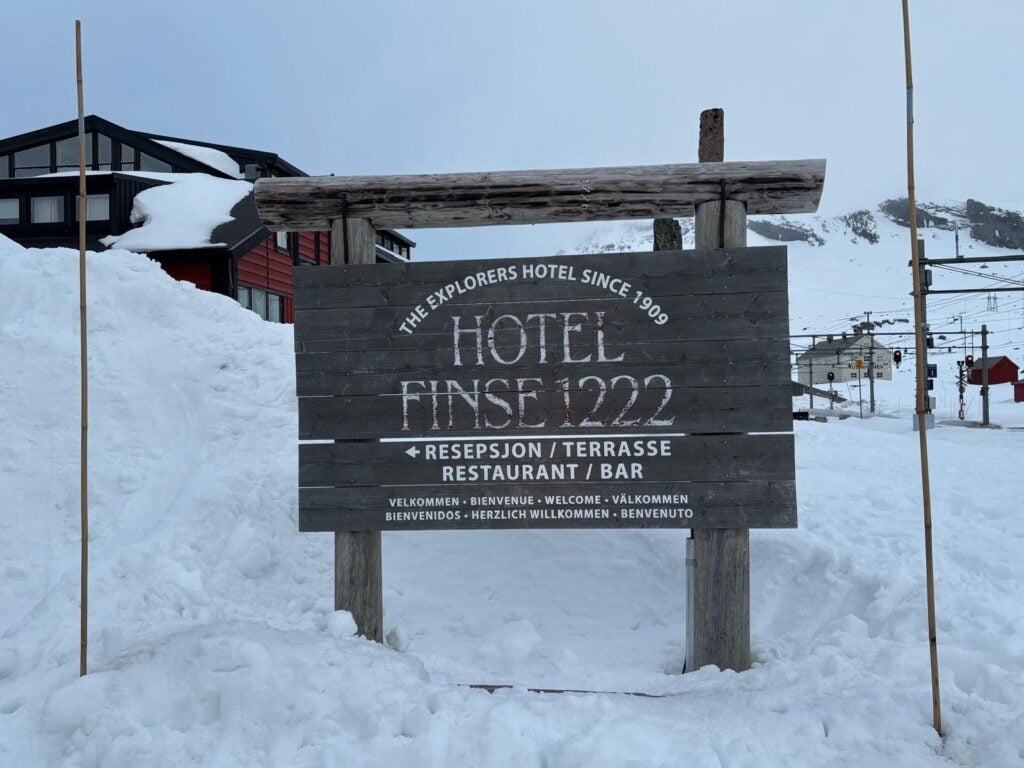
Louis and Amelia spend two days teaching us navigation skills, avalanche rescue, and polar survival at Finse 1222, a historic, high-mountain hotel at 1,222 metres above sea level. Located in front of the train station, this is our base camp for the duration of the trip. We venture onto the frozen lake and across Finse’s undulating landscape, ascending and descending, each of us hauling our pulk filled with a tent, a camping stove, freeze-dried food, and a metal shovel, behind us. This is by no means glamping; it’s hardcore, and I am not an experienced camper.
I remind myself why I volunteered for this assignment: to reconnect with what I consider my intrepid core — the reporter who made it to Baghdad the day after the Iraqi border fell to the Americans, bluffed her way into a Philippine prison to get an exclusive interview with a deposed president, and travelled to Colombia to report on the ayahuasca trade.
I wondered if that same instinct for venturing into harsh and uncertain places still lived inside of me.
I shared this motivation with the others in our group — each with awe-inspiring backstories: a journalist who recently shed more than 40 pounds, a former stuntman and rock climbing instructor, a newly hired Shackleton employee who set a 2025 world record rowing from Perth to Kenya in 71 days and a 23-year-old aspiring Arctic guide who had slept in a snow hole the day before our overnight camp.
“There is something about the snow that I just love. I like whiteouts, to be away from phones and screens when you cannot see three feet ahead,” the aspiring guide tells me.
All good people to have on your side when pitching tents on a glacier edge, I quickly learn.
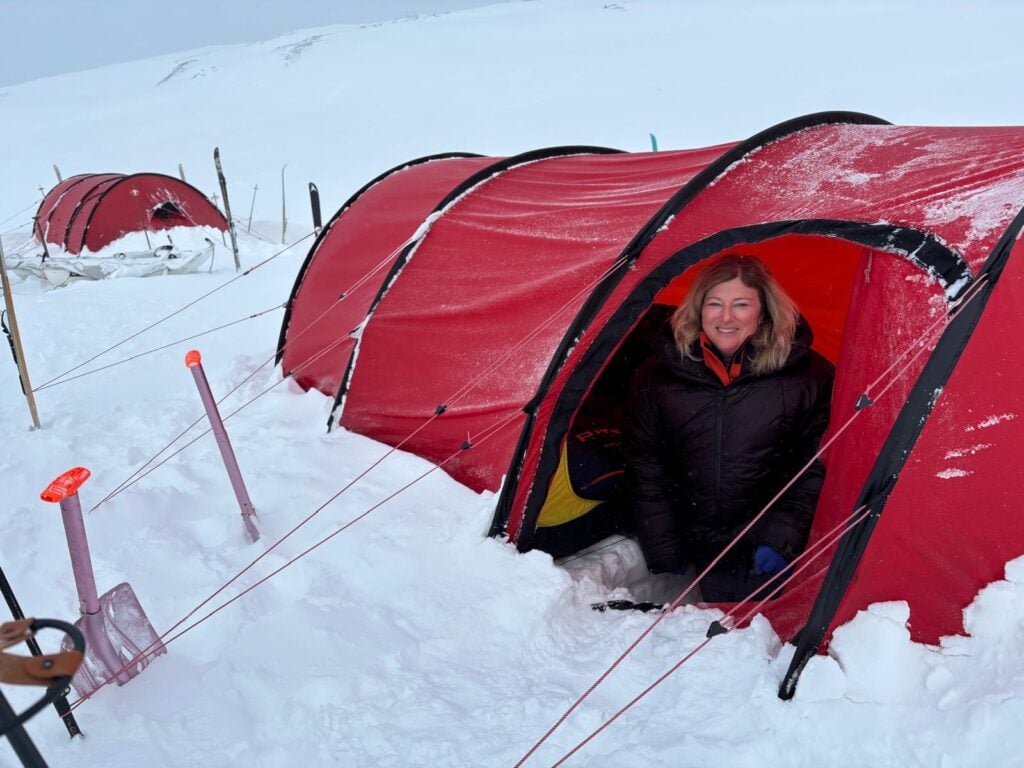
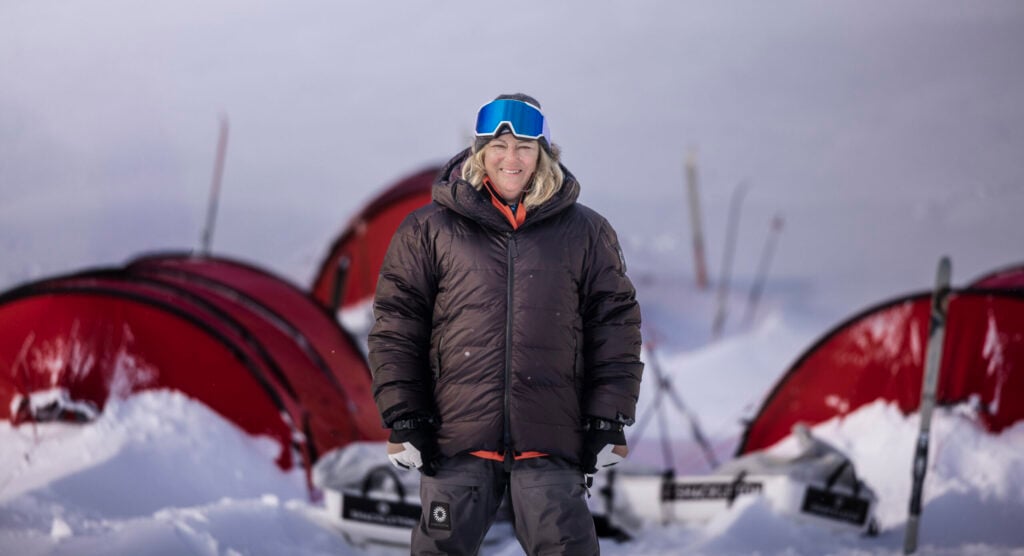
My tent mate is Amelia, Shackleton’s expedition manager, is the seventh woman in history to ski solo and unsupported from the Antarctic coast to the South Pole.
“I believe there is one adventure out there for every heart,” she says. “The physical, mental and emotional impact of an expedition, the alchemy in the change of perspective it gives you.”
Underpinning it all is an enduring fascination with Sir Ernest Shackleton, notably his remarkable saga of survival after the loss of his ship Endurance in pack ice off Antarctica. According to The New York Times, his leadership provided a “management tutorial in how to face repeated crises.” His tools, according to one book on Shackleton’s leadership, “were humour, generosity, intelligence, strength, and compassion and patience.”
My fellow travellers’ humour and optimism definitely help me get through.
We follow Louis’ instructions to choose a campsite away from the wind, stomp the snow firm with our boots to level the ground, anchor the tent with single skis as pegs at the end of the guide ropes, and shovel extra drifts over the tent skirts, racing the cold to avoid frostbite.
Amelia boils melted snow in a tin kettle, and we fill our bottles with hot water and place them at the bottom of our sleeping bags, along with our wet gloves and socks to dry.
After a dinner of freeze-dried pulled pork, we gather in Louis’s tent for stories over a shared bottle of aquavit.
“I love passing along the idea of expanding your comfort zone,” says Louis, who became an Arctic adventurer while he was still in the military and found his navigation, self-reliance and Arctic warfare skills made him a natural fit.“It’s also the teamwork,” he adds, before sharing a story of a 61-year-old he guided to the South Pole who didn’t believe she would make it. “I was humbled to witness such a monumental moment in this woman’s life.”
Amelia was a mother of four in a communications role for the UK military before she got the polar exploration bug. She trained and fundraised for five years before she undertook her first solo Antarctic crossing in 2019-2020.
“As women, we’re often told we don’t need to shout or be loud but we need to unlearn those things,” says Amelia. “Stating your intention can be scary, but that is your starting point.” On her arm, a tattoo reads: Fortitudine vincimus, the Shackleton family motto, which translates to “By endurance we conquer.”
“Wakey, wakey, chocolate cakey,” Louis calls over the radio the next morning to Amelia, whose nickname is “Cakes.”
She is already melting snow for coffee and freeze-dried oatmeal. I slept surprisingly well, rocked by the restless song of the wind sweeping over the ridges. In the quiet vastness, surrounded by ice and shadow, I felt not fear but a curious sense of protection — as if the stark isolation of Finse itself were keeping watch.
With the sun out, I feel upbeat about the mainly downhill return trip. Louis explains how to descend hills with a pulk, the wind at our backs.
“You place the sled in front of you and your skis to either side, pushing it along,” he instructs.
We set off, and my sled immediately blows off course and whacks me in the knee. I fall, get back up, fall again, and am about to take off my skis in despair.
The 23-year-old aspiring guide skis back. “Do you need a hand?” he says, offering to take my pulk.
I make it down, battered and bruised, every muscle aching, but elated. We ski the final kilometre across the frozen lake to Finse 1222, blades cutting through wind-driven snow.
In my room, I sink into a long, scalding shower, letting the warmth chase away the chill, and stare out the window at the winter scene. Sore, raw, and trembling with fatigue, I feel a fierce pride. It was tough — but a reminder that the hardest journeys often leave the deepest sense of accomplishment.
Exploration
Inside the expedition that found famed explorer Sir Ernest Shackleton’s famed last ship

Exploration
RCGS find of Quest featured at major Shackleton gathering in Dundee, Scotland
Exploration
An expedition led by the Royal Canadian Geographical Society found the vessel intact and upright at a depth of 390 metres

People & Culture
A live donkey is better than a dead lion,” Ernest Shackleton, the renowned British explorer, once said. He was referring to his 1907 to 1909 Nimrod expedition, and…