Environment

El Niño is here and could reach historic intensity. What does that mean for Canada?

What do predictions of a strong El Niño event mean for Canada? Talking climate models, stats and weather predictions with the Canadian Centre for Climate Modelling and Analysis.

  • Published Jun 15, 2026
  • Updated Jun 16
  • 1,248 words
  • 5 minutes
[ Disponible en français ]
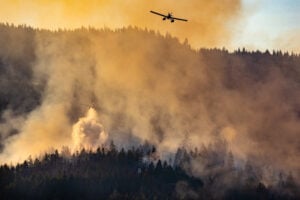
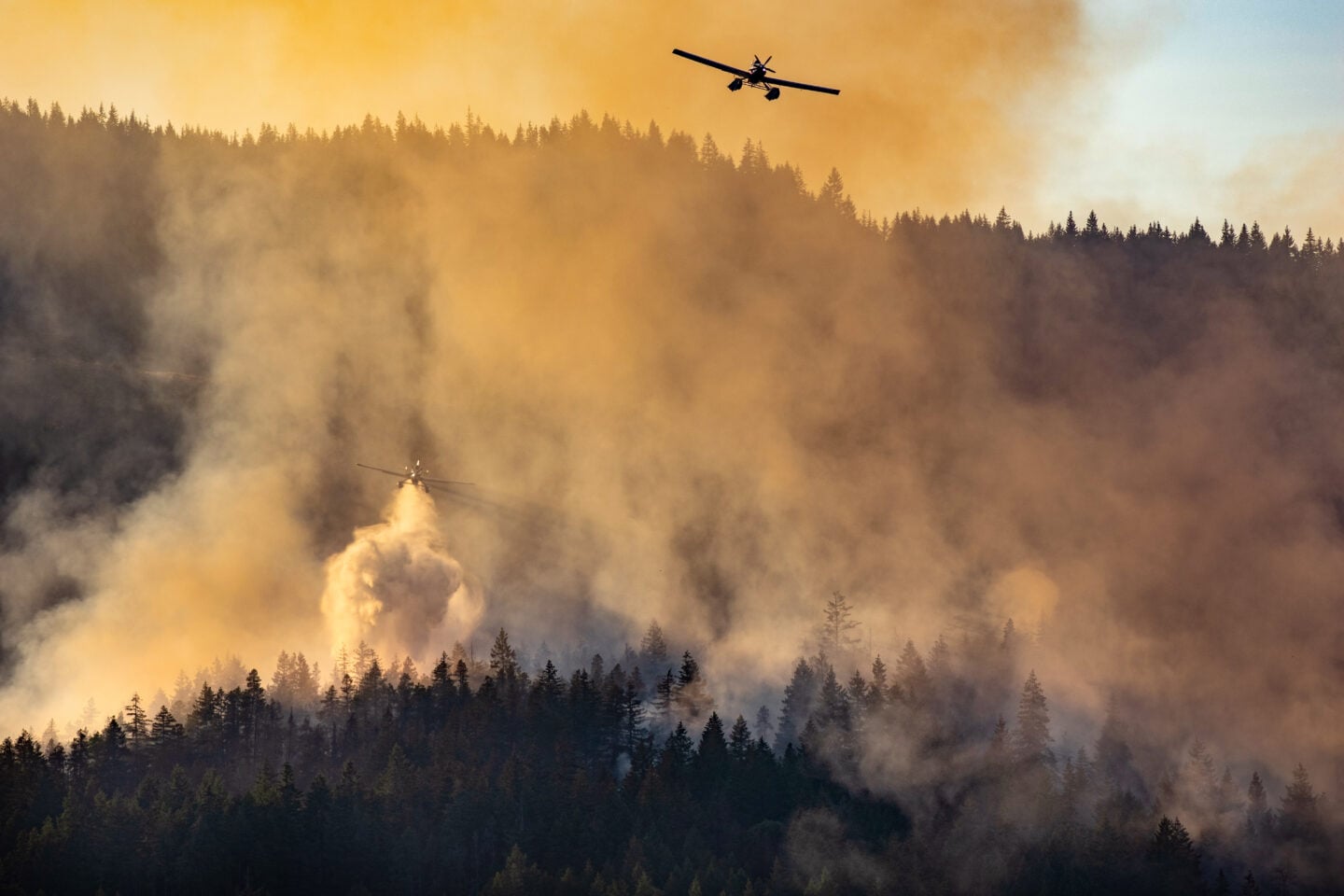
Water bombers tackle forest fires on Vancouver Island during the summer of 2025. The Canadian Centre for Climate Modelling and Analysis produces expert modelling geared to helping Canadians adapt to a changing climate and to the variations that are occurring as the global climate warms. (Photo: Arriana Gibson/Can Geo Photo Club)
Expand Image
Advertisement
Advertisement

Four times a year, the World Meteorological Organization publishes an El Niño/La Niña forecast assessing the probability that either of these key drivers of global climate will occur in the months ahead. It’s the sort of report that was once noticed only by climate wonks but is now regular fodder for the daily news. The reason? El Niño and La Niña are the yin and yang of a phenomenon known as the El Niño-Southern Oscillation, a years-long cycle of warming and cooling of surface waters in the central to eastern tropical Pacific Ocean.

When one or the other occurs (warming waters equal El Niño; cooling waters equal La Niña), it alters cloud, wind and weather patterns, which in turn amplifies the worldwide temperature and precipitation extremes already being caused by climate change. Last week, the National Oceanic and Atmospheric Administration out of the U.S., along with a host of other climate experts, confirmed that El Niño has arrived and could grow to historic strength by this fall. “We need to prepare for a potentially strong El Niño event – which will exacerbate drought and heavy rainfall and increase the risk of heatwaves both on land and in the ocean,” said Celeste Saulo, secretary-general of the WMO, in a statement

You need only look back to 2024 to understand the significance of this prediction. That was the warmest-ever year in the historical record, the first in which the overall global temperature increased by more than 1.5 degrees versus the pre-industrial benchmark — and it came in the wake of a very strong El Niño at the end of 2023.

“When there is an El Niño event, it tends to act as a sort of global heating mechanism, almost like having a global furnace on,” says Bill Merryfield, a Victoria-based research scientist at Environment and Climate Change Canada’s Canadian Centre for Climate Modelling and Analysis. He explains that this heating effect is cumulative, so its overall impacts on global temperature tend to be felt mostly in the year following. A La Niña event, on the other hand, tends to bring less heat, while wet and dry extremes under both scenarios vary regionally.

The World Meteorological Organization’s outlook is based on an aggregation of climate forecasts from leading government research agencies worldwide, among them, Environment and Climate Change Canada’s seasonal prediction system. And in this case, Canada’s model and the consensus are aligned. “Our forecasts are increasingly pointing toward a significant El Niño event to develop later in 2026,” says Merryfield. And if it does materialize, “I think there’s going to be a very high chance that 2027 will be a new global record temperature, and we’ll also once again break through that 1.5-degree mark.”

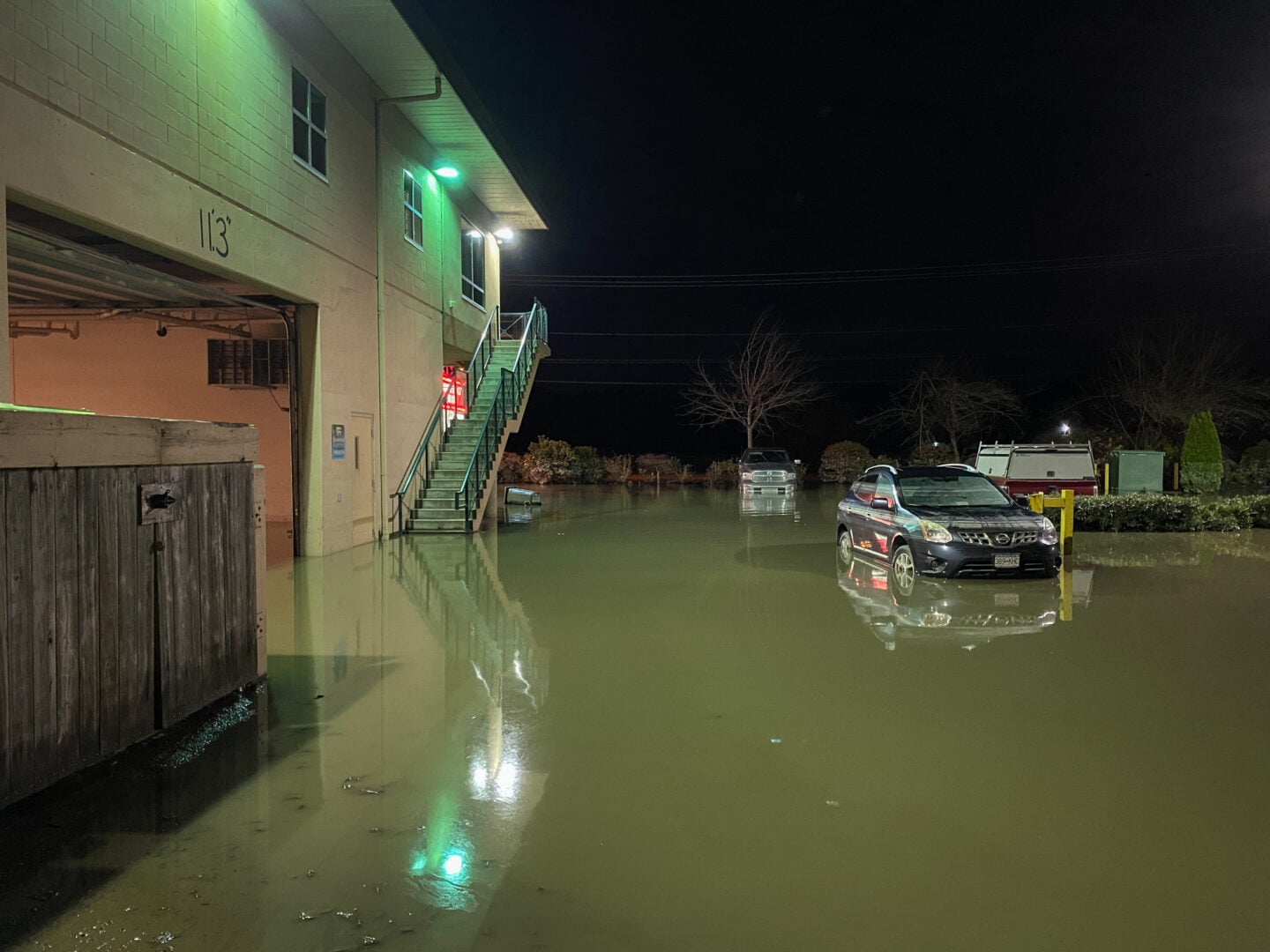
This photo was taken two days after the worst of the flooding caused by the 2021 atmospheric river that devastated Abbotsford, B.C. (Photo: Windy Corduroy/Can Geo Photo Club)
Expand Image
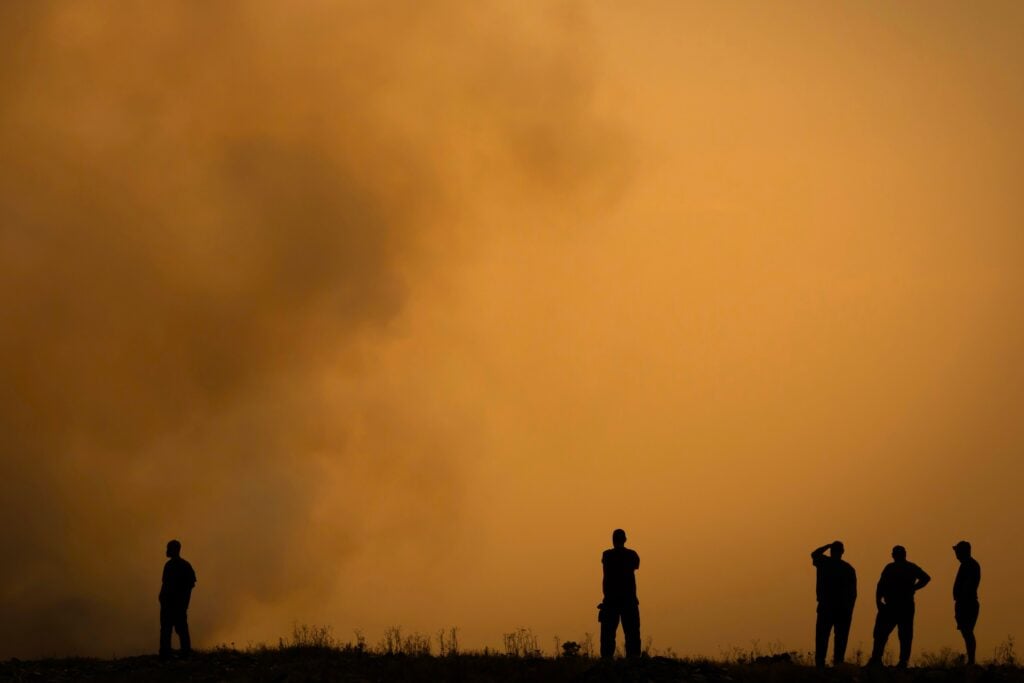
The evening sun creates an orange haze. A series of wildfires near St. John's, Nfld., in August 2025 led to evacuation alerts, as well as trail and park closures. (Photo: David Sturge/Can Geo Photo Club)
Expand Image
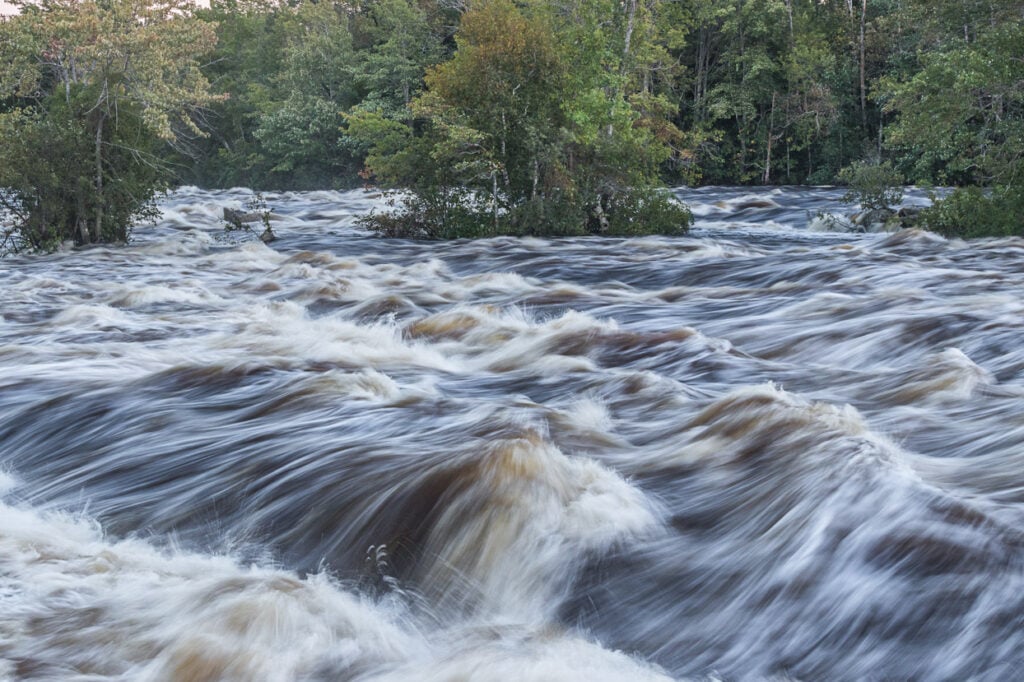
The St. Croix River in New Brunswick after post-tropical storm Lee made landfall in the Maritimes in September 2023. (Photo: Carol Behan/Can Geo Photo Club)
Expand Image

“When there is an El Niño event, it tends to act as a sort of global heating mechanism, almost like having a global furnace on.

WHILE THE EL NIÑO-SOUTHERN OSCILLATION has the power to influence global climate, interactions between the ocean and atmosphere are complex, and the impacts from El Niño and La Niña are often felt differently on different continents. In Canada, for example, impacts are more pronounced in terms of temperature than precipitation, says Merryfield.

“Generally, during an El Niño, Western and perhaps Central Canada tend to be warmer than usual — keeping in mind that what we consider normal is a moving target these days. And then [we see] the opposite effects for La Niña,” he notes. To the extent El Niño affects precipitation, it tends “to bring drier conditions to Western Canada and also around the Great Lakes.”

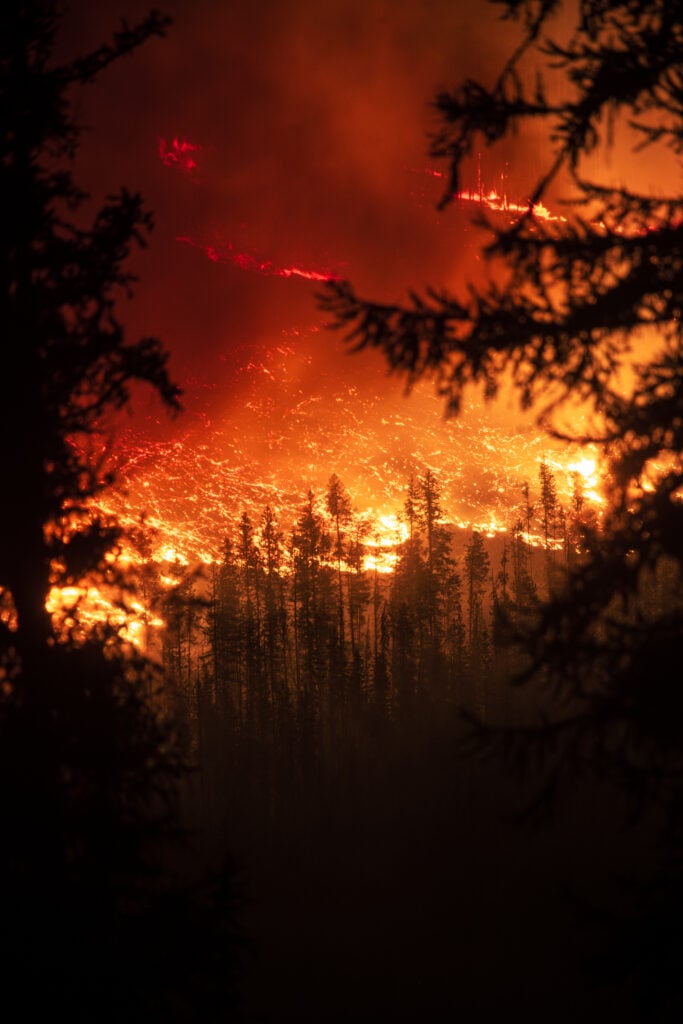
A wildfire burns on Mt. Mackie near Castlegar, B.C., in August 2025. (Photo: Ashley Voykin/Can Geo Photo Club)
Expand Image

But there are also combined effects. “In El Niño winters, that tendency for a precipitation deficit combined with warmer temperatures will give a tendency to have less snow on the ground, particularly in Western Canada, says Merryfield. The opposite is the case for La Niña. These winter influences tend to persist into spring — sometimes even into late spring.

To produce its yearly forecasts (which are updated monthly), Environment and Climate Change Canada combines the results it obtains from two models used to project long-term climate change based on projected greenhouse gas emissions, as well as natural atmospheric “forcings.” (Climate forcing is a general term that describes human or natural factors that change the balance of heat exchange in the atmosphere. An example of a natural climate forcing would be a large volcanic eruption.)

The Canadian researchers run their models like a weather prediction, “taking today’s observations of the atmosphere and the ocean and other things from many sources and then letting it run forward for a full year,” Merryfield says. To represent uncertainties and improve their results, the modelling team runs the data through these models 20 times. “From that information, we assess probabilities of different outcomes,” he says.

The results of this work can now be examined in interactive map format on the recently launched ClimateData.ca website, a joint collaboration between Merryfield’s modelling centre and the Canadian Centre for Climate Services. On a map of Canada, viewers can bring up four different datasets (seasonal forecasts, global climate projections, marine climate projections and climate normals), highlight either temperature or precipitation variables, and zoom in or out to view local, regional or national outlooks. Data is displayed on a probability gradient and the content is further customizable according to time scales and expected versus unusual conditions.

The team is now developing additional value-added products that would be useful to decision-makers in a wide range of economic sectors — from farming to firefighting. Those forecasts might include things like degree days for heating, cooling, growing and thawing, says Merryfield.

Given that the interplay between the El Niño-Southern Oscillation and climate change has obvious implications for water availability and food production, policy makers, planners and farmers already pay close attention to Environment and Climate Change Canada’s seasonal and yearly forecasts.

Natural Resources Canada also has a strong interest due to links between these factors and the growing threats associated with wildfires. For instance, an early snow melt and warmer temperatures, which tend to occur in El Niño years, would definitely contribute to greater wildfire risks. In fact, they incorporate Environment and Climate Change Canada’s temperature and precipitation forecasts into its world-leading system for forecasting wildfire threat levels and fire weather danger.

The centre’s expert modelling is geared to helping Canadians adapt to a changing climate and to the variations that are occurring as the global climate warms, but Merryfield still cautions that while the consequences of climate change are indisputable, seasonal forecasts remain just that — forecasts. In the winter of 2011-12, for example, he says there was a moderate La Niña, which would normally mean colder than usual temperatures. But Canada actually had one of its warmest winters on record, something not predicted as likely in any seasonal forecasts.

“That’s why we issue them in probabilities. Generally, the situation with ENSO and the associated seasonal predictions will give you a good idea what the conditions will be. But every so often nature does throw us a curve ball. And that always ought to be kept in mind when making decisions.”

*This story was created in partnership with Environment and Climate Change Canada.
Advertisement

Help us tell Canada’s story

You can support Canadian Geographic in 3 ways:

Related Content

Environment

El Niño est arrivé et pourrait atteindre une intensité historique. Quelles conséquences cela aura-t-il pour le Canada?

Que signifient pour le Canada les prévisions concernant un prochain épisode El Niño ? Entretien avec le Centre canadien de la modélisation et de l’analyse climatique au sujet des modèles climatiques, les statistiques et les prévisions météorologiques

  • 1467 words
  • 6 minutes

People & Culture

Rekindling hope: Kanaka Bar’s climate evacuees

As wildfire seasons worsen, residents of British Columbia’s southern interior have been repeatedly evacuated. They may be climate evacuees, but this hasn’t stopped them finding solutions, Canadian Geographic writer David Geselbracht reports in his new book Climate Hope.

  • 6869 words
  • 28 minutes
leather sea stars

Environment

“We did this:” Is there a way out of our intertwined climate and biodiversity crises?

As the impacts of global warming become increasingly evident, the connections to biodiversity loss are hard to ignore. Can this fall’s two key international climate conferences point us to a nature-positive future?

  • 5595 words
  • 23 minutes

Environment

Opinion: Environmental racism and Canada’s wildfires

Ocean Bridge Ambassadors address the burning injustice of the climate crisis on marginalized communities

  • 1036 words
  • 5 minutes
Advertisement
Advertisement