People & Culture

“It’s almost like a treasure hunt:” investigating deepsea corals off Newfoundland’s Grand Banks

Deepsea canyons along the Southern Newfoundland Slope shelter ancient cold-water corals and rich marine biodiversity. Scientists are racing to uncover and protect this fragile ecosystem before it’s lost.

  • Published Apr 06, 2026
  • Updated Apr 09
  • 3,304 words
  • 14 minutes
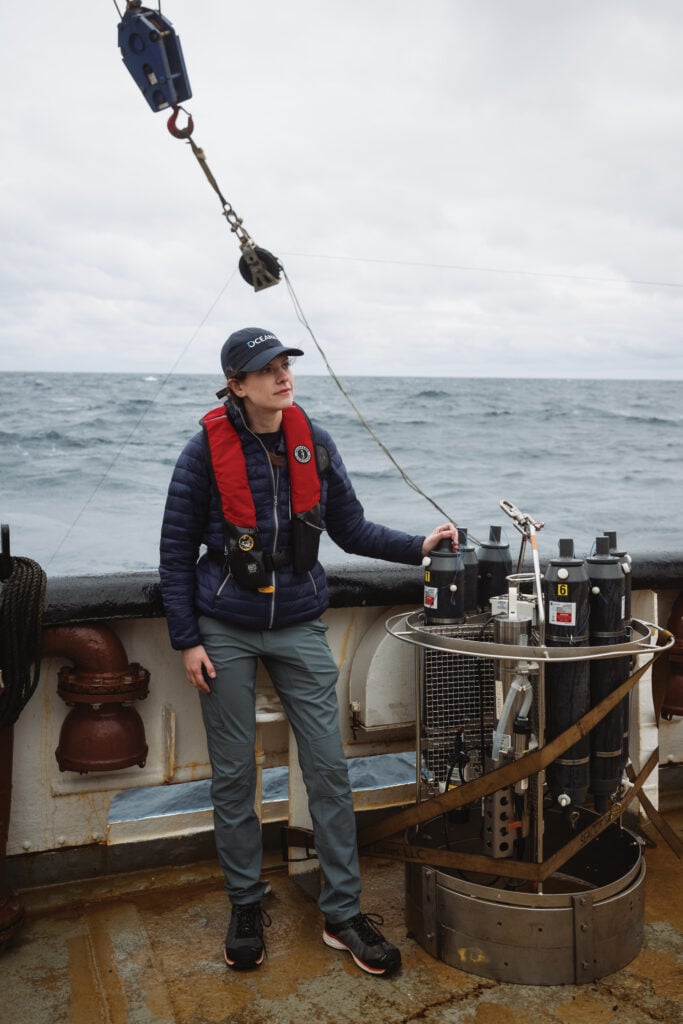
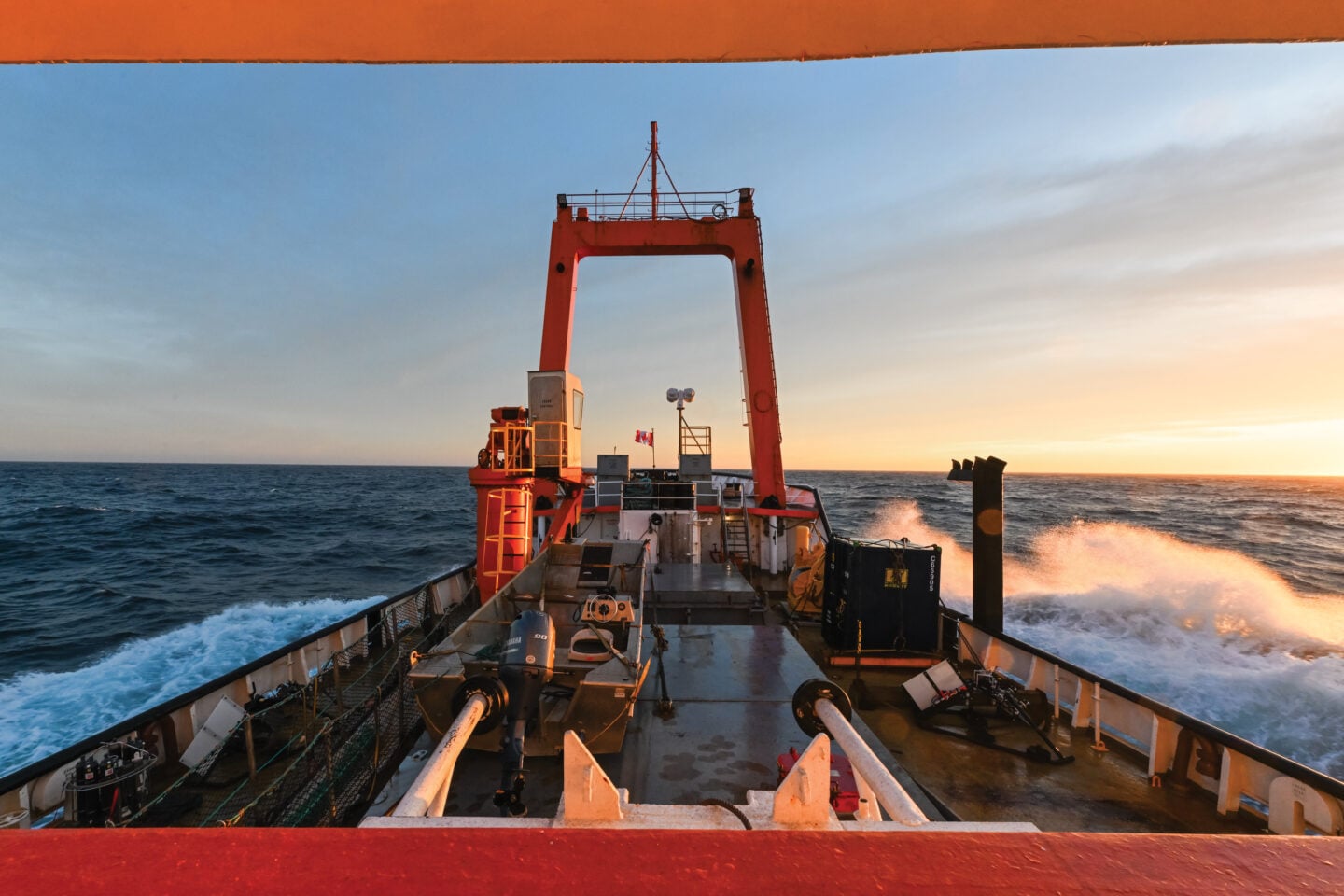
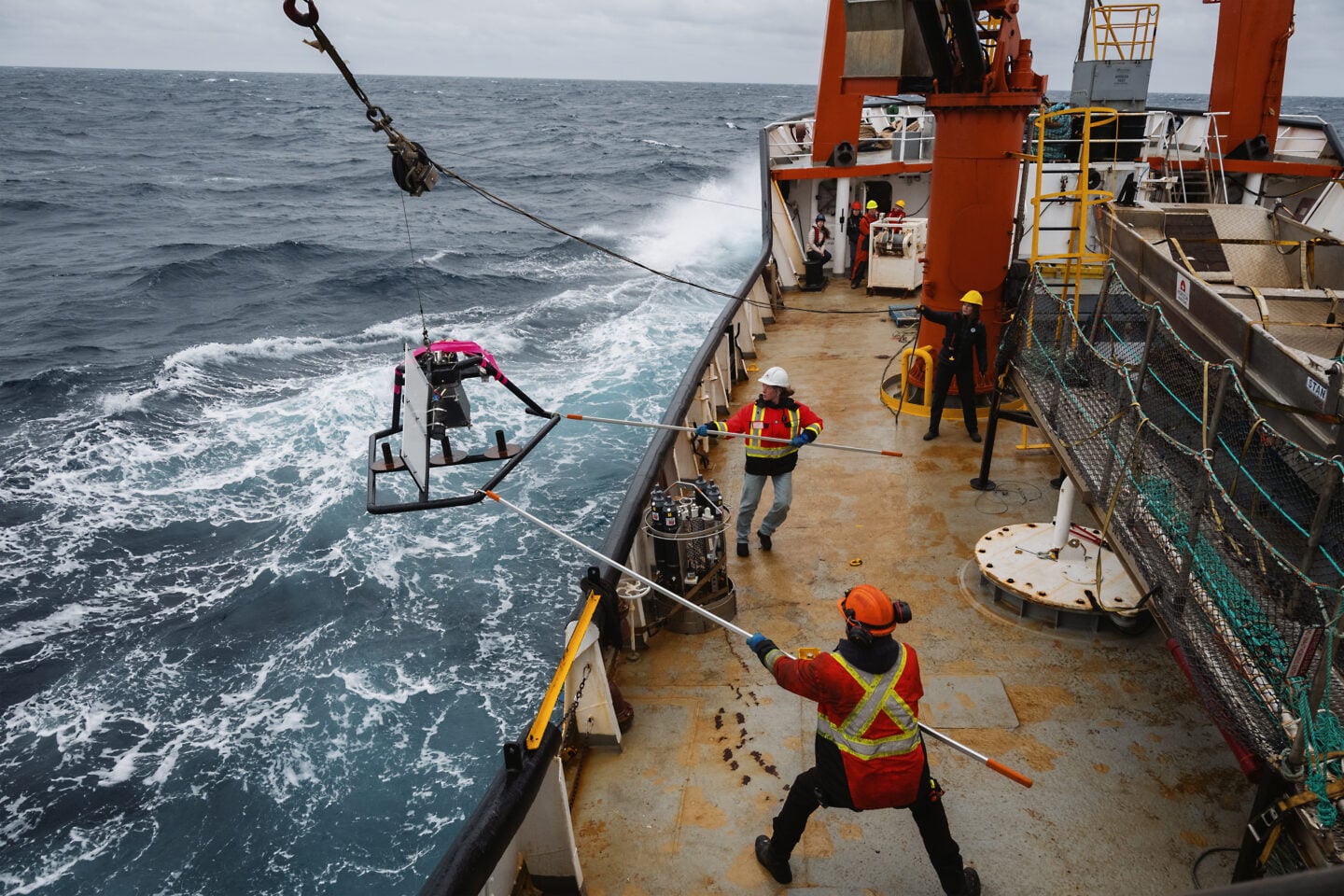
During the expedition, several challenges were encountered, including a camera that had to be secured with duct tape after a mishap in choppy waters. (Photo: David Coulson/Oceana Canada)
Expand Image
Advertisement
Advertisement
Live Net Zero Email Service

Isabelle Jubinville is in a clothing store in St. John’s, N.L., trying on tall rubber boots. A marine scientist with the conservation advocacy group Oceana Canada, she has been on her fair share of ships. But now, as she gets ready for an expedition to the deepsea clefts of the Southern Newfoundland Slope, she wants even more protection from the ocean’s ferocity.

Not only is she sailing on the Polar Prince, a light-class icebreaker so old and prone to rolling that it has earned the affectionate nickname “Noah’s Ark 2,” but she’s also going to the north Atlantic Ocean in late October, the bitter end of the season.

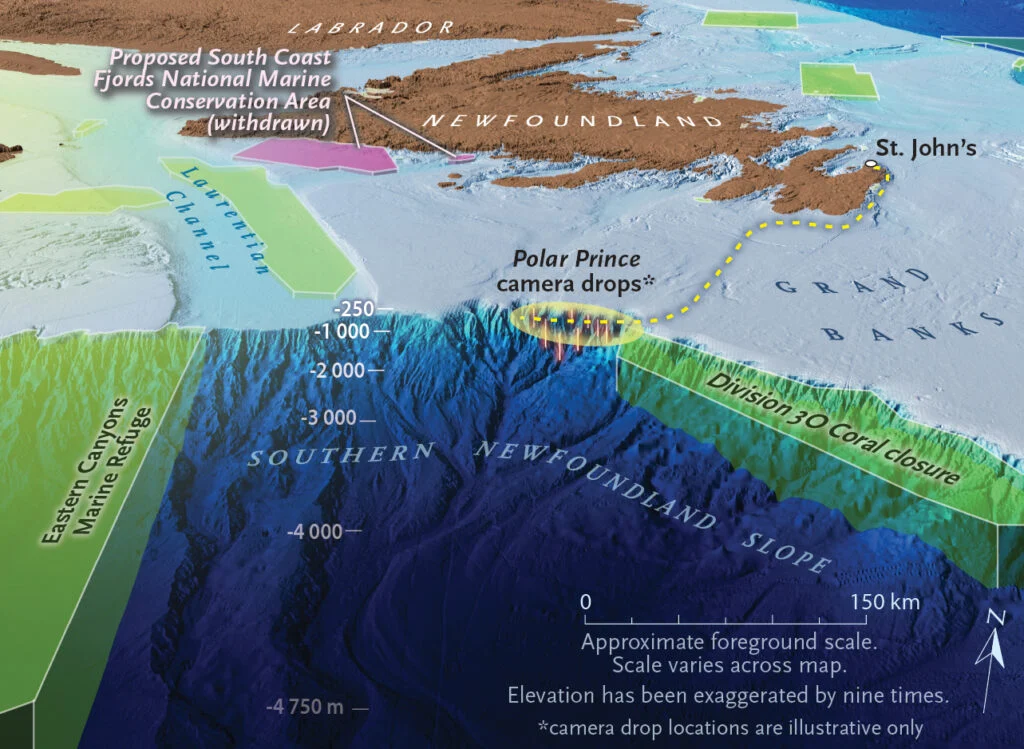
Map: Chris Brackley/Can Geo. Map data: Elevation data: General Bathymetric Chart of the Oceans (GEBCO), British Oceanographic Data Centre, 2025. Protected areas: Canadian Protected and Conserved Areas Database (CPCAD), 2024. Proposed NMCA: South Coast Fjords NMCA recommended boundary map, Parks Canada.
Expand Image

Already, the expedition has been fraught. We have lost several valuable days of exploration to technical snags, and our departure could still be days away. Jubinville, who seems to be in constant motion, is ready to be at sea. She and Vanessa Oldford, a biologist at the federal Department of Fisheries and Oceans who helps establish marine conservation areas, have been planning this trip for more than a year.

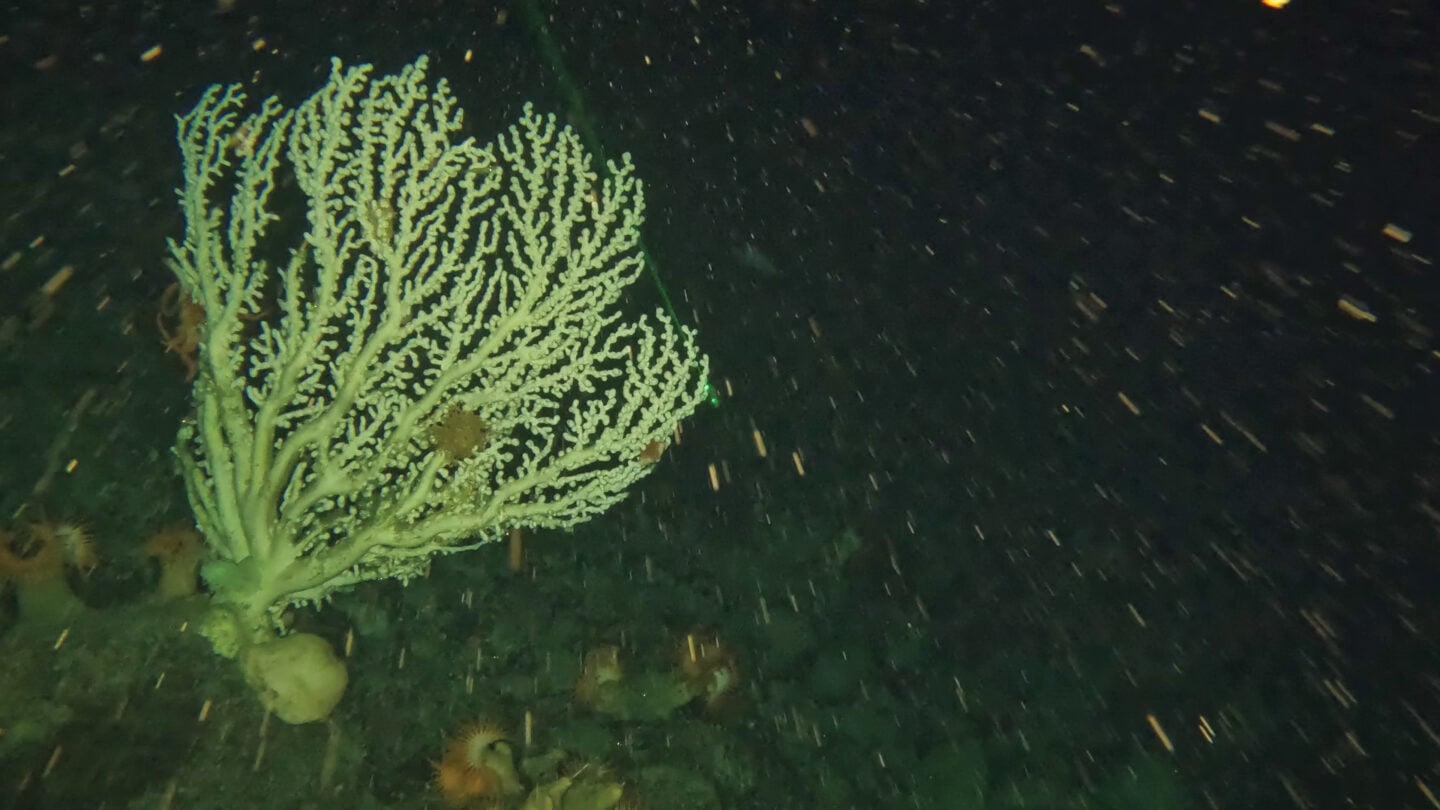
They are looking for some of the most enigmatic, most remote, most ancient and least understood animals on Earth: deep cold-water corals. Unlike the famous tropical corals that delight reef snorkellers around the world, these creatures ring the edges of the planet’s continental shelves and underwater sea mounts, rooted to the seabed in the sunless, frigid reaches of the sea. Some have stiff skeletons. Some resemble feather-like pens. Others are intricate puzzles of soft flesh. They are so odd that they defy our ability to describe them in animal terms. In fact, scientists tend to talk about them as if they are plants: coral gardens or thickets or sea pen forests.  

But as cryptic and little-studied as they are, one indisputable fact has emerged in the past few years: human activities are destroying them before we can even tell exactly which ones are where.

Which is why Jubinville, new boots in hand, is racing against time to get this expedition started.

The expedition's mission is to survey the Southern Newfoundland Slope. (Photo: David Coulson/Oceana Canada)
Expand Image

Deep-living corals have been out of sight, out of mind and out of reach for most of the time humans have populated this planet. The first few scientific descriptions emerged in the 18th century, including some by Carl Linnaeus, the Swedish taxonomist who invented the Latin naming convention for the planet’s lifeforms. In 1758, he described the one now named Paragorgia arborea, known as bubblegum coral, a species that perhaps came to his attention because its trunk-like hulk can grow to three metres and is sometimes bright pink.

But most deepwater corals had to wait to be discovered until the revelatory oceanographic expeditions of the late 19th century, when vessels such as HMS Challenger took to the seas with long-line dredges and trawls, collecting creatures from the depths that had not only never before been seen by human eyes but also never been imagined. Until then, people believed that the deep ocean was bereft of life. “It was almost as difficult to believe that creatures comparable with those of which we have experience in the upper world could live at the bottom of the sea, as that they could live in a vacuum or in the fire,” wrote scientific director Charles Wyville Thomson in his 1878 account of Challenger’s voyage.

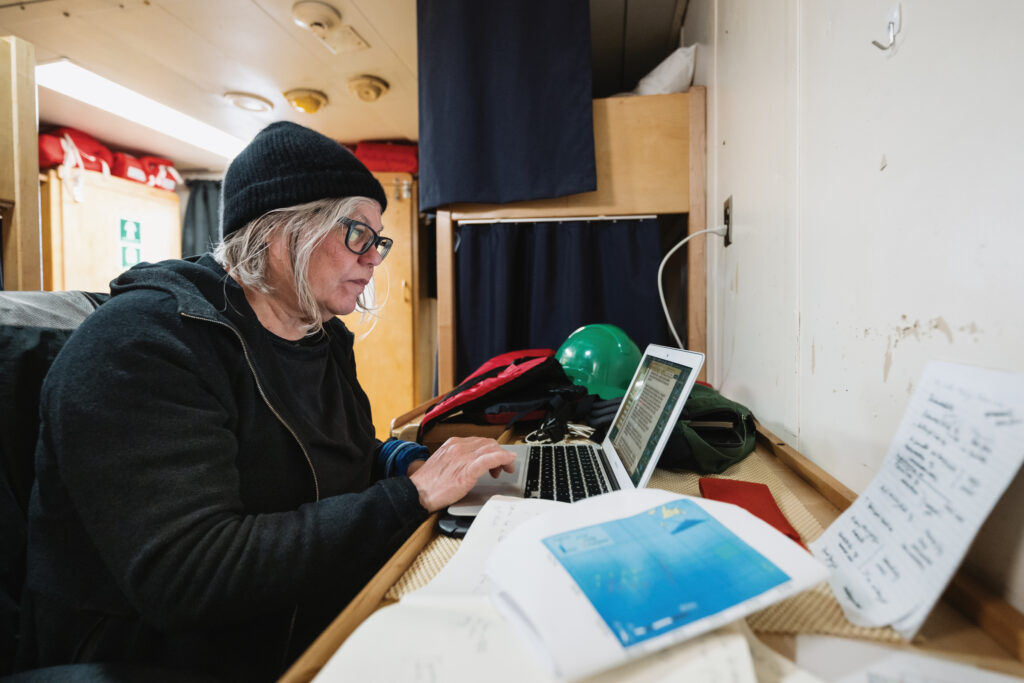
Writer Alanna Mitchell keeps a daily record of the expedition. (Photo: David Coulson/Oceana Canada)
Expand Image

Bárbara Neves, a coral biologist at DFO in St. John’s, says these early samples, now lodged in museum collections, still offer insight. “My favourite moments are when I have a jar with a specimen that came from the Challenger, for example, and then you look at the specimen and then you look at the little sketch that somebody did, and it’s exactly the same…. It’s just so precise.”

Since the turn of this century — armed with new technologies like underwater cameras, fibre-optic cables, remote-operated vehicles, autonomous underwater vehicles and submersibles — scientists have pieced together a fuller picture of the more than 3,000 known species of cold-water corals, some of which have been found at crushing pressures 6,400 metres below the surface of the water.

Nestled there in the dark cold depths, snatching food from the water around them, they seem to have a different sense of time. They grow at an extraordinarily leisurely pace — some, only millimetres a year. Many can live for a century or more, making them among the longest-lived animals on Earth. In 2009, American scientists reported finding a black coral, with its inky skeleton and orange flesh, off the coast of Hawaii, dated using radiocarbon techniques to be more than 4,000 years old; this individual was already 500 years old when humans were putting the finishing touches on Stonehenge.

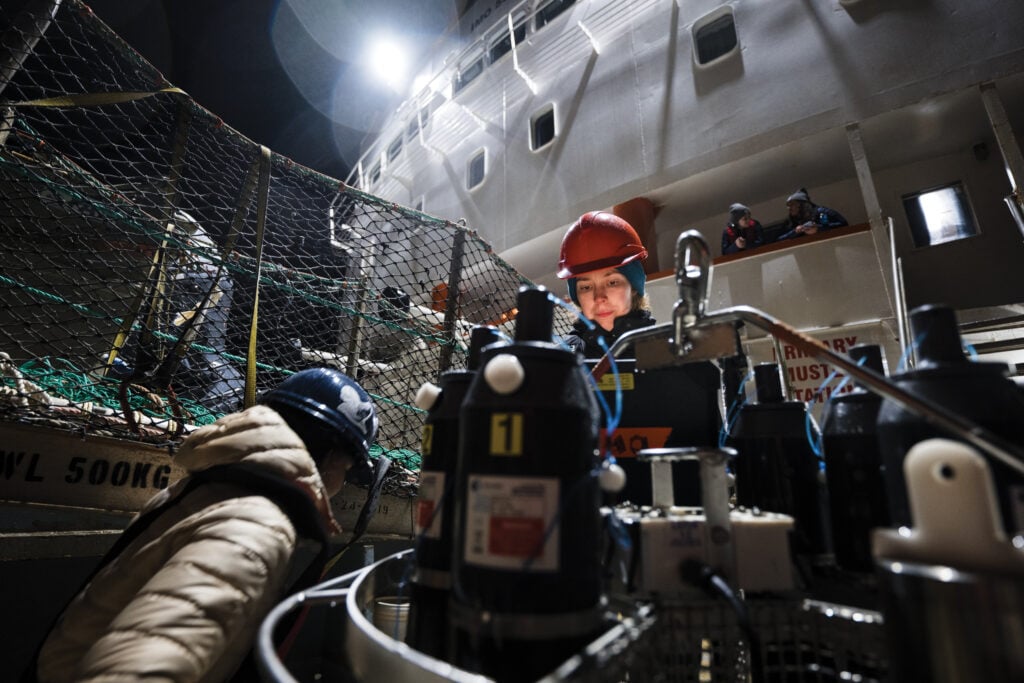
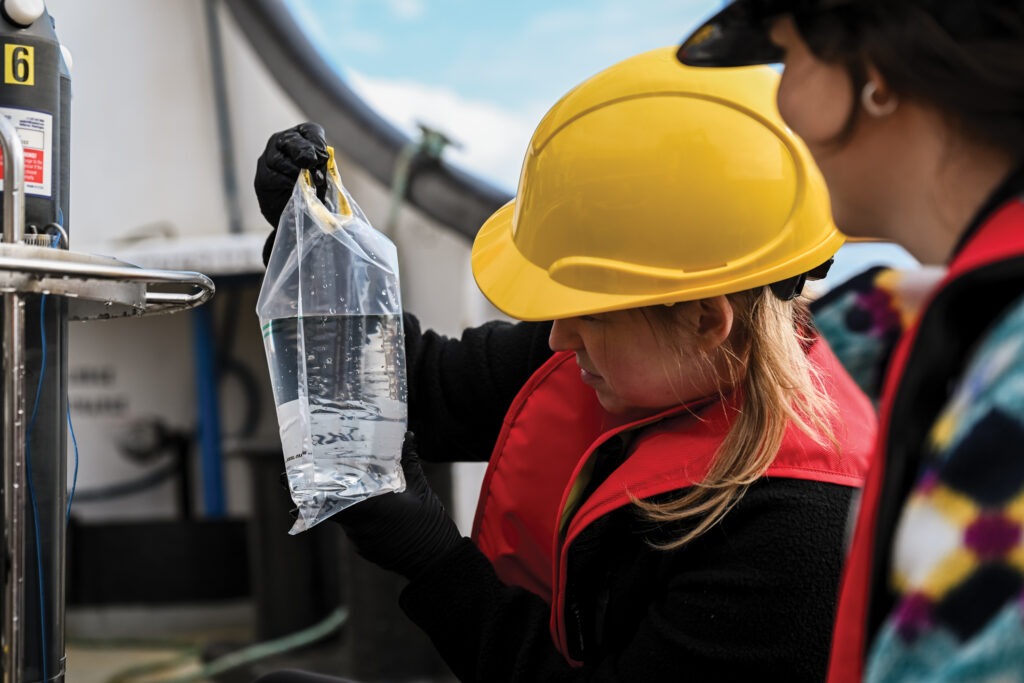
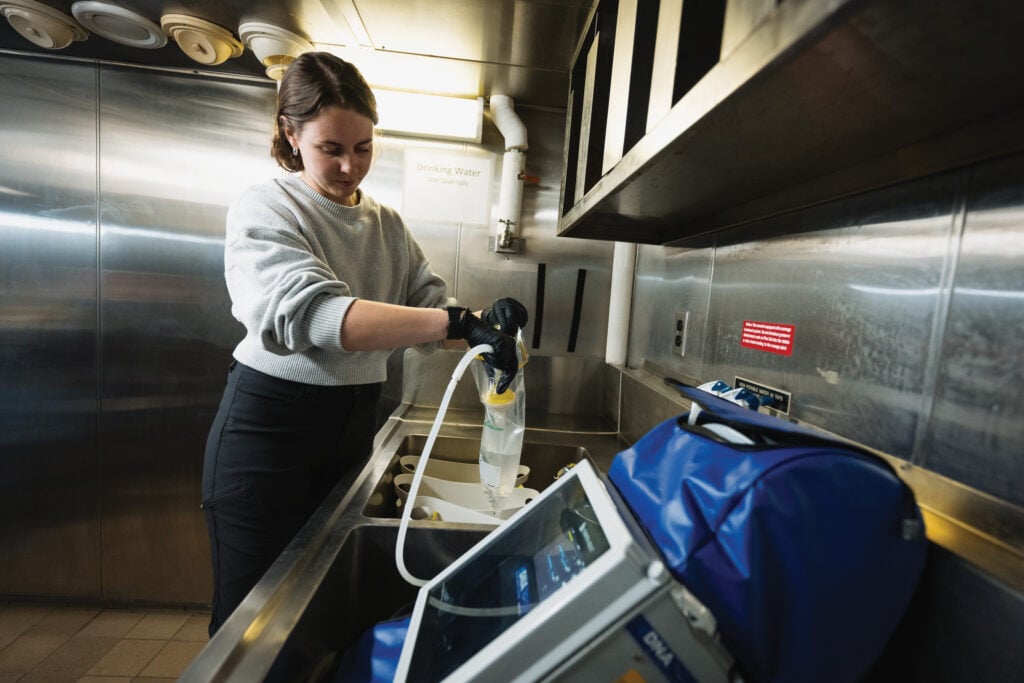
DFO biologist Mary Clinton collects seawater samples and environmental data. (Photo: David Coulson/Oceana Canada)
Expand Image

And they’re fragile. As high-powered, deepwater fishing expanded around the world in the 1950s and 1960s, cold-water corals started showing up in nets. In some cases, marine biologists only realized where corals were when the animals came up in fishing gear, notes Evan Edinger, a geologist and coral specialist at Memorial University of Newfoundland. For example, a 2006 survey of the shrimp fishery east of Hudson Strait off Labrador found records of up to 500 kilograms of two types of coral in a 15-minute tow. One species was Linnaeus’s famous bubblegum coral. And those may not have been the only casualties from the tows, Edinger’s subsequent report notes, because other coral corpses likely fell through the gear.

Sometimes the destruction is deliberate. In the late 1980s and early 1990s, people in the northeast channel south of Nova Scotia razed corals to make fishing easier, dragging a logging chain across the sea floor between two trawlers, Edinger says. “They used to call it ‘trimming the trees.’”

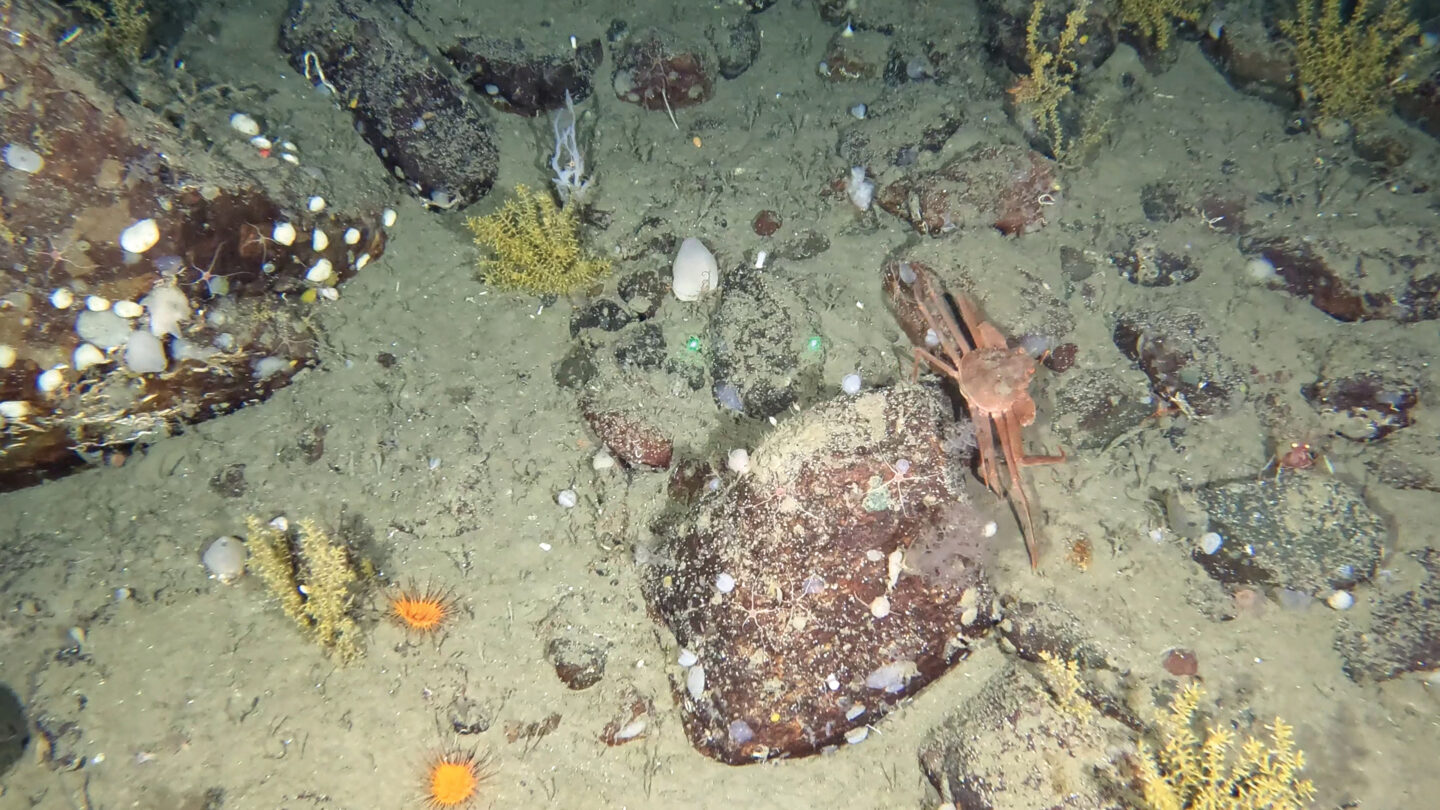
A crab creeps along a seafloor alive with corals and anemones. (Photo: Oceana Canada and Fisheries and Oceans Canada)
Expand Image

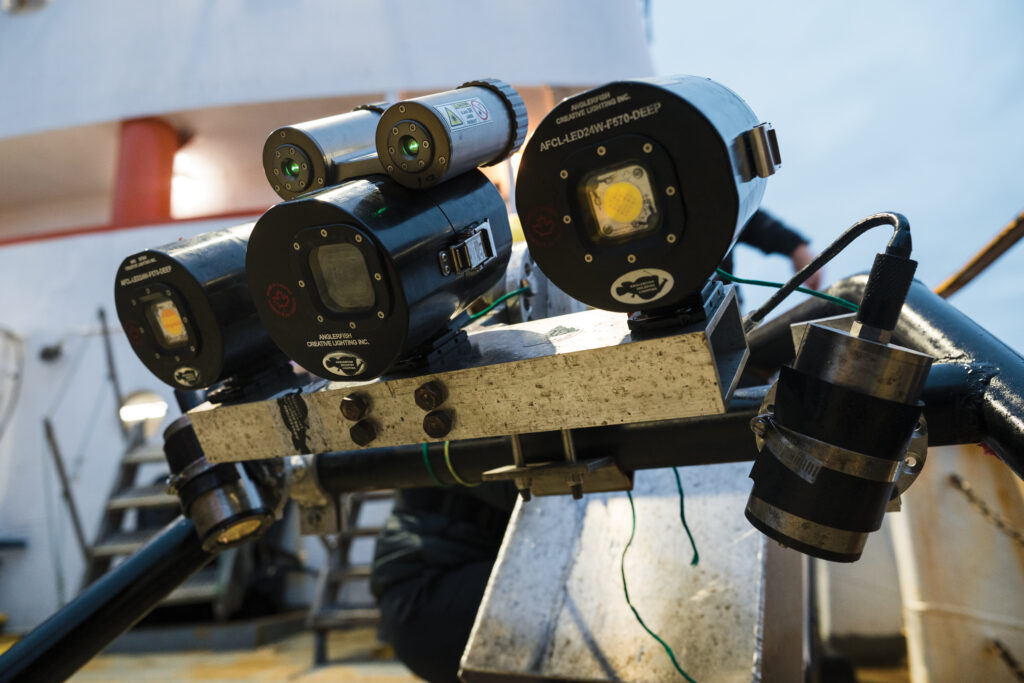
The Polar Prince has finally arrived above the Southern Newfoundland Slope, just where the fabled Grand Banks fishing area angles sedately southward into the abyss. Jubinville, Oldford and the rest of the team are getting a video apparatus ready to drop 700 metres to the canyon slope beneath us, where, if all goes well, it will hopscotch across the seabed floor, capturing images with two GoPro cameras.

The deep-sea drop-camera system. (Photo: David Coulson/Oceana Canada)
Expand Image

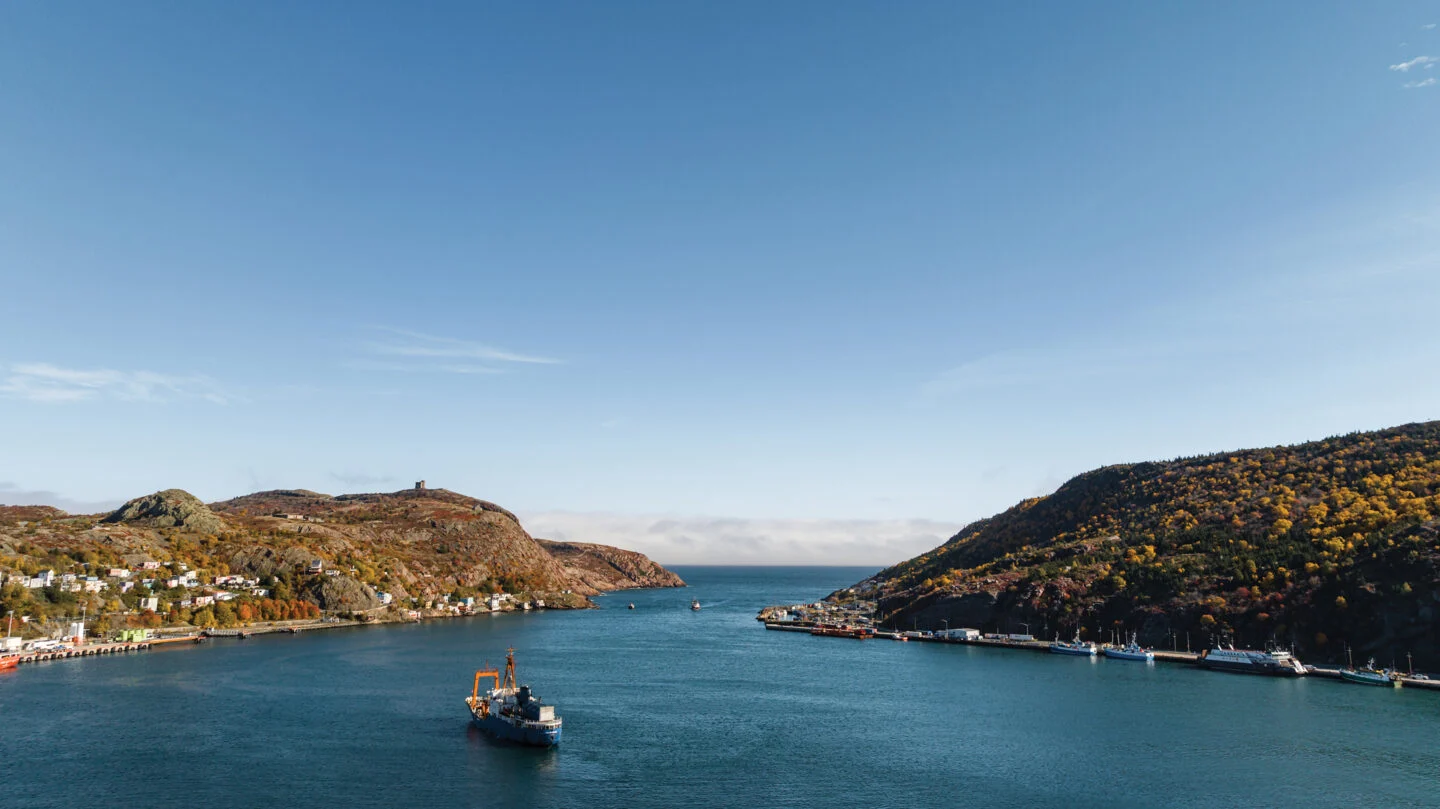
By the time we left St. John’s harbour, we were jubilant: glitches overcome, sun shining, en route to a part of the planet that has rarely, if ever, been seen before. “It’s almost like a treasure hunt,” Sheena Roul, a technician who works on DFO’s marine conservation targets, told me as we headed for the open ocean.

Now, here we are 190 nautical miles out to sea, at the edge of the continent, a zone of metamorphosis phenomenally rich with life. Deep below us, rare submarine canyons carve into the continental shelf and then fan out into ocean floor. They are hotspots of species diversity. That’s because different types of creatures live at different depths of water along the canyons’ sloping sides; currents crash into the shelf and the rifts, sweeping upward, carrying food. But maybe even more important, the sea bottom itself ranges from cliffs of hard rock to crevices to fields of boulders to cobble to mud, each supporting different types of marine life, the result of ancient glaciers dumping debris as they moved across the continents during the Ice Age. It’s like a marine Garden of Eden down there.

“It’s crazy the amount of effort and collective expertise it takes just to put a camera in the water.”

The first leg of this deepsea expedition, in July 2025, gave a taste of just how teeming with life this area is. So far, it hasn’t been fished or explored for oil and gas or mining. Our goal is to gather more information about exactly what lives here and how many of them, to support the federal government’s plan to protect 25,000 square kilometres of the Southern Slope — part of its broader commitment to conserve 30 per cent of Canada’s land and ocean by 2030. Until these journeys, marine biologists and geologists mainly used computer models and sounding data to predict what was here. Now, they’re on a mission to prove it by seeing it with their own eyes.

DFO biologist Laura Lilly filters seawater samples for environmental DNA (eDNA) analysis. (Photo: David Coulson/Oceana Canada)
Expand Image

Banks of rain clouds scowl all around us. A hurricane is mustering to the south. But here, over our first drop spot, it’s warm and sunny, and the sea is smooth. The team summons the winch, which is attached to a massive, rotating iron arm that a crew member operates from a closed-in crow’s nest. On deck, two other crew members steady the unwieldy video apparatus with long ropes and their own body weight while the winch reels it up and over the side of the ship. There’s a heart-stopping moment when it finally hits the water, the ropes slide free and the thing sinks below the surface.

“It’s crazy the amount of effort and collective expertise and years of experience it takes just to put a camera in the water,” Jubinville has told me. I’m struck again now at just how determined she and the others have to be to do this kind of work in such inhospitable conditions. It’s the same urge to find out who we share this planet with that has driven scientists for thousands of years, including those on the Challenger expedition and, decades before them, Charles Darwin in his shipboard journey around the world. Except now, part of the mission is also to find out how humans are endangering those other creatures. And maybe, how to stop.

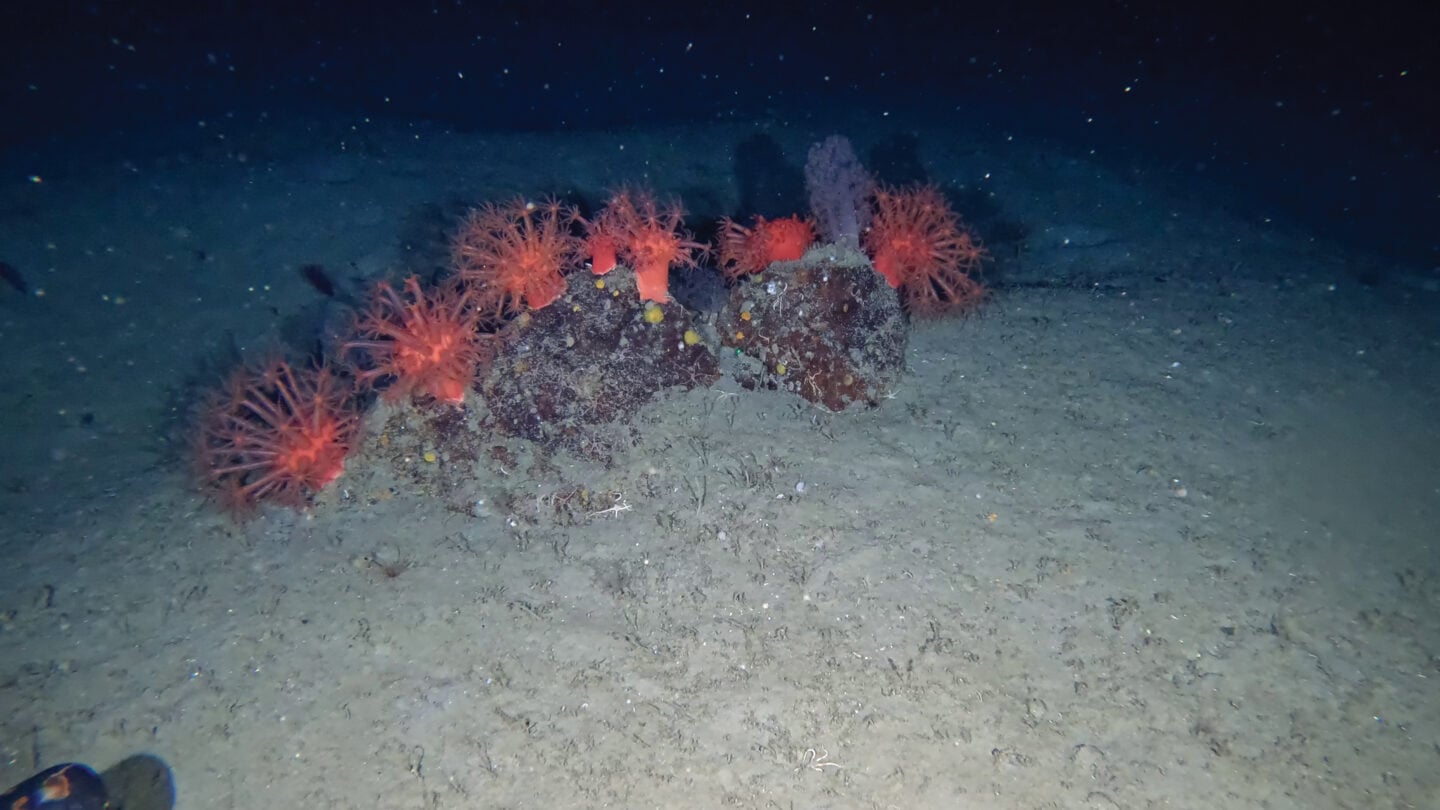
Mushroom corals and soft corals attached to a boulder at 900 metres depth. (Photo: Oceana Canada and Fisheries and Oceans Canada)
Expand Image

How do you know whether a species is endangered? If it lives on land or in the air, you typically do math. You count how many, say, elephants, are on Earth now compared with how many were there before. You figure out how fast the number is changing and why. And then you factor in how fast the elephant can reproduce. When it comes to cold-water corals, every piece of that math is difficult or impossible.

Jubinville on the deck of the Polar Prince. (Photo: David Coulson/Oceana Canada)
Expand Image

Getting a global figure for how many were once there is fiendishly hard. What’s your baseline when the first glimmer that most of them even existed was less than 200 years ago, made from sporadic stops across the ocean using primitive technology? Even definitively identifying species is tricky, because so many individual corals are captured by image rather than examined hands-on, traditionally a taxonomic taboo. Plus, new species keep being discovered. There’s no final list of what’s even down there.

Nor is there a comprehensive modern global map. Even the more than 70 species found in Newfoundland and Labrador alone are not fully catalogued, says Neves. “We know where there are concentrations of some of them, but we don’t know all of it.”

Researchers also don’t have a good handle on how most corals reproduce, which means it’s hard to predict how fast they can bolster their numbers after damage. Many of the cold-water areas closed to fishing after heavy destruction show no recovery, even after many years. “There are all these different questions about these elements of the biology of the species that we just don’t fully understand,” says Neves.

All that means assessing total losses over time — and the level of threat of extinction — is elusive.

Despite those challenges, last year Neves and others published the first global assessment of cold-water corals for the International Union for Conservation of Nature’s red list, looking at 22 well-known and widespread species for which they had some published information. Based on documented large-scale declines from recent baseline numbers, they were able to assess eight of the 22 as near threatened and one as globally vulnerable.

(Photo: David Coulson/Oceana Canada)
Expand Image

Among them was Linnaeus’s bubblegum coral. The researchers assessed it as near threatened. So difficult are these corals to study alive that the researchers came to their conclusion by comparing how many dead ones came up in trawling bycatch over time. Bubblegum corals have become scarcer and smaller in fishing gear, meaning they’re just not there in the same abundance or size to be broken off and snagged. Scientists think the global decline is at least 20 per cent.

Beyond these hard numbers, there’s why cold-water corals matter. Those with hard structures are known as “speaking stones” because they’re so ancient, they carry within themselves a tantalizing record of the chemistry and carbon content of the ocean they grew in. But they’re also what’s known as ecosystem engineers, meaning they provide three-dimensional habitat, breeding grounds and shelter for many other species, including those of commercial value. They’re nurseries of the sea.

“The fact that [greater than 30 per cent] of the species we assessed are facing an elevated estimated risk for global extinction is a sobering reflection of the extreme destruction of deepsea habitats, which so often goes unnoticed,” Neves and the other authors concluded.

A bubblegum coral photographed at 500 metres depth and believed to be about 100 years old. (Photo: Oceana Canada and Fisheries and Oceans Canada)
Expand Image

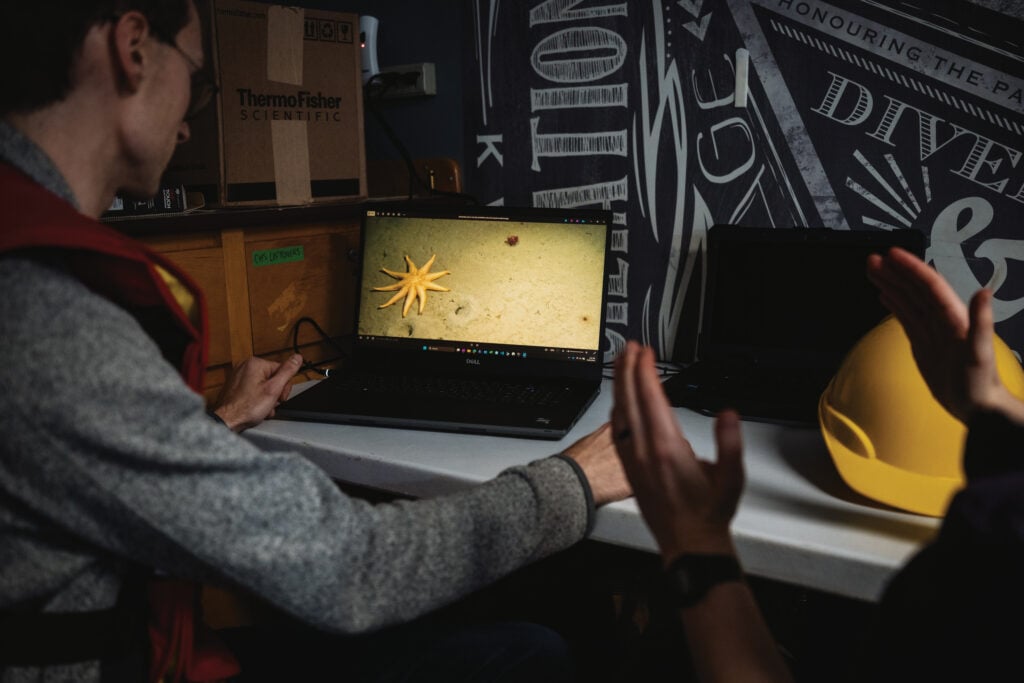
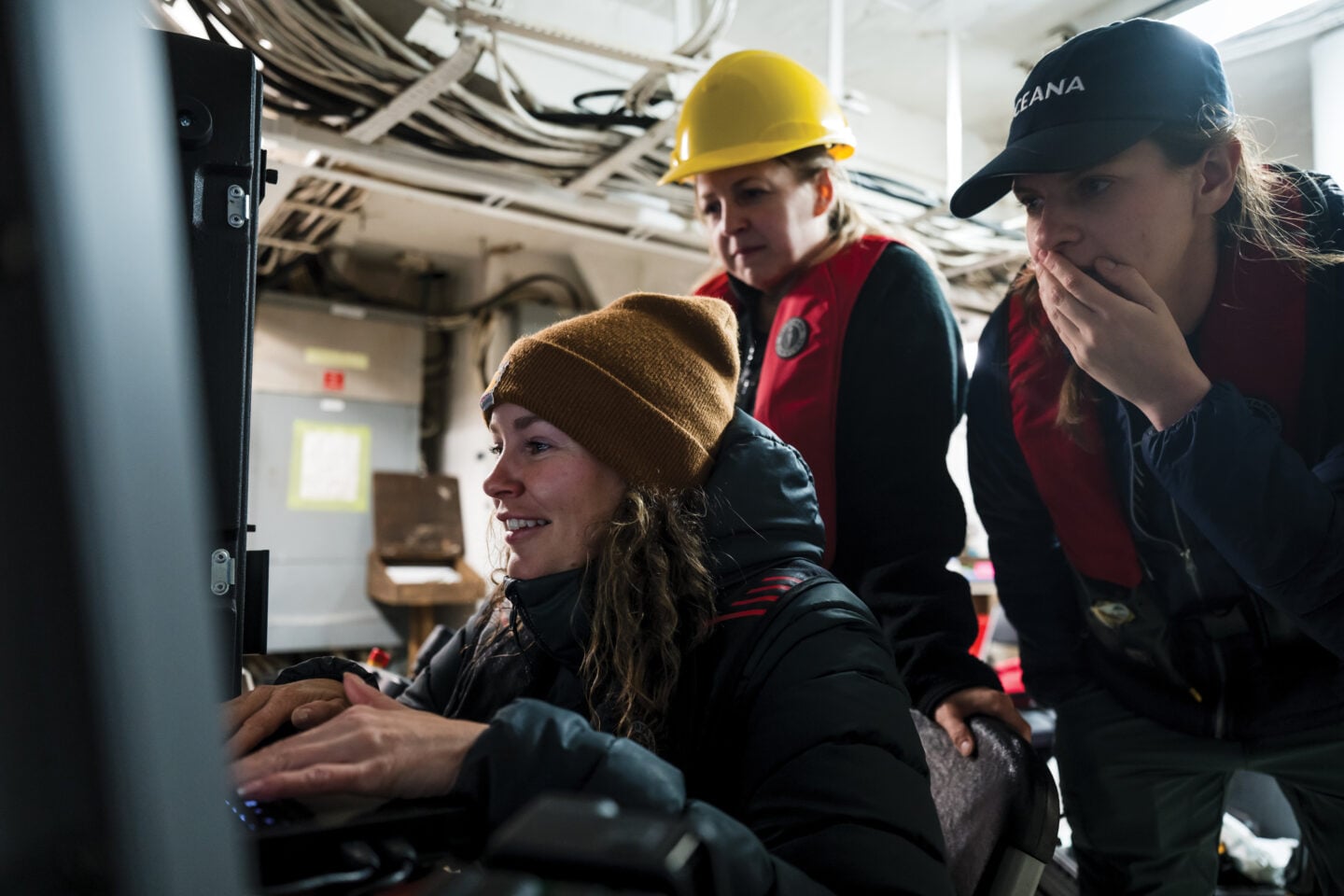
Back on the Polar Prince, the camera apparatus has returned to the surface intact from its first drop. Another victory. The next step is to get the data off the memory cards and then run it through an artificial intelligence identification program that Rylan Command, an aquatic sciences biologist in Neves’s benthic ecology group, has programmed for just this task. He settles in at the computer he’s set up on the ship. His fingers fly so quickly over the controls that I can barely follow. We’re both taut with excitement. No eyes have ever seen this part of the planet before. No light has ever reached this seabed floor until now. It’s like soaring through a galaxy to unknown worlds.

(Photo: David Coulson/Oceana Canada)
Expand Image

We watch as the camera flies through darkness and hits bottom. Soft sediment puffs up in clouds. Creatures are everywhere. Command can identify everything, even things that look like shadows and blobs to me. Here are sea pens — a soft coral made up of colonies of single polyps — waving like pink feathers in the water. Looking closely, we can see the mouth of each individual polyp.

Over there, a sea anemone that lives inside a mucous tube. And there, a couple of arrow-toothed eels that slither backwards away from the lights and camera. Greenland halibut, a rattail fish, a huge black dogfish shark and a witch flounder. Many more sea pens. A red mushroom coral. A pale-yellow sea star that’s about a foot across. Tiny brittlestars. A shrimp with legs almost half a foot long. “Crazy long legs,” Command says. A bright red spiky sea urchin carrying something that could be egg sacs.

Then Command spots a lollipop sponge, which looks like a stick with a white blob on the end. A huge smile spreads across his face. “Maybe this is the one and only time this is seen,” he says. “It’s pretty wild.”

I am grinning, too. I feel like we’re witnessing history.

The study area is off the Grand Banks of Newfoundland, a historic fishing ground once renowned for its abundance of cod but now struggling to recover from overfishing. (Photo: David Coulson/Oceana Canada)
Expand Image

It is the middle of the night, three days into our voyage, and another storm is battering the Polar Prince. Sleepless in my bunk in the pitch black, I’m being tossed back and forth like a rag doll. But I’m thinking about the brazenness of the human spirit, our endless curiosity, our determination to learn. Yesterday morning, during the expedition’s third drop, one of the cameras came off the frame but somehow remained attached, dangling by a wire. Oldford and Roul narrowed their eyes at it and then came back out on deck with a roll of neon pink duct tape, winding it around camera, casing, frame. After that, the camera stayed put.

All this for data points about corals that few people even know exist, living in some of the most extreme environments on Earth, collected under extreme circumstances. It’s all, as Neves says, part of a big puzzle about how things in the ocean are connected to each other and how the ocean is connected to everything else. Without those data points, how do we know what’s going on?

Just as scientists are figuring out how the marine system works, they are also finding out how humans are changing that system.

Lying there in the dark, the great sweep of history overwhelms me. This is a globally special place we’re sailing on. The Grand Banks came to be about 100 million years ago in the mid-Cretaceous period when Newfoundland broke off from the chunk of land that became the Iberian Peninsula and Ireland and moved west. Dinosaurs were roaming the lands. The Atlantic Ocean was still figuring itself out. Eventually, the Grand Banks became a place of rare maritime generosity, even by the lavish standards of the ocean. Here, warm subtropical Gulf Stream gyres bump up against the cold subpolar gyres of the Labrador Current, setting the stage for a phenomenal feeding ground for cod, cold-water corals and other marine life.

And then, about 500 years ago, Europeans showed up, believers in the fable of inexhaustibility. They fished for all they were worth. By 1992, the blink of an eye in geological terms, cod were in such catastrophic straits that officials declared a moratorium, which lasted until 2024. Even after three decades of little fishing, cod have not roared back. And now the global press of human activity is hitting the Grand Banks. These corals we’re seeing for the first time are already living in water affected by the carbon humanity has pumped into the atmosphere from burning fossil fuels, some of which are drilled on the Banks. Water temperatures are on the rise. More acidic water is a threat, even to corals this deep. Warm-water corals, the more visible cousins of the ones we’ve been documenting and similarly vulnerable to ocean change, have become an icon of global loss.

This feels like a momentous time. Just as scientists are finding out ever more fascinating information about the ocean, figuring out for the first time in human history how the marine system works, they are also finding out how humans are changing that system. Much against their inclination, scientists have become our planet’s prophets.

DFO biologists Sheena Roul, left, Vanessa Oldford, centre, and Oceana Canada marine scientist Isabelle Jubinville, right, review underwater footage. (Photo: David Coulson/Oceana Canada)
Expand Image

Will all this new information about the Southern Newfoundland Slope be enough to protect it? Atlantic marine reserves are having a rough go of it lately. In February, the Newfoundland government withdrew from plans to protect the fiords of the province’s south coast, saying aquaculture, fishing and mining have to come first. Days later, U.S. President Donald Trump reopened the Northeast Canyons and Seamounts Marine National Monument off Cape Cod, home to at least 54 species of deepsea corals, to commercial fishing.

There are also signs of hope. Jubinville and Oldford and their teams know this is a long game. They are hard-wired to honour the process of community consultation; they genuinely want to understand how the community feels about a new protected area and to share what they’ve learned. In any event, the area, with its canyons and cliffs, is hard to get at for commercial activity, so, in that single way, time is on the corals’ side. Plus, Oceana has an impressive track record of success in using hard science to catalyze protection of special underwater areas. Its team of marine scientists helped make the case to permanently protect seamounts off the west coast of Vancouver Island, now the Tang.ɢ̱wan – ḥačxʷiqak – Tsig̱is marine protected area, born in 2024.

I keep thinking of Jubinville. Just before we leave the ship, she reflects that the very things that make the South Slope so productive and valuable are the same things that make it fragile — and ultimately worth protecting. “There’s not too many places where you can go a few hundred kilometres offshore and be pretty sure you’re going to see something really cool, you know?” she says. “Every time I’ve been out here, I’m just amazed.”

Advertisement

Help us tell Canada’s story

You can support Canadian Geographic in 3 ways:

Live Net Zero Email Service

This story is from the May/June 2026 Issue

Related Content

Environment

Wonder and loss: the deep ocean and its future

Though it’s the largest ecosystem on Earth, we know less about the deep ocean than the surface of the moon. As the threat of mining looms, will its fate be decided before we know enough to make such a far-reaching choice?

  • 4191 words
  • 17 minutes

People & Culture

Covenant with mystery: James Cameron’s magic submarine

Dr. Joe MacInnis discusses his relationship with explorer and filmmaker James Cameron as well as how the DEEPSEA CHALLENGER came to be 

  • 1532 words
  • 7 minutes

Travel

Exploring Newfoundland with Adventure Canada

Immerse yourself in Viking archaeology and Basque whaling history while taking in Newfoundland’s scenic coastline and incredible geology

  • 1201 words
  • 5 minutes
Coral Restoration Foundation nursery

Exploration

Canadians helping save coral

2019 North American Rolex scholar Neha Acharya-Patel shares insights from her work (and that of other Canadians) in assisting the Florida-based Coral Restoration Foundation to rebuild beleaguered reefs

  • 1027 words
  • 5 minutes
Advertisement
Advertisement