Exploration
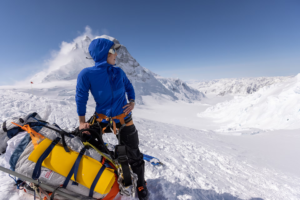
The cool calling: Glaciologist Alison Criscitiello is redefining the term explorer
She's also combining her knowledge and skills to uncover the secrets of climate change
- 2830 words
- 12 minutes
Science & Tech
An ice core from the Canadian Arctic’s Axel Heiberg Island, the deepest drilled in the Americas, is a record of ancient sea ice past
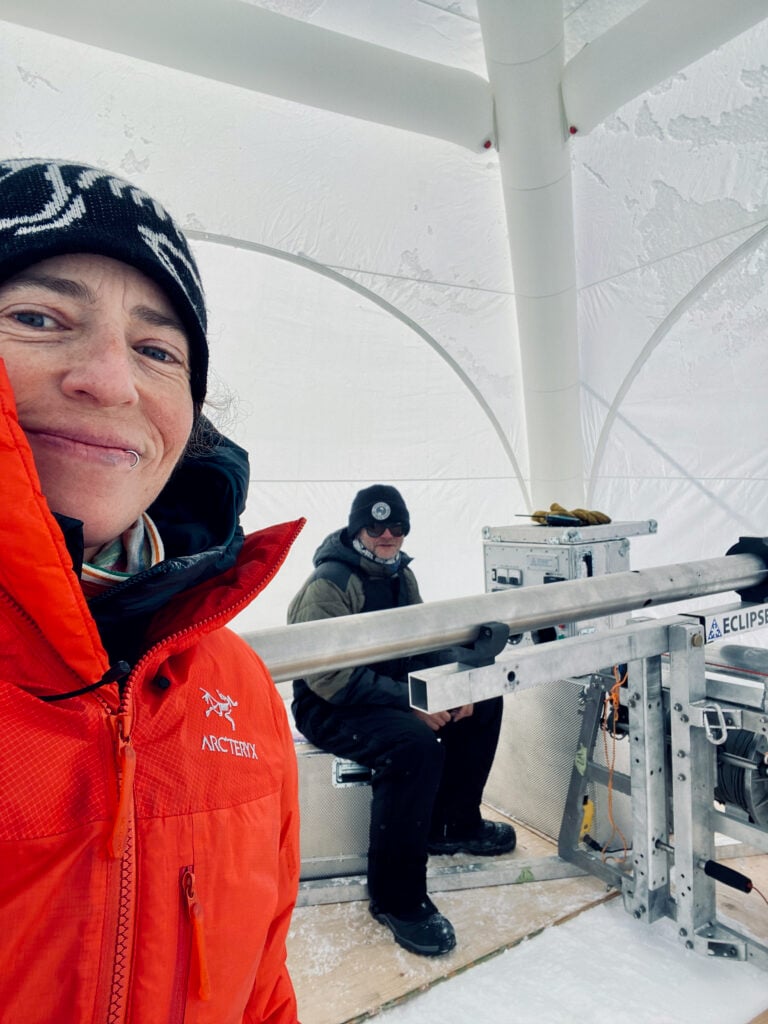
Alison Criscitiello has drilled a lot of ice cores in her career, but this one’s special. “It might be the most special thing I do in my whole career,” says the ice core scientist and explorer, still wearing a warm jacket and a tuque. She’s taking a break from a long day in the freezer at the Canadian Ice Core Lab at the University of Alberta, Edmonton, where her team is about three-quarters of the way through cutting up and imaging a 613-metre ice core, the deepest ever drilled in the Americas.
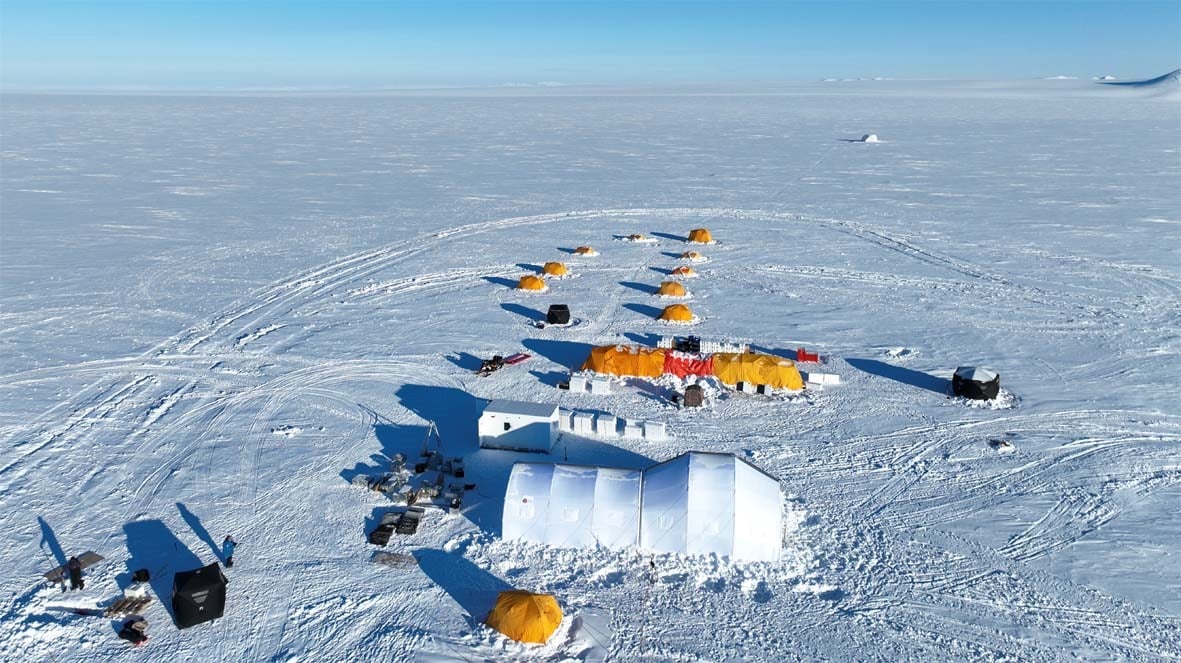
This icy cylinder was bored from the Müller Ice Cap on Axel Heiberg Island (Umingmat Nunaat), Nunavut. “It is insanely deep for a small ice cap, meaning it likely offers us a really long climate record,” says Criscitiello. “There’s a big hole in our understanding of Arctic Ocean variability over long time periods … so this little island right at 80 degrees north in the Arctic Ocean became a target among a whole group of us.”
Joining Criscitiello on the ice was project lead Dorthe Dahl-Jensen (University of Manitoba) along with a team of ice and climate researchers from across Canada and Denmark, the Danes bringing both expertise and a very big, and advanced, drill. But before they broke the ice, the scientists did airborne and ground-penetrating radar surveys to image the ice from the surface down to the bedrock. By figuring out the deepest spots, where the layering in the ice looked “really nice,” and — importantly — where they could obtain an undisturbed climate record, the team could pick the ideal spot to drill.
Each time the drill goes down the borehole, it drills down only a couple metres before you’re “pulling it back up, swinging it, taking the ice out, sending it down again,” says Criscitiello. “When you get really deep, the travel time… you can wait an hour for it to get all the way down.” It took two months for the two teams (10 members in April; 13 in May) to secure the icy samples they needed for the lab. Then, “we had to get 613 metres of ice from the Arctic to where I’m sitting,” says Criscitiello, which “involved building temporary freezers on other Arctic Islands, on Ellesmere, in Yellowknife.”
Now that the ice is safely in the ice core lab, the real work begins: deciphering the past. Today, Criscitiello already knows the ice dates back more than 10,000 years to the last glacial maximum. “I’m most excited for this core’s likely ability to allow us to reconstruct Arctic Ocean sea ice in the past in a way we’ve never been able to actually observe or prove.”
This story is from the March/April 2026 Issue
Exploration
She's also combining her knowledge and skills to uncover the secrets of climate change
People & Culture
Searching for clues to a changing climate on a record-breaking expedition to the top of Canada’s tallest peak

Exploration
Four researchers team up to ascend Mount Logan, measuring change and resilience on Canada’s highest peak

People & Culture
Ice core scientist and alpine climber Alison Criscitiello discusses her record-breaking expedition to Mt. Logan