People & Culture
Kahkiihtwaam ee-pee-kiiweehtataahk: Bringing it back home again
The story of how a critically endangered Indigenous language can be saved
- 6318 words
- 26 minutes
People & Culture
A sincere look at what it means to be Niitsitapii (Real People)
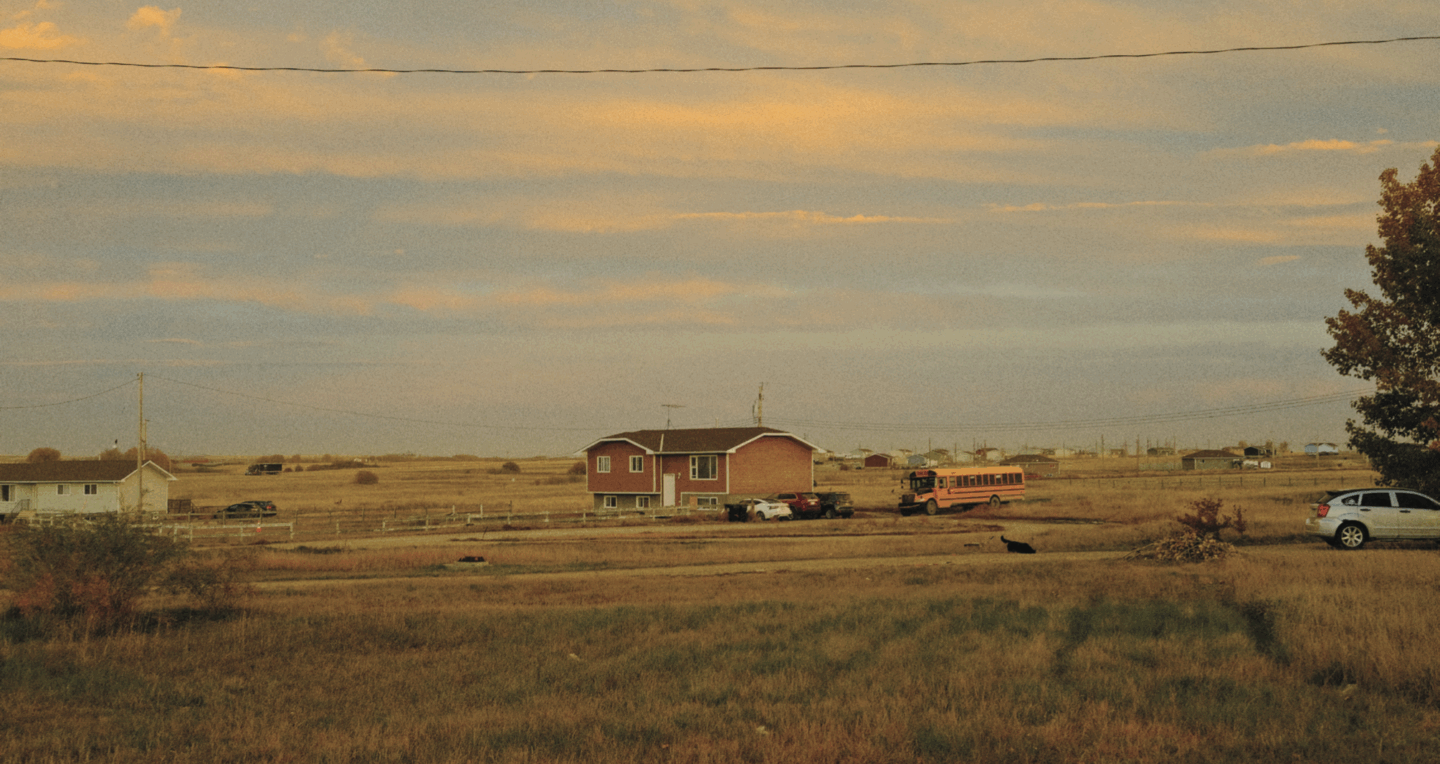
The gentleness of the prairies can be felt by all living things. This is true in my grandmother Georgina Solway’s earliest memories. The meadowlarks were nature’s alarm clock. She recalls the beautiful birds singing as her father George Leather scooted her along her morning routine. When little Georgina idled too long, her dad would tease, “Awanii Sohksiisiimstaan, that meadowlark is telling you to put your stockings on.”
My grandma’s stories are a doorway into my history, one I can feel the presence of beneath my feet. In her days, people visited — often — and spoke only in Blackfoot. Her grandparents travelled by wagon to visit relatives in Siksika Nation. “It’s not like today. Go, go, go. Race over here, race over there,” says Solway. “Everything was just the way it is. The way we’re supposed to live.”
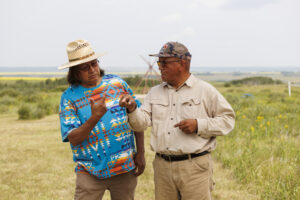
Darrell Breaker, a Blackfoot Elder and ceremonialist, was raised by his grandparents. It’s a norm for the grandparents to raise the eldest child. “I was never called by my English name. It was always Siipiyohkomi (Thunder at Night),” says Breaker.
When Breaker recollects his childhood, he describes an age where life moved with intention. There was no power for TVs that informed you of the outside world. There were no cell phones to give your social circle instant access to your life. Breaker’s childhood was spent outside learning from his grandparents.
“You didn’t have to worry about crime, breaking in, stealing. People had respect,” says Breaker. “When we were away, you would notice that somebody came in and made themselves a sandwich, or they would borrow a saddle horse.” Breaker’s grandparents wouldn’t expect payment in return. They believed they would be shown the same kindness down the road.
When Breaker was seven, he entered residential school, an institution that would turn his world upside down.
“I had to learn not to cry. They would say ‘only girls cry.’ You’re supposed to be tough. So residential school taught us not to be compassionate.” Yet he came from an environment where he was spoiled with love by his grandparents. Breaker says despite the abuse he received and witnessed at school, it never severed the connection to his culture. “Once you know the language, how we were raised and cared for, that will always be in you.”
Breaker’s granddaughter recently asked him to teach her Blackfoot swear words. He smiled and told her there ware none. “We didn’t get to that state to have to swear,” says Breaker. “Sure, people get angry. The grandparents would say tsa nistapi, kitomohtaoki’takihpa. They want to know why, how come you’re mad. They want you to talk about it so that you’re released from this anger.” The act of pinpointing your emotions and acknowledging they exist created an emotional awareness that we rarely see in our men today.
“Once you know the language, how we were raised and cared for, that will always be in you.”
Teacher Vivian Ayoungman, also known as Siipiisai’pia’ki, who has committed more than 50 years to revitalizing Blackfoot, says her language takes a gentler approach than English. If a grandparent was correcting a younger relative, they would say, “Tsiki — my son, which is a real term of endearment,” says Ayoungman. “Mohkkitaistotsiip matohksoka’piiwa — what you’re doing is not good. Kitaakohtakanohsi — you’ll hurt yourself. Nitomohtsito’tsipoyi — the reason why I’m bringing this up is kitaisikahkitsihtato, I care about you. The person you’re talking to won’t get angry: they’ll say back nitsiikiniitsiip — I feel so grateful that you care about me. Kitaakksistsiiwakato — I’m going to listen to you because you care about me.”
Ayoungman helped develop the Blackfoot Language Series, a toolkit created for the Siksika Board of Education and used in school systems. She also developed a multimedia app called The Blackfoot App that includes photos, videos, audio works and games. “A lot of our words are real gentle words and are a window into who we are and into our past.”
Breaker estimates three-quarters of his generation are gone now because of their addictions due to the wounds of residential school. He believes Blackfoot ceremonies and the Creator saved his life.
“I realized that the Creator knew there were things in me that needed releasing,” says Breaker. During a Blackfoot sweat ceremony, an Elder told him he needed to let go of the past. Tomorrow is a new day to be grateful for.
Today, Breaker shares his experiences and mentors young men dealing with addictions through the Siksika Justice Department.
For me, learning my language helps me better understand myself — especially when our Elders make it sound like sweet poetry.
One evening, after a thunderous rain storm, a rainbow stretched across the sky. I asked my grandma what the Blackfoot word for rainbow is. Instead of giving me a word-for-word translation, she described to me a feeling like “the worst of it is over.” She stopped for a second and looked up. “It really is something to see a rainbow. It’s not just a pretty picture. It’s an understanding of the way the Creator works.”
People & Culture
The story of how a critically endangered Indigenous language can be saved
People & Culture
Plains Indian Sign Language was used by generations of Indigenous Peoples to communicate across languages and landscapes. Now, it’s being reclaimed.
People & Culture
A new Canadian Geographic series in print and online will take readers on a linguistic journey across the lands and waters we now call Canada

People & Culture
Multilingualism is at the heart of Canada‘s identity. It’s also a matter of decency and human rights.