Exploration

Excerpt from Vanished Beyond the Map: The Mystery of Lost Explorer Hubert Darrell

In his latest book, Canadian Geographic’s Westaway Explorer-in-Residence Adam Shoalts shares the story of the legendary Arctic explorer who vanished in 1910 

  • Published Nov 25, 2025
  • Updated Nov 26
  • 1,299 words
  • 6 minutes

Editor's note

Excerpted from Vanished Beyond the Map by Adam Shoalts. Copyright © 2025 Adam Shoalts. Published by Allen Lane Canada, a division of Penguin Random House Canada Limited. Reproduced by arrangement with the Publisher. All rights reserved.
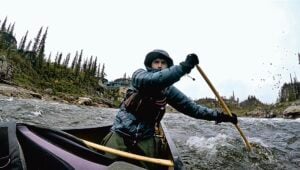
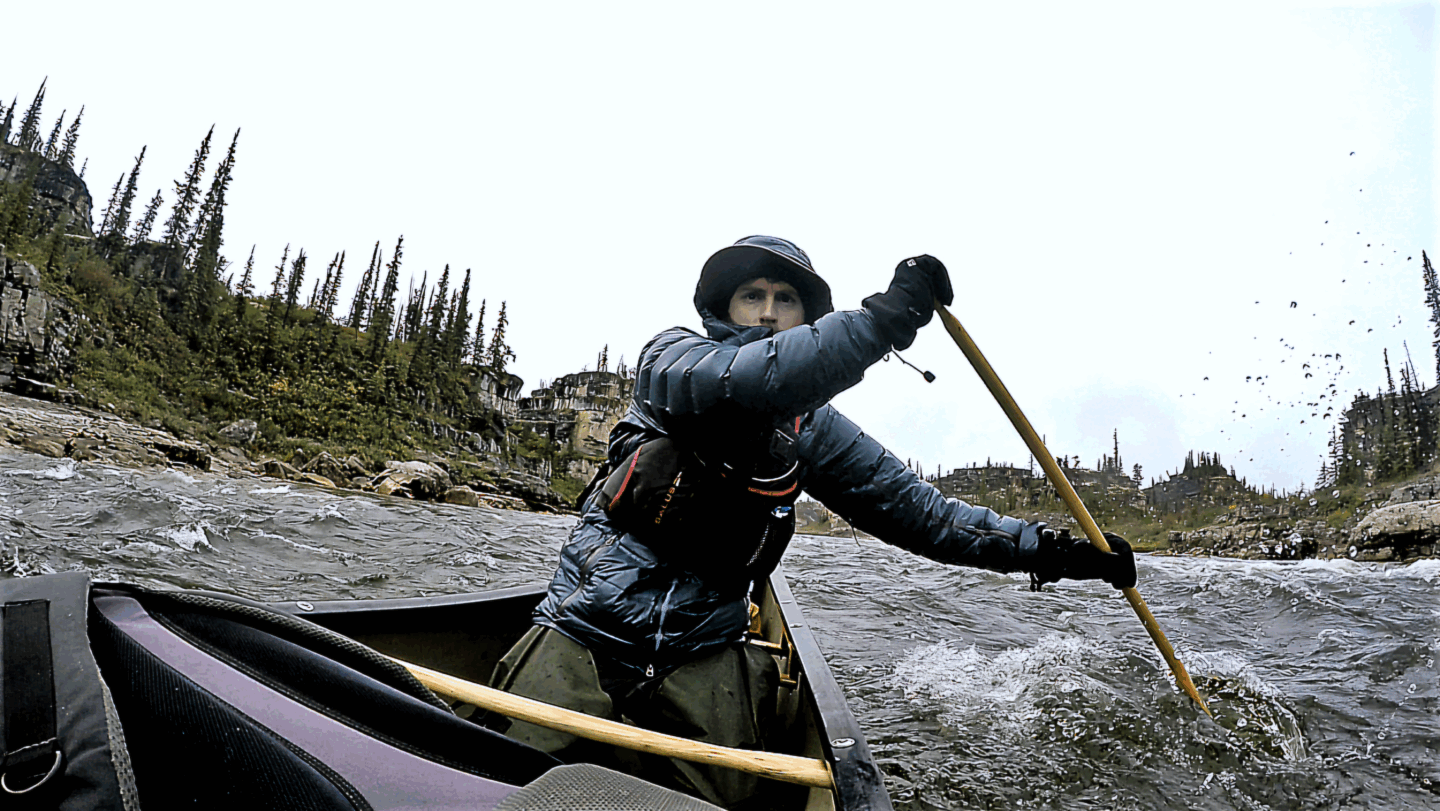
Shoalts paddling rapids on the Anderson River in the Northwest Territories on a cold and wet day. (Photo: Adam Shoalts)
Expand Image
Advertisement
Advertisement

Chapter One: The Start of a Mystery

“Word from lost explorer. Yukon Indians report message on tree from Hubert Darrell.”

New York Times headline, September 1912

It was the fall of 2011 and I was busy reading old historical records, as one often does on a Friday night. My interests lay primarily in fur traders, explorers, and adventurers from days past. I would amuse myself for hours by reading through the entries under the heading “Explorers” in the ponderous fifteen-volume Dictionary of Canadian Biography, which I’d been introduced to as a student. Sometimes, in the course of reading one entry, another name would come up, and I would then meander down an unexpected pathway to read that entry too. It was while engaged in this pleasing pastime that I first stumbled upon a name that would later come to haunt my waking dreams: Hubert Darrell.

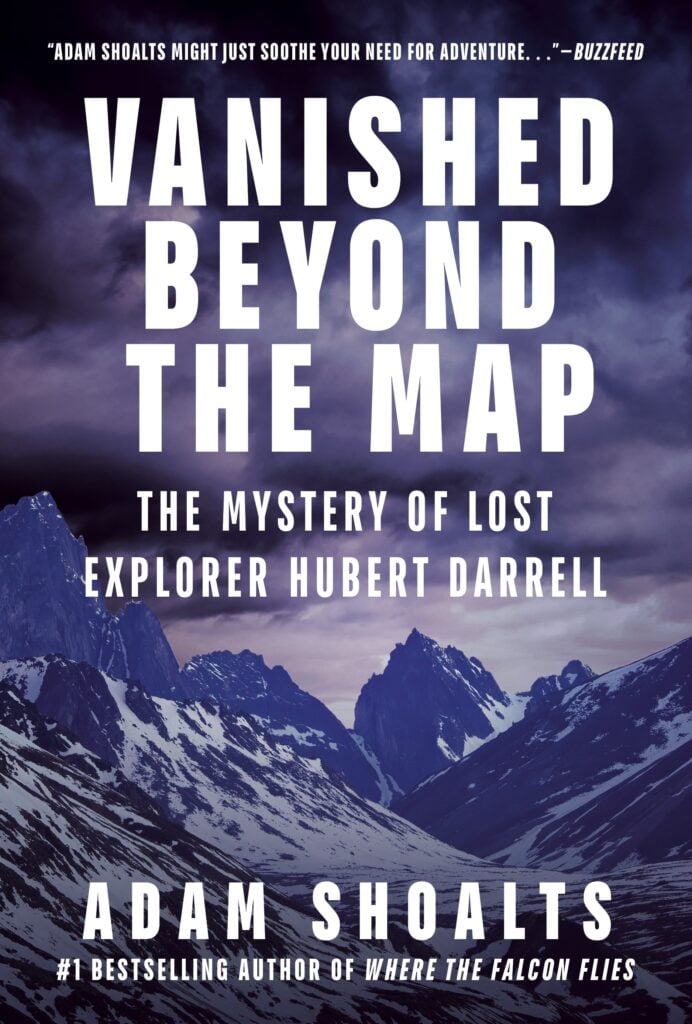
Vanished Beyond the Map: The Mystery of Lost Explorer Hubert Darrell by Adam Shoalts.
Expand Image

It was only a very short entry, 941 words in all, that tersely described this obscure figure half lost in the shadows of the past. Born in England in 1874 or thereabouts (even the exact year of his birth was uncertain), Hubert Darrell had arrived in Canada as a youth to work on a Manitoba farm. The work was presum­ably hard and dull, and when news erupted of the discovery of gold in the Klondike, like many others he’d headed north. Although Darrell ended up panning for gold along isolated mountain streams in the Canadian North for more than a decade, riches always eluded him. But among those wild moun­tains and rivers, he discovered his true talent: exploration and map-making—trades at which the self-taught Darrell excelled. In order to support himself in these callings, he worked variously as a guide, trapper, riverboat sailor, and mail carrier between isolated and widely separated arctic outposts. In the process he made incredible journeys alone across windswept mountain ranges, through pathless forest, and over endless miles of frozen tundra that have likely never been equalled. Far more unusual was Darrell’s preference for doing without canoes and dogsleds, instead travelling by foot. Darrell guided himself on these undertakings, relying for navigation upon his own maps rather than official charts that were frequently full of errors—errors he often corrected. As he once remarked, official maps were “good to get oneself lost by.” Among his most legendary feats was saving the lives of hundreds of American whalers trapped in the ice of the Arctic Ocean. Darrell, alone and on foot, travelled almost eight hundred kilometres to bring news of their desperate plight to the outside world.

His skills led to valuable friendships with Indigenous com­munities with whom he enjoyed close relations and frequently defended from what he saw as attempts at the time to assimilate them. The author of the brief entry, Peter Lorenz Neufeld, wrote of him, “he came to know the interior of Canada between Hudson Bay and Alaska better than any other white, and he developed an extraordinary reputation for travelling alone in all seasons, living off the land miles from human settlements.” Darrell’s expertise, uncanny abilities, and staggering feats of endurance led other, more famous explorers to hire him as their guide. In November 1910, Darrell was exploring and filling in blanks on existing maps alone in the western Arctic near the Anderson River when he mysteriously vanished.

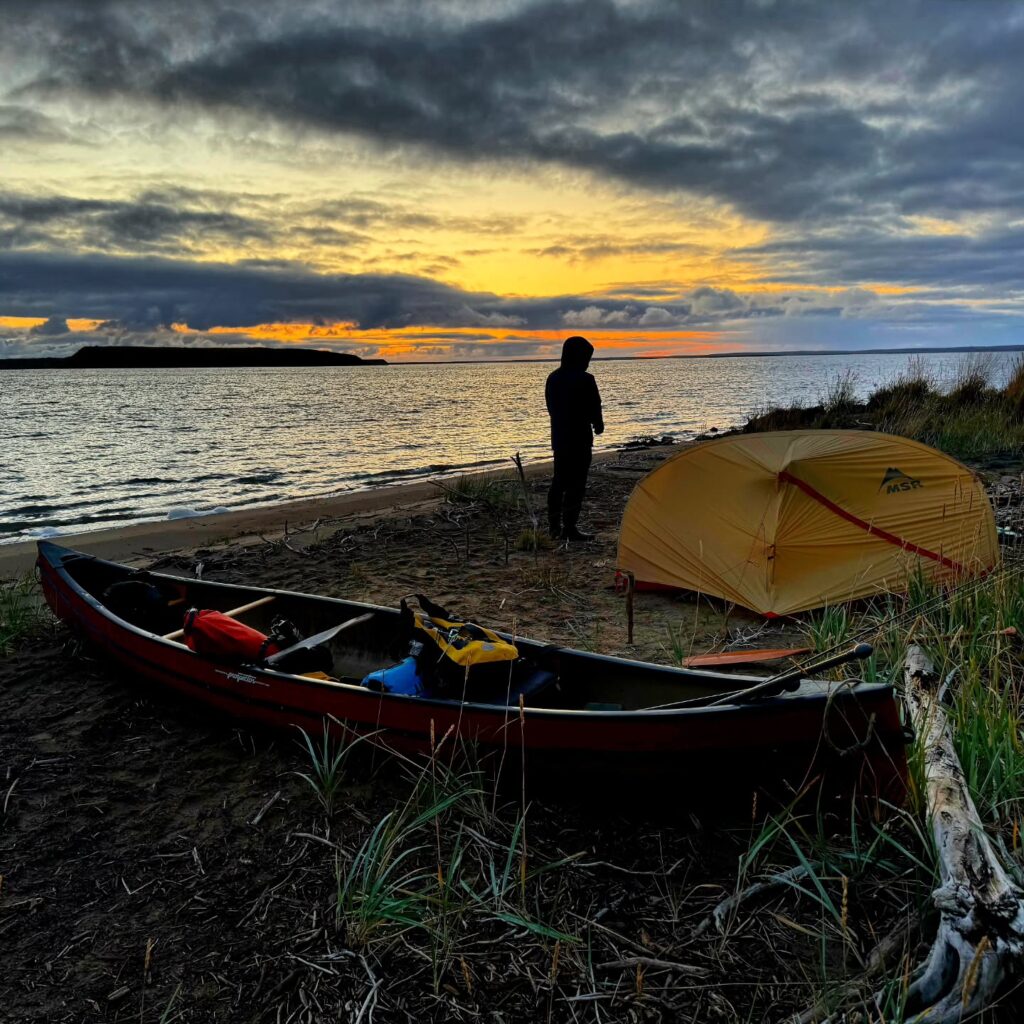
Camp on the Beaufort Sea. (Photo: Chuck Brill)
Expand Image

The brief entry intrigued me: here was a lost explorer, and not a famous one like Franklin but a true cold case. Following that fateful Friday night when I first stumbled upon this lost explorer, I began—casually at first, then later with single-minded focus—collecting whatever material I could dig up on him. The more I learned, the more intrigued I became. Despite his obscur­ity today, Darrell had left deep impressions on others who crossed his path. Roald Amundsen, the legendary Norwegian explorer who became the first person to navigate the Northwest Passage and later the first to reach the South Pole, held Darrell in awe, remarking that with men like him “I could go to the moon.” Another famous polar explorer, Vilhjalmur Stefansson, leader of the Canadian Arctic Expedition, also encountered Darrell in the North. Stefansson was well-known for his ego and testy relations with his rivals. But for the solitary woodsman Darrell, he had nothing but admiration, stating that he con­sidered Darrell in a class of his own and noting that he was more accomplished than any of his more famous contemporaries. Even the North-West Mounted Police eventually found this enigmatic, lone wanderer indispensable. From 1906 to 1910, the Mounties hired Darrell to guide their dogsled patrols through the Yukon’s formidable mountains.

When Darrell vanished, newspapers as far afield as New York and Los Angeles covered his disappearance, but despite clues reported by Inuit trappers and Mounted Police inquiries, his fate remains a mystery. What could have happened to him? One theory was that he’d simply fallen through a patch of weak ice somewhere . . . but there was evidence to suggest that didn’t happen, and in any case, for a seasoned traveller of Darell’s abil­ities, it seemed somewhat unlikely. Of course, as I knew from my own solitary expeditions, hazards are a fact of life alone in north­ern wilderness: an ill-chosen campsite wiped out in a landslide, a sudden storm while crossing an open stretch, a careless swing of an axe, a mistake in an unforgiving rapid, or even a dinner invitation from a polar bear. Though perhaps what had happened to Darrell was something darker: in the lawless expanse of the far North at that time, with witnesses few and far between, vio­lence among trappers who were invariably armed and isolated was not uncommon. Tensions, too, between prospectors who chased after rumours of fabulous gold-filled streams could easily become strained. Strangely, shortly after Darrell disappeared, among his former associates several murders took place in the Northwest Territories. But perhaps it was all a coincidence. Maybe Hubert Darrell, the lone wolf, simply made up his mind to turn his back on the world.
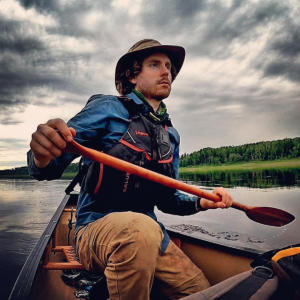
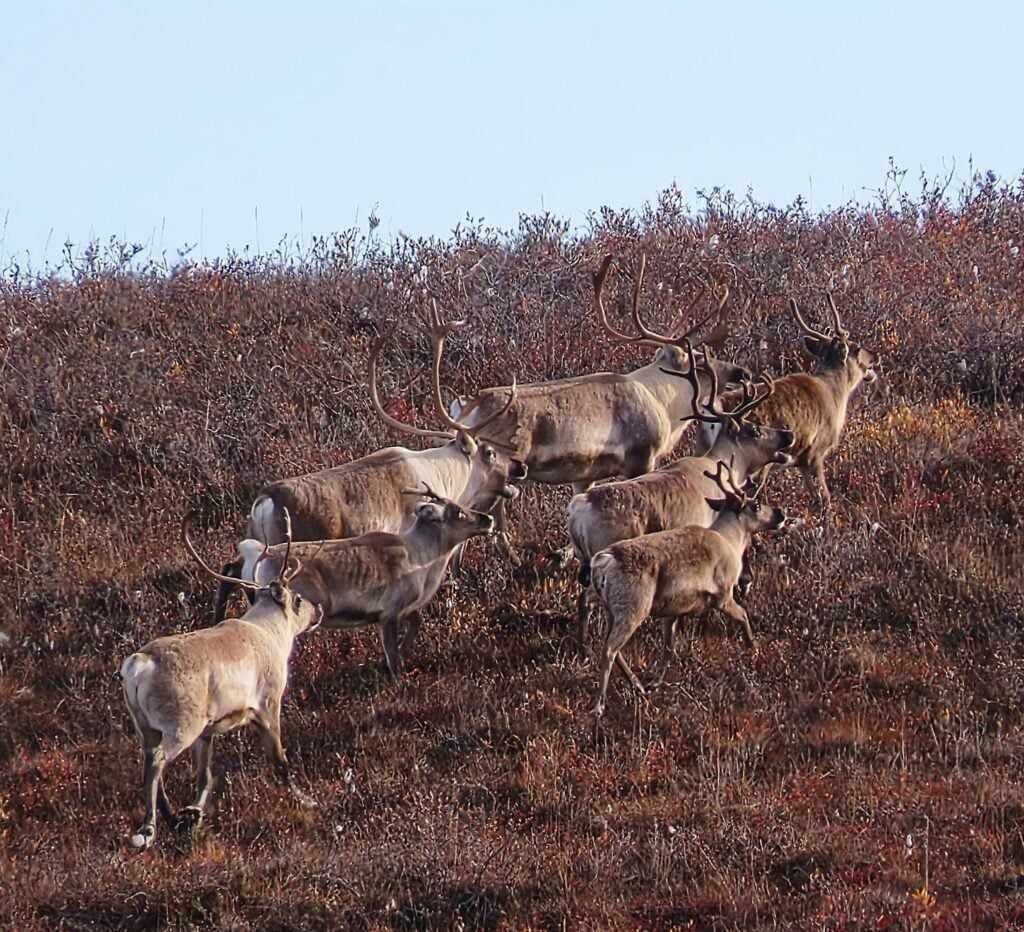
A herd of caribou on the tundra hills of the Northwest Territories. (Photo: Adam Shoalts)
Expand Image

In tracking down traces of Darrell’s life, I often felt as if I were chasing a ghost. He’d vanished not only literally, but from the pages of history. Darrell was so little known that no one had ever written a book about him; he didn’t even have a Wikipedia page. And since he never married nor had any children, Darrell left no descendants to recall his tale.

Yet what I soon found was that Darrell had left behind a trail of sorts in the form of letters, journals, and hand-drawn maps. To piece together the fragments of his forgotten life, I relied heavily on these unpublished archival documents scattered in odd corners, as well as my own retracing of his routes through the wilderness from long ago. It felt very much like detective work—tracking down leads, making inquiries, sifting through old water-stained journals and faded letters, digging up news­paper records, finding the ruins of abandoned cabins or forgotten campsites, and seeking out elderly individuals who might by chance remember someone who’d known him. Gradually the picture of Darrell’s life came into clearer focus, and I began to feel, as I read and reread his diaries and camped where he had once camped, paddled where he’d paddled, broke trail where he had once done, that I knew him—at least as well as anyone can know someone who’d disappeared more than a century ago.

This feeling of kinship spurred me on to find out what had happened to him and to solve, if I could, the mystery of his dis­appearance. After retracing parts of Darrell’s routes, I began organizing expeditions to search for evidence of his last camps, hoping to bring his tale to light. This is the story of what I found.

Advertisement

Help us tell Canada’s story

You can support Canadian Geographic in 3 ways:

Related Content

Exploration

Vanished Beyond the Map: Adam Shoalts on the mystery of lost explorer Hubert Darrel

Episode 111

Through extensive reporting for his new book, RCGS Explorer-in-Residence Adam Shoalts discusses the story of Hubert Darrell, the legendary Arctic explorer who vanished in 1910

  • 58 minutes
Adam Shoalts, Arctic, explorer, expedition, North, wildlife, canoe, RCGS

People & Culture

Exclusive: Adam Shoalts on his epic Trans-Canadian Arctic Expedition

Explorer Adam Shoalts, who completed his monumental 4,000-kilometre journey on September 6, speaks to Canadian Geographic about an expedition that calls to mind the likes of Vilhjalmur Stefansson and Joseph Tyrrell

  • 2702 words
  • 11 minutes

Exploration

Adam Shoalts

Episode 4

The solo adventurer and best-selling author shares highlights from his expeditions and the “lost” explorer who’s captured his imagination

  • 48 minutes
Prime Minister Justin Trudeau talks with RCGS Explorer-in-Residence Adam Shoalts

People & Culture

Prime Minister Justin Trudeau meets with new RCGS Explorer-in-Residence Adam Shoalts

Trudeau congratulated Shoalts on his recent appointment

  • 344 words
  • 2 minutes
Advertisement
Advertisement