
Travel
Photos: A balikbayan’s journey of connection and reflection in the Philippines
Rediscovering the tropical Southeast Asian nation after immigrating to Canada more than a decade ago
- 1970 words
- 8 minutes
Travel
For Winnipeg’s Filipino community, food is a bridge to the motherland
What if I never eat her pancit again?” The thought came to me while my mother was hospitalized and placed on life support, when I was feeling disheartened by the ventilator’s rhythmic artificial breath. Thankfully, a dedicated healthcare team and her Filipina stubbornness pulled her through. Days later, when she was ready to eat, she balked at the hospital pasta and said, “I want rice.” My aunt brought her lugaw, a savoury ginger-garlic rice porridge. That was when her true healing began.
Comfort food is often our mothers’ food, the dishes we crave in times of joy and in despair. For a diasporic population far from their mothers’ tables, whether new immigrants or first, second or third generation, cultural cuisine serves as the tether to their motherland. It’s the bridge that connects family and culture in Canada, a nation of immigrants. While poutine is considered the quintessential national dish, our cuisine reflects the mosaic of our population; bannock, tourtière and ketchup chips join perogies, jollof rice, kebabs and phō in our culinary profile. Food is home.
But there can be growing pains. As a child, I was teased for eating fried Spam, accused of eating dog food. I then refused to eat my mother’s cooking. I wanted to be “normal” and eat fish sticks and fries. My exception was her pancit, which I had reasoned was the Filipino version of chow mein with vegetables, chicken and rice noodles tossed in soy sauce and garlicky broth. I rediscovered Filipino food as an adult with a new appreciation for its savoury-sour aromatics.
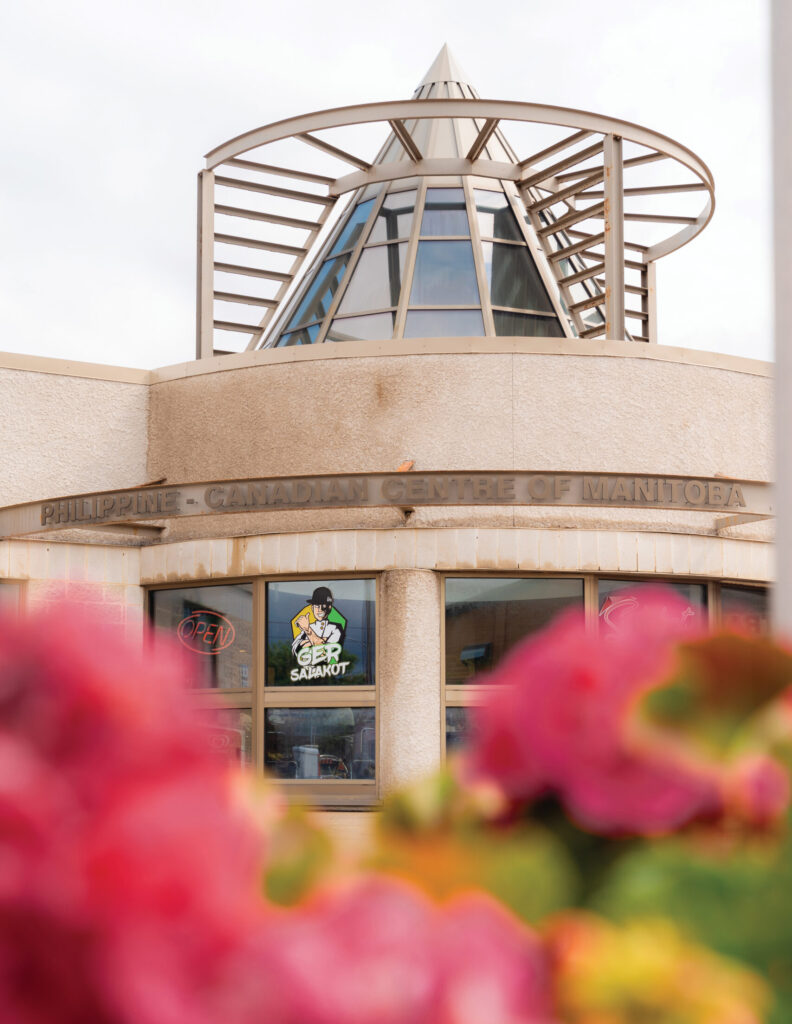
Winnipeg, my home, has the largest Filipino population per capita in Canada. Dozens of Filipino restaurants serve the community, ranging from family restaurants to fusion cuisine and Philippine chains offering everyone a taste of home. One of them is Ger Salakot.
Offering classic Filipino dishes made with high quality ingredients, the counter-service restaurant is turo-turo style, literally translated as “point-point.” Customers order off the daily whiteboard menu or point to the steam table loaded with unlabelled trays of ulam, stew served over rice. A few tables dot the space, but most people bring their plastic containers home.
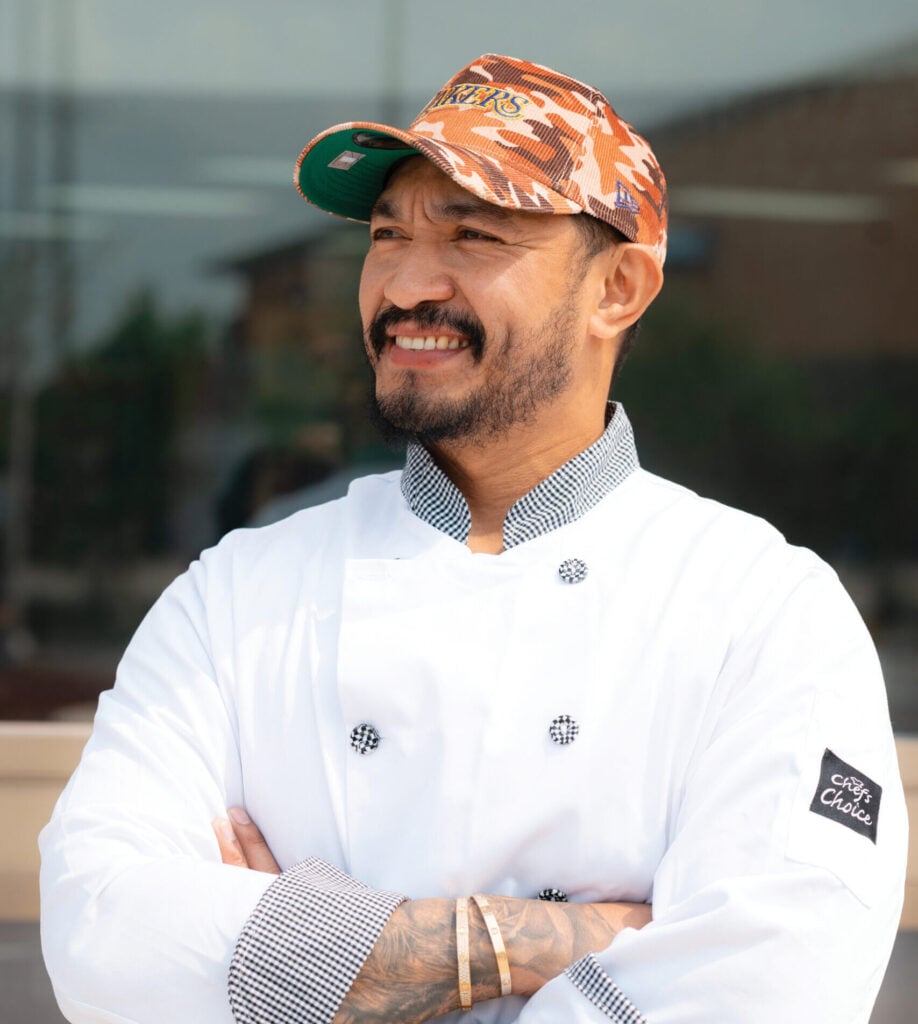
Ger Salakot is inside the Philippine Canadian Centre of Manitoba, a community hub featuring a social hall, stage, and small businesses. In 2013, the cone-shaped structure atop the building caught the eye of Chef Gerome Labial, who noticed its resemblance to a salakot, or traditional Philippine hat. He says, “I always dreamed of owning a restaurant, and Salakot’s owners wanted to sell.”
In the Philippines, Chef Gerome worked his way from dish washer to head chef of a Chinese restaurant. When he immigrated to Canada, he worked in a hotel kitchen catering banquets. After buying Salakot, he and his wife, Princess, ran the restaurant with a few of the original staff. He crafted new recipes, distilling the menu down to popular dishes that sold out daily. By 2022, the restaurant was successful enough to invest $400,000 to upgrade the space to match the commercial kitchens where Chef Gerome had paid his dues. Only then did he proudly add “Ger” to the restaurant’s name.
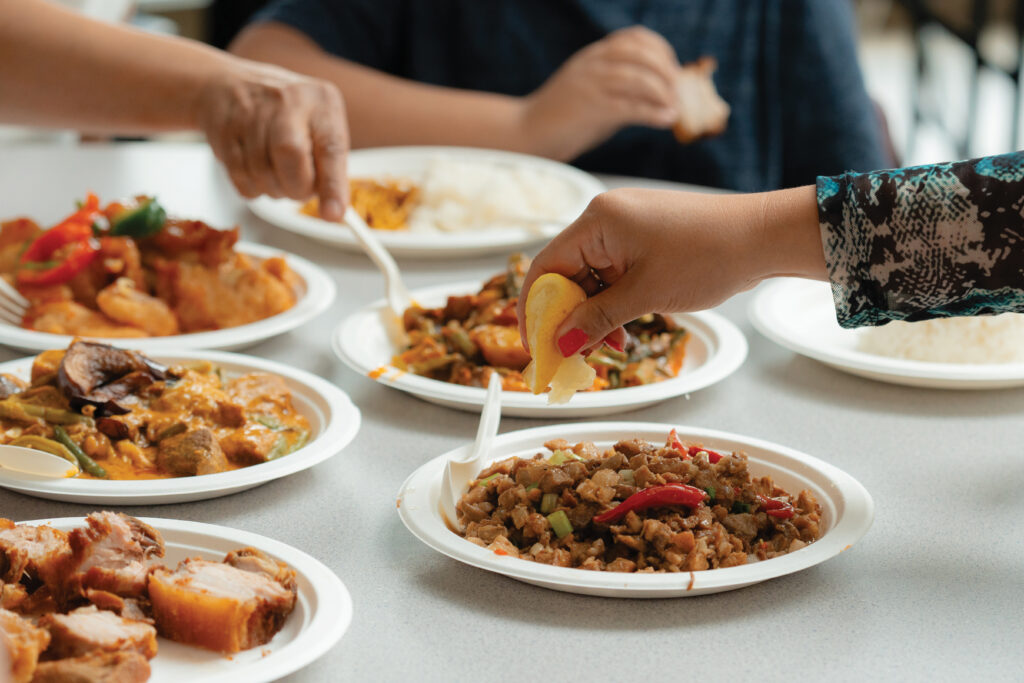
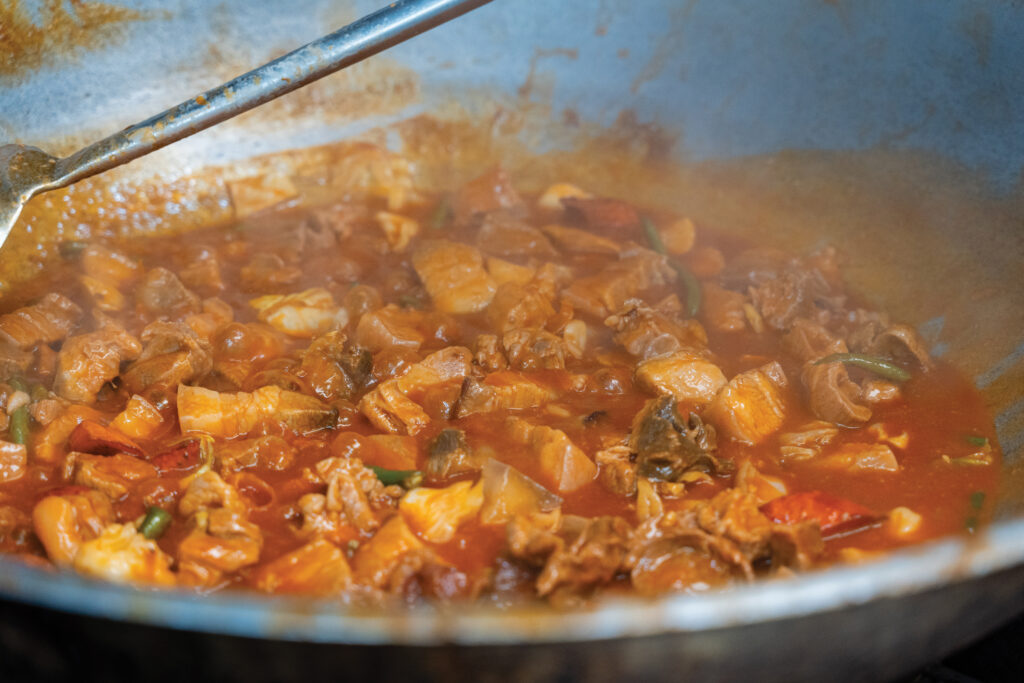
We choose a variety of dishes from Ger Salakot’s menu: sweet and sour fish fillets with peppers; sisig, minced pork jowls; dinakdakan, chopped pork topped with red onions, chilies and lemon; lechon kawali, deep fried pork belly; and their best-selling kare-kare, beef and tripe in peanut sauce served with house-made bagoong, fermented seafood paste.
As I stand at the Ger Salakot counter, I point to the pancit that resembles my mother’s version. April, our photographer, orders sinigang, pork and cabbage tamarind soup, a dish my mother cooked weekly. For dessert, I get kutsinta, an orange mochi-like rice cake topped with shredded coconut, one of my mother’s go-to potluck dishes.
We are far from the Philippine shore, yet the Philippines is with us.
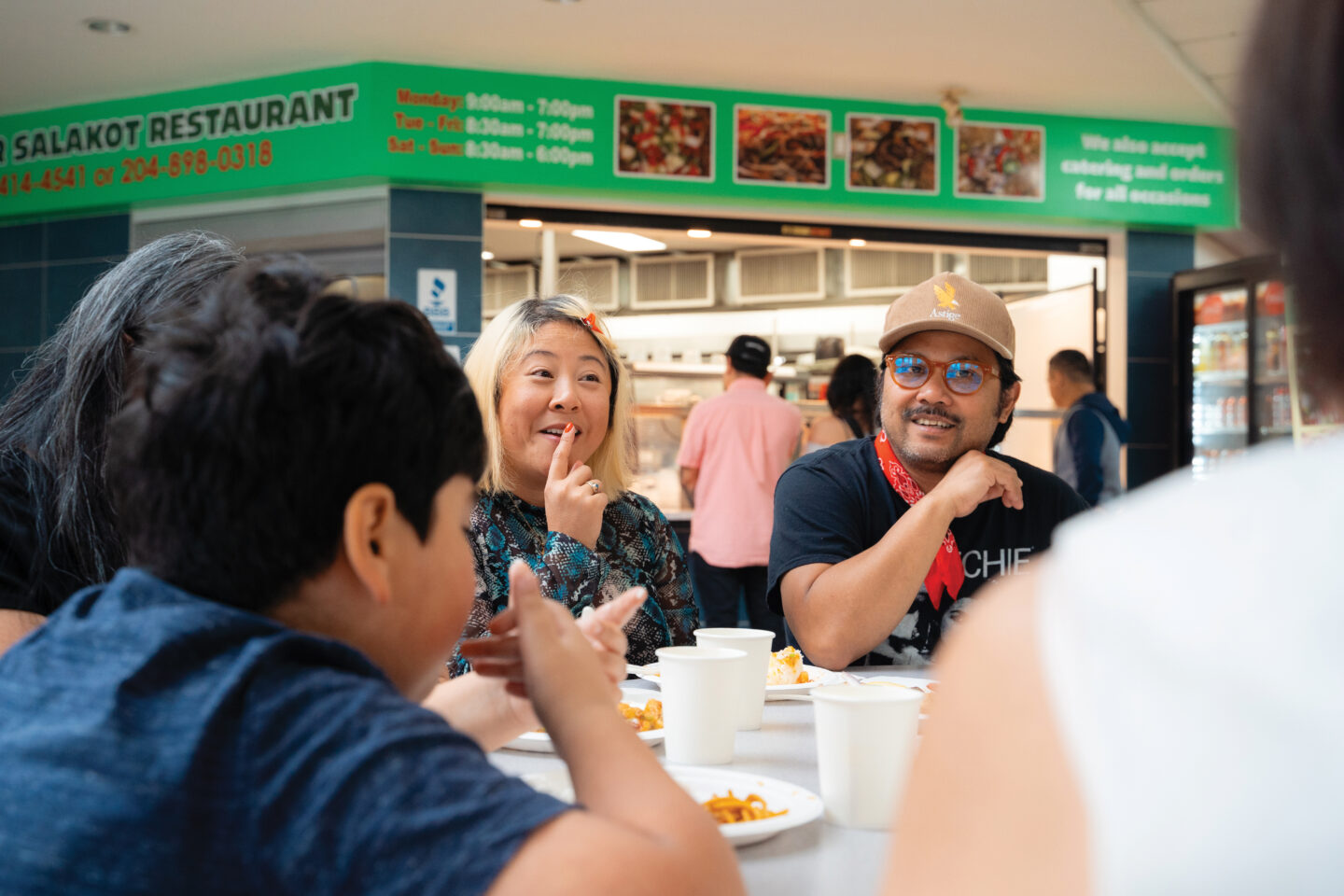
Several friends have joined for lunch at Ger Salakot, a group spanning different generations and community connections. We are far from the Philippine shores, yet the Philippines is with us, embedded in the loaded paper plates at the centre of the table, ready to be shared family-style.
Kain na! Let’s eat!
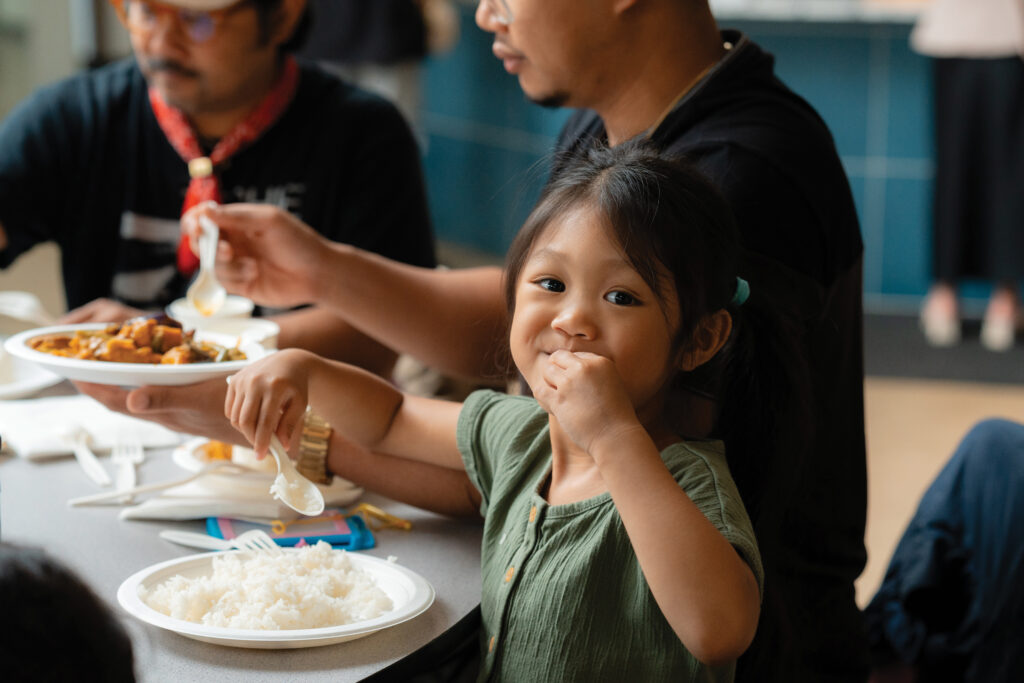
Filipino food is meant to be communal, cooked in large quantities to serve a family over several meals. Our cuisine is peasant food, not as in food for peasants, but as in the culinary category of cuisine where regional hearty stews are served with starch to stretch tough cuts of meat. Peasant food equals comfort food: shepherd’s pie, spaghetti Bolognese, ulam and rice.
Aida Champagne of the Filipino Seniors Group finds it impractical to cook large pots of ulam for her solo meals. Like other hard-working Filipinos, she depends on turo-turo restaurants like Ger Salakot to buy a little of everything for that taste of the Philippines after a hard day, calling it “a fiesta at home.”
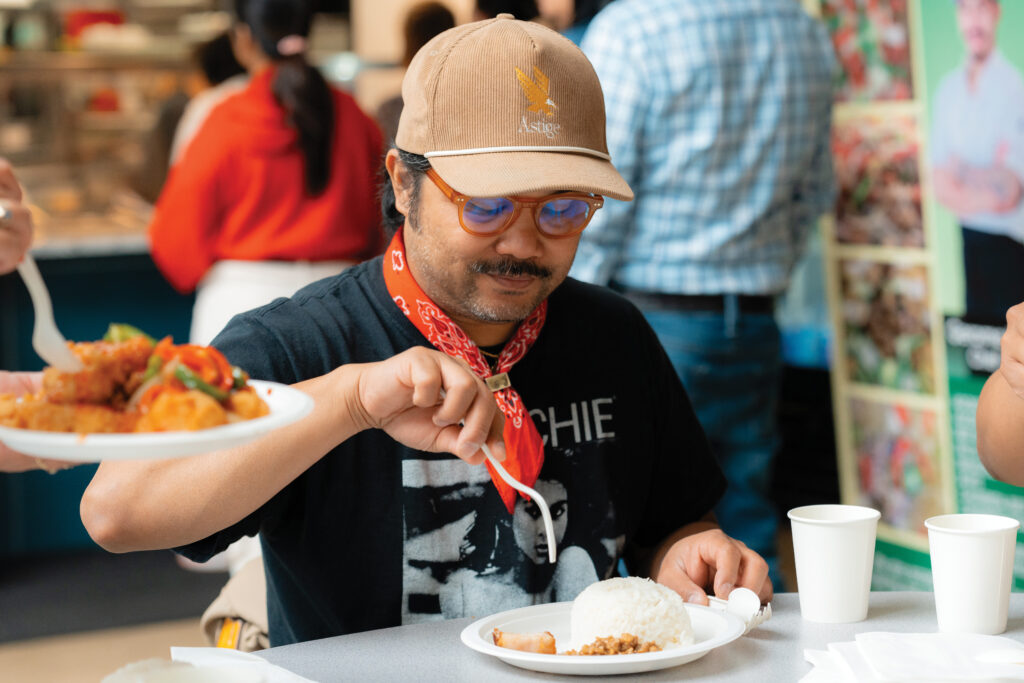
Our group take turns sharing their favourite Filipino dishes. Hazel Venzon and David Oro, a married couple and founders of multimedia production company UNIT Productions, go first. Hazel recalls her aunt’s ginataang langka, jackfruit and shrimp in coconut milk. “I was surprised that jackfruit pulled like meat,” she says. This was long before unripe jackfruit had become a vegan staple. David says kare-kare is his favourite dish because “the flavour is so uniquely Filipino,” referring to its savoury funk.
Instagram food blogger Denice Cayetano (@wpgfoodlovers) strives to serve Filipino food to her children, Octavia and Ozias, modestly saying, “I cook simple things like sinigang or tinola,” yet these “simple” tamarind and ginger soups are the foods that will bind her children to their culture, reminding them of family and home.
My son, Silas, pulls apart each layer of lechon kawali, savouring the crispy skin, unctuous fat and meaty pork. He announces his favourite Filipino food is Spam. My mother often cooked fried luncheon meat and rice for my kids, as she had made for me as a child. I recently listened to an episode of The Sporkful podcast, “How Spam became a Filipino staple”; American soldiers would trade the salty canned meat for fresh eggs during the Second World War, cementing Spam’s place in Philippine larders.
After lunch, we pack the remaining food into take-out containers. The sign of a successful Filipino meal is when your guests take home baon, leftovers for lunch. Little Octavia asks her father if they could buy more kutsinta to take home. I offer the package with the last three rice cakes. Her father thanks me and says, “It’s her favourite.”
I pack up rice and sinigang to bring to my mother in the hospital to offer a bit of home while she is away from home. Perhaps the soup will feed her soul, as her food has always fed mine.

This story is from the September/October 2025 Issue
Travel
Rediscovering the tropical Southeast Asian nation after immigrating to Canada more than a decade ago

Travel
When your heart needs to roam, these 10 iconic Manitoba experiences will be waiting

Places
Winnipeg’s iconic Portage and Main intersection has been closed to pedestrians for 40 years. Is it time to reopen the “crossroads of Canada” to foot traffic?

Travel
One writer’s journey to explore the life of Louis Riel