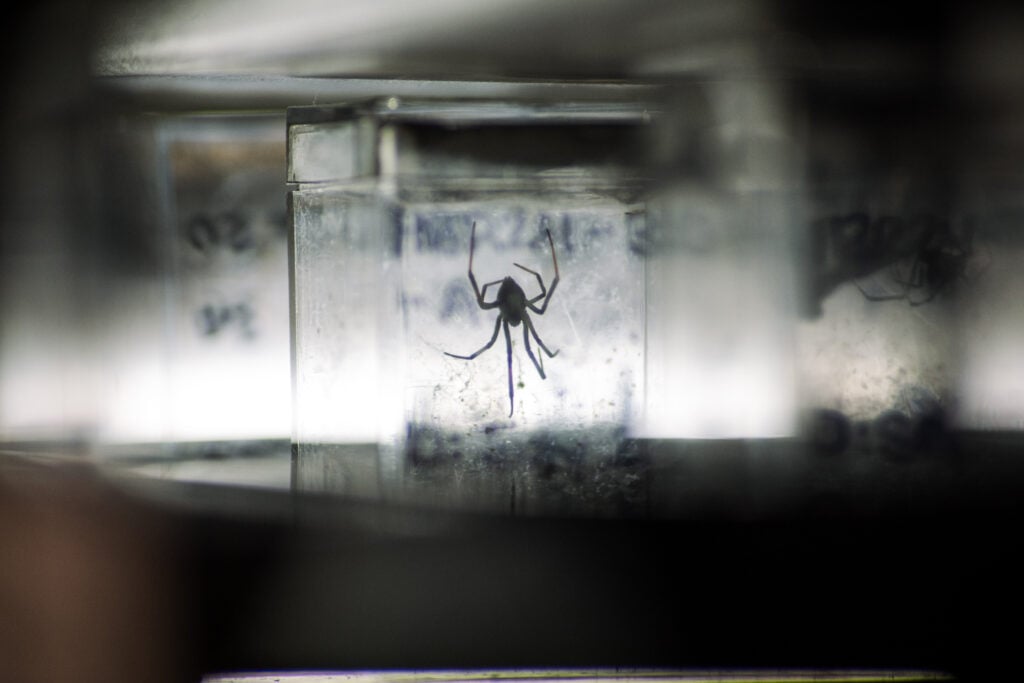
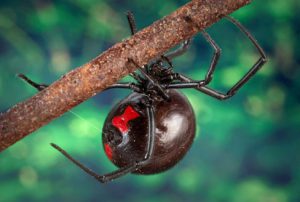
Considering that the black widow produces a neurotoxin 15 times more toxic than that of a rattlesnake, it’s not surprising that the lab created waves when it opened in 2000. “Many people were terrified,” admits Andrade.
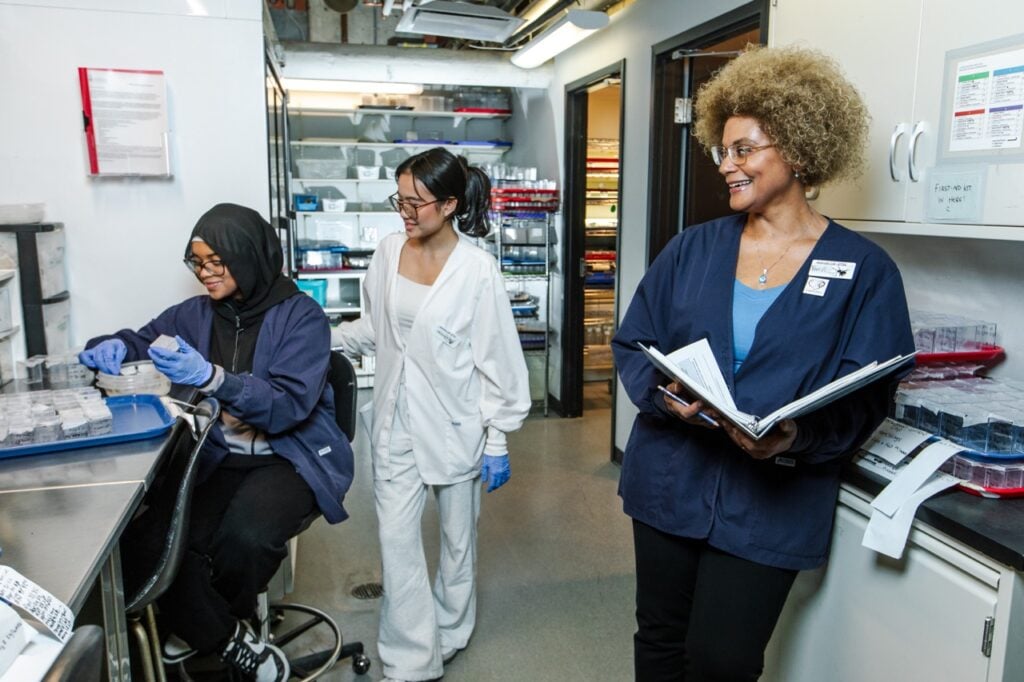
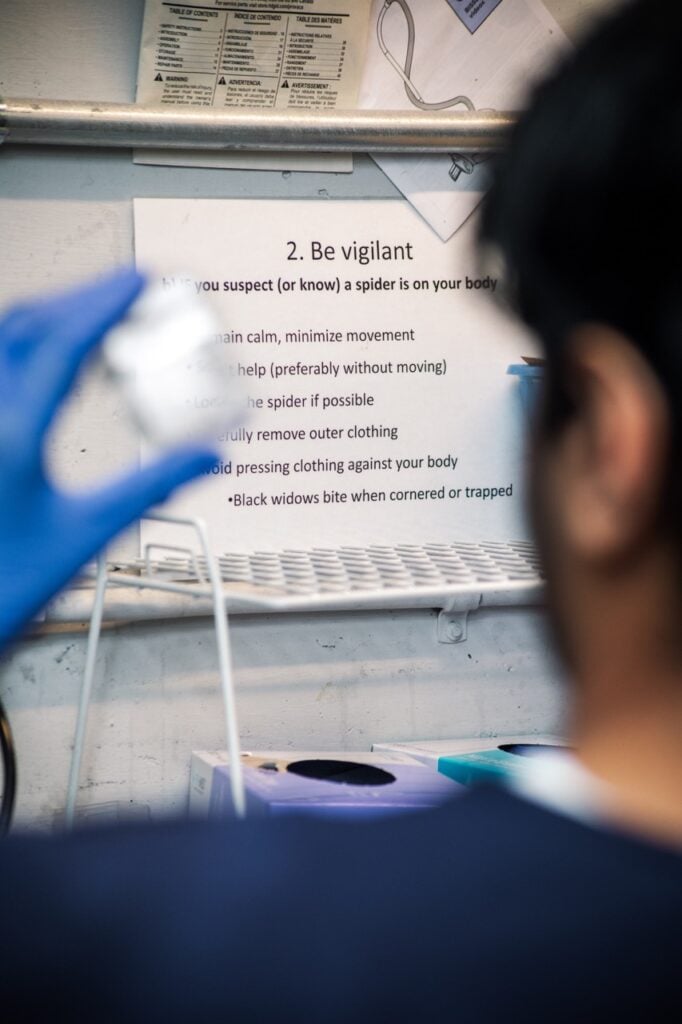
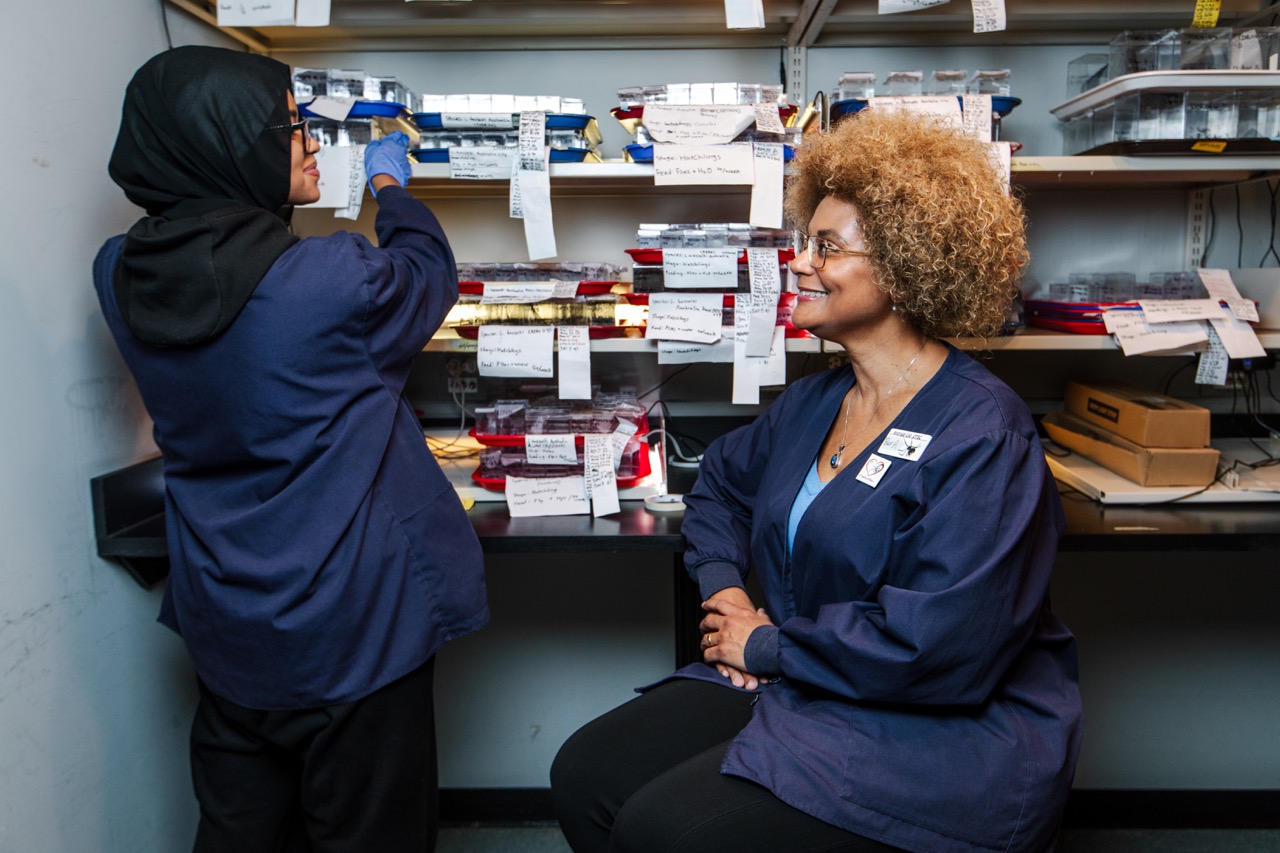
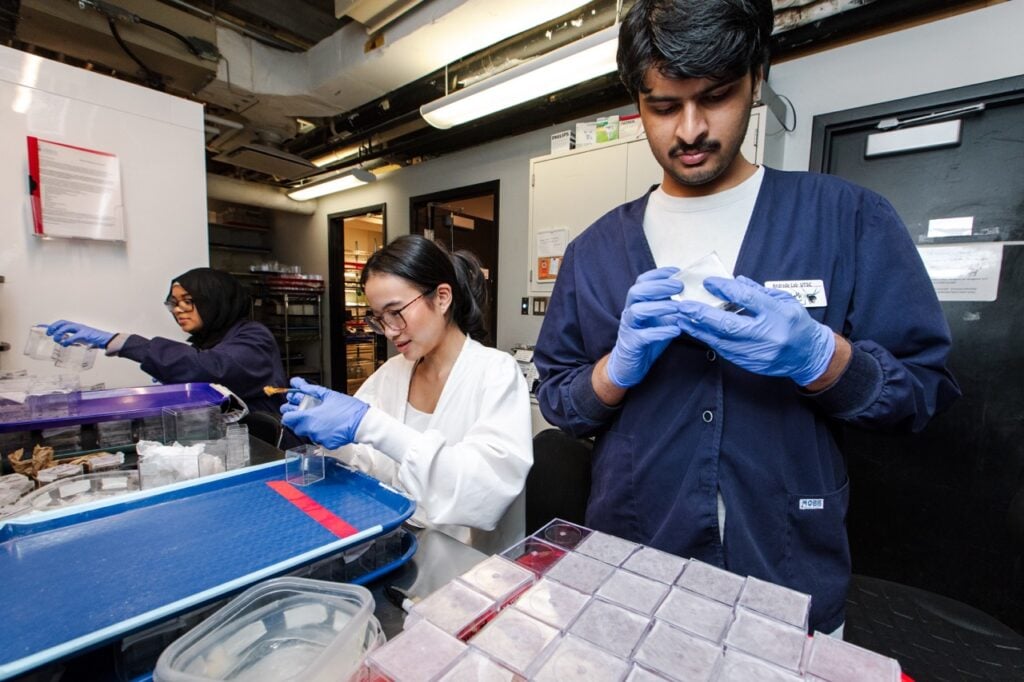
However, she says the concerns were unjustified: the bite of these shy and retiring spiders is rarely fatal for a healthy adult (though it can cause a range of nasty symptoms requiring prompt medical attention). Even so, the lab must conform to strict safety protocols that include two sets of locked doors and twice-weekly vacuuming. Entry is restricted to those who are trained in biosecurity protocols, and students must ensure no skin is exposed when handling the spiders.
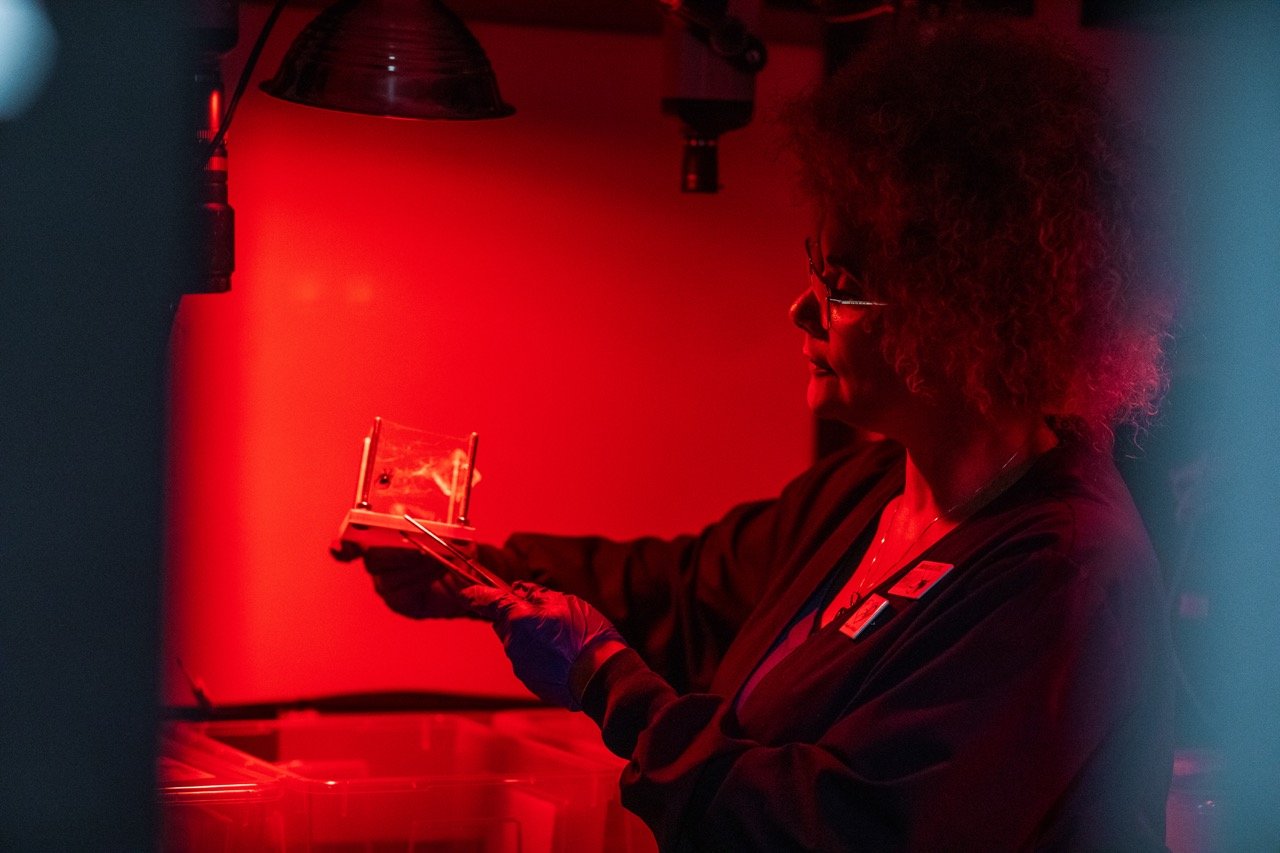
Experiments take place under the glow of special red lights, as the spiders are most active at night, and mating activity is filmed from above and watched on monitors in another room.
Andrade chose to study black widow spiders because they display extreme behaviours that confound our expectations. She focused her PhD on the most cannibalistic of the black widows, the Australian redback. After penetrating the female during mating, the male will perform a somersault and position his body directly above her fangs. The sex continues as she eats him alive.
Other scientists had proposed that the males sacrificed themselves to literally feed their future offspring, but Andrade proved their behaviour is really an act of self-interest, allowing a male to copulate for longer, thus boosting the chances that his genes are passed on in the competition that takes place inside the female if she mates with other males. The discovery made headlines and catapulted Andrade to academic fame.