People & Culture
On thin ice: Who “owns” the Arctic?
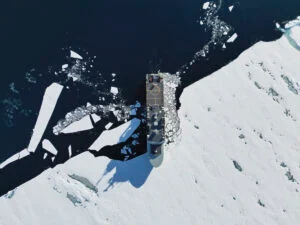
As the climate heats up, so do talks over land ownership in the Arctic. What does Canadian Arctic Sovereignty look like as the ice melts?
- 4353 words
- 18 minutes
This article is over 5 years old and may contain outdated information.
Kids


The Arctic char is the most northernly occurring of any freshwater fish and mainly inhabits the Arctic and adjacent oceans.

Common name: Arctic char
Scientific name: Salvelinus alpinus
Inuktitut name: ᐃᖃᓗᒃ (iqaluk or tariurmiutaq)
Type: Fish
Diet: Carnivore
Group name: School
Average weight: 200 grams to 4.5 kilograms
Average length: 40 centimetres to 60 centimetres
COSEWIC Status: No status
Despite being a northernmost freshwater fish, some arctic char populations are anadromous, meaning they move from saltwater to freshwater to spawn.
Although they are similar in shape to salmon or trout, arctic char vary in colour depending on the time of year, location and stage of development. Usually, their backs are dark blue, green or brown, with silver sides and a white underbelly; however, they can also sometimes be covered with purple, pink or reddish spots. When spawning or releasing their eggs, the char can have a bright red or orange colour. This is one colourful fish!
These fish have been an important food source to Inuit for centuries. Arctic char is eaten raw, frozen (called quak), dried (called pipsi), smoked, aged or cooked. In some instances, skins from char have been made into waterproof coats and their bones have been made into sewing needles along with pouches that carried the sewing equipment.
Arctic char are carnivores. They mostly feed on shrimp, insect larvae, snails, clams and some small fish.
Arctic char can be found across the Arctic Ocean, including the Arctic Archipelago, and in the freshwater lakes and rivers of the Arctic islands and Canada’s northern mainland.
People & Culture
As the climate heats up, so do talks over land ownership in the Arctic. What does Canadian Arctic Sovereignty look like as the ice melts?
Kids
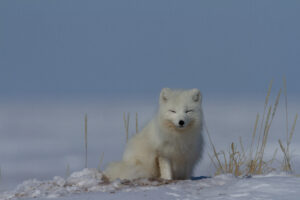
As one of Canada's most beautiful mammals, the Arctic fox is well-known for its white fur which is why it's often referred to as the snow fox.

Environment
The uncertainty and change that's currently disrupting the region dominated the annual meeting's agenda
History
All school-aged children in Norway learn his name.And thanks to the recent repatriation of a handful of Nattilik Inuit artifacts he collected in the early 1900s, perhaps…