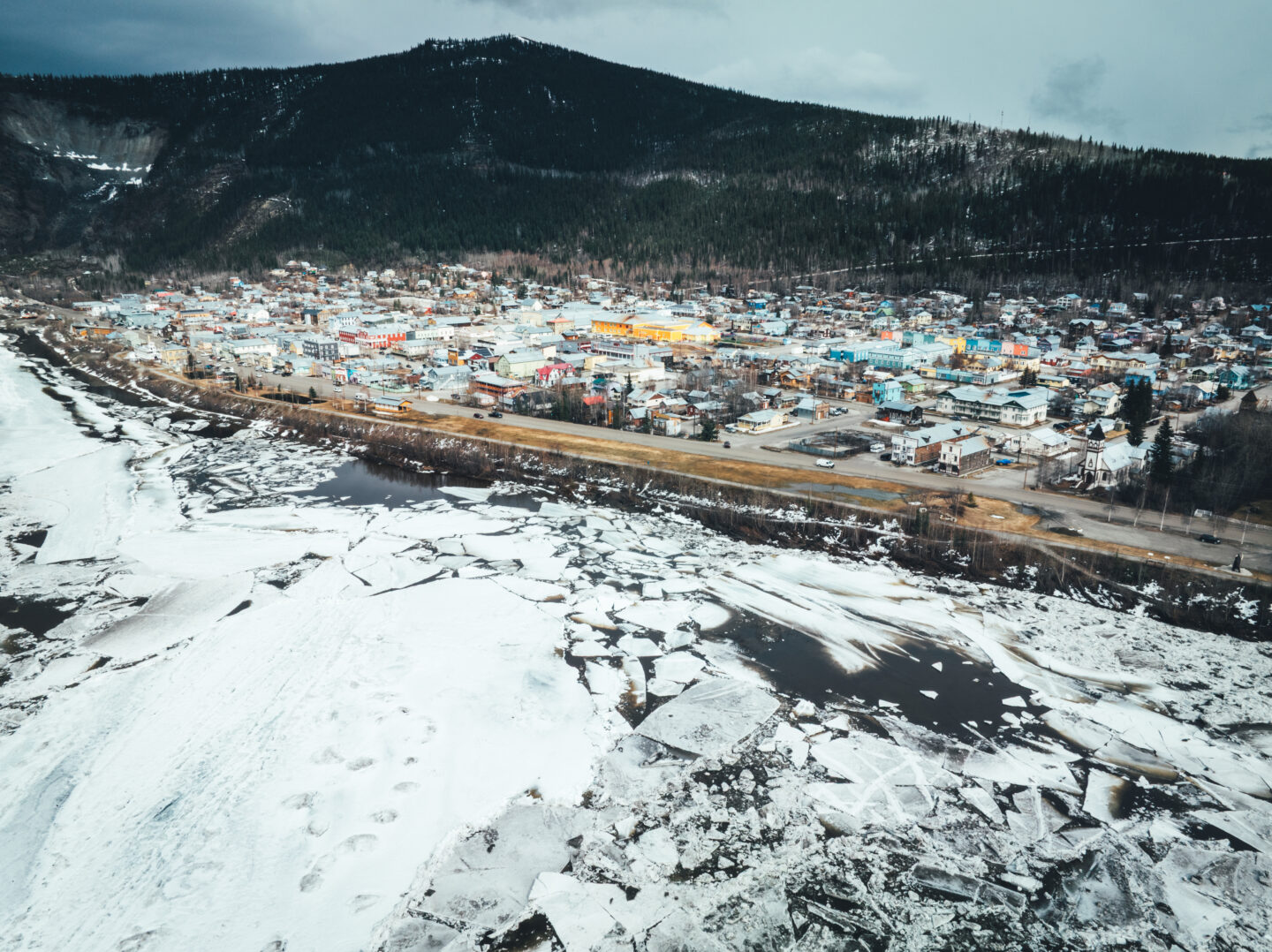
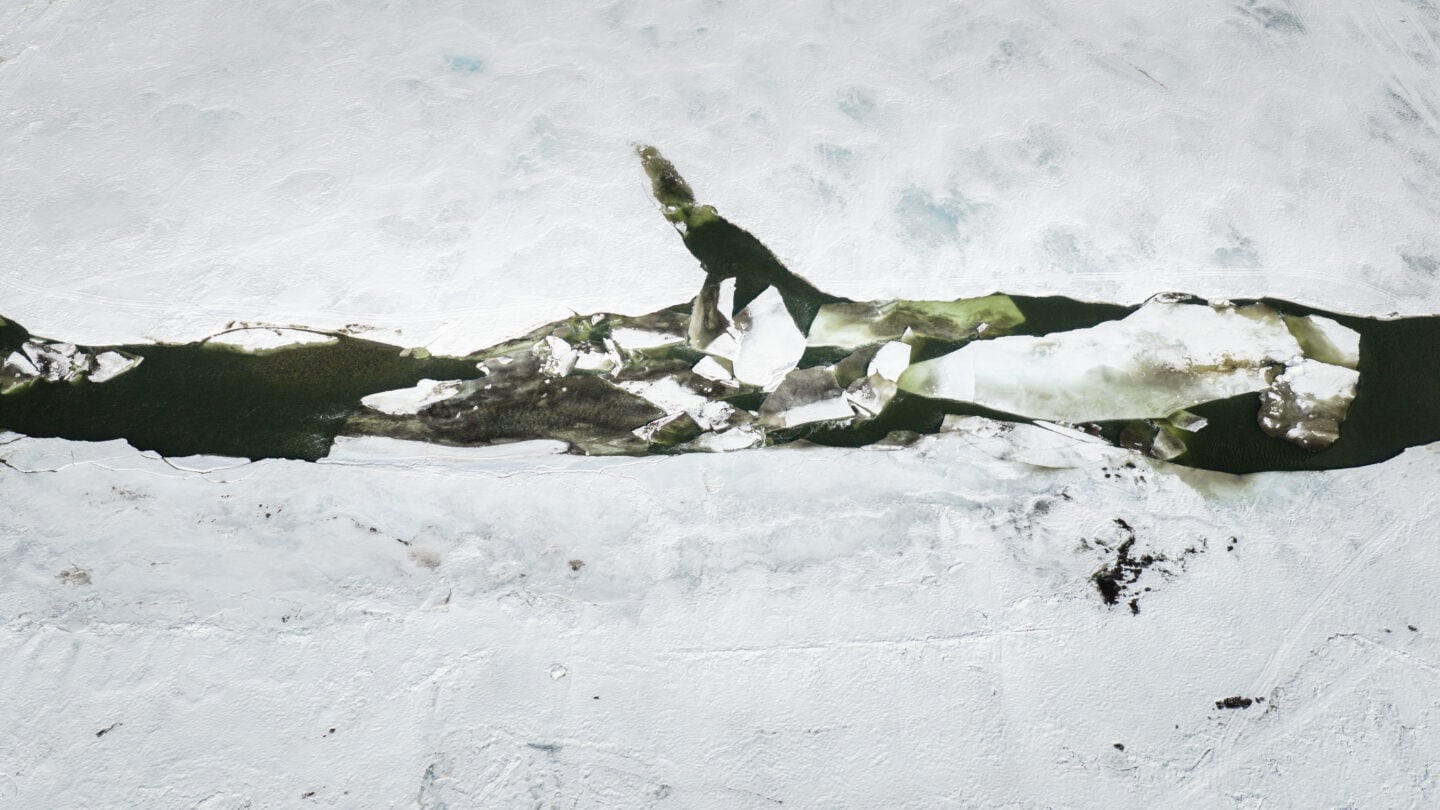
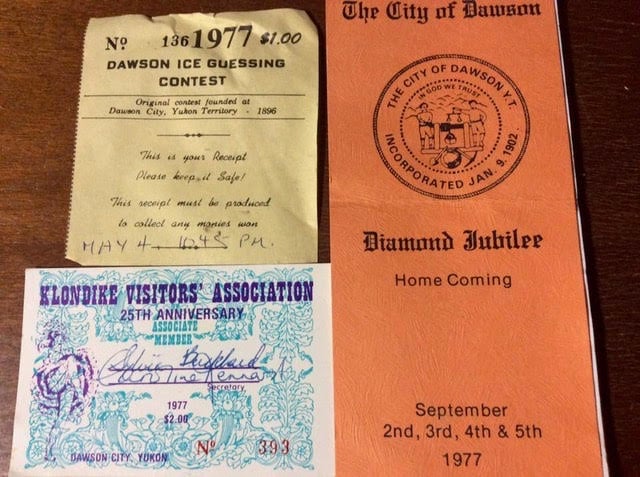
By 1896, the Klondike Gold Rush was quickly turning Yukon’s Dawson City from a ragtag tent town into the largest city between Seattle and Winnipeg. Around the same time, its citizens were placing bets on when the ice on the Yukon River would break up, opening the river to seasonal boat traffic. This betting system continues today. People buy tickets to bet on when the river ice will break — their guesses are down to the minute.
Thousands of dollars are riding on when that precise moment will be. Participants can enter a lottery to pick the exact minute the ice broke up, and the river opened. The winner gets half the total, and the Imperial Order Daughters of the Empire distributes the other half to local charities.
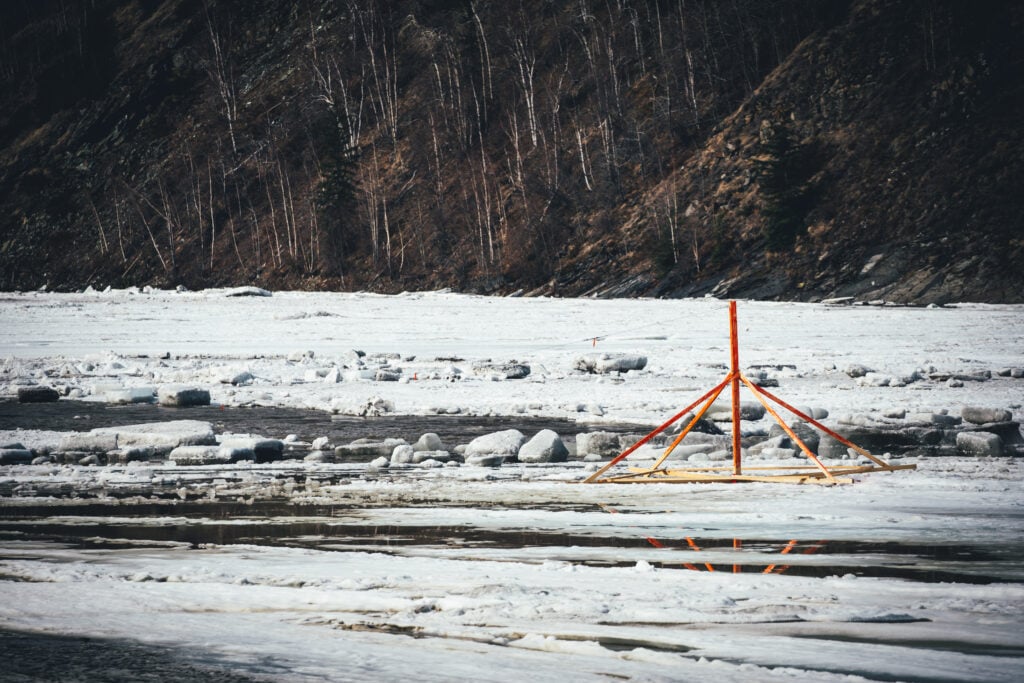
To accurately measure the “winning” time, a wooden tripod with a cable attached to a clock is placed on the ice near the Dänojà Zho Cultural Centre. When shifting river ice moves the tripod, the cable stops the clock, marking the precise moment of breakup in a tradition that dates back to 1896.
The Breakup is a major event in Yukon, marking the end of seven months of winter and the unofficial start of the tourist season, when Dawson’s population swells to three times its year-round 2,000 residents. But this is nothing compared to the gold rush days that saw its population swell from a small First Nations fishing camp in 1896 to a boomtown of 30,000 people two summers later.