
Travel
Exploring the Great Lakes with Viking Cruises
Named after the south star, Octantis is Viking’s first expedition ship, which incorporates visits to Indigenous communities, supports environmental protection and more
- 2384 words
- 10 minutes
Travel
Aboard Viking Vesta, ancient Mediterranean worlds take shape through legendary ports, historic ruins and sweeping coastal landscapes
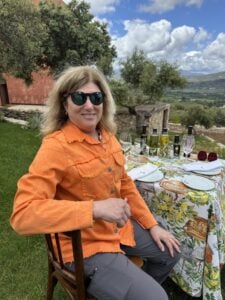
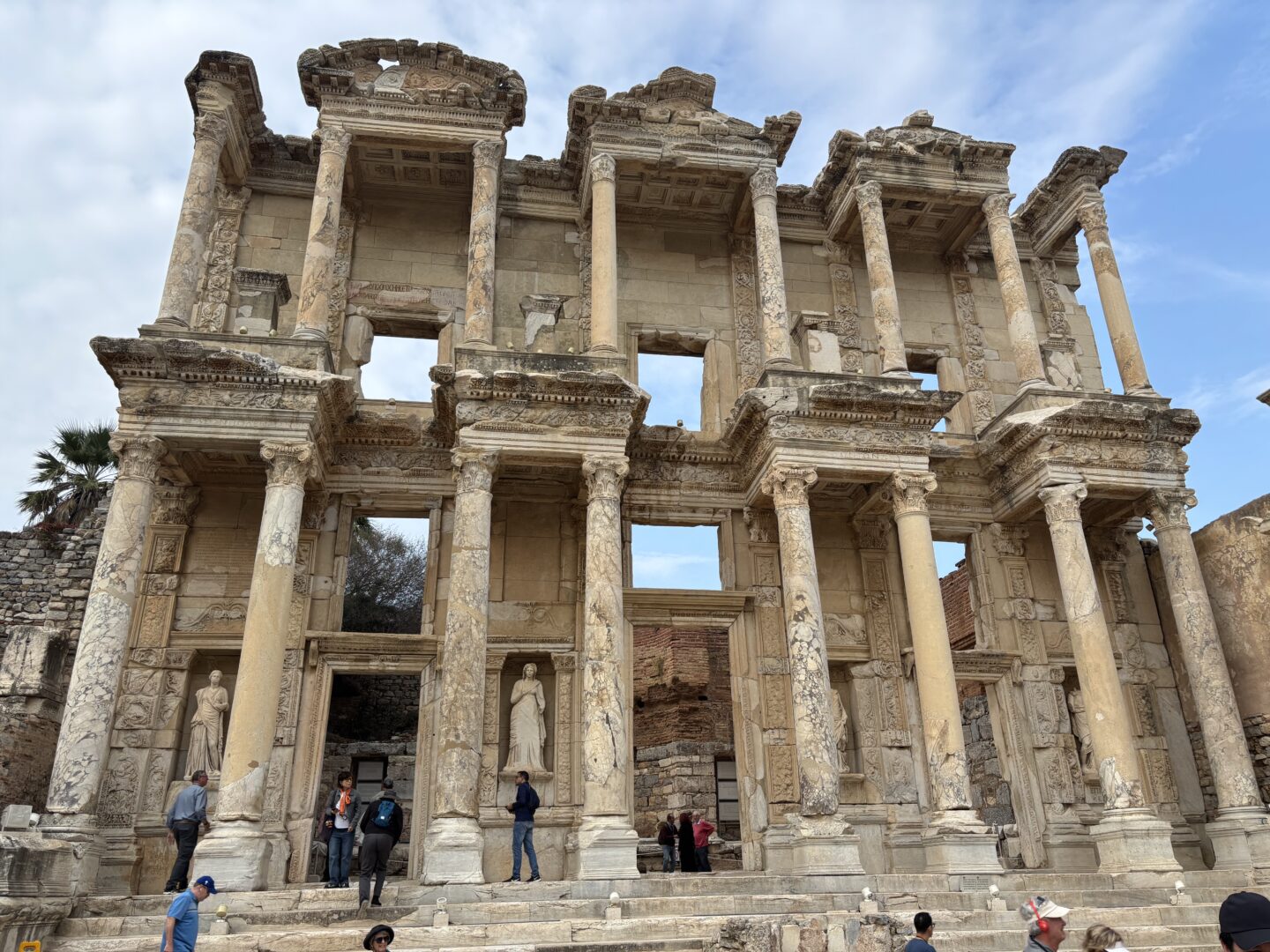
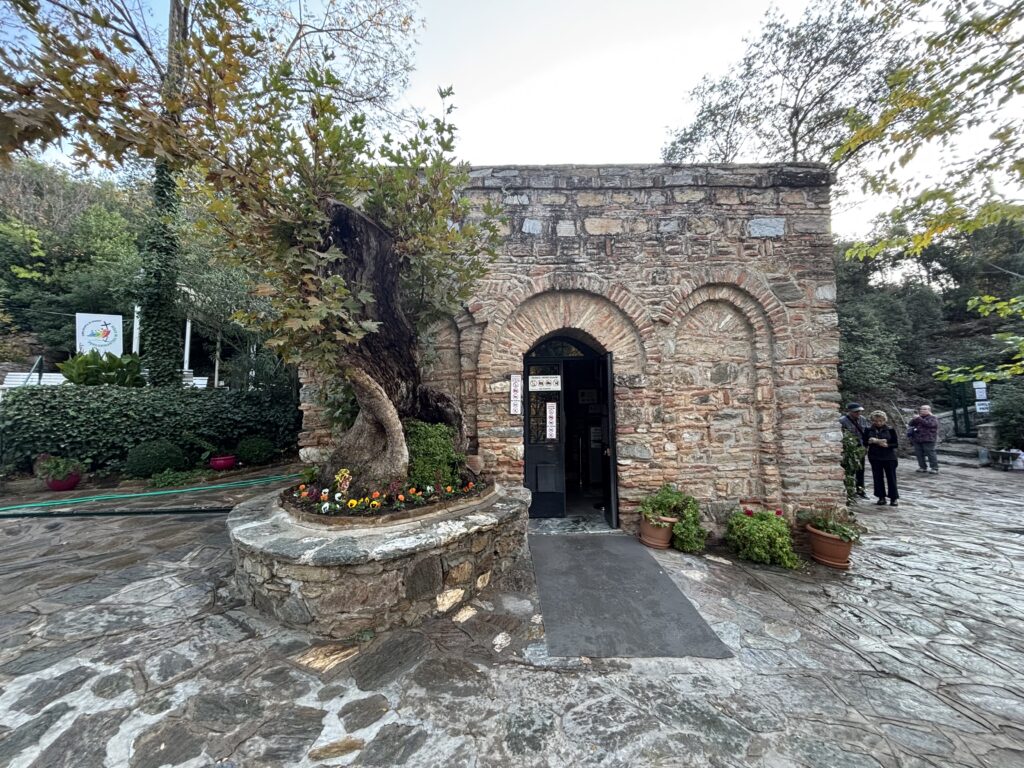
The early morning is cool and bright as I arrive at the House of the Virgin Mary on Mount Koressos, near Selçuk in İzmir Province, western Turkey.
The modest stone chapel, with its Roman arch, rests in a grove of olive and cypress trees on the mountain flank, just beyond an ancient cistern. Inside, a simple altar and a statue mark the space, and a narrow adjoining chamber is revered as Mary’s “sleeping room.”
Having just lost my father, a history buff and cultural Catholic, two weeks before this journey, I pause to reflect on how much he would have enjoyed the site.
Below, a footpath leads to a wishing wall layered with countless prayers. Pilgrims gather at the spring, blessing themselves, whispering intentions, letting their tears fall freely.
In this stillness, I can imagine Mary herself — robed in blue, her veil stirring in the breeze — walking the forest paths, spending her last days in quiet grace.
Most remarkably, the shrine is located not in Jerusalem or Nazareth but in Turkey, just inland from the Aegean coast. It is an important reminder of the enduring legacy of ancient Christian, Greek, and Roman societies in this region.
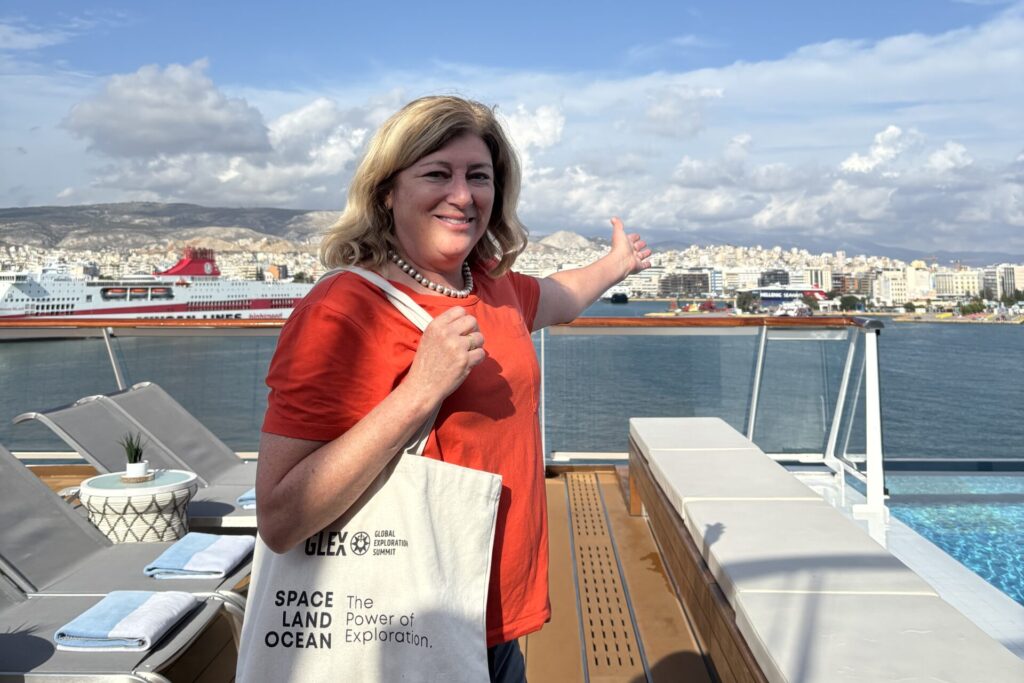
According to the New Testament, Jesus asked the Apostle Paul to care for his mother, and Paul came to preach here. In the 19th century, a bedridden German nun had a vision that Mary’s house was on this mountain, and two scientific expeditions in 1891 concluded that the original foundation dates back to the 1st and 4th centuries. The chapel standing today was rebuilt on those foundations.
While the Catholic Church does not say the history is proven, it recognizes the site as a place of veneration, and several Popes have prayed here. Who can resist this story of mystery, faith, and possibility?
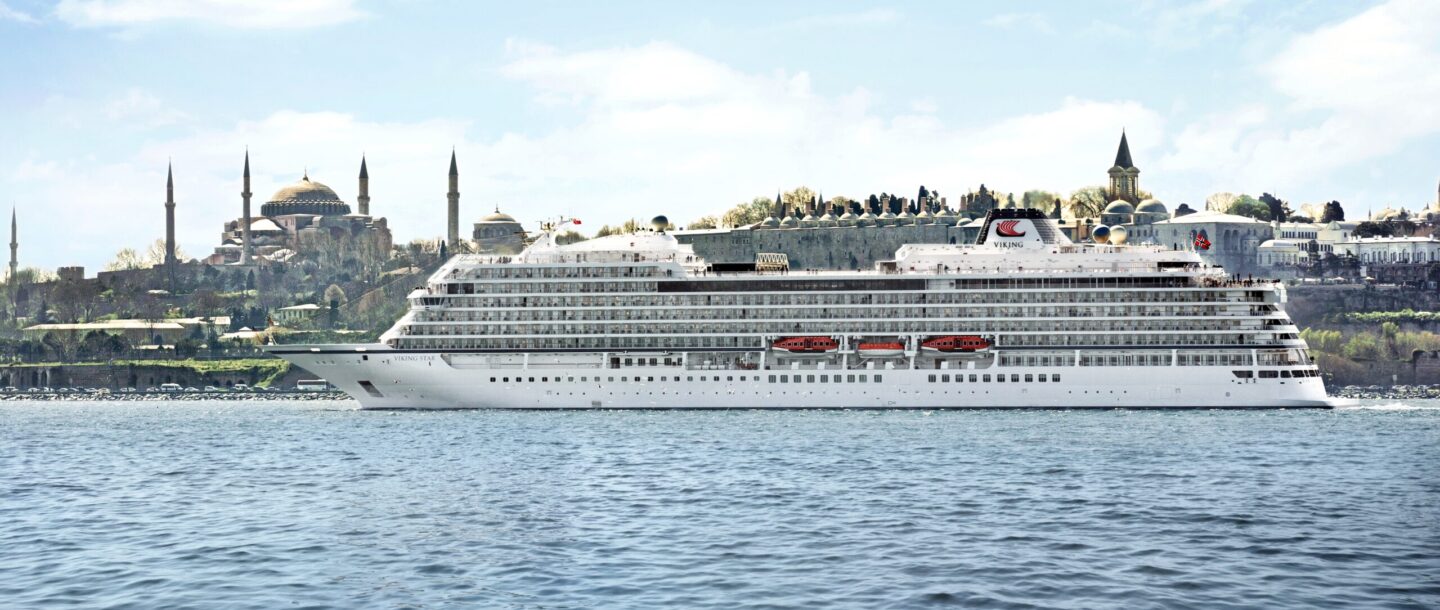
On this week-long Ancient Mediterranean Treasures Viking Cruise, from Istanbul, Turkey, to Athens, Greece, I feel as if I am crossing not just the Aegean Sea, but time itself. Each stop unfolds like a living museum, revealing unexpected connections to a past shaped by ancient battles and shifting powers.
It is an immersive crash course in ancient civilizations, and I am embarrassed by how little I know about the ancient Greek myths and legends, not to mention the Minoans and the Mycenaeans.
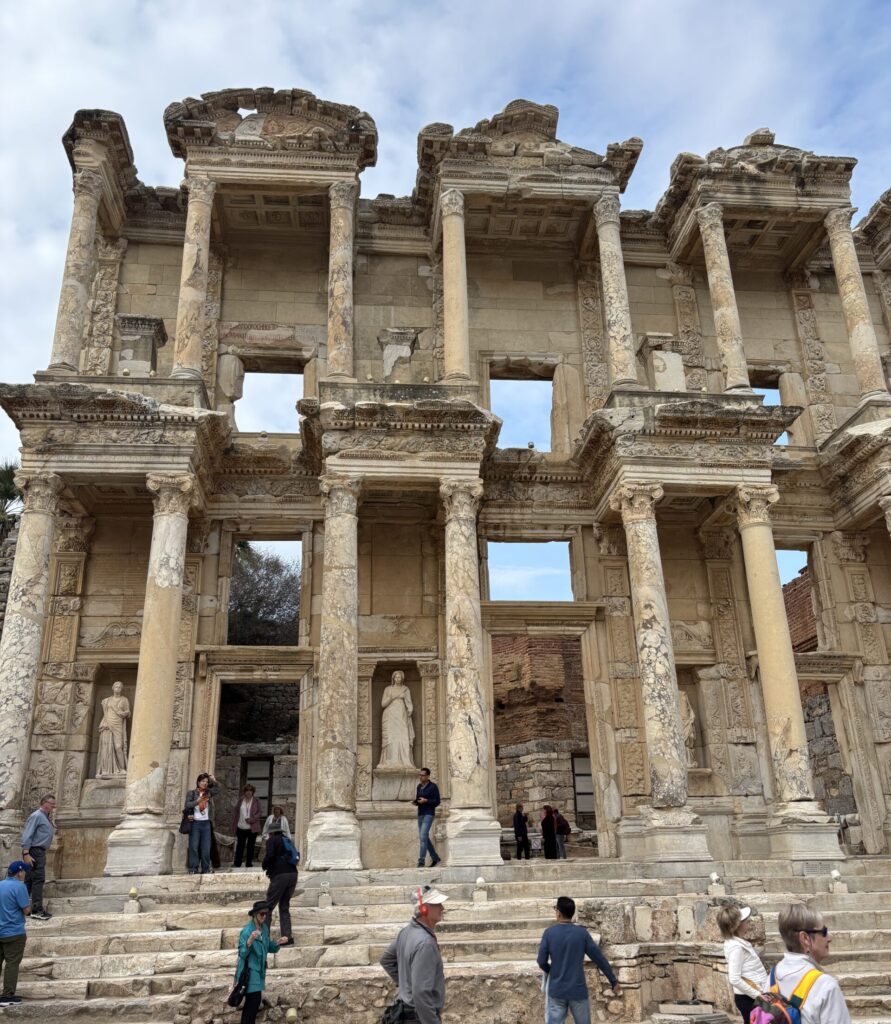
Ephesus, near the House of the Virgin Mary, dates back to the 10th century BC and was once one of the grandest cities of the ancient world.
John Gurel, our garrulous tour guide from Turkey who scolds me for asking too many questions, leads us through the vast ruins of temples, baths, labyrinthine streets, intricately decorated facades, marble fountains, statues, mosaics, and frescoes.
It’s easy to picture the ancients in linen tunics promenading under the marble porticos of the Arcadian Way. The famous Library of Celsus, with its carefully reconstructed two-story façade, once held more than 12,000 scrolls. Gurel tells us that one of the liveliest parts of the city was the Agora, or market, where people haggled over olive oil and dried fish in covered shops, and artisans repaired broken vessels and chipped pottery.
A massive U-shaped Stadium, known as the Hippodrome, impresses, capable of holding 30,000 spectators for gladiatorial fights and chariot races. The amphitheatre, begun by the Greeks and improved by the Romans, still stands, and gladiators’ graves have been discovered nearby.
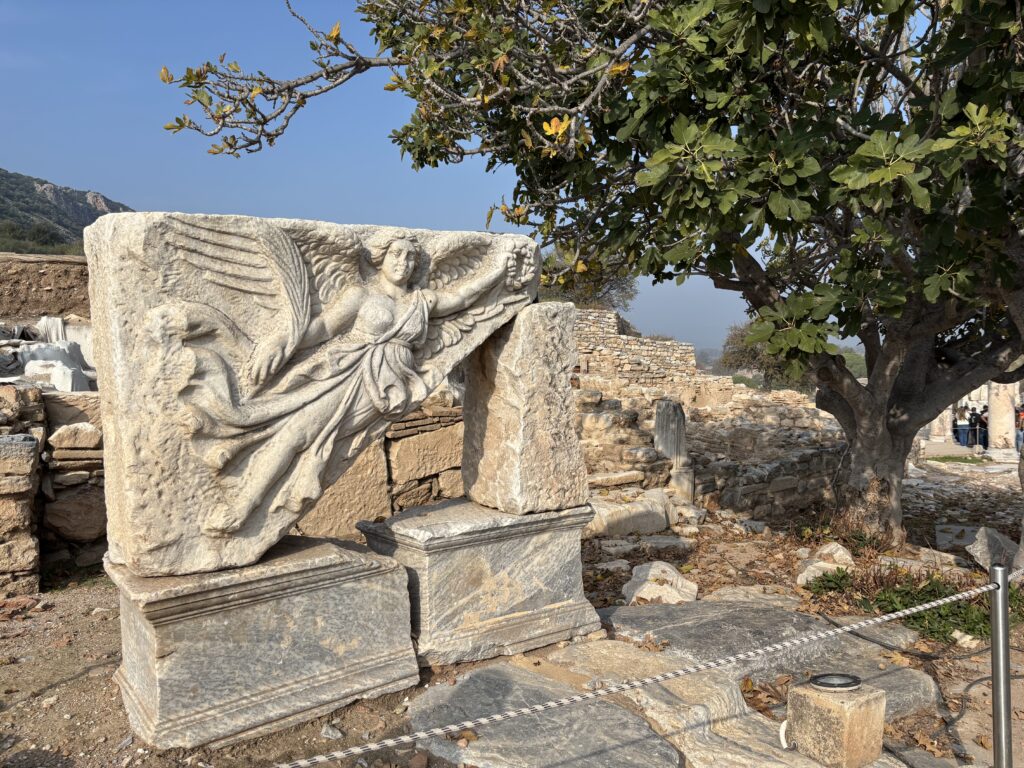
According to the New Testament, Paul, who preached here in the first century AD, loved the city but also warned of its many vices: idolatry, sexual immorality, greed, and superstition.
“Is there a greater city than Ephesus?” asked St. Paul.
“I know that after my departure fierce wolves will come in among you, not sparing the flock,” he warned.
Earthquakes and a silting harbour led to Ephesus’s gradual decline. Excavations, underway for more than a century, have unearthed only about 10-15 per cent of the city.
Gurel, a retired architect who worked on the site in the 1980s, recalls having to excavate on hands and knees, sorting through hundreds of tiny coloured stones like pieces of a giant puzzle.“This is really the cultural heritage of the world,” he says. “We are the bodyguards, but it belongs to everyone. Civilization passed from here into Asia, so it is a really special place.”
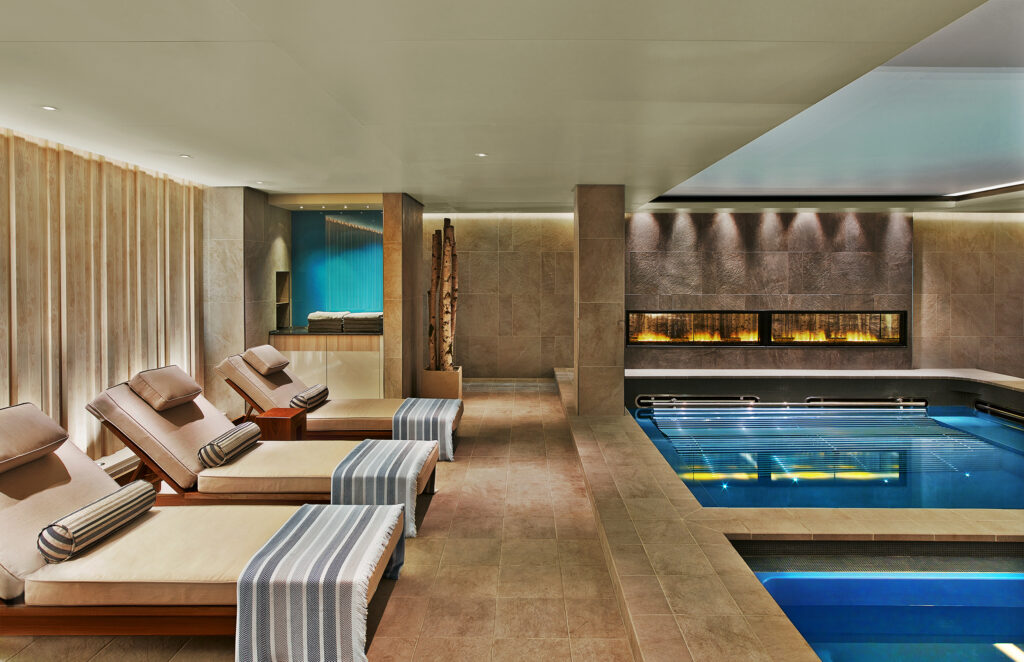
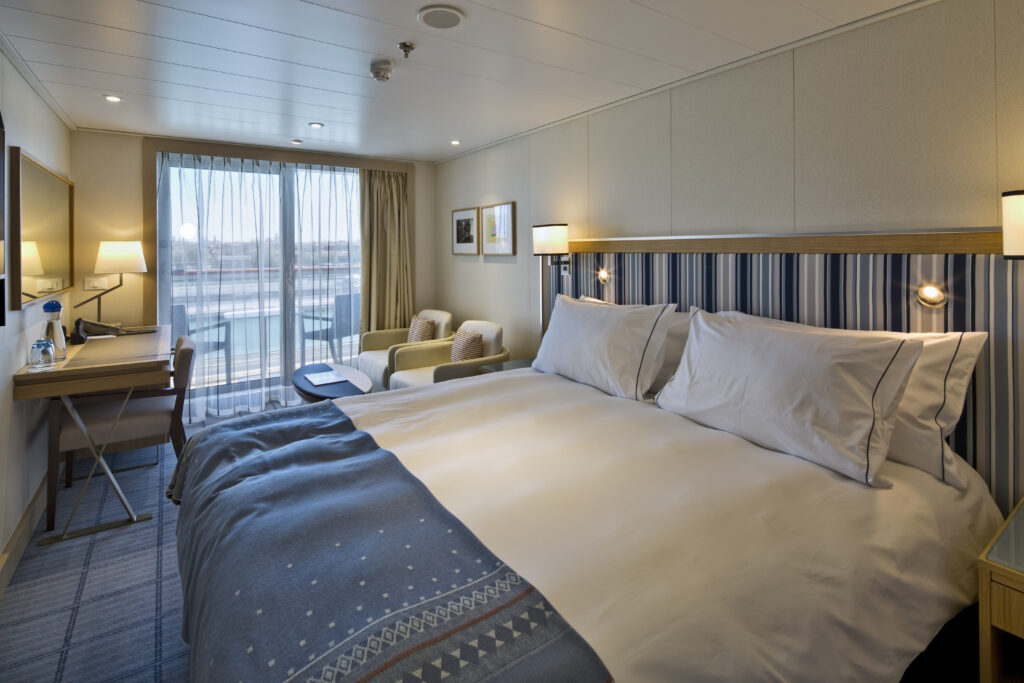
After a long day exploring, I am grateful for the comfort and minimalism of Viking Vesta, the newest in Viking’s ocean fleet, launched in July 2025. At 240 metres long, with room for 998 guests, Viking Vesta is an adults-only “small ship” class. No casinos or dawn announcements to jolt you awake. Instead, classical musicians drift gentle notes through the lobby, high tea unfolds in the afternoon, and each evening, guest historians such as Mark Lane illuminate the places we are visiting.
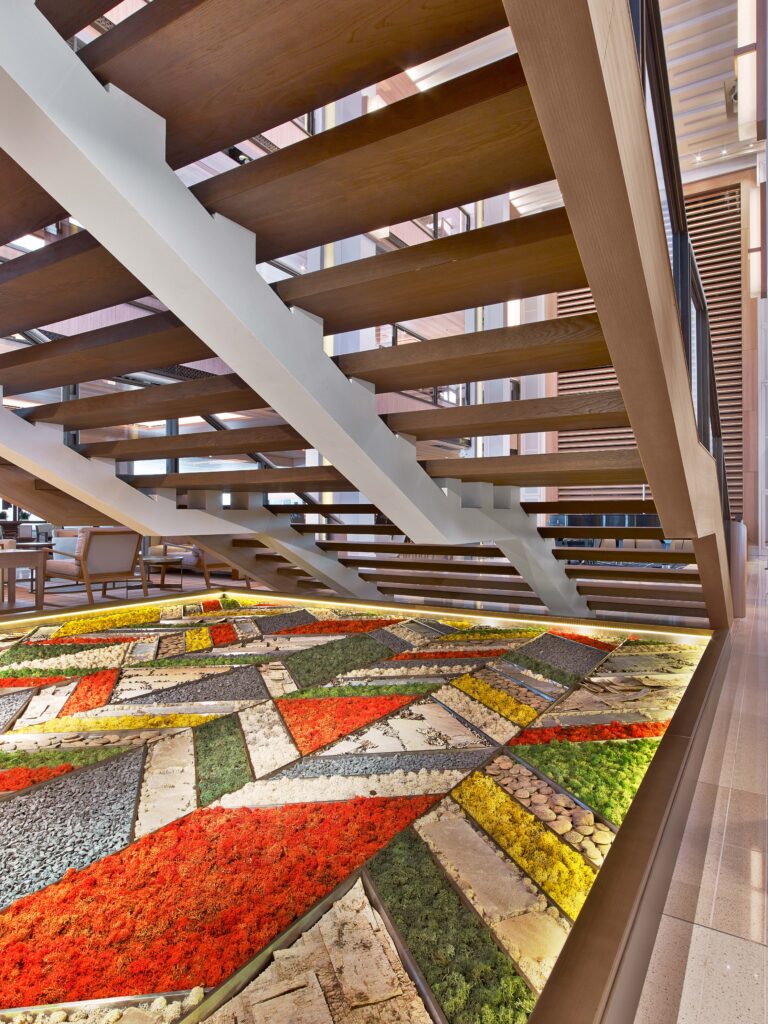
The ship offers many unexpected pleasures: Edvard Munch paintings on loan from a Norwegian museum, lichen gardens tucked beneath stairwells, wallpaper that mimics a knitting pattern, birdsong in the bathrooms, and Norwegian Freyja skincare products. The Nordic spa on deck one is especially enticing. The bathing ritual alternates between hot (sauna, steam room, or pool) and cold (snow grotto and cold plunge). I stand in the snow for as long as I can before submitting to a bucket of frigid water being dumped on my head, then dash back to the steam room, feeling as brave as a Roman gladiator.
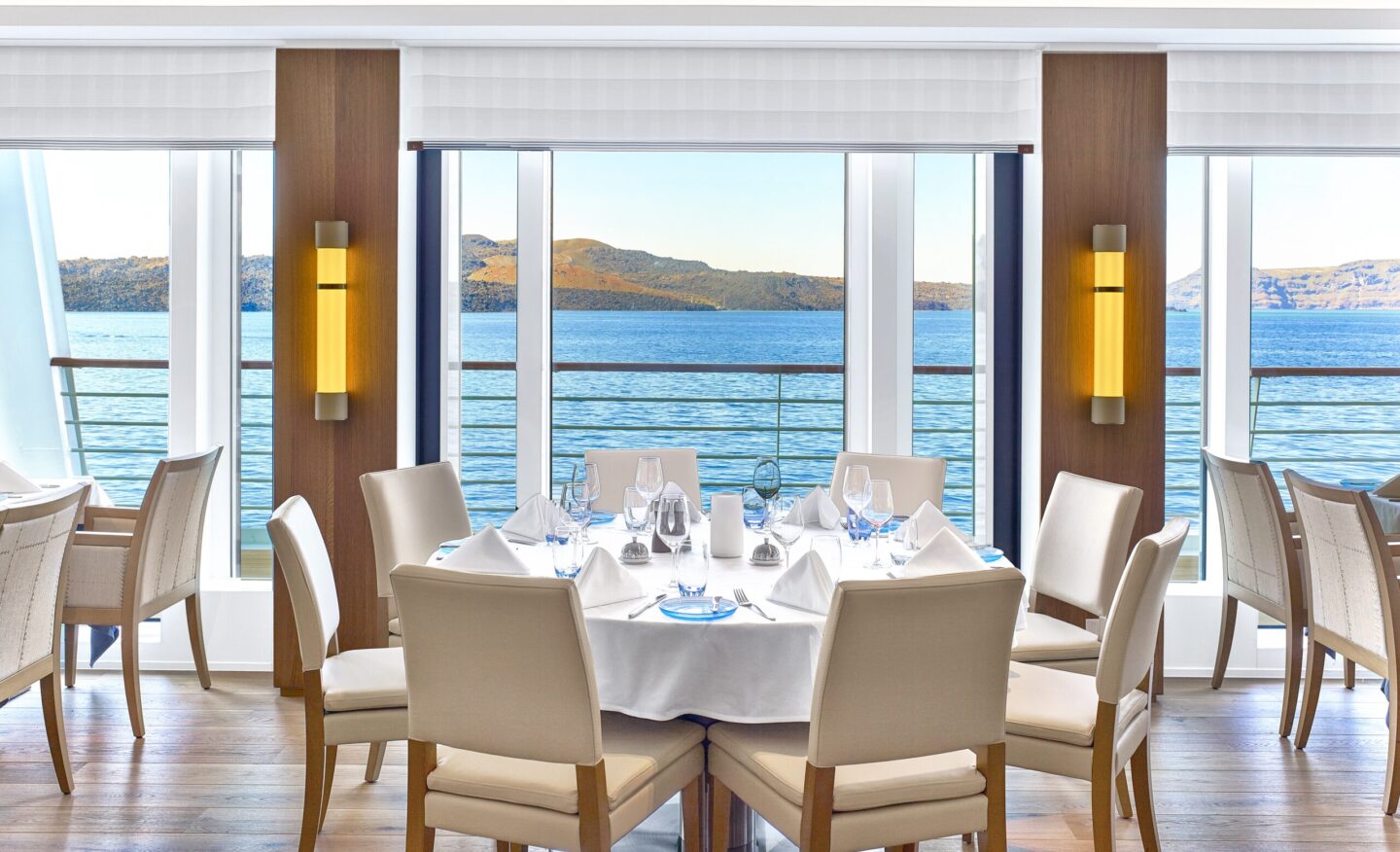
I swap stories with other bathers, many of whom are repeat Viking guests. They praise the line’s consistency: every ocean vessel is laid out the same way, with heated bathroom floors and verandas in the cabins. Each ship offers the same spa and restaurants — World Café with a sushi bar, Manfredi’s Trattoria with bistecca alla Fiorentina and homemade pasta, Mansen’s, a casual deli named for Viking founder and Chairman Torstein Hagen’s mother, that serves open-faced sandwiches and waffles, and the Chef’s Table, featuring a five-course tasting menu with wine pairing. (Although Viking Cruises went public in 2024, Torstein and his daughter still own more than half the shares, and he remains CEO.)
A conversation between a guest and a couple who have been onboard for 17 days captures the mood perfectly. “Do you ever get bored?” the woman asks the couple. “Oh no,” they reply. “We get off every day, and we just love it. We don’t just sit in our rooms. We have so many different experiences.”
Visiting the Mediterranean in the shoulder season (November) has its perks: the olive harvest is at its peak, the pomegranates are ripe and juicy, and the tourists have gone home.
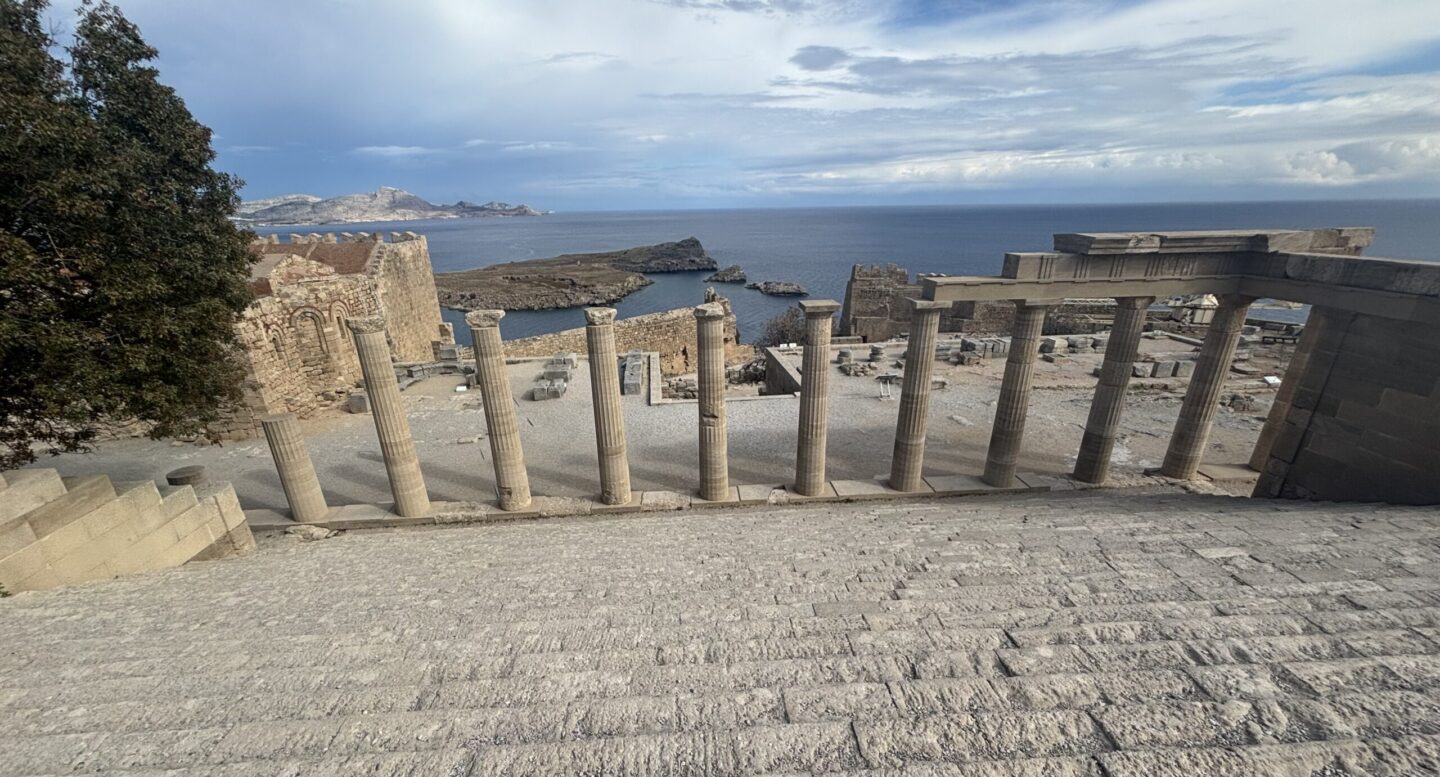
On Rhodes, a tour takes us to the Acropolis of Lindos, about 55 km from Rhodes town. The pathway up is short but steep, and I scramble up narrow cobblestone streets through a winding village to get to the top: the Temple of Athena Lindia and a 20-columned covered walkway known as a stoa that is from the Hellenistic period, which I learn lasted from 323 BC to 30 BC and the Roman conquest of Egypt.
Birdsong and wind whistle through my hair as I wander through the Temple ruins, imagining the dramas that unfolded here. The panoramic sweep of turquoise bays and the maze of the old town create an unforgettable view. Fortification walls built by the Greeks, Romans, Byzantines, and Knights of St. John layer the cliff edge, giving the complex the feel of a citadel suspended between sky and sea. Alone at the summit, the stillness is so compelling that if I had a tent, I would be tempted to stay the night.
Back in Rhodes, my journey moves forward in time to the medieval age with a tour of the Palace of the Grand Master, home to the Knights of the Order of St. John from 1309 to 1522.
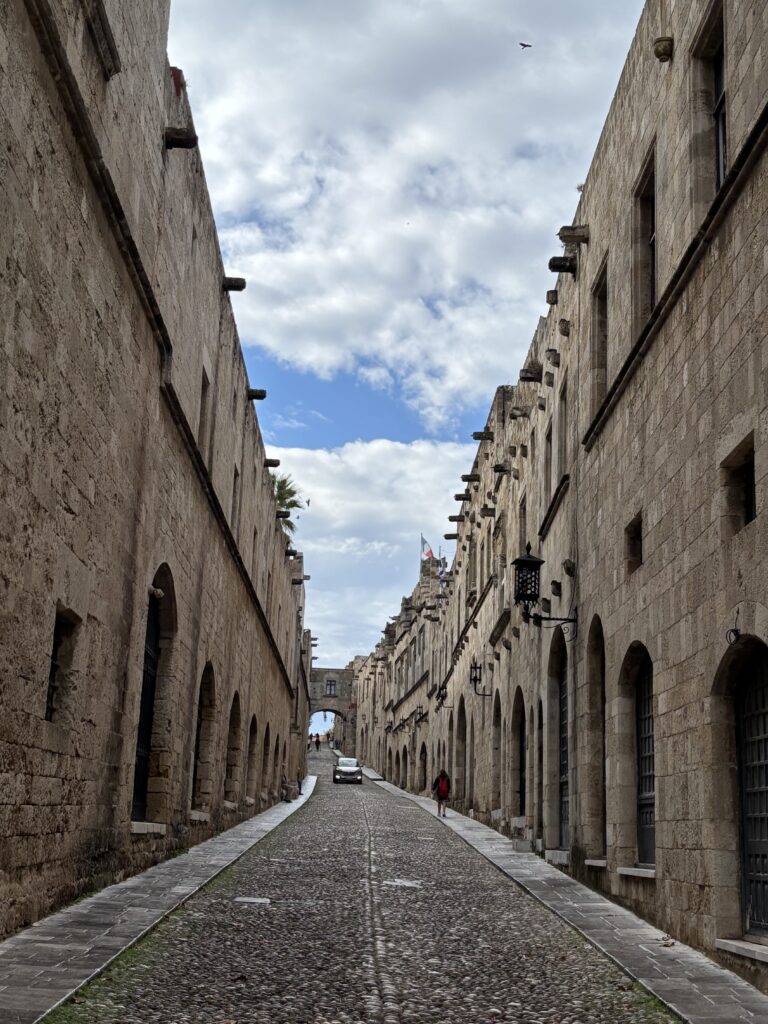
Margarita Tsoullou, our amiable guide who grew up in Psinthos with 11 siblings, leads us along the mostly empty Knight’s Street, lined with imposing stone inns that once housed knights from across Europe.
“Rhodes is the land of culture, liberty and democracy,” she says.
Our walk ends up at the medieval palace, surrounded by thick stone walls, towers and a commanding gate. Inside, the courtyard opens to warm light, ringed with elegant arcades that blend military precision and Renaissance refinement.
Now a museum, the site reveals Rhodes’ turbulent history under Byzantine, Crusader, Ottoman, and Italian rule, with the Italians occupying the island from 1912 to 1943.
“I’m from Rhodes, but I don’t know if I’m Greek, Roman, Persian, Ottoman Turk or Italian,” says Tsoullou. “We are such a mixed island, a real crossroads of crusaders, merchants and sultans mixed together like a moussaka.”
A trained pharmacist, Tsoullou became a tour guide to share her passion for Greek history, culture, and mythology. “In Greece, there is something for everyone.”
Crete may be known as a party island. Still, history buffs will delight in discovering that it was once home to the Minoans, Europe’s earliest recorded civilization, and that they were so sophisticated they drank tea and wine, played board games, and had toilets and running water. The island’s capital, Heraklion, grew from the riches of the Venetian Empire. I hired a guide to drive me to Knossos, in the nearby hills, where the Palace of Minos awaits – a labyrinth of massive columns and frescoes dating back as far as 1900 BC.
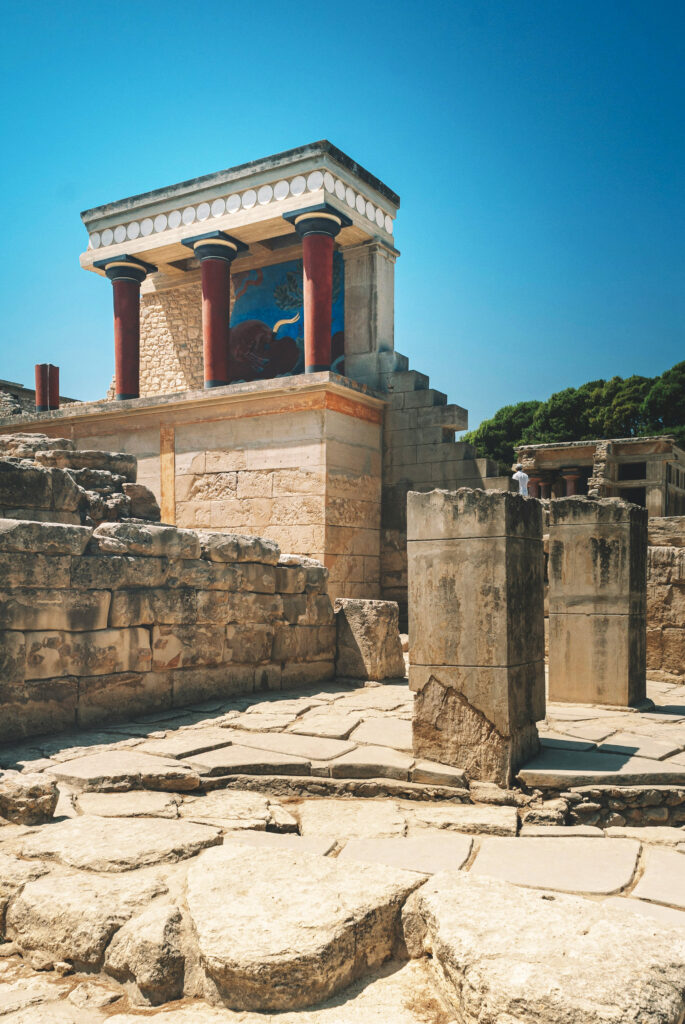
Some believe it is the site of the myth of King Minos, in which his wife is impregnated by a bull and bears the Minotaur, a creature with the body of a man and the head of a bull. I see no sign of the monster, but the Heraklion Archeological Museum houses a fascinating collection of Minoan jewelry and artifacts, with the bull a recurring motif (The Minoan typographic alphabet, the first in history, with 45 symbols, is also very impressive).
Even the grumpiest traveller will know the Acropolis is unmissable. “This open-air museum is an astonishing repository of once-mighty structures,” reads my daily itinerary. Dedicated to Athena, goddess of wisdom and war, the Parthenon crowns the Acropolis as a symbol of democracy and inspiration. The walkway up is a slow but tolerable climb, at least in November. Afterwards, you can enjoy a plate of souvlaki and a glass of ouzo in one of the cafés in Plaka, the hillside village that sits in the Acropolis’s shadow — a perfect end to your day.
Viking includes beer, wine, and soft drinks, plus one free excursion per stop, with additional paid tours available. Dress code on board is casual. As a silent ship, it’s important to check the daily itinerary or download the Viking app to stay updated on activities and departure time. Viking Vesta, like all Viking ships, features several libraries with a wide variety of books, from exploration and travel to novels by Kazuo Ishiguro and Elena Ferrante. Guests can relax at one of several bars or in a cozy nook in various fireside lounges. While Viking doesn’t call itself “luxury”, it has the feel of a discreet boutique hotel, with interiors in a palette of Scandinavian pale greys and warm neutrals. You’ll feel less like you’re boarding a cruise ship, and more like you’re returning home.
Travel
Named after the south star, Octantis is Viking’s first expedition ship, which incorporates visits to Indigenous communities, supports environmental protection and more

History
Bestselling author Bill Arnott embarks on an extraordinary adventure, trekking the ancient world, unearthing Viking secrets and more to reveal history’s most elusive treasure, the holy grail

Travel
Travel columnist Robin Esrock (finally) ticks a European river cruise off the bucket list
Travel
Seeing iconic landscapes before they fade away may be accelerating their demise. Can we square the circle on making these trips sustainable?