Environment

Waterkeeper: how water can be a blueprint for peace

For Bashar Alshawwa, water is not just a basic need — it is both the heart of global inequality and the key to peace. After decades of occupation, exile and war, he is working to turn a weaponized resource into a bridge between peoples.

Editor's note

CONTENT WARNING: this story includes heavy topics that could be triggering for some readers.
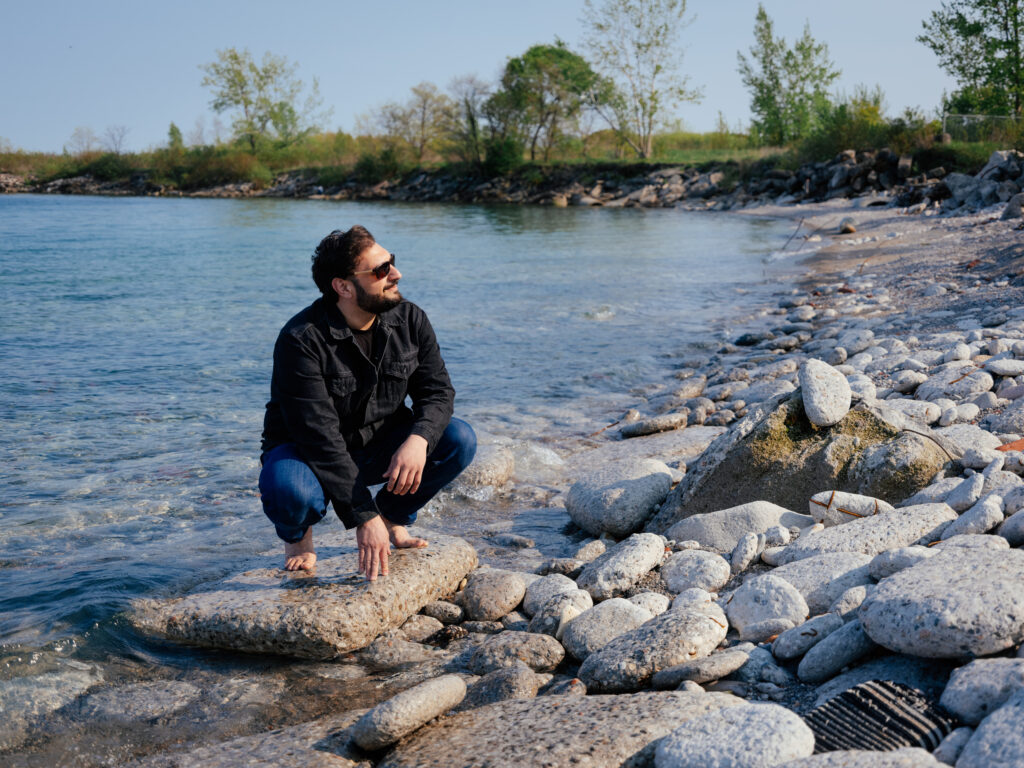
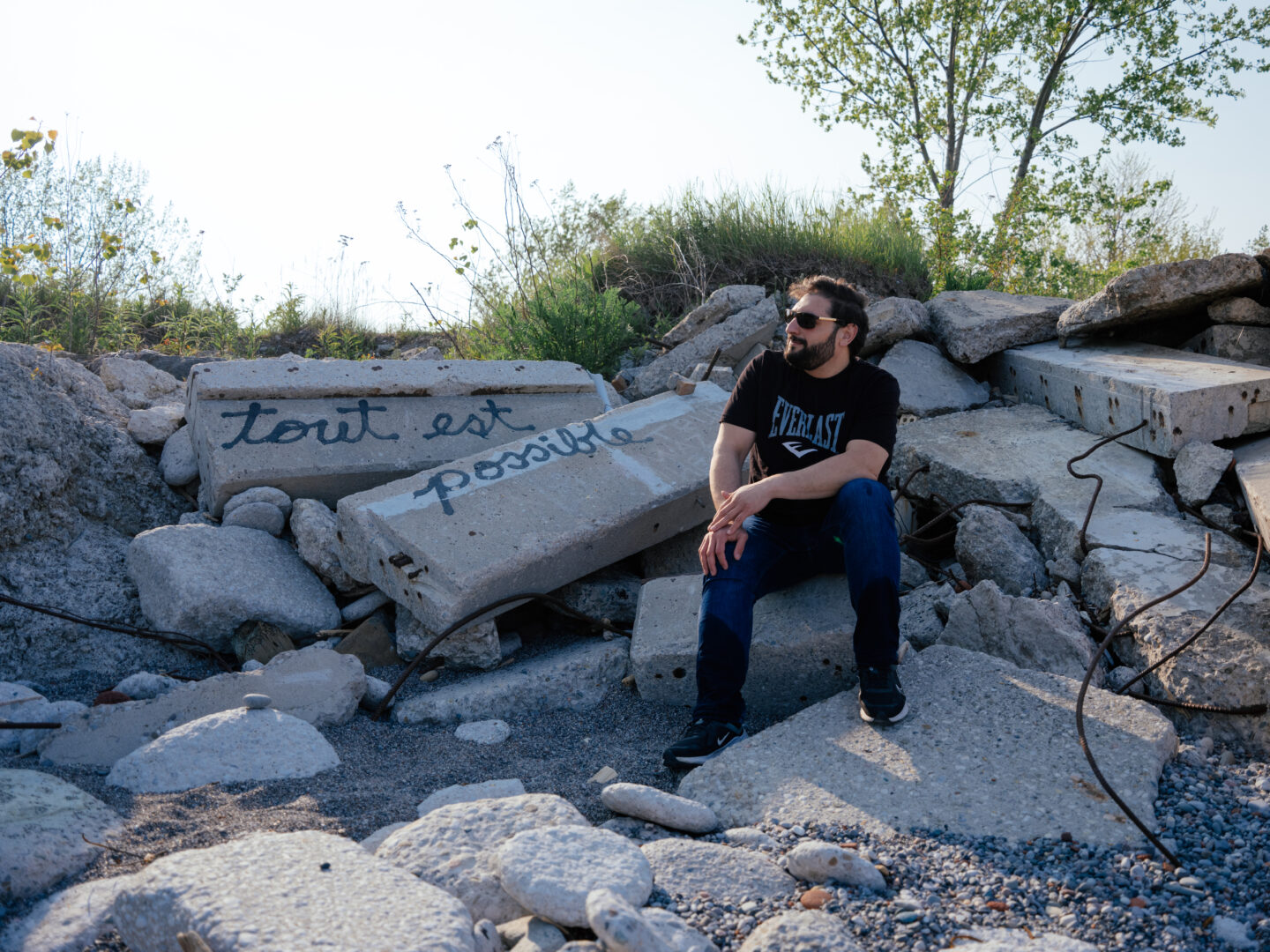
Bashar Alshawwa on the shores of Lake Ontario.
Expand Image
Advertisement
Advertisement

Bashar Alshawwa thinks Canadians are spoiled. He’s immediately apologetic as he admits this, smiling sheepishly — and questions out loud if he even has the right to say that as a newcomer to Canada from the occupied West Bank. But to him, being able to turn on the tap at home at any time — and get clean water on demand — is a new kind of “heaven” that he thinks most Canadians don’t appreciate enough.

“I’m enjoying the water here because, back home, we can’t drink the tap water for a million different reasons,” Alshawwa says. Among them: old, unrenovated water systems. Pollution. And, crucially, the lack of access, control and ownership of water itself due to Israel’s long-standing occupation of Palestine.

What this new availability of unlimited clean water means for Alshawwa, his wife and four young children is that their relationship with water is changing. Now, he says, “I don’t care about taking a bath once every day or once every week or once every month, depending on the situation. I’m not worried if my kid needs a bath after a messy meal or, you know, a full diaper, because back home, we would use wipes and be very careful.”

And yet, as Alshawwa enjoys this newfound freedom and access to water — not just to drink, but to be able to walk on the shores of a Great Lake or along one of the winding rivers in Toronto, where he now lives — he is watching his entire extended family in Gaza struggle to find it every day.

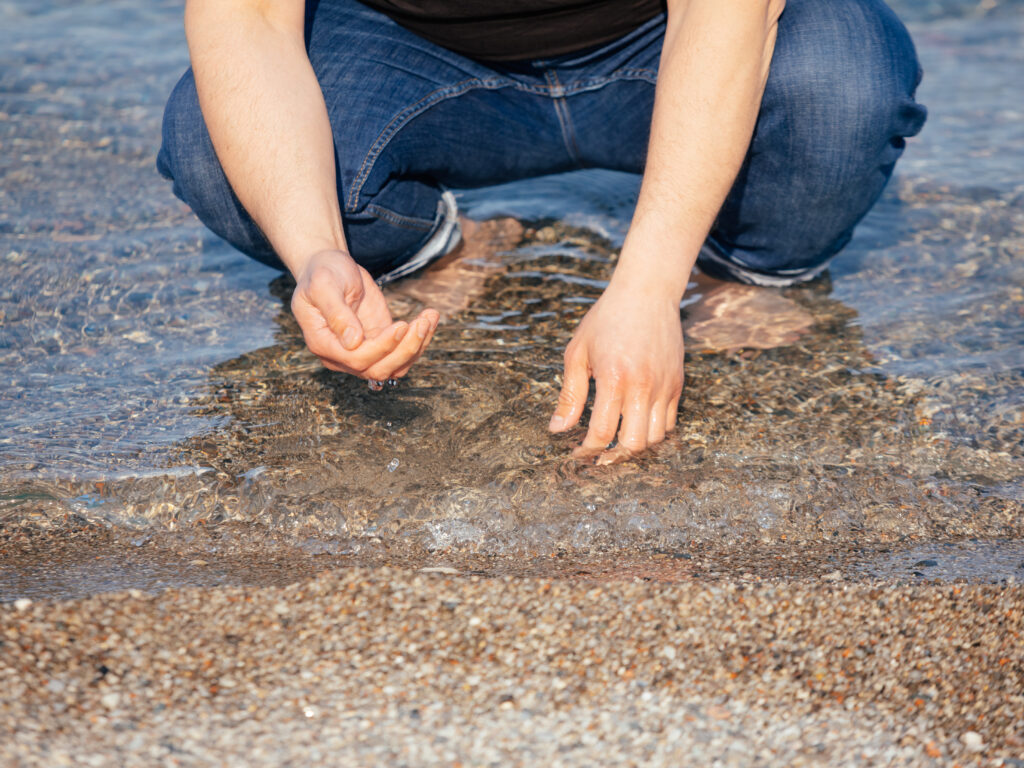
Alshawwa in the cool waters of Lake Ontario.
Expand Image
Alshawwa has spent his career trying to clean up and protect water.
Expand Image

This water catastrophe dates back long before the military assault that began after Hamas’s attack on Israel on Oct. 7, 2023. Water has been at the source of Israel’s occupation of Palestine since 1948, during the Nakba. Nakba (النَّّكْْبََة), the Arabic word for “catastrophe,” refers to the violent expulsion and ethnic cleansing of more than 750,000 Palestinians from their villages by Zionist paramilitary groups to establish the state of Israel. Palestinians believed they would be home again in weeks, but more than five generations later, there are now more than seven million Palestinian refugees and internally displaced people globally.

Then, and again after the 1967 Arab-Israeli war, the first military decisions Israel made were about water, with the Israeli military taking complete control of all water resources and infrastructure in the West Bank, East Jerusalem and the Gaza Strip. Water was a key issue on the table during the peace agreements of the Oslo Accords, first signed in 1993, along with right of return, refugees, settlements and borders.

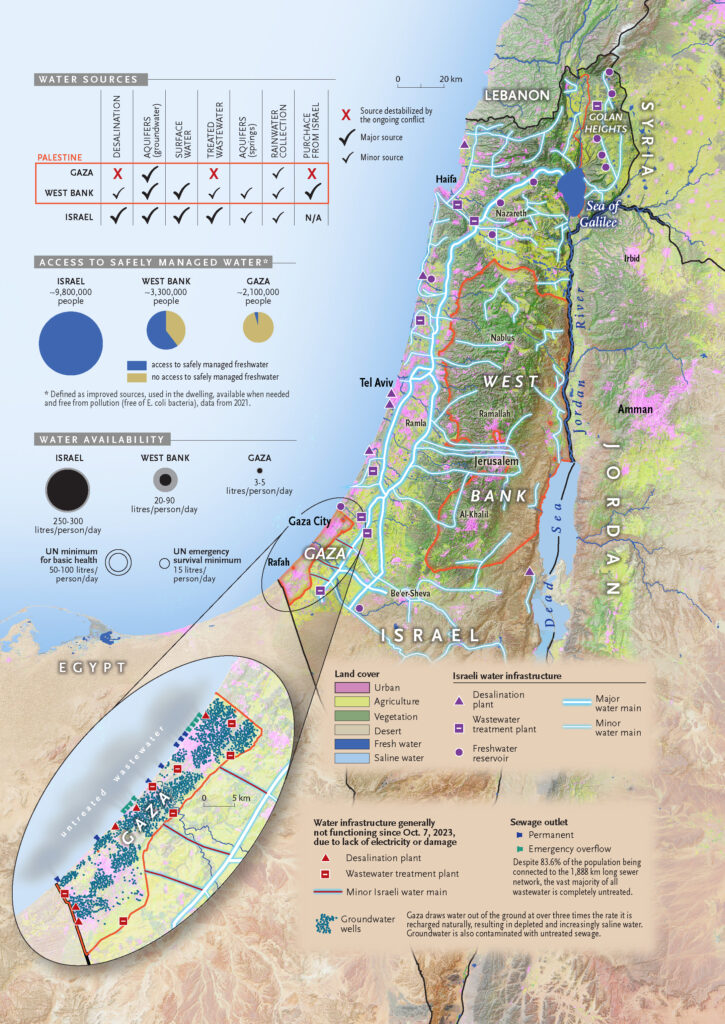
Map: Chris Brackley/Can Geo; Map data: Water sources: Fanack; Safely managed water: Palestine Central Bureau of Statistics, 2021; UNICEF; Cohen, 2024; Water availability: Palestine Central Bureau of Statistics/Palestinian Water Authority; Palestine Studies; Kramer et al 2022; World Health Organization; United Nations; Sewage, Gaza: Fanack; Pollution, Gaza: United Nations; GIS data: LANDSAT imagery, 2023: USGS; Land cover, 2020: Centre for Environmental Cooperation; Israeli water infrastructure: Mekorot; Gaza water wells: Salem & Isaac, 2007; Gaza water infrastructure: UNICEF, 2023
Expand Image

According to Amnesty International, “one of the most devastating consequences of Israel’s occupation is its discriminatory policies on Palestinians’ access to adequate supplies of clean and safe water.” Almost 60 years later, these restrictions continue, preventing Palestinians from getting the water they need to live a dignified life. In 2012, the United Nations predicted that by 2020 the lack of clean water would render Gaza “unlivable.”

In the Gaza Strip, 97 per cent of fresh water is unsuitable for human consumption, and raw sewage pours into the Mediterranean Sea. Desalination plants that treat water work only occasionally because Israel controls the fuel, supplies and electricity that power the plants. Since October 2023, the Israelis have repeatedly bombed these desalination plants and other water infrastructure, then hindered efforts to repair them.

“The numbers are horrible back home,” explains Alshawwa. According to Fanack Water, a Dutch organization that raises issues of water scarcity in the Middle East and North Africa region, some Palestinian communities only receive under 30 litres per day. (The World Health Organization recommends a minimum of 100 litres per day.)  This shortage exists even though Palestinians in the West Bank are the landowners and the water well owners. But they don’t have access to these water wells due to Israel’s occupation and “ownership” of the water under Israeli law. Meanwhile, according to the Palestinian Water Authority officials, illegal Israeli settlers in the West Bank receive 400 liters per day, enjoying pools and water fountains. Alshawwa calls it “a huge injustice.”

This water inequality is something Alshawwa has lived through. “Where I used to live in Ramallah, we receive [water] once every one month. In other communities, once every four months,” he says. “That means that all your behaviour will change as a human: when do you take a bath? When do you water your garden? When do you clean your house? You can’t renovate your water pipes. You can’t deal with the existing water resources that you have under your house, because the law — the military law, the occupation law — prevents you from doing that.”

Back home in Ramallah, Alshawwa was working for EcoPeace, a non-profit organization bringing together Jordanian, Palestinian and Israeli environmentalists to foster peace through shared environmental issues such as water. The organization, which has offices in Amman, Tel Aviv and Ramallah, was founded in 1994 in the wake of the Oslo Accords and funded and supported in part by Canada.

EcoPeace sought to fill in the blanks of what the Oslo peace accords left out: real solutions to water and environmental concerns. The non-profit saw a rare opportunity for collaboration amid conflict: Jordan, Israel and Palestine all shared the same waterways. Alshawwa and his colleagues wanted to protect the basic human right to water. “It’s something undeniable,” he says. EcoPeace work gave him a clear-eyed entry point into the occupation and conflict in Israel/Palestine, one that’s often framed as religious. “No,” says Alshawwa. “It’s a war over resources.”

Occupation, annexation and war further threatened an already water-scarce region. EcoPeace saw the right to healthy, clean, accessible water as a powerful tool: one that united these countries with a shared responsibility — for themselves, and for each other. “We’re talking about mutual interest,” Alshawwa says. “These human values of equality and justice are not enough to protect the cause. This is reality.”

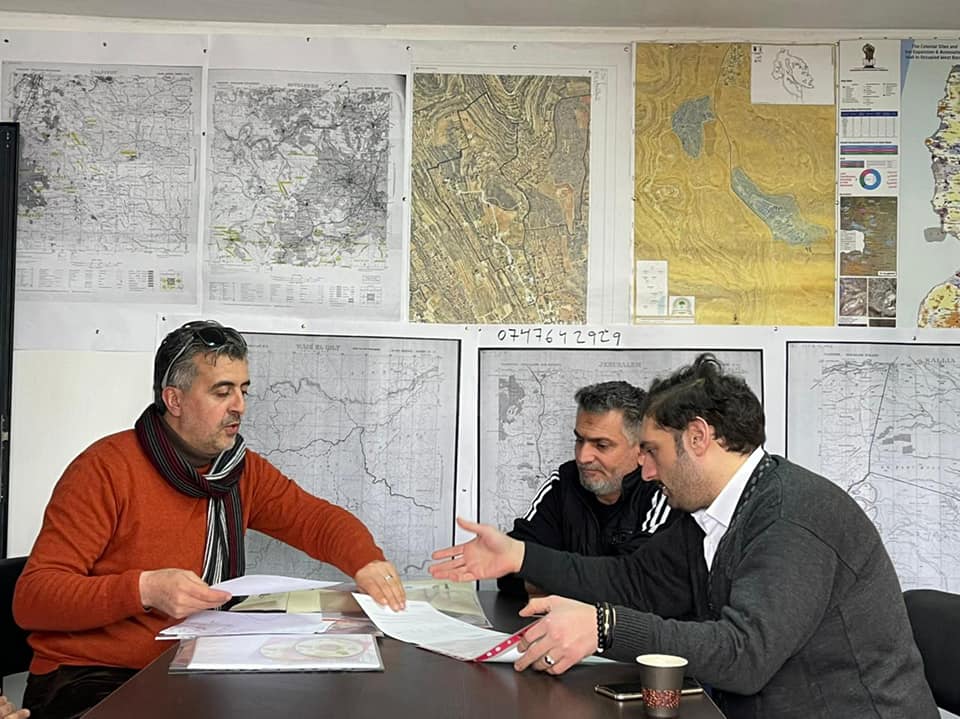
Alshawwa (right) working with the Wall and Colonization Resistance Committee on a legal case in 2022. (Photo: courtesy Bashar Alshawwa)
Expand Image

There’s no stronger case for water diplomacy than the Jordan River (Nahr al-Urdunn or نهر الأردن in Arabic and Nehar ha-Yarden or נהר הירדן in Hebrew), which springs from the mountains between Lebanon and Syria, slips through the Sea of Galilee and winds 360 kilometres down to the Dead Sea. Along the way, it delineates some of the region’s tensest borders — Israel with Jordan and Syria, and Palestine with Jordan — a landscape crisscrossed with fences and landmines. Decades of water grabs by Israel, Syria and Jordan have bled the river dry, leaving Palestinians without a share in its southern reach — and leaving nature with almost nothing at all. Today, roughly 96 per cent of the Jordan’s fresh water has been diverted. A river sacred to Jews, Christians and Muslims has been reduced in many places to a sluggish, foul-smelling trickle. “The Jordan River valley used to be the food basket for the Levant area, but it ended up like the Sahara because of the weaponization of water,” Alshawwa says.

When EcoPeace started its work on the river in 2005, the waters in which Christians believe Jesus himself was baptized thousands of years ago were drying up — and nearly irreparably polluted, owing to decades of competition over, and diversion of, the Jordan. EcoPeace estimates Israel diverts about half of the river’s average annual flow, while Syria and Jordan take the rest. Palestinians, denied access to the river, take almost nothing.

Yet, the Jordan River is the perfect case study for how effective “eco-diplomacy” can be. Through advocacy, campaigns and legal pressure, EcoPeace helped pressure the Israeli government to build a wastewater treatment plant in the Gaza Strip in 2021. The Israeli government also agreed to release water from the Sea of Galilee to the Jordan River. And EcoPeace also secured some access for Palestinians to the biblically significant shores of the Jordan. Nearby Al- Maghtas, where it is believed Jesus was baptized, became a UNESCO World Heritage site in 2015.

Despite these wins, Alshawwa laments the damage that has already been done. Pilgrims flocking to the holy shores of the Jordan River to be baptized are doing so in polluted water. “I feel sorry for that,” Alshawwa says.

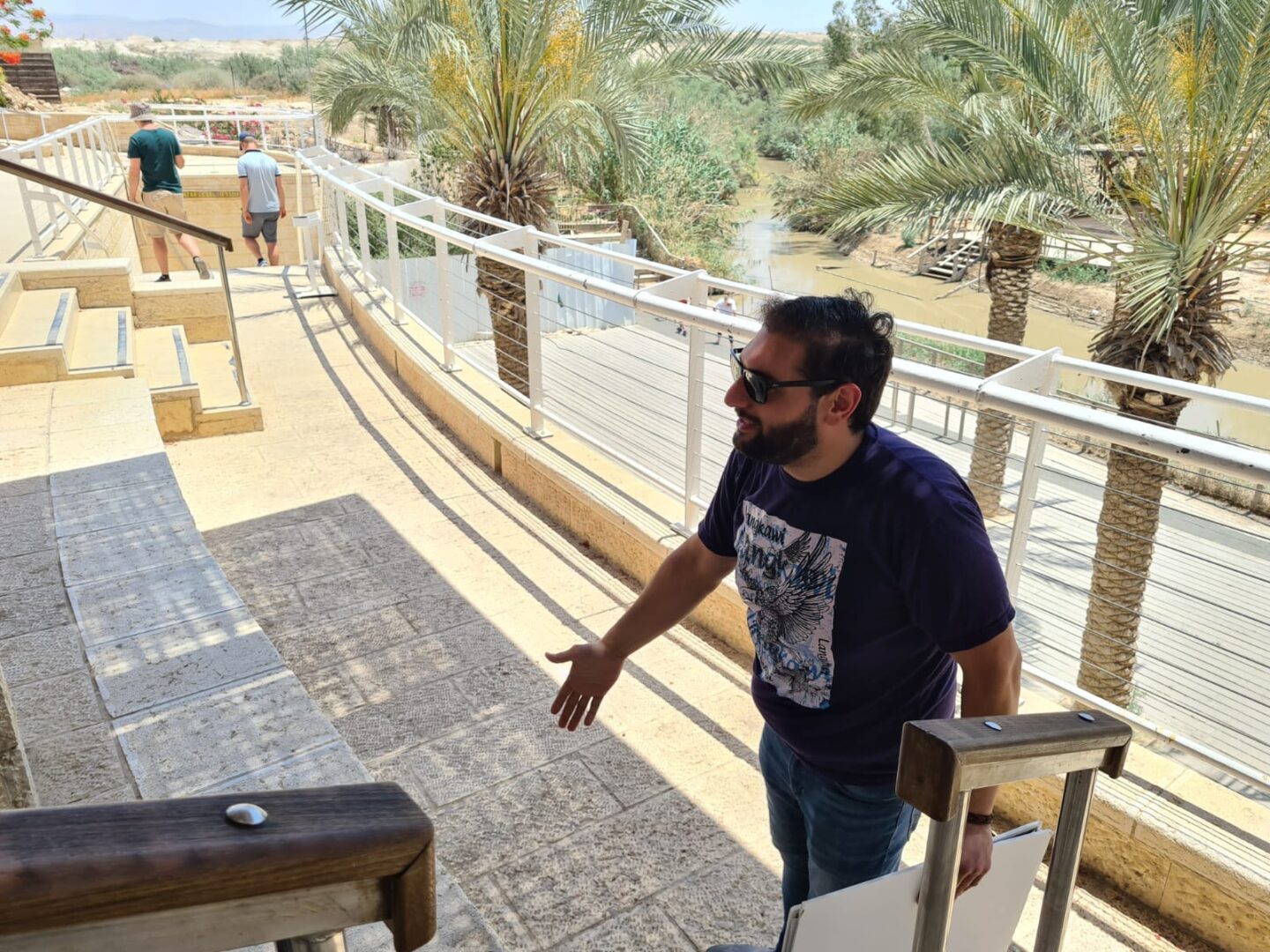
Alshawwa on the shores of the Jordan River during an advocacy tour in 2022. (Photo: courtesy Bashar Alshawwa)
Expand Image

One week before Oct. 7, 2023, Alshawwa and his colleagues at EcoPeace — including a Palestinian decision-maker, an Israeli decision-maker and a delegation of international diplomats — embarked on an advocacy tour in the “Gaza envelope,” the territory in Israel within seven kilometres of the Gaza Strip. What they saw was concerning.

Alshawwa can list in quick succession the factors that made this place a tinderbox. It was clear to him and his colleagues that Gaza, as it was, had no future. No jobs for youth. No security. No stability. No clean drinkable water. No facilities for electricity, nor for energy, not even enough to effectively treat waste, so waste was pushed instead into the open sea. No cement for construction: no pipes, no building materials, owing to Israel’s blockade — which restricted even toys, spices and jam, musical and writing instruments — let alone desperately needed supplies to rebuild infrastructure damaged in previous wars on Gaza.

“No one can accept living in such an unstable situation. Unfortunately, it took us a genocide to start worrying about that region,” says Alshawwa. “We didn’t expect the scale of October 7. We have been warning for many years that the apartheid ethnic cleansing regime is not only damaging Palestinians; it’s threatening the entire Middle East and the entire world.”

In late October 2023, Alshawwa and his colleagues at EcoPeace, along with a coalition of influential Israeli NGOs, experts and institutions, sent letters to Israeli Prime Minister Benjamin Netanyahu warning him that turning off the water supply to Gaza was against Israeli law and pressured him to reopen the taps, or they would take him to court. The U.S. administration was also pressing Netanyahu on this. This coalition met with Netanyahu’s team, and the government acquiesced. But it was a short-lived win. Israel opened the water connections in late October, but its military had effectively destroyed the water infrastructure within Gaza — so water arrived with no way to distribute it. 

EcoPeace was on the ground delivering water alongside partners in Gaza’s water, sanitation, and hygiene committee when six of the water sector workers were killed in an Israeli attack. “These were no accidents,” says Alshawwa. “These were coordinated activities that Israel had knowledge of. We shared all details of the car, the plates, where the teams will work, all their pictures and IDs. It was coordinated with the Red Cross, and they bombed them. They killed many people.” In a separate incident, Alshawwa lost a colleague: EcoPeace’s own engineer who supervised EcoPeace’s projects in Gaza. 

Today, the situation is catastrophic. “Nowadays in Gaza, oh my God… I don’t have enough words to explain,” Alshawwa says. “No words can explain that. In the shelters, you have to put one of your kids all day at the queue to the bathroom, just to reserve a place because it will take eight hours, 10 hours, to get your [turn] to use the toilet.”

Alshawwa adds that it’s women who bear the brunt of the lack of water access. “In the shelters, imagine women with their periods, with the lack of having tampons,” he says. “In some communities, women have to go from one place to another to wash clothes and to use water.” Mothers were already buckling under the pressure of parenting amidst the relentless military onslaught by Israel while also having to find food and water for their children. Alshawwa says this plan “to make life hell” for residents in Gaza is part of Israel’s plan of forcible displacement and ethnic cleansing.

But to Alshawwa and his colleagues at EcoPeace, there was an opportunity here: what if water could go from being the root cause of conflict to unlocking and solving it for good?

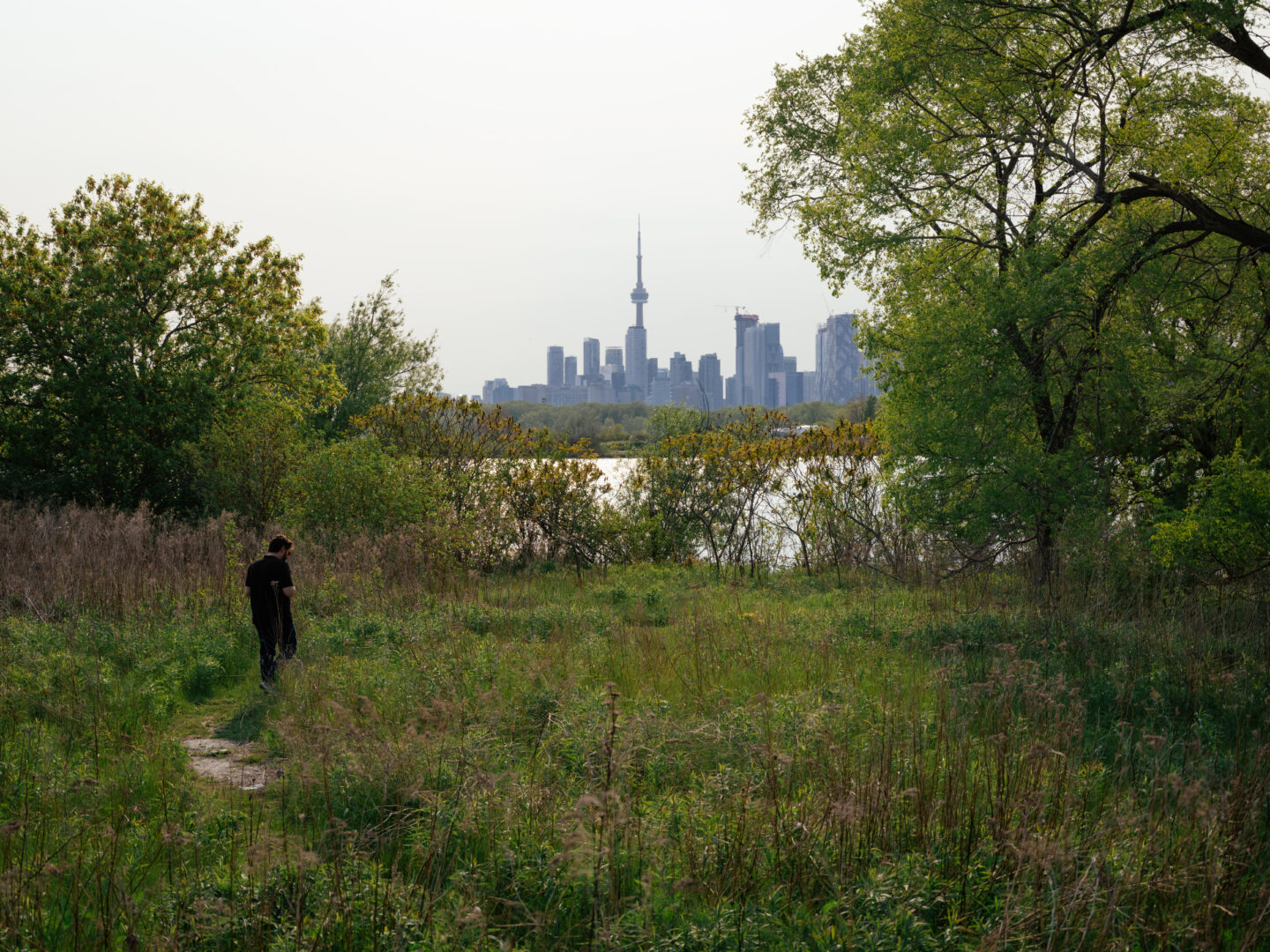
Bashar Alshawwa in Tommy Thompson Park, Toronto.
Expand Image

Alshawwa’s path to water justice was forged by a childhood spent in search of a home. He was born in 1985, a Palestinian refugee outside Palestine in Kuwait. During and after the Gulf War in 1990-91, close to 400,000 Palestinians were expelled from Kuwait — a form of collective punishment after the Palestine Liberation Organization had aligned with Saddam Hussein — forcing Alshawwa and his family to move to Iraq, a country engulfed in what he describes as an unlivable war. Next, they tried to make a home in Jordan, but owing to their status as refugees, he and his sister were unable to enrol in schools. They had to leave yet again, finding themselves in a Palestinian refugee camp in Damascus, Syria. That, too, was short-lived: Syria was living under a dictatorship, and Alshawwa says even finding bread was a struggle. Then came the Oslo Accords in 1993, a landmark agreement between Israel and the Palestinian Liberation Organization in which Israel recognized the organization as a legitimate authority representing the Palestinian people. Alshawwa’s father returned to Palestine, and the family joined him a year later, in 1995.

Being in Palestine for the first time after a lifetime of displacement was “bliss,” Alshawwa says, a reprieve from not being “the other.” A feeling of safety, of being home — finally. But less than a decade later, that positivity began to crumble for Alshawwa with the beginning of the Second Intifada, a major uprising by Palestinians against Israeli occupation that began in 2000 and continued for five years. This difficult time made Alshawwa re-examine his decision to stay in Palestine. “I lost friends, classmates and… and seeing everything collapsing with zero future,” says Alshawwa. “I knew if I stayed I would never make it.”

Alshawwa moved to Russia to attend Vladimir State University, about 200 kilometres east of Moscow. He’d received a scholarship to study biomedical engineering, which married his interests in becoming an engineer or a doctor. He “saw life” there, and that it could be “huge and big.”

This was the dream for many young Palestinians — to fulfill the responsibility of studying abroad, then come home to build, bringing back all they’d learned to Palestine.

He “saw life,” and that it could be “huge and big.”

Five years into that dream return, it shattered with a single bullet that tore through Alshawwa’s leg. A friend had invited him to a “peaceful protest” against the 2014 Gaza War. Protests, as far as Alshawwa knew, meant lighting tires on fire or throwing rocks. This was not that. It was “one of those European protests with candles.” It was called the “march of مسيرة 48 ألف) ” 48,000) and the plan was for Palestinians from communities all over the West Bank to march about 14 kilometres to the border with Jerusalem. They would sit at the Qalandia checkpoint until Israel ended its offensive on Gaza. Alshawwa went with his sisters, his nieces and his girlfriend, Arwa — now his wife. They marched carrying candles and signs. They reached the checkpoint. Then, the shooting started. Alshawwa, no stranger to rubber bullets, realized with horror that Israeli soldiers were shooting live ammunition.

“I was lucky because, when they started shooting, I just hid behind a small piece of concrete,” Alshawwa says. What he didn’t realize was that there were also Israeli snipers positioned overhead on military towers. He remembers a man next to him screaming that there was a laser pointed at Alshawwa’s head as he was crouching behind the concrete barrier. He knew he had to move — fast.

Alshawwa stood up to run and took the bullet in his leg. When an ambulance tried to rescue him, the Israelis shot at it. Medics arrived on foot. Israeli soldiers fired at the medics. Alshawwa says the soldier who shot him just “wanted me to bleed to death.” In the end, he crawled to reach the ambulance. That’s all he remembers until he woke up after surgery. It took 52 stitches to repair the damage caused by the bullet.

It took Alshawwa three days to come back to himself. He’d lost a lot of blood and was on a dizzying combination of painkillers and morphine. Visitors rushed to see him at the hospital and share what had happened. His mom and sisters had wept the day he was shot after hearing someone had been killed in the protests. “They thought I was dead,” remembers Alshawwa. “It was painful. I can’t really even remember what happened.”

Two weeks later, he started to wonder what he was even doing in Palestine. It would take almost a year and many other surgeries to walk again. Meanwhile, the war raged on. By the time a ceasefire agreement was reached, 2,251 Palestinians had been killed, 11,231 were injured and some 18,000 houses were partly or fully destroyed. At the time, Alshawwa says, he abandoned the possibility of peace with this “apartheid regime.”

“Sitting on the couch for one year gives you all this negativity and anger,” he recalls of his recovery. “Until this moment, I’m paying the price for being Palestinian.”

Three years after his painful recovery, the birth of his first daughter, Luna, changed everything. “I promised myself to do whatever I can do to make her future better than my history. I don’t want her to face the same messed up childhood I had,” Alshawwa explains. Within seconds of holding her, “I felt responsible for her. It’s not her fault to be born Palestinian.”

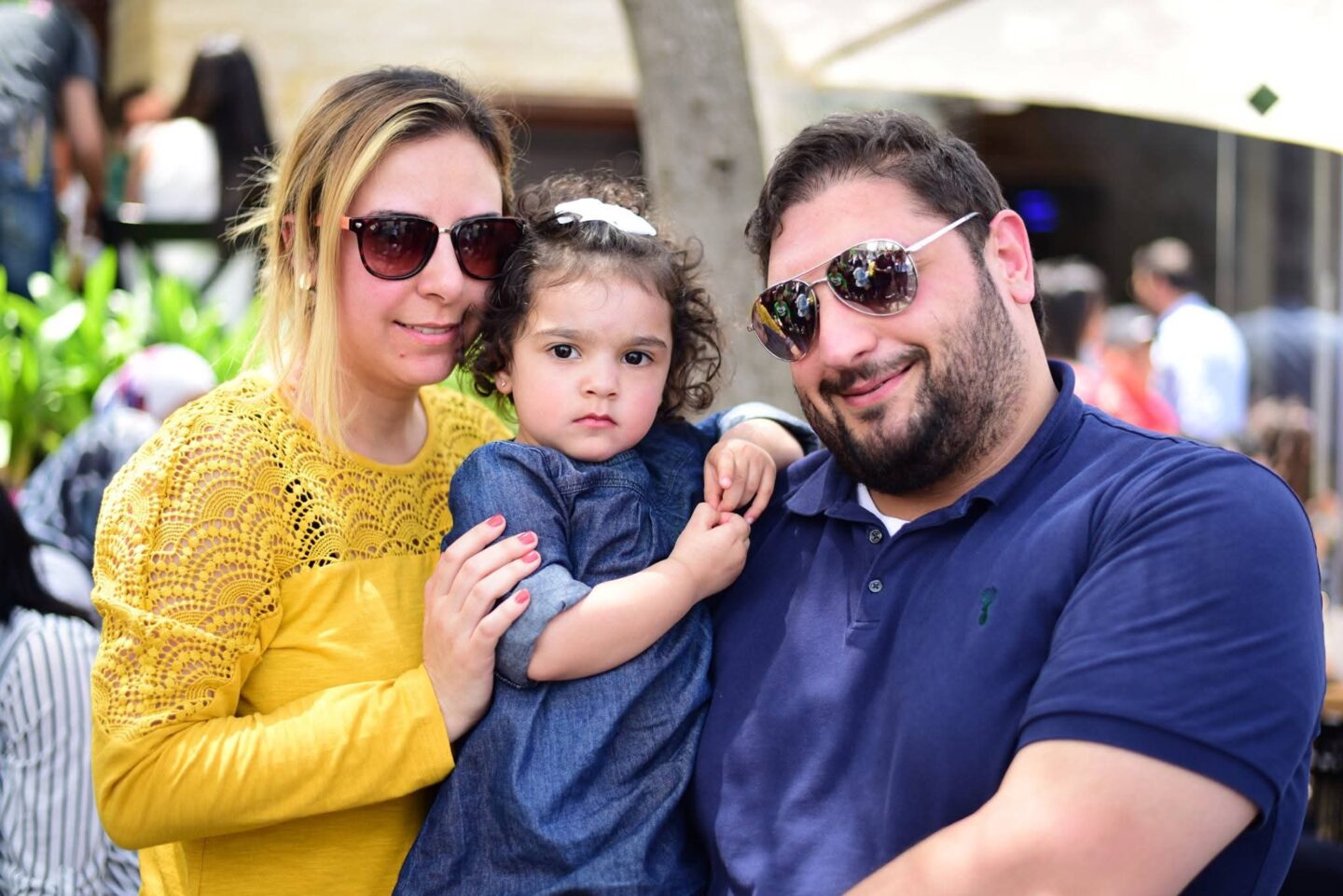
Alshawwa in 2019 with his wife, Arwa, and their daughter Luna. (Photo: courtesy Bashar Alshawwa)
Expand Image

Alshawwa found a way forward. In 2018, he began to work in conflict resolution with EcoPeace. Understanding how crucial access and rights relating to water were to solving a decades-long imbalance between Israel and Palestine made him think: maybe water was the key to unlocking a better life for his new baby. He followed that thread, going on to receive a master’s degree in conflict resolution and development, specializing in water security and water diplomacy.

Water has no borders, he says. Take Gaza, for example, with its lack of power to treat wastewater. It was not only Gaza’s shoreline being polluted with wastewater and losing its biodiversity, but Israeli beaches and those in neighbouring Egypt. “So it’s not only a Palestinian problem now; it’s an Israeli problem,” says Alshawwa. “It’s an Egyptian problem. It’s an international problem.”

“I felt responsible for her. It’s not her fault to be born Palestinian.”

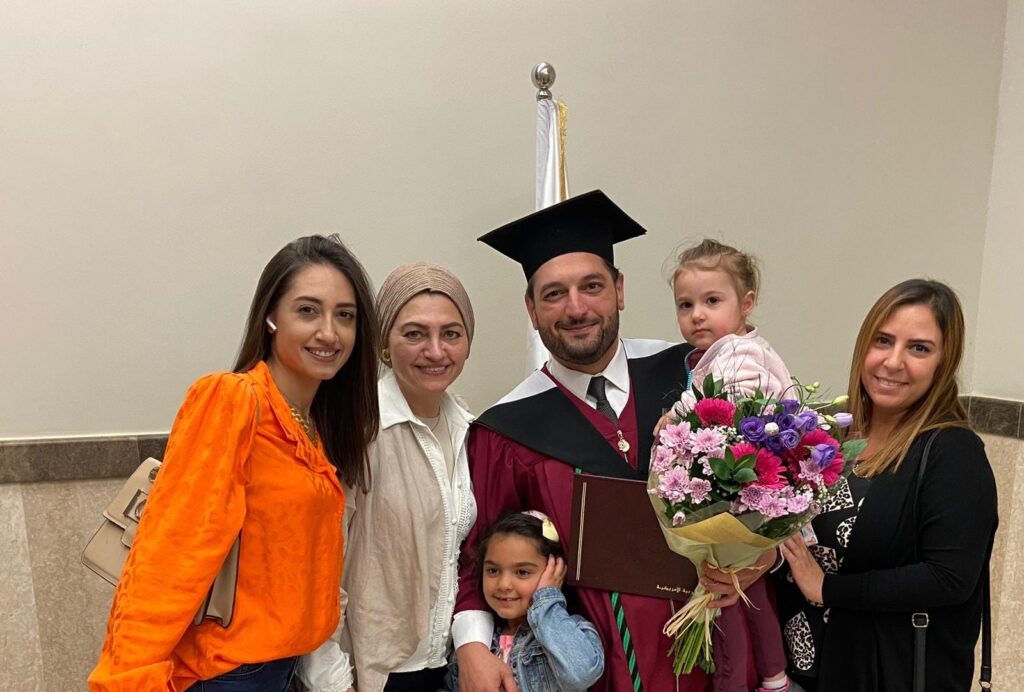
Alshawwa and family after his Masters graduation ceremony in 2022. (Photo: courtesy Bashar Alshawwa)
Expand Image

While the work is long, heavy and often uphill, Alshawwa has no shortage of success stories that prove environmental rights, water rights and human rights can be the building blocks for a better life: EcoPeace’s work has prevented land confiscation, stopped the building and expansion of illegal Israeli settlements and prevented the demolition of houses, according to Alshawwa. As director of advocacy, Alshawwa was leading the teams doing this work. They’d start by going to Israeli military courts, sometimes even taking their cases to Israel’s supreme court and international courts.

For years after Luna’s birth, Alshawwa turned down job opportunities outside Palestine, not wanting to miss his chance to stay and live at home after a lifetime of exile and displacement. That calculation changed after October 2023.

“When we started counting bodies… I just looked at Luna, and I said, ‘Maybe it’s my mistake, my decision to stay home, but it’s not her fault.’” He and his wife decided to take their children and leave the country, at least until things calmed down. Alshawwa feared there were no limits to the violence underway. “We had horrible stories,” said Alshawwa. “I have people with names, memories, with lives, kids killed just for being there.”

In June 2024, Alshawwa saw his opportunity. He’d learned there were special measures for Israelis and Palestinians affected by the war to come to Canada and receive a work or study permit for up to two years. While in Canada to represent EcoPeace during meetings with the Canadian government, which supports EcoPeace’s work, he told his team that he intended to take advantage of these special measures and stay in Canada. He resolved to make a life for himself and his growing family.

Alshawwa walks alone as the Toronto city skyline rises above Lake Ontario.
Expand Image

The leadership at EcoPeace sprang into action to help make Alshawwa’s dream a reality. They reached out to their contacts through the Waterkeeper Alliance. The alliance, which EcoPeace joined in 2009, is a worldwide network of over 300 water organizations working to protect more than 15.5 million square kilometres of rivers, lakes and waterways on six continents. Alshawwa was connected with waterkeepers in Ontario, who share his passion for protecting waterways, addressing water scarcity and seeing water as a powerful conduit for peace through international co-operation.

It took 10 months for Alshawwa’s family’s applications to be approved while he stayed in Canada. “It wasn’t easy,” he said. “The process, the bureaucracy…[and] holding a Palestinian passport.”

Alshawwa with his children in their new home.
Expand Image

In July 2024, Alshawwa missed the birth of his fourth child, a son named Khalil, while still navigating the reams of paperwork that would bring his family to Canada. He FaceTimed them often, and he watched Khalil grow with every call. He smiled when Khalil grew to recognize his father’s face through the screen.

Eight months later, on March 28, 2025, Alshawwa stood nervously at the arrivals hall at Pearson Airport, waiting for the doors to part for his wife, Arwa, along with their children Luna, Maya, Majed and Khalil, now seven months old. Two of Alshawwa’s friends stood by his side. One held a big, square balloon, while the other held a hand-drawn sign that read: “WELCOME TO CANADA,” along with the children’s and Arwa’s names in colourful lettering.

An hour went by. All around him, Alshawwa and his friends watched families and friends reunite, hugging, laughing, shedding tears. He grew anxious. Had something gone wrong? Where were his wife and kids? Alshawwa recalls his back seizing in the painful way that it does when he is on edge. Two hours passed.

Alshawwa’s heart sank. He began to think the whole Canadian dream was naive, and perhaps it was time to abandon it and book his own ticket back home to Palestine.

Then, the doors parted, and through them ran his daughters, Luna and Maya, straight into his arms. “When I just saw them, everything disappeared,” Alshawwa says.

Then he saw Khalil for the first time. Any fears that his newest son wouldn’t recognize him evaporated. “This little incredible kid, he knew me,” Alshawwa says, wide-eyed with wonder as he remembers Khalil’s recognition of a father he’d never met.

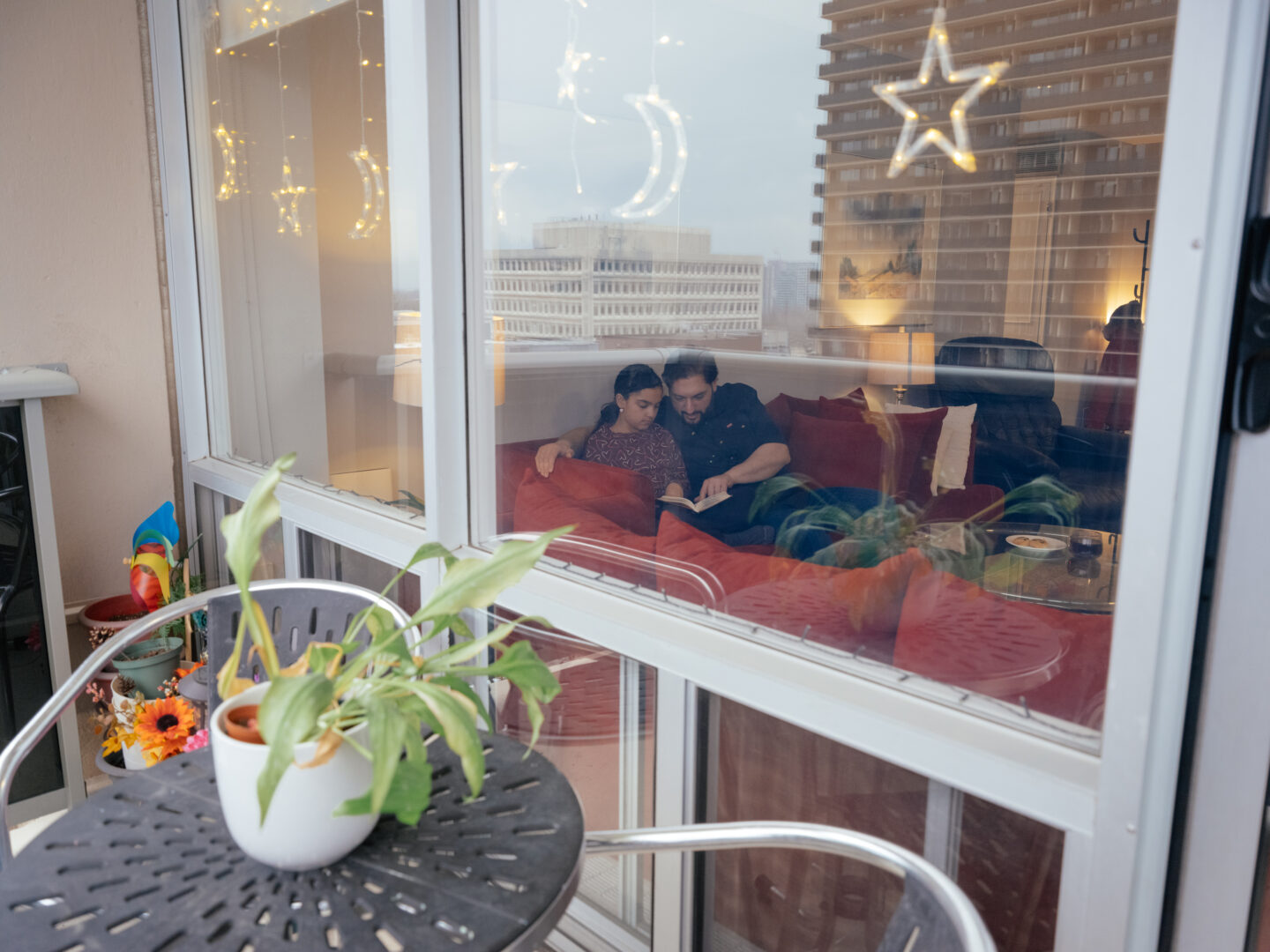
Alshawwa reads with Luna at home. Decorations are up for the month of Ramadan.
Expand Image
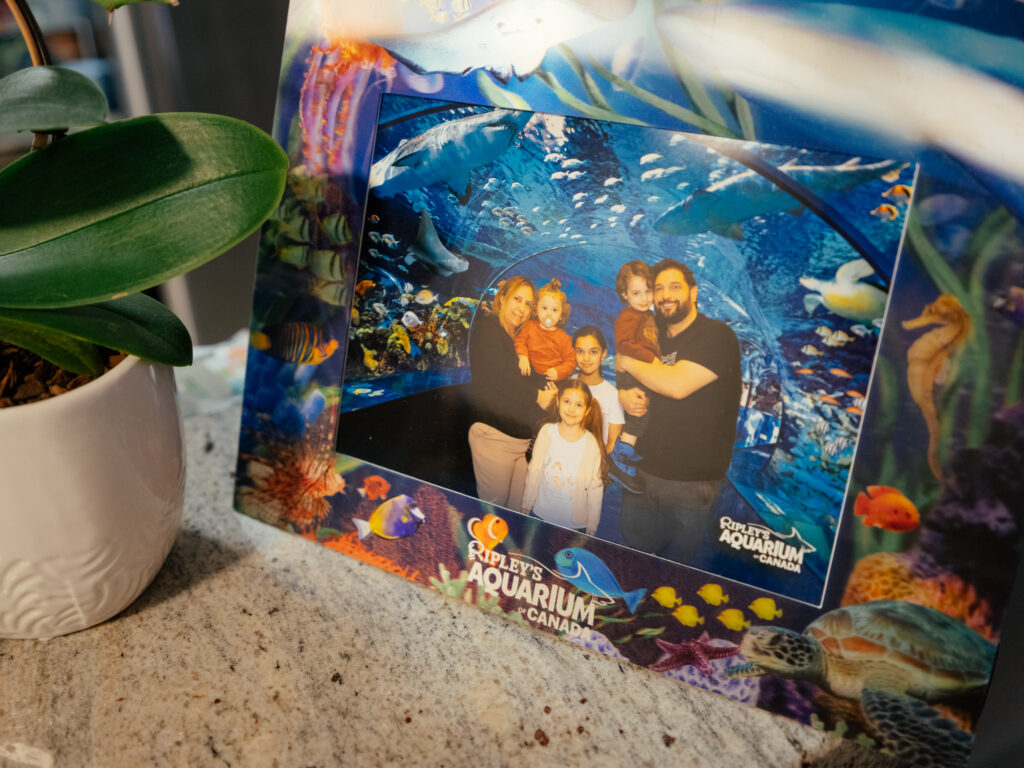
A family photo from a trip to Ripley’s Aquarium since moving to Canada.
Expand Image
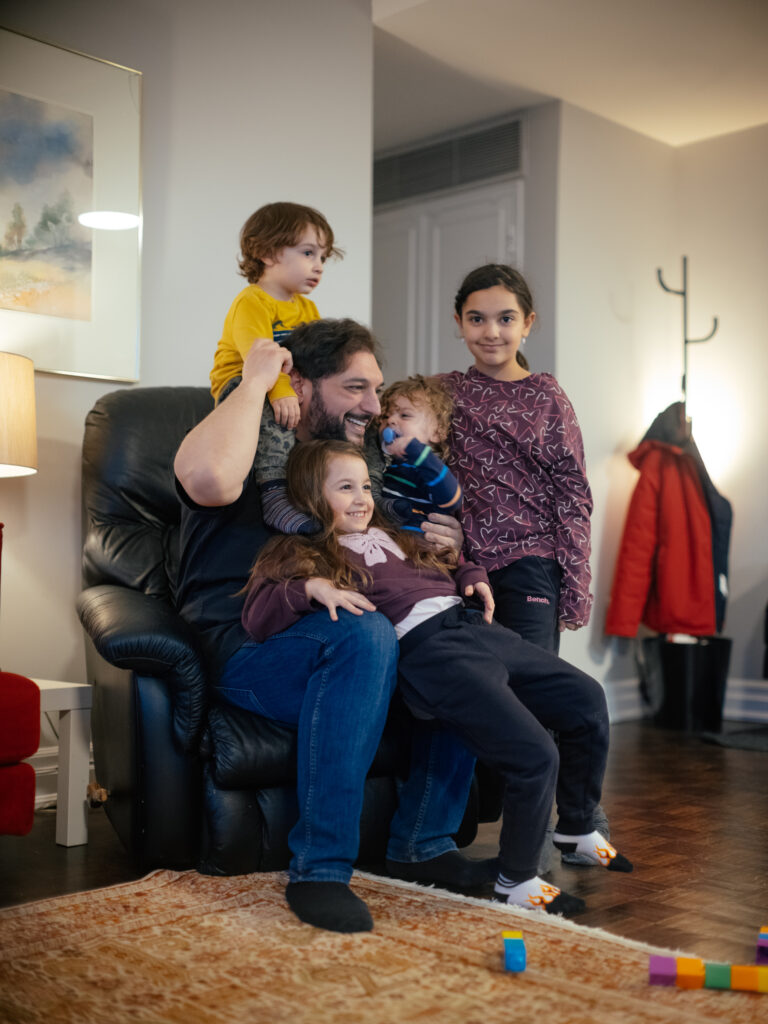
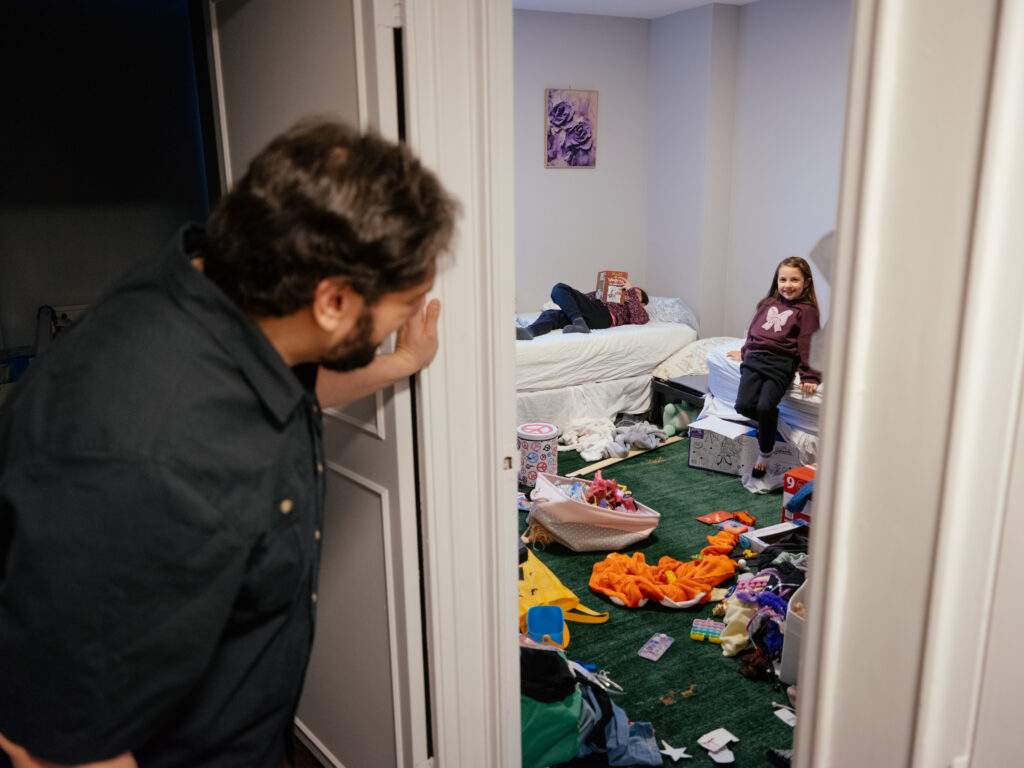
Parenting life in the Alshawwa household.
Expand Image

A few weeks later, slate-coloured skies and a warm breeze envelope the auditorium at the Toronto Reference Library in downtown Toronto, as it fills with hundreds of attendees in purple T-shirts. It is the Canada Peace Summit, a full day of panels, conversations and dialogue designed to “engage Palestinians and Jews in dialogue.” The event was organized by Toronto Friends of Standing Together, a community of Torontonians who are supporters of Standing Together, an Israeli social grassroots movement aiming to end the occupation and achieve peace and equality. Alshawwa is standing just outside the auditorium, looking sharp in his suit, Arwa beaming at his side.

Alshawwa is very clear about why he’s here to speak today. “It’s our story, our cause,” he says. He says Palestinians are often pushed out of the frame when talking about their very futures, and he doesn’t want to waste an opportunity to claim the conversation. He also sees it as an opening: nothing is as polarizing as talking about Israel and Palestine, and people are divided, splintered, and far apart. This is an opportunity to bring them closer together under a massive metaphorical tent of people who care deeply about the future of Palestine and Israel.

“People are standing on the edge,” Bashar says. He has a plea and invitation to anyone who may be reluctant: “If you want to make a change, here is a partner for change. Come on board.”

It is mere minutes before Alshawwa is due to take the stage, but first, there’s something he wants to do. He excuses himself with a flash of a smile. “I’m going to go make a membership at the library [for] my kids.”

Moments later, Alshawwa takes the stage. He is nervous but speaks clearly and emphatically.

“I’ll start by the words weakness — weakness, helplessness, oppression,” says Alshawwa. “These are not just emotions. They ache like a wound, a pain that seeps into your bones and your spirit. My experience has never been easy. For most of my life, I believe I was powerless.”

For the next few minutes, he holds the room’s rapt attention as he tells his life story — and his refusal to give into the anger and rage that consumed him after he was shot in 2014. 

 “I was born a Palestinian refugee from Gaza, outside Palestine, and had a childhood without a childhood. I was without stability. I don’t remember a school I stayed in or a childhood friend. We were always on the move. We were chasing safety. Then came a chance: I returned to my homeland after the Oslo Accords, only to be shocked by a brutal reality: occupation, violence, death, injustice. At that time, I did what anyone would do, and I tried to tell myself I was like everyone else — that I can, I can, or I could, cope with that. Then a sniper’s bullet shattered that. I was shot by an Israeli soldier. I couldn’t walk for a long time, and at that time I was spent with rage, pain and most of all, helplessness. I was helpless to move. I was helpless to reject the injustice. I remember being trapped in that feeling until the day I had my biggest achievement, when I had my beautiful daughter, Luna. And for the first time, everything changed in that moment… I found myself rejecting helplessness, rejecting weakness, rejecting the very oppression that had defined my life. I knew I had to try to fight for a change, for hope, not just for me, but for that beautiful kid. Since then, I have spent years building bridges, forming partnerships, trying to convince the status quo and rejecting the oppression. And I have to prove myself and to others that change is possible, that hope is not a lie. And then, unfortunately, this war started. And when this war began, and again, I lost loved ones, family, friends, uncles, aunts, nieces, nephews, colleagues in Gaza, the pain returned… My body collapsed at that moment. My gallbladder burst from distress and grief, and after waking up from the surgery, I faced the same question, the same test: would I return to being that helpless child, that victim, or would I remain the Bashar who chose to act, to never stop working for peace, for justice? Today, we are all facing that same test as individuals, as groups, as communities, societies, Jews, Arabs, Muslims, white, Indigenous. And this is a challenge, at the end, to our humanity, to our values, to everything we stand for. But we have a choice. Remember that we have a choice, a chance to create a change, to say no to helplessness, no to injustice, and yes to action, yes to responsibility, yes to protecting not just ourselves but the world that we all share. So change is possible if we want it, and that truly is our choice. Thank you for being here.”

The room hangs with silence for a moment after Alshawwa stops speaking. Then, the crowd rise to their feet, and Alshawwa stands amid a wave of thunderous applause.
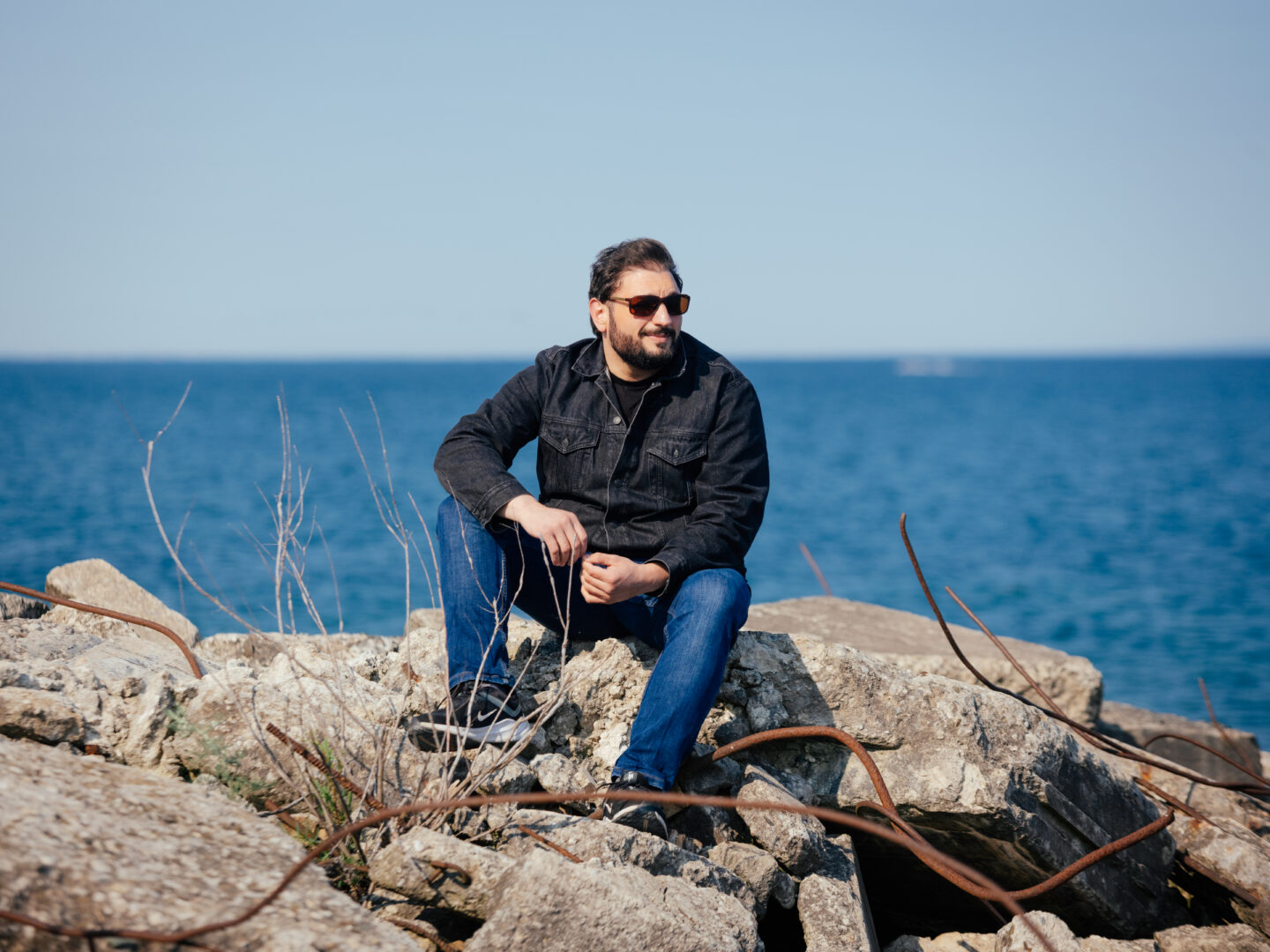
Alshawwa laughs with his daughters Luna (right) and Maya (left).
Expand Image

THREE MONTHS INTO the war on Gaza, Alshawwa was in his office at EcoPeace’s Ramallah headquarters, trying to stay focused on his mission and work amid news of Israel’s relentless campaign of devastation. His boss walked in with life-changing news: he and his colleagues at EcoPeace had been nominated for the Nobel Peace Prize, recognizing three decades of environmental peace-building work and, notably, their work on the Jordan River. It was proof — and recognition — that water could truly be a tool of cooperation.

“This nomination is huge,” Alshawwa smiles. “Even Trump didn’t get it.”

The Nobel nod was especially meaningful to Alshawwa because the nomination recognized EcoPeace’s advocacy work — Alshawwa was, at the time, director of advocacy for the organization. “It came in the times of war, in the times of the genocide, and it came to give us hope that at least we’re not left behind, and someone outside is thinking about this.”

Then, Alshawwa says, “we continued our daily work,” pushing for Gaza to receive electricity, for the strip to be able to treat their own water, to stop raw sewage from polluting shorelines, for Palestinians to have access to water, and protecting the ancient biodiversity of the Jordan River Valley, one of the most important bird migration flyways in the world. Nobel nomination secured, it was time to get back to work: the storks, common pelicans, kingfishers, herons, shovelers, sandpipers, shanks, francolins and other globally threatened waterfowl were counting on him to keep going.

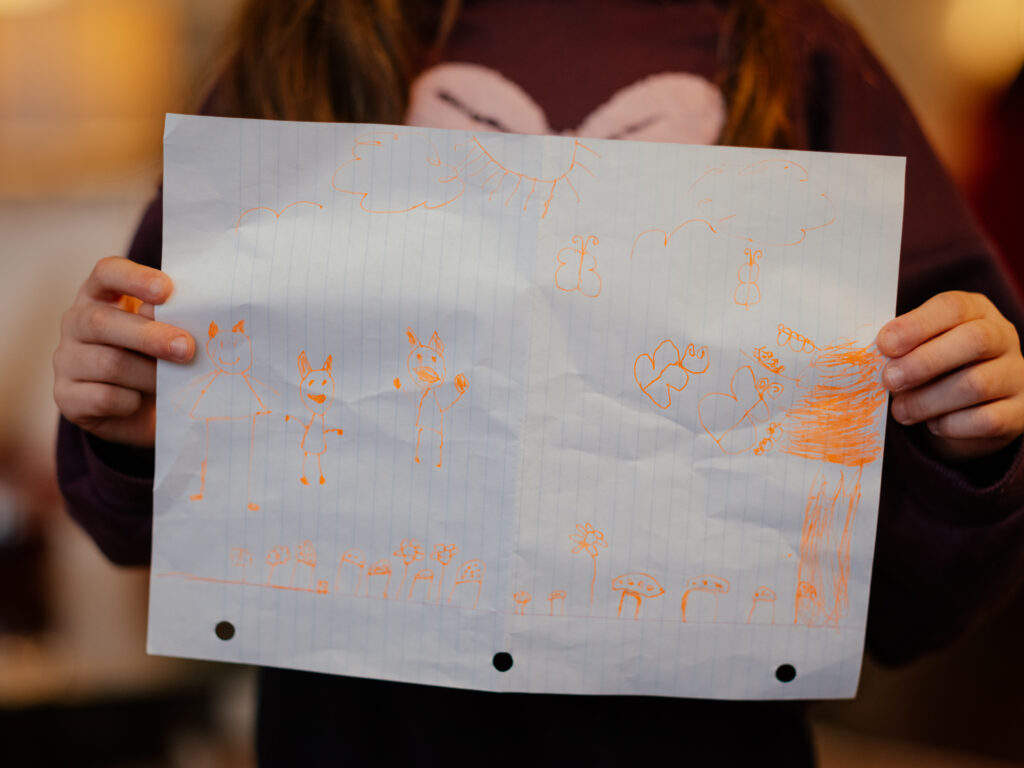
A drawing by Maya.
Expand Image
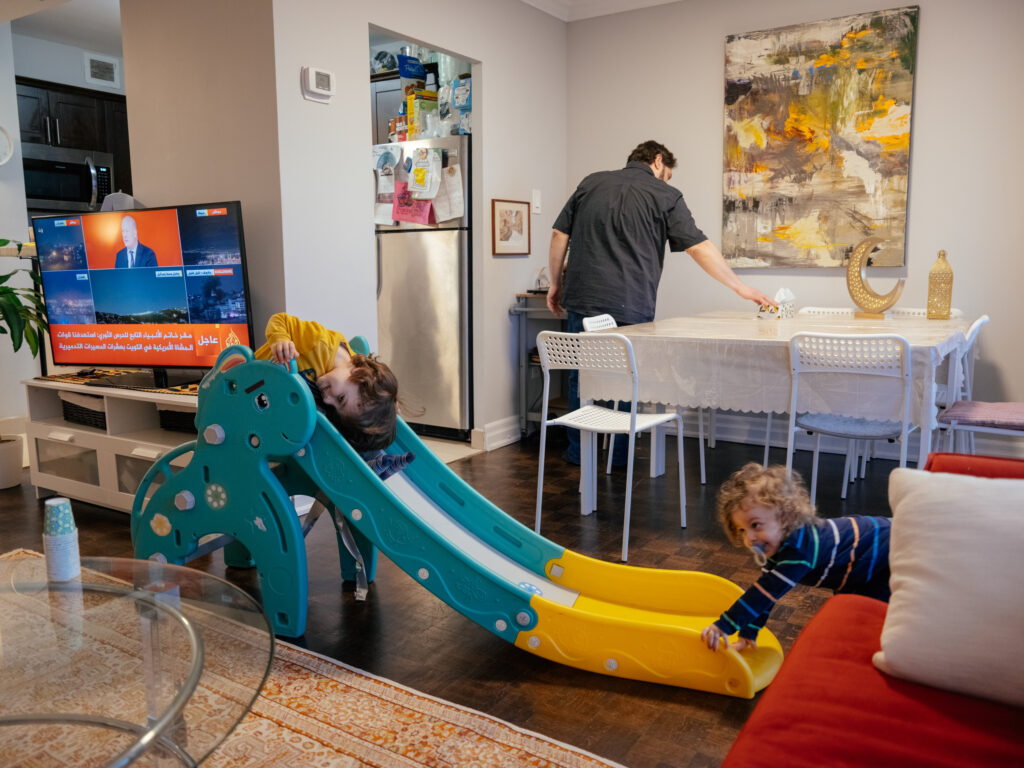
Majed and Khalil play while Alshawwa clears the table and the news plays in the background.
Expand Image
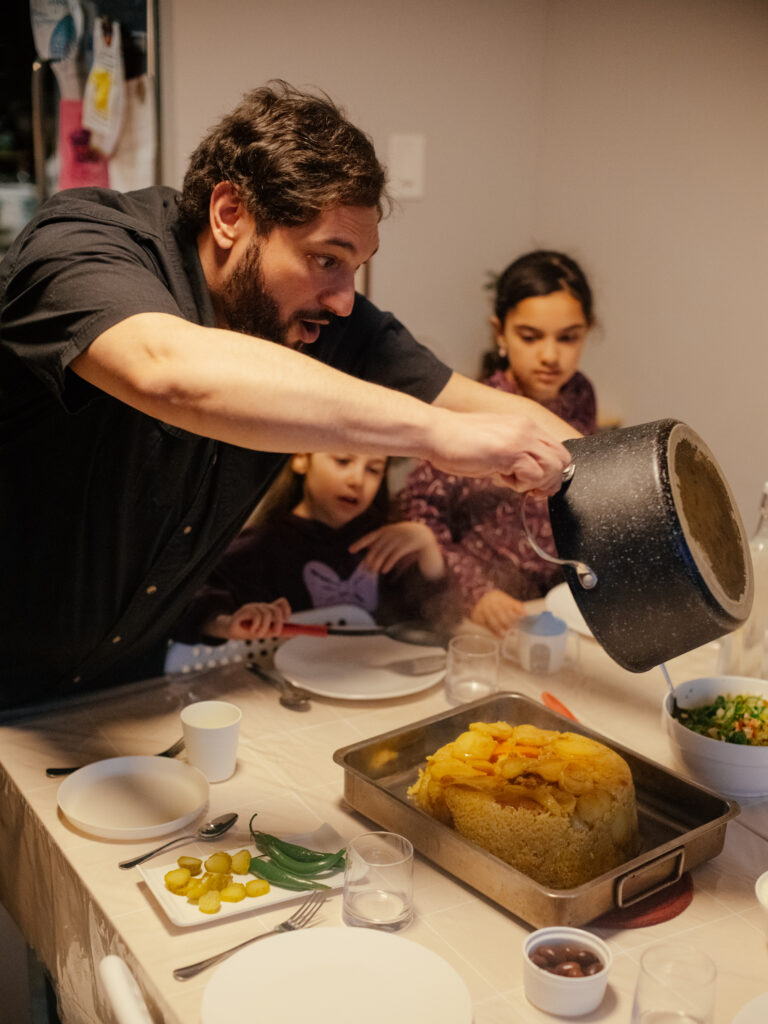
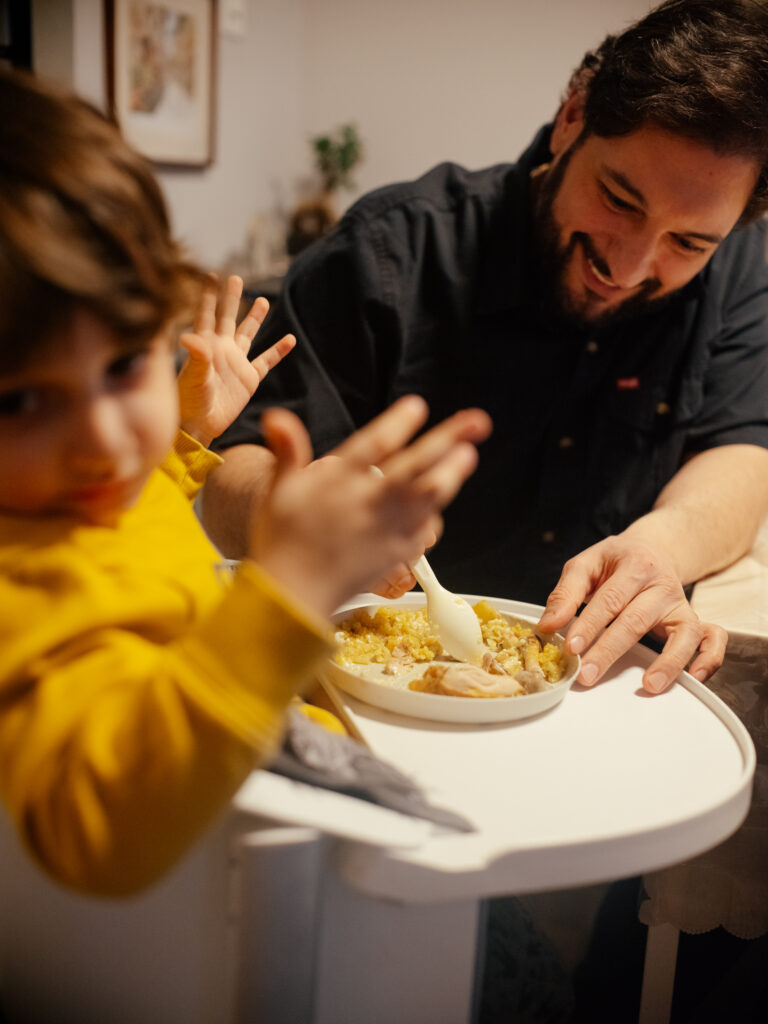
Alshawwa turns out maqluba, a Palestinian upside-down rice dish, after the girls bang on the top with spoons.
Expand Image
Majed tries the maqluba!
Expand Image

Today, Alshawwa and his family are having “good problems” in their new home. In the West Bank, school drop-offs and pickups involved monitoring for the threat of violence. Alshawwa had to be hypervigilant, because “being at the wrong place, wrong time will cost you your life.” Here, everyday problems look more like preparing for the upcoming fun fair, or the pool being closed for renovations at school. “We’re so grateful for this opportunity.… It’s a new life, a new beginning,” Alshawwa smiles.

But the home he’s left behind doesn’t stray from his thoughts. “When I see my daughters enjoying the life of Canada, I still remember my nieces [in Gaza] striving for water.”

The violence back home has shifted. Alshawwa has seen Israeli soldiers “shooting and laughing,” videos of Israeli soldiers celebrating their birthdays by bombing houses. Palestinians called the intentional and systematic destruction of their people a genocide long before the world caught up. Now, the UN Commission of Inquiry, the International Association of Genocide Scholars, Amnesty International and the government of South Africa (in a case at the International Court of Justice) have stated Israel’s actions in Gaza amount to genocide. Alshawwa says he fears what other atrocities will be discovered when they eventually stop — if they ever do.

Today, Alshawwa’s entire extended family is in the north of Gaza. On a good day, messages read, “We survived today.” Other days: “We lost someone today, and we’re counting bodies.” That’s to say nothing of the daily scramble for food and water, with Alshawwa doing his best to coordinate funds, logistics or both, to help them get it. That is in addition to his work in Canada leading the Water for Peace initiative at non-profit Swim Drink Fish and, more recently, working in advocacy and building inter-community relationships for C-Space, a conflict resolution firm.

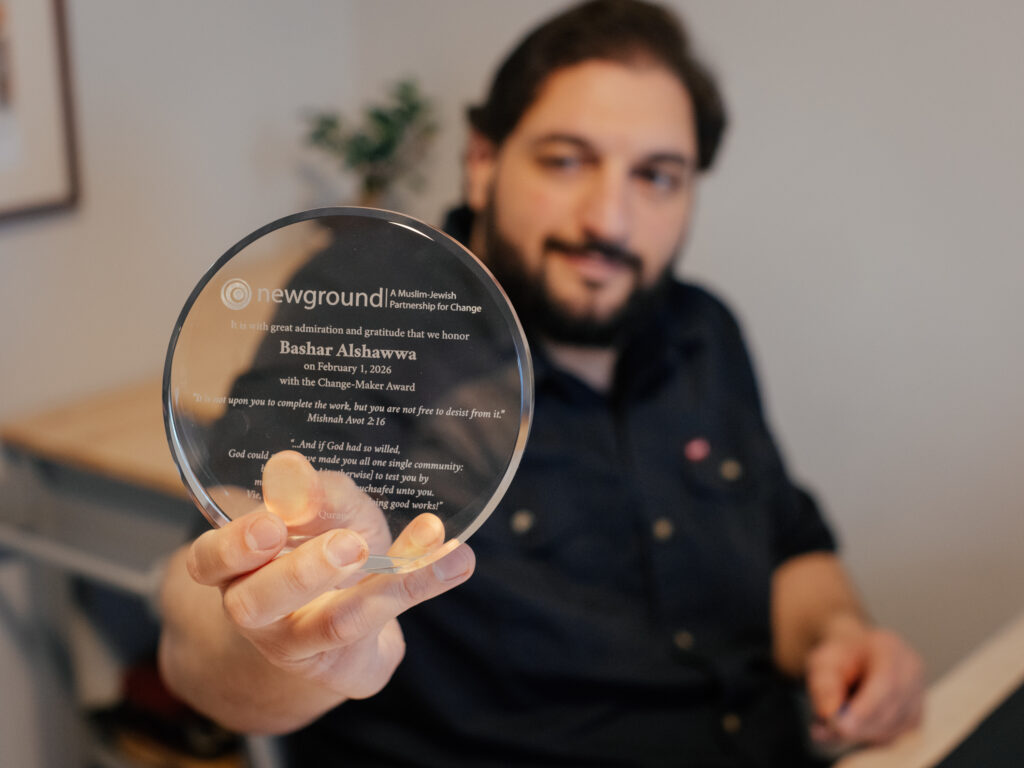
In February 2026, Bashar was awarded with a “Change-Maker Award” by Newground, a Muslim-Jewish partnership.
Expand Image

Alshawwa says he wants to give up. Often. But he rejects the urge to give into despair. “It’s our cause. It’s our responsibility. Someone has to do it. It’s now or never. I would blame myself in the future if I did nothing.”

It’s sometimes thankless work, criticized by everyone around him. Alshawwa understands when people lose hope. But he also says that’s exactly what “the spoilers” want. Alshawwa says they exist not just on “both sides” but on all sides — those who benefit from keeping things exactly as they are: he names the Israeli government, as well as Hamas, the Palestinian Liberation Organization and the Palestinian Authority. But it’s also the wider international community, weapons manufacturers, Christian Zionists. All of them, he says, benefit from the status quo he is trying to change.

“There is no one villain in this story,” says Alshawwa. “There are many villains — and many victims and many heroes.”

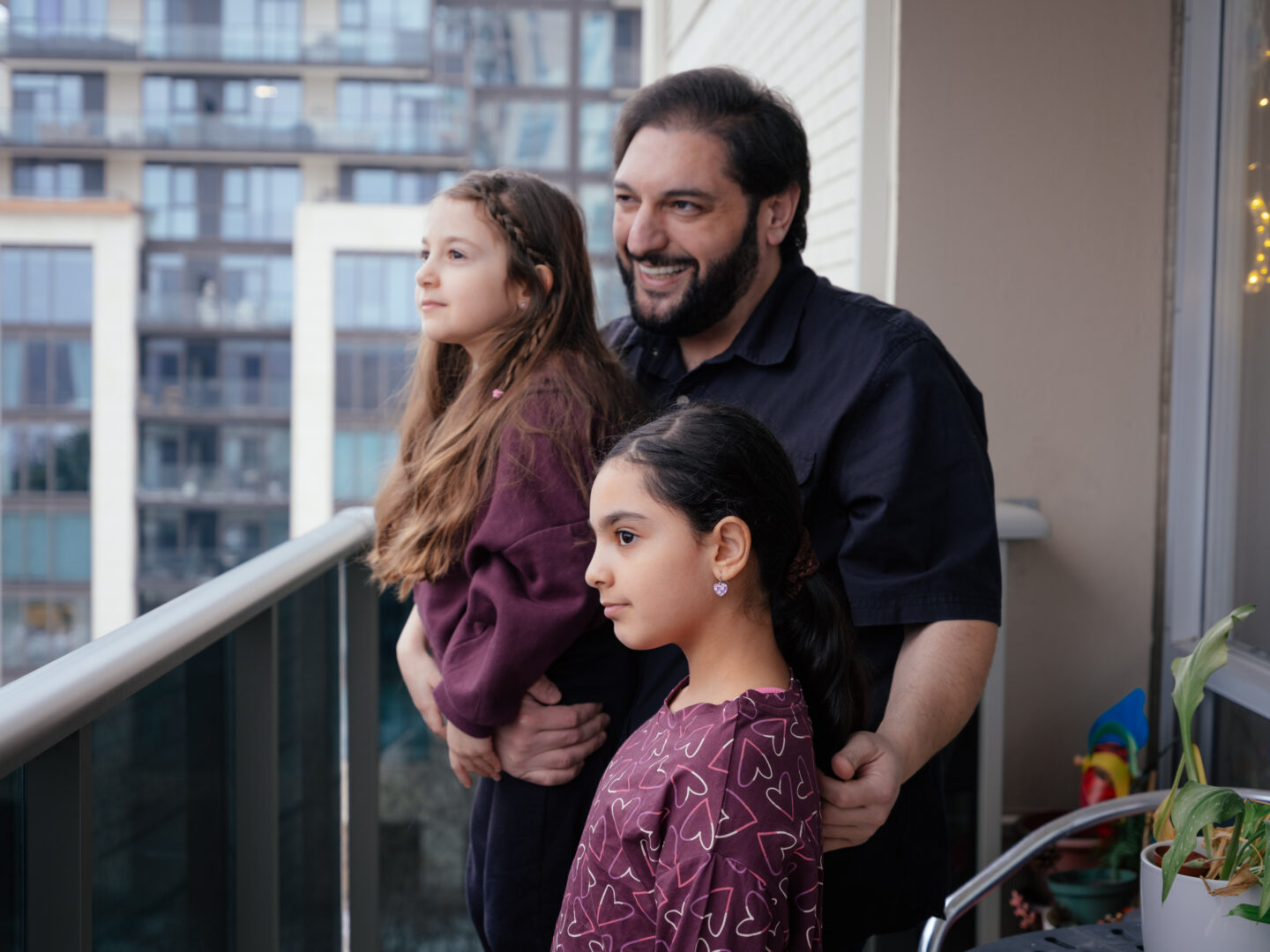
Alshawwa won’t let the villains win and instead wants to be one of the heroes, for four very good reasons. Their names are Luna, Maya, Majed and little Khalil. The water Alshawwa is working to protect belongs to them, after all. “We don’t own water,” says Alshawwa. “We just inherited it. Our only mission is to protect it and to give it to our kids.”

Advertisement

Help us tell Canada’s story

You can support Canadian Geographic in 3 ways:

This story is from the May/June 2026 Issue

Related Content

People & Culture

She who holds the canoe: a ceremonial pilgrimage along the Peacemaker’s Trail

Cayuga Elder Norma Jacobs follows the historic path of the Messenger of Peace — an exploration and discovery of the traditional territories, her culture and herself

  • 1822 words
  • 8 minutes

People & Culture

Laws braided into belts: three Haudenosaunee Wampum Belts you should know

Cayuga Sub-Chief and Faithkeeper Jock Hill on how Wampum Belts came to be — and the knowledge they contain within their strands

  • 2152 words
  • 9 minutes

Environment

Healthy rivers: Communities use DNA tool to keep tabs on freshwater quality

Many of Canada’s 25 watersheds are under threat from pollution, habitat degradation, water overuse and invasive species

  • 996 words
  • 4 minutes

Wildlife

Unlocking Ontario’s fishy secret

At least 50 species of fish can be found in the Arctic drainage basin in Ontario

  • 987 words
  • 4 minutes
Advertisement
Advertisement