
Wildlife
Hide and seek: The race to save the Vancouver Island Marmot
In the field with researchers and volunteers scrambling to save Canada’s most endangered mammal
- 2418 words
- 10 minutes
Wildlife
A small army of scientists, conservationists and volunteers cooperate to ensure the successful rebound of Canada’s most endangered mammal

It is surprisingly difficult to see a Vancouver Island marmot in the wild. For nearly a decade, I’ve spent my summers hiking through the mountainous interior of Vancouver Island, a landscape of slate-gray peaks, steep valleys and flower-filled alpine meadows. It feels like ideal marmot country.
Yet unless I was hiking with the right people, I would never have seen one.
Mount Arrowsmith, rising above the Salish Sea, has supported one of the island’s largest marmot colonies for almost a decade. I’ve climbed its several routes to the summit many times.
Still nothing.
Fast forward a couple of years, and I’m waiting in a volunteer fire department parking lot to carpool with some folks from the Marmot Recovery Foundation, including former field coordinator Mike Lester.
They pull up in a white pickup truck with a marmot logo on the passenger-side door and pick me up. We’re off to the mountain I’ve been to many times before. This time, however, will be my best chance yet of finding one of the rarest mammals on the planet.
High in the cloud-draped alpine meadows of Vancouver Island’s mountains lives a creature found nowhere else on Earth. The Vancouver Island marmot (Marmota vancouverensis) is one of Canada’s few endemic mammals — a species that evolved here and exists nowhere else in the world.
Its origins stretch back millions of years. During the early Pleistocene period, when sea levels were lower, marmots likely crossed a land bridge connecting Vancouver Island to the mainland. When the glaciers retreated and the sea returned, those animals became isolated in the island’s mountains.
Over time, they evolved into their own species.
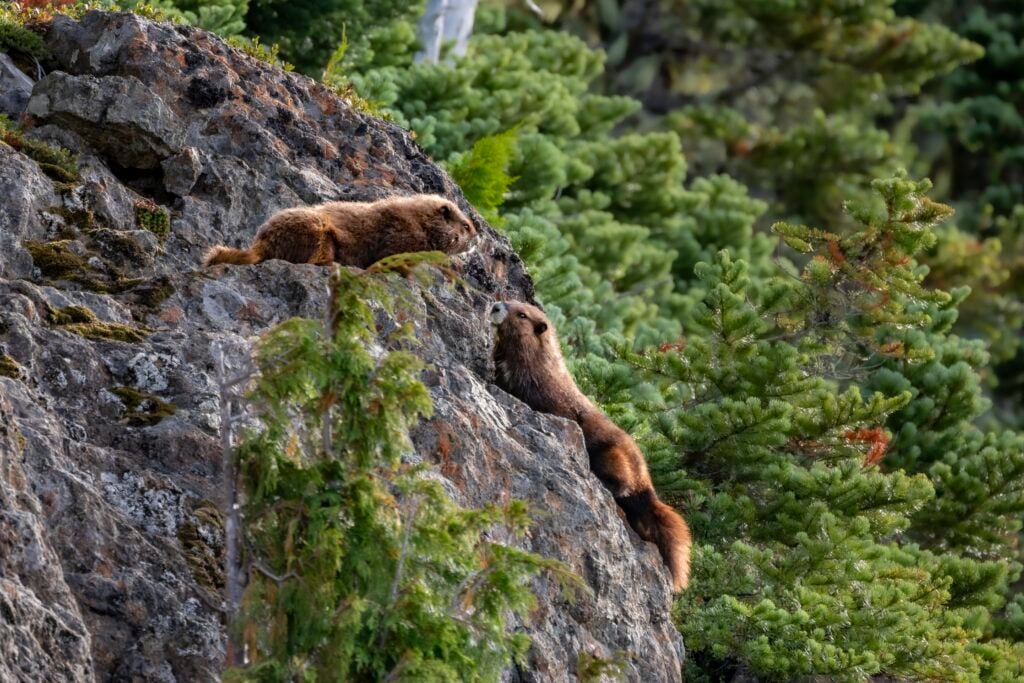
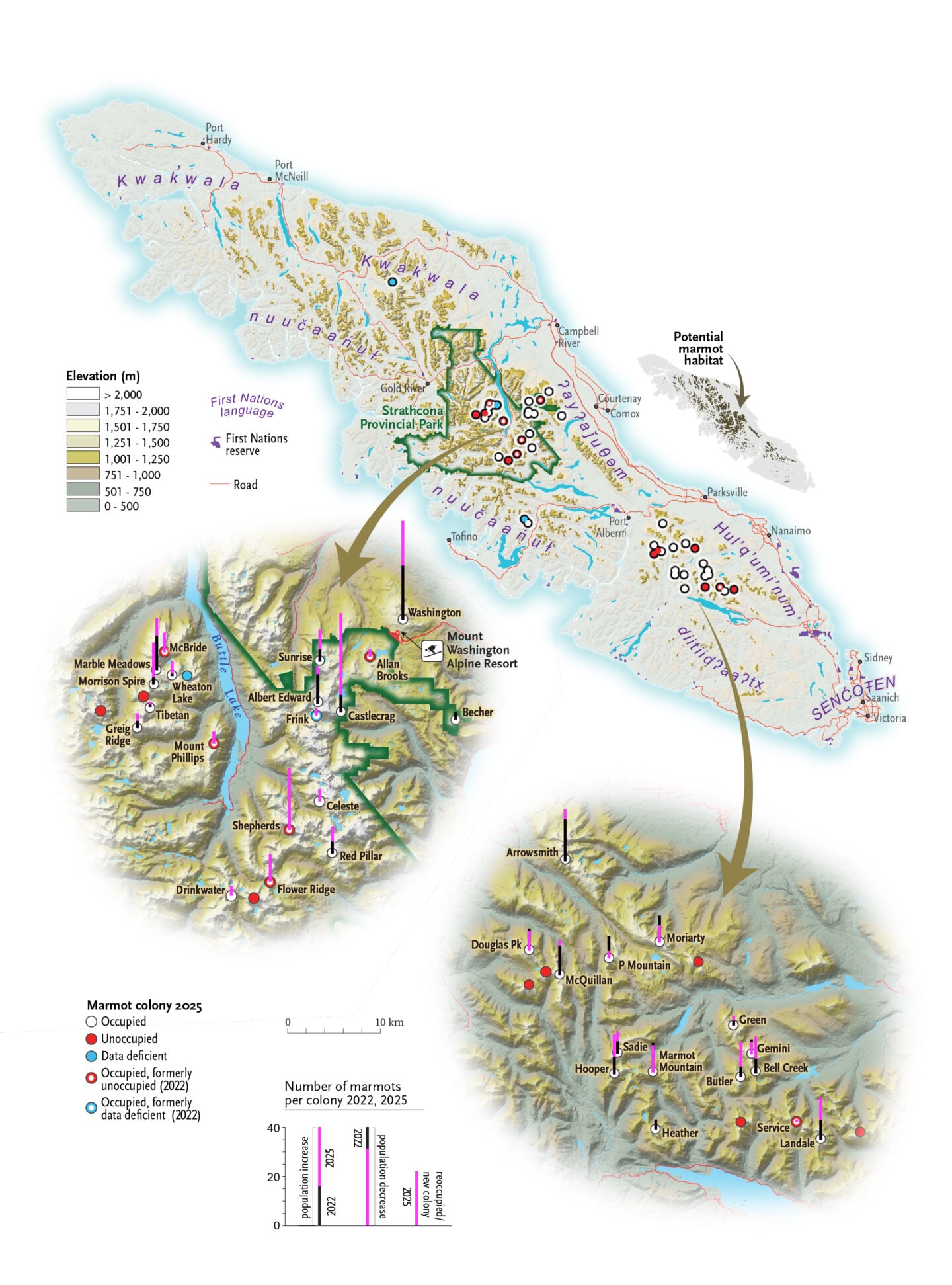
Today, the Vancouver Island marmot survives only in scattered patches of alpine habitat across the island’s mountain ranges, typically above 1,000 metres. These windswept meadows, dotted with boulders and carpeted with summer flowers, are the last places on Earth the species persists.
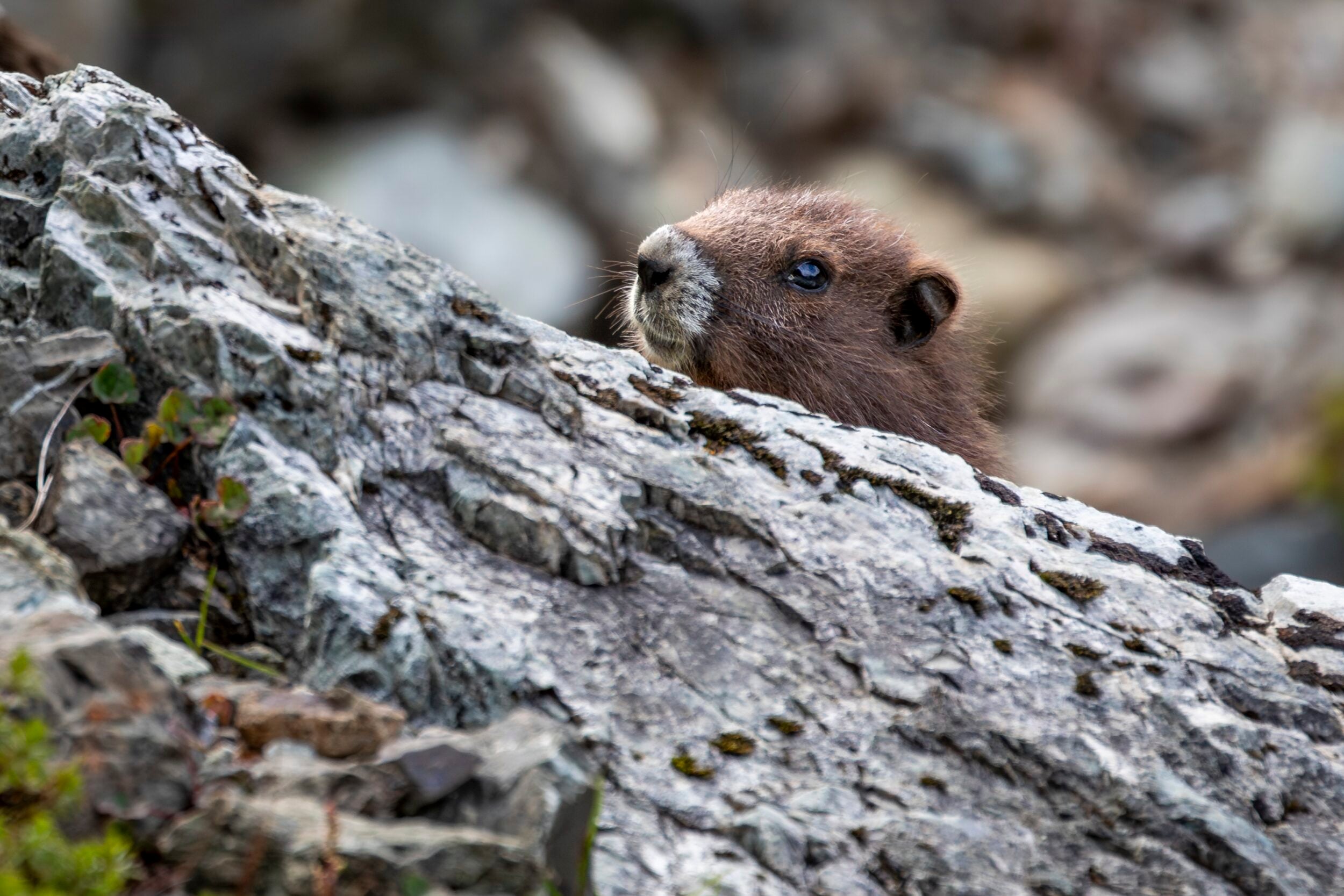
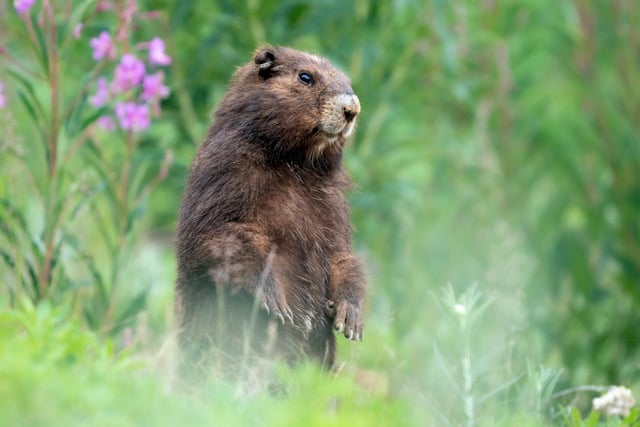
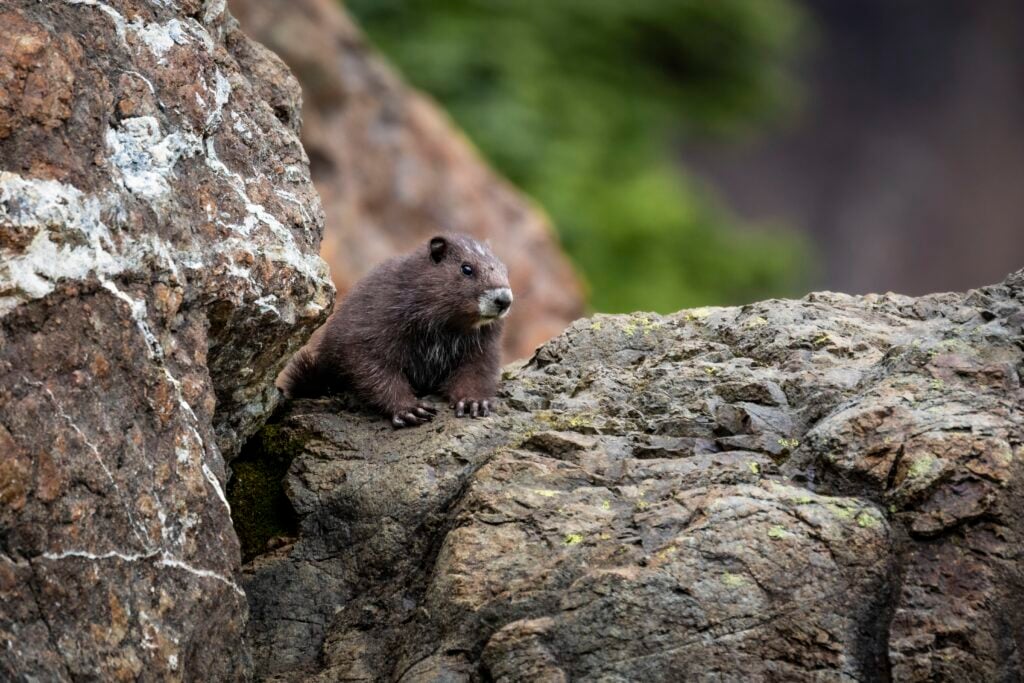
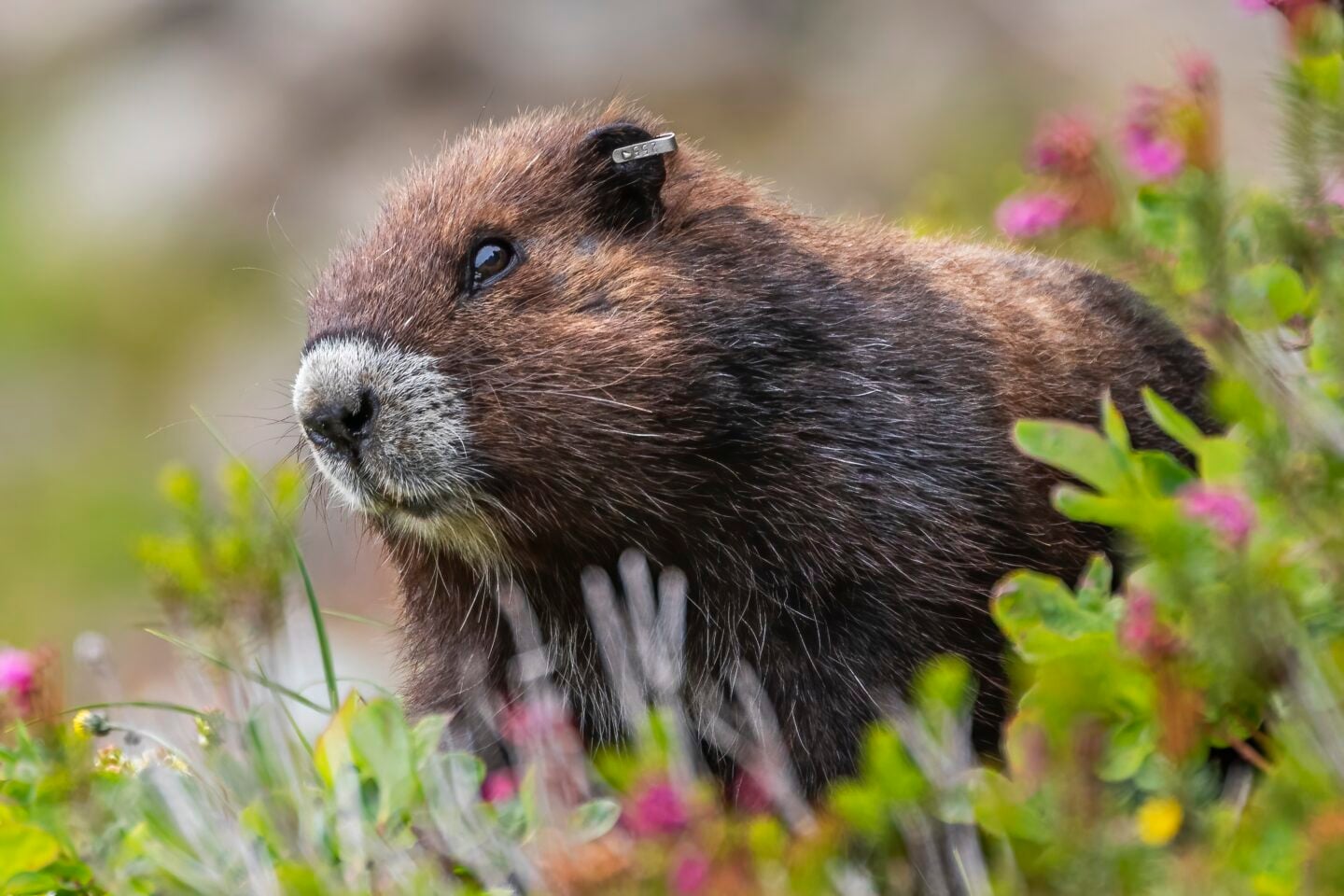
At first glance, the marmot appears unremarkable: a stout rodent with chocolate-brown fur and a bright white patch across its nose. Adults measure around 58 to 77 centimetres from nose to tail and can weigh up to 7.5 kilograms, roughly the size of a hefty domestic cat.
But life in the alpine demands resilience.
Using powerful claws and teeth, marmots dig complex burrow systems beneath rocky soil. Inside these underground chambers, they spend nearly two-thirds of the year in hibernation, often buried beneath metres of snow for as long as seven to eight months.
When spring arrives, their lives accelerate. After months underground, marmots emerge thin and hungry, sometimes having lost a third of their body weight. Through the brief alpine summer, they must feed constantly, grazing on more than 40 species of grasses, sedges and wildflowers to rebuild the fat reserves needed to survive the next winter.
They live in close-knit family colonies and communicate with a surprising range of vocalizations. The Vancouver Island marmot has more calls than any other marmot species, including piercing alarm whistles and a distinctive “kee-aw” call that carries across the slopes. Those whistles are essential. Cougars, wolves and golden eagles all hunt marmots, and a single alarm call can send an entire colony diving underground within seconds.
Life moves quickly in the alpine. Within a few short months, marmots must feed, breed and raise their young before winter returns. Females typically produce litters of three to six pups, but reproduction is slow. Many females skip breeding years entirely. “Marmots are in a tough environment,” Lester says. “It’s hard for them to reproduce. We just want to help them.”
For a long time, help came dangerously late.
By the late 1990s, the Vancouver Island marmot was sliding toward extinction. Colonies vanished from mountainsides. Meadows that once echoed with whistles fell silent.
Researchers struggled to explain why. Human activity had transformed much of Vancouver Island’s high country during the 20th century. Hydroelectric development flooded sections of Strathcona Provincial Park when Buttle Lake was expanded in 1958, altering travel corridors between marmot colonies. Logging roads pushed higher into the mountains, and large clearcuts opened across the landscape.
At first, marmots appeared to benefit. Clearcuts resembled natural meadows, and animals began colonizing them. But the new habitats proved to be ecological traps. As the cut blocks began to regrow, the young trees provided stalking cover for predators. Logging roads also created efficient travel corridors for predators.
Cougars, in particular, proved devastating.
In a small population, the loss of even a few animals can be catastrophic.
In 1978, the Vancouver Island Marmot was first designated as endangered by the federal Committee on the Status of Endangered Wildlife in Canada.
By 1998, with an estimated 74 marmots left in the wild, the situation was critical. Conservationists, scientists and community supporters banded together to establish the Marmot Recovery Foundation, launching one of the most ambitious wildlife rescue efforts in Canada. The foundation quickly built partnerships with the federal and provincial governments, private landowners and a network of zoos and breeding centres across Canada.
Captive breeding and reintroduction programs became the species’ lifeline.
Between 1997 and 2003, 55 wild marmots were trapped and brought into captivity to establish breeding populations at facilities including the Calgary Zoo, the Toronto Zoo and the Tony Barrett Mount Washington Marmot Recovery Centre.
Built in 2001 at Mount Washington Alpine Resort, that centre became the heart of the recovery program. Named after the foundation’s late executive director, Tony Barrett, it houses breeding pairs and raises pups destined for release into the wild.
Breeding marmots is delicate work. Pairings must be timed carefully around the animals’ natural reproductive cycles, and introductions are managed cautiously to avoid conflict between potential mates. When it works, pups are born each spring and raised until they are ready for release.
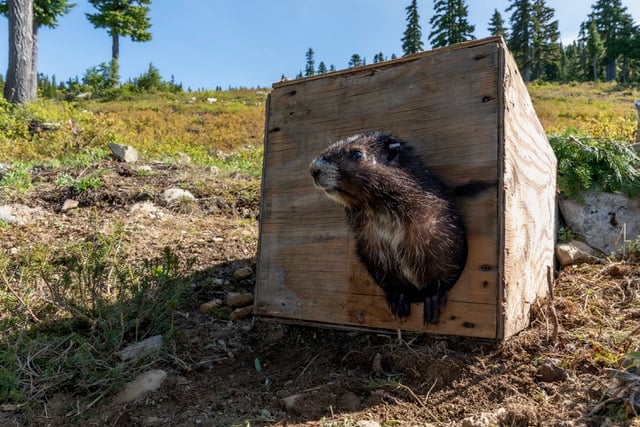
Since the early 2000s, some 726 captive-bred marmots have been returned to Vancouver Island’s mountains.
Today, the results are remarkable. From fewer than 30 wild marmots in 2003, the population has rebounded to 420 animals across 37 colonies observed in the 2025 field season, with additional individuals in conservation breeding programs.
While the results are encouraging, Environment and Climate Change Canada’s 2020 recovery strategy noted that for the marmots to be considered truly “out of the woods,” their colonies need to be self-sustaining, with the mammals dispersing freely between colonies to ensure genetic diversity. That ambitious goal will likely not be met over the next few years, but the strategy document stressed that the department is committed to making resources available to ensure success.
“People are often surprised when I say it,” says Adam Taylor, executive director of the Marmot Recovery Foundation. “But this is one of the best examples of species recovery in the world.”
Still, recovery requires constant work. To understand how marmots are surviving — or dying — researchers must first be able to find them.
Which brings us back to the slopes at Mount Arrowsmith.
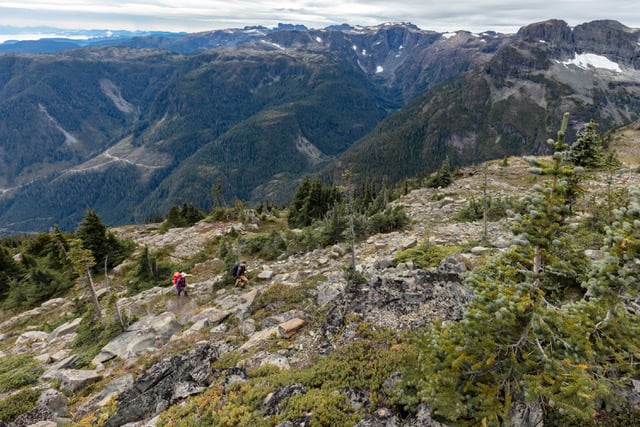
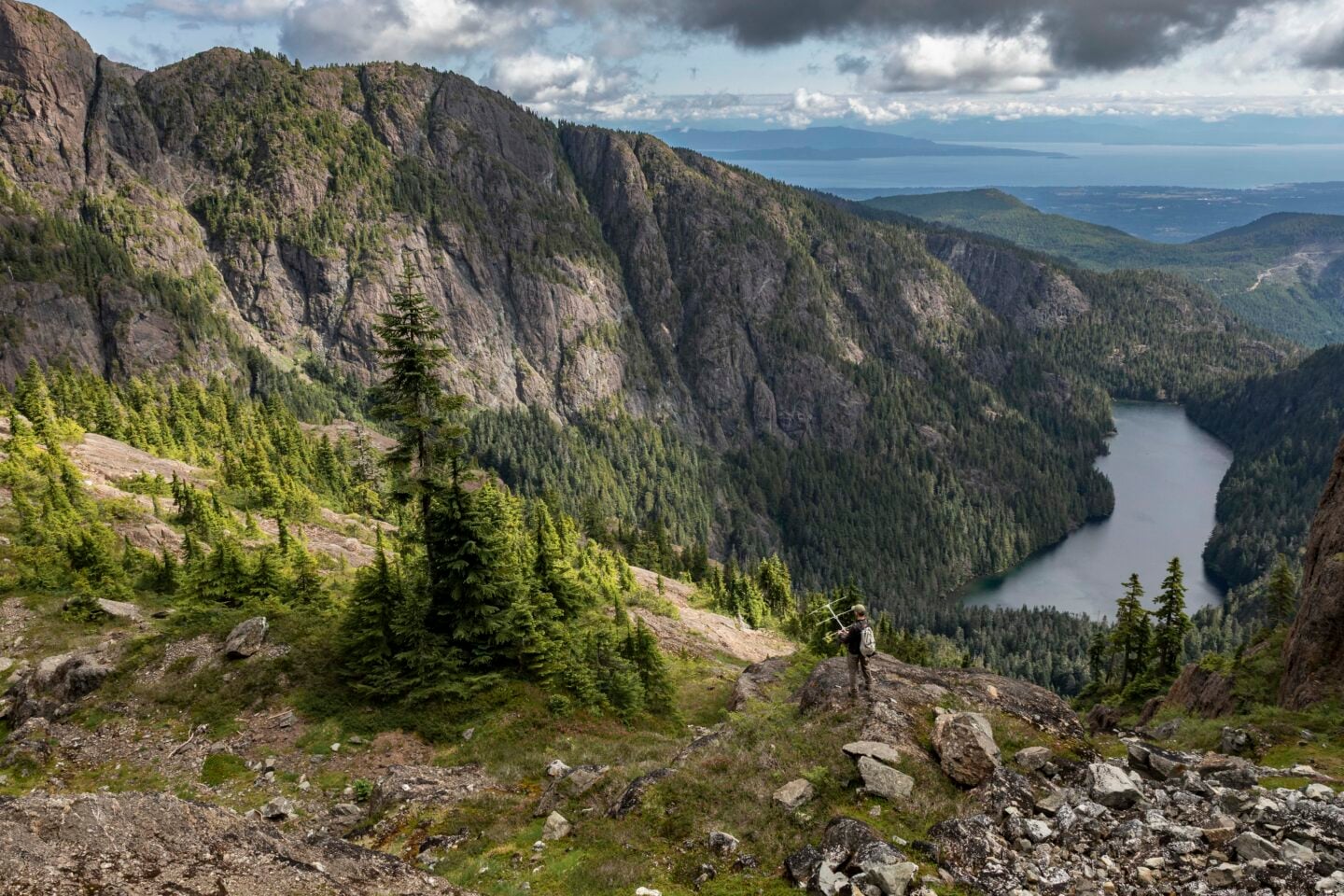
After hiking through a gruesome slash block and scrambling up a side of the mountain I didn’t even know existed, Lester adjusts his hand-held radio telemetry receiver and sweeps the antenna slowly across the mountainside. A faint electronic pulse begins to tick through the speaker.
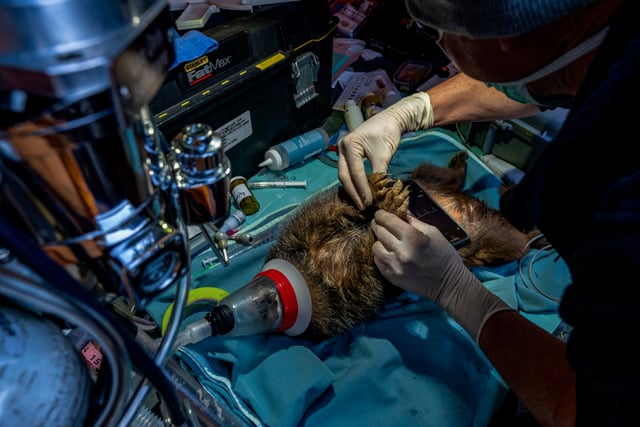
Each signal belongs to a specific marmot carrying a small transmitter roughly the size of a flashlight battery. These transmitters have been implanted inside the marmots’ abdomens.
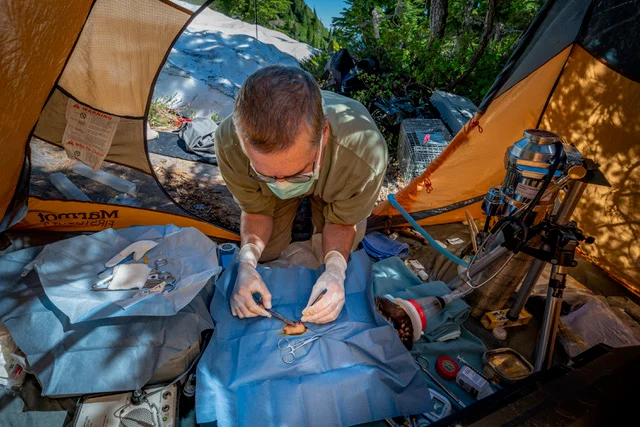
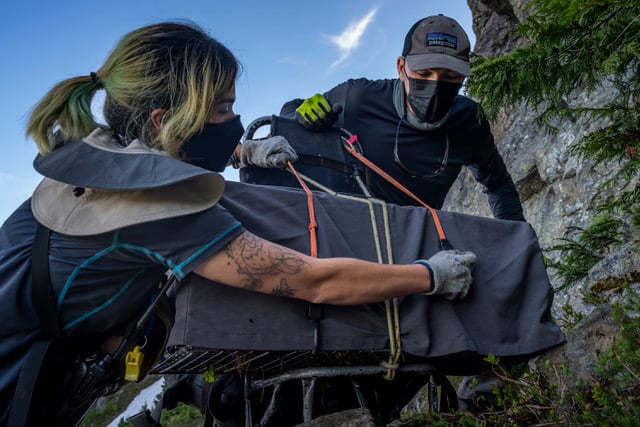
Collars won’t work. Marmots have thick necks and narrow heads, meaning a collar would either restrict them or slip off entirely. Instead, veterinarians surgically implant transmitters during short procedures often performed in the alpine inside a small field surgery tent. Each device emits a radio signal that allows researchers to track the animal’s movements. The speed of the pulse indicates whether the marmot is alive. The signal strength helps pinpoint its location.
Without these devices, locating a marmot in the wild would be nearly impossible. After all, when you are prey, disappearing is an essential skill.
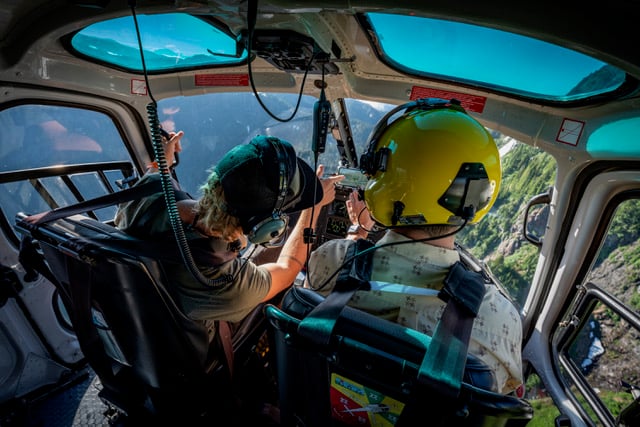
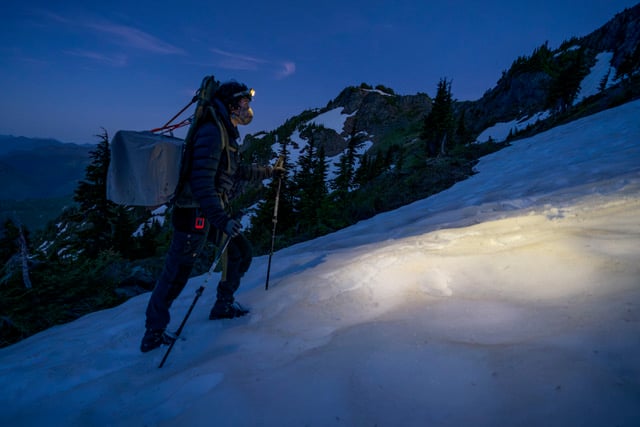
Each summer, small teams from the Marmot Recovery Foundation hike across Vancouver Island’s rugged backcountry carrying telemetry antennas. Sometimes they travel by helicopter to remote mountaintops before hiking for hours through steep terrain to reach known colonies.
They scan slopes with binoculars, listen for whistles and follow faint radio signals bouncing across the landscape.
Even then, marmots can be frustratingly elusive.
On this day, we follow a signal, seemingly circumnavigating Mount Arrowsmith’s jagged rocks and alpine shrubs. The receiver grows louder with each step. Finally, Lester stops in a lush alpine meadow.
He points across a trickling snow-fed stream to a lone gravelly, dirty scree patch, about 30 metres away.
“Mya,” he cheerfully boasts.
I ask Lester if I can edge a little closer to photograph the first marmot I’ve ever seen in the wild. I begin a slow, cautious approach. Lester laughs and waves me forward, showing me how it’s done. We walk almost straight to the burrow entrance. As Taylor later explains, a marmot’s willingness to stay above ground and observe is typically related to how close it is to escape terrain. The closer its burrow or a large rock to dive under, the more confident it will be.
Mya is sitting just outside. As we approach, we can actually smell her; she’s lactating. Then, suddenly, movement — two pups, then three, then four more appear nearby, watching us carefully from the grass and rocks. These are wild-born marmots. Proof that recovery is working. Mya has just had a litter.
We sit only a few metres away, hardly believing it. For a species once reduced to just a few dozen animals, this moment feels extraordinary. While we eat lunch, the pups tumble and wrestle in front of the burrow, kicking up dust and chirping at one another in the sun.
Eventually we shoulder our packs and continue the long loop around Mount Arrowsmith, linking up with the field crew on the far side of the mountain. Their day has been just as remarkable: they counted more than 10 marmots. For a species this rare, it feels like a triumph.
Predators still roam the mountains. Climate change is gradually reshaping alpine habitats, shrinking snowpacks and allowing forests to creep higher into marmot meadows. And with such a small population, genetic diversity remains fragile.
“This is a managed recovery,” Taylor says. “Without continued intervention, the population would likely crash again.”
Somewhere in those mountains, marmots are listening. For about two million years, they survived in this harsh landscape by remaining vigilant — whistling alarms, diving into burrows and waiting out the winter beneath the snow.
Today they have one additional advantage. A small army of scientists, conservationists and volunteers continue to climb these same mountains, antennas raised, determined to ensure the whistles of Vancouver Island’s rarest mammal never fall silent again.
And after decades of effort, the sound is slowly returning.
This story was created in partnership with Environment and Climate Change Canada.
Wildlife
In the field with researchers and volunteers scrambling to save Canada’s most endangered mammal
Wildlife
Une petite armée de scientifiques, de défenseurs de l’environnement et de bénévoles coopère pour assurer le succès du rétablissement du mammifère le plus menacé du Canada.
Wildlife
The Vancouver Island marmot, burrowing owl, greater sage-grouse and northern leopard frog are thriving again thanks to the zoo’s efforts
Environment
A new study finds zoos and aquariums in Canada are publishing more peer-reviewed research, but there is still more to be done