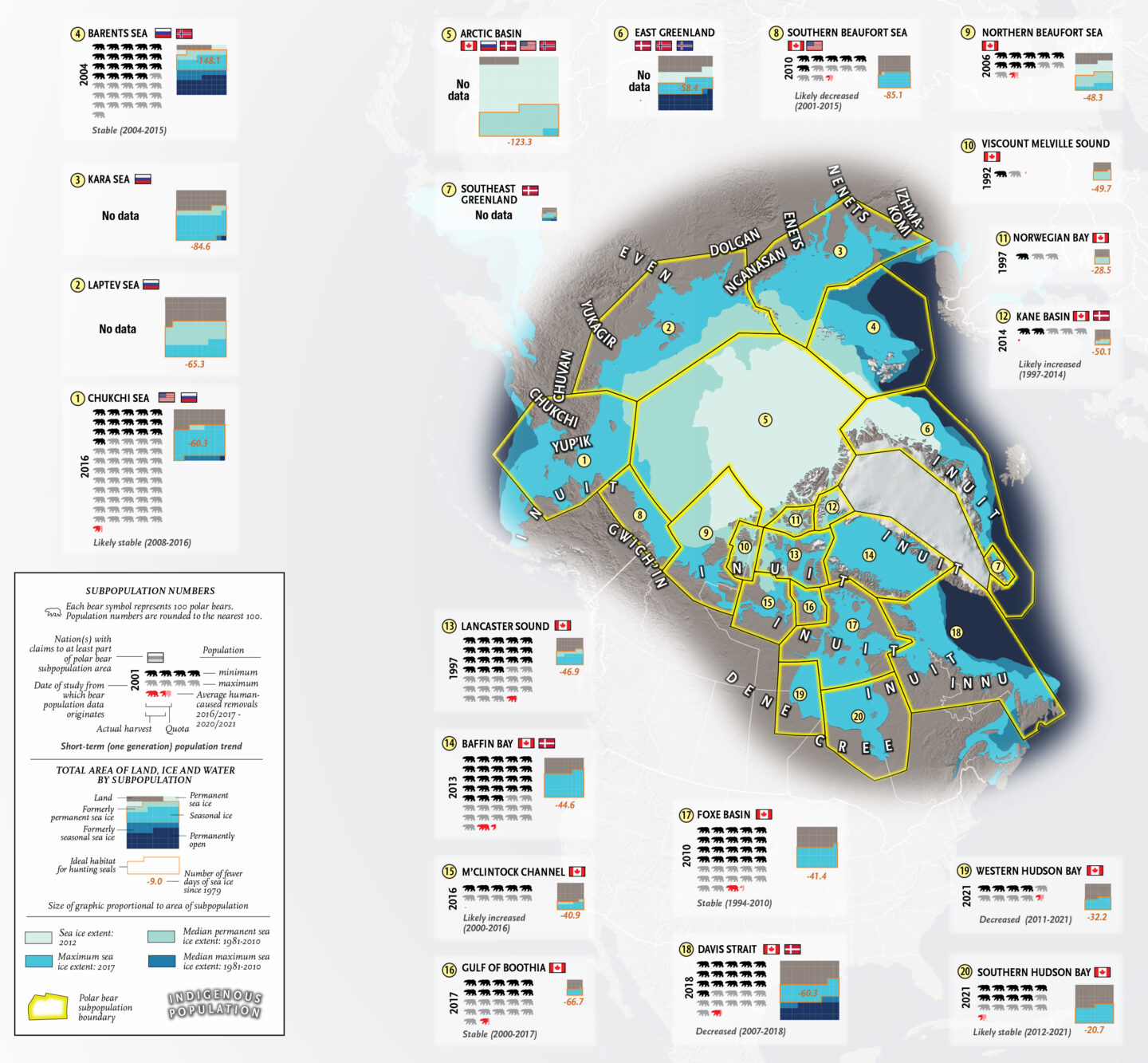
Where sea ice was once permanent, it’s seasonal; where it was once seasonal, it’s now open water. Since satellite records began in 1979, sea ice has been receding across the Arctic, home to 20 polar bear subpopulations evolved to inhabit that icy domain.
Despite their changing home, the bears’ future prospects aren’t clear. Some subpopulations are growing; others dwindling. Some lack data. “Polar bears live so far away from people that logistical arrangements can be very difficult,” says Steven Amstrup, chief scientist emeritus for Polar Bears International, who has studied polar bears for more than 40 years. To track bears, researchers must cover vast swathes of the High Arctic to capture, tag and release them.
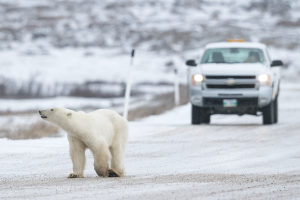
The data that has been collected can also conflict with the observations of the people living closest. For years, First Nations and Inuit residents have reported that more bears are coming into northern communities, nosing through garbage and scavenging. The 2019 Nunavut Polar Bear Co-Management Plan said that increasing numbers of polar bears in some subpopulations are posing safety concerns to Inuit communities and that polar bears “may have exceeded the co-existence threshold of Nunavummiut.” The plan was drafted soon after an Inuk man died protecting his children from a polar bear near Arviat, Nunavut — within the western Hudson Bay polar bear subpopulation area, which scientists consider in decline.
“There’s been lots and lots of encounters by polar bears — damages to cabins, close calls, people being chased,” said Alex Ishalook, chair of Arviat’s hunters and trappers organization, during a Nunavut Wildlife Management Board meeting last year. “Our concerns are getting stronger and stronger.”
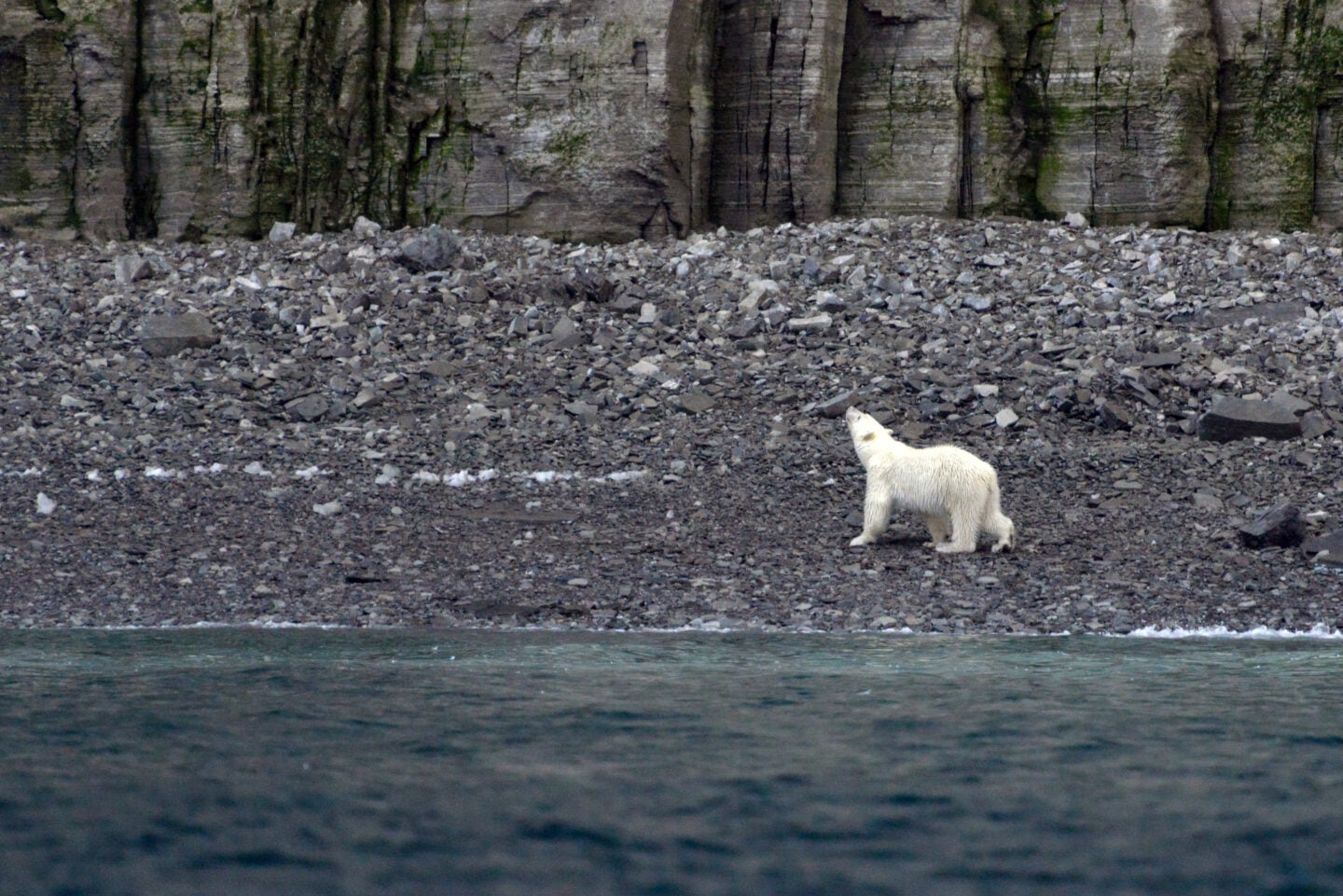
One thing most Inuit and polar bear researchers can agree on is the impact of declining sea ice on polar bear behaviour. The Nunavut government’s plan lists “climate-driven changes in sea ice” as the other driver of polar bear safety concerns, stating that fewer sea ice days are forcing bears to spend more time on land. This is the same explanation many researchers give for the increase in dangerous polar bear encounters by community members.
Since the Nunavut Land Claims Agreement Act in 1993, Inuit Qaujimajatuqangit, or traditional knowledge, has played an increasing part in polar bear management — including in assessments from the Committee on the Status of Endangered Wildlife in Canada. The hope is that, with time, this two-eyed approach will provide a clearer vision of the fate of this iconic animal.