
People & Culture
Robert Bateman on life, art and mice
At 94, Canada’s venerable naturalist painter reflects on a long career making art and keeping it real
- 1142 words
- 5 minutes
People & Culture
Two eminent Canadian naturalists reflect on their lifelong friendship and adventures around the globe

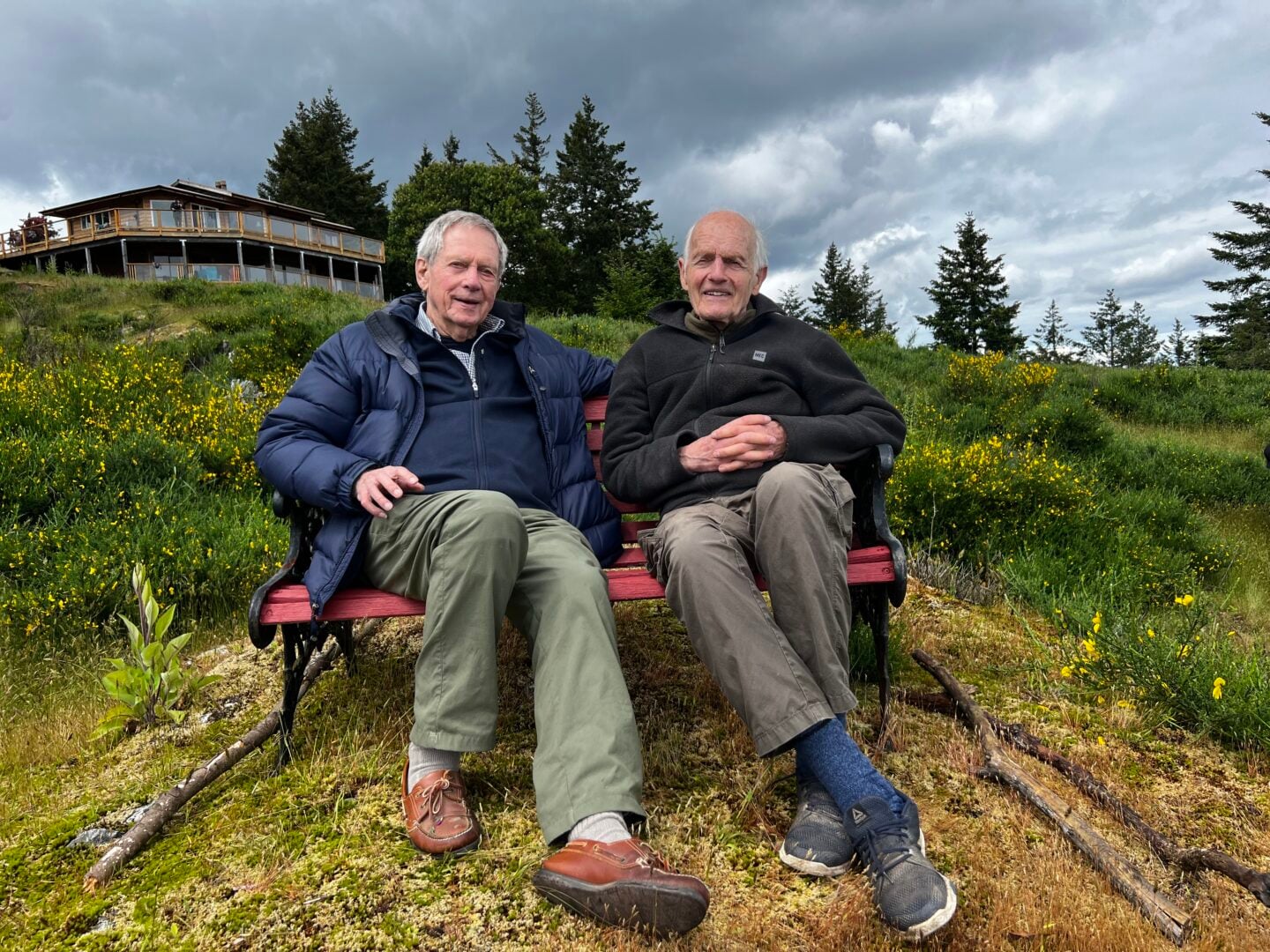
Sitting in his painting studio, Robert Bateman is telling a story of the Canadian Arctic when he hits a snag. “There’s a particular lichen that I don’t know the name of…”
“Caloplaca elegans,” fires out Bristol Foster, without skipping a beat.
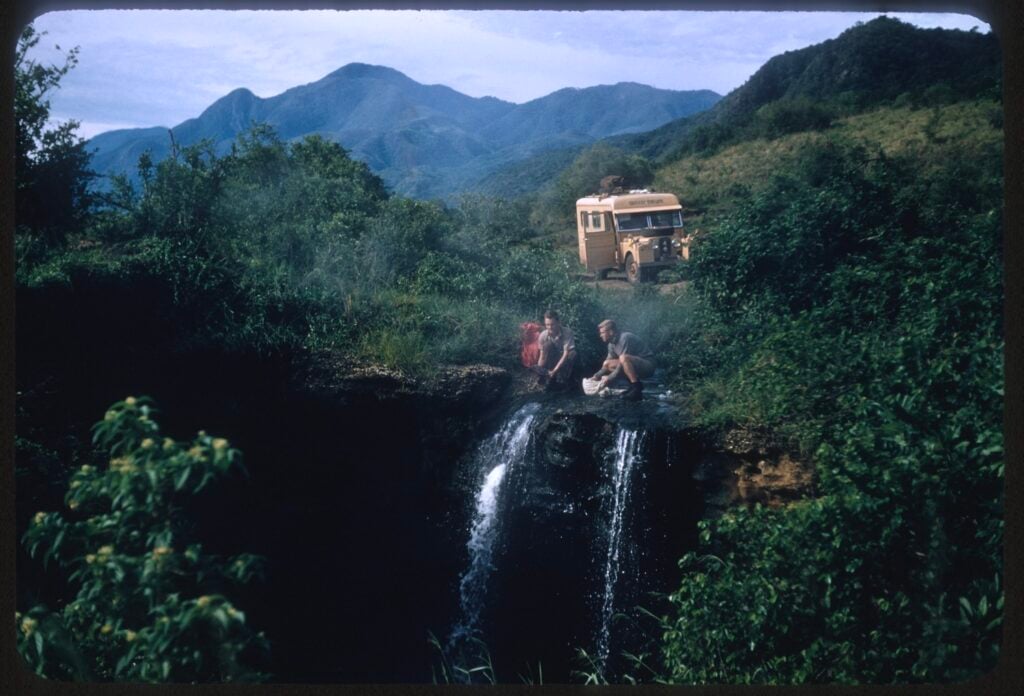
This kind of symbiotic patter runs through The Art of Adventure, a new film from director Alison Reid. Bateman and Foster, both 95, first met as teenagers through the naturalist club of the Royal Ontario Museum. For 18 months between 1957 and 1958, they travelled across Africa, the Indian subcontinent, Southeast Asia and Australia in a Land Rover they christened “Grizzly Torque.” The film, premiering April 17, details the journey, as well as their lifelong friendship and commitments to conservation. Both men spoke to Canadian Geographic about their travels, their friendship and what they hope others find in their story.
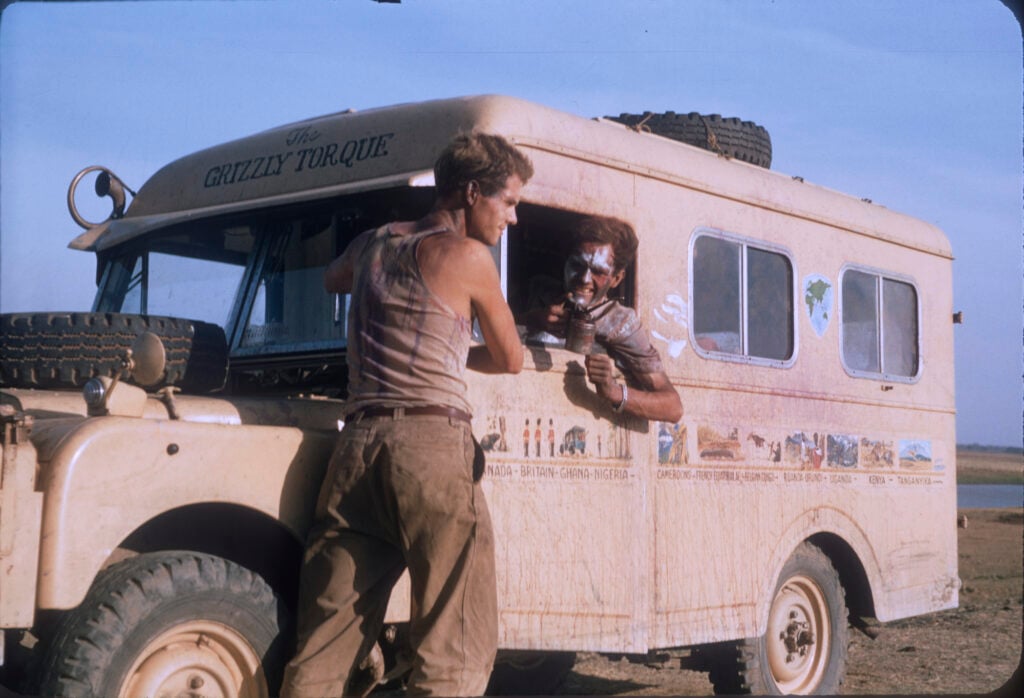
Bateman: We sat down with a school atlas one Sunday afternoon in Toronto and planned it out.
Foster: We did it in red and pink, meaning across the British Empire. The Belgian Congo was a big exception, and that was tricky. Certain parts of the world are good to avoid because they are dangerous — more dangerous now than when we did the trip. There are far more guns and more stress between different groups of people.
Bateman: That’s very true. Most people go in big cruise ships now. They take their whole life with them around the world. They eat the food they had at home and have all the friends they had at home, and they’re not isolated with other cultures or other species of wildlife. It’s nothing like what we did.
On encountering other cultures
Bateman: I consider the Bambuti [Indigenous Peoples of the Iruti forest in the eastern Congo Basin] the most perfect people that I’ve ever met. They live in total harmony with nature. They worshipped the forest. If they had bad luck, their reaction to it was to sing a cheerful song: “Come on, forest. You’ve been taking care of us up until now. You must have dozed off a little bit. So come on, wake up! We need you to help us out here!”
Foster: They were talking like ecologists. They had never been to university, but they were full of knowledge. That was inspiring for us because it wasn’t some professor in a university; it was people out of the forest.
Bateman: There’s a saying referring to nature, but it also applies to cultures around the world: “Nature is not only more complicated than you know; it’s more complicated than you can know.” You can never fully understand all the complications that are just out the window here. And that’s the same with culture.
Foster: I think [my life] has been a search for meaning.
Bateman: Did you say a search for meaning? I think mine’s an expression of meaning — an expression of what it means to be a wildebeest or an osprey. I think we’ve always both been optimistic about what one can do to make the world a better place. Both of us are active in conservation movements and trying to protect and preserve what we’ve got. It’s a constant battle, but I think the public is swinging this way, to protect the nature that we have left. All kinds of critters are alive today because of Bristol, because he set aside their areas for them, and not for us.
Foster: Well, the critters don’t know it. [He threads his fingers together.] Things can seem separate, like fingers, but they’re actually meshed together. And if you lose one, you’re going to be losing another.
On inspiring others
Foster: [I’d like to see] children start their own little nature club and get more involved. Just outside the door here, there are these huge heaps that ants have put together. They’ll bite you — not hard enough to draw blood, but most people don’t like it. We take the kids out on nature walks, and I put my hand right on top of the nest. After a minute or two, my hand is covered with biting ants.
And I show it to them, and they [mimics recoiling], and then I start eating them. They’re tasty, actually. So go outside and enjoy. Put your hand on an anthill. You learn a lot by watching others, but especially if you do it yourself. Be ready for surprises. Be ready for everything. Don’t make judgements ahead of time. Go for it and find out.
This story is from the March/April 2026 Issue
People & Culture
At 94, Canada’s venerable naturalist painter reflects on a long career making art and keeping it real
People & Culture
For an achievement by one or more individuals in the field of geography, or a significant national or international event

People & Culture
Geography was on the map in Gatineau, Que., for The Royal Canadian Geographical Society's annual College…

People & Culture
He’s best known as the world-renowned artist who’s spent a lifetime capturing Canada’s natural beauty through his paintings.But Robert Bateman is also an…