Travel

Quebec’s Eastern Townships: Where city dreams take root

Once city dwellers, these families swapped traffic for tractors, crafting lives rooted in community, creativity and the beauty of rural Quebec

  • Published Nov 06, 2025
  • Updated Nov 10
  • 1,773 words
  • 8 minutes
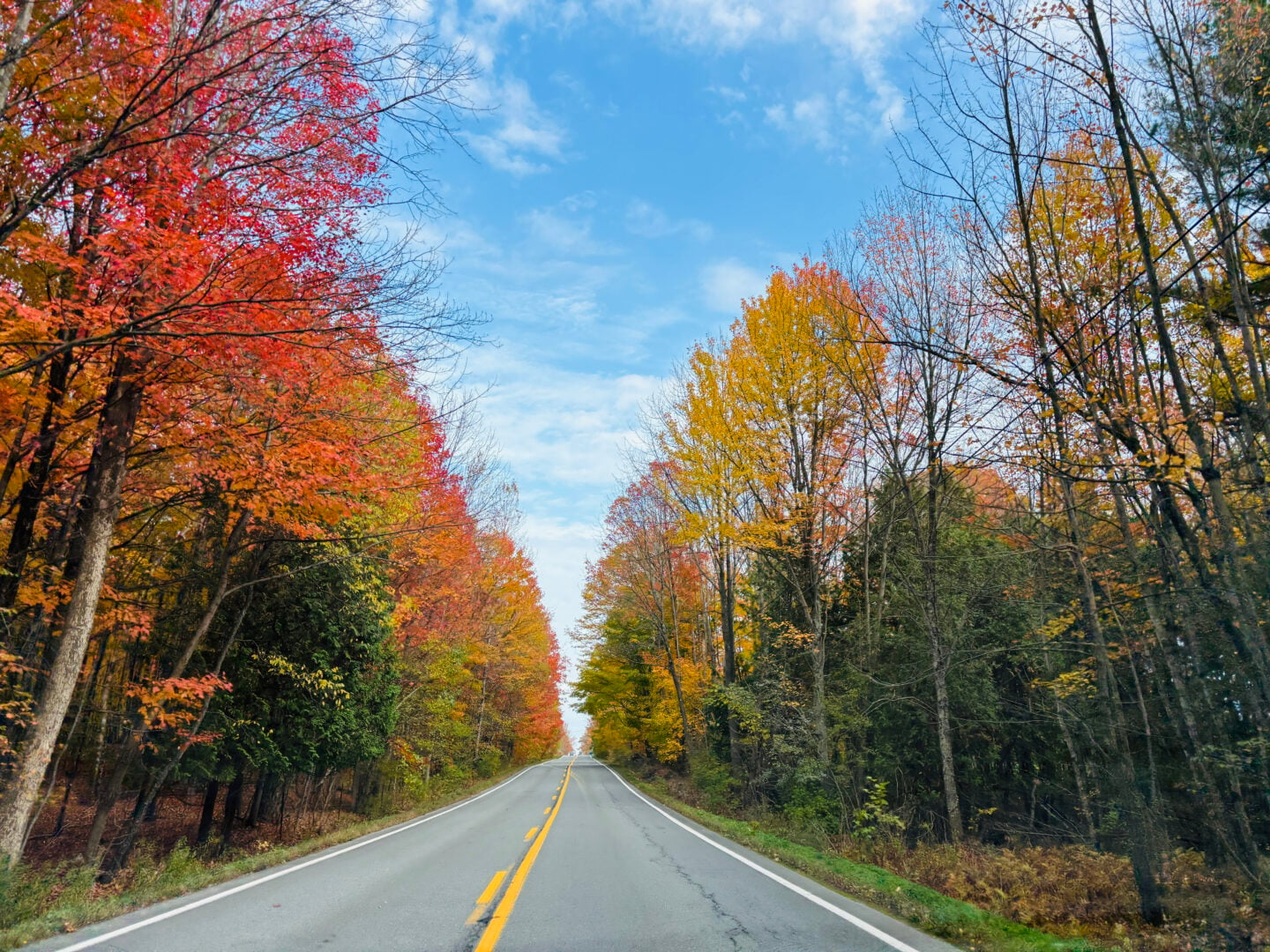
Driving the country roads of Quebec's Eastern Townships in the fall. (Photo: Robin Esrock)
Expand Image
Advertisement
Advertisement

Like many couples who’ve spent years living in a big city, my wife and I often daydream about moving to the country – where jam belongs on sourdough, not with traffic. It’s a dream to leave it all behind, buy a farm, grow our own food and watch our kids collect organic eggs from the henhouse. Somewhere close enough to a major airport, yet far removed from the relentless hum of city life.

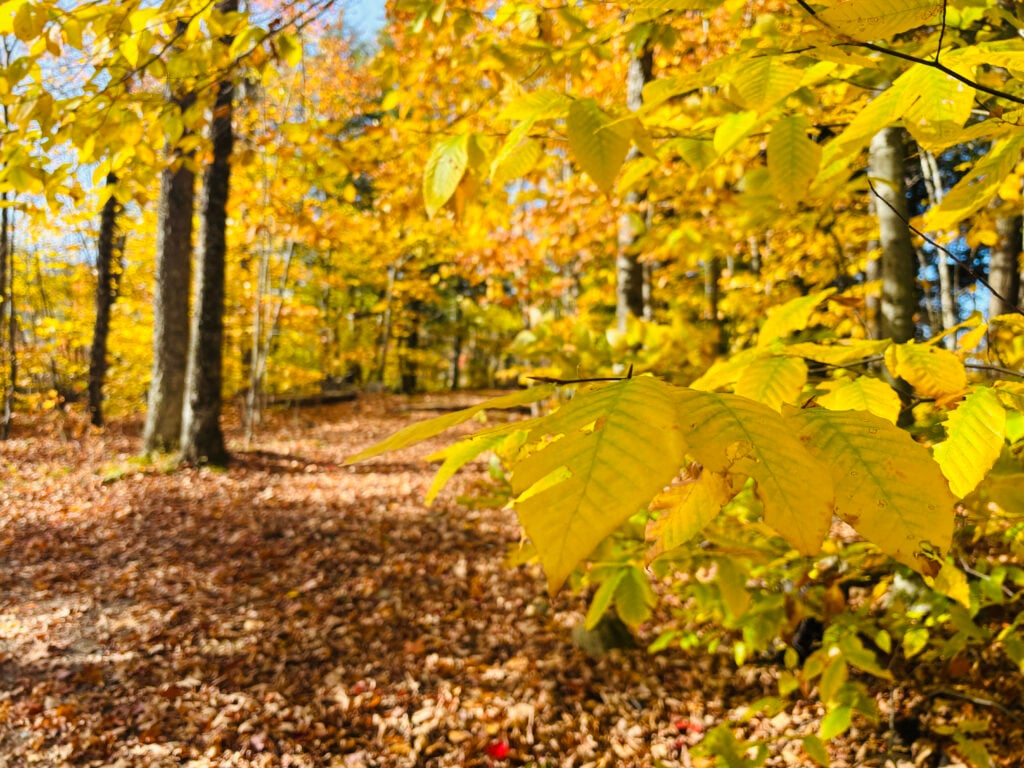
Fall Foliage in Parc national du Mont-Orford. (Photo: Robin Esrock)
Expand Image

I’ve arrived in Quebec’s Eastern Townships to witness the region’s famous fall foliage, when forests ignite like a jewel box of gold, ruby and emerald. This landscape has attracted visitors since the mid-1800s, when Loyalists crossed the border to settle alongside European immigrants and Québécois farmers, who were also seeking fertile land. Just an hour’s drive from Montreal, the Townships are now home to more than half a million people, many of whom work in agribusiness and, increasingly, agritourism. Among them are five couples who dreamed of the urban escape and made it a reality.

Nadya Kravchenko overlooks her sheep farm, never tiring of the view. With her husband, Matvey, and their three children, the Kravchenkos embody the Canadian immigrant dream.

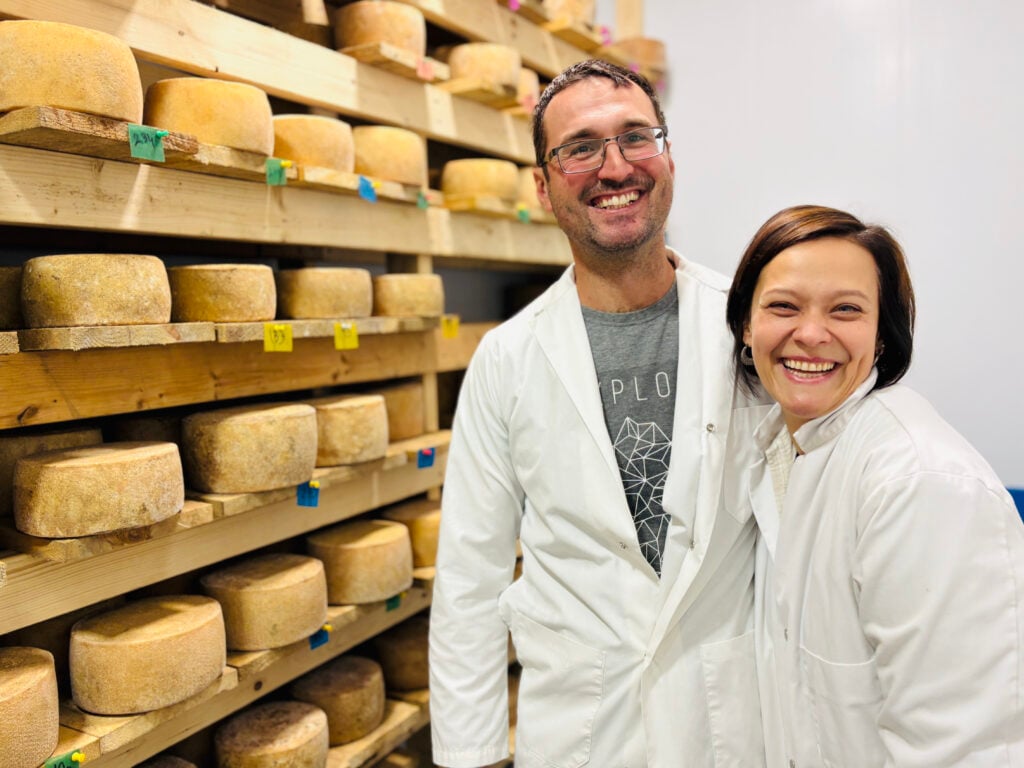
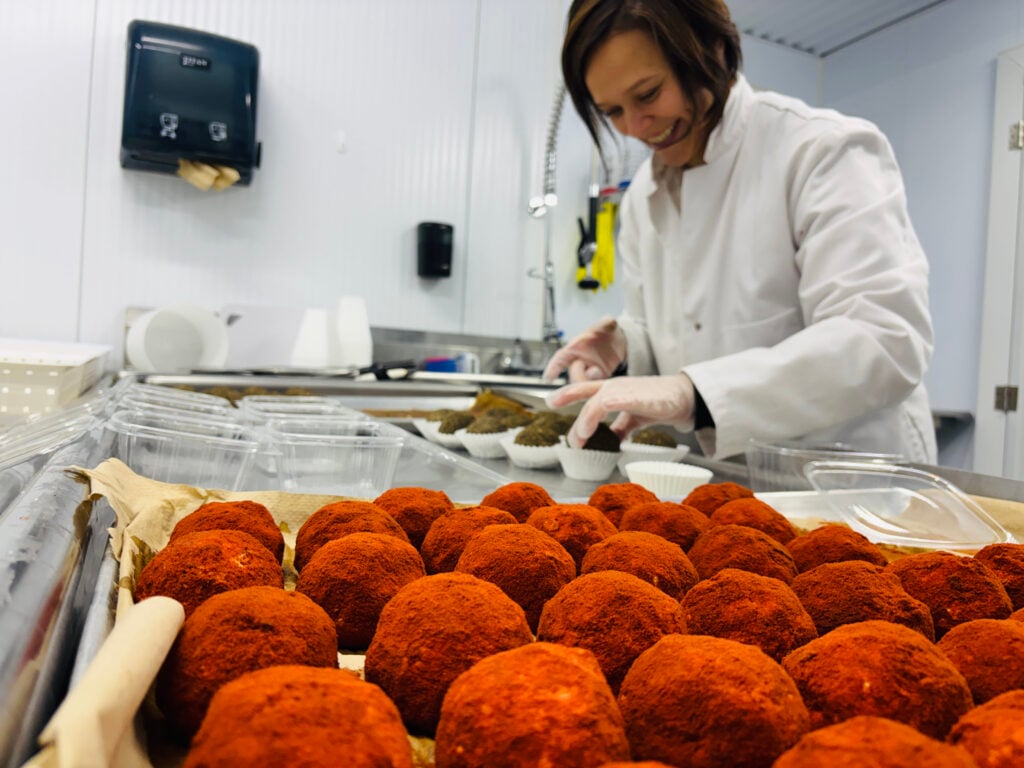
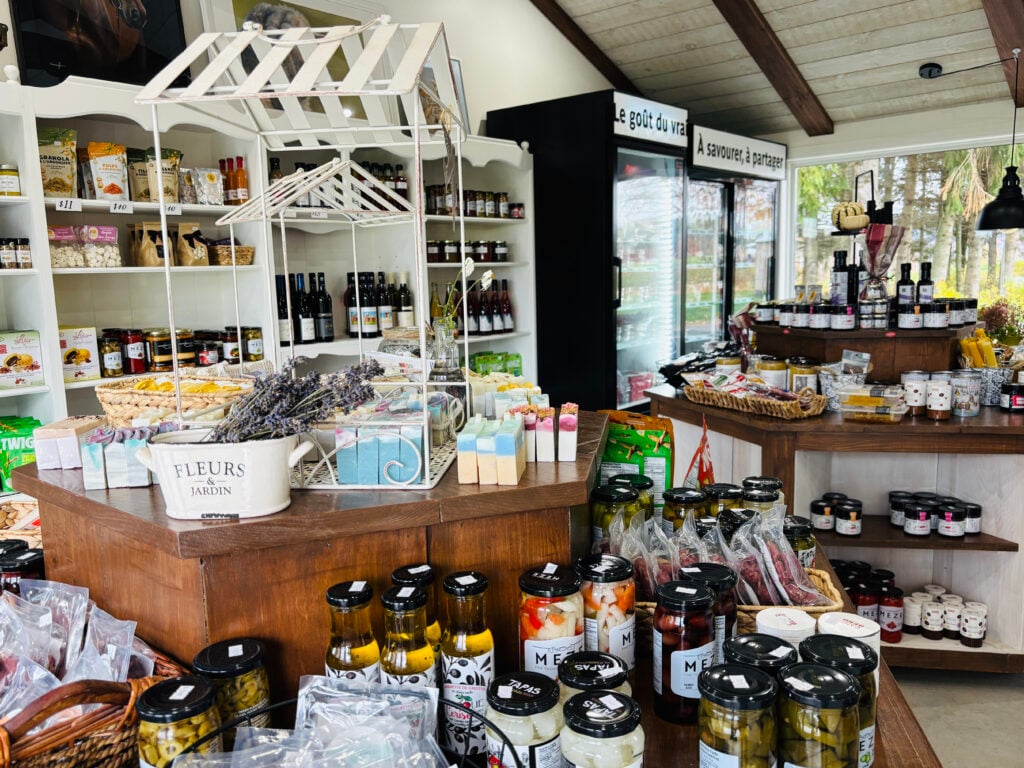
They arrived with little in Montreal, worked for decades and saved up enough to buy a farm. In their new country life, the Kravchenkos taught themselves how to produce high-quality sheep cheese in a custom-built barn and production facility built by Matvey and their 17-year-old son. Their garage was converted into a boutique local foodie store. Starting with just 10 sheep, they now have 100, and customers visit their Brebis de Bromont Fromagerie from near and far.

Hard work, big dreams and the promise of Canada. Matvey and Nadya Kravchenko in their sheep cheese factory. (Photo: Robin Esrock)
Expand Image

Juggling their kids and working two jobs to fund the first five years of the farm’s development, the couple continue to do everything themselves, pouring love into their sheep’s cheese, honey, yogurt and other products. As they proudly show me around the farm, I sense both the delight of their accomplishment and their exhaustion. 

“We’re building a future for our kids,” says Matvey, and much like tending sheep, one has to be patient. Their daughter works the shop till, loyal customers show up for cheese and chit-chat, and Nadya offers me a delicious tasting board. Sheep cheese is rich, friendly for those with lactose intolerance, and in high demand among those who grew up with it in Europe (Montreal’s Romanian community has been particularly supportive). The Kravchenkos are that rare urban couple who took the leap, figured out what they needed to know and remain committed to a meaningful rural future.

Food is a significant aspect of life in the Eastern Townships. There are currently 16 cheesemakers on the region’s Les Tètes Fromageries foodie trail, dozens of breweries on a microbrewery circuit, 40 vineyards that produce the majority of wine in Quebec, and hundreds of certified agritourism businesses. This is a region where farm-to-table is more than just a hip culinary trend: you’re on the farm, here’s the table, enjoy.

Nadya Kravchenko prepares sheep cheese products at Brebis de Bromont Fromagerie. (Photo: Robin Esrock)
Expand Image
Local products for sale at the storefront of Brebis de Bromont Fromagerie (Photo: Robin Esrock)
Expand Image

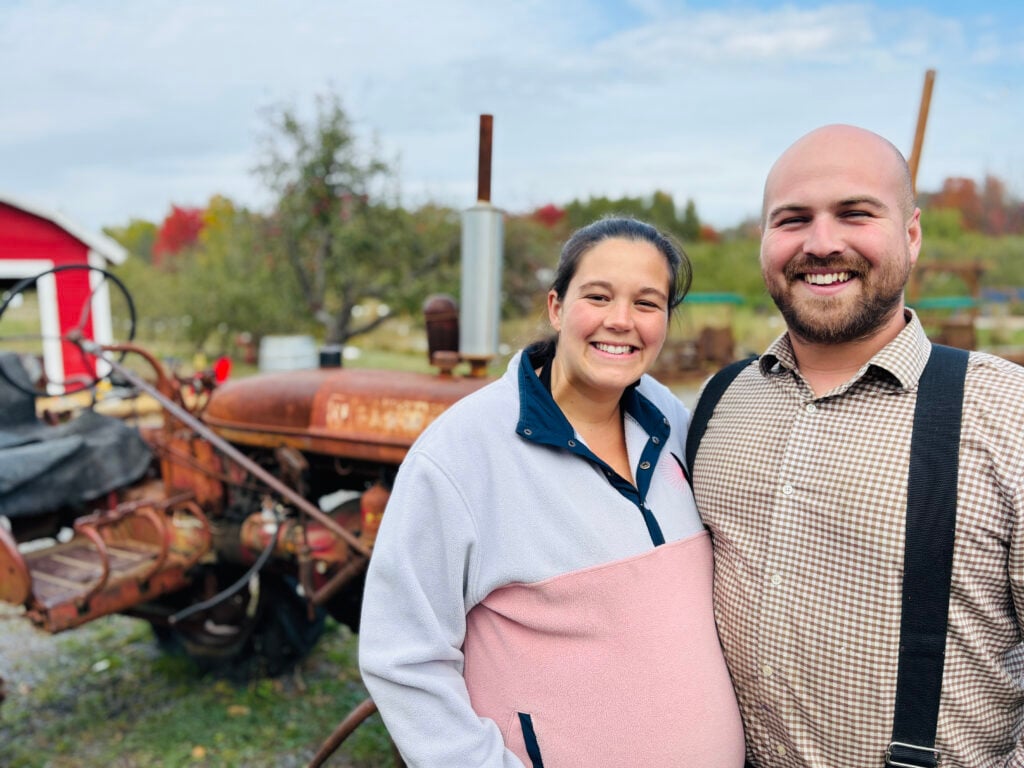
Such is the case at Ferme Cidricole Équinoxe, where another young couple pursued a dream of owning a sustainable, organic farm and food stop. Marc-Antoine Arseneault-Chiasson guides me around his 48-acre property, explaining how they’re working hard to diversify the apple orchard with grapes, pears, plums, cherries and, with the changing climate, peaches too. Like the Kravchenkos, Marc-Antoine and his pregnant wife, Audrey-Anne, were not traditional farm kids.

This is a region where farm-to-table is more than just a hip culinary trend: you’re on the farm, here’s the table, enjoy.

Growing up in Montreal, Audrey-Anne studied law, while Marc-Antoine pursued agricultural sciences. When an opportunity presented itself to take over an ailing farm outside of Farnham, they jumped at it, pursuing the idea of a holistic biome where plants, animals and insects work together.

Marc Antoine and Audrey-Anne Arseneault-Chiasson at their organic Ferme Cidricole Équinoxe. (Photo: Robin Esrock)
Expand Image

The result of their efforts includes an award-winning cidery that has reintroduced the fizzy beverage to the region. “Young growers like us showed there’s a market, and we’re reinvesting the profits to grow the farm. It all starts with the fields,” explains Marc-Antoine. 

Audrey-Anne oversees the excellent on-site restaurant and marketing, and once again, passion and exhausting hard work are yielding unmistakable results. The farm is frequently booked out for summer events, hosts community gatherings and attracts young families with its swings and bouncy castles.

“I’m so happy our children will grow up with trees and animals,” says a beaming Audrey-Anne. I lunch on fresh squash soup harvested from their garden and a tasting flight of their cider, wowed by it all but especially the sweet ice cider created from frozen apples. Bidding au revoir, I’m off to visit another farm in the Eastern Townships, where another winter baby will soon arrive, on schedule, according to the growing season.

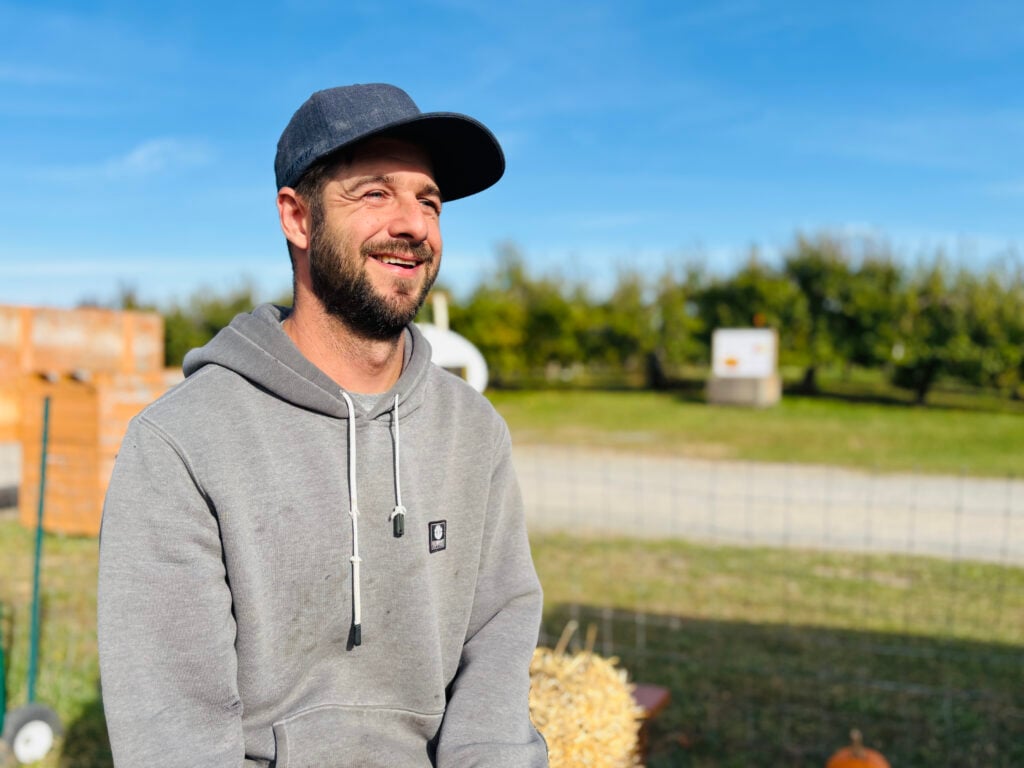
Marc-André Pelletier greets visitors at Verger Champêtre, located outside of Granby, QC. (Photo: Robin Esrock)
Expand Image

Marc-André Pelletier weighs the pumpkins that customers have selected from the patch for Halloween. Kids are pulling wagons, picking apples from the trees and petting alpacas and sheep in a nearby enclosure. Marc-André also didn’t grow up on a farm, but he has been working on one since he was 12. He knew what he was getting into when a local landowner approached him with an opportunity to take over an agritourism business.

With 38.8 hectares and several employees, caring for fruit groves, vegetable patches and more than 100 animals is a 24/7 job, 365 days a year. Like the other couples, Marc-André and his wife, Marie-France, a nurse, worked side jobs for years until their income was stable enough to focus on their Verger Champêtre located outside of Granby. Their second baby is due in the fall, when the foliage season has ended and things finally slow down for the winter.

“I think it’s important that kids see where their food comes from,” says Marc-Andrè. “It’s a life project for us, for our kids will grow up on a farm. If they don’t want to stay, that’s OK too,” he says, then greets another wagon of pumpkins.

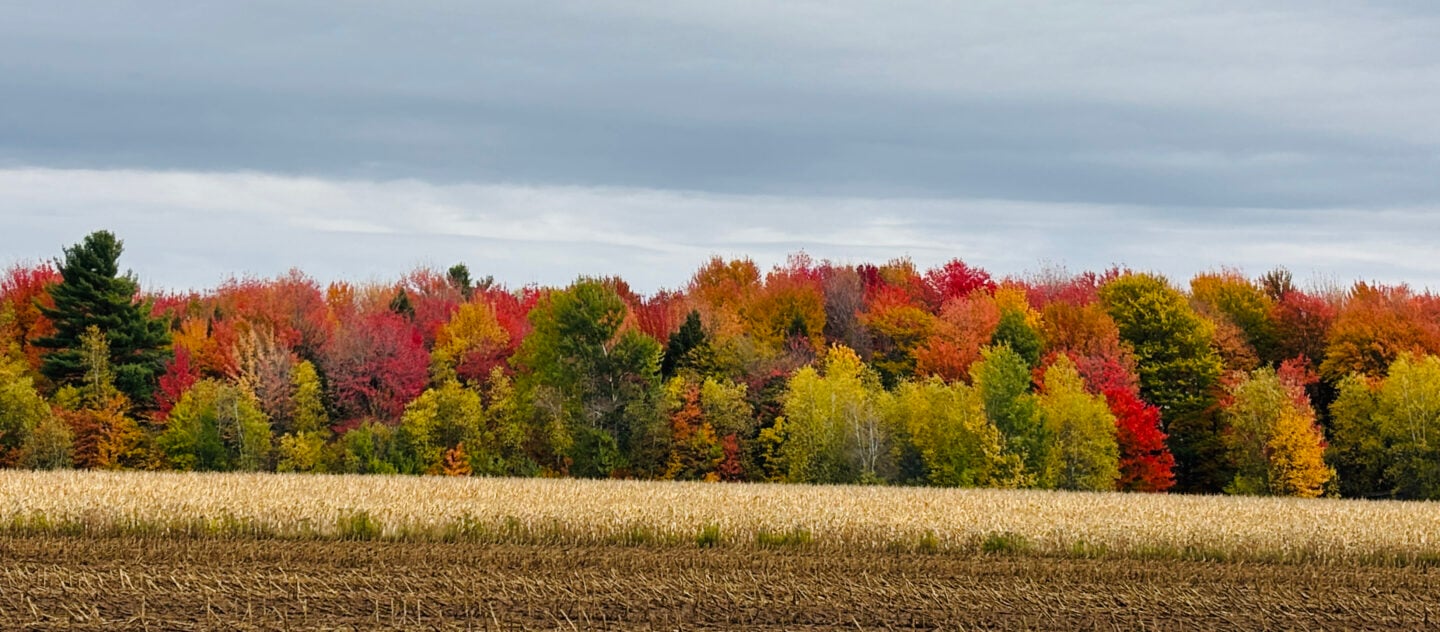
Fall foliage in the Eastern Townships. (Photo: Robin Esrock)
Expand Image

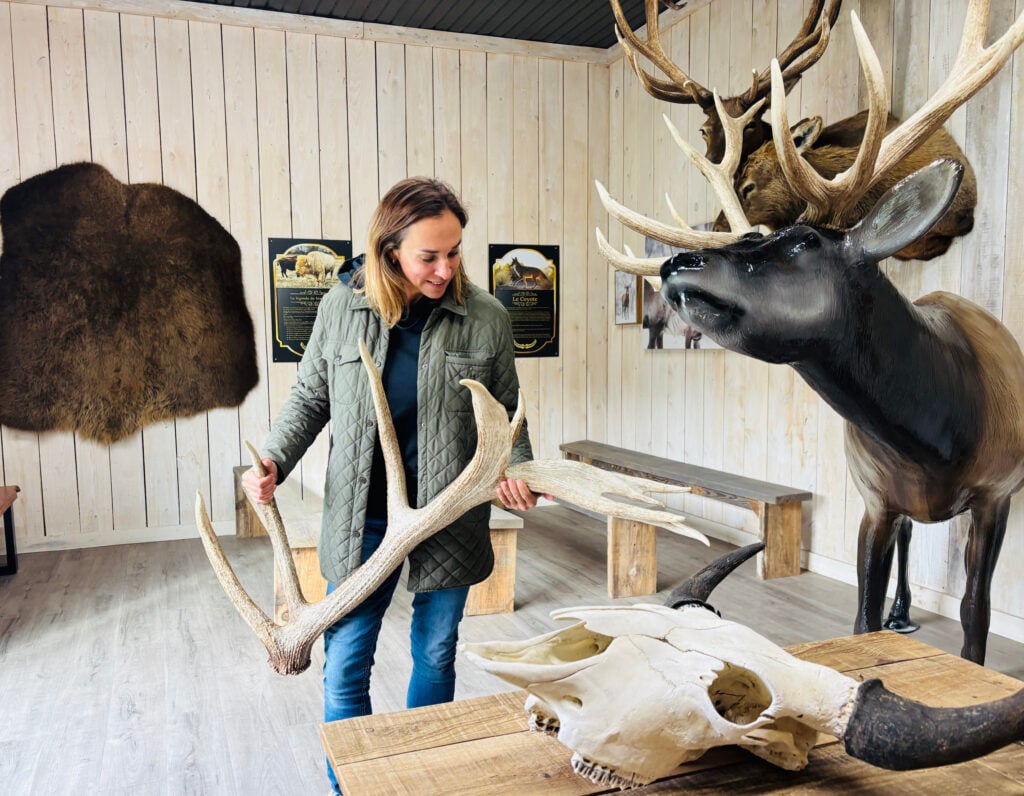
Not far away outside the town of Bromont, Caroline and Dave Porlier’s Domaine Muscadine raises a herd of more than 70 wapiti (elk) and three bison, educating locals and visitors about the health benefits of game meat. Although she worked for Quebec’s liquor board for two decades, Caroline grew up on an orchard and dreamed of combining farming and agritourism.

Caroline Porlier introduces the history and benefits of elk meat at Domaine Muscadine. (Photo: Robin Esrock)
Expand Image

Their 37.6-hectare farm features an interpretation centre located beneath the converted stable, where they raise their three children. A storefront sells elk, beef, pork and bison products directly to the community. Caroline went back to school to learn how to butcher her own cuts of meat, including how to prepare sausages, steaks and other products. It all required a significant investment of time, and they gratefully received help from the surrounding community.  

“We never imagined how much work it would be,” she tells me outside the paddock, where a herd of skittish elk graze on the yellowing grass adjacent to her prized white bison. I ask about where someone interested would even begin. 

“You start small on a farm,” she says. “And if you like it, you start to grow it.” It’s the same advice I received from Nadya and Marc-Antoine. “It’s hard work and we make many compromises, but we’re also making a difference, and we’re leaving something for our children,” she adds.  “The farm is our hearts. There’s soul in our food. This is a real life.”

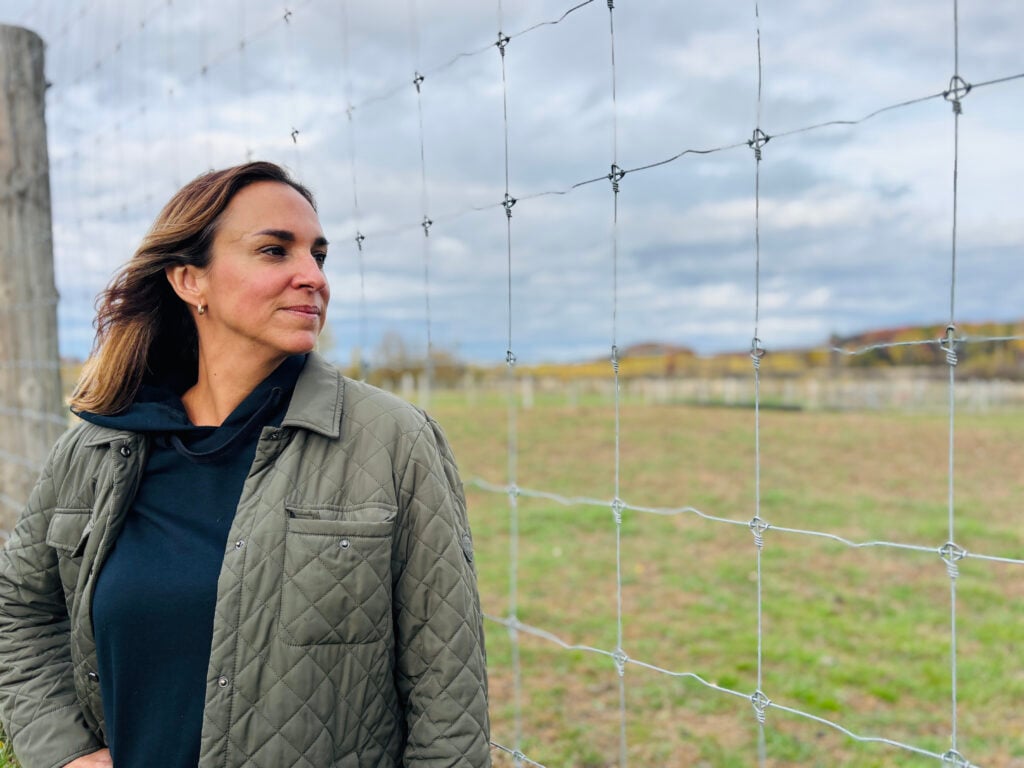
Caroline Porlier at her paddock in Domaine Muscadine. (Photo: Robin Esrock)
Expand Image

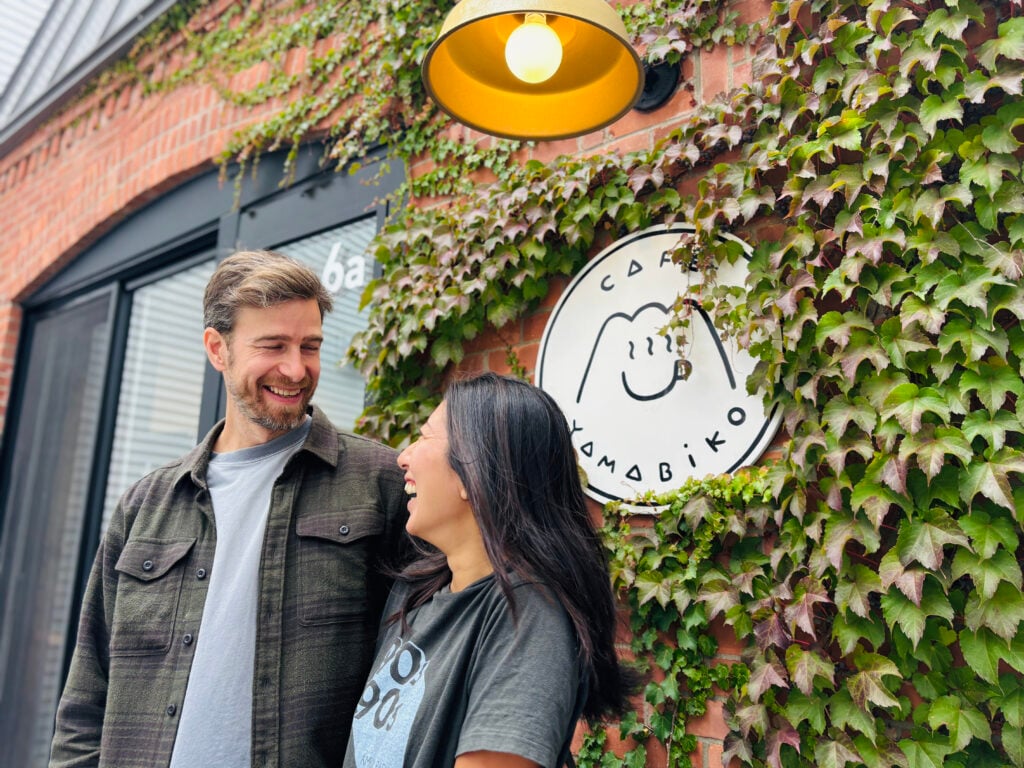
It’s Monday morning and Café Yamabiko is bouncing. Located in Sutton, the coffeeshop and roastery is the realized dream of a couple, Nahoko Nakada and Chris Shinn, who met in Australia and bonded over fine coffee in Melbourne. Moving to Vancouver, the couple was visiting Chris’s brother in Sutton when the pandemic hit, and they found themselves staying put. The mountain town of 4,500 people attracts an eclectic mix of artists, outdoor enthusiasts, and visitors from Quebec, Ontario and beyond, including those from the nearby U.S. border. 

Drawing on her experience as a barista, Nahoko first opened a coffee stall at the farmers’ market and in a local bagel joint. Word spread, and a property owner approached the couple about transforming a defunct space into the kind of coffee shop they fell in love with in Australia, but couldn’t find in Sutton.

Nahoko Nakada and Chris Shinn outside their Cafe Yamabiko in Sutton, QC. (Photo: Robin Esrock)
Expand Image

Although Chris initially kept his day job to help finance the store, after four years, the café is doing well and it’s been enthusiastically embraced by the community. The couple now have a roasting facility next door and take great pride in the quality of their coffee. 

Indeed, I haven’t had a flat white this good since my last visit to Melbourne. Like many couples moving to the country, they had to create their own opportunities. Chris credits the Canadian Roasting Society for the essential advice, the right timing with the right partners, following their instinct, and a lot of hard work.  At the end of the day, they actually did it. 

The beauty of fall in the Eastern Townships exceeds its reputation. I find myself aimlessly driving along the empty country roads, admiring farmland interspersed with a riot of colours. In the Parc national du Mont-Orford, I go on a short hike into the forest, witnessing the end of one season as the chill of the coming winter blows through the canopy. Conversations with inspiring people swirl in my head, and while I have no illusion about their sacrifices and compromises, they appear to be living a delicious life.  Quality cheese, ciders, fruits, meats, beers, wine and coffee clearly benefit from the passionate stories behind their production. Stories we can all look forward to on a visit to this beautiful pocket of Canada, whatever the season.

Advertisement

Help us tell Canada’s story

You can support Canadian Geographic in 3 ways:

Related Content

An illustration of a rooftop farm

Environment

Fresh from the city: The rise of urban farming

Already gaining steam before the pandemic, interest in urban farming — and hunger for hyper-local food — has soared. A look at three Canadian takes on the urban farming phenomenon

  • 2239 words
  • 9 minutes

Travel

The return of The Great Canadian Bucket List in a new era of Canadian travel

Canadian Geographic’s Bucket Listed columnist Robin Esrock explores domestic tourism, national pride and the evolution of Canadian travel in the third edition of his bestselling book, The Great Canadian Bucket List

  • 1453 words
  • 6 minutes

Environment

Farming a changing sea

Struggle and success in Atlantic Canada, where aquaculturists strive to overcome climate change and contamination while chasing a sustainable carbon footprint 

  • 4058 words
  • 17 minutes

Science & Tech

Q&A: The sustainability of regenerative ocean farming

Environmental benefits and food sources from this low-cost form of farming might be the future

  • 1324 words
  • 6 minutes
Advertisement
Advertisement