
Travel
Tiwšɛm (learn): a stay at Klahoose Wilderness Resort
On the coast of B.C.’s mainland awaits an immersive experience on the water’s edge, where tourism can be an act of reconciliation
- 1997 words
- 8 minutes
Travel
Two sisters arrived at Klahoose Wilderness Resort looking for wildlife, but what they found was a worldview rooted in reciprocity, remembrance, and a relationship to the land
We came to Klahoose Wilderness Resort expecting a classic West Coast wildlife story—black bears, whales and the lush coastal terrain of Canada’s temperate rainforest. And yes, the natural beauty was breathtaking. But what stayed with us wasn’t the scenery and wildlife. We encountered something deeper, something ingrained in the essence of this place.
In this living cultural landscape, each gesture reflects a sustained, reciprocal relationship with the land and its beings, a cultural community that can’t be understood from the vantage point of a city. It was an energy that could only exist in a place like this, carried through generations. It’s not just seen, it’s felt. It vibrates through the soil, moves through the water and lives inside every being that grows from it, takes from and gives to this land.
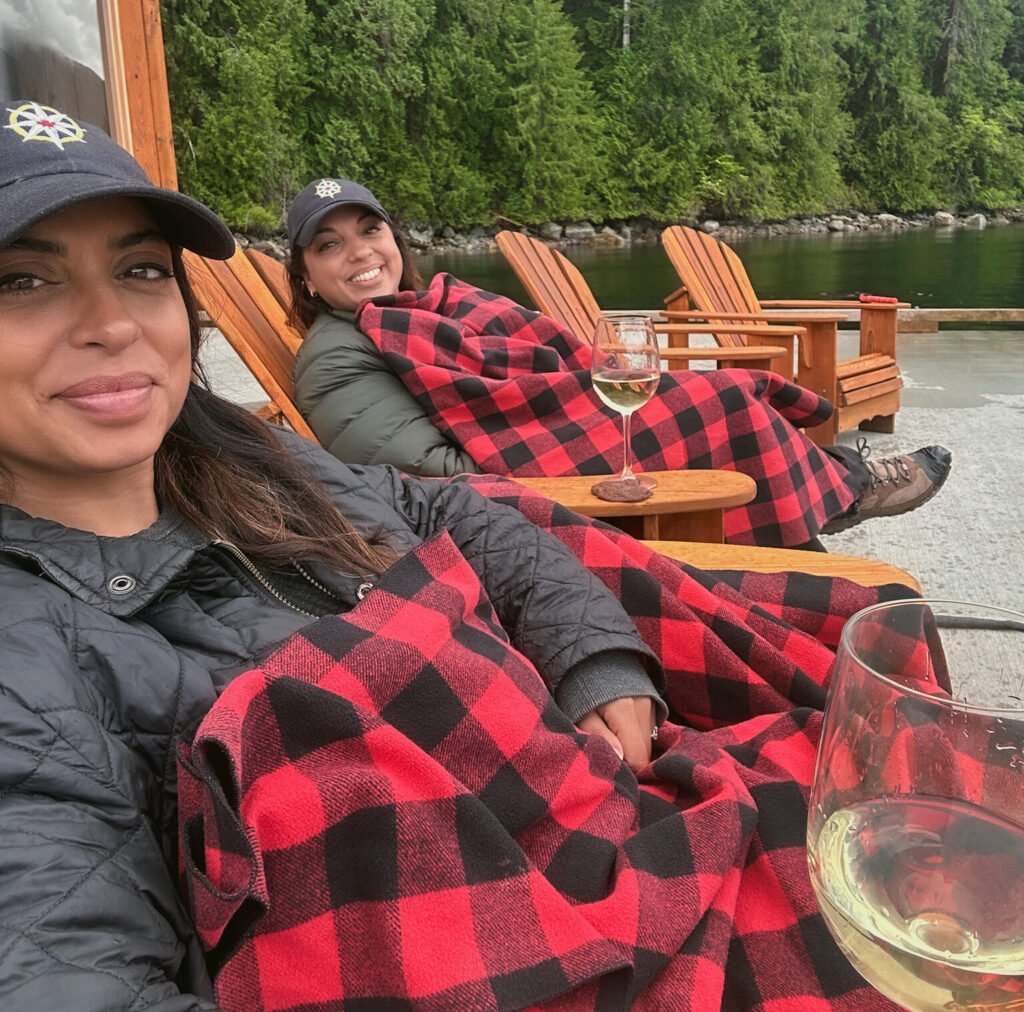
This trip was destined to be magical, as any reunion between close sisters always is. We are Canadian sisters and business partners who live across the world from each other. As an environmental journalist living in Los Angeles, Aliya Jasmine visited Klahoose in the Fall of 2023 when she was pregnant for the first time, and the bears on this land taught her the first lessons of motherhood. Years later, we get to come back together and do research for our environmentally-focused production company, Earth Tones. And a new perspective, as Aliza, based in the South of France, is not only a first-time visitor to Klahoose, but also a Landscape Architect and PhD student who focuses on cultural heritage. It was a long journey for her to get to this little piece of land, but experiencing this trip through her eyes will be special, considering Klahoose is an award-winning luxury eco-lodge that is 100 per cent indigenous owned and operated.
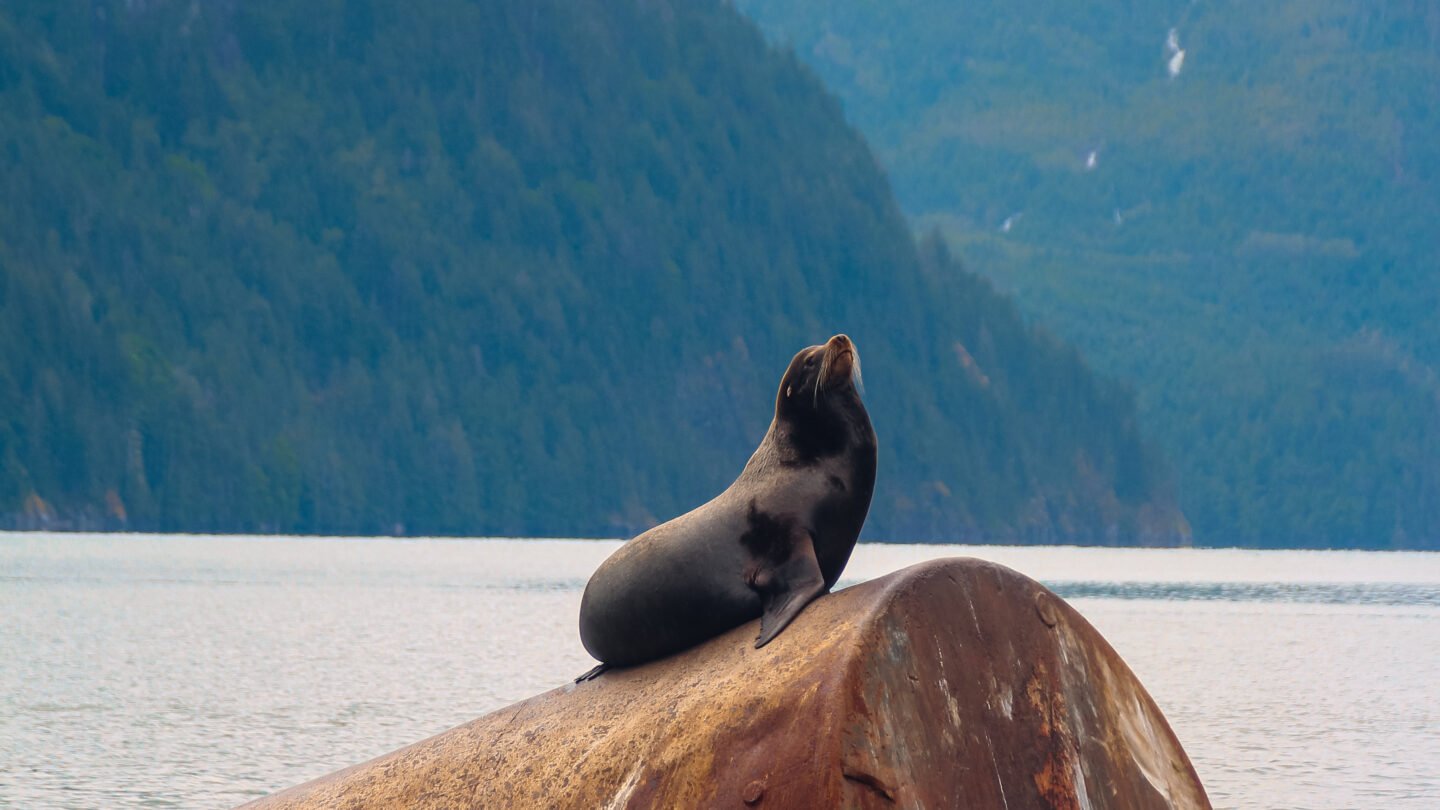
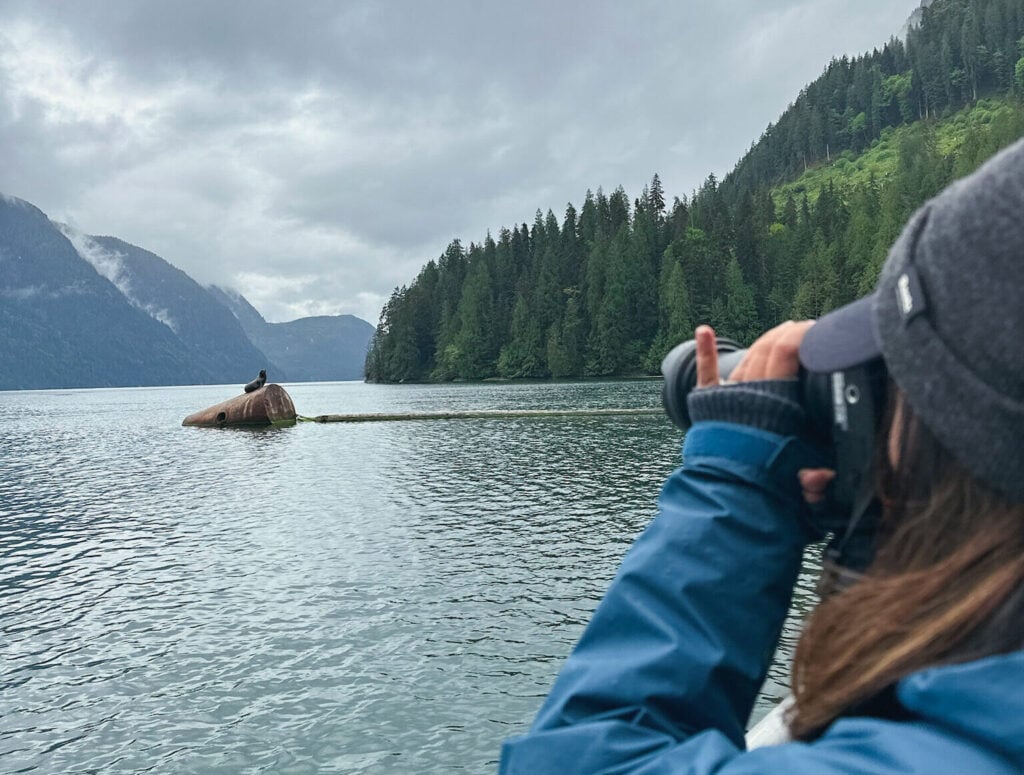
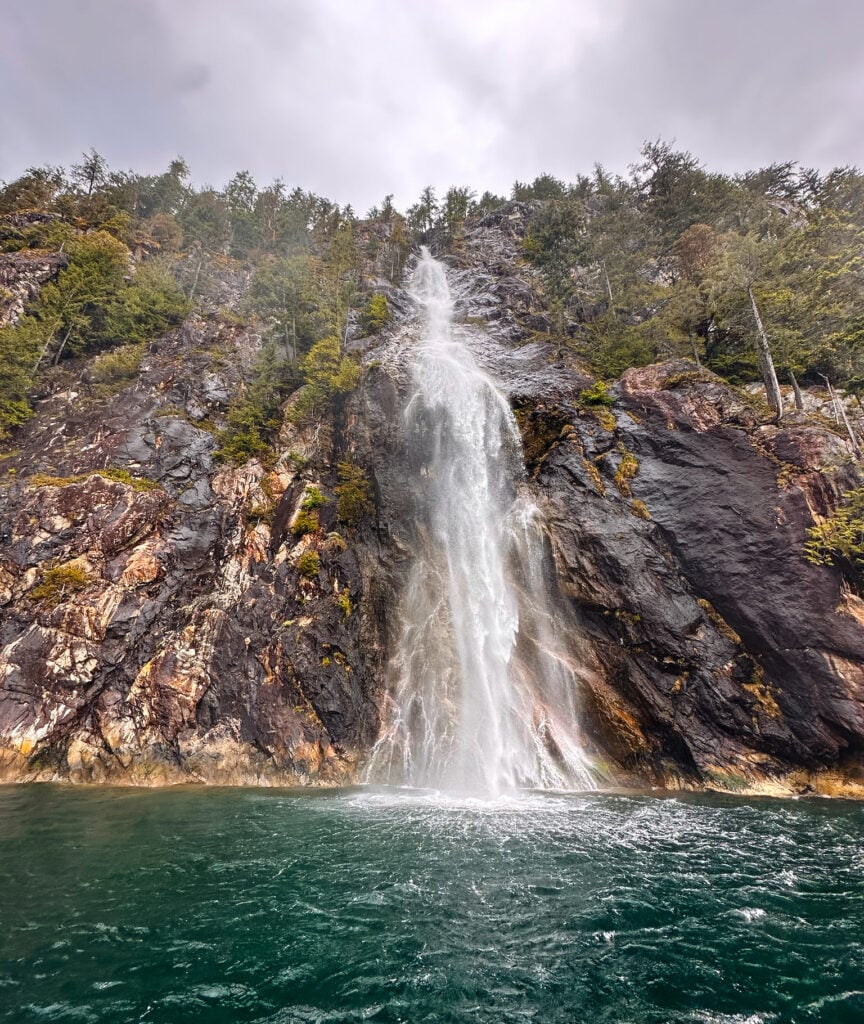
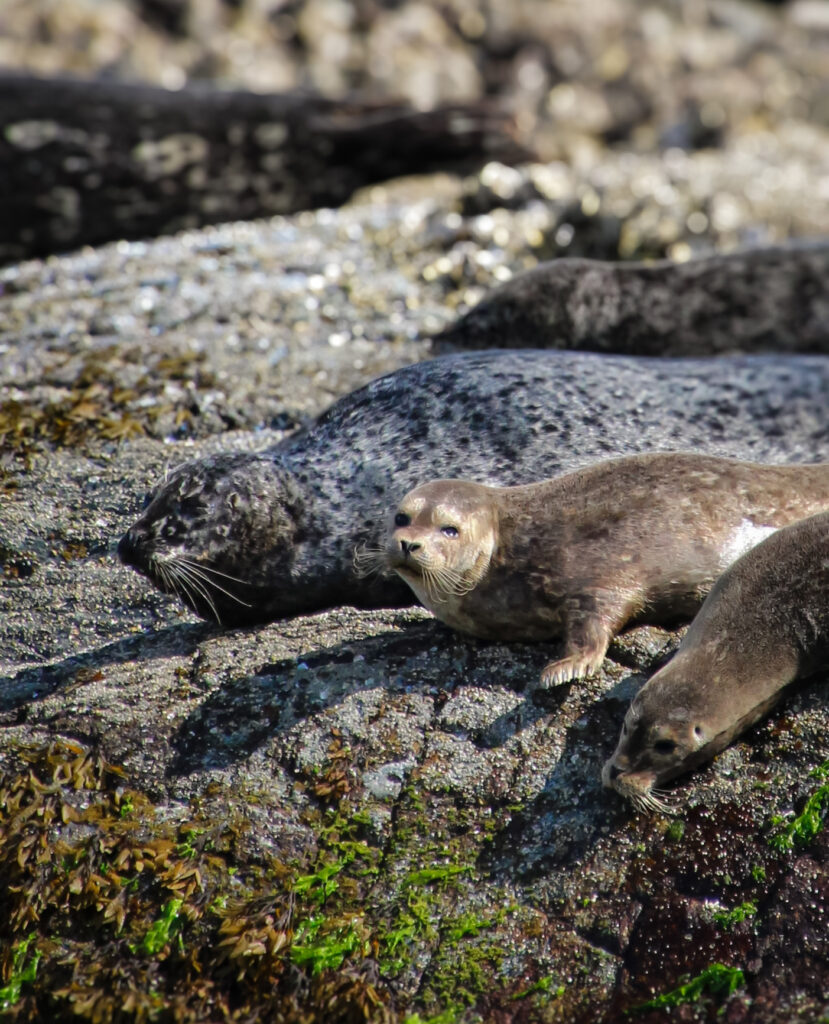
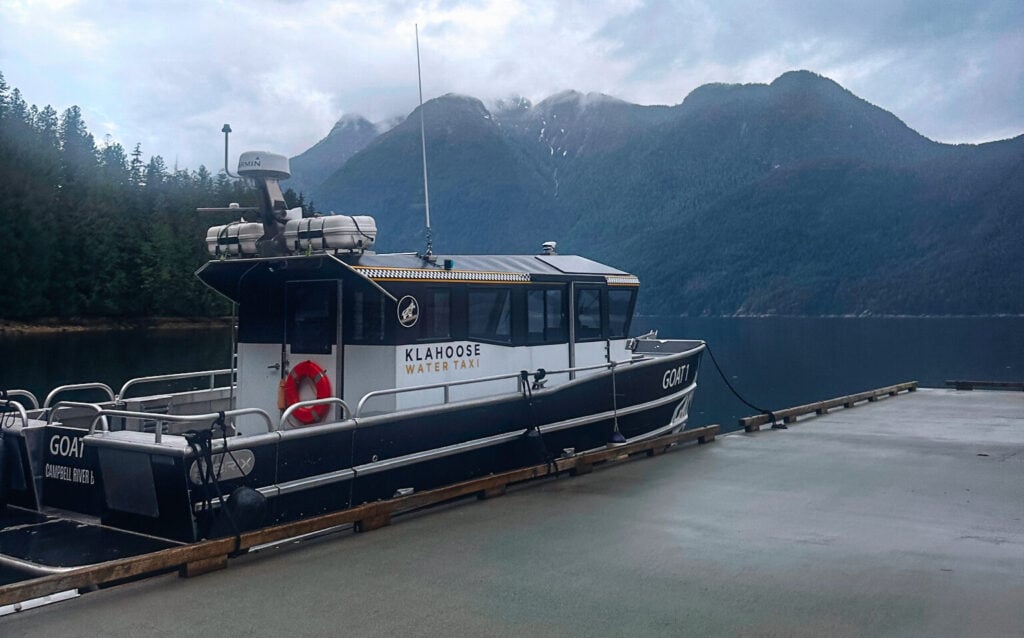
After a long journey to Vancouver from France and Los Angeles, respectively. Followed by a seaplane, drive up the coast, and a long boat ride, our ultimate arrival into B.C.’s Toba Inlet is breathtaking – and well worth every minute of borderline sea sickness to get here. As our boat glides across the ancestral waters of the Klahoose First Nation, sea lions lounge on rocky islands as the forested cliffs of Desolation Sound rise around us, we’re spoiled with lush green landscapes and a dramatic sky from the spring rain. At the dock, we are greeted with song by local cultural interpreters and guides Ivan Rosypskye (Heiltsuk Nation), Jerry Francis (Klahoose Nation) and Heather Timothy (Tla’amin Nation), as well as interim resort manager Suzanne Fletcher and skipper Roger Gillen—not with a performance, but with a traditional Klahoose welcome. A steady drumbeat echoed across the inlet as the words čɛčɛhaθɛč taθ qʷal—“welcome to our home”—are sung into the air. In Klahoose tradition, guests arrive by water and wait offshore until they are invited ashore. This protocol is more than ceremonial; it’s an act of mutual respect, rooted in the values of care, protection and accountability.
As travellers, we are not simply entering a resort; we are stepping into a living cultural landscape, as guests. Stories, songs, language and place names are not just anecdotes to be consumed, but sacred inheritances, belonging to the community of the toq qaymɩxʷ (Klahoose) people. This welcome ceremony marks the beginning of a relationship between the travellers and our hosts—one grounded in gratitude and shaped by a deeper understanding of what it means to truly arrive.
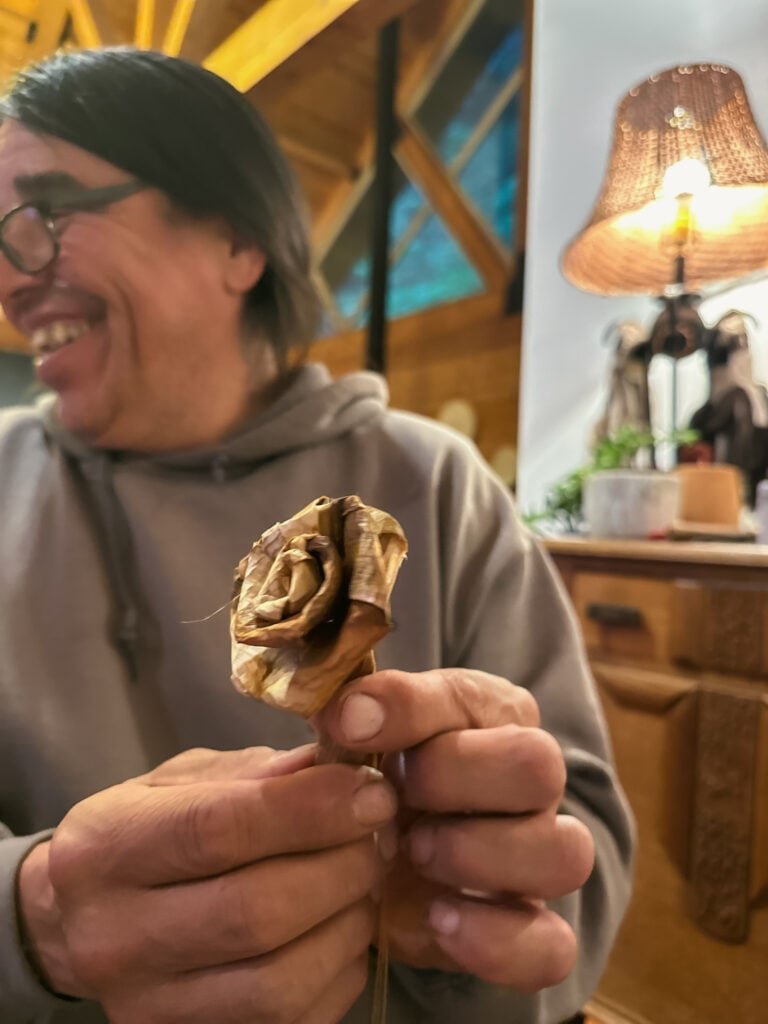
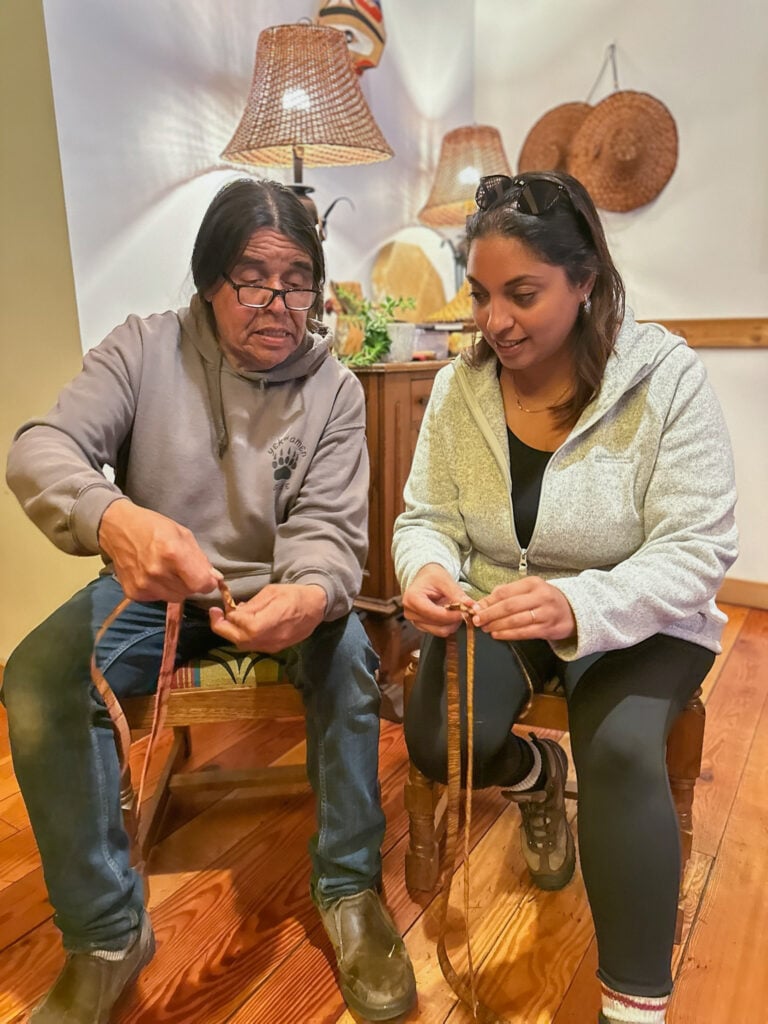
During the evening’s cultural programming, Ivan teaches us how to make a traditional cedar rose, a common decoration made by families. He explains the process of respectfully harvesting long strips of cedar bark and leaving tobacco, an offering to the land. “Whenever you take something from the land,” he says, “you give something too.” Each gesture was a form of gratitude.
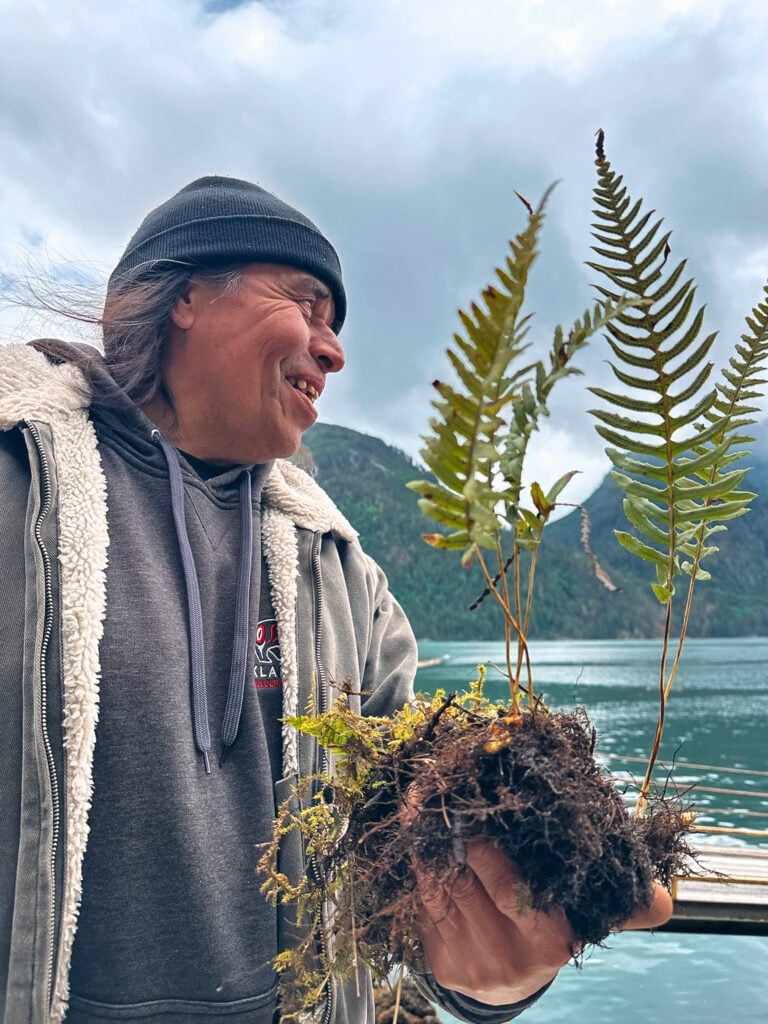
The next morning, aboard a wildlife-viewing boat tour, Ivan docks near a sustainable logging site and notices a plant growing roadside: liquorice root. The moment was completely off-script from our scheduled tour, yet absolutely welcome. He carefully harvests some (again offering tobacco beforehand), sharing how the root has long been used in Indigenous medicine to soothe sore throats, calm inflammation and support digestion.
What was being offered wasn’t a tour, but a way of seeing. Where each teaching is given with care, and every gesture asks something of us in return, shaping not just where we stand, but how we will carry ourselves long after we leave.
Arriving like many before us, we expected the West Coast’s grand spectacle: breaching orcas, eagles soaring overhead, black bears foraging on the shoreline and sea lions lazing on rocks. But nature offers a quieter gift.
We capture a glimpse of a bald eagle, some sea lions and even a pair of young black bears from afar, but no whales or orcas, despite the area’s reputation. In time, we come to realize: this, too, is a part of the teaching.
Ivan reminds us that encountering wildlife here is not a matter of luck or guarantee, but rather a matter of relationship. “Set your intention,” he says. “Call out to them. Maybe they’ll show themselves, but we aren’t owed a sighting.”
Across many Indigenous teachings, animals are considered kin, not attractions. They appear when they choose to, not when summoned. At Klahoose, this perspective shapes every encounter, not as a restriction, but as an invitation to slow down, observe and approach the natural world with humility rather than control or expectation. As we made our way up the Inlet, everyone spread out around the boat. We held our breath over and over, for hours, searching the shorelines for bears, eyes squinting, scanning the horizon for whales. And although we were disappointed not to have a huge sighting, the stillness of searching for something so sacred, without screens or phones or social media or news feeds, was fulfilling in a way none of us could anticipate. It wasn’t boring, it was stillness, mindfulness, simply being in the now. And the minute we would see a whale, all the phones would come out, so we found ourselves cherishing the waiting. In a way we never anticipated.
We will ultimately leave with no whale selfies, no bear highlight reels—only memories of shared breath, watchful stillness and the sense that what we truly witnessed was the humility of being within, not above, the natural world. One could argue that this is more valuable than an epic selfie, perhaps not in the number of likes on Instagram, but in a merit that is much harder to quantify.
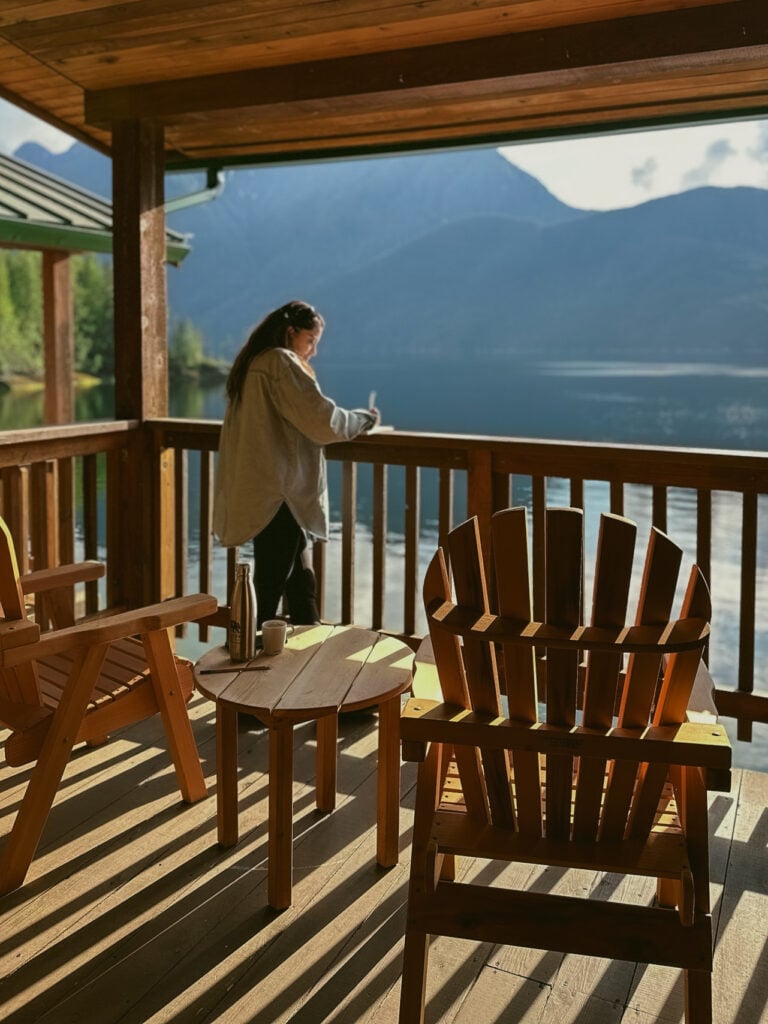
One of the most moving experiences of our stay comes through the spiritual bathing ritual, led by Heather and Jerry. We travel by boat to Ahpokum—also known as Forbes Bay—just around the corner from the resort within Klahoose First Nation territory. Set at the edge of the rainforest, the ceremony begins with brushing the body off with cedar to cleanse the spirit, followed by wading into the frigid water. For us, it was the ultimate test of mind over body. Each step deeper into the river demands presence, patience, and courage while fighting the urge to retreat to warmth. Eventually, we are fully submerged, our bodies numb from the cold, arms at our sides and hands open to the sky.. We turn in each direction, first North, then East, South and finally West.
For the Coast Salish peoples, spiritual bathing is not just a special occasion—it’s often practiced weekly as a way to reset the body, clear the mind, and realign the spirit with intention.
On the boat ride back to the resort, Heather shares stories of her ancestors: a grandfather who called deer by blowing on blades of grass, a midwife grandmother who once practiced in a now‑abandoned town across the inlet. A white chapel remains visible as a poignant reminder of family memories. In that moment, we understand that the river does more than cleanse. It remembers. It restores connections across generations and carries teachings in its flow.
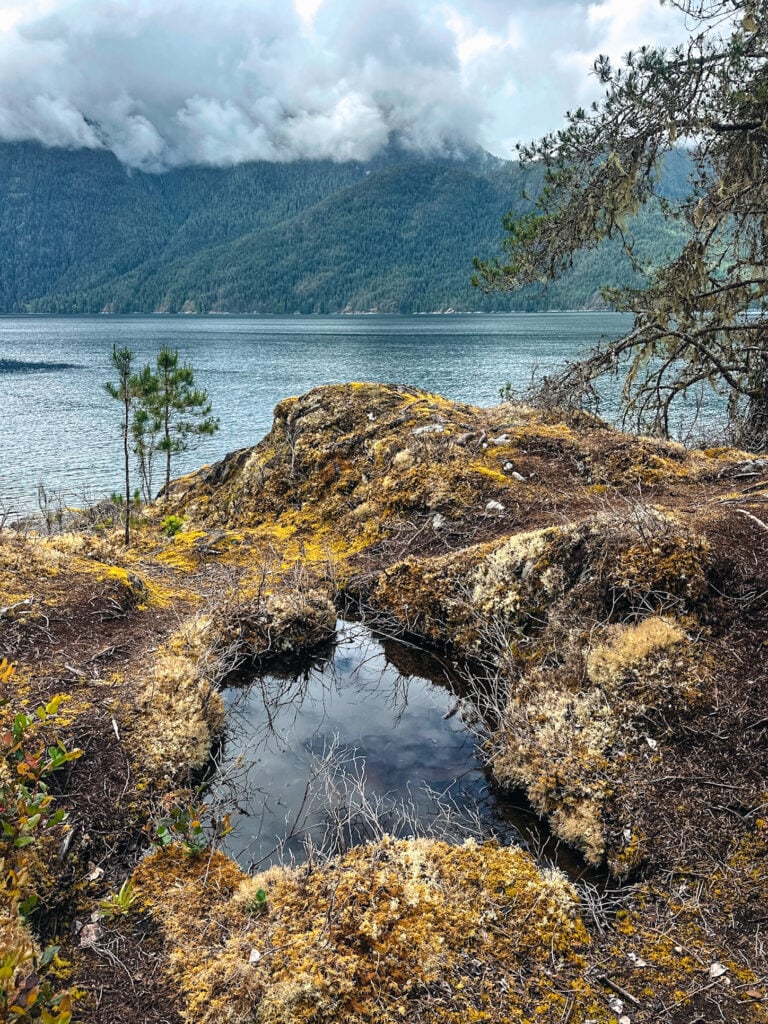
As sisters with professions that involve interpreting land (one of us, an environmental journalist, and the other, a landscape architect), viewing the world through the lenses of ecology, history, and design is not foreign. But at Klahoose, those lenses gave way to something deeper: relationship.
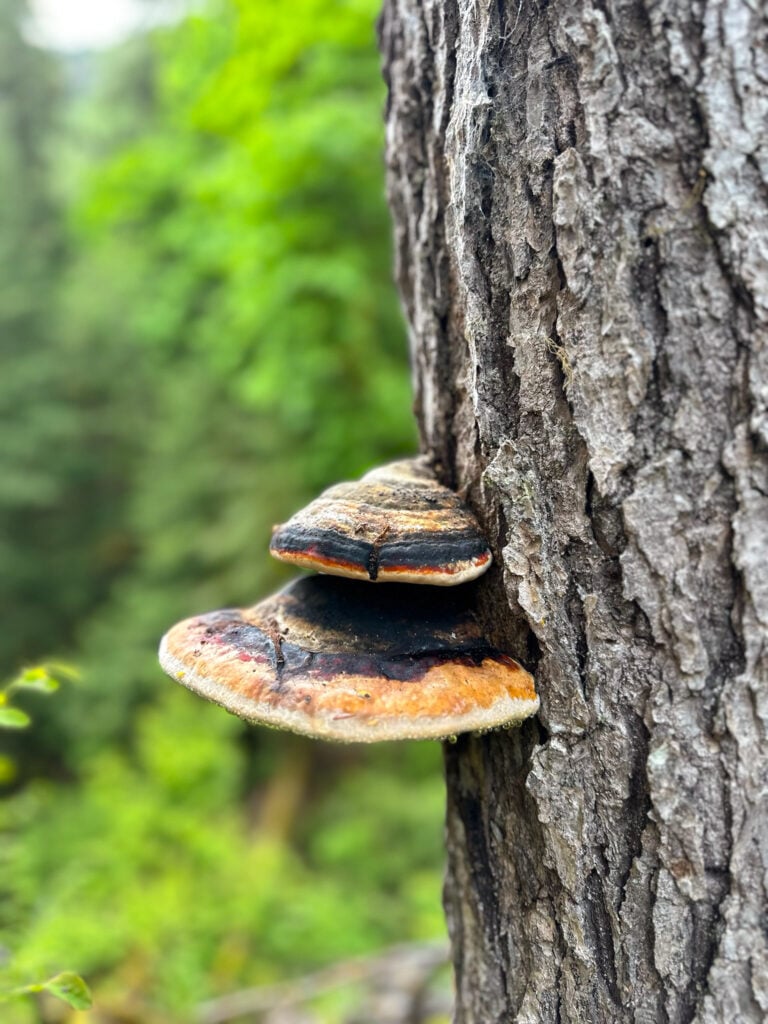
From the boat, we spot twisting arbutus trees clinging to rocky inlets, standing tall like guardians of the shoreline. On land, we encounter yew trees, used for medicine and bow-making and walk beneath Douglas fir, maple and hemlock, draped in moss and “old man’s beard.”
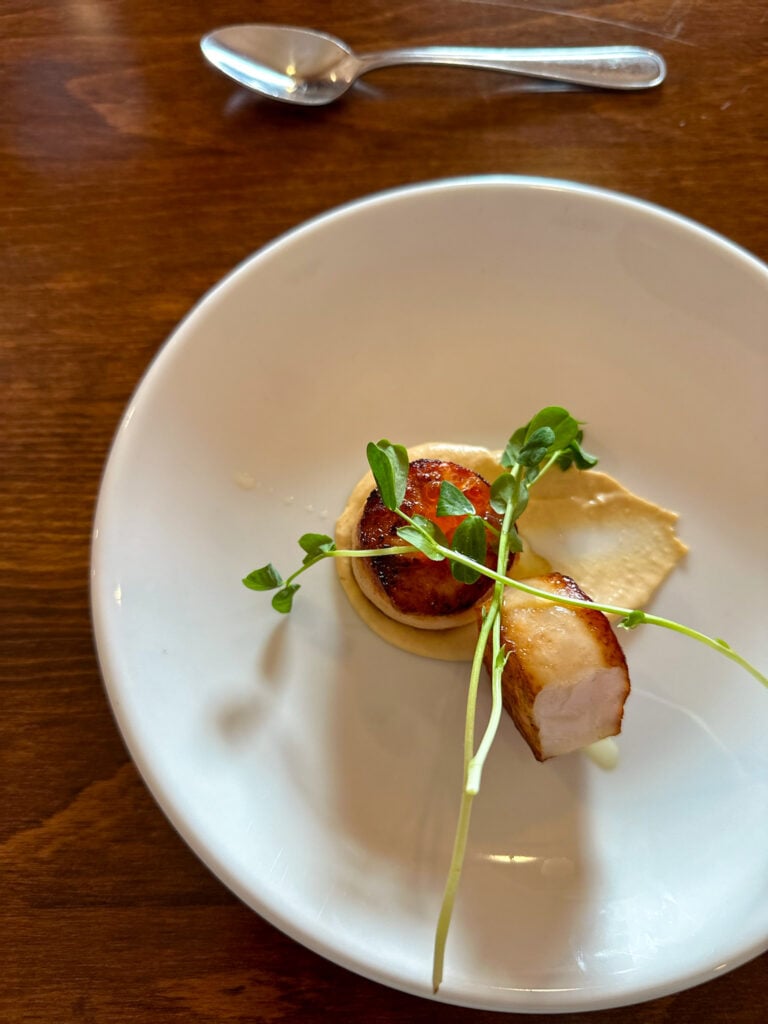
We taste spruce tips in fresh bread prepared by chefs Jen and Mike Levy, alongside myosotis (colloquially known as forget-me-nots), salal, lavender and dandelion flowers. Even the food being served on our plates during the resort’s elevated family-style dining experience is part of the forest’s voice.
What we once might have called foraged ingredients, Klahoose reveals as inherited knowledge—flavours rooted in memory and drawn from the Earth’s quiet abundance. Even the act of eating becomes a form of listening, a reminder that the forest doesn’t just feed the table—it speaks.
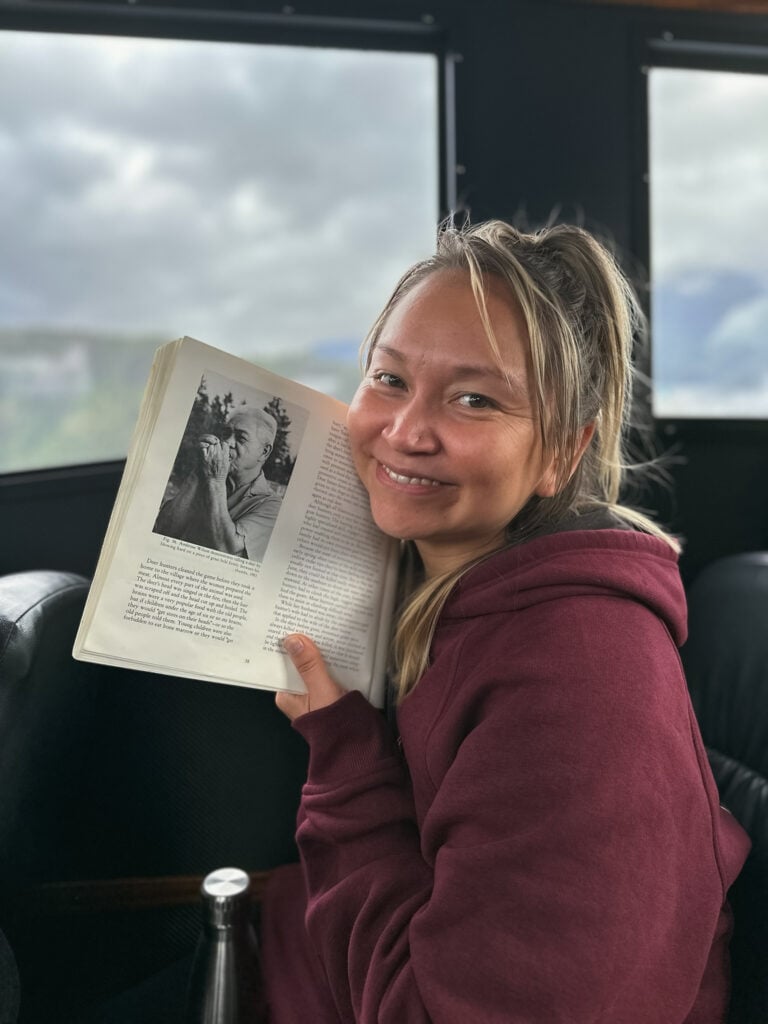
The Klahoose, like many Indigenous nations, have endured displacement, cultural suppression and the long shadow of colonialism. Yet, what they offer at the resort is not a transaction; it is an invitation to walk alongside one another. By supporting Indigenous-led tourism, guests participate in a broader journey of reconciliation, one that honours history while helping shape a more just and connected future.
In ʔayʔaʓuθɛəm, the language of the Klahoose people, there is no commonly used word for “goodbye.” Instead, they regularly say: ʔi:mot tətᶿ kʷənome—“See you again” or “It’s good to see you.” These words carry more than a hopeful farewell. They carry a worldview. One that views time not in finalities but in continuities.
We came looking for wildlife. We leave with something wilder: a story that we now carry, and a place that we will always carry it from.
Travel
On the coast of B.C.’s mainland awaits an immersive experience on the water’s edge, where tourism can be an act of reconciliation
Travel
Robin Esrock visits four different resorts to discover how getaway traditions in southern Ontario continue to thrive

Travel
An off-grid eco-friendly resort, only accessible by boat or seaplane, turns out to be the unexpected perfect “babymoon” destination for nature’s lessons in the wildest maternal instincts
Wildlife
Recording the soundscapes of our ecosystems is a burgeoning field that allows researchers to better decode what the Earth is saying. But are we listening?