Places

Land before time: Exploring the many layers of Anticosti Island

A visit to Canada’s newest UNESCO World Heritage Site, home to ancient fossils, storied shipwrecks — and more deer than people

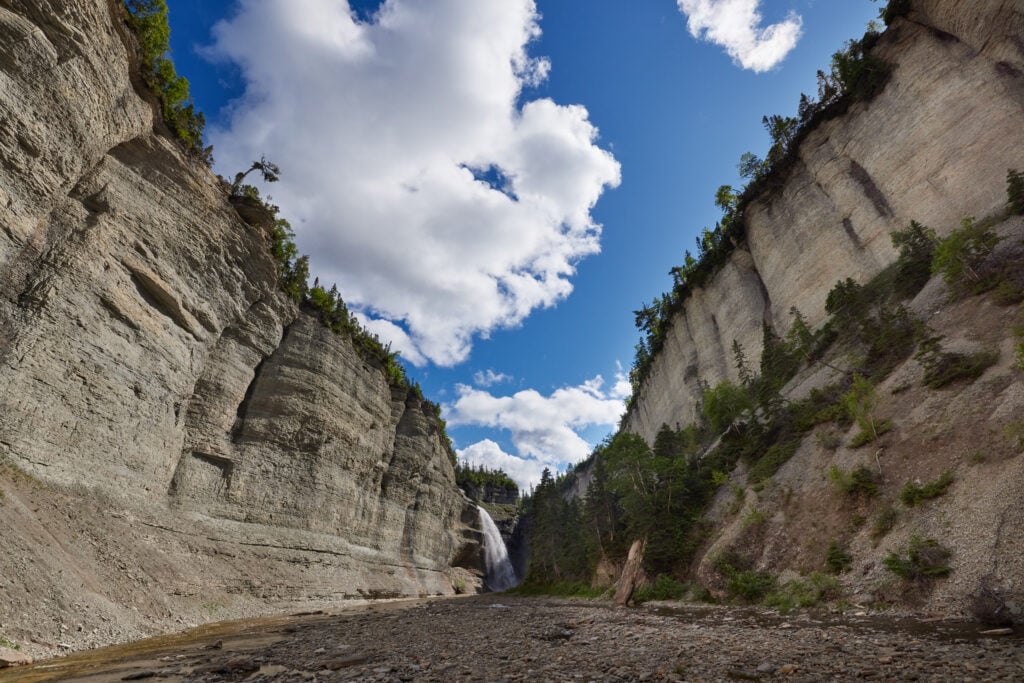
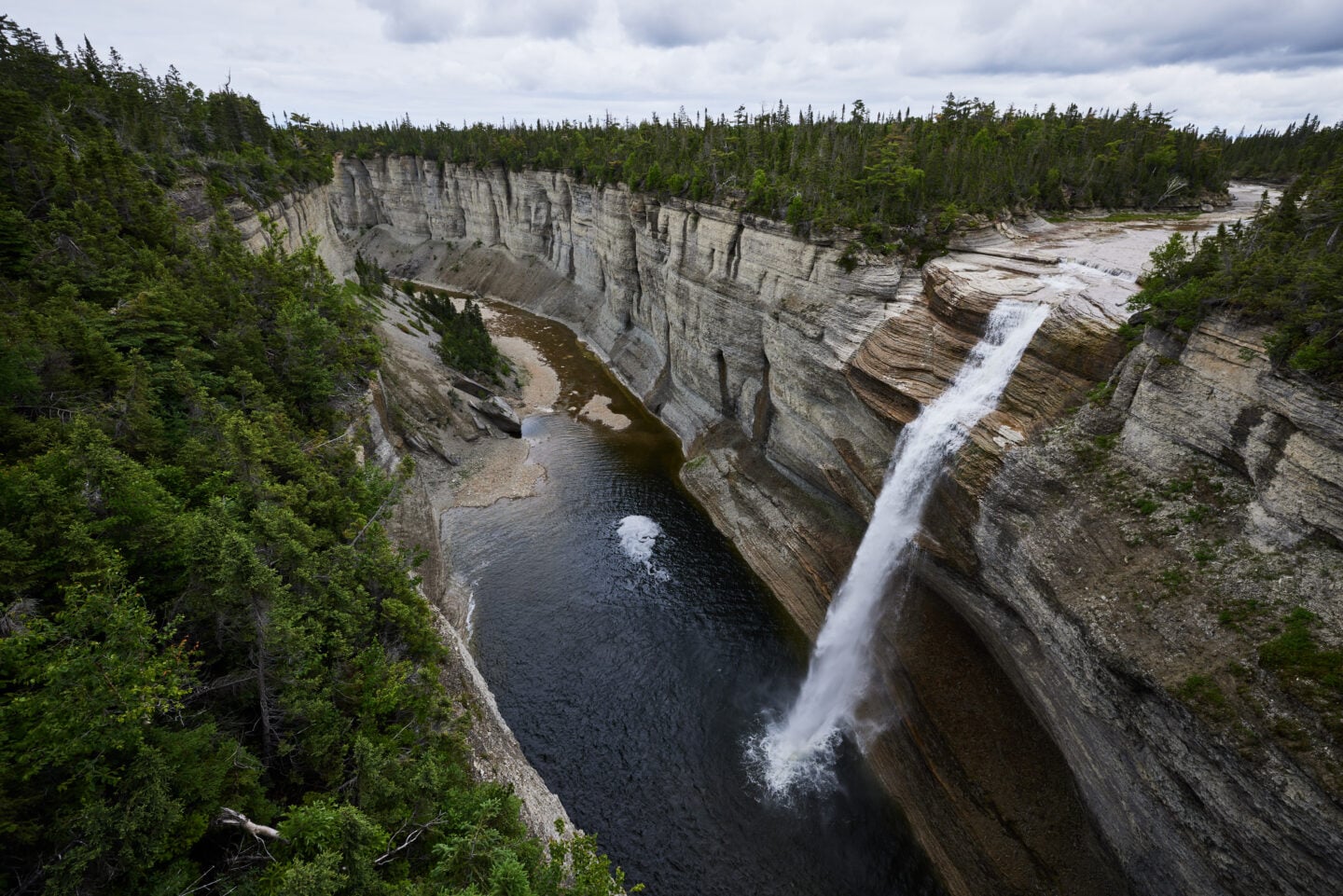
The Vauréal Falls, on Anticosti Island’s north coast, plunge 76 metres into the canyon below, where ancient fossils are easy to find.
Expand Image
Advertisement
Advertisement
Advertisement

I’m splashing through the shallows of the Vauréal River on Quebec’s Anticosti Island, navigating a rugged trail to the island’s most impressive waterfall. Boulders have tumbled from the canyon walls above into gargantuan piles, forcing me into the water. Squelching over to the riverbank for a closer look at the rubble, I discover a slab of shale cracked open like a popup storybook.

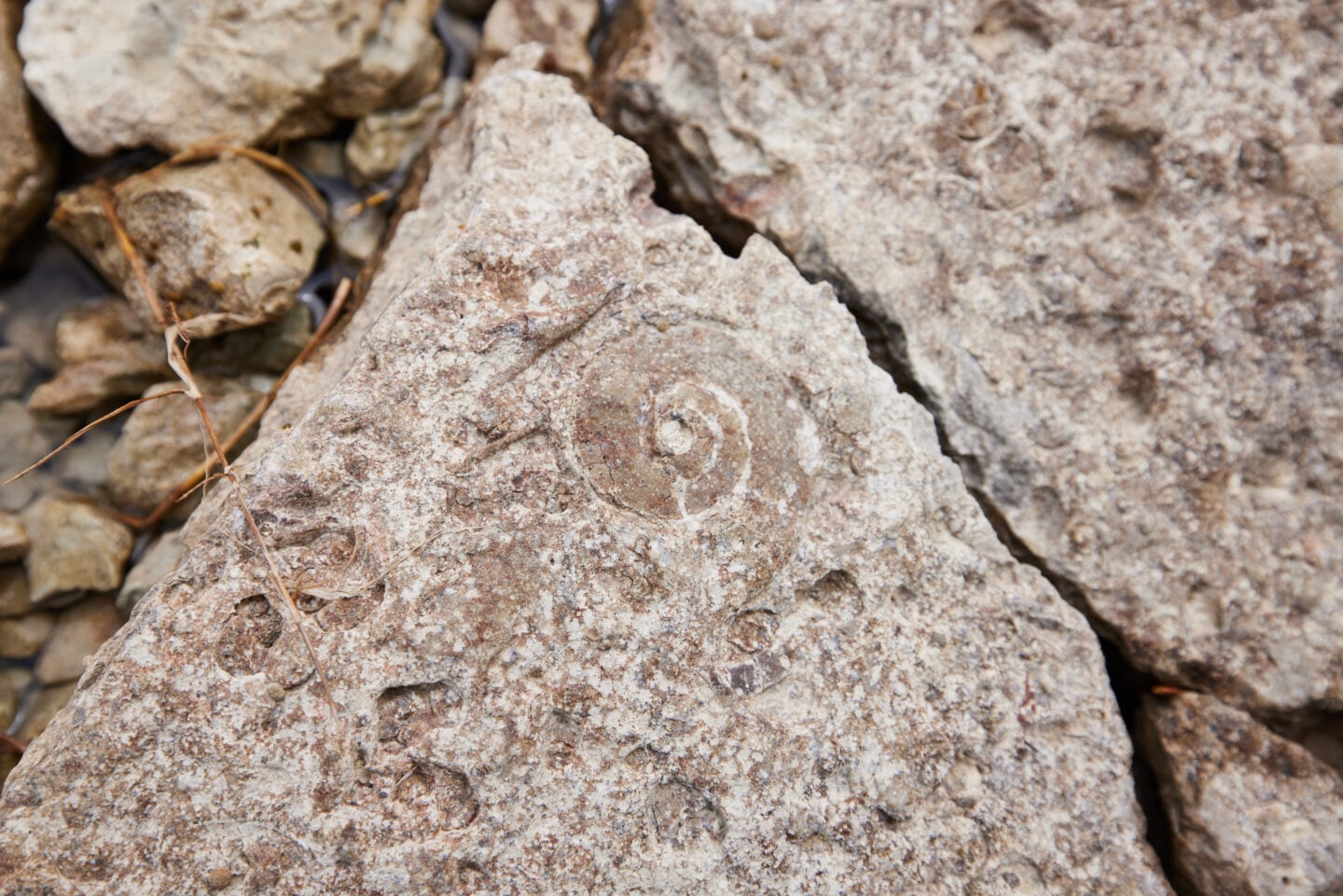
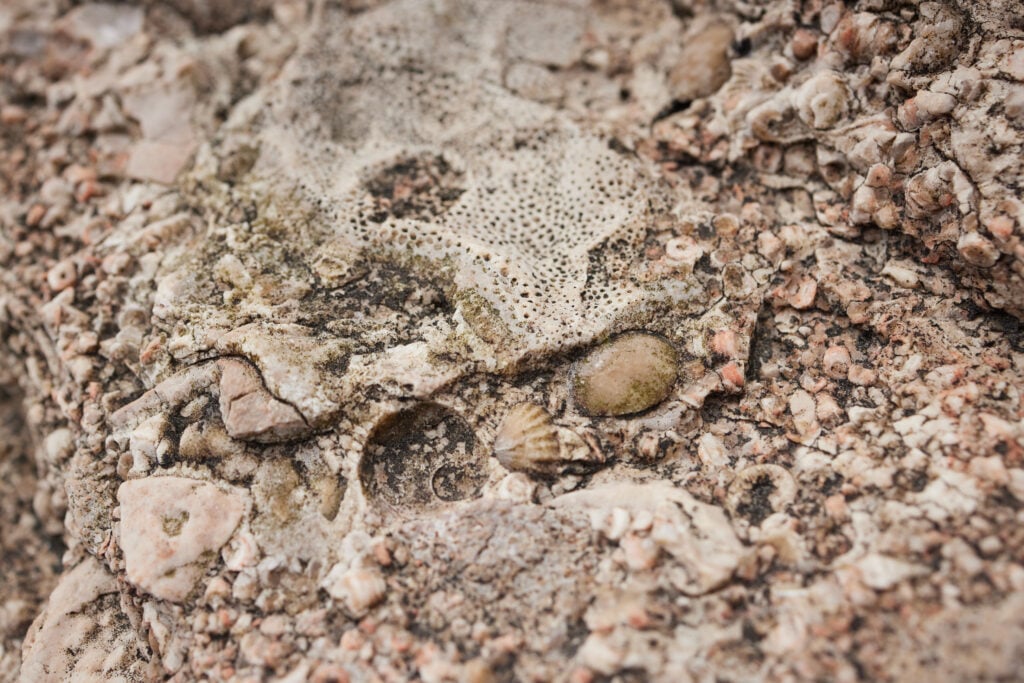
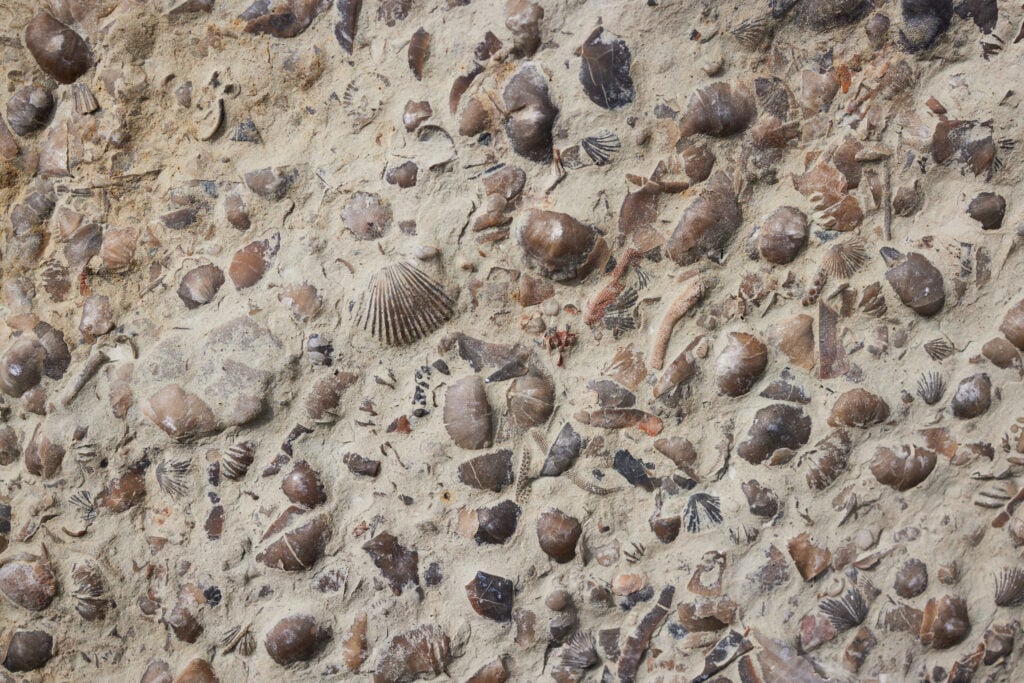
The rock inside looks like concrete made with a shovelful of shells no bigger than a fingernail, some as delicate as feathers, others hard as thumbtacks. These are the fossilized remains of unfathomably ancient animals, most of which disappeared nearly half a billion years ago when Earth underwent the first of five mass extinctions. 

The Vauréal River slices through layers of shale containing fossils dating back to Earth’s first mass extinction.
Expand Image

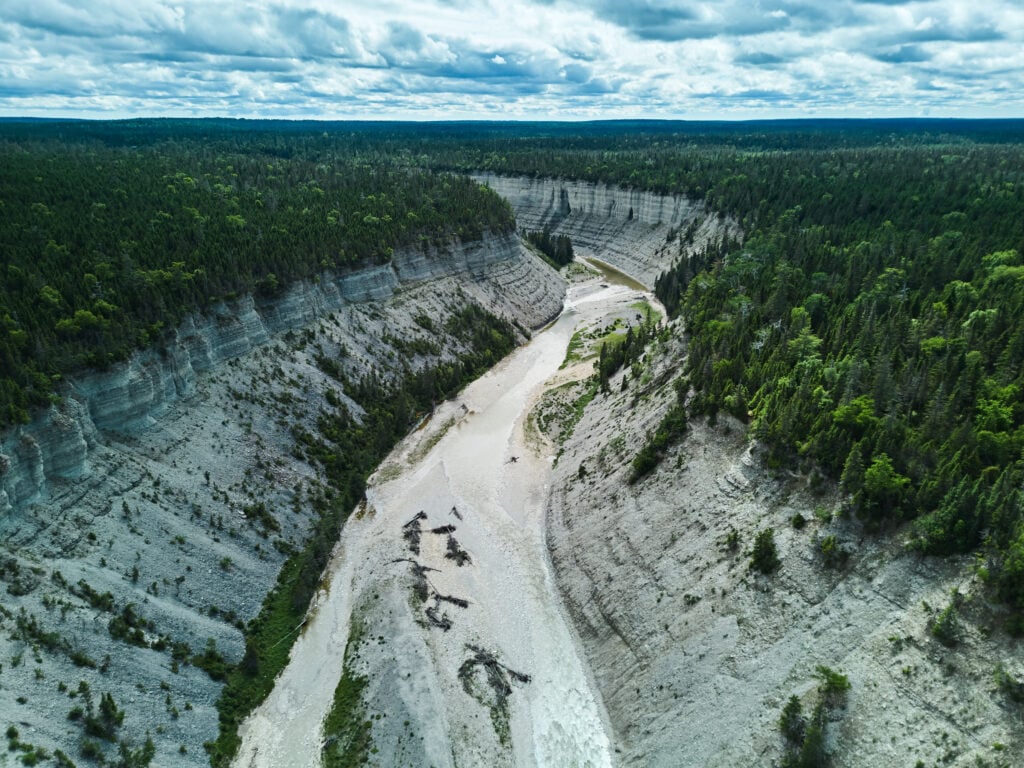
Anticosti, a remote, sparsely-inhabited island in the northern Gulf of St. Lawrence, is like a slice of cake tipped onto a plate, exposing all of its layers at once. On the north coast, the Vauréal slices through this geological confection like a knife, plunging from a stunted tangle of boreal forest to the canyon below before draining into the Gulf of St. Lawrence. Fossils here and at other sites have lured paleontologists for a century. Anticosti has other claims to fame — notably its deer population and its bizarre period as a French chocolate magnate’s private playground — but ultimately it is these visible snapshots of ancient Earth that earned the island a coveted designation as a UNESCO World Heritage Site in 2023.

I’ve come to Anticosti to see for myself why this narrow, wild wedge of land deserves to rank among our planet’s great sites of human and natural heritage — places like the pyramids of Egypt, the Serengeti and the Great Barrier Reef. The Innu call it Notiskuan, translated as “where bears are hunted,” while the Mi’kmaq call it Natogostec, “land of before,” possibly a reference to its position at the mouth of the St. Lawrence River. But as I’m learning, Anticosti lives up to its Mi’kmaq name in another way, offering tantalizing glimpses at a time before virtually all of life on Earth as we know it today existed.

A fossil dating back almost half a billion years embedded in rock in Vauréal Canyon.
Expand Image

I reach Anticosti on a charter out of the tiny Air Inuit terminal tucked away at the northern end of Montréal-Trudeau International Airport. A laminated card that I return for reuse serves as my boarding pass. No assigned seats. No security. Just a limit on hunting rifles because of the weight.

Most of the island outside its main municipality, Port-Menier (permanent population 200), falls under the jurisdiction of Quebec’s park service, the Société des établissements de plein air du Québec (SÉPAQ). In 2001, Quebec established a national park around the Vauréal River, and in 2017, after years of protest, petitions and political battles, banned petroleum exploration on Anticosti. Today, deer hunting and tourism drive the economy.

We make a quick stop in Quebec City to pick up a few tourists and SÉPAQ employees, including Steve Gareau, who is dressed head to toe in camouflage. He plunks down beside me, so we chat much of the way to Port-Menier. When I ask if he’s a hunting guide, he gestures at his clothing and jokes with a wry smile, “No, I’m no guide.”

In fact, his summer job is to keep the trails clear, and in fall, he guides hunters, so he knows the island like few others.

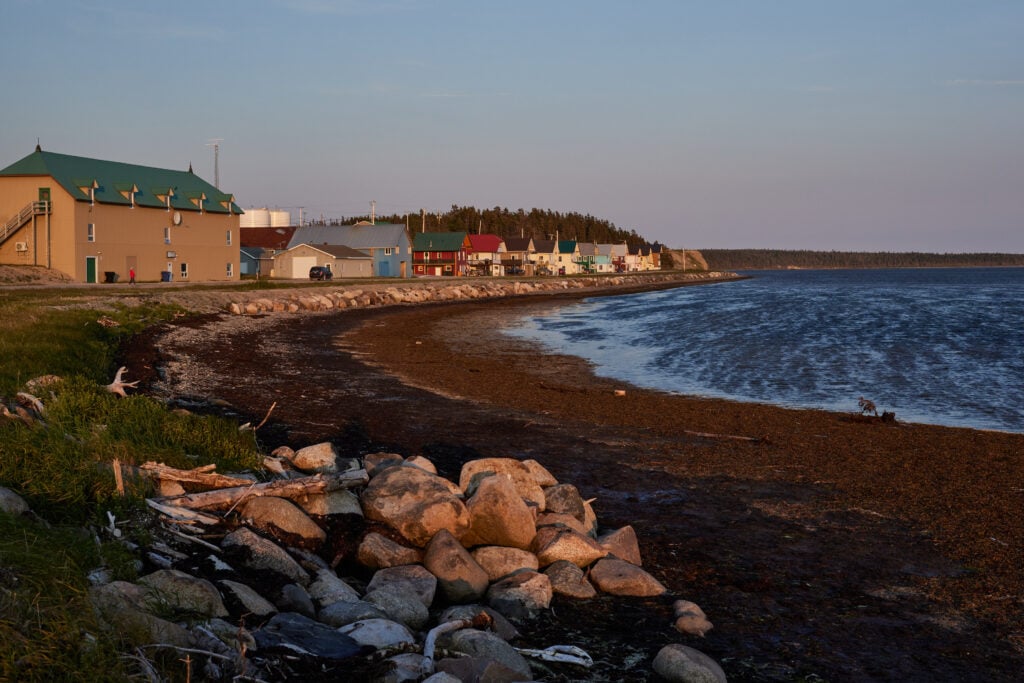
Port-Menier, Anticosti’s only permanent settlement.
Expand Image

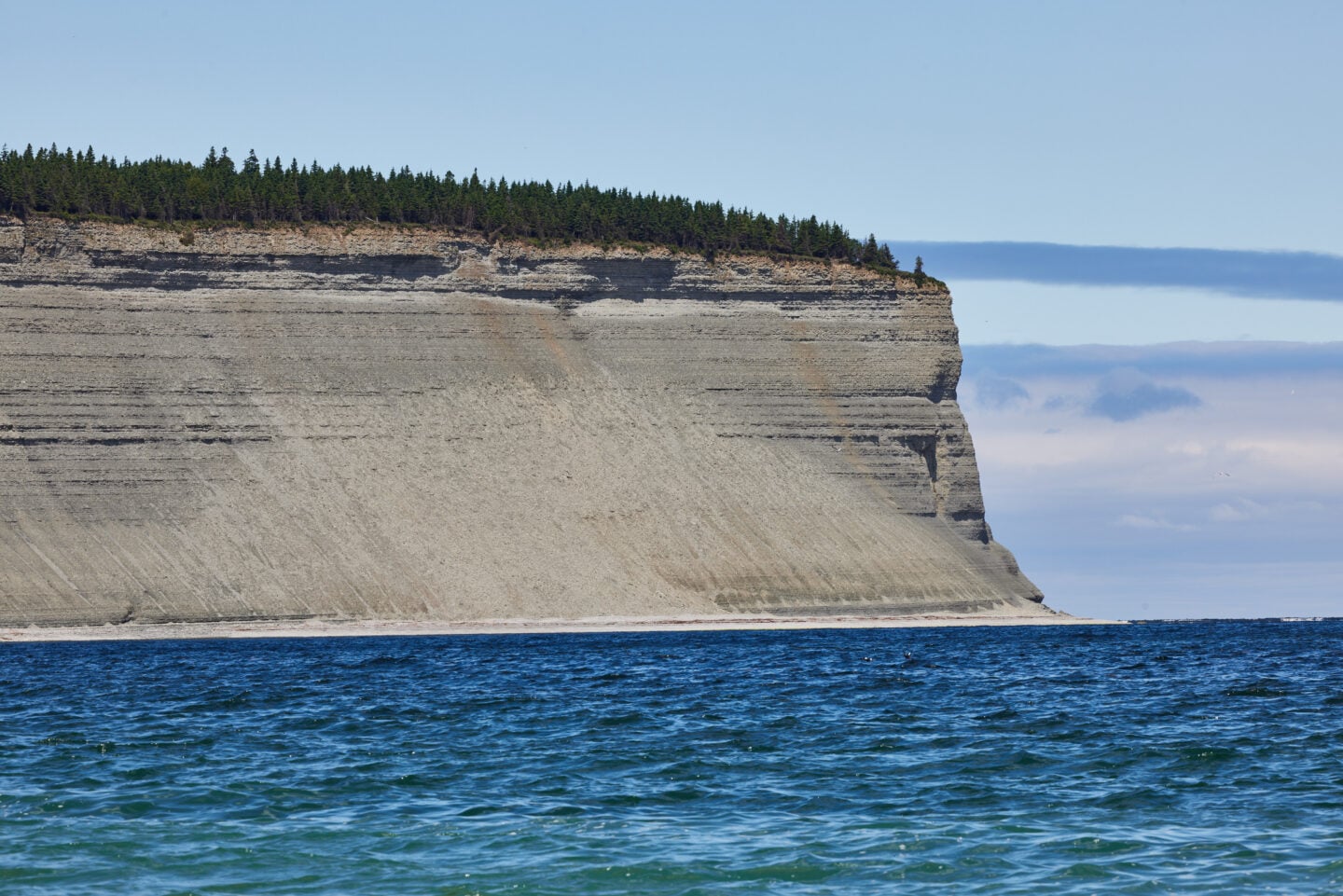
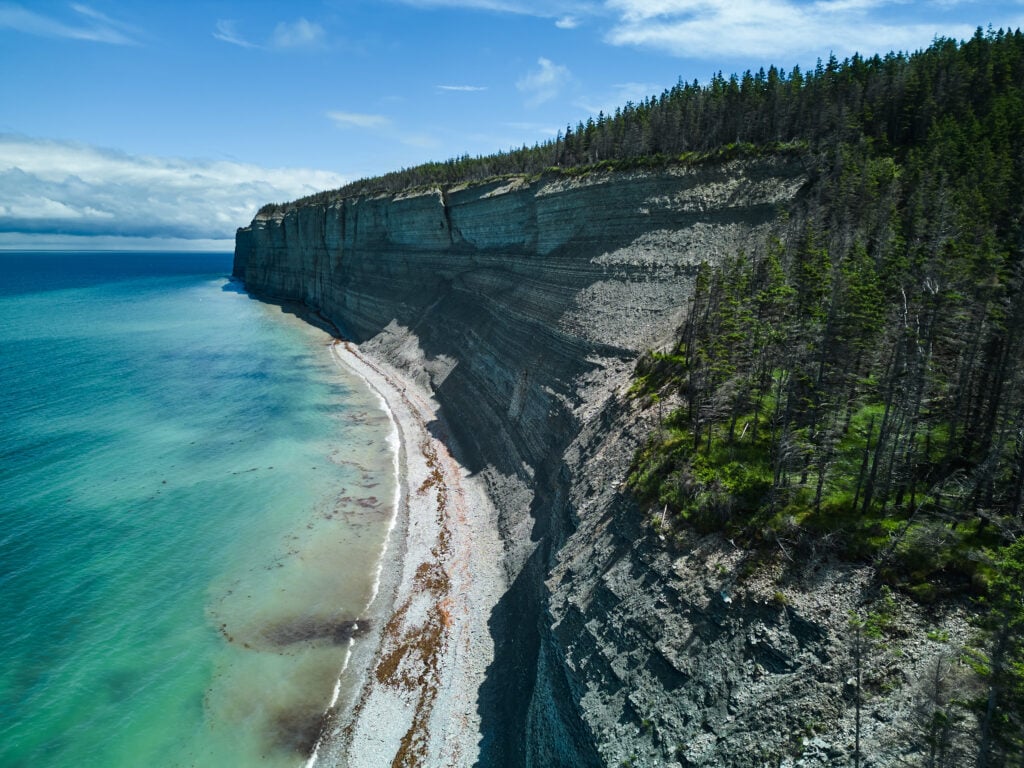
In Port-Menier, photographer Christian Fleury and I pick up our rental 4×4 and immediately head out to explore the island, stopping first to check in at Auberge McDonald, one of three main auberge-style accommodations on Anticosti. The 16-room lodge, which serves an excellent lobster Benedict breakfast, sits on the northern shoreline at Kilometre 105, about halfway between the island’s eastern and western tips. From the auberge, we drive east to Pointe Carleton Lighthouse and beyond to Baie de la Tour, where twin cliffs flare out on either side of a lagoon trapped by a crescent beach like the wings of a stone bird, layers of fossils exposed by the scouring winds.

That night, around a seaside campfire at Auberge McDonald, where SÉPAQ workers and tourists sing French songs, I meet up with Gareau again. He recommends a few sites to visit not found on tourist maps and shows us photos of a natural, four-metre deep swimming pool dug by a short waterfall that he hopes visitors can someday add to their Anticosti itinerary.

The sheer fossil cliffs of Baie de la Tour.
Expand Image
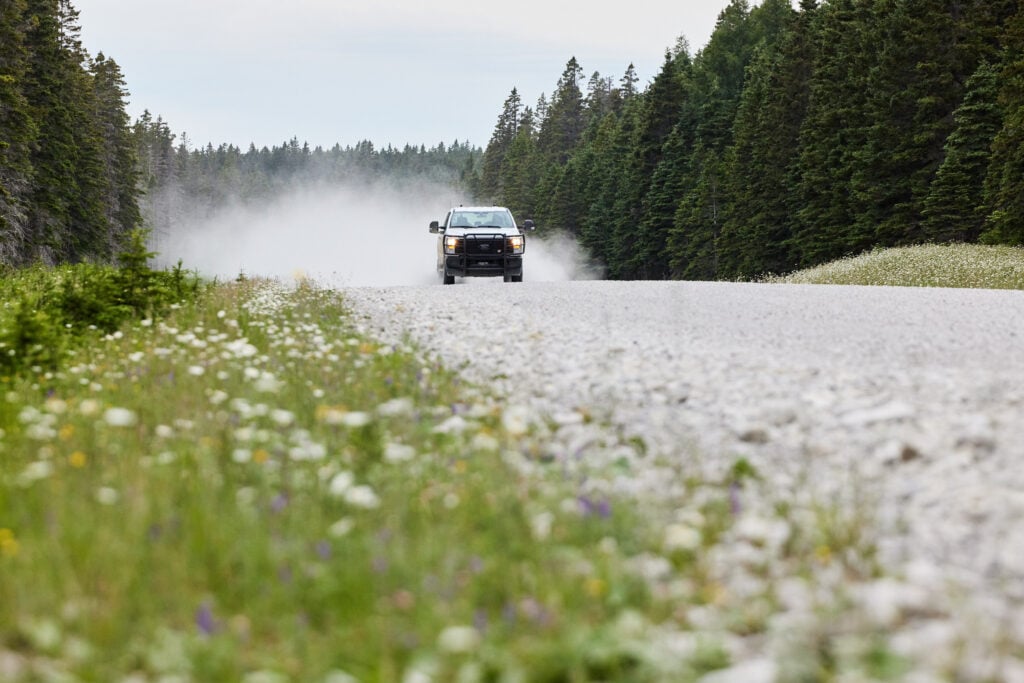
“On Anticosti, the road comes with dust.”
Expand Image

The next day, crossing north to south from McDonald to Chicotte-la-Mer, we travel from one end of the Earth’s first mass extinction to the other. The drive takes nearly two hours, over rippling hills like ocean swells. Glancing in the rear-view mirror at the clouds kicked up by the truck tires, I’m reminded of what a clerk at Port-Menier’s only grocery store told me: “On Anticosti, the road comes with dust.” The hiss of loose gravel under the tires reminds me of the swish of water off a boat’s bow.

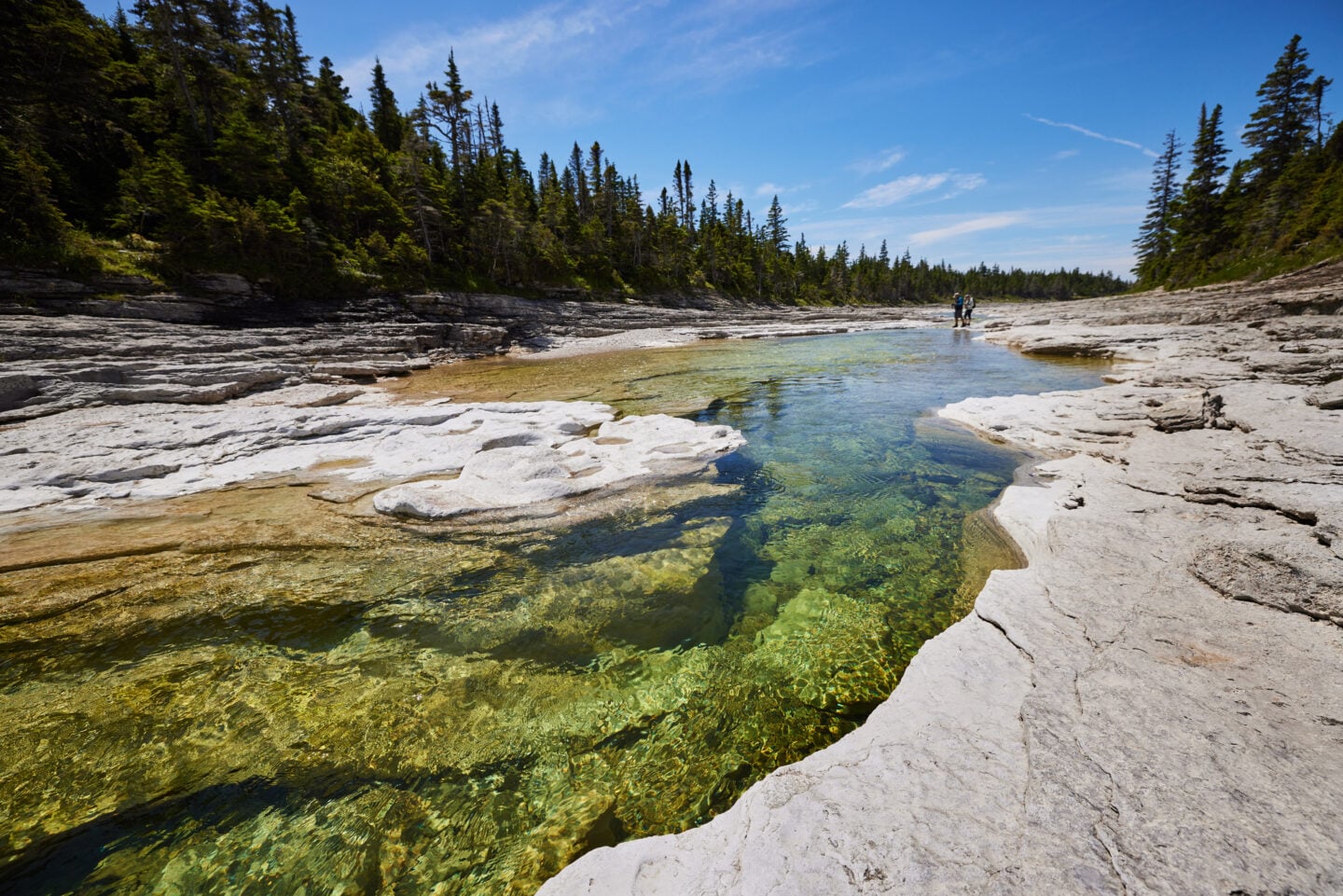
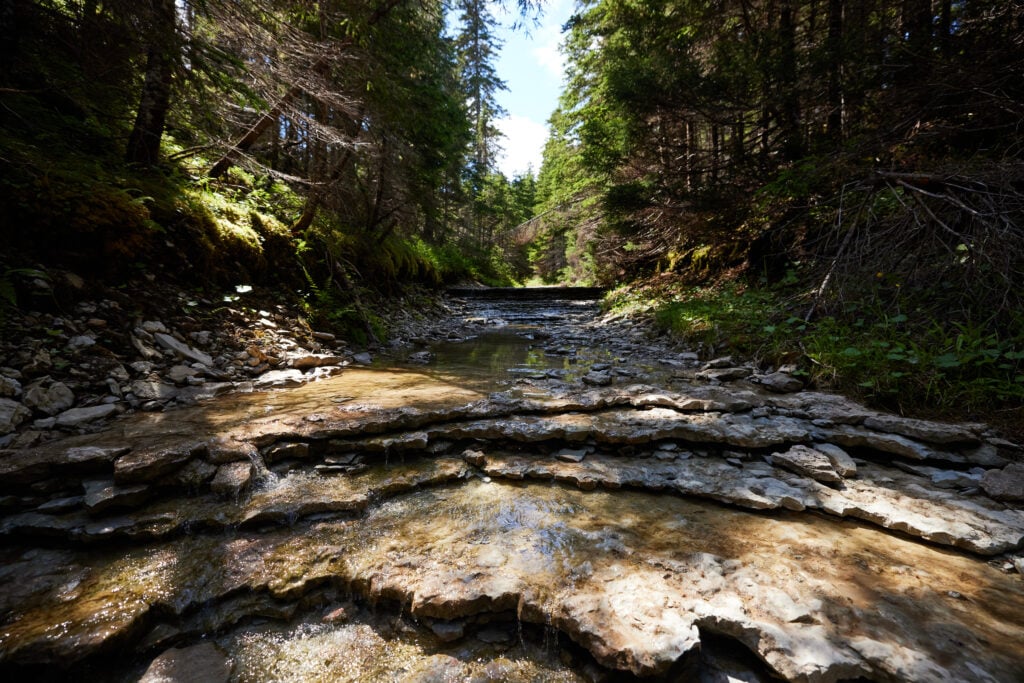
The water in the Chicotte River is low but perfectly clear, the stone sides of the channel sculpted into polished organic art. Water sways and swirls in shades of green. On the riverbank, I spot fossils etched into the water-worn rocks like ancient runes on a tablet.

Walking about the riverbed, we meet Myriam Tessier and Claude Lachance. Always in search of places where the road ends, the retired couple is exploring the island in their camper van. In Rimouski, they loaded the van into a shipping container and onto the MV Bella Desgagnés, the cargo-passenger ship that supplies communities at a dozen small ports along Quebec’s Lower North Shore. At Port-Menier, a crane plucked their camper from the ship and placed it on the dock.

“It’s very wild here,” says Tessier. “It was like a dream to complete what we wanted to see.” Lachance declares the Chicotte Canyon hike one of their favourite activities because, unlike at Vauréal, there’s no viewing platform, so it seems even wilder.

Three kilometres west at Les Caps, coastal erosion has dug shallow caves and exposed shelves of stone. Here, so thick are the cross-sections with fossils, it’s as if the stone is made of nothing but fossilized corals, shells and other compressed marine life.
The crystal-clear water of the Chicotte River.
Expand Image
Looking down from the cliffs at Baie de la Tour.
Expand Image
Fossil-laden rock at Chicotte-sur-mer.
Expand Image
Advertisement

Amid deer-mowed meadows at Baie-Sainte-Claire, I discover a more recent chapter of Anticosti’s history: the strange reign of Henri Menier, a self-appointed king who populated the island with a shooting gallery of preferred prey.

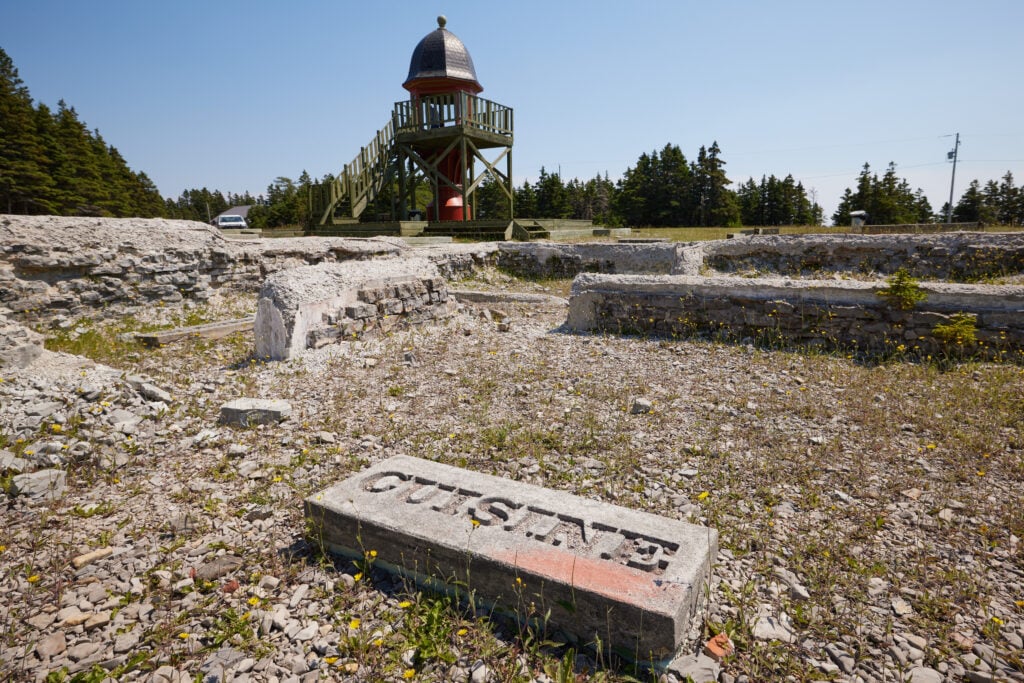
Born into the Menier Chocolate company dynasty, the Frenchman lived off the family wealth, spending his time racing cars and yachting. On sprawling grounds near his chateau in Vauréal, outside Paris, he and his brothers stocked deer to hunt on horseback. He brought the same decidedly aristocratic approach to Anticosti, which he purchased from a logging company for $125,000 in 1895, forcing the island’s few residents into tenancy to him. In 1900, he moved his private kingdom from Baie-Sainte-Claire to Port-Menier, where he constructed his opulent five-storey, 30-room Château Menier with a marble chimney, tapestries, a grand piano and an enormous wall of glass blocks in the shape of a fleur-de-lis. The chateau deteriorated over time, then was intentionally burnt down in 1953, but an ornate viewing tower overlooking its foundations gives a sense of its grandeur. 

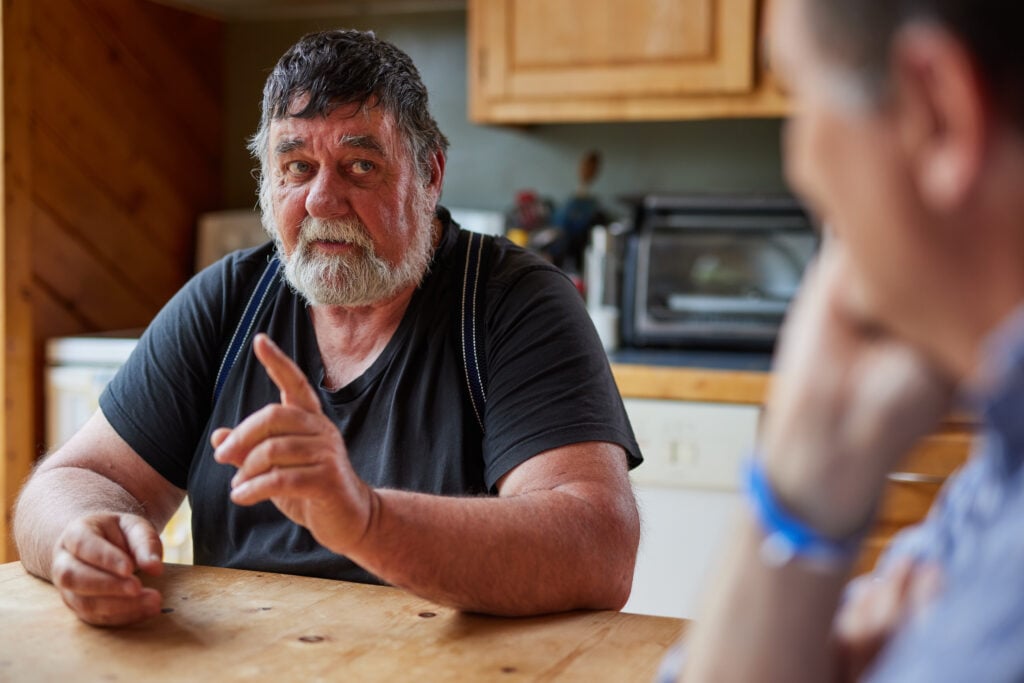
Menier visited his island only six times, yet ran it like a fiefdom, operating by a strict code that sentenced some lawbreakers to permanent exile. John Pineault, the former mayor of Port-Menier and the lead on Anticosti’s UNESCO nomination, calls this period Menier’s “golden prison.” It wasn’t until 1983, nearly a decade after the Province of Quebec bought the island from corporate owners, that residents finally owned their homes and properties. Pineault, now the island’s only oyster farmer, can cite just one remaining Menier decree — no dogs allowed on the island — but he says the belief that authority can’t be challenged lingers.

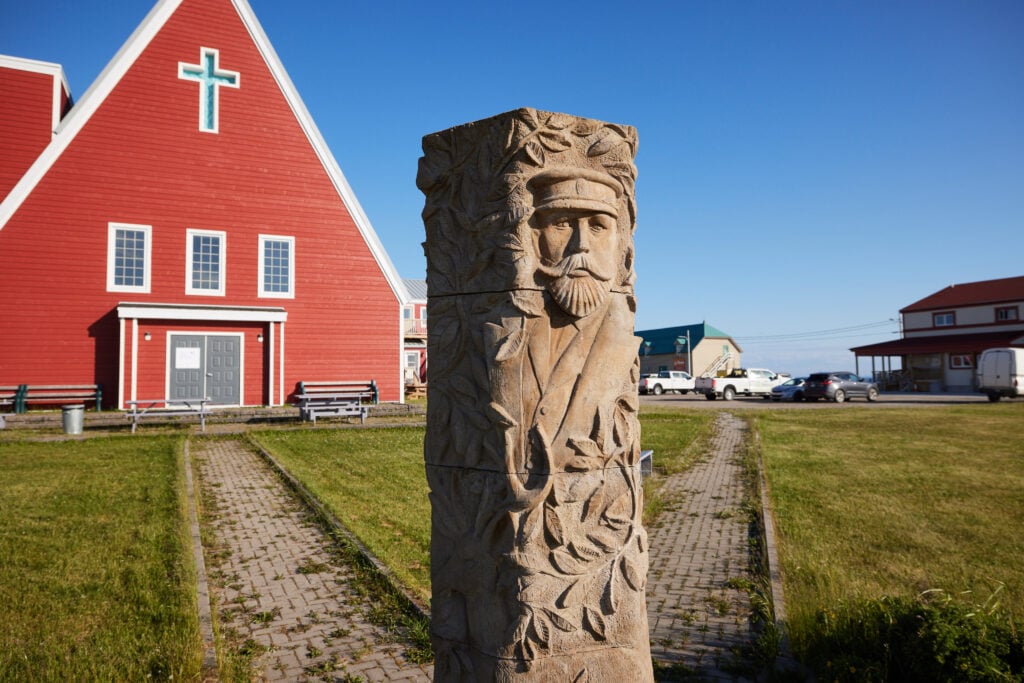
A sculpture of Henri Menier in Port-Menier.
Expand Image

Menier stocked Anticosti with reindeer, elk, moose, bison, hare, grouse, mink, beaver and fox. He released mink frogs, encouraging people to spread them around to control mosquitoes. In 1896 and ’97, he imported 220 white-tailed deer, an act that has irrevocably transformed the island into a hunting ground that today attracts thousands of camo-clad visitors. Without natural predators or pests such as coyotes or ticks, the deer population has grown to between 130,000 and 200,000, outnumbering humans on the island by more than 500 to one. Come autumn, thousands of hunters, guides and support staff spread out to dozens of hunting cabins across the island, each hoping to bag the limit of two deer.

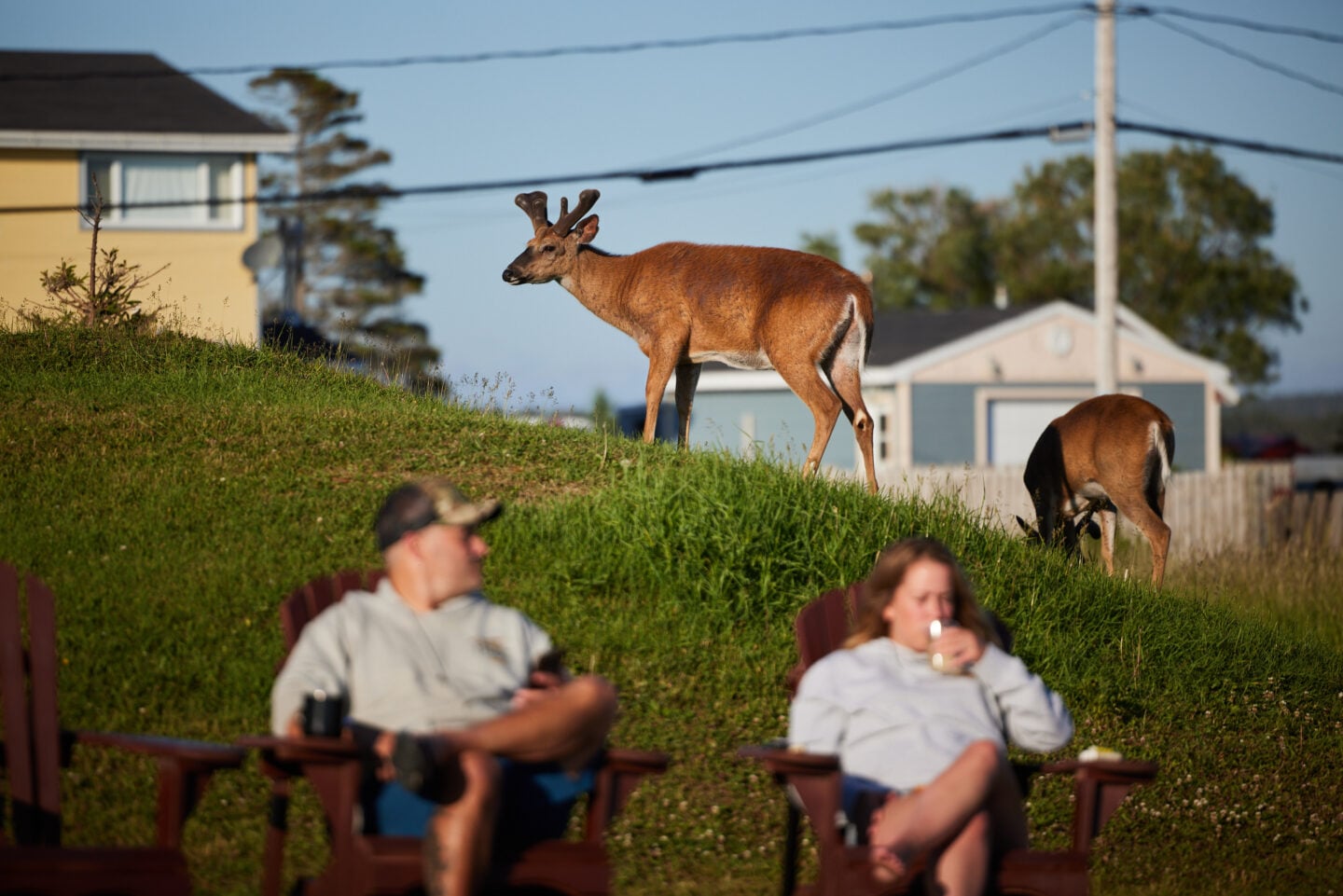
“Without the deer, there would be no people,” says Pineault in a voice as rugged as his weathered and whiskered face. “There would be no economy. We live with the deer.” As sacred as cows in India, the townie deer aren’t just given a free pass; they get nicknames and are fed by hand. All-inclusive five-night summer tourist packages to the island come with flights, three meals a day, a guided tour, an electric bike — and a bag of deer food. When I approach a deer on the lawn of Auberge Port-Menier, where they feed, frolic and nap, it nuzzles its marshmallow-soft nose against my hand.

All-inclusive five-night summer tourist packages to the island come with flights, three meals a day, a guided tour, an electric bike — and a bag of deer food.

Deer roam the grounds of the Auberge Port-Menier. Introduced to the island by Henri Menier in the early 20th century, deer now outnumber people on the island by more than 500 to one.
Expand Image
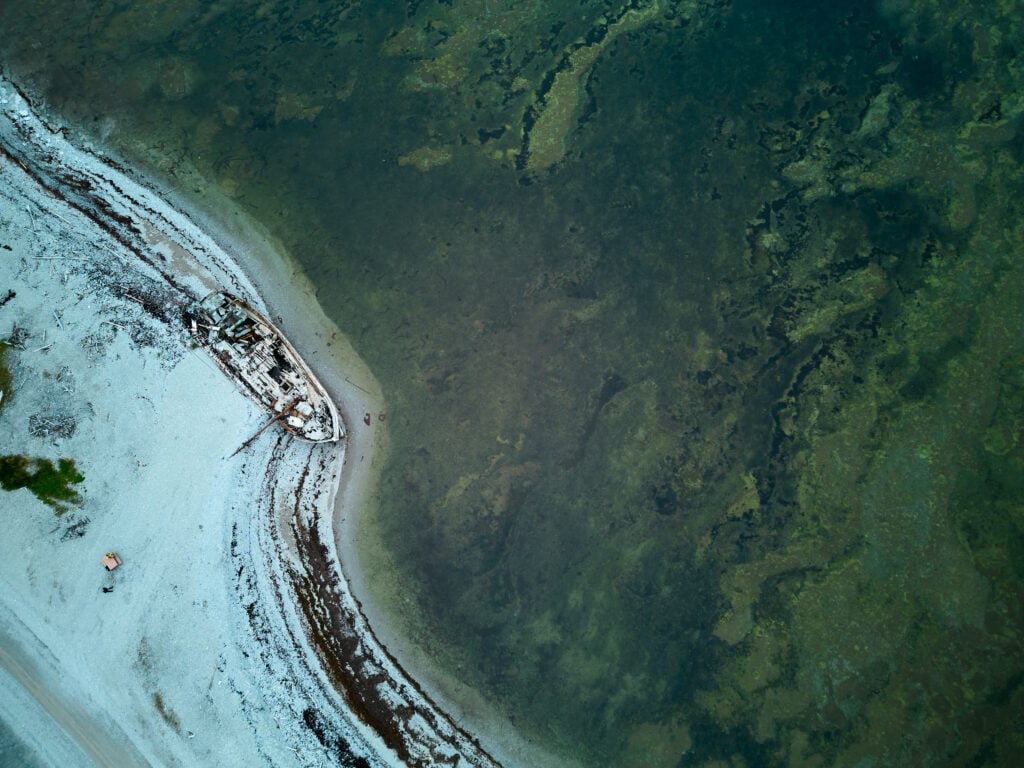
The wreck of the fishing trawler Calou.
Expand Image

Just as Pineault and others value what might be considered a plague of deer anywhere else, they also see the island’s dangerous reefs differently. More than 400 ships have foundered on these shores, earning Anticosti the nickname Graveyard of the Gulf. According to Pineault, early sailors called it l’île maudite (cursed island). Near Auberge McDonald, steep wooden stairs lead to the MV Wilcox, a wrecked former minesweeper, its bow heavily fortified with steel. The hulk, split open like a slain deer, slumps under its own weight, with spruce windfalls scattered across its bulk. At Pointe-Ouest, 15 kilometres from Port-Menier, the fishing trawler Calou rests in a nest of gravel where it was wrecked in 1982.

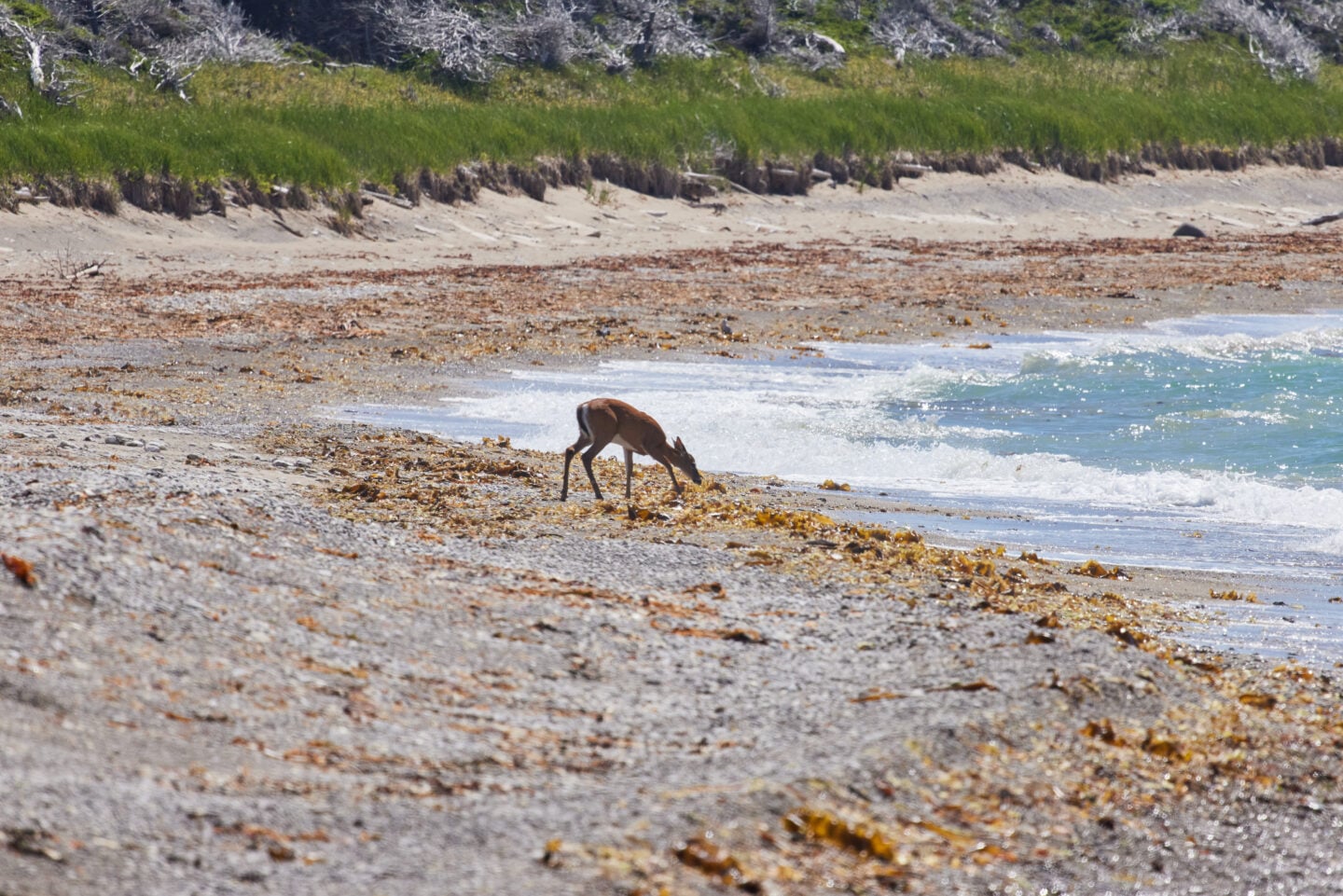
Anticosti’s deserved reputation for danger discouraged settlement and development, but the reefs have also insulated the island from the rapid erosion reshaping Côte-Nord, the Quebec mainland opposite Anticosti’s northern shore. When winter storms roar out of the northeast, the deer migrate south to find shelter and feed on seaweed that washes up on the reefs. On our travels around the island, we spot deer feeding far out on the shoals at low tide.

Menier’s château in Port-Menier was intentionally burnt in 1953, but visible relics remain.
Expand Image
John Pinault, the former mayor of Port-Menier, led the island’s UNESCO application.
Expand Image
A deer feeds on seaweed at low tide.
Expand Image
Rock thick with fossils in the Vauréal Canyon.
Expand Image

After Henri Menier’s death in 1913, his brother Gaston struggled to make his ownership of Anticosti profitable. As a last resort, the Meniers’ emissary, Georges Martin-Zédé, came up with an elaborate tourism plan that he never had a chance to implement before Gaston sold Anticosti to a pulp and paper company in 1926. Martin-Zédé’s plan foreshadowed what the island offers today and inspired Pineault to pursue the UNESCO nomination.

Pineault assembled a team of 40, including representatives from the Innu communities of Ekuanitshit and Nutashkuan on the mainland and the Quebec government. He appointed André Desrochers, an adjunct professor in the Department of Earth and Environmental Sciences at the University of Ottawa, scientific director for the nomination.

“Anticosti is the fossils,” says Pineault, “but it’s also the shipwrecks, the story of the Indigenous people. It’s layer upon layer upon layer.” Pineault imagined Menier would also be a key part of the bid, but, in the end, it was the fossil record alone that won the day. In a global analysis of sites with fossils dating to Earth’s first mass extinction, Anticosti easily came out on top. The island has the most complete and abundant fossiliferous record of that critical 10 million years of Earth history between 447 and 437 million years ago.

Desrochers calls Anticosti a huge laboratory. He’s made countless visits, beginning with his first in 1977 as a graduate student studying why those prehistoric creatures thrived and faltered. A drop in ocean oxygen levels likely asphyxiated most marine life; however, Desrochers says the full explanation is as layered as everything else about Anticosti. “We all agree that the Ordovician mass extinction is actually a succession of events, but it’s a very hot topic of research right now.”

Hiking to Vauréal Falls.
Expand Image
The Vauréal Falls.
Expand Image

Hiking on through Vauréal canyon, my mind on mass extinction, I come across another massive slice of cleaved-off canyon, with boulders as big as buses — the layer cake hacked at by a giant voracious child. As I scramble over it, I think of debris from a collapsed pyramid, scattered stone foundations or maybe a crumbling chateau.

Just before the falls come into view, I feel the bass note of their power in my chest. Anticosti’s grandest natural phenomenon flings itself over the side of the canyon wall, dropping 76 metres — 25 metres higher than Niagara Falls — into the deep pool it’s dug into the bedrock.

Water once nurtured the alien life forms flecked throughout the Vauréal canyon’s layers. Today, Anticosti’s waters are still working their slow, steady magic, eating through 10 million years of history, exposing museums of creatures frozen in time nearly half a billion years ago, then washing them back into dust.

Advertisement

Help us tell Canada’s story

You can support Canadian Geographic in 3 ways:

Related Content

A crowd of tourist swarm on a lakeside beach in Banff National Park

Places

Smother Nature: The struggle to protect Banff National Park

In Banff National Park, Alberta, as in protected areas across the country, managers find it difficult to balance the desire of people to experience wilderness with an imperative to conserve it

  • 3508 words
  • 15 minutes
Mountains, sea ice in Nunavut's Sirmilik National Park

Places

Eight Canadian places that could become UNESCO World Heritage Sites

A look at the fascinating sites Parks Canada has proposed for UNESCO World Heritage Site designation

  • 1119 words
  • 5 minutes
Parks Canada red Muskoka chairs on a snowy slope overlooking the Banff townsite

Places

Parks Canada to take ‘nature first’ approach to managing national parks

Responding to feedback from Canadians, environment minister Catherine McKenna promised a renewed focus on science and conservation for Canada's protected places

  • 754 words
  • 4 minutes

Travel

Exploring Newfoundland with Adventure Canada

Immerse yourself in Viking archaeology and Basque whaling history while taking in Newfoundland’s scenic coastline and incredible geology

  • 1201 words
  • 5 minutes
Advertisement
Advertisement