Wildlife
Unpacking the mystery of grizzly bears in Wapusk National Park
In the Hudson Bay Lowlands, polar bears have reigned supreme. Increased sightings of a new predator have everyone on high alert.
- 5236 words
- 21 minutes
Science & Tech
In Churchill, Manitoba, a custom-built electric Tundra Buggy is reshaping Arctic tourism and sparking conversations about climate action

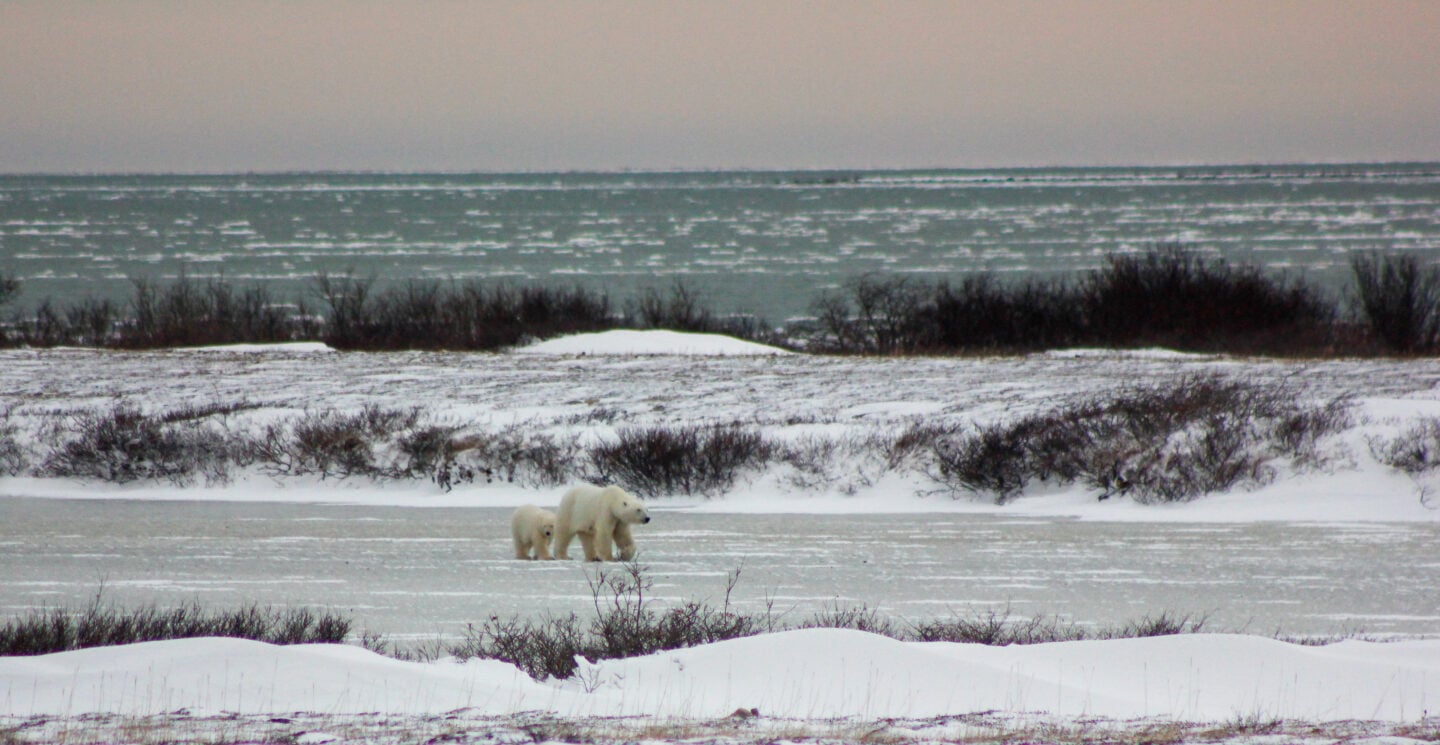
Observing polar bears via an electric vehicle seemed improbable at best. “Sounds like you’ll be a polar bear’s snack,” said my grandmother when she heard about my invitation by Polar Bears International to the sub-Arctic. And she wasn’t the only one who was skeptical — I also questioned the invitation to view these apex predators on an electric-powered Tundra Buggy.
I’ve driven an electric vehicle for about two years, and I know range anxiety well — the crippling fear of running out of battery with no charging station in sight. When we first got our EV, I had a 70-kilometre commute to work through snowy Ottawa winters, half of which was on rural roads. Needless to say, I was stressed most of the time. But thankfully, my fear is not one shared with a quiet innovation underway in Churchill.
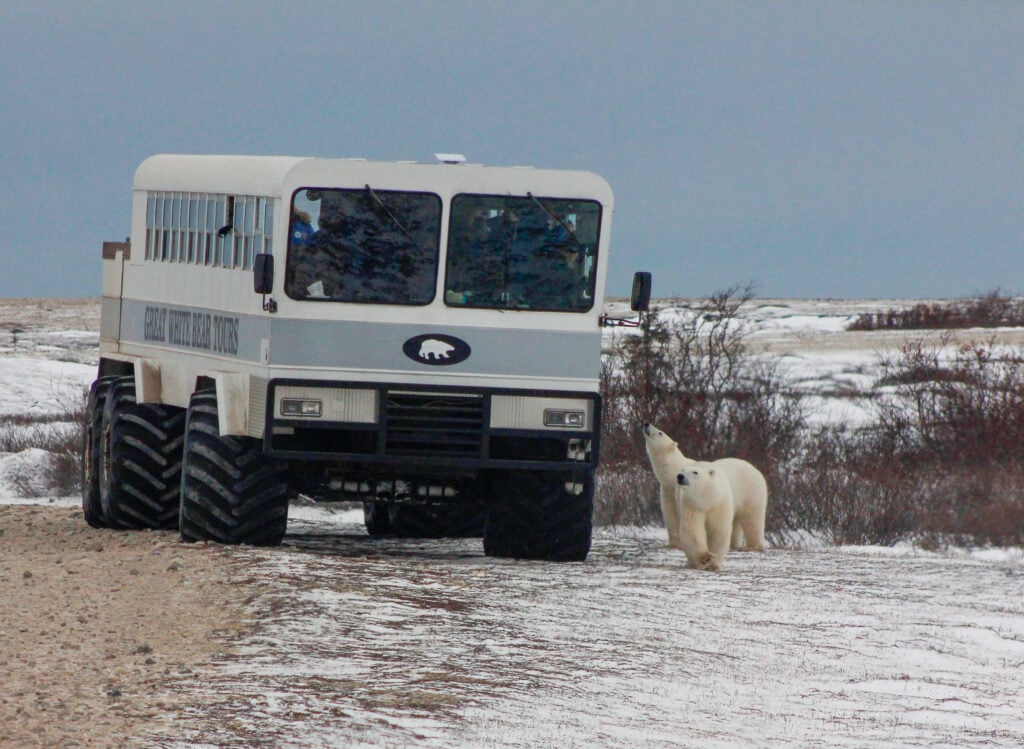
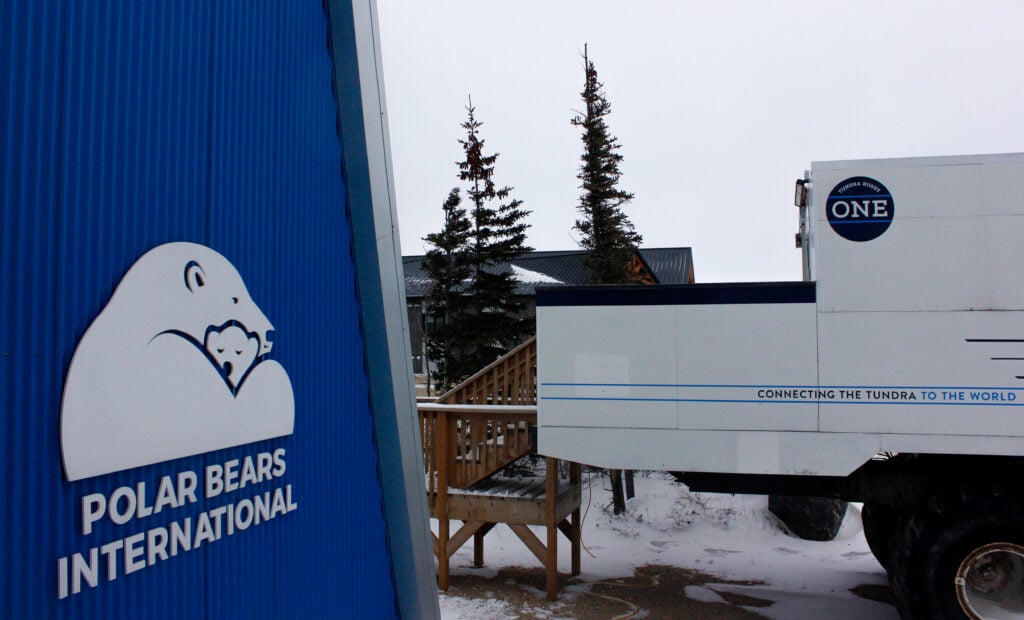
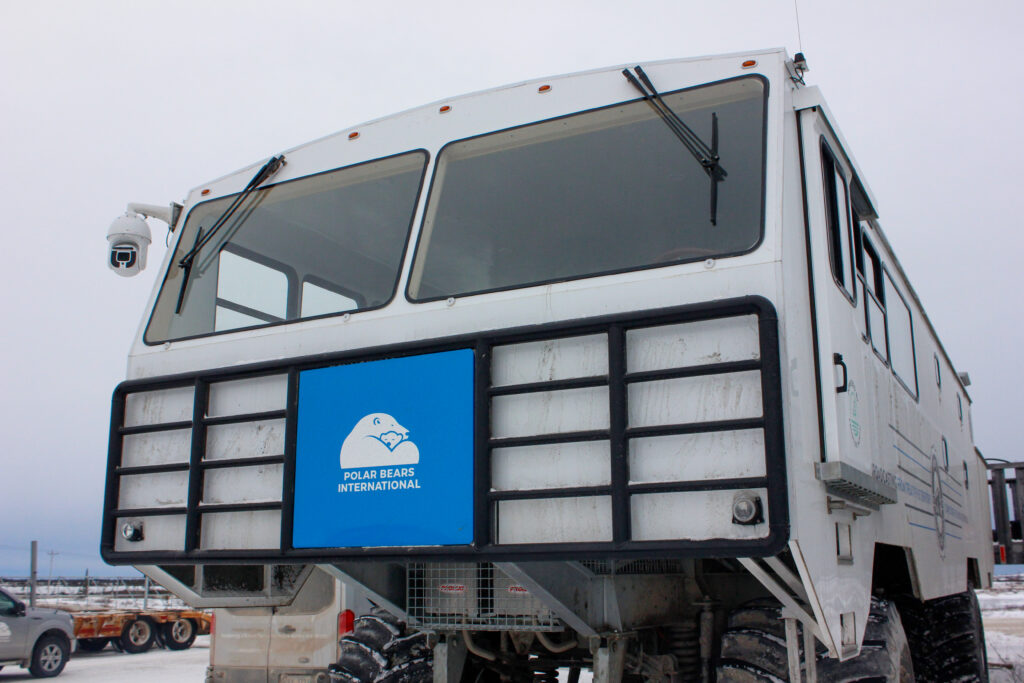
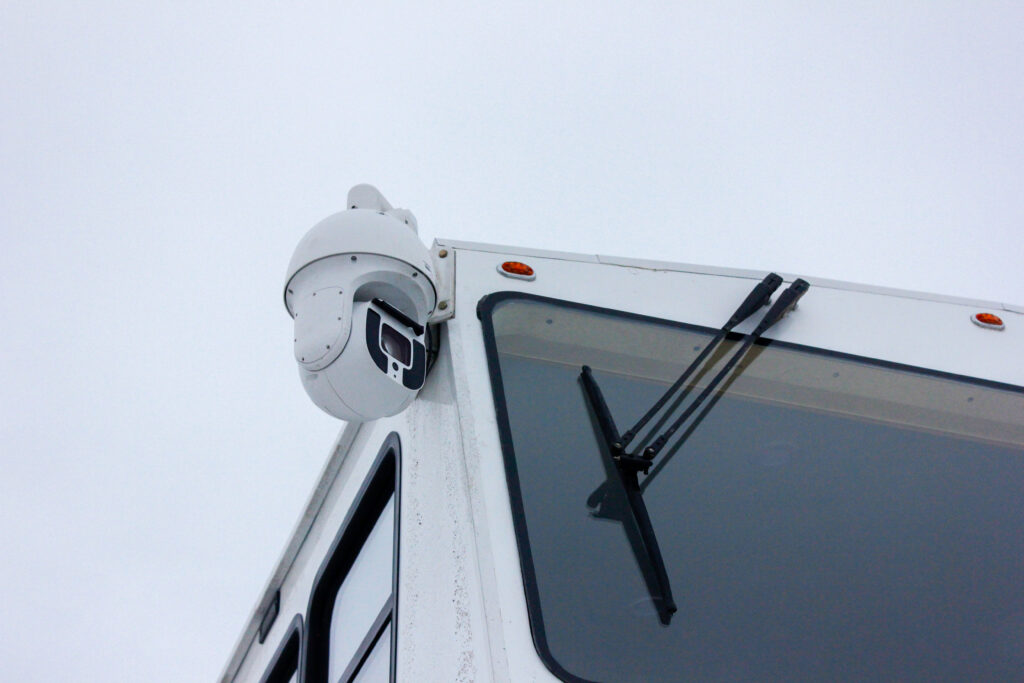
In partnership with Frontiers North Adventures and Noble Northern, the custom-built EV Tundra Buggy One is engineered for sub-Arctic temperatures (conditions that typically drain battery range). Not only that, but it can also broadcast live, and doubles as a mobile research station and virtual classroom, connecting students worldwide to polar bears, the sub-Arctic, and Churchill, Man.
But for me, it was the quiet that struck me most.
As we watched a mother polar bear and a cub-of-the-year (a baby polar bear born this year) make haste away from a large male polar bear, then observed two subadult polar bears wrestling for hours, mere 30 metres from us, I marvelled at the quiet. No ugly black exhaust poured from the back of the EV Tundra Buggy One while the engine competed with the wind — instead, clear silence. The on-board cameras had impeccable zoom, and we were merely observers. It all felt surreal — and a scene that any tourist can experience.
The EV Tundra Buggy One is the first fully electric Tundra Buggy built from the ground up. Equipped with full sleeping quarters, a kitchen stocked with a fridge and small stove, viewing windows, and of course, its camera and broadcasting software. I could easily have spent many comfortable nights on the tundra.
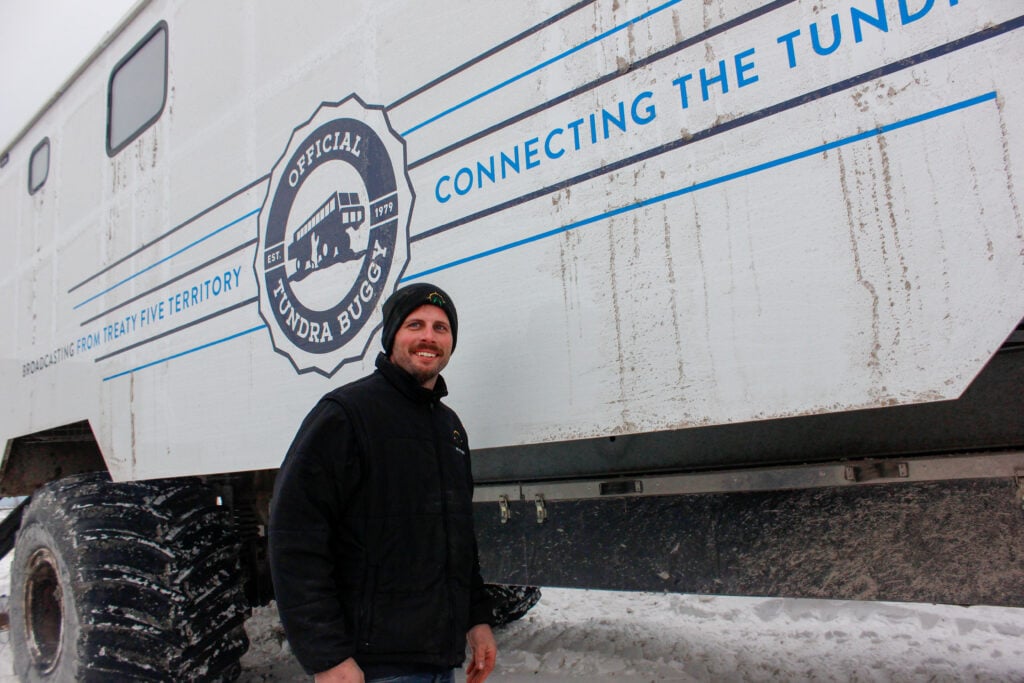
Frontiers North Adventures operates two other electrically-powered Tundra Buggies, converted from diesel. The zero-emission EV Tundra Buggy One, built by Noble Northern, took eight months to build and is engineered specifically to operate in sub-Arctic temperatures and terrain. Constructed in Winnipeg and transported by train to Churchill, this machine fully replaces the diesel-powered Tundra Buggy One, which operated for more than 20 years. Frontiers North Adventures plans to convert its entire touring fleet (12 Tundra Buggies), which could reduce its greenhouse gas emissions by more than 3,600 tonnes of carbon dioxide over the next 25 years.
“The cold has no effect on our range,” says Tye Noble, president of Noble Northern.
It was hard to believe that the range anxiety I face constantly in Ontario as an EV driver doesn’t top the list of things the Noble Northern team worries about. They’ve insulated the battery to protect it from extreme temperatures.
“With EVs, it’s about the thermals. And if you can insulate and keep your heat rather than just trying to get rid of it, which we do, then I think it’s not an issue,” says Noble. “If somebody were to take a Tesla vehicle and fully insulate the battery, I think your range would go drastically up.”
It costs about $4 to run the EV Tundra Buggy One for 50 per cent of its battery. On diesel, the Tundra Buggy costs about $300 to travel the same distance.
Often referred to as the Polar Bear Capital of the World, Churchill was once home to more than 1,000 of these majestic creatures — the most accessible population for tourists anywhere. Each year, from mid-October to mid-November, polar bears flock toward the shoreline, waiting for sea ice to form after a long summer on land. Reached only by plane or train, Churchill is an extremely remote community with roughly 900 full-time residents.
This section of Hudson Bay is one of the few regions where the ice completely melts, and usually refreezes early in the season. So, hungry polar bears are eager to reach their primary prey: seals.
In 1987, Churchill’s polar bear population was around 1,200; today, it is estimated at around 600. A number of tourism companies operate out of Churchill, focused on seasonal polar bear viewing, but Frontiers North Adventures is the only certified B Corp and the only current vehicle advancing into electric vehicle technology.
From both a tourism and research perspective, quieter technology means less disturbance to bears, improving viewing opportunities. Zero tailpipe emissions also help to reduce pollution, contributing to healthier wildlife. On a global scale, climate change is the biggest threat to polar bears, so it’s essential to reduce emissions.
“For us, it’s a conversation starter,” says Ian Wood, marketing manager for Frontiers North Adventures. “It all comes back to conservation, climate change, and what we’re putting out there. It’s a way for us to continue our information sharing.”
Beyond that, he added, electric buggies enhance the guest experience. “With the diesels, we have to cut the engine in order to get everyone’s attention. Now, for conversations with your peers, it takes the Tundra Buggy and puts it in the background.”
While EVs give Frontiers North Adventures a competitive edge, Wood hopes the move inspires others. “If every operator were to take on some initiative like this, it would make us happy, showing us that our impact is continuously pushing the boundaries and challenging others to do better as well.”
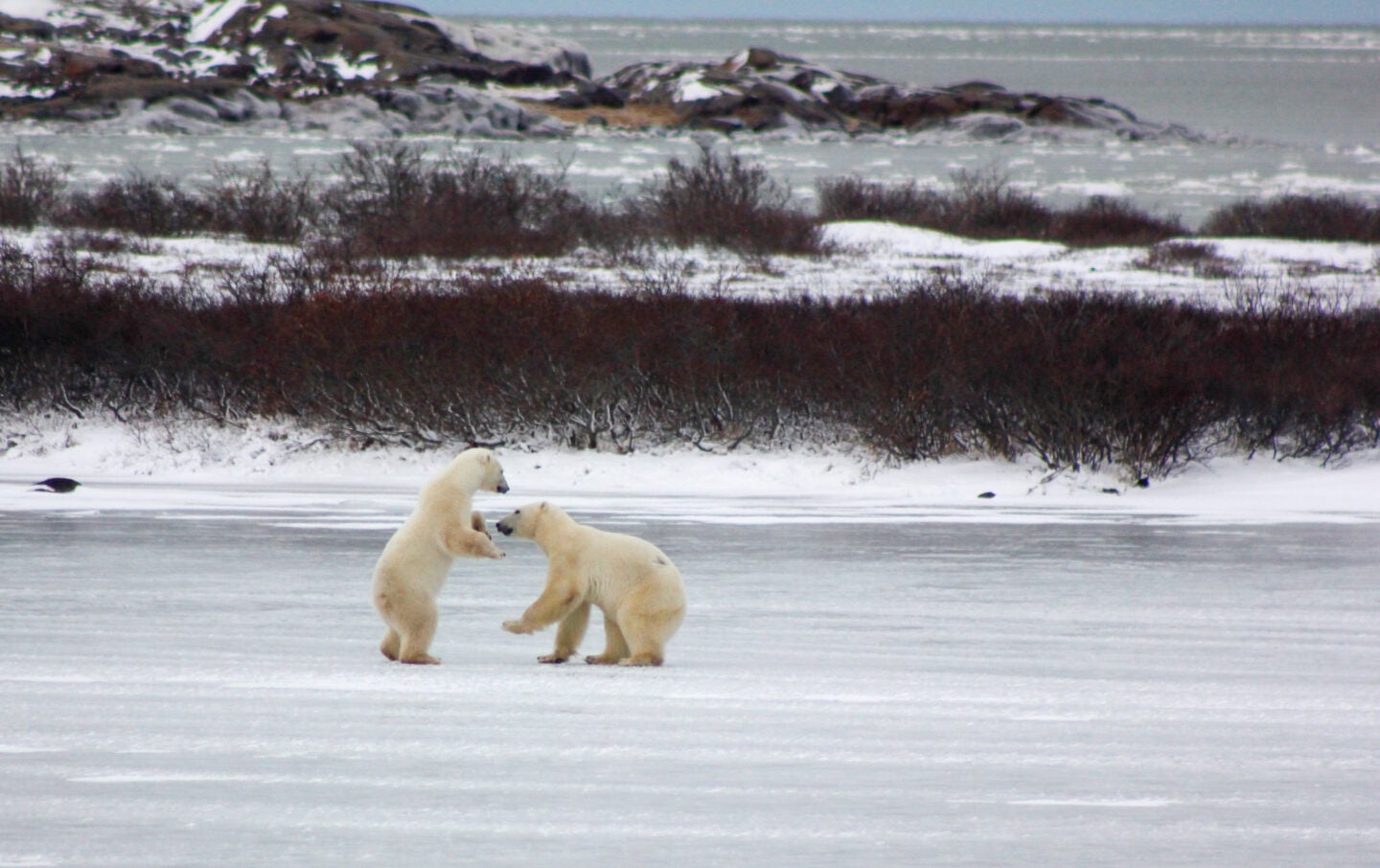
According to Polar Bears International, a polar bear loses, on average, 1 kilogram (2.2 pounds) of body weight each day during fasting. And because of climate change, the off-ice period is three to four weeks longer than it was 40 years ago, so polar bears have to go without food for that much longer. Not only are today’s polar bears physically smaller because of this, but we’re also coming entirely too close to a danger line. At around 180 days off ice, the starvation and subsequent mortality rates of polar bears are too high, reports a 2024 study published in Nature.
“I think people don’t realize how much of a marine mammal they are,” says Alysa McCall, about the polar bears.
As Director of Science at Polar Bears International, McCall believes the drastic decline in polar bear populations is directly attributable to changes in sea ice.
“But in the higher Arctic, we still have time to act,” she says. “Sea ice is very responsive to changes in atmospheric temperature, so when we get our act together, there’s no tipping point for sea ice. We can bring it back. We have a lot of hope.”
Polar Bears International’s executive director, Krista Wright, recognizes that the conservation organization could exist without tourism, but the collaborative spirit with organizations like Frontiers North Adventures allows them to do far more than they could on their own.
“These people had an interest to come see polar bears or to experience the Arctic, so they probably have some interest in seeing these things persevere for future generations,” she says. “We want to really encourage people to get involved in the action side of it, by engaging people in the conservation of polar bears.”
“We want to continue to co-exist in a modern world,” says Churchill Mayor Mike Spence. “Now that this [technology] has been showcased, people are going to buy into it.” Mayor Spence says he’s hoping for more government rebates to help incentivize more of this kind of work.
“It’s all about making sure we continue to co-exist, be respectful of the environment and of the bears.”
Track polar bears in Churchill with the Polar Bears International tracker and leave that range anxiety in the garage!
Wildlife
In the Hudson Bay Lowlands, polar bears have reigned supreme. Increased sightings of a new predator have everyone on high alert.
People & Culture
Depending on whom you ask, the North’s sentinel species is either on the edge of extinction or an environmental success story. An in-depth look at the complicated, contradictory and controversial science behind the sound bites

Wildlife
An excerpt from Gloria Dickie’s book, Eight Bears: Mythic Past and Imperiled Future, which explores the planet’s eight remaining species of bears and the dangers they face
Wildlife
Humans and bears are sharing more landscapes now than ever before. As we continue to invade their world, will we be able to coexist?