Exploration

DNA match identifies four more crew members from ill-fated Franklin expedition

Find settles long-running debate over the identity of one of the lost explorers, a petty officer thought to have been demoted

  • Published May 07, 2026
  • Updated May 08
  • 838 words
  • 4 minutes
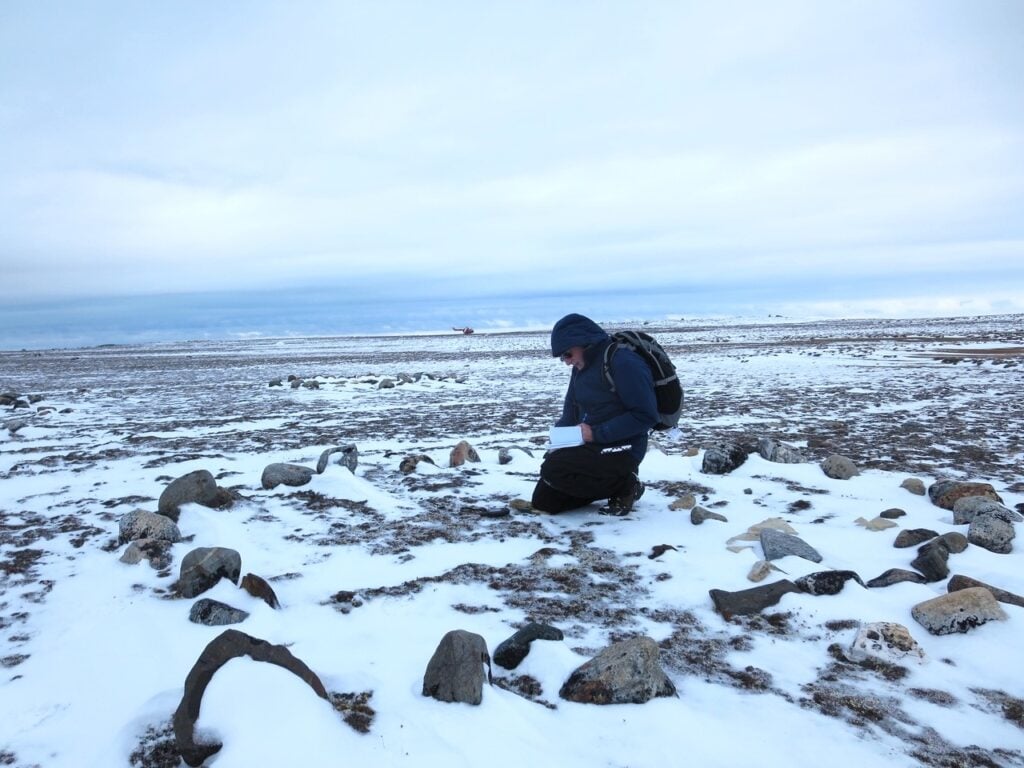
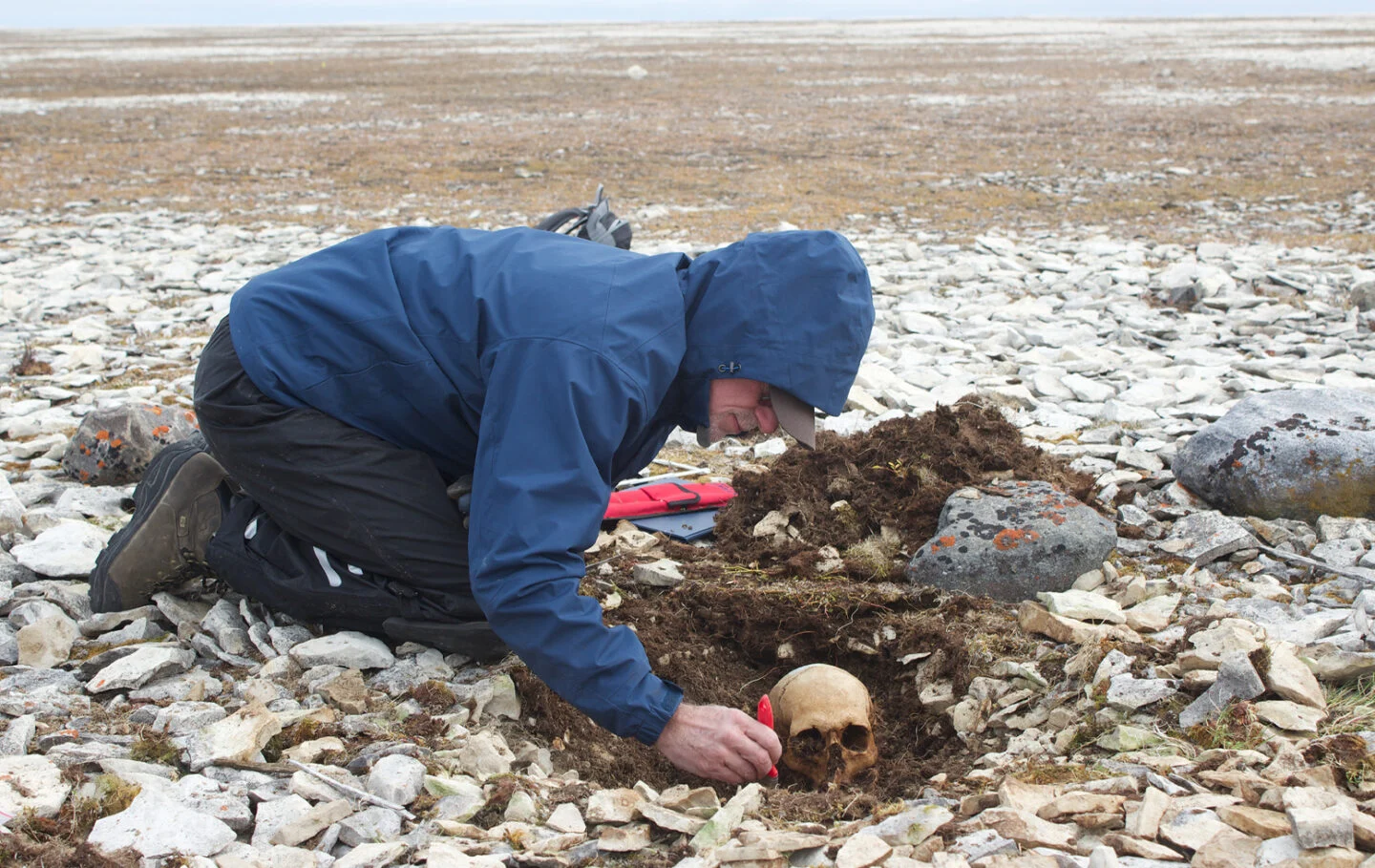
Dr. Douglas Stenton, anthropologist and adjunct assistant professor at the University of Waterloo, excavating the bones of sailors from the 1845 Franklin expedition at Erebus Bay. (Photo: University of Waterloo)
Expand Image
Advertisement
Advertisement
Advertisement

New research from the University of Waterloo has uncovered the identities of four more crew members from the ill-fated Franklin expedition of 1845. DNA from the explorers’ living descendants was matched with skeletal remains found on King William Island in Nunavut, where most of the crew perished after the expedition’s two ships became entrapped in ice.

The expedition, led by British naval officer Sir John Franklin, originally consisted of 129 men aboard the HMS Erebus and Terror. Tasked with locating the Northwest Passage after decades of failed attempts by the British navy, the mission went sideways after both ships were caught in pack ice a year after setting sail. By 1848, the 105 surviving crew members had abandoned ship and escaped to King William Island. Franklin had died the previous year. No one survived the ordeal.

More than 30 expeditions were sent into the Arctic to investigate what happened to Franklin and his men. While the initial search parties were sent by the British government, later searches were funded by Franklin’s wife, Lady Jane Franklin. A naval officer named Francis Leopold McClintock participated in several of these expeditions, including one he commanded over two years after setting sail in 1857. On this trip he travelled to King William Island, where he encountered objects from Erebus and Terror, such as silverware and books — and human remains.

Stenton recording site features on an island close to the HMS Erebus wreck. (Photo: University of Waterloo)
Expand Image

Among the skeletal remains, one in particular has caused its fair share of debate. For years, researchers have questioned whether it could be Harry Peglar, a petty officer aboard the Terror, because of inconsistencies between the clothing and artifacts found with the remains. Douglas Stenton, an adjunct assistant professor of anthropology at the University of Waterloo, has spent a lot of time trying to answer this question.

“People have been talking about that since it was found in 1859,” says Stenton. “They … thought that it was Peglar and then they thought that it wasn’t Peglar, because the clothing he was wearing contradicted the fact that his seaman certificate was found with the skeleton. And so other researchers have been looking into this for many years and come up with ideas of how it might not have been Peglar.”

But Stenton says he suspects the mismatch between Peglar’s clothing and known rank might be due to the sailor getting demoted while on the expedition. Now, thanks to Stenton’s research, Peglar’s identity has been confirmed. The process required “a bit of detective work,” he says. “It was personally satisfying for me because I’ve probably been working on this one for about five years and DNA is definitive — it’s a perfect match with his sister’s great-great-granddaughter. So, there’s no question, it’s Peglar.”

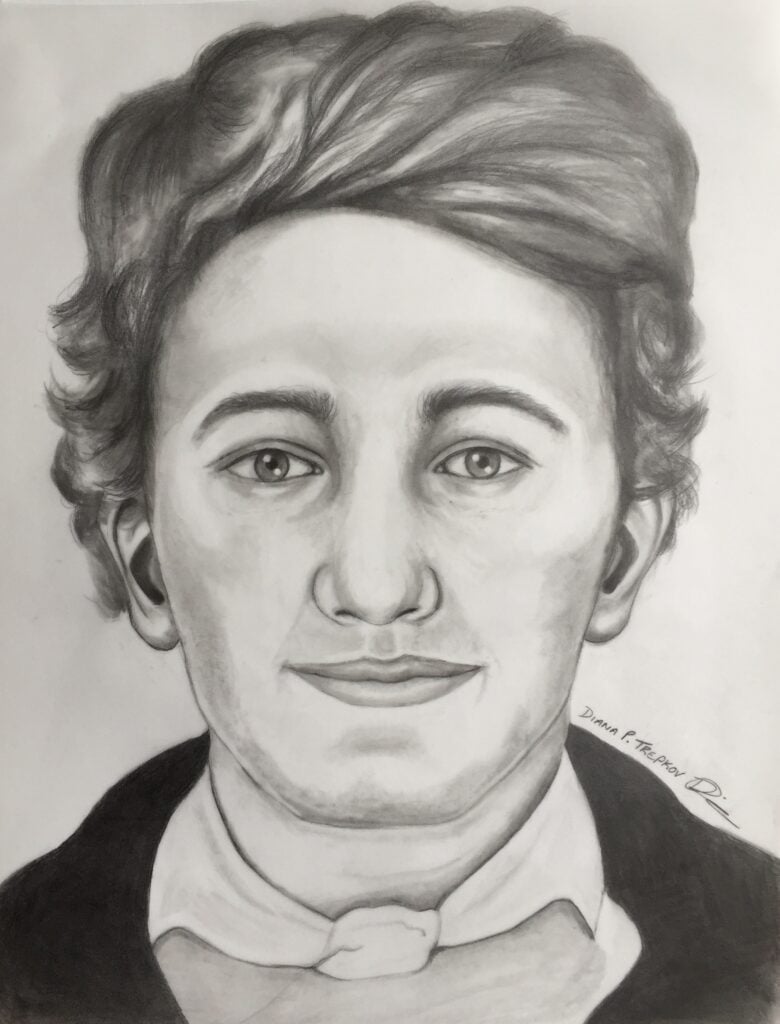
Depiction of what David Young, a boy 1st class aboard the HMS Erebus who died at Erebus Bay, might have looked like. (Photo: 2D Forensic Facial Reconstruction by Diana Trepkov, Investigative Forensic Artist)
Expand Image

This most recent group of identifications marks the first time that remains of the crew aboard the HMS Terror have been identified through DNA matching. The other five identified to date were all from Erebus.

Among those identified in the most recent round of testing was John Bridgens, a subordinate officer’s steward on Erebus, who prior to joining Franklin’s crew, had made his first naval voyage aboard the HMS Endymion in 1843 as a musician. Also identified were David Young, a first class boy seaman who boarded the vessel when he was 17 years old, and William Orren, an able seaman who is mentioned on his parents’ tombstone in Chatham, England as “one of the crew of the unfortunate Erebus in the ill-fated expedition under Sir John Franklin of whose fate no discovery has yet been made.”

These identifications are the result of more than a decade of work by a research team whose members specialize in anthropology and genealogy. To make the matches, the team has so far tracked down 33 descendants who have either maternal or paternal lineage to one of the explorers. After they obtain DNA samples from these relatives, they compare it to DNA from around 50 bone and tooth samples recovered from the Franklin expedition.

Previously, the researchers used this method to identify two other members of the expedition: John Gregory, an engineer aboard Erebus, and James Fitzjames, captain of Erebus.

Stenton says when a DNA match is made, he has the pleasure of informing descendants alongside his collaborators on the project. “Their reaction is great. They have great questions and they seem really thrilled, really excited about it,” he says. “It’s a positive experience, having a chance to speak with them.”

John Geiger, CEO of the Royal Canadian Geographical Society and author of Frozen in Time, an account of the lost expedition and its possible fate, says identifying remains from the expedition restores a bit of humanity to the lives lost.

“They were more than a simple list of casualties, such as appears on the Franklin memorial at Waterloo Place, London,” says Geiger. “They had lives and loves and families. It was a very long time ago, but to know where they died, even in some instances to reconstruct what they looked like, to put a face on them, matters.”

Advertisement

Help us tell Canada’s story

You can support Canadian Geographic in 3 ways:

Related Content

History

Excerpt from Searching for Franklin: New Answers to the Great Arctic Mystery

Arctic historian Ken McGoogan takes an in-depth, contemporary perspective on the legacy of Sir John Franklin, offering a new explanation of the famous Northern mystery

  • 2400 words
  • 10 minutes

People & Culture

RCGS hosts evening of fascinating Franklin discussion

On April 12, Franklin enthusiasts had a rare opportunity to come together in the same room as The Royal Canadian Geographical Society presented their 2016 Can Geo Talks

  • 833 words
  • 4 minutes
a white man wearing a grey toque crouches next to a cairn which is adorned with a plaque. There's an inset of the plaque in the top left corner.

Exploration

Finding Fitzjames: the search for Sir John Franklin’s senior officer

University of Waterloo researchers have identified the remains of Capt James Fitzjames, who died on Franklin’s failed Northwest Passage Expedition, among an archeological site on King William Island, Nunavut

  • 930 words
  • 4 minutes

Science & Tech

1845 Franklin expedition member identified using DNA

A new report has identified crewman of the previously unknown remains found on Nunavut's King William Island in 1993

  • 618 words
  • 3 minutes
Advertisement
Advertisement