
History
Reflecting on the 1923 Chinese Exclusion Act
On the 100th anniversary of the Chinese Exclusion Act, a look at the system of IDs used to track and control Chinese residents
- 840 words
- 4 minutes
Travel
From Kolkata to Kingsway, a journey through Vancouver’s Indo-Chinese restaurants reveals how food connects cultures, helping some feel at home
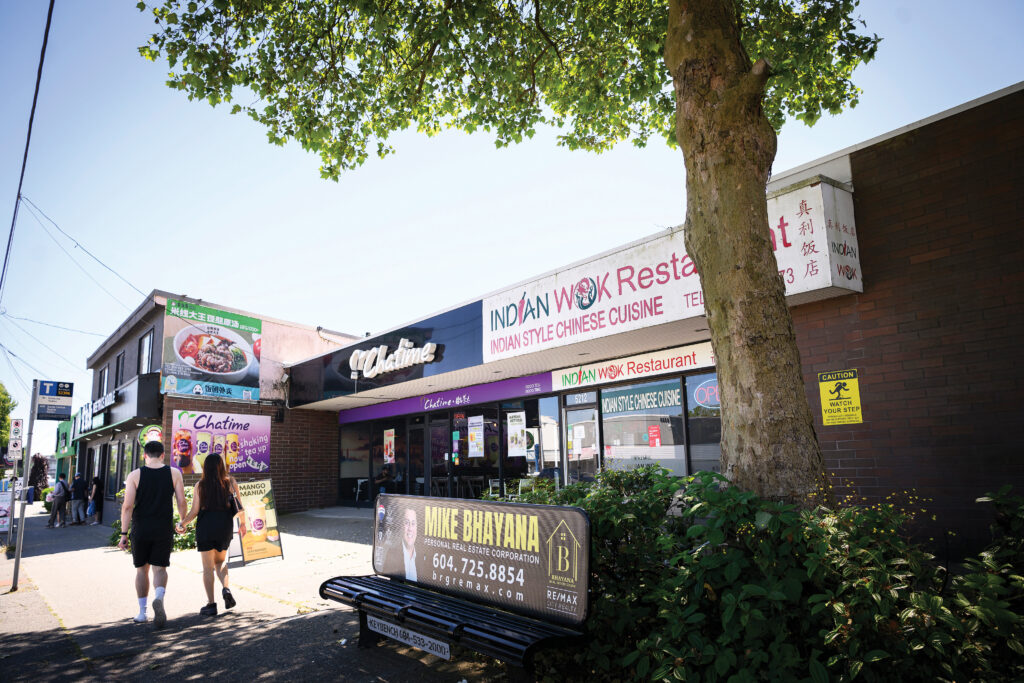
The first time I had Indian-Chinese food in Canada was when my roommate and I were cycling back from our first long bike ride together. Around 40 kilometres in, we started talking about what we wanted to eat. I was craving chicken Manchurian and fried rice, I said, not expecting her to point out a slight detour that would take us to popular Indian-Chinese restaurant Indian Wok. We rushed over before it closed, finishing the ride with the take-out bad hanging from my handlebars. I could smell the rich aroma of the spices in the Manchurain all the way home. When I took my first bite, I nearly cried. I was transported back home to India.
While many in Canada know and love Indian and Chinese food separately, few know about the marriage between them. The union can be traced back to the late 1700s, when Hakka Chinese immigrants settled in Calcutta (now Kolkata), in the northeastern state of Bengal. Chinese silk traders, dentists, carpenters, shoemakers and tannery owners flocked to what was then the capital of the British empire in India — and discovered a variety of local spices and ingredients. They started combining the deep, spicy Indian flavours from ingredients like red and green chilies with ginger, garlic and staple Chinese bases like soy sauce and vinegar, giving birth to what is now known commonly as Indo-Chinese or Hakka cuisine. The first few restaurants to serve this cuisine started in Tiretta Bazaar and Tangra, the two Chinatowns in Kolkata.
Soon, it spread in popularity all over India. Dishes like Schezwan chicken, which substitutes dry red chilies for Sichuan peppercorns, and gobi Manchurian, where cauliflower is coated in thick batter, deep-fried and tossed in spicy soy sauce with onions, green chili and garlic, are staples.
In Vancouver, these dishes can be found on Kingsway and Victoria at Green Lettuce, whose owners, Lucy and Peter Chang, embody the history of the cuisine. “I’m 100 per cent Chinese, but my parents immigrated to Kolkata, and I was born and brought up in India,” says Lucy. Peter and his brother-in-law Winston started the restaurant in 1999, wanting to introduce this unique flavour to Vancouverites. At the time, it was the first Indo-Chinese restaurant in British Columbia. A few years later, Winston left to open a Green Lettuce branch to serve the large South Asian population in Surrey, and Lucy officially joined Peter at the restaurant.
“Now you know how old I am,” says Lucy with a laugh. You wouldn’t know because of the energy and warmth she brings to the place, constantly checking in with customers at every table and asking for feedback. She’s even received celebrity endorsements. Photos of famous Bollywood personalities including Aishwarya Rai, Hrithik Roshan, Sridevi, Lata Mangeshkar and Sonu Nigam with Lucy and Peter at the restaurant adorn the entrance wall. “These Indian film stars were so trendy … it felt really special when they came to the restaurant,” says Lucy.
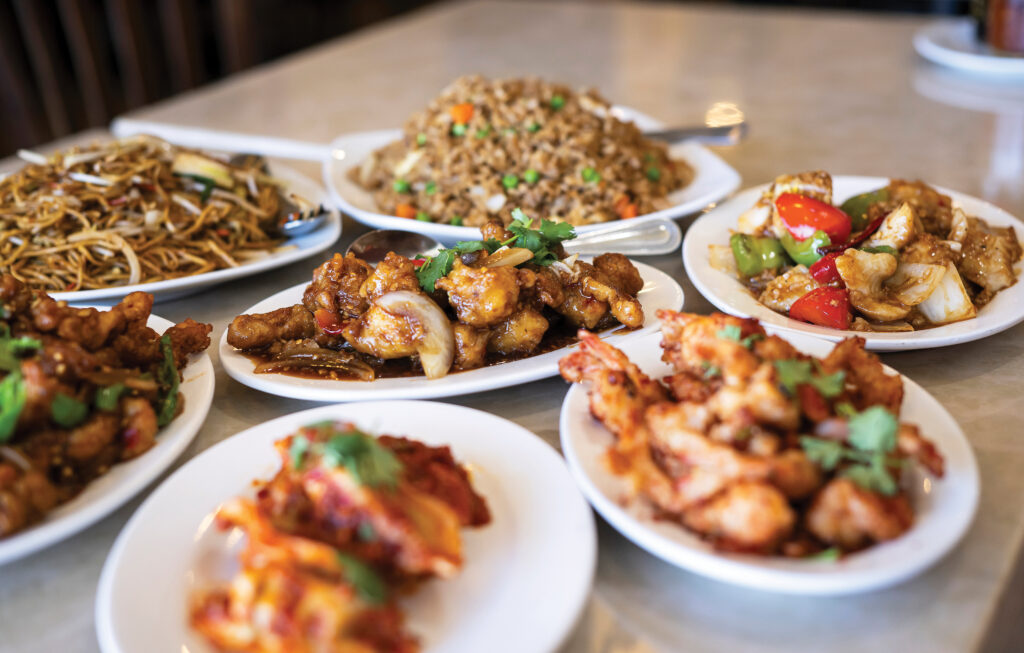
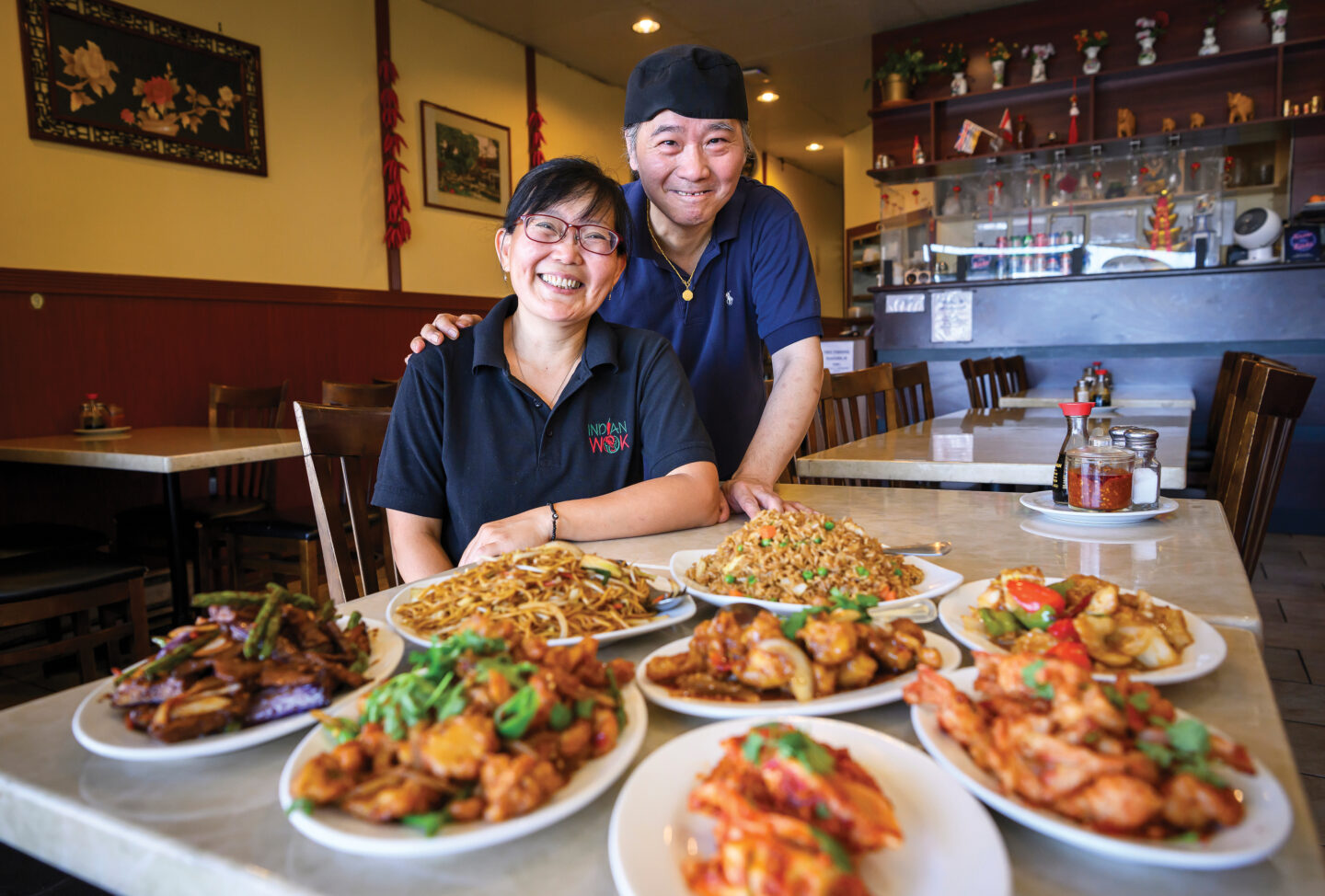
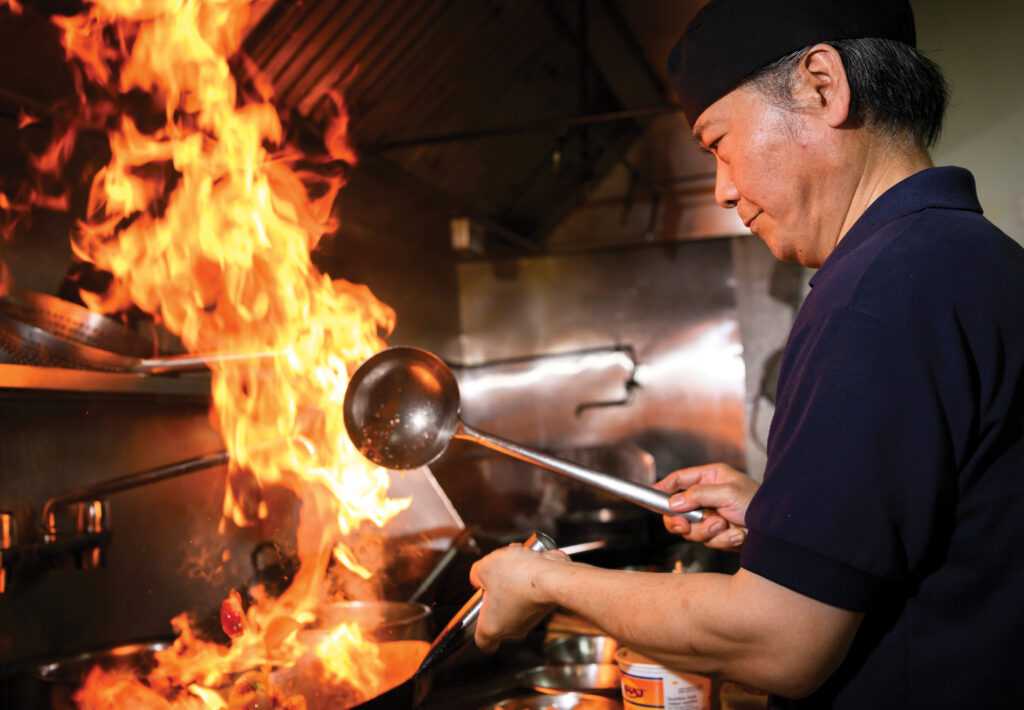
Lucy’s brother Ian and his wife Sophia run Indian Wok. “When people eat at my restaurant, they are usually really surprised that Indian spices compliment Chinese-style cooking so well. It’s the best of both worlds,” says Ian. His gobi Manchurian was perfectly deep-fried and crisp, and the sauce had that special robust, spicy flavour, so perfect it got its own name. What comes through in the food — and is shared between cultures — is the central role food plays in bringing people together. “For Chinese people, any occasion revolves around food. It is what connects people, families,” says Lucy.
All my life, I thought I grew up eating Chinese food, until I moved to Vancouver in 2016. Since then, I have been seeking restaurants in the city that add the Indian twist, a quest most South Asians relate to. At Green Lettuce and Indian Wok, I found that portal home. Fittingly, the tagline for Green Lettuce is “Just The Taste Will Bring You Back.”

This story is from the September/October 2025 Issue
History
On the 100th anniversary of the Chinese Exclusion Act, a look at the system of IDs used to track and control Chinese residents
People & Culture
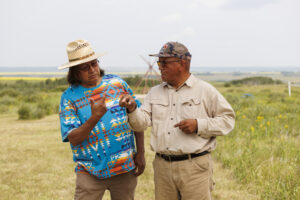
Plains Indian Sign Language was used by generations of Indigenous Peoples to communicate across languages and landscapes. Now, it’s being reclaimed.
People & Culture
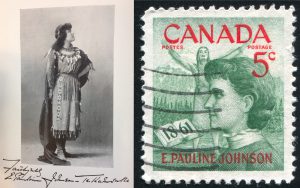
The daughter of a hereditary Mohawk chief and an English immigrant, Johnson used her hard-won celebrity to challenge Indigenous stereotypes

People & Culture
Indigenous journalists are creating spaces to investigate the crimes committed at Indian residential schools, grappling with unresolved histories and a reckoning that still has a long way to go