Travel
The spell of the Yukon
An insider’s account of the modern-day gold rush
- 4210 words
- 17 minutes
Travel
Costumed characters, historic buildings, and frontier legends transport visitors in B.C.’s most famous boomtown

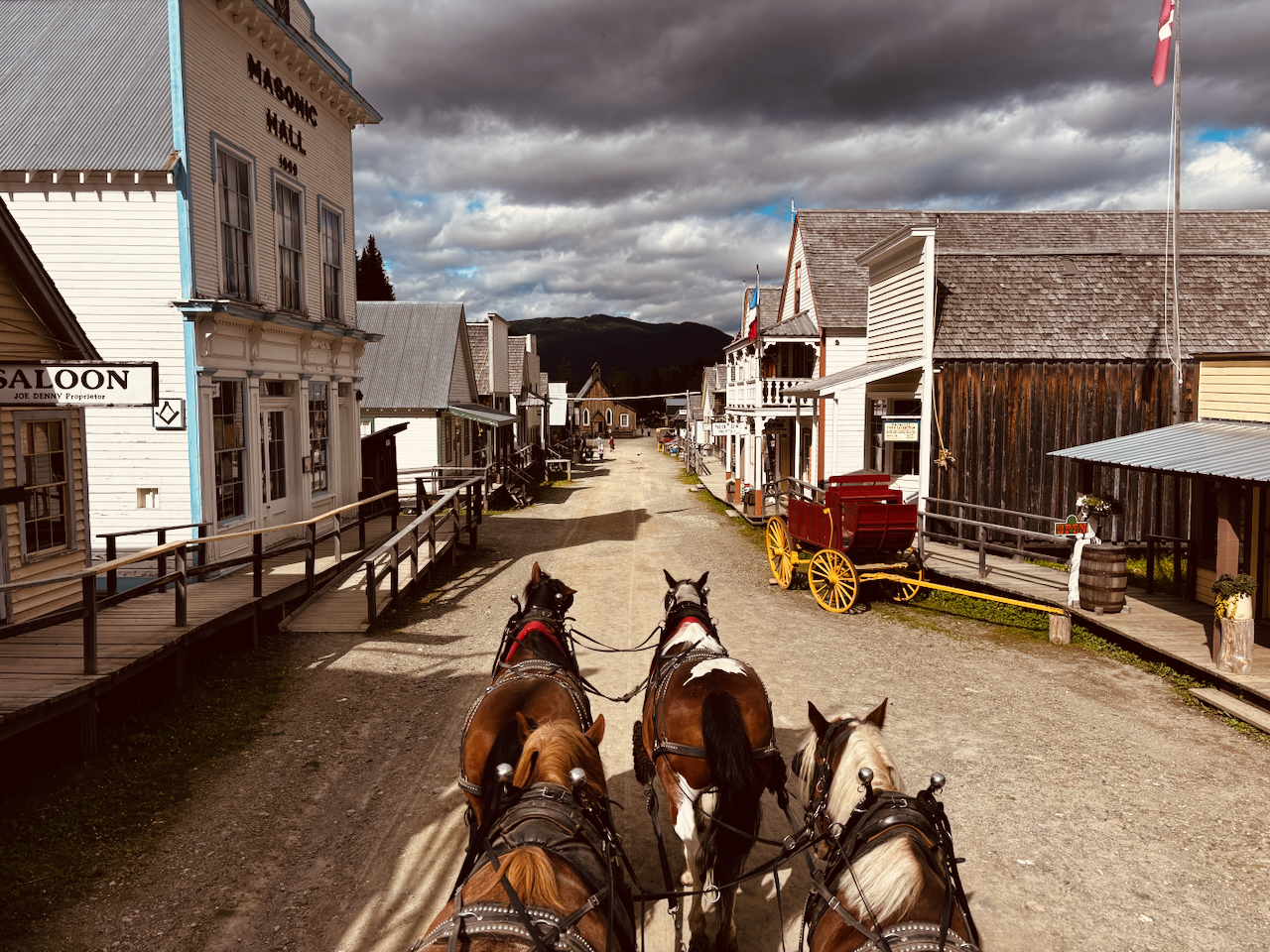
There’s a time machine in British Columbia’s Cariboo region, and it’s so big you can drive right into it — but its functionality won’t transport you back in time. No dinosaurs, no Julius Caesar, no medieval knights, just a remarkably intact portal to the 1800s.
Firmly rooted within 457 hectares, this time machine is fixed on a single destination: the gold rush years of 1862 to 1885. It was an exciting time, drawing more than 10,000 people in search of fortune, including a sizeable Chinese community. Once you enter Barkerville Historic Town and Park, you will meet some of them. They’ve got some neat things to show you, and some stories to share.
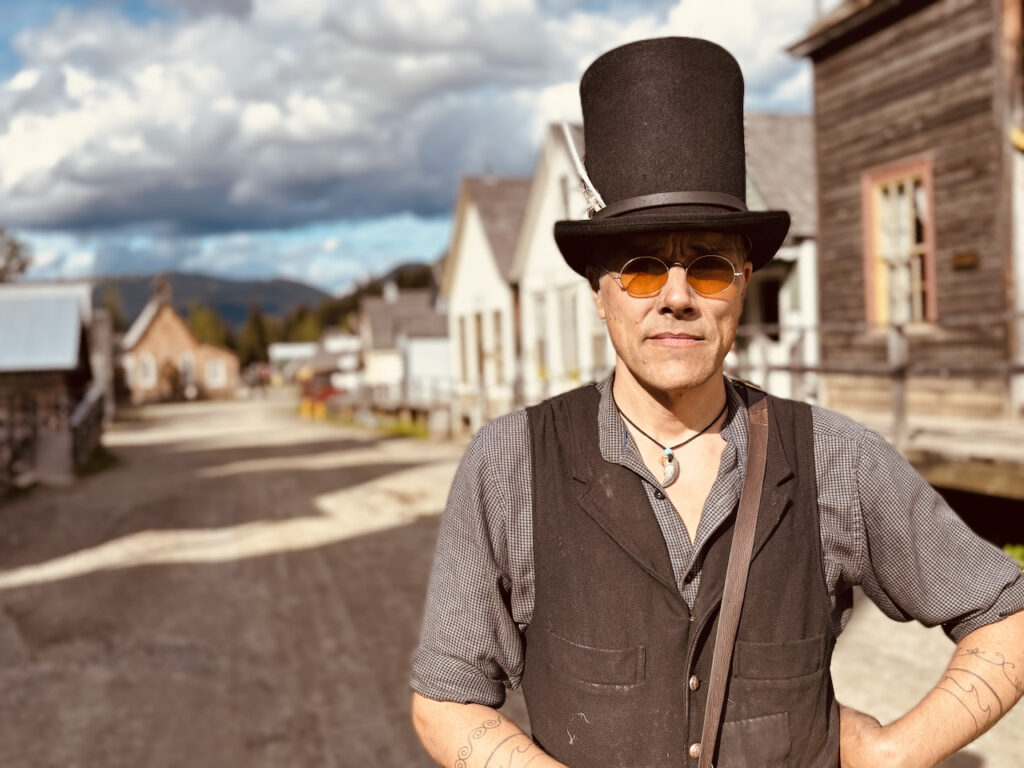
An Englishman named Billy Barker first struck gold in Barkerville in 1862, quickly attracting a rush of miners and migrants, along with the services to support them. The Cariboo Gold Rush preceded the more famous and chaotic Klondike Gold Rush by three decades, but its impact was critical for the fledgling Dominion of Canada.
Centred around Barkerville, which quickly became one of the largest settlements north of San Francisco and west of Chicago, the colony of British Columbia built ambitious infrastructure to support the booming gold fields. When the rush subsided, construction of the 640-kilometre-long Cariboo Wagon Road had essentially bankrupted the colony, contributing to the colony’s financial troubles and pushing B.C. toward Confederation. Factor in an 1868 fire that destroyed the town in less than an hour, a miraculous rebuild of 90 buildings in just six weeks, the town’s decline into a ghost settlement, and its rebirth as the largest living-history museum in western North America, and there’s a lot to learn. But first, we’ll need to swap out our threads for something more appropriate.
With an authentic 19th-century streetscape, more than 100 well-preserved original structures, 62 heritage replicas, and dozens of costumed re-enactors, Barkerville attracts tens of thousands of visitors each year. This has been the case since its rebirth as a living museum in 1959. For its economic and cultural significance, it was also designated a National Historic Site in 1924. There’s a lot of history here to fill your boots, and a lot of boots to choose from inside the L.A. Blanc Photography Gallery and Studio.
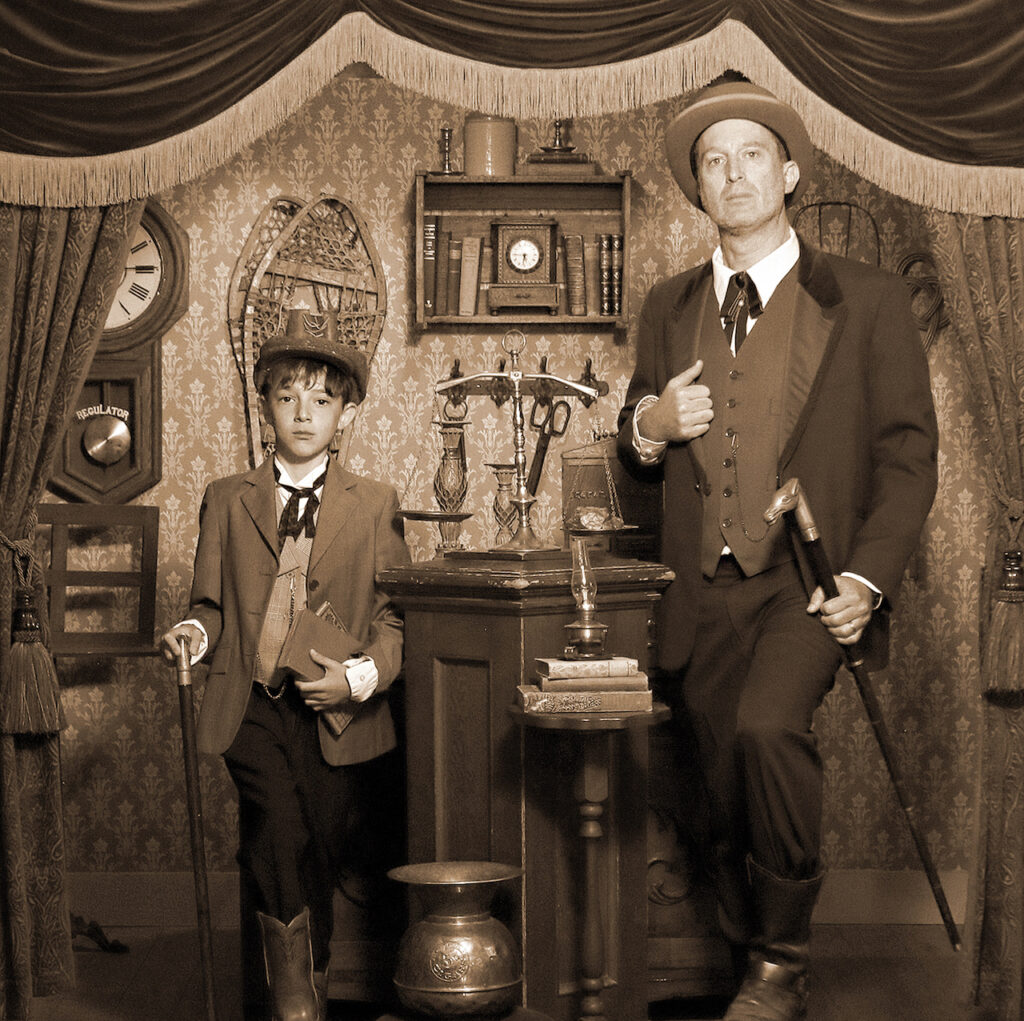
Tamara Bédard took the studio over from her parents, and her daughter is working the till. The streets of Barkerville are lined with independent seasonal businesses, including restaurants, gift shops, and an old-school confectionery. Along with performers in the festive Theatre Royal, the blacksmiths, teachers, gold panners, and re-enactors roaming the streets play their part to a tee. The photography studio does a roaring trade offering period costumes and photo prints, and Tamara’s other family business — the Goldfields Bakery — strikes gold with fresh fritters and legendary doughnuts. Costumes can also be rented, so my son and I depart the studio looking as if we fell through a 19th-century wormhole, complete with canes, an unexplained limp, and inexplicable Yorkshire accents.
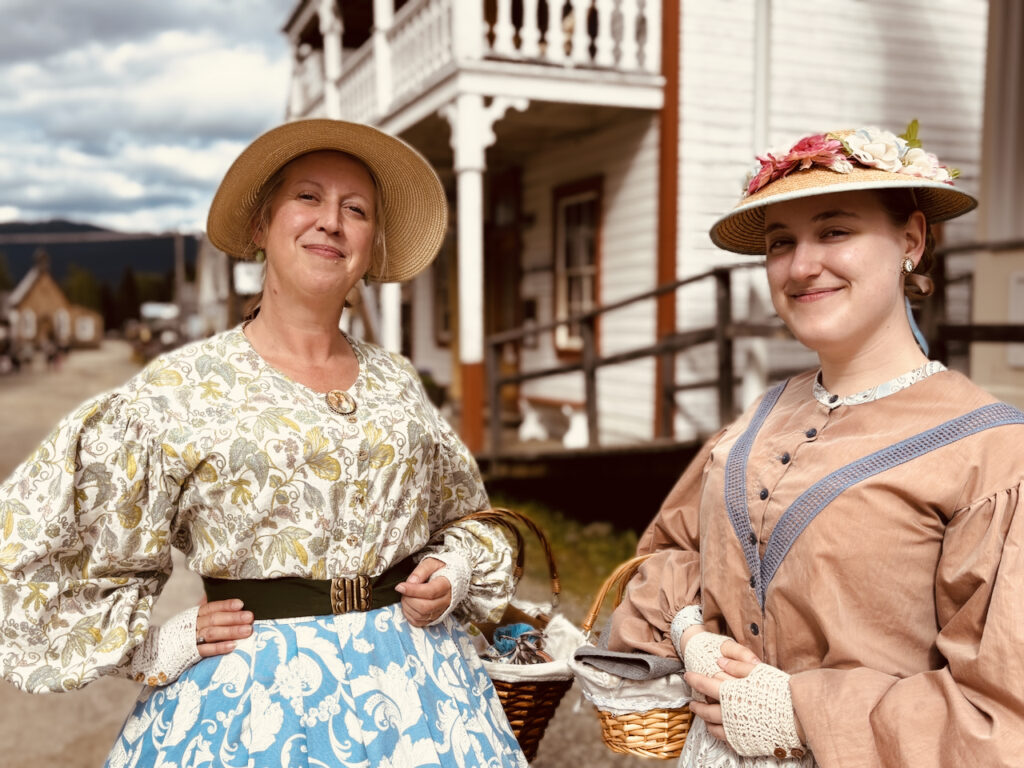
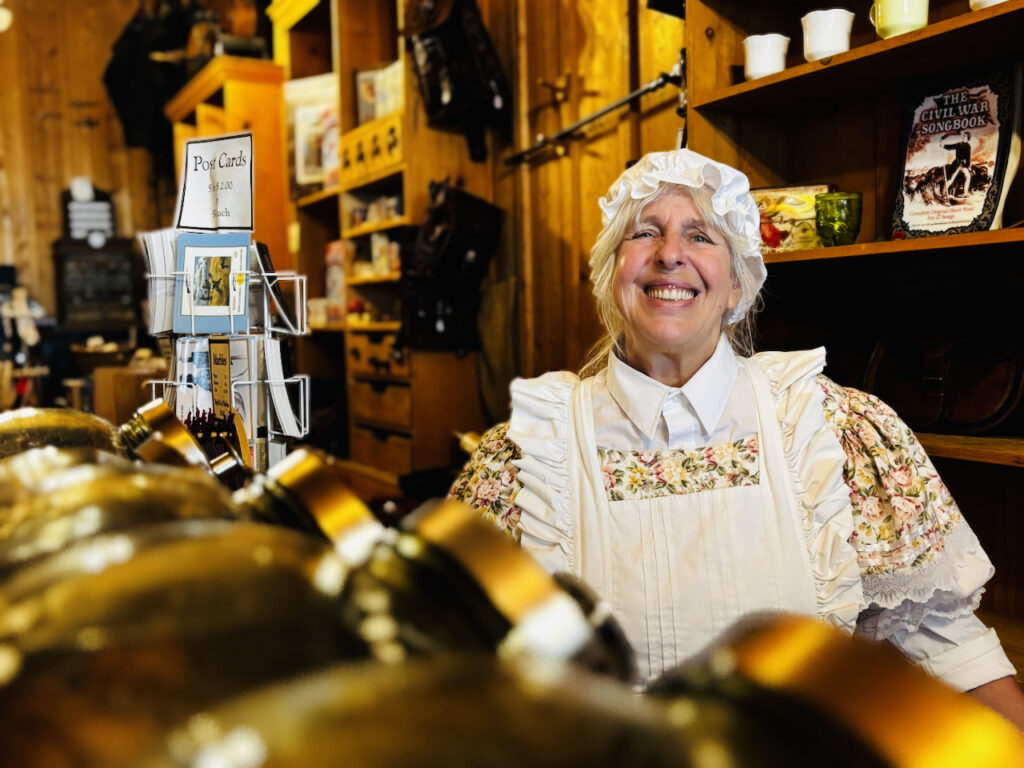
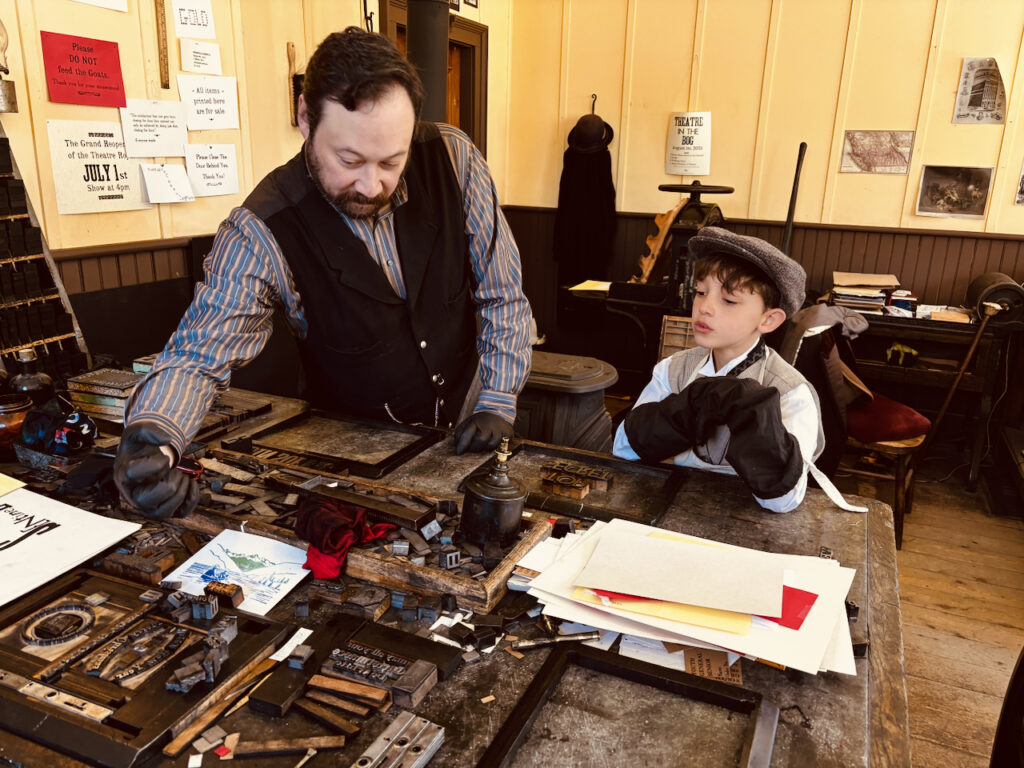
I take pride when a tourist asks us for directions to the bathroom. We have an appointment at the Cariboo Sentinel Print-Shop to learn about traditional wood typesetting on a 140-year-old platen press from George Wallace, the founder of the Cariboo Sentinel. His actual name is Chris, and he’s an Interpretive Lead, but why spoil the fun?
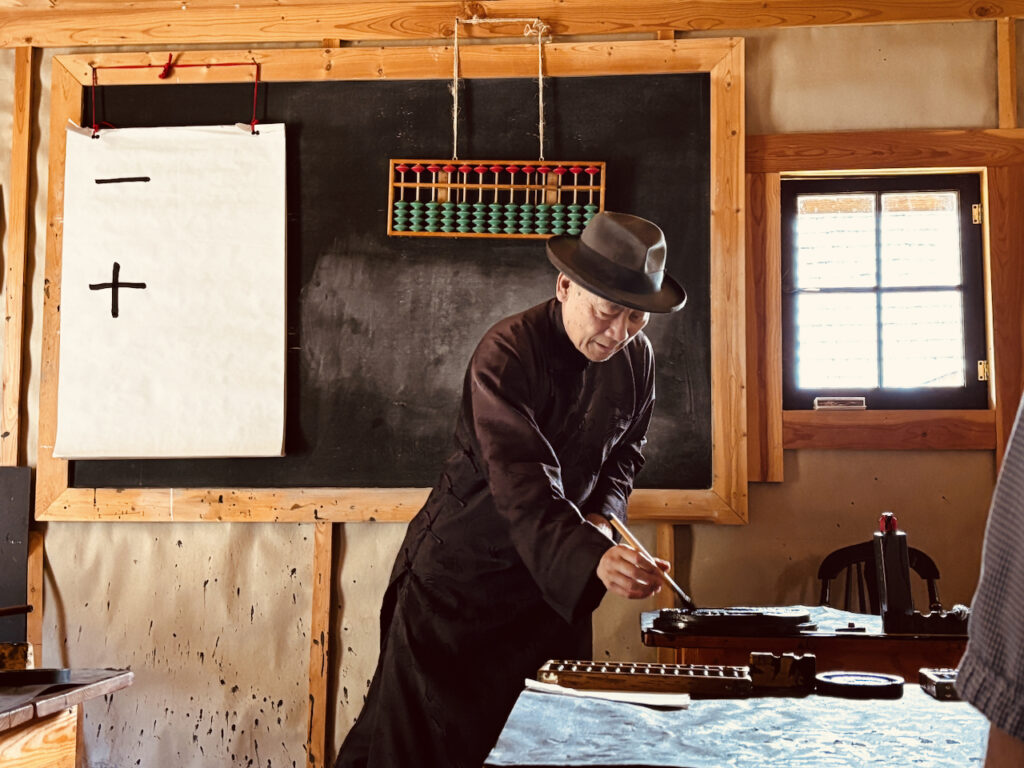
We get our hands inky, take our handmade prints and head off for a lesson in Mandarin calligraphy with Teacher Zhou, the best school teacher you never had.
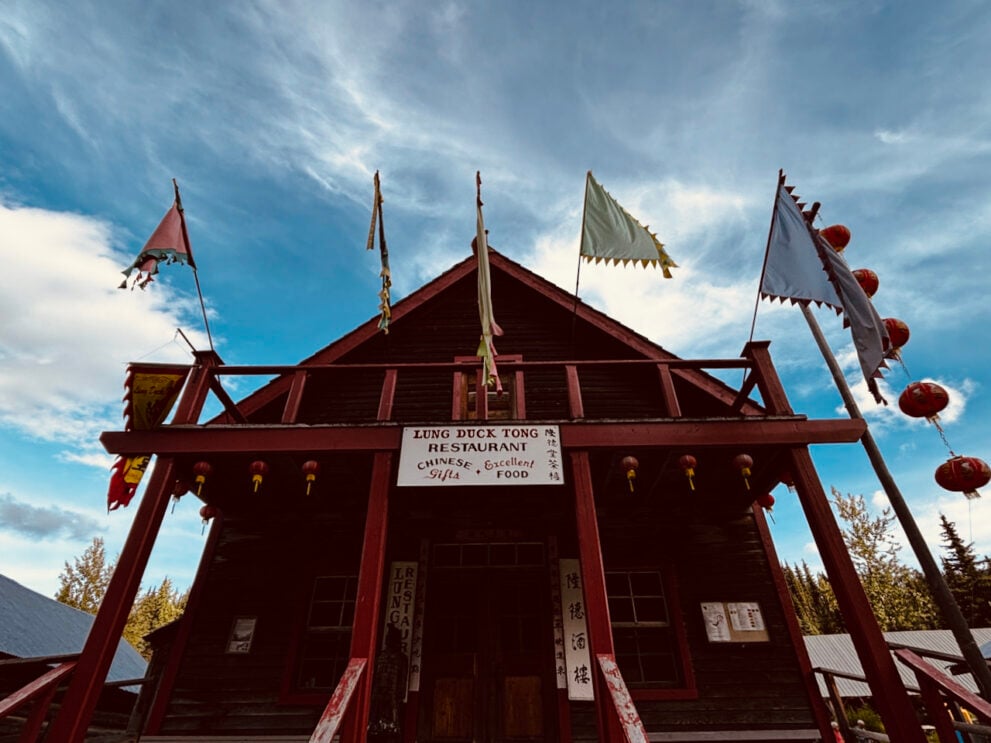
During the height of the gold rush, approximately 5000 Chinese people lived in Barkerville, making up half the town’s population and creating one of the oldest Chinatowns on the continent. Facing systemic discrimination, they still found success and built a thriving community. Barkerville’s Chee Kung Tong Building, a National Historic Site, is among the oldest ethnic structures in Canada, and the museum has one of the largest Chinese archival collections in the country. Visitors can learn about Chinese history in several buildings and enjoy great food at the Lung Duck Tong Restaurant, too. As for Teacher Zhou, he is enthusiastic, entertaining, patient, and a highlight for kids and their parents.
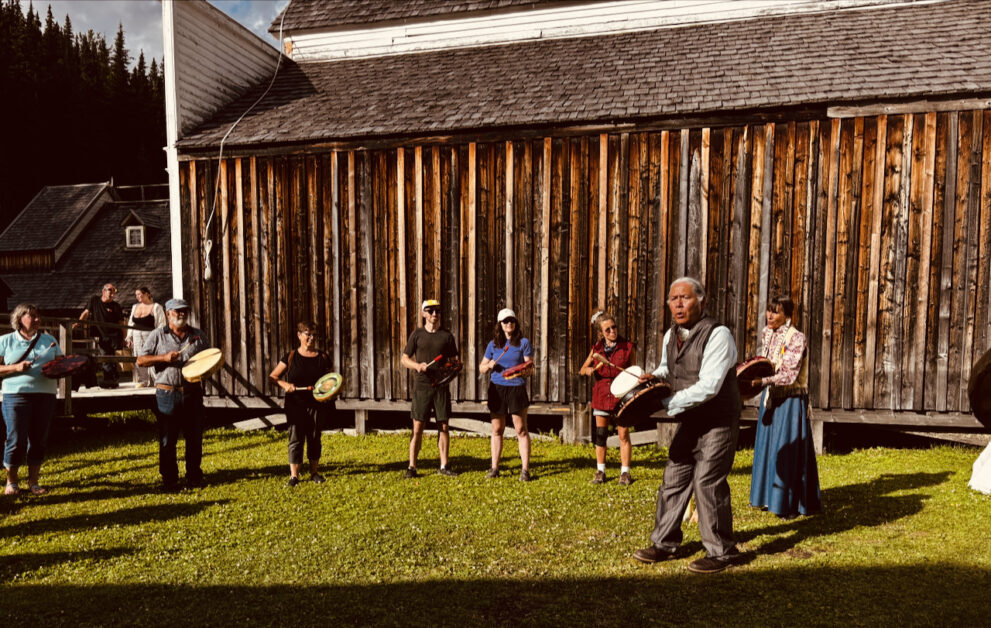
Re-enactors gather for a daily variety show in the Theatre Royal, performing a song, dance, and jest to explain the town’s history. Later, we’ll catch up with some of the performers at the waterwheel and evening drum circle. Throughout the day, we’ll pop into various buildings to learn about life in the 19th century, from weapons and dentistry to transport and Indigenous relations. We’ll take a horse-carriage ride through the town, snack on treats from a candy shop, and watch Andrew the Blacksmith make hooks from iron rods.
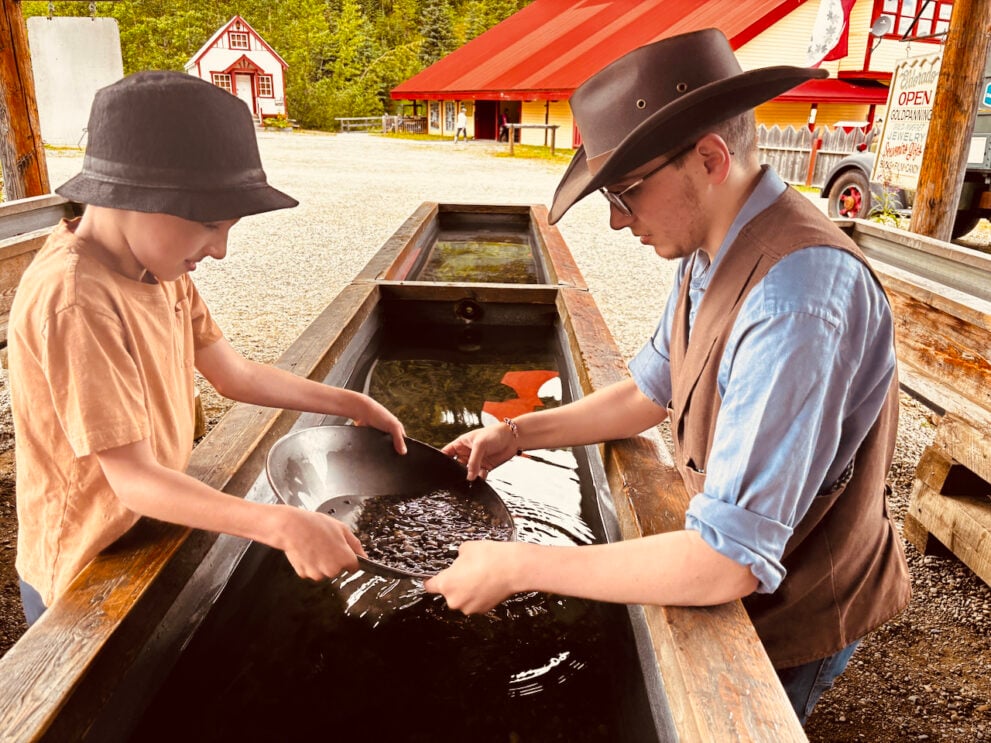
It’s a busy day, and visitors can rest up for the night by booking a room at the King or Kelly House. We stayed in one of the new, modern self-catering cottages within walking distance of the town’s entrance. Ghost hunters might enjoy a night at the St. George Hotel, said to be haunted by a woman in a white dress. Meals are also available in Wake-Up Jake and the House Hotel Saloon, and you can pan for gold flakes (which you can keep) at the Eldorado Gift Shop by the town entrance.
One hundred and fifty years after a dislodged stovepipe ignited a fire that burned the town to the ground, the historic site faced another threat. The devastating 2024 Antler Creek wildfire forced the evacuation of the park along with the nearby village of Wells. Fortunately, the town was spared, and efforts have been made to protect Barkerville through firebreaks and forest thinning. One devastating fire in Barkerville is more than enough.
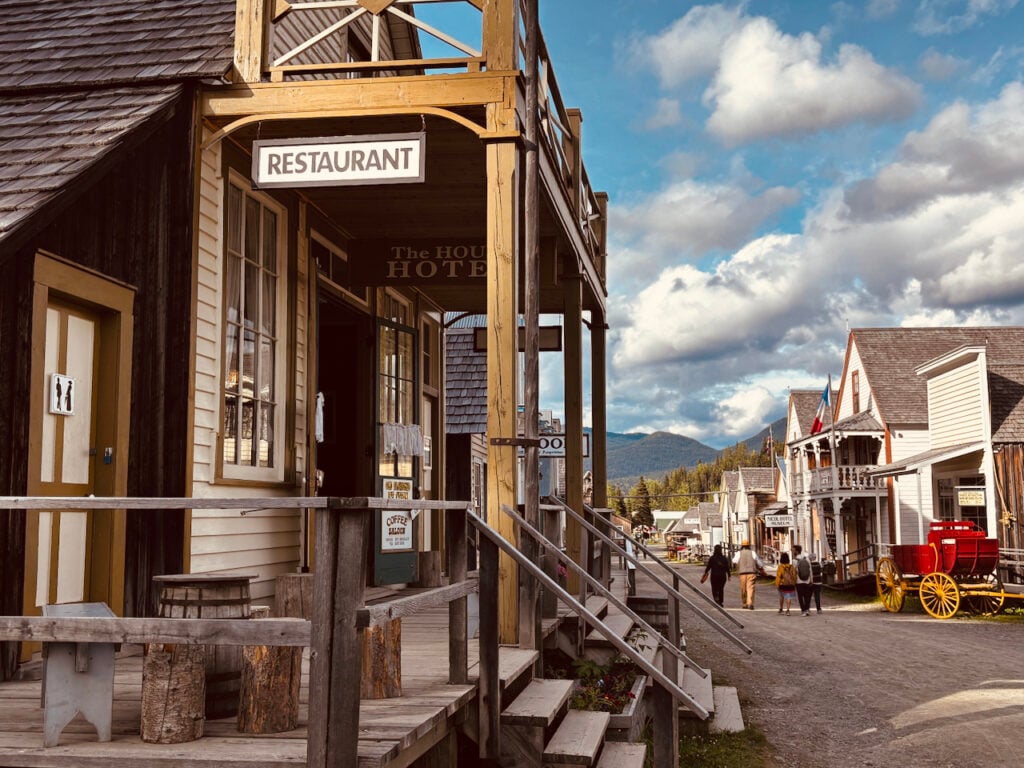
Today, Barkerville has been a tourist attraction for nearly as long as it existed as a working town. Many people from B.C. remember visiting as children — on a road trip or school visit. And judging by the accents on the main street, foreign visitors are enjoying it too. Many people from B.C. remember visiting as children — on a road trip or school visit. And judging by the accents on the main street, foreign visitors are enjoying it too.
We can all appreciate time-travelling into the past, when things were harder, yet simpler, and golden nuggets were waiting to be discovered. All a time machine truly needs are good stories, imagination, and a sprinkling of gold dust.
Travel
An insider’s account of the modern-day gold rush
Environment
Vancouver might just be home to the greenest building in the world. Meet the geography professor who brought it to life.
Travel
Canadian Geographic’s Bucket Listed columnist Robin Esrock explores domestic tourism, national pride and the evolution of Canadian travel in the third edition of his bestselling book, The Great Canadian Bucket List
Travel
Two award-winning travel journalists discuss why family travel, even the kind that pushes us outside our comfort zones, is one of the most powerful investments we can make