Environment
Why we need to totally rethink plastic waste
Myra Hird, a sociology professor at the School of Environmental Studies at Queen’s University in Kingston, Ont., discusses why recycling isn’t a perfect solution
- 1268 words
- 6 minutes
Travel
He never planned to return to Mont Ventoux, one of the Tour de France’s most notorious climbs. But merde happens.
Sometimes I wonder why I can’t be more like other people when I go on vacation. It’s Saturday morning in Provence, France, and I imagine the average tourist here is enjoying a pain au chocolat or café au lait right about now. I, however, am riding a bicycle up a very big hill — and I am hurting.
I’ve been on the bike for about 50 minutes and, to be honest, I’m not sure how much more of this I want to endure. The road has been exceedingly steep for a while now, and, though I’ve already covered nine kilometres, I’ve still got another 12 ahead.
I am deep in my own private hell when another rider suddenly appears to my left. I didn’t hear him coming; I certainly wasn’t expecting to see any other cyclists on this brisk November day.
I give him a wave as he pulls beside me, and feel the need to explain my tortoise-like pace. “C’est trop difficile pour moi,” I say, instantly wondering if I should have said “très” instead. “Pour moi aussi,” he replies with a smile, as he slowly but surely rides past.
Sadly, he is gone before I think to mention that I have what I consider a good excuse for my sorry performance. I am riding up the wrong mountain.
The Tour de France boasts many legendary alpine climbs, but in my mind there are three that stand above the rest: Alpe d’Huez (vertical ascent 1,120 metres), which is probably the most famous cycling challenge on the planet, with 21 hairpin turns that zigzag sharply upwards to a small village in the Alps; the Col du Tourmalet (vertical ascent 1,404 metres), which was first included when the ever-changing route passed through the Pyrenees in 1910, and is this year being featured for the 89th time; and Mont Ventoux (vertical ascent 1,617 metres), which is aptly nicknamed the “Giant of Provence,” and has been infamous in the cycling world ever since Tour competitor Tom Simpson died while climbing it in 1967.
I’ve been a fan of the Tour for many years, so on a visit to Provence in November 2008, I thought I would pay homage by trying to cycle up Mont Ventoux. I was not a road biker at the time, but I did do some workouts beforehand on a nearby hill in my hometown of Toronto. When I arrived in France, however, I discovered that you can’t really prepare for a mountain by riding up a molehill. I somehow reached the top of Ventoux, but it was a humbling experience.
On my next trip to France, in October 2024, I decided I would celebrate my impending 65th birthday by attempting another of the iconic Tour climbs: the Col du Tourmalet. This time I expected things to go a little better, because, a few years earlier, I’d become a recreational cyclist. Before heading to the Pyrenees, I did only one training session on a relatively modest slope, confident that my general cycling fitness would get me easily to the top of the Tourmalet. It did not. I managed to make it up, but just barely.
This past November, I found myself unexpectedly making yet another trip to France. And despite my painful memories of both Ventoux and the Tourmalet, I could not resist the call of Alpe d’Huez. This would be my chance to complete the triple crown.
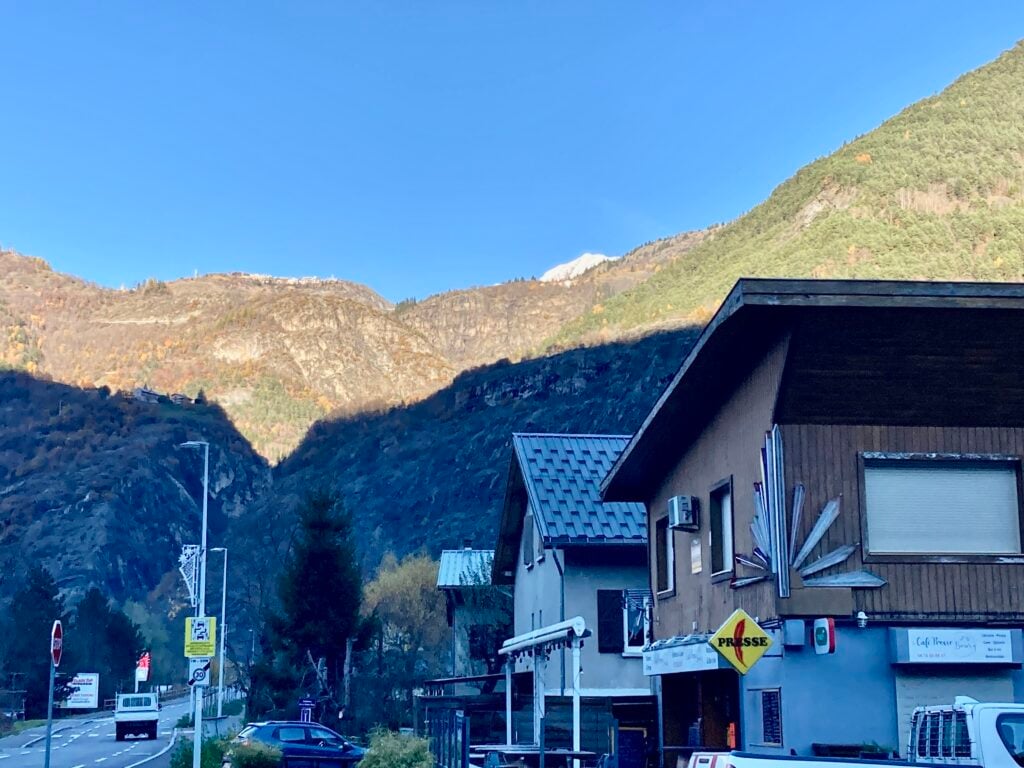
Immediately after landing in Marseille on a Tuesday, my long-suffering partner and I point our rental car north and start the three-and-a-half-hour drive to Le Bourg-d’Oisans, the small town at the bottom of the Alpe d’Huez climb. I’ve pre-ordered a rental bike there for my ride tomorrow morning.
At one point as we’re zooming along the A7 autoroute, we look far to the east and see a huge pyramid with a white summit — Mont Ventoux. I can barely believe that I once managed to ride up that thing, and I’m relieved I will never have to do so again. Apparently.
We arrive in Le Bourg-d’Oisans, and get settled in at a chalet just on the edge of town, close to the bike shop (which is technically closed for the season). From where we’re staying, I can see the road that switchbacks up to the village of Alpe d’Huez. Happily, the temperature tomorrow morning is supposed to be warmer than usual at this time of year and there won’t be much traffic. Ideal conditions.
But in the morning, my dream falls apart. I wake up feeling crappy, and realize there’s no way I can do the ride today. I’m crushed. My partner and I discuss the possibility of staying here another day, but who knows if I’ll be better tomorrow? Besides, she and I have other places we plan to visit. So we point the car back south toward Provence.
I spend the next few days enjoying the charm of small Provençal towns, but also lamenting the fact that I missed my shot at Alpe d’Huez and the triple crown. I’m feeling better now, so I consider the possibility of returning, but apart from other concerns, I’m not even sure if I could still rent a bike.
It seems I am schlepping my cycling gear around France for no reason. But then, to the surprise of both my partner and myself, I realize that there is one other place nearby where I might still be able to go for a ride: Ventoux.
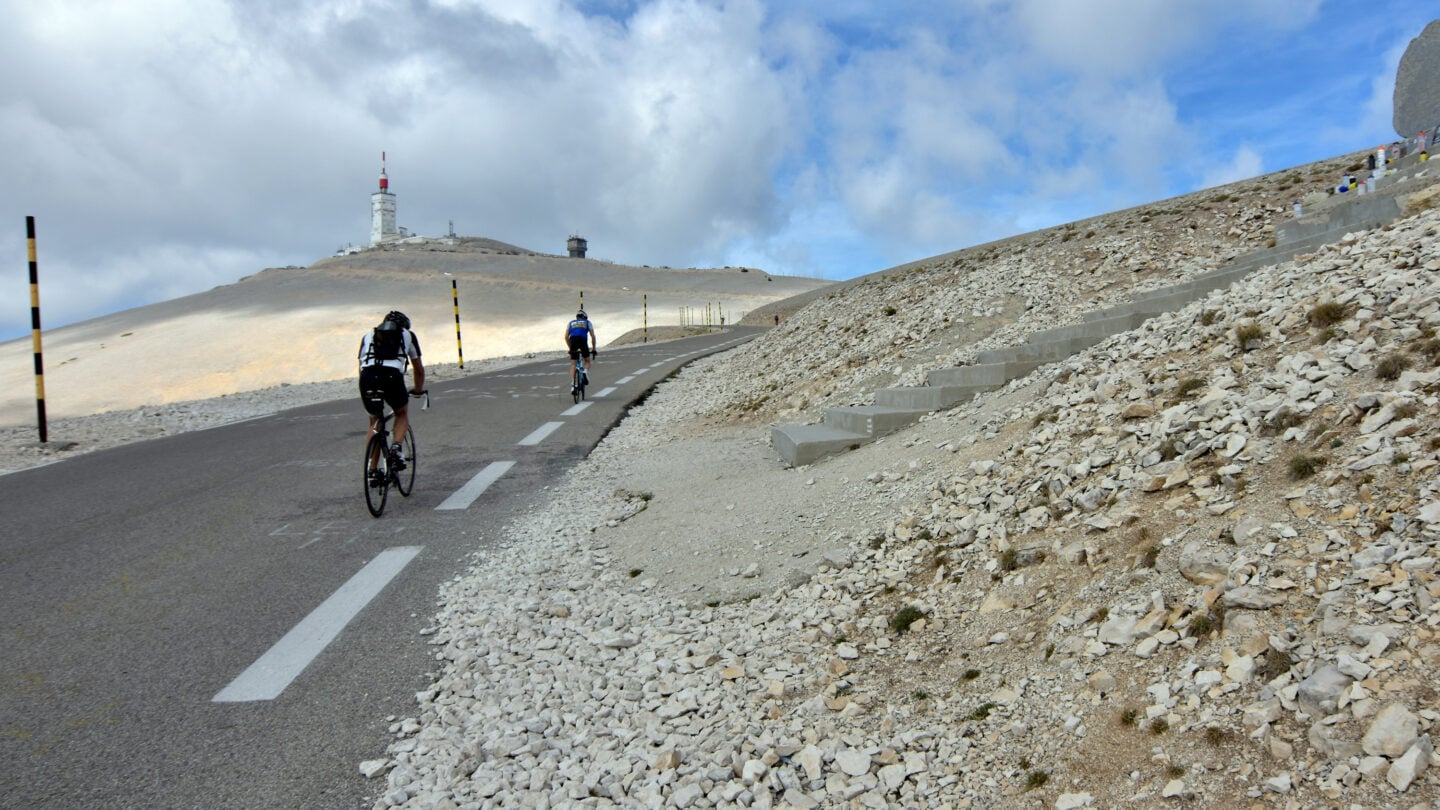
And so it is that at 9 a.m. on Saturday, I arrive in the small town of Bedoin, and head for Rêve de Vélo, the very same shop where I rented a bike in 2008. Back then I was nervous because I didn’t know what I was getting into. Now I’m nervous because I do know what I’m getting into.
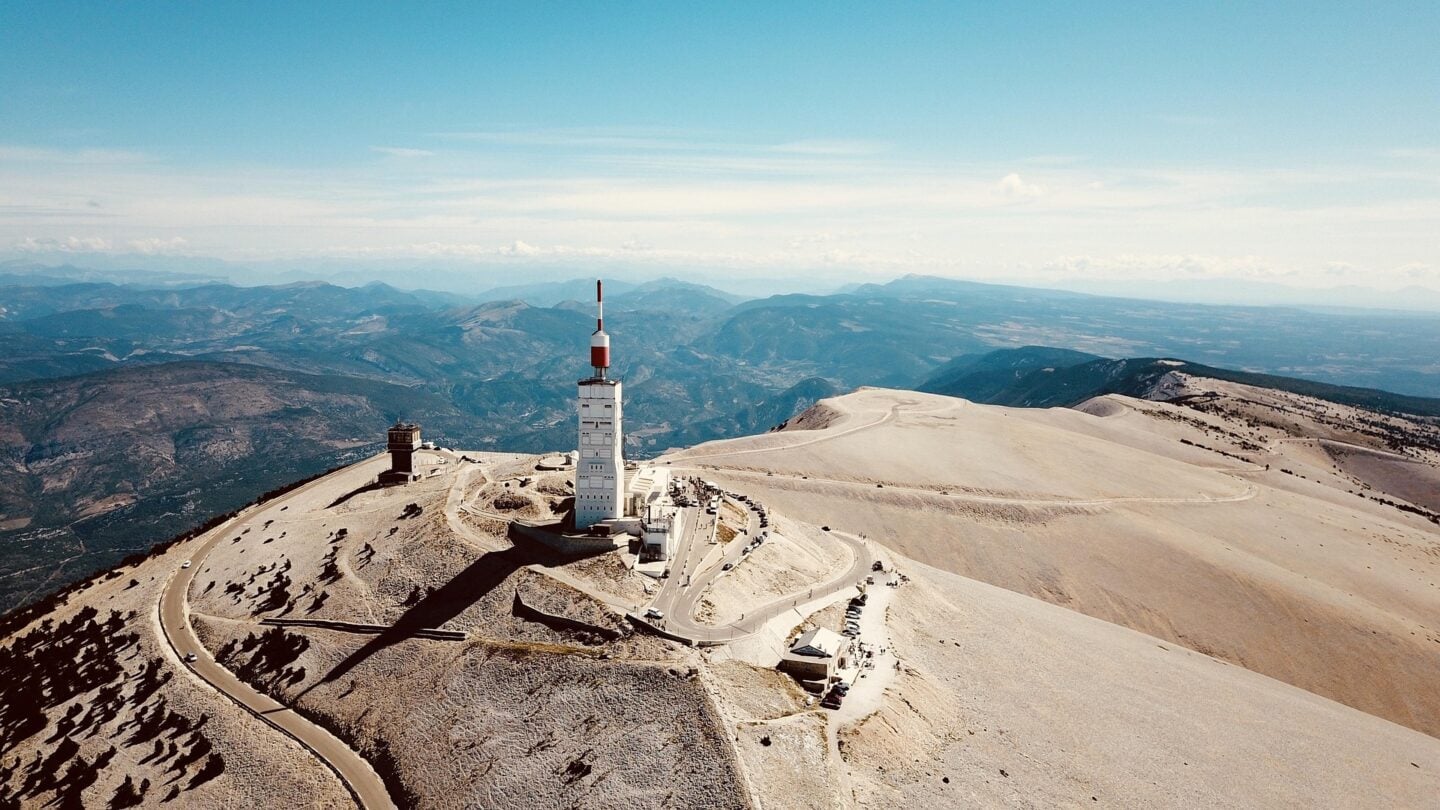
Mont Ventoux — also known as the “Beast of Provence” — is without doubt one of the Tour’s toughest climbs. For starters, it’s long — about 21 kilometres from Bedoin to the 1,910-metre summit. It’s also steep — averaging about a 7.7 per cent gradient, with a maximum of roughly 13 per cent. And the wind at the exposed top is frequently ferocious.
The last time I was here, it had snowed at the summit, so the road was closed to cars about two-thirds of the way up, though bikes could continue on the salted pavement. I ask Massimo, the guy in the store, what the conditions are like today, and he says that, while there isn’t any snow up top, the temperature will be around freezing. Happily, however, the wind is not strong, though he warns that conditions can change in a hurry. I decide to manage Massimo’s expectations (and also my own) and tell him that I may only go partway up. Then I set out.
As I remembered, the Ventoux climb starts gently, with several easy kilometres that wind past vineyards and orchards and a few tiny hamlets — the perfect warm-up. Off to my left, looking northeast, I can see the top of the mountain, crowned by its tall white tower, almost 1,600 metres above. From here it looks as though the peak is covered in snow, but that’s because the summit of Ventoux is blanketed by chunks of limestone. The trees that once grew there were cut down many years ago, to feed the shipbuilding industry in Toulon.
Just after five kilometres, the road makes a sharp left turn and enters the forest that covers the mountain’s lower slopes. This is where the “fun” starts. The gradient of the next nine-plus kilometres averages a leg-boggling nine per cent. I instantly switch to my easiest gear, as I did the last time I was here, and my heart rate jumps to more than 160 beats per minute. The grind begins.
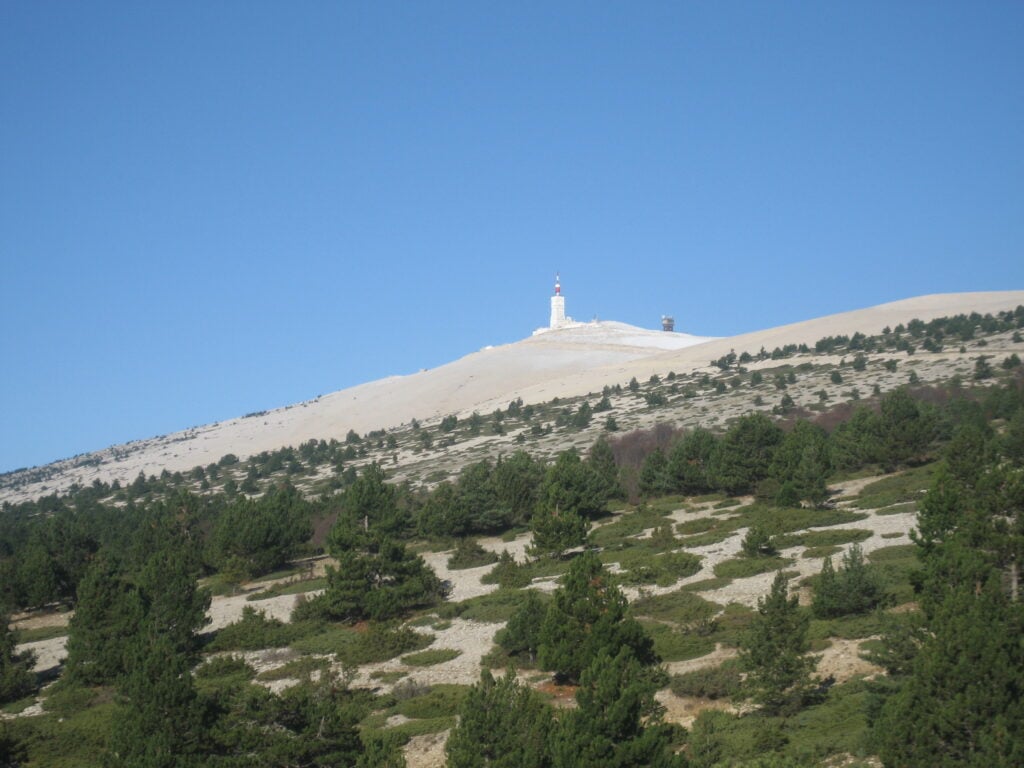
All three of these Tour de France classics are rated as “hors catégorie” (“beyond categorization”), but they differ in character. At 19 kilometres, the Tourmalet is longer than most climbs, but not as steep as some others. Alpe d’Huez is steeper than most, but only 14 kilometres in length. Mont Ventoux, however, is both longer and steeper than most of the rest.
Last fall, in the brief time I had to prepare for Alpe d’Huez, I twice headed to the steepest hill I know in Toronto (in a branch of the Don Valley) and rode my mountain bike up and down for as long as I could. My uphill speed was only about nine kilometres per hour, but in my second session, I managed to climb for about 90 minutes, which is about how long I figured it would take to do the Alpe.
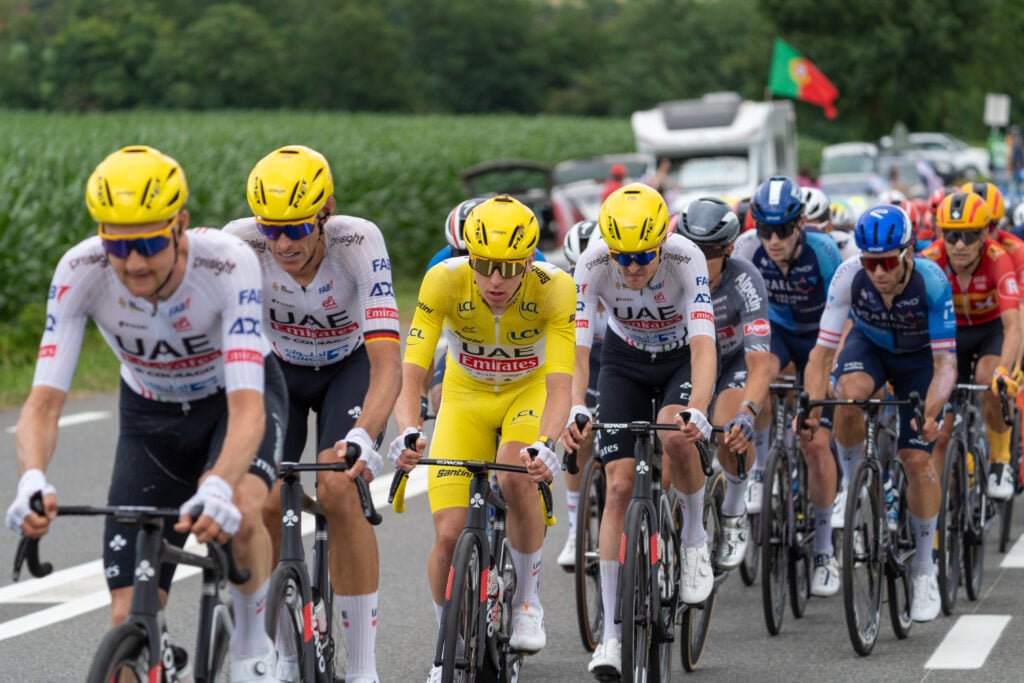
Now, here on Ventoux, I am again riding very slowly uphill, but this time on a road that runs more or less straight ahead up the mountain’s southern shoulder. There’s not much in the way of scenery — just the forest that closes in on both sides. I prefer not to look at the steep grade in front of me, so I focus on the pavement below. Every so often I see the names of Tour competitors — including multiple winners Tadej Pogačar and Jonas Vingegaard—which were painted on the road when the race came here last July. Unfortunately, nobody has painted my name.
About three kilometres into the woods, I hit my first 10-per-cent stretch, or should I say it hits me. I do not remember this part being so hard. Each pedal stroke requires substantial effort and I begin to wonder just how far I’ll get today.
Suddenly, the rider materializes on my left, and slowly passes me. I had not seen any other cyclists on this mountain in 2008 or on the Tourmalet in 2024, so the experience of being passed on a big climb is a new one. I have to admit, it does not improve my mindset. But still I crawl along, watching the distance between us gradually increase.
A few minutes later, I hear a whining sound and then another rider appears. This time it’s an older guy — about my age — and I note that he’s riding an e-bike. I do not converse with him, and he goes by faster than I would like.
For some reason, I am irritated by the ease with which he has passed me. And I decide that if he is going to make it to the top, so am I.
I hit my first 10-per-cent stretch, or should I say it hits me. I do not remember this part being so hard.
At some point in the forest, the trees thin out a bit on the left and you get a glimpse of the summit, still far away but definitely closer. On my first visit here, I figured that this meant I was almost out of the woods, both literally and figuratively. And so I was devastated when I discovered several more steep kilometres in the forest ahead. Today I just carry on slowly, and manage to get through them.
Finally, the gradient eases, and a few houses appear. For the first time in more than an hour, I can actually pedal normally. I think back to the 2016 Tour, when four-time Tour winner Chris Froome was involved in a bizarre incident on this stretch. His bike had been damaged in a freak uphill crash, and so Froome started running up the road without it. There have been times today when I would have liked to do the same.
Soon I’m out of the trees and I see a welcome sight ahead: Chalet Reynard. This restaurant sits at the start of the transition zone between the forest below and what race commentators always describe as the lunar landscape above. It’s the perfect spot to take a breather and I see three riders who are doing just that. One of them is the guy on the e-bike. The other two are new to me. They may have come up a different road that leads to the Chalet.
I pause for a drink of water with some trepidation. The previous year, when I stopped pedalling for a minute on the Tourmalet, my upper hamstrings seized up, and though stretching helped, my legs were never quite the same afterwards. Today, when I hop back on the saddle, my hamstrings feel okay. My limited training seems to have paid off.
By now, I have ridden 15 kilometres and gained about 1,100 metres — roughly the same distance and elevation of the entire Alpe d’Huez climb. But there are still six kilometres ahead, which snake across the barren flank of the mountain to the summit.
The other riders who were stopped at the Chalet are now back on their bikes, and moving up the road. I am soon in hot — or perhaps lukewarm — pursuit.
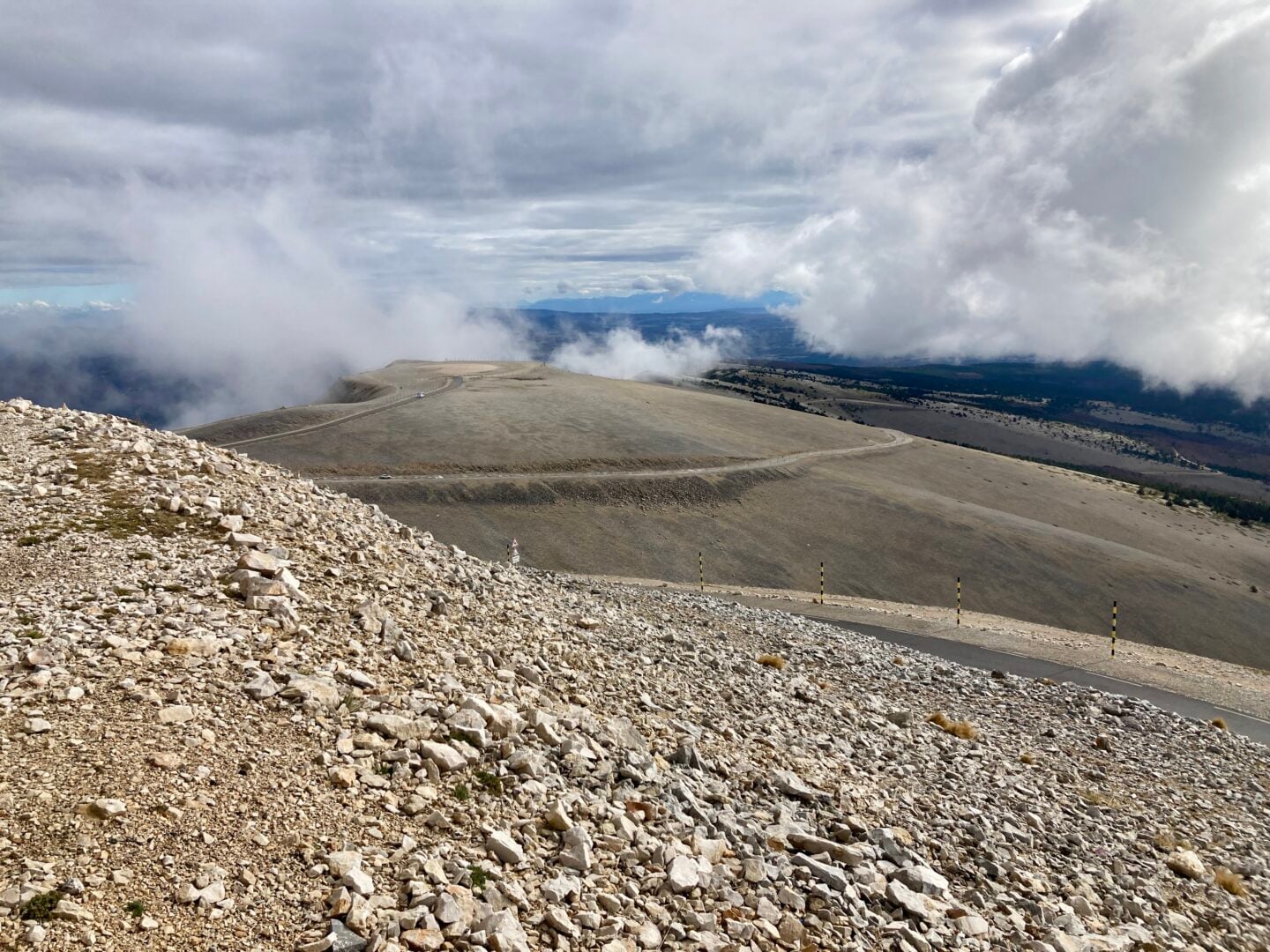
The next few kilometres average around seven per cent, which now seems almost easy, and the gradual switchbacks make a nice change from the road in the forest. If there is any wind, I’m not aware of it.
As expected, the e-biker soon disappears around a corner up ahead. But the other two cyclists are more my speed. Or, in fact, a little slower. I catch up to them after a few minutes, and we exchange waves when I pass.
The tower at the summit is closer now, and I’m feeling good. But with three kilometres left, the road steepens again, and it’s back to the grind. As the gradient increases, I keep an eye on the two riders behind me. It would be embarrassing if they caught up after I passed them.
With just over a kilometre to go, I come to the memorial for Tom Simpson, the 29-year-old British rider who died at this spot on a hot July day in the 1967 Tour. The former world champion was chasing the leading group when he fell off his bike and could not be resuscitated. It was initially reported that he’d died from heat exhaustion, but a post-mortem revealed that amphetamines had also contributed to his death. To me that makes his tragic ending even sadder. I nod as I ride by.
The long final switchback is supposedly 10 per cent, but it looks even worse. And it feels even worse. My legs are exhausted now, but the tower looms just above. I am close.
I round one more corner, and the finish lies just ahead. There are no cheering crowds today, but I’m happy to see the first rider who passed me about an hour and a half ago. He is just beginning his descent and shouts “Bravo!” when he recognizes me. There is no sign of the e-biker, who may have gone down the other side of the mountain.
I cross a line on the road and stop my watch. It has taken me almost two hours and 23 minutes to reach the top, about eight minutes more than in 2008, and about 90 minutes longer than Pogačar’s record-setting time last July. But I am pleased. I have actually made it to the top of Ventoux again, 17 years later.
I take a few minutes to check out the views to both the north and the south, but clouds have moved in so I can’t see much beyond the mountain itself. It looks like it might soon begin to rain down below. I wait for the two guys who were behind me to cross the line and yell “Bravo!” And then I begin my descent.
I am looking forward to my pain au chocolat.
Environment
Myra Hird, a sociology professor at the School of Environmental Studies at Queen’s University in Kingston, Ont., discusses why recycling isn’t a perfect solution

Environment
Canada leads the developed world in per capita production of garbage. What’s behind our nation’s wasteful ways?
Travel
What happens when a decidedly non-professional cyclist takes on the Tour de France’s most historic climb? Hint: It isn’t pretty.
Science & Tech
Environmental entrepreneur Miranda Wang turns to science to seek profitable solutions to the problem of what to do with our mountains of plastic waste