Travel
Island time: 10 luxurious experiences in St. Vincent and the Grenadines
Adventure and indulgence collide in the Caribbean’s best-kept secret — a sun-soaked haven calling to Canadian explorers
- 1601 words
- 7 minutes
Travel
On this small island in St. Vincent and the Grenadines, a historic sugar mill is finding new life as a solar-powered sea saltworks
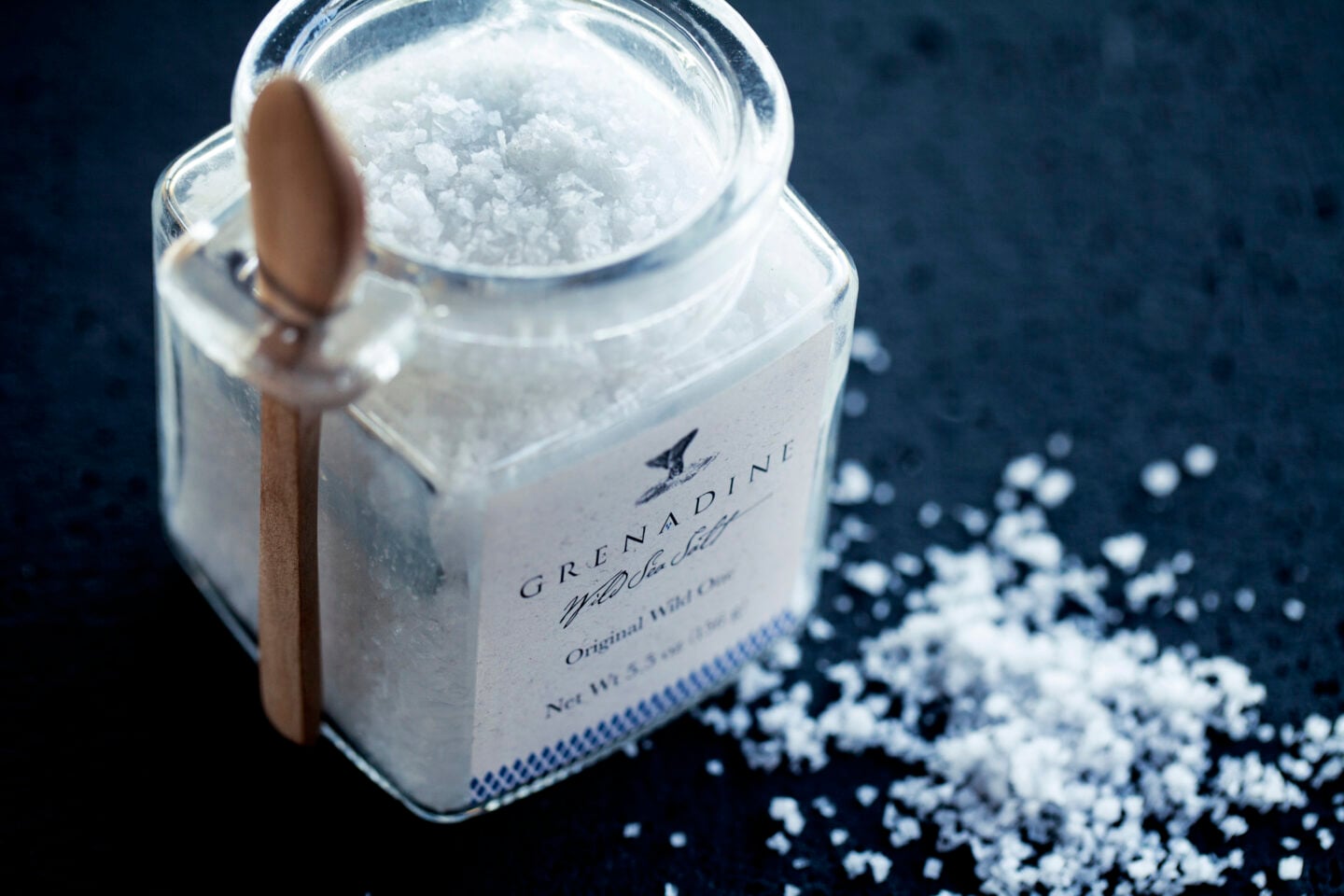
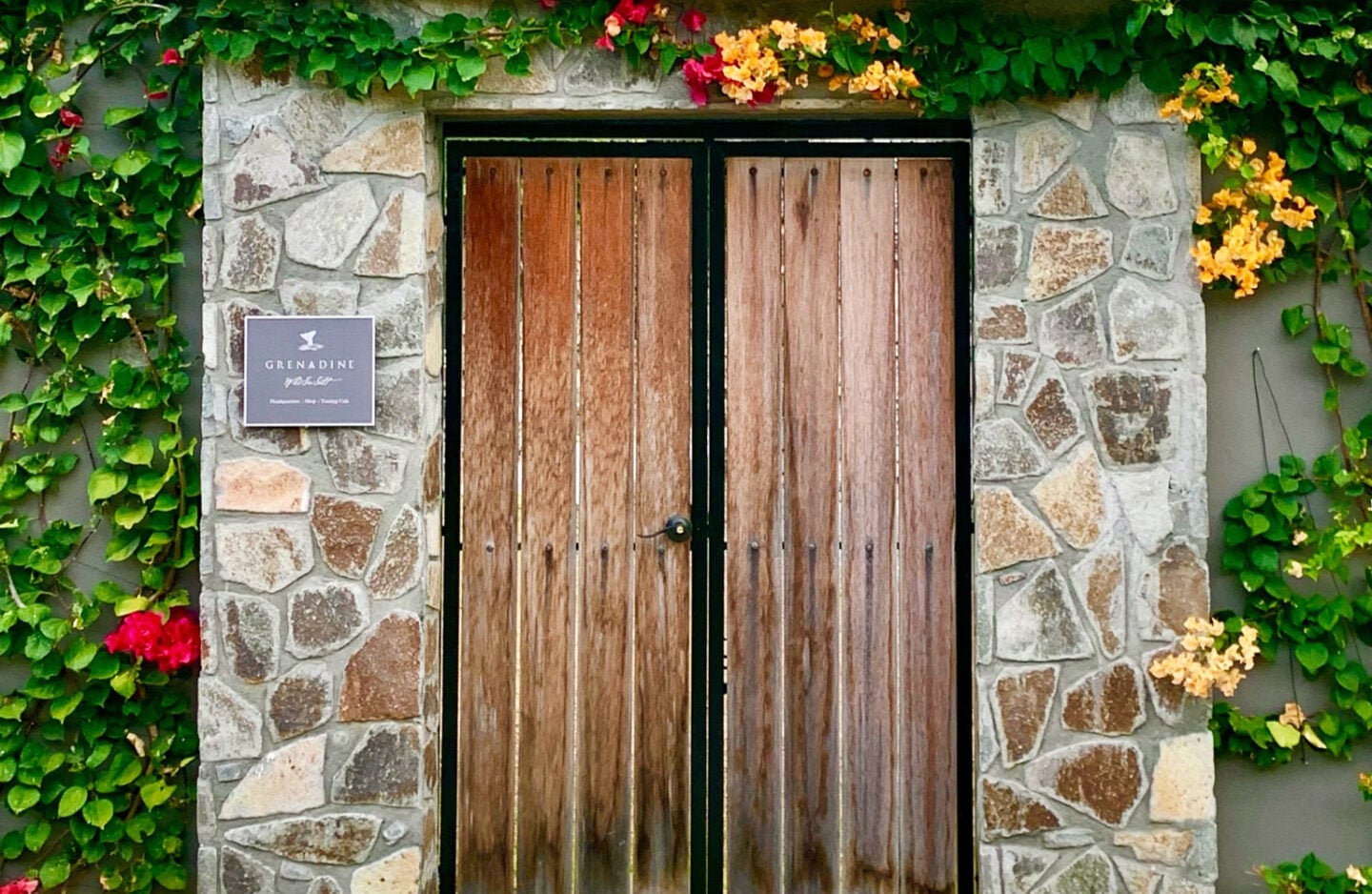
Beneath the Caribbean sun on the small, slow-paced island of Bequia, an unlikely industry is taking shape. Once a 17th-century sugar mill on the second-largest island in St. Vincent and the Grenadines, the purpose of the mill has shifted from manufacturing sweet to savoury products – now serving as home to Grenadine Wild Sea Salt.
Located nine miles south of the main island in the Grenadines, Bequia is known for its laid-back charm and rich, seafaring heritage. But now, the island has added a surprising new chapter to its story, one that turns salt into a symbol of sustainability and renewal.
Transforming seawater into delicate, mineral-rich flakes prized by chefs and home cooks, the Grenadine Sea Salt Company has restored the crumbling sugar mill into a working business. Along with creating year-round jobs, the company is also providing travellers with a taste of the island’s culture: a chance to see how Bequians cook, adapt and make the most of what the sea and land provide.
Grenadine Wild Sea Salt founder and owner Jerry Simpson didn’t start out in food production. For decades, he lived and worked in New York as a photographer and television commercial director, specializing in the culinary world. When working with chefs, Simpson would inquire about the one ingredient they couldn’t live without. Ninety per cent of the time, their answer was salt, explains Simpson. This sparked his fascination with the briny treasure.
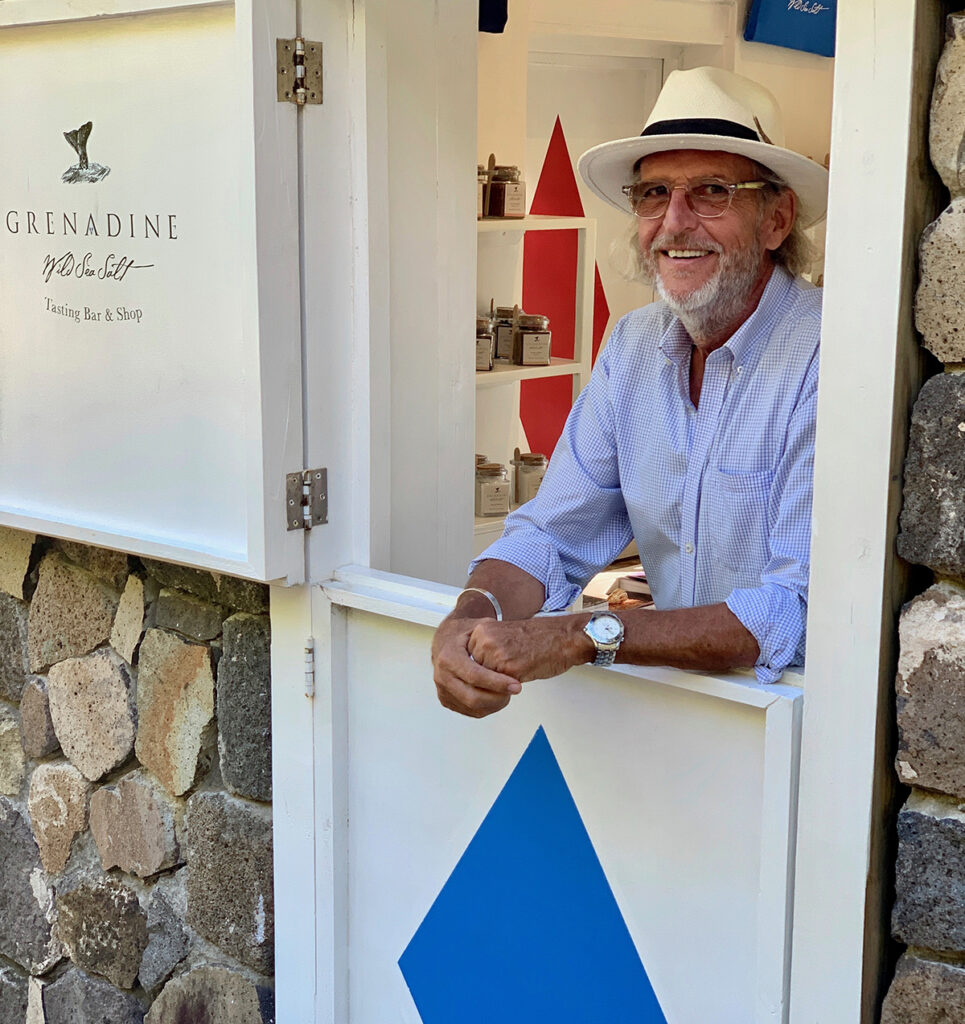
When he retired in 2016 and moved to Bequia, where he had kept a home for 35 years, he decided to try making salt himself. At first, it was simple: shallow pans of seawater left to evaporate in the sun. Simpson says the early results impressed his chef friends. “The difference in our salt is the quality of the water,” he says. “Bequia is a volcanic island, so the water around it has a lot of minerals.” Those minerals give the crystals more character and complexity than well-known brands such as Maldon. Encouraged by the positive response, he began to look for ways to scale up production.
To expand his business, Simpson began renting Bequia’s abandoned sugar mill (one of the island’s oldest landmarks) in 2018, eventually purchasing it four years later. However, restoring it proved far more demanding than Simpson had expected: “Most of the roofs were off, and it needed a lot of work,” he says. “It was well worth it, but I would never do it again.”
Turning the crumbling mill into the home base for Grenadine Wild Sea Salt also meant considering how to operate a company responsibly on a small island. “Especially down here, whatever you’re doing has a direct impact on the land because it’s such a tiny little island,” says Simpson. “Whenever you can make something sustainable, why not do it that way? It’s better for the planet. It’s better for the people living here.”
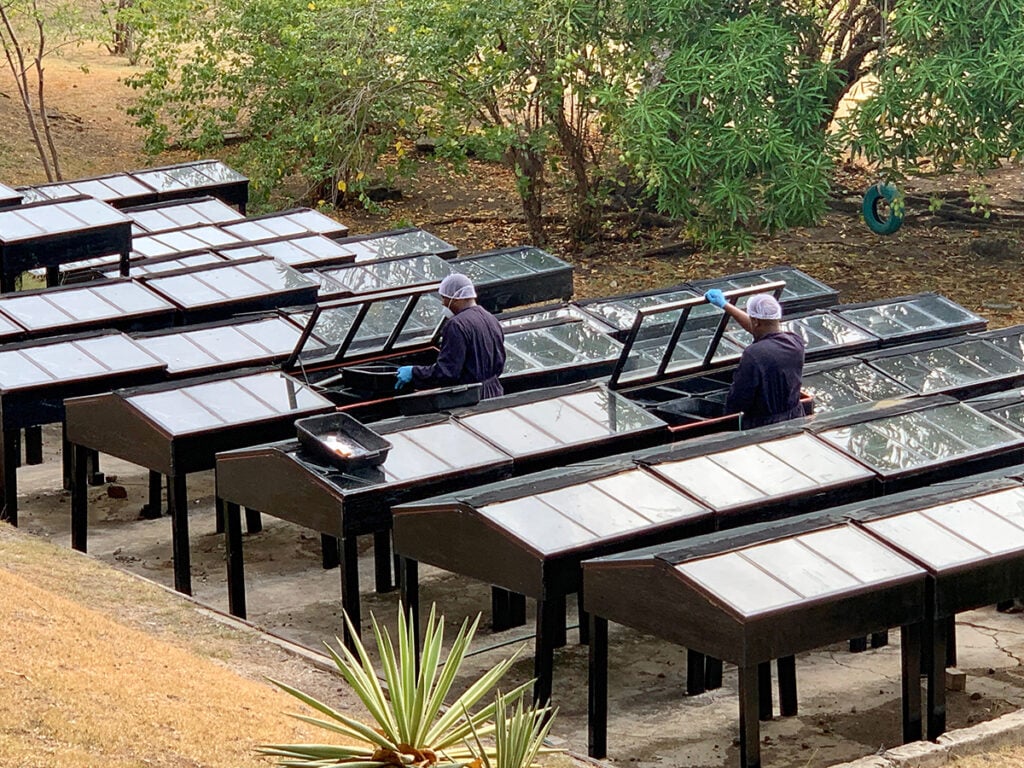
Simpson’s process relies entirely on solar evaporation, avoiding the boiling that strips minerals and the chemical cleaning common in large-scale saltworks (a salt manufacturing factory). On Bequia, sudden downpours can sweep in without warning, flooding the drying pans before crystals form. The setbacks pushed Simpson to find a better way to shield his salt.
When Simpson was 13, he read a story about a sailor adrift on a liferaft who survived by using clear plastic to trap evaporated seawater and turn it into drinking water. Inspired by this story, Simpson adapted the idea and began covering his pans with angled glass to keep rain out and collect fresh water.
The covered stills now serve a dual purpose: shielding the brine from surprise storms while capturing usable freshwater as a byproduct. As production grows, Simpson hopes that water could eventually help households that run short during the dry season and rely on costly deliveries from other islands.
Economic impact matters too. Bequia’s economy once revolved around boat building and small-scale trade, but now, the island leans heavily on tourism, leaving few stable jobs outside the busy season. By running a permanent saltworks in the ruins of the sugar mill, Simpson hopes to provide steadier work and give the island a new kind of trade rooted in sustainability.
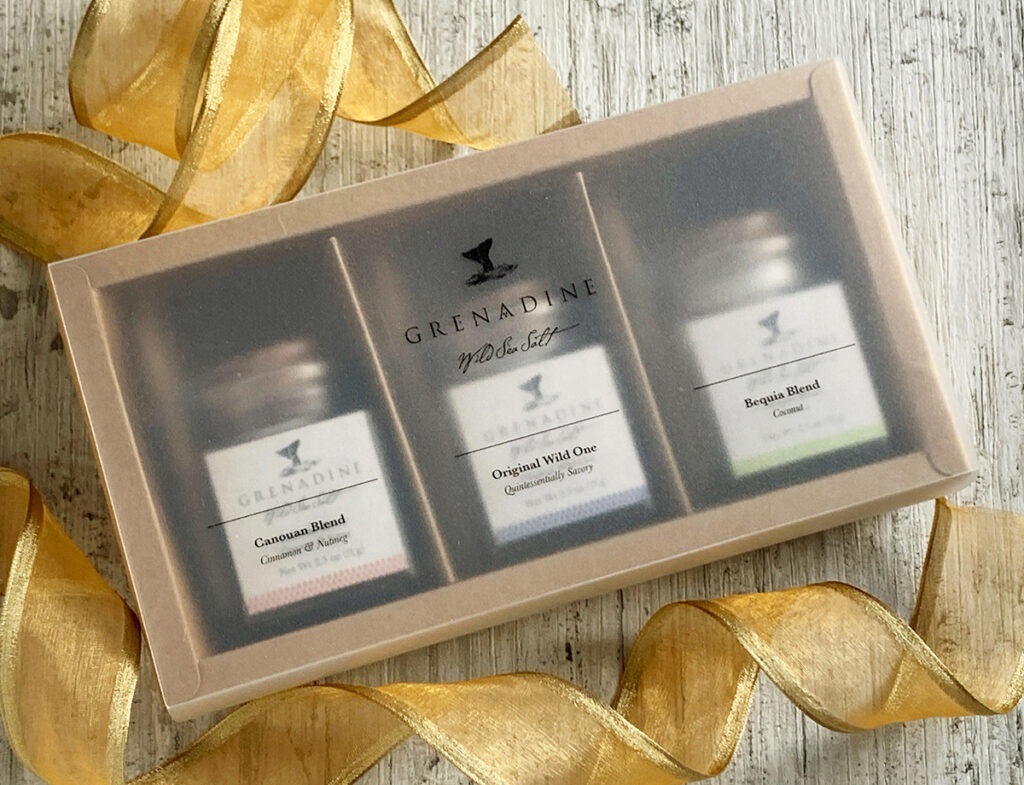
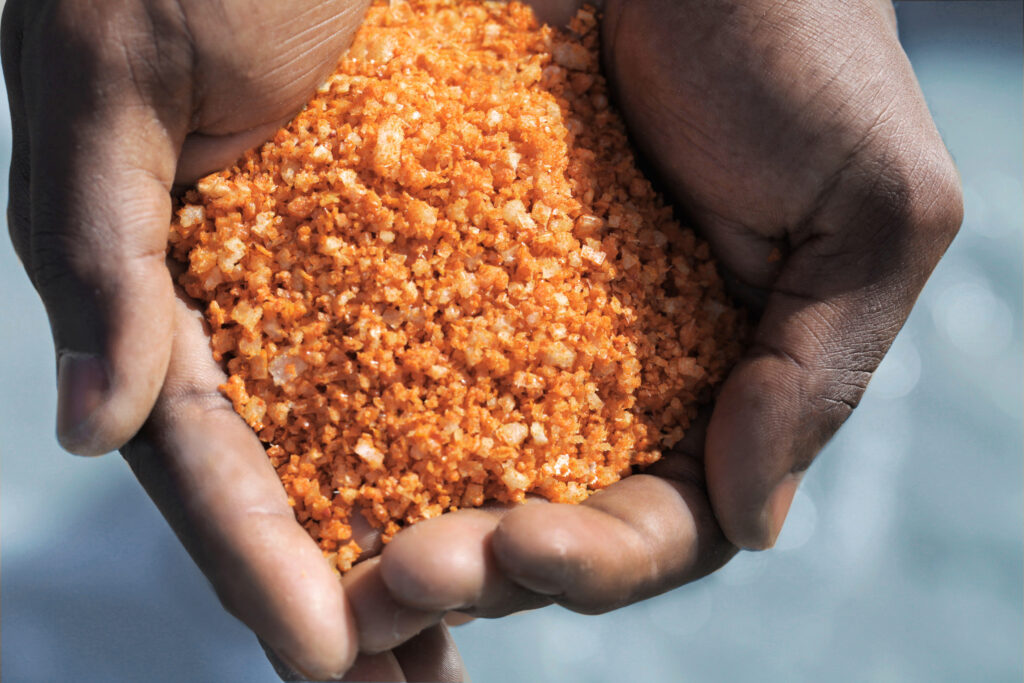
Grenadine Wild Sea Salt, however, is more than a sustainability story; the salt itself encapsulates the island. Salt crystals form slowly, preserving the volcanic island’s mineral profile and creating a clean, complex flavour. Unlike mass-produced salts that are boiled or chemically refined, these flakes remain intact, with a delicate crunch. Chefs and visitors often compare the salt to European classics such as Maldon and fleur de sel, but note a distinctly Caribbean character. Grenadine Wild Sea Salt is a touch sweeter, more mineral and less sharply salty.
Visitors can tour the mill, watch brine shimmer and crystallize under glass, then sit down for an evening meal in the seasonal on-site restaurant. The menu highlights how the salt transforms flavour. Servers bring trays of housemade blends and encourage guests to season each dish, noticing how a small pinch changes the taste. “It enables people to experiment with the salt,” says Simpson. They can see which ones they like better and what the differences are.”
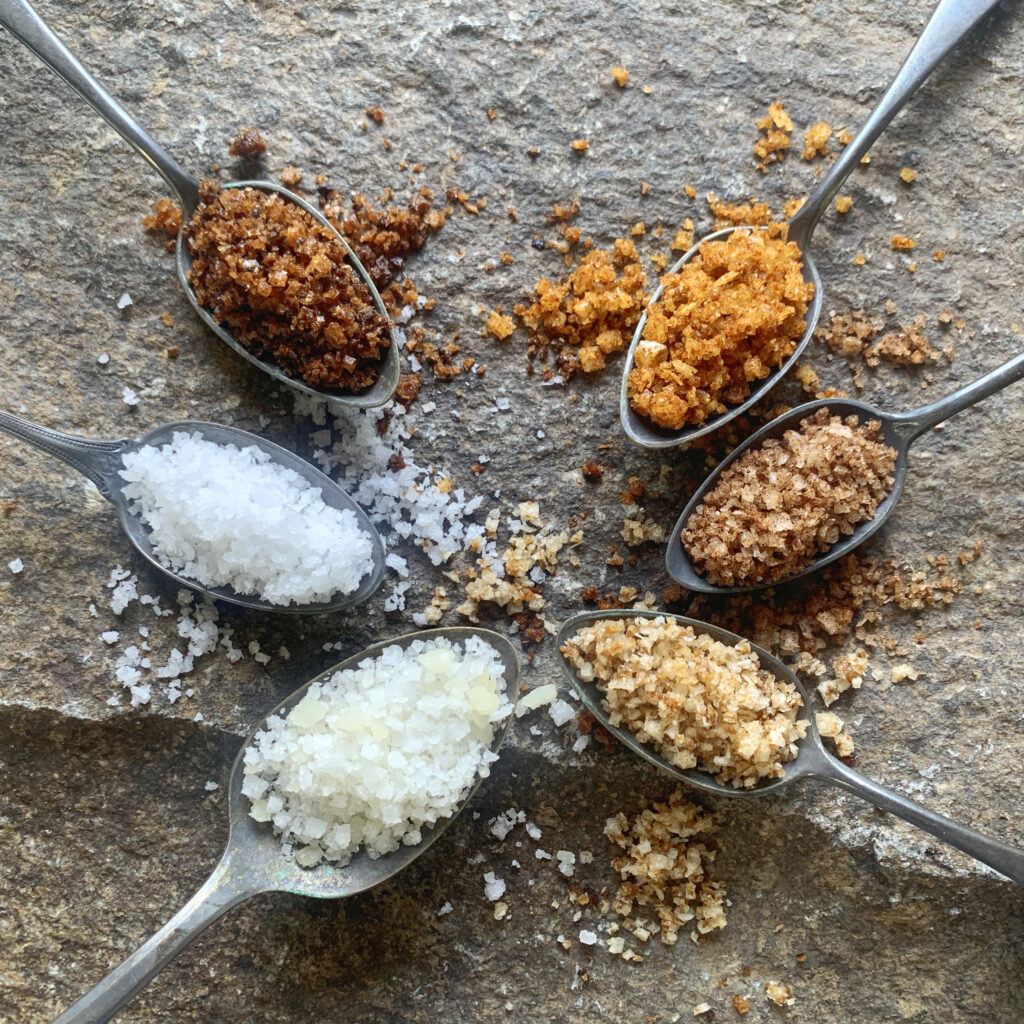
The lineup ranges from a chunky, mineral-rich finishing salt used on everything from grilled fish to desserts, to the tropical Mustique Blend with mango and lime, a Coconut Blend made from local coconuts and the St. Vincent Blend with turmeric and chilli for gentle heat.
“It’s amazing what the salt does to flavour the food, and you realize you don’t really need that much of it,” says Simpson.
Each dish begins with homegrown ingredients, then takes a creative turn. “The ingredients are sourced here, so every dish has some connection to the culture of St. Vincent,” says Simpson. Breadfruit tacos, for example, start with whole fruit roasted over fire for smokiness, then dehydrated and milled into flour with coconut milk for a naturally gluten-free tortilla. Cocktails highlight local sugar cane grown onsite, plum rose fruit, and mabi – a dehydrated bark drink spiced with cinnamon, star anise, cloves, and nutmeg, balanced with agave and tequila.
For many travellers, the visit becomes more than a meal; it’s a way to understand Bequia beyond its beaches.
Running a business on a tiny island means constant hurdles — high shipping costs, sudden storms and a limited local market. Still, Simpson sees room to grow: to bring Bequia’s salt to cooks far beyond the Grenadines while keeping jobs on the island. His rebuilt mill stands as proof that a small enterprise can revive a historic site, operate lightly on fragile land and offer travellers a deeper understanding of Bequia.
“I’ve gotten so much joy and positive things in my life from being here,” says Simpson. “Giving back is the thing to do, and it makes me feel good.”
Travel
Adventure and indulgence collide in the Caribbean’s best-kept secret — a sun-soaked haven calling to Canadian explorers
Travel
A slow, sun-soaked journey through this tropical island’s famed beaches, eclectic food scene and pristine landscapes, where luxury is understated and tranquillity is the norm

Travel
Bucket List columnist Robin Esrock visits the British Virgin Islands in search of pirate lore, Caribbean sunsets and a greener future for cruising
Travel
A second-generation Haitian chef is using food to tell a story of heritage and identity in Canada