
Travel
Three reasons to visit La Paz, Mexico
From snorkelling with whale sharks to savouring fully-loaded Mexican hot dogs, here's why La Paz should be on your list of places to travel next
- 627 words
- 3 minutes
Travel
Robin Esrock swaps Cabo’s mega-resorts for marine life, desert ranches and off-grid coastal camps

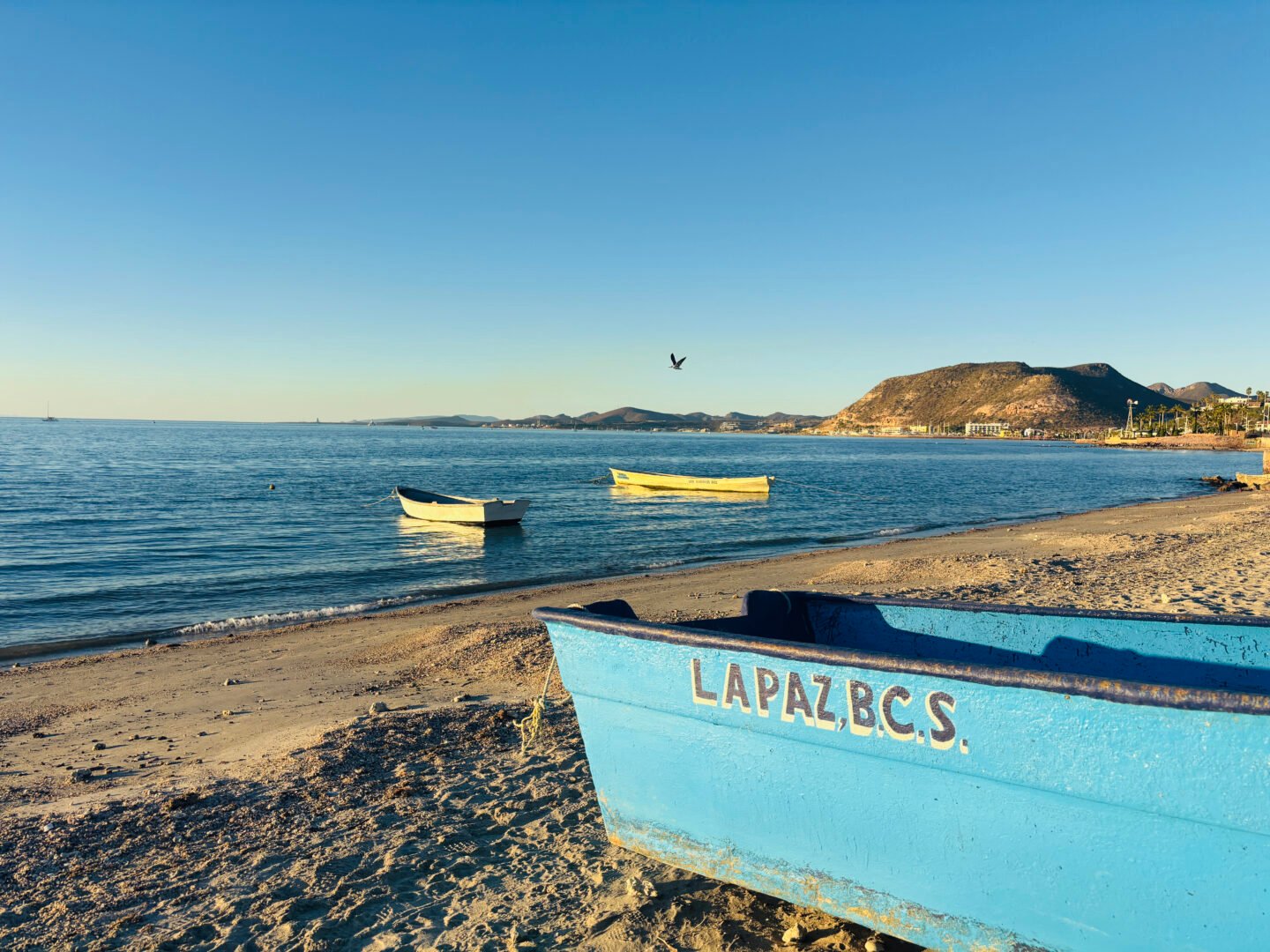
It took less than 24 hours for La Paz to become my favourite city in Mexico — a realization that came while savouring the glow of another reliable sunset on the Malecon.
A two-hour drive north from the spring break resort hotspot of Cabo San Lucas, we’d left mega resorts, chain stores and aggressive timeshare touts behind for a different experience of Baja California Sur.

In La Paz, the state’s resurgent capital on the shores of the Sea of Cortez, the lifestyle sells itself. Cars stop for pedestrians crossing the five-kilometre-long seafront boulevard, lined with restaurants and stores, benches, gardens, marine-themed statues and dedicated running and biking lanes. A chilled margarita blend of locals, expats and tourists imparts a relaxing atmosphere you simply won’t find in the flop-n-drops of Cancun, Puerto Vallarta or Acapulco.
Luxury camping — aka “glamping” — has become a popular travel trend in recent years. But given the number of glamping experiences now on offer, Bryan Jauregui is unsure whether the catchphrase is still useful. Instead, the Louisiana transplant defines glamping as accommodation restricted by its terrain, with no permanent structures, no sewerage, and no access to the grid.
Together with her husband Sergio, Bryan co-founded Todos Santos Eco Adventures to pioneer outdoor adventure in Baja California Sur, curating a wide range of experiences, such as kayaking, hiking, birdwatching, coral gardening, sandboarding, cliff walking, surfing and whale watching, while upping the wow factor at three off-grid camps. This includes their latest endeavour, Camp Cecil de la Bahia, set on sprawling sand dunes overlooking the grey whale mecca of Magdalena Bay.

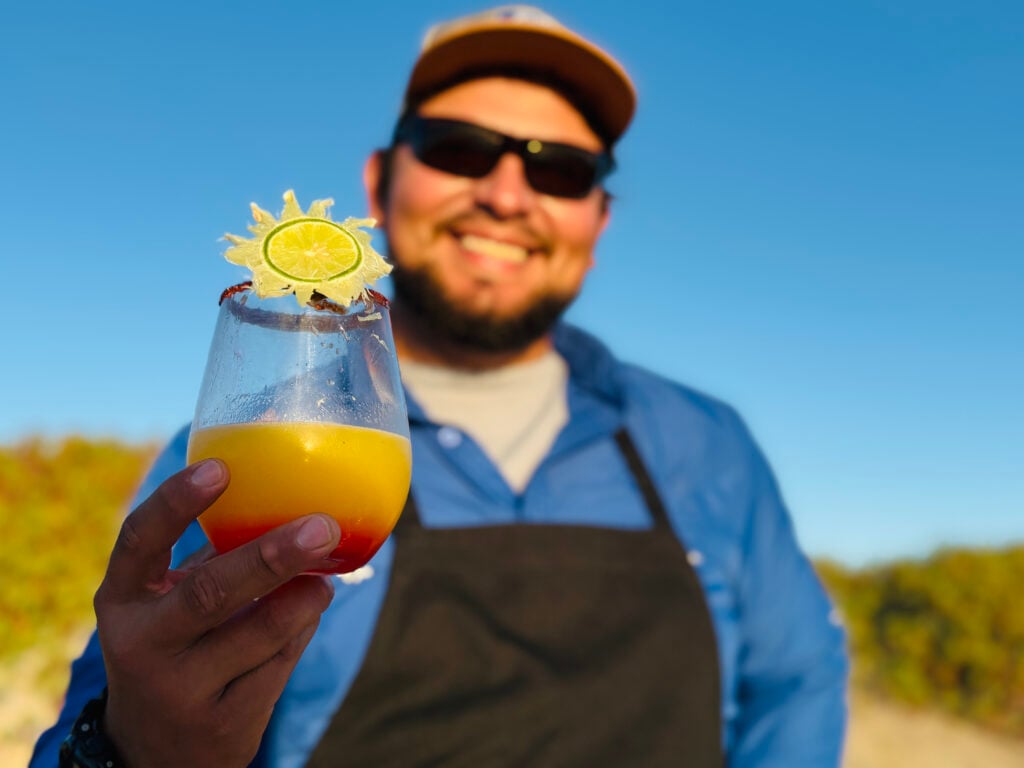
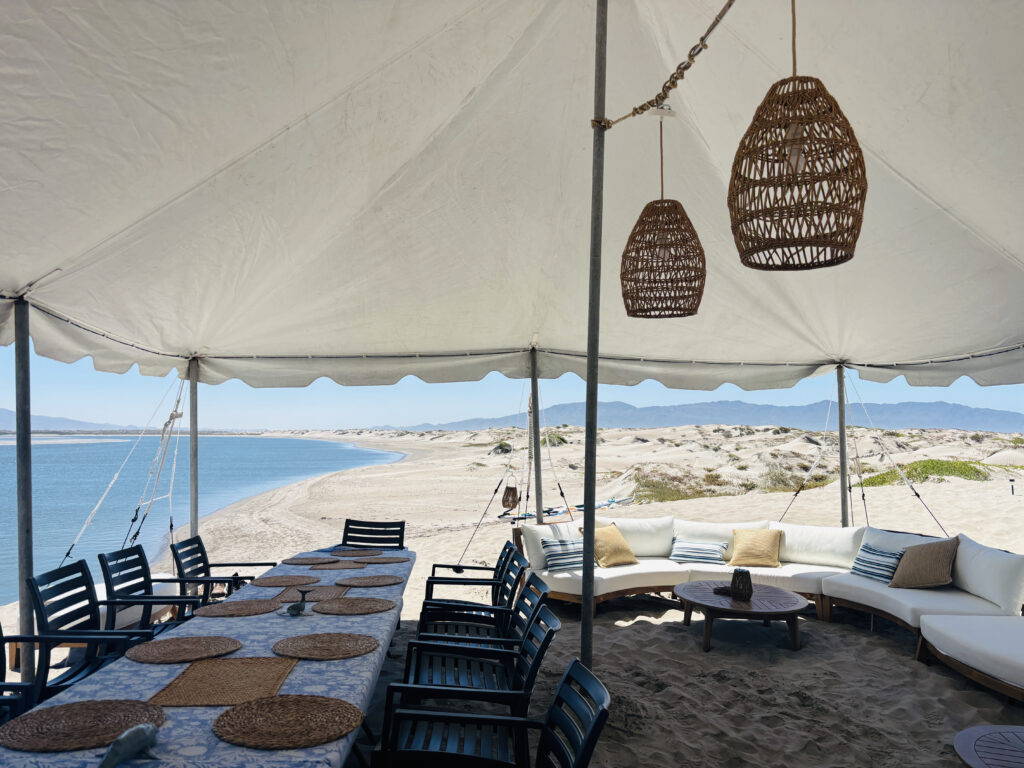
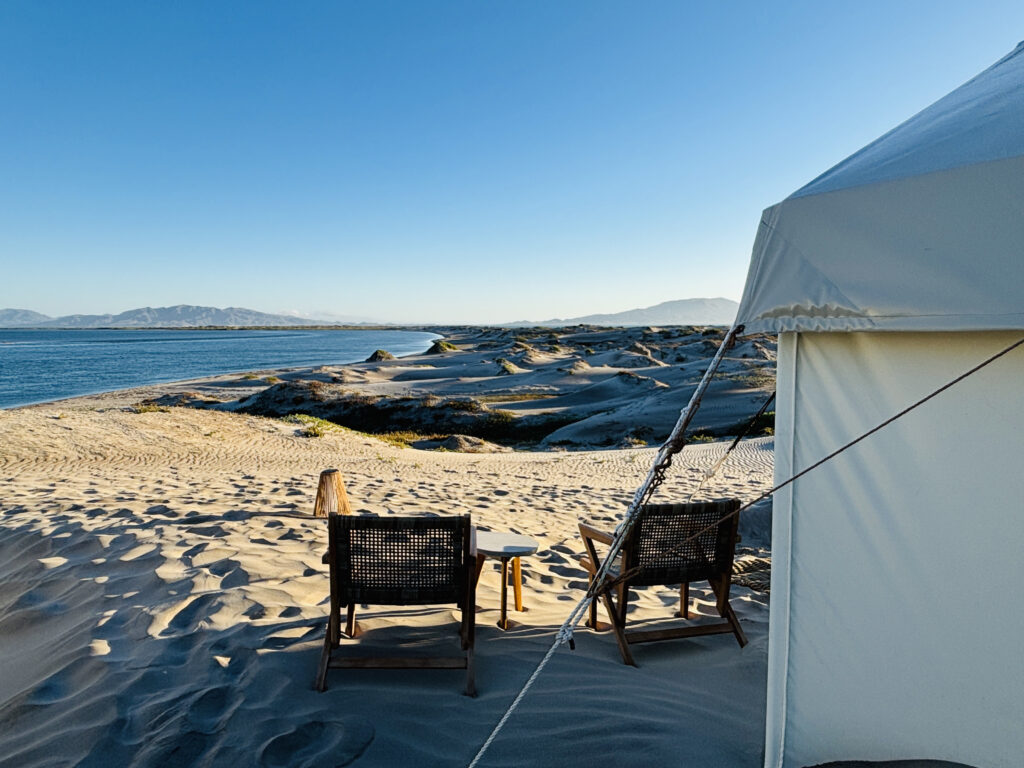
It’s a two-hour-plus drive north from La Paz on bullet-straight Highway 1 before we turn onto the bumpy dirt road to Cancún. Not the resort city of Cancún, 3,500 kilometres away in the Yucatán, but a tiny, namesake wood-shack fishing village primarily occupied by pelicans, cormorants, blue crabs and seagulls. Camp Cecil guests hop on a motorboat for a half-hour ferry to the dunes, where we are greeted by smiling staff, a cocktail, and large safari-style tents with a dazzling view.
“Luxury here has always been the nature,” says Bryan, visiting to assess the inaugural season’s success. “To be in a place this beautiful and remote, you typically have to rough it and have serious camping skills. But here, you can bring your kids or your parents, enjoy an experience perhaps just outside your comfort zone, but celebrate at the end of the day with great food and a comfortable bed.”
We’re shown to our gorgeous safari-style tent with thick duvets, plush carpets, elegant décor, and an ensuite bathroom with a foot-pump-operated sink and a compost latrine. Within minutes, my daughter wanders off, and I’m a little worried when I can’t find her. “I was just following coyote footprints to a massive beach beyond the dunes,” is her excuse, warming my heart to see an adventurous apple falling very close to her father’s tree.
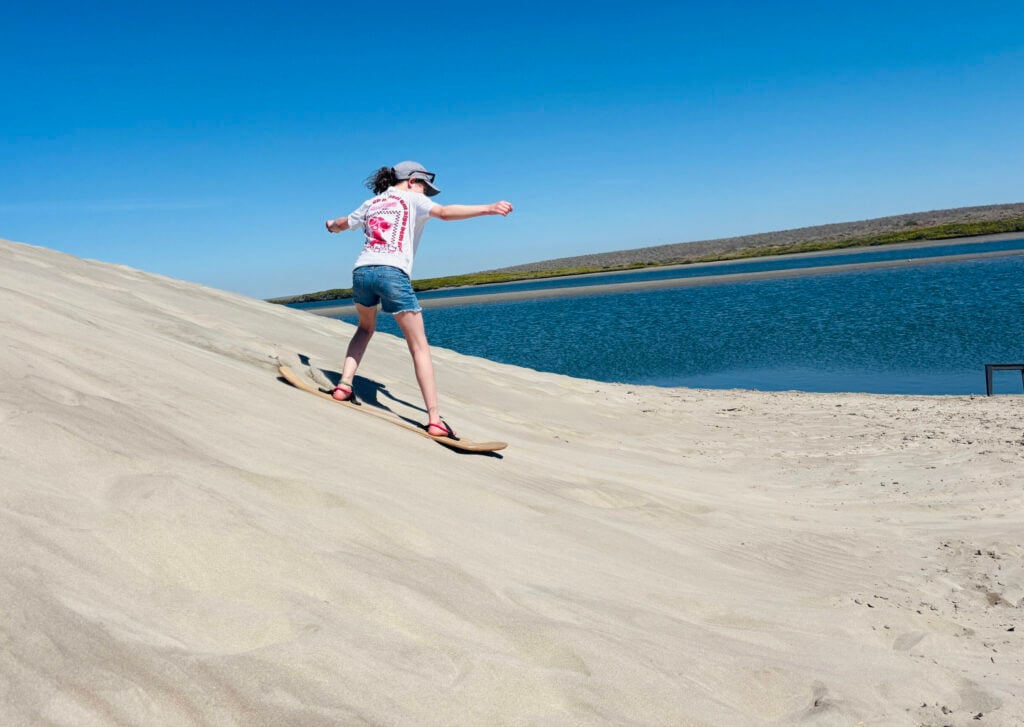
After an outstanding lunch of tuna sashimi tostadas and fresh guacamole, my daughter investigates bones and shells, triggers avalanches in the soft dunes, conquers the sandboards, and makes friends with a nine-year-old girl visiting with her family from Guadalajara. We paddle out in sea kayaks to explore nearby mangroves and sandbars, watching turtles breach as pelicans and osprey dive bomb for fish.
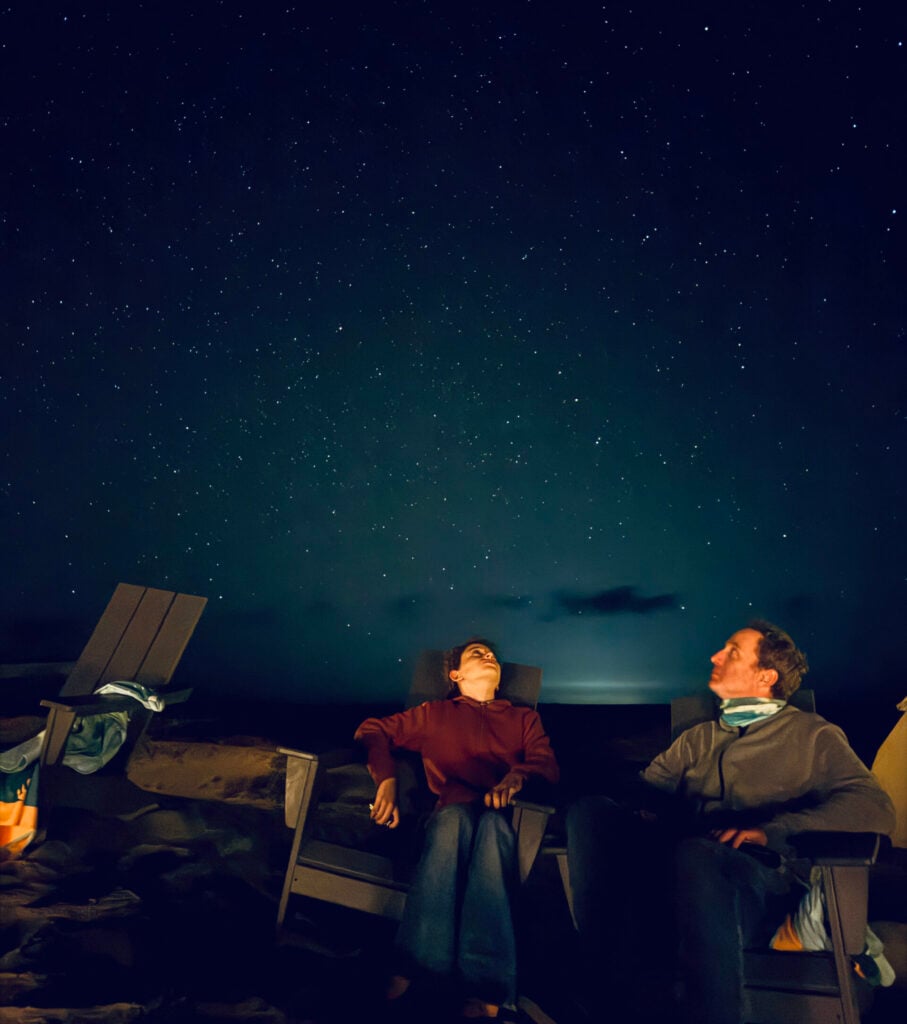
Returning to camp, we gather for cocktails on the beach and one of those epic sunsets that never sets in your memory. A locally caught lobster dinner, sourced from another fishing village, is followed by sensational stargazing, enthusiastically led by Sergio, who draws on his deep knowledge of myth and story. The girls dip their toes in the dark waters of the lagoon and gasp at shimmering bioluminescence mirroring the stars above. You remember days like this for a lifetime.
That Camp Cecil delights a nature lover’s imagination is no accident. The Cecil in question is Cecil Kramer, an Emmy Award-winning animation producer with credits that include Wallace & Gromit and Shrek. A close family friend of the Jaureguis, Cecil takes on each glamping site as a passion project, designing the interiors, layout, and ensuring an overall sense of wonder for all ages. Close encounters with a curious, spy-hopping grey whale in Magdalena Bay is the camp’s major draw, which is why the season runs January to March.
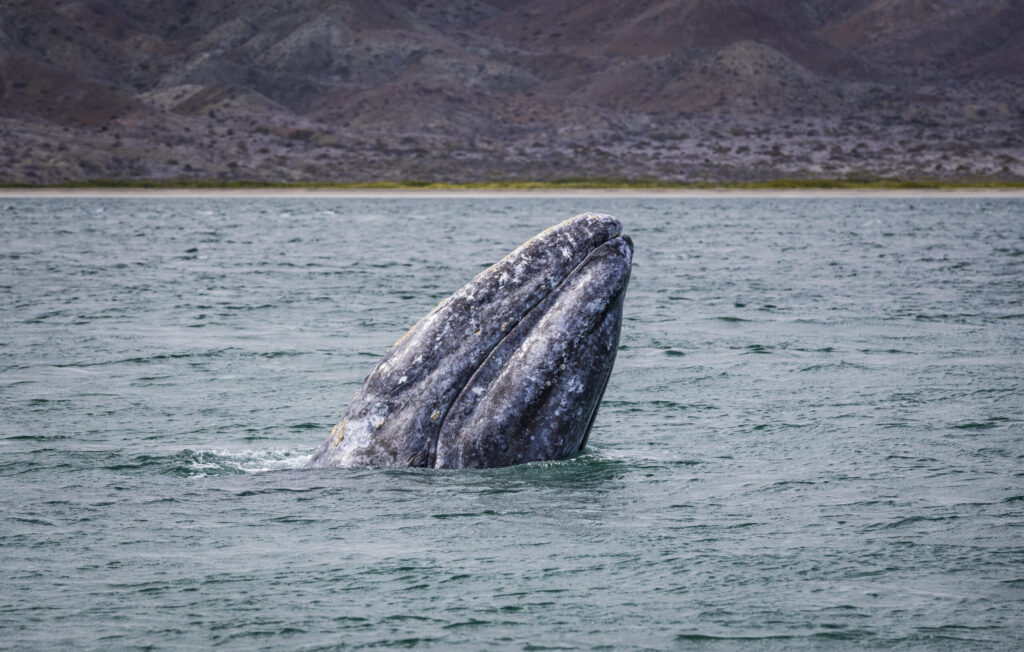
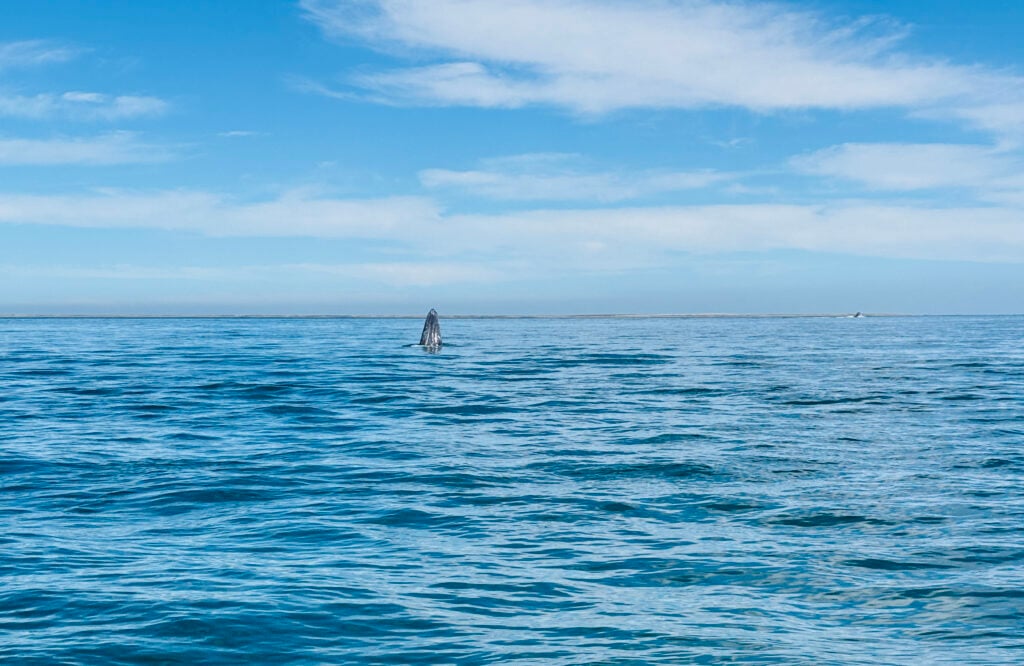
We spot the last few grey whales in the bay before they begin their great migration to their northern feeding grounds, undertaking one of the longest migrations of any mammal on the planet. It will take a week or two for Bryan’s team to strike camp, after which all signs of its existence will dissipate like fine sand in the onshore breeze. At least until next season, when the shifting dunes will host a new version of Camp Cecil de la Bahia. I implore Bryan and Sergio to extend next year’s season for us Canadian spring breakers. Whales or no whales, being comfortably immersed in this kind of remote coastal beauty is one for the bucket list.
It takes a certain vision, sweat, and a no-shortage-of-investment to create something this special, from the dunes of Magdalena Bay to the sweeping scrub valleys and rocky peaks of the Sierra Cacachilas. Here awaits another unique glamping adventure, offering rugged natural beauty with a commitment to environmental restoration, cultural regeneration, and low-impact eco-tourism. If there’s anywhere else on the planet like Rancho Cacachilas, I’ve yet to find it.
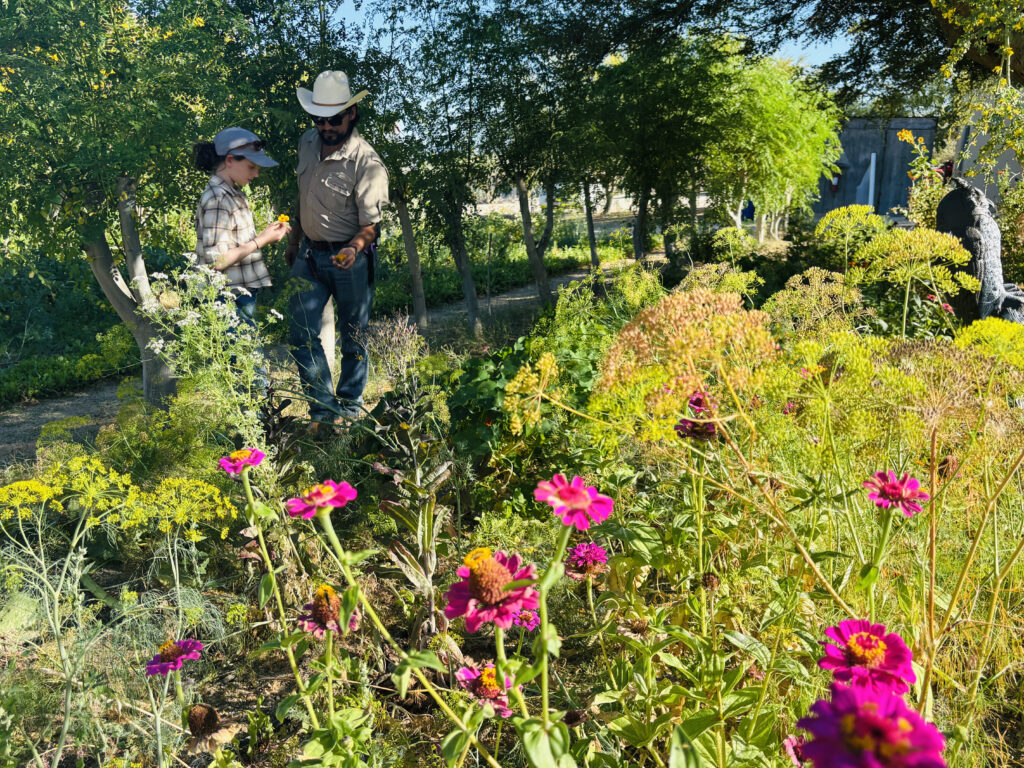
Located 40-minutes’ drive southeast of La Paz, Rancho Cacachilas sits on approximately 16,000 hectares of scrubland overlooking the Sea of Cortez, with 60 kilometres of trails for hiking, mountain biking, trail running or horseback. Accommodation is offered in the form of large safari-style tents with spotless communal bathrooms, and meals that warrant their own culinary experience.
Eco-tourism is just one facet of this working ranch. It also operates as a research and education hub to regenerate local water and soil systems, combat desertification, and restore Baja’s rich ranch tradition with innovations to make farming more alluring, profitable, and sustainable. It promotes the idea that Baja ranches can increase yields with hardier livestock while exploring new revenue streams such as beekeeping, cheesemaking, and adventure tourism. The off-grid Rancho Cacachilas serves as a case study, sustainably powered by solar energy while growing its own produce, managing its own livestock, and recycling precious water across the entire system. As a cultural, conservation, and eco-tourism project, it can afford to experiment.
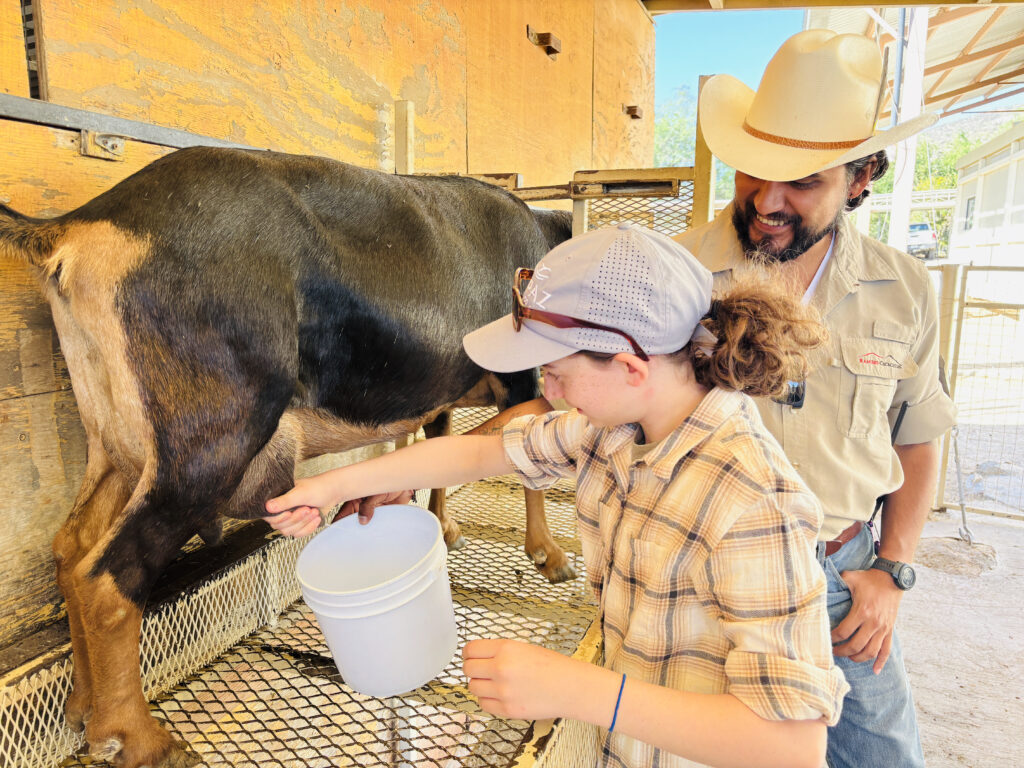
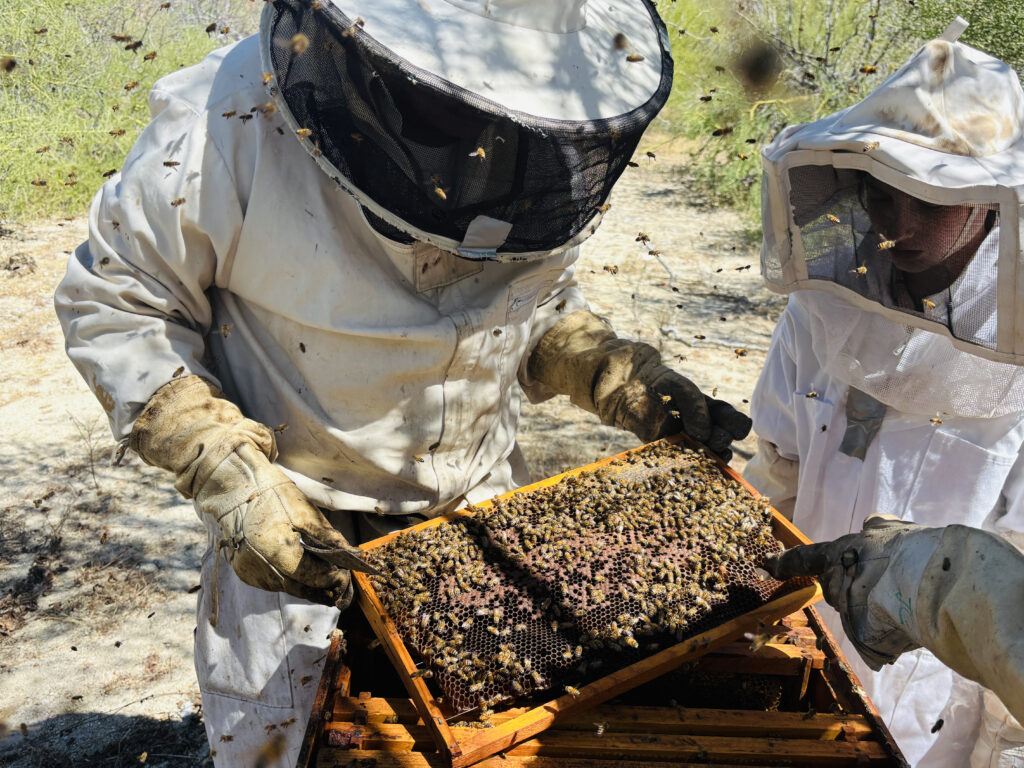
The ranch is part of a network of Baja companies and initiatives founded by billionaire Christy Walton of the Walmart family. Praised for her philanthropy that focuses on conservation, education and community development, Rancho Cacachilas is a well-funded living lab for scientists, ranchers, food producers and tour operators. Our guide Said helps us pack it all in: we learn about sweet and sour cacti and elephant trees with flaking bark. We milk goats and turn their milk into delicious cheese in a modern kitchen facility. We don overalls and accompany a beekeeper to the hives, where we learn all about bees and how to appreciate the finer aspects of honey. Driving about the ranch, we eye jackrabbits, mule deer, an elusive bobcat, a great horned owl and a roadrunner (but no Wile E. Coyote). We learn a little about Baja’s vaqueros (traditional Mexican cowboys) before taking mules for a ride into bone-dry river beds and dense scrub at sunset.
After a sumptuous dinner of grilled red snapper with salads and veggies from the farm, Said pulls out a UV flashlight so we can spot glowing scorpions scurrying between the rocks. “Well, I’m entertained!” exclaims my daughter after such a thrilling and educational day. A desert wind howls against our safari tent, and she’s asleep in seconds.
La Paz has unique outdoor adventures, on bikes, horseback, boats, and underwater, too. My daughter and I hop into the shallow, nutrient-rich waters of the city’s bay, where an annual plankton bloom attracts welcome guests from October through May. Along with Indonesia’s Raja Ampat, this is one of the few places in the world where you can reliably swim with whale sharks. Fortunately, the experience is heavily regulated to the benefit of all creatures in the bay.
Fourteen monitored and licensed boats are limited to two-hour permits, and each gets a maximum of 30 minutes with an individual whale shark. Boats keep their distance, with guests in wetsuits snorkelling toward the shark. The Bay of La Paz boasts staggering marine biodiversity, and the city is home to scientific institutions and NGOs focused on shark, turtle and reef conservation. Marine biologists are everywhere, with many working as local tour guides. Nobody wants to stress the animals, and when we hop into the water to swim with a six-metre-long juvenile, the whale shark appears utterly unbothered by our presence.
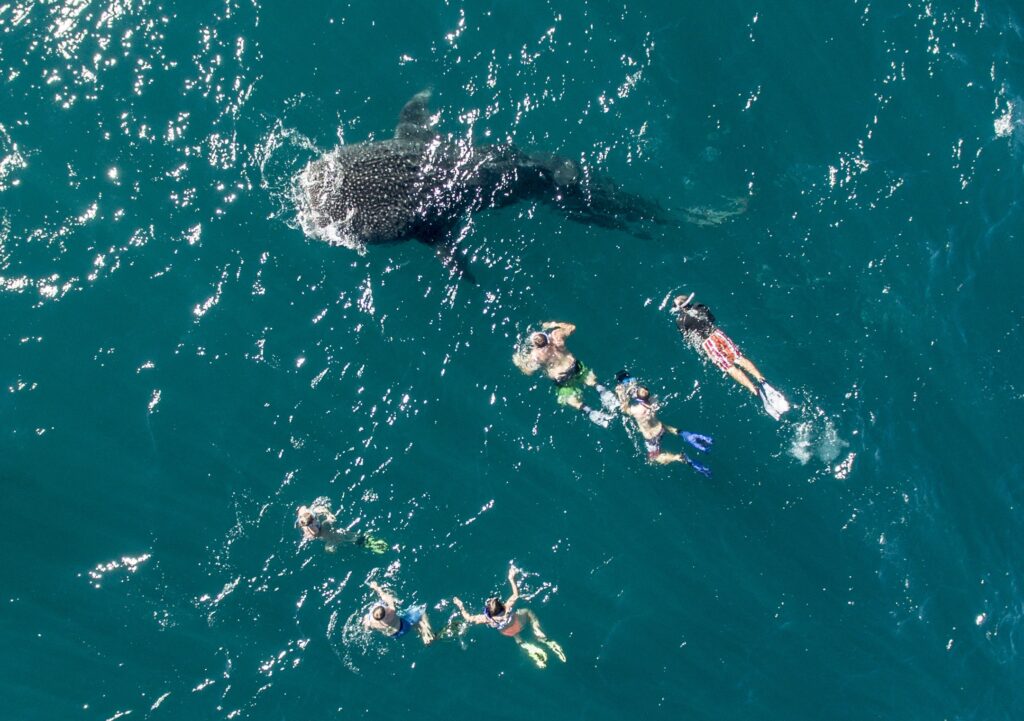
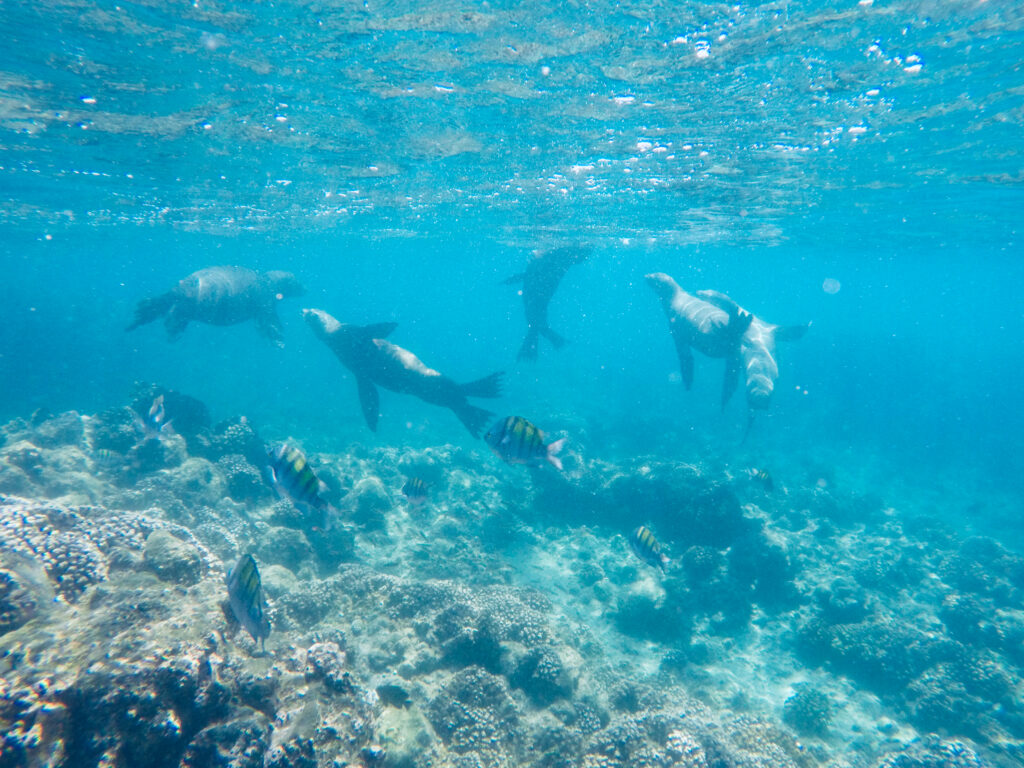
Snorkelling with gentle giants is a major attraction to the region, but you can also go deeper to scuba dive with sea lions, groupers, and colourful schools of fish. The nearby Espíritu Santo Archipelago, a UNESCO World Heritage Site, is colder and murky in March, a by-product of ocean currents funnelling plankton into the bay, pursued by the migrating sharks and whales that feast on it. We don’t see a visiting blue whale in nearby waters, but do spot three humpbacks playfully slapping their tails, to communicate or perhaps dislodge a few barnacles. An altogether different sort of whale is also visiting La Paz, evident by the mega-yacht of Jeff Bezos. I’m told Mark Zuckerberg was recently in town too, suggesting billionaires enjoy strolling the sunny Malecon and feasting on fresh ceviche tostadas like the rest of us. Along with local government investment in the city’s arts, culture, and promenade, La Paz’s food scene has flourished in recent years, supported by the region’s abundant seafood.

Compared to many Mexican coastal destinations, local residents, scientists, and NGOs are unusually organized, vocal, and effective in protecting La Paz’s natural resources. They’ve protested against plans to expand cruise traffic, opposed large-scale resorts, and continue to enforce fishing and tourism regulations. In the case of the island of Espiritu Santo, a planned casino resort motivated locals and conservationists to buy the land and successfully campaign for its now-protected status. Altogether, it’s an inspiring example of how a community can actively defend the ocean that sustains it.
Returning south to Los Cabos for our direct flight home to Vancouver, we feel the sudden onslaught of mass Mexican tourism. Sunburned Americans with loud T-shirts, overpriced souvenirs, pushy salespeople…it’s a lot to process after the relaxing vibe of La Paz and four nights immersed in pristine nature. We travel with different agendas and different goals, and I’ll be the first to admit that sandy feet, bumpy drives and bucket showers are not for everyone. My last story about Mexico explored the all-inclusive experience in Puerto Vallarta, which ultimately delivered something for everyone. That said, families in search of unique, nature-grounded, culturally authentic adventures might find La Paz becomes their favourite Mexico destination too.
Travel
From snorkelling with whale sharks to savouring fully-loaded Mexican hot dogs, here's why La Paz should be on your list of places to travel next
Travel
Canadian Geographic’s Bucket Listed columnist Robin Esrock explores domestic tourism, national pride and the evolution of Canadian travel in the third edition of his bestselling book, The Great Canadian Bucket List

Environment
Vancouver might just be home to the greenest building in the world. Meet the geography professor who brought it to life.
Travel
Two award-winning travel journalists discuss why family travel, even the kind that pushes us outside our comfort zones, is one of the most powerful investments we can make