
Environment
Canada’s greenest prof
Vancouver might just be home to the greenest building in the world. Meet the geography professor who brought it to life.
- 2598 words
- 11 minutes
Travel
Once dismissed as the “useless island” by Spanish explorers, Aruba has quickly become one of the Caribbean’s most rewarding destinations

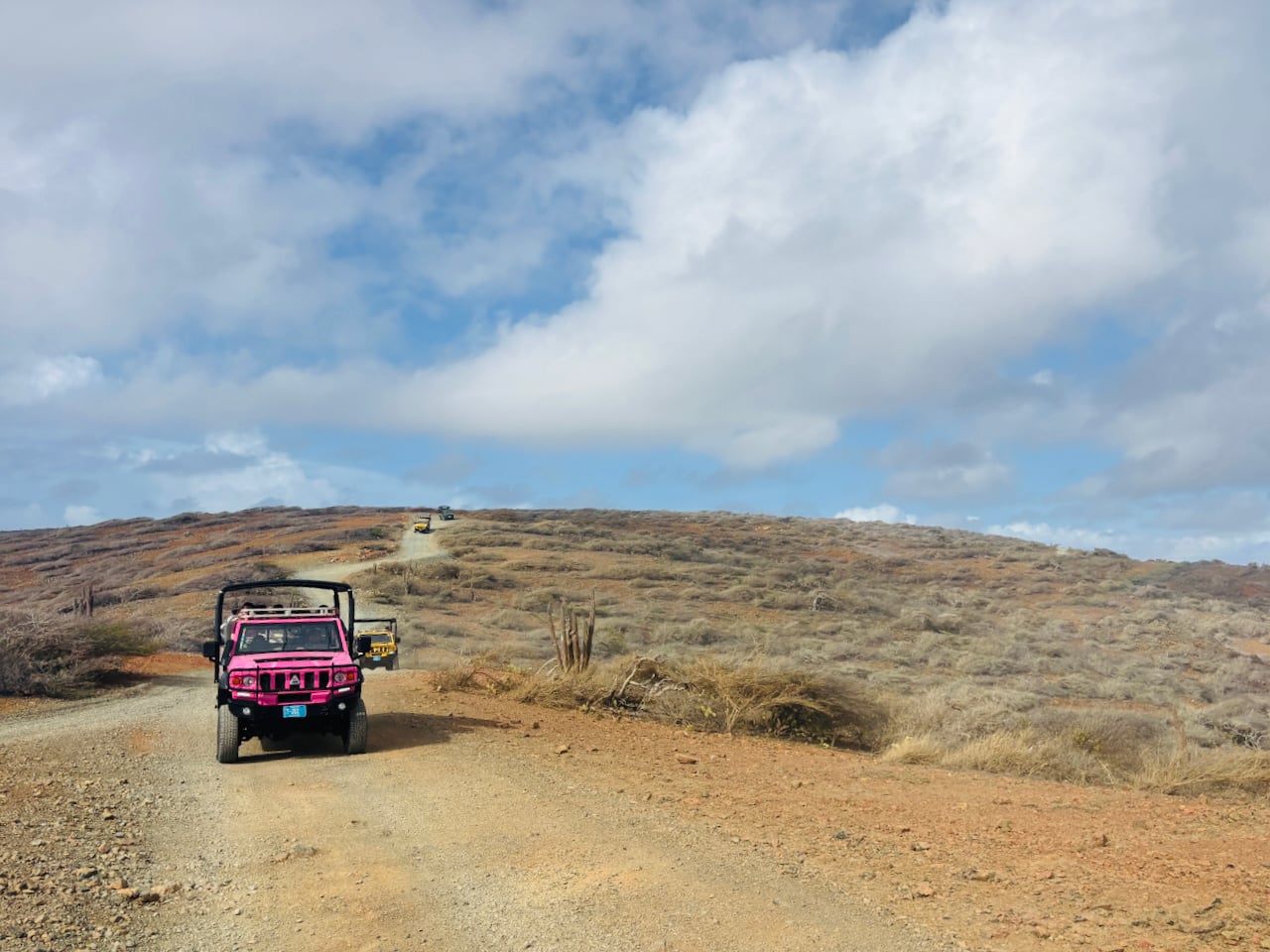
When Spanish explorers anchored off Aruba in 1499, they expected a whole lot more than they found. Instead of a lush tropical island with waterfalls and rainforest, they discovered a barren, arid and windswept island. Lacking freshwater sources or an obvious source of gold, the Spanish called it isla inútil (the useless island). After brutally enslaving the Indigenous population, they promptly lost interest in the desert island, which was a terrible result for all concerned. Later came the Dutch, who stuck around, along with a gold rush and an oil boom, which didn’t.
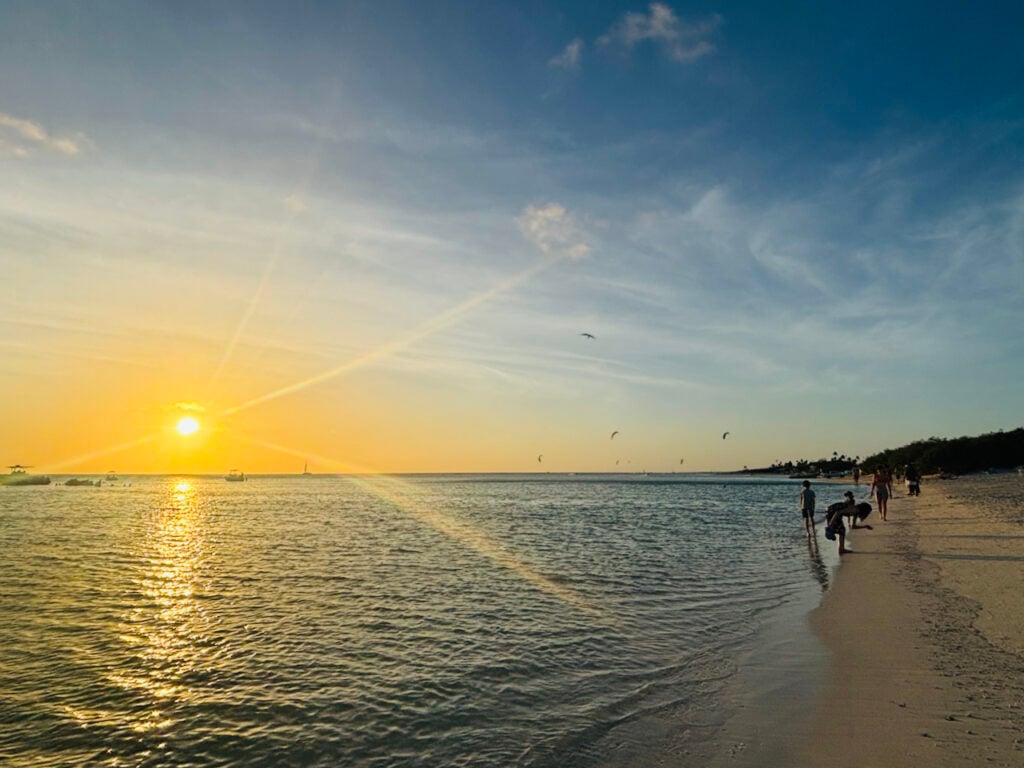
Today, Aruba remains part of the Kingdom of the Netherlands, the A of the ABC islands found on many cruise itineraries in the southern Caribbean. Besides almost a million annual cruise passengers, Aruba (population about 108,000) hosts more than a million overnight tourists, drawn to reliable weather, fine sandy beaches, warm seas, orderly government and upmarket hospitality. This week, my family is among them, relaxing into the resort experience while searching for something different, too.
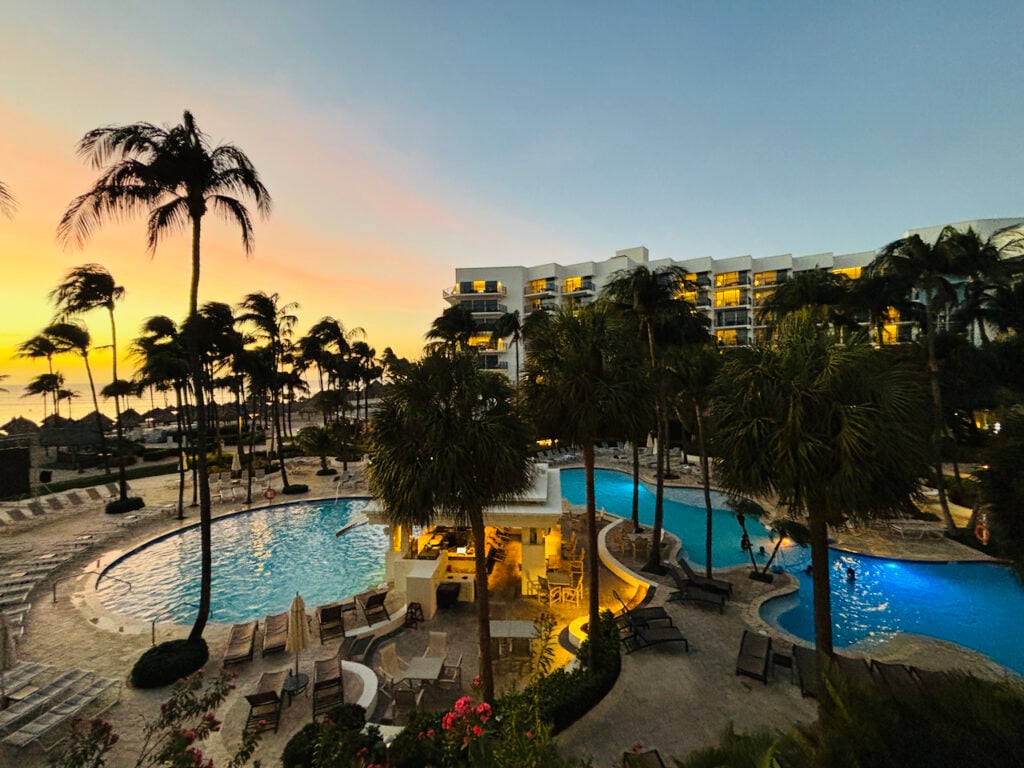
For cruise passengers, a visit to Aruba often means docking in Oranjestad Harbour to explore the markets, promenade and generic port franchises. Vacationers are concentrated in the southern resort epicentre of Palm Beach, which reminded me of a mini-Miami Beach. Picture U-shaped global resort chains, a pool bar in the middle, restaurants, pool DJs, Kid Clubs, and a beach club at the end.
With no rainy season to speak of, Aruba attracts North Americans, South Americans, and Europeans year-round, thanks to its location outside the hurricane belt. If you’re booking ahead and looking for fun in the sun, you’re almost guaranteed to find it here. I encounter swooning honeymooners, large multigenerational family gatherings, retirees, parents with young children, and tanned college students — I also learn that Aruba has one of the highest repeat-visitor rates in the Caribbean. Life is good here, or as they say in Aruba, biba dushi!
Dutch, English, Spanish and a local creole called Papiamento are spoken by most Arubans, and one can easily see the unique tri-continental influence of Europe, South America and North America. Less than 30 kilometres off the coast of Venezuela, we eat Dutch cheese in sight of a Taco Bell.
While the island measures just 30 kilometres long and only 10 kilometres across at its widest point, there’s a lot to discover on land and water. We hop on De Palm Tours’ popular 70-foot catamaran and head out to snorkel around a large, shallow shipwreck called the Antilla. My kids leap off the boat into the turquoise sea, having thoroughly enjoyed their snorkel encounter with unbothered green turtles off a shallow reef called Boca Catalina.
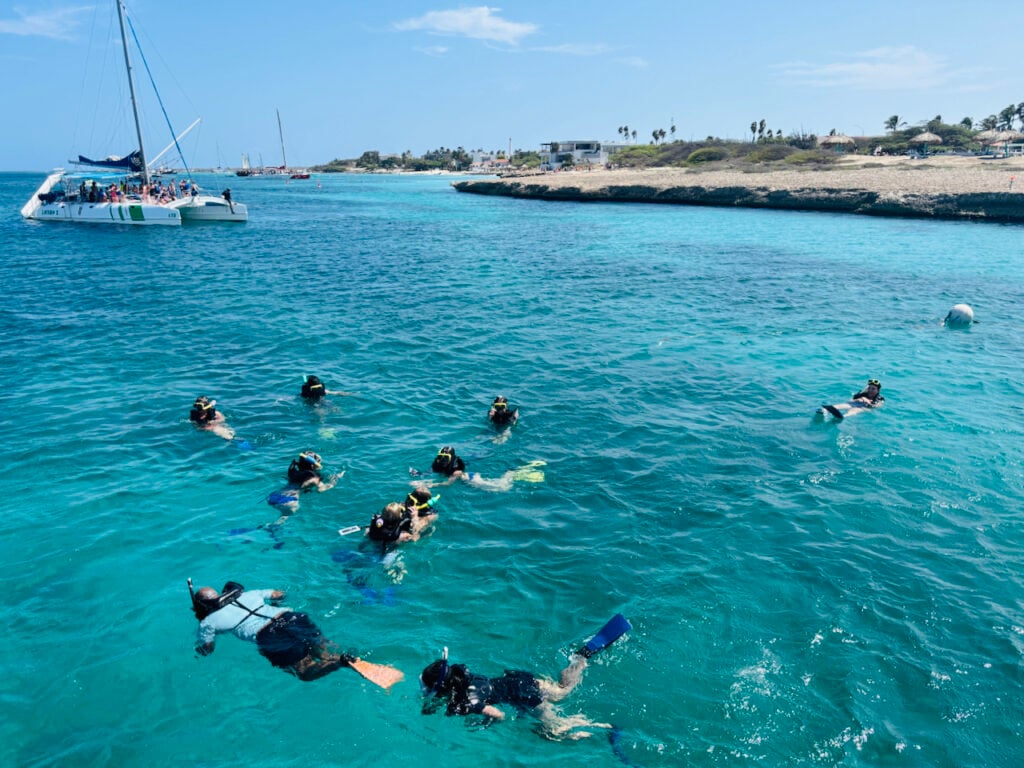
“Dad! I was following a turtle and there was a huge school of big fish below me, and a huge school of little fish above me, and the turtle gave me life advice!” reports my elated daughter, snacking on the boat’s pineapple cake. In case you’re wondering, life advice from a turtle involves taking it easy, going with the flow, and eating your seaweed.
You don’t need a boat to find your own therapy turtle. Aruba’s beaches are accessible by rental car or taxi. Simply pull up, find some shade, take out your mask and snorkel, and swim offshore. That said, RJ Singh from Aruba Outdoor Adventures highly recommends wearing water shoes or flippers because you never know what might be hiding in the rocks.
We’ve joined the energetic RJ for a morning kayak excursion around Spanish Lagoon, in sight of the sprawling desalination plant that provides clean drinking water for both locals and tourists that support the island’s economy.
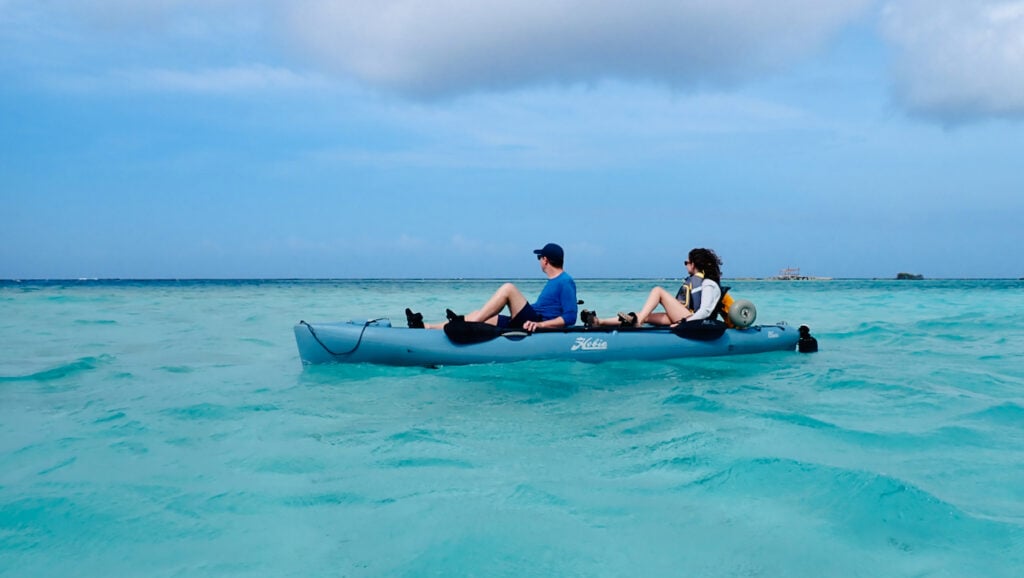
Born and raised in Aruba, RJ wants to introduce visitors to the same waters and bays he grew up with, using pedal-powered kayaks that leave your hands free for photos. We gently drift alongside a red mangrove, spotting green iguanas, jellyfish, blue crabs, and baby barracuda hunting minnows. RJ educates us about the local flora and fauna, the island’s history and culture, while discussing why tourism on a beautiful island can be both a blessing and a curse. He points out how the flood of cruise ships and hotel overdevelopment have negatively impacted the mangroves and coral reefs. Yet for a small island that has seen its fortunes rise and fall over generations, tourism is the best opportunity going.
While early explorers lacked the technology to find it, Aruba did indeed contain plenty of gold. The gold rush hit in the 19th and early 20th centuries before resources were quickly exhausted. It didn’t take long for a different kind of gold to take its place. Crude oil from nearby Venezuela was shipped to Aruba to be processed at what was then one of the world’s largest oil refineries. Thousands of workers arrived from all over the world, settling in the buzzing company town of San Nicolas, and introducing a diversity of languages, cultures, and cuisines.
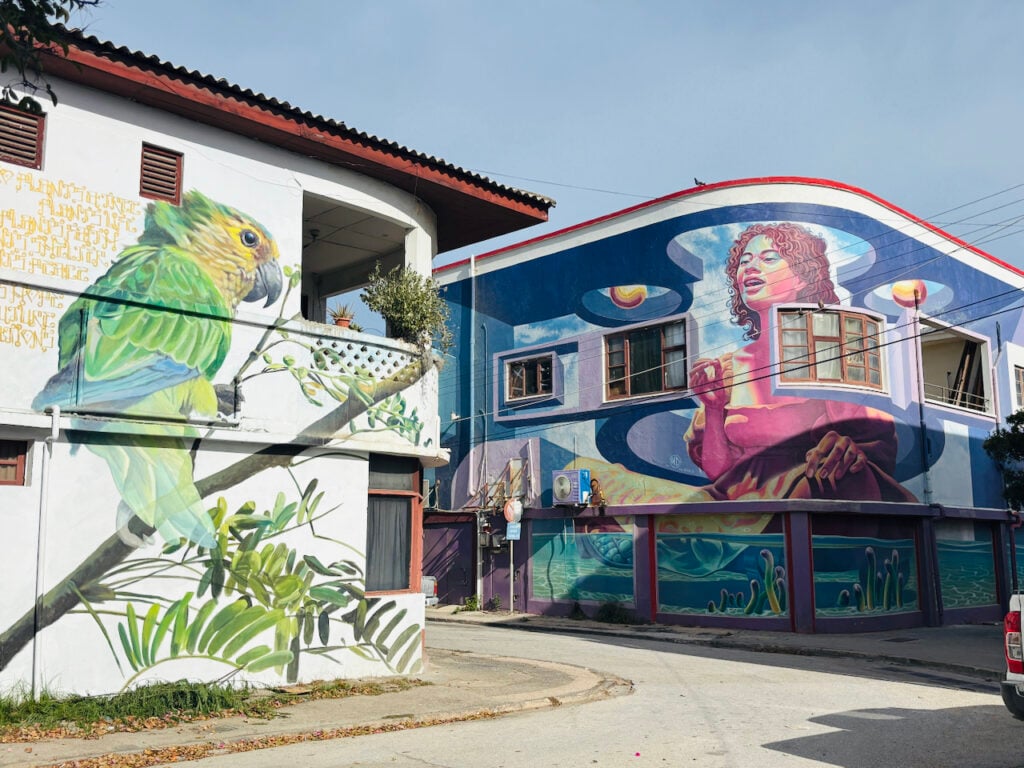
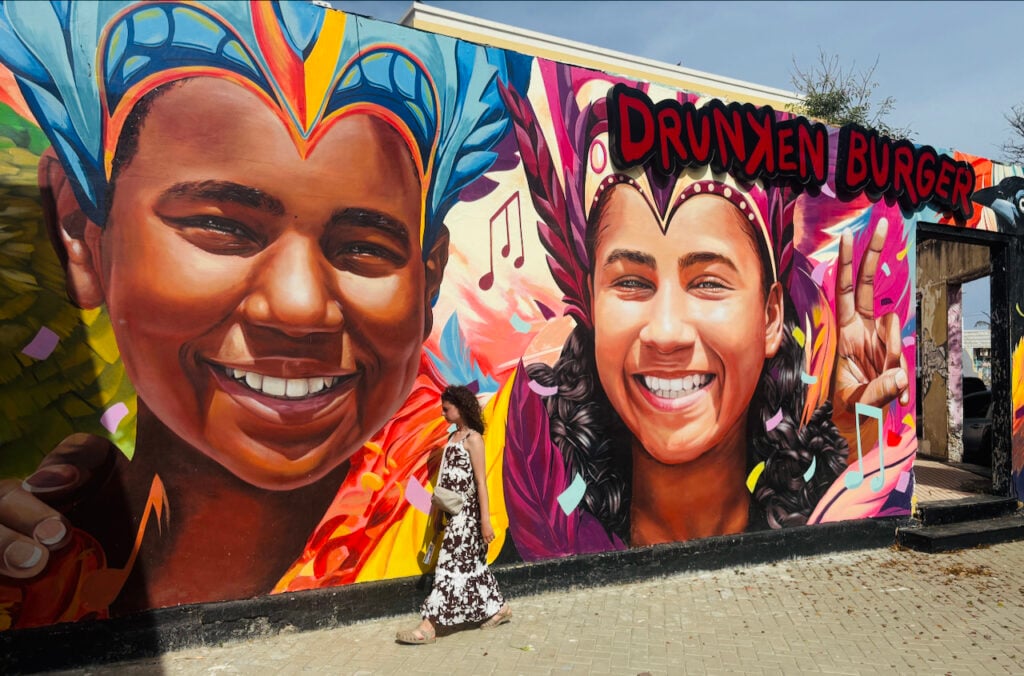
In 1985, the refinery was deemed unprofitable and shuttered by Exxon, all but wiping out the island’s economy. Plans to revive it have failed over the years, and San Nicolas fell into disrepair while the government pivoted to tourism around Palm Beach and Oranjestad. We get this history lesson walking the dusty streets of San Nicolas, admiring an incredible assortment of murals that are rejuvenating the town. The lifelike murals are the brainchild of ArtisA, a non-profit with a mission to use art as a catalyst for building and maintaining thriving communities.
In 2016, it invited international artists to use San Nicolas’s buildings as a colourful canvas for their creative visions. Artweek Aruba continues to take place each September, welcoming global and local artists to refine or add to the 90-plus murals and mosaics. As a result, San Nicolas is evolving into the Caribbean’s street art capital. We encounter X-ray murals, gold-leaf mosaics and giant, lifelike paintings of children on our guided Aruba Mural Tour, learning about the artists, visiting two excellent galleries, hearing local stories, while witnessing the inspiring rebirth of a community.
Artists arrive in September and Carnaval revellers in February, but kite-surfers and windsurfers blow in year-round for the reliable trade winds that sweep across the island. The wind is notable, but sheltered by its proximity to the mainland, the waters of Palm Beach are famously calm and particularly family-friendly. To see crashing waves, we hop in the back of Isla Aruba’s 4×4 pick-up and drive north to a barren moonscape of jagged cliffs, limestone caves, and black volcanic rock.
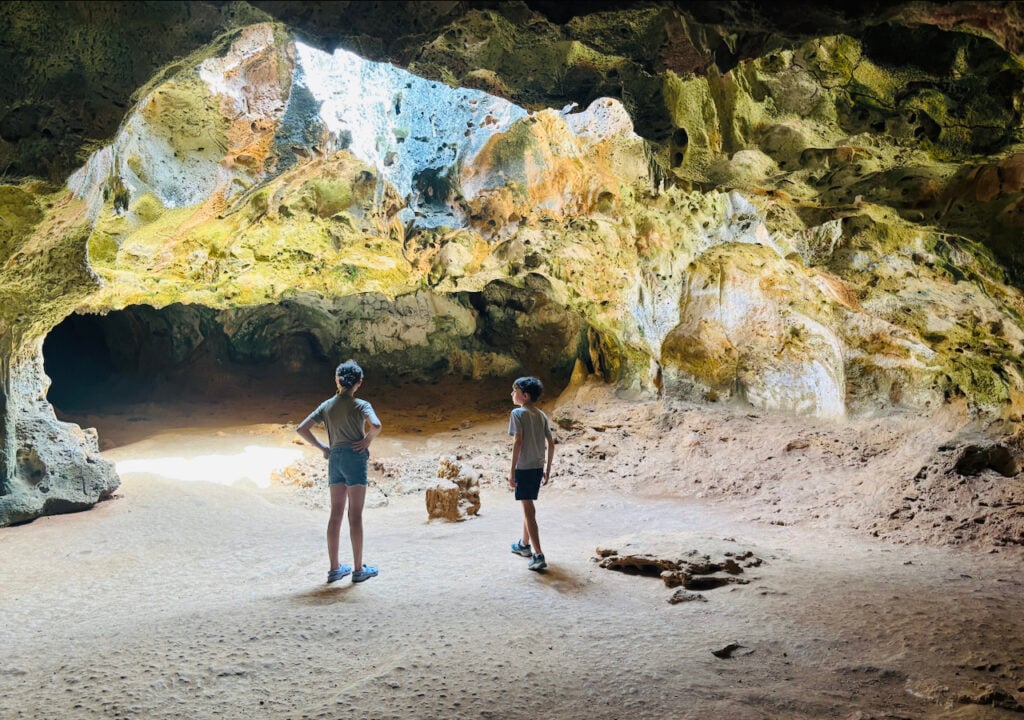
Arikok National Park protects 20 per cent of the island, and a visit is well worth a very bumpy off-road vehicle tour. We hang on tight as our 4×4 heads to the coast, bouncing over steep hills and parched plateaus. At a natural rock pool, we join a few dozen tourists to snorkel with tropical fish, while tall rocks protect us from dramatic, pounding waves.
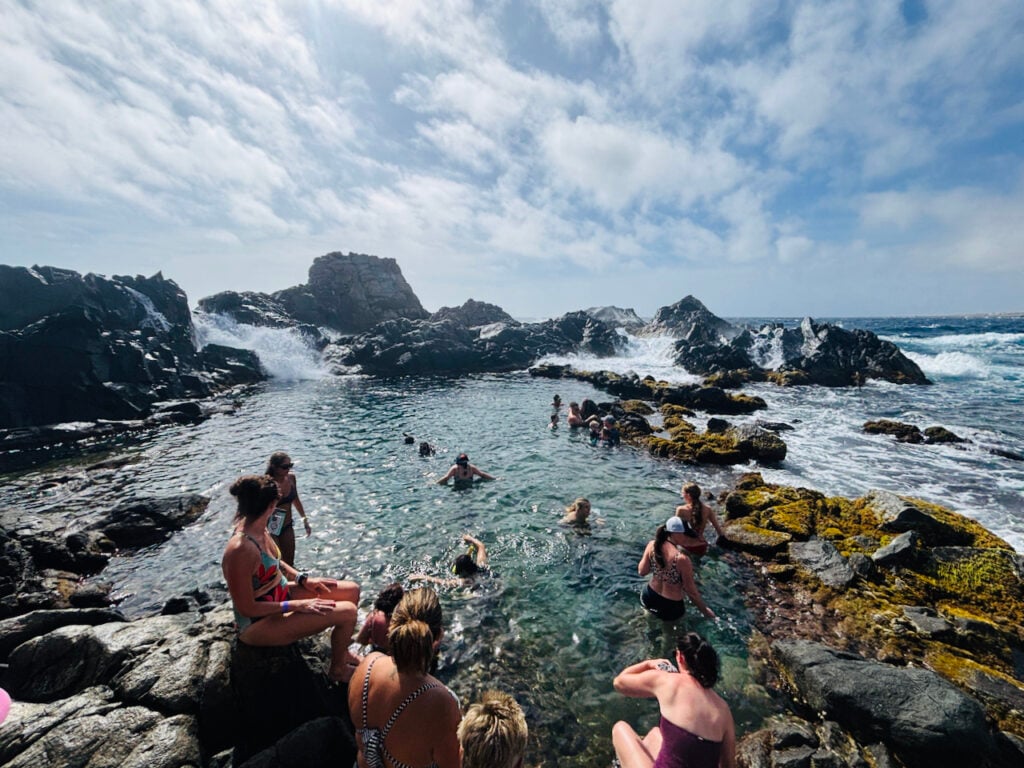
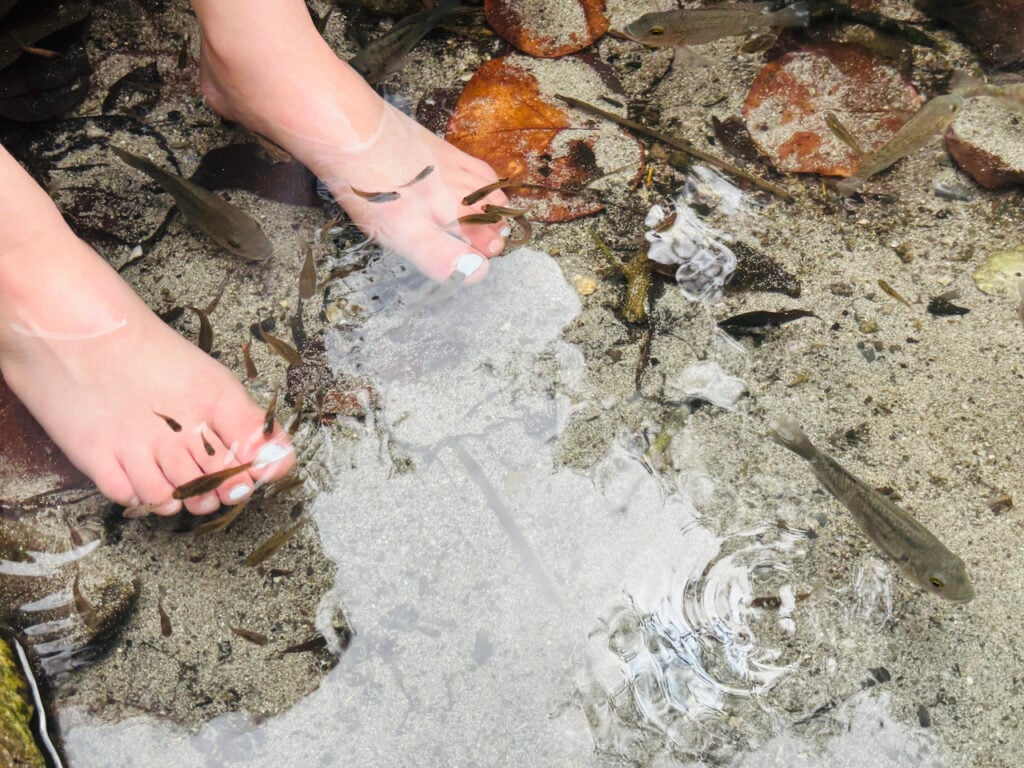
Inside Arikok’s limestone caves, we find Indigenous Caquetío cave art dating back millennia. Aruba’s original inhabitants were decimated following European colonization, with only trace elements of their culture and language surviving in the island’s Papiamento creole. Outside Fontein Cave, we let small freshwater fish nibble dead skin cells off our toes beside the island’s only natural freshwater source. Giant cacti pierce the hot sky, spiky scrub carpets the dry earth, and shade is non-existent thanks to centuries of deforestation. It’s scorching, rocky, humid, and the last place a shipwreck survivor wants to wash up. For day trippers looking to escape the resort pool, Arikok National Park is a true wonder.
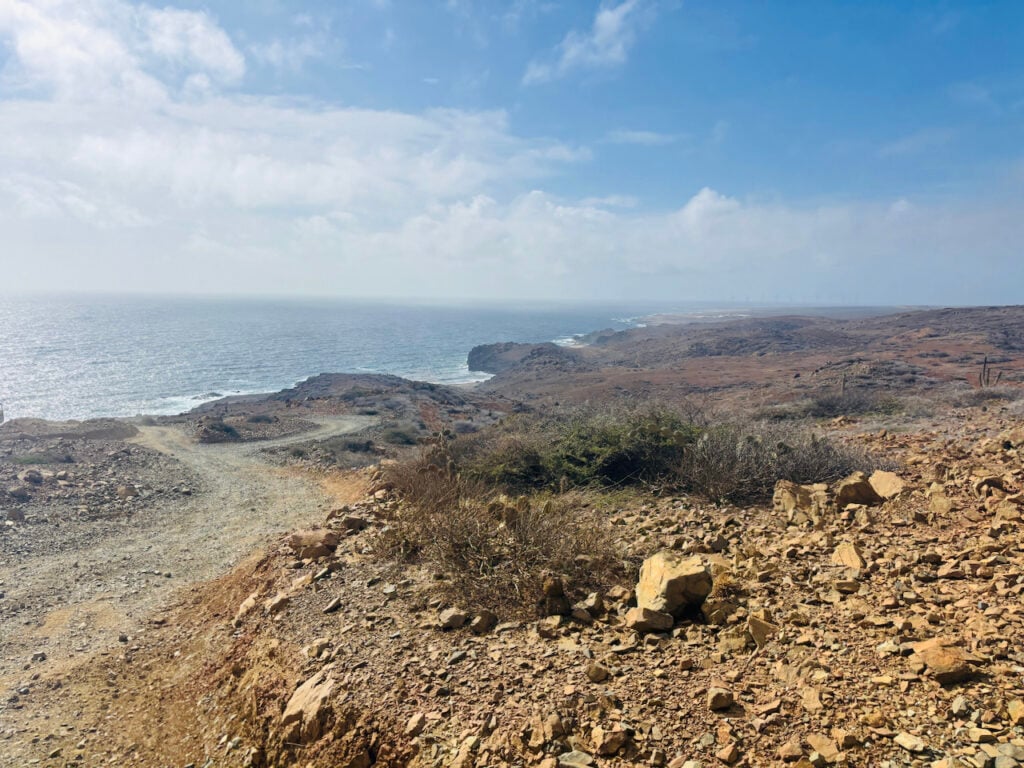
Attractions around the island offer an opportunity to explore the densely populated interior and see how locals live. We encounter drive-through hardware stores, food warehouses, supermarkets, global fast-food chains, indoor gyms, and quick-stop snack bars in shipping containers. It’s odd knowing just about every product is imported, much like the 90-plus nationalities that work and live on this tiny, prosperous island. Everything had to cross water to get here: the butterflies in the colourful Butterfly Farm; the ubiquitous palm trees inside the sprawling beach resorts; the tourists who visit, and many of the staff who cater to them.
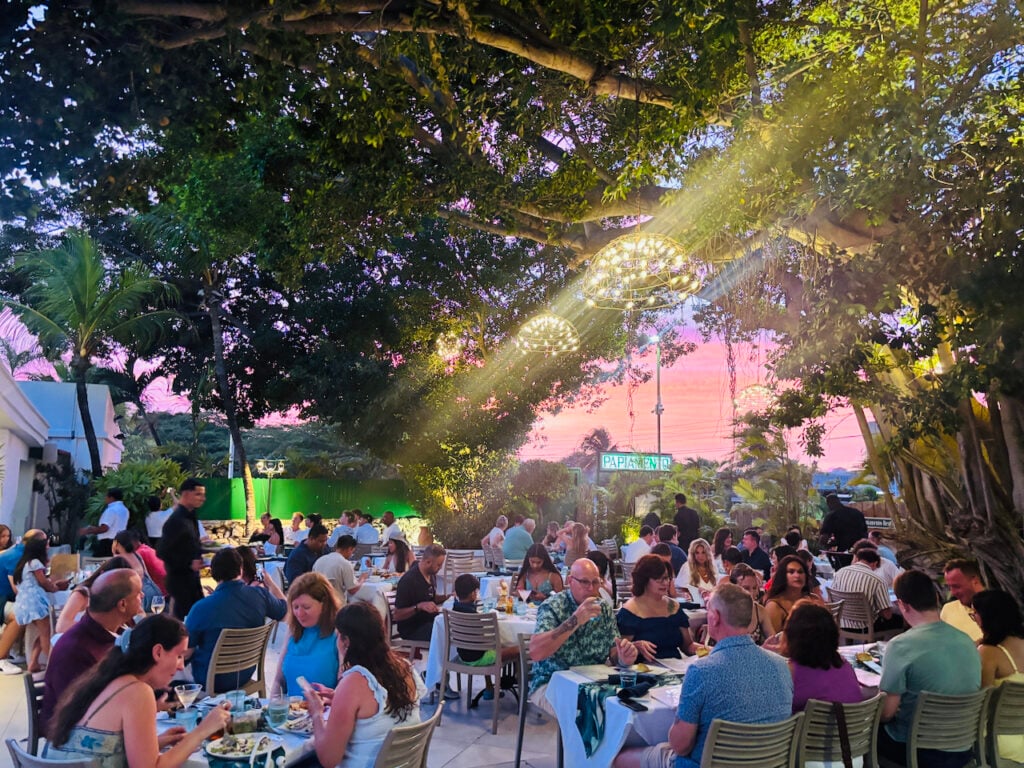
Back in Palm Beach, we have another memorable meal, another gorgeous sunset, and another warm night to swim under the stars. With a well-deserved reputation for safety, stability, and reliability, it’s easy to understand why Aruba is popular with an increasing number of Canadians. But there’s far more to the island than cruise passengers ever experience. More than five centuries after being dismissed as the “useless island,” Aruba continues to prove its first European visitors spectacularly wrong. Far from useless, it’s a tiny island that rewards curious families with an outsized mix of culture, history, relaxation, and adventure.
Environment
Vancouver might just be home to the greenest building in the world. Meet the geography professor who brought it to life.
Travel
Two award-winning travel journalists discuss why family travel, even the kind that pushes us outside our comfort zones, is one of the most powerful investments we can make
Travel
Canadian Geographic’s Bucket Listed columnist Robin Esrock explores domestic tourism, national pride and the evolution of Canadian travel in the third edition of his bestselling book, The Great Canadian Bucket List
Travel
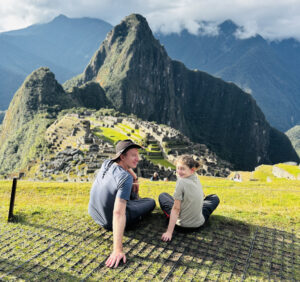
Twenty years after his first hike, Bucket List columnist Robin Esrock walks the Inca Trail again. This time, with his daughter.