Science & Tech
The hidden world of fungi
As fungi bloom into the mainstream, a research station hidden in the B.C. Rainforest aims to uncover some of the mysteries of mushrooms
- 2277 words
- 10 minutes
Environment
For mycologist Greg Thorn, the two chance discoveries reveal how little we know about fungi
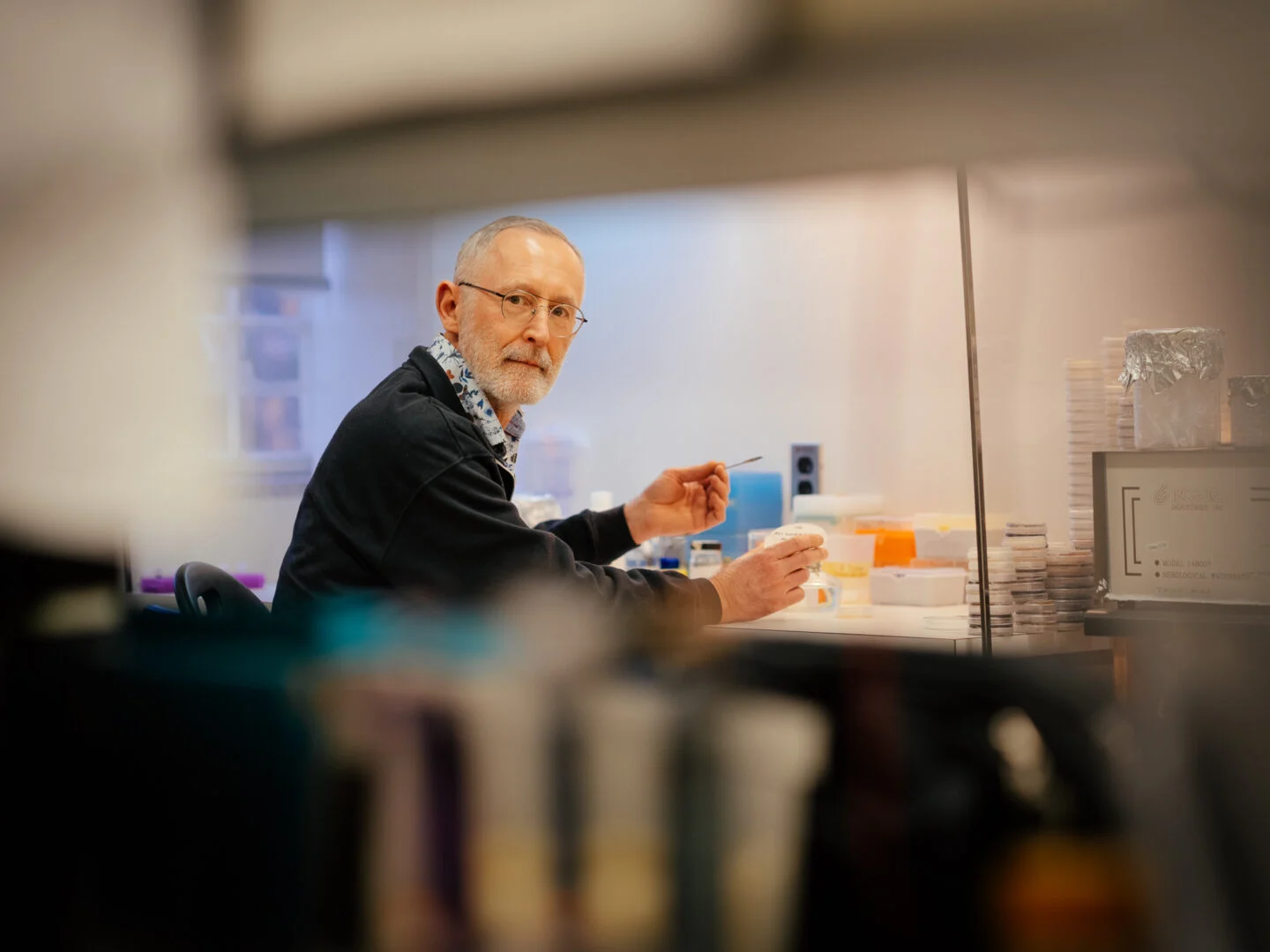
In 1986, while completing his master’s degree, Greg Thorn wandered into the forest near the western gate of Ontario’s Algonquin Provincial Park and collected samples of soil, leaves and rotting wood. Lab analysis of the samples revealed a new species of fungus growing within them, feeding on nematode worms. It hadn’t been recorded anywhere since. Then, decades later, a mushroom hunter collected a curious-looking mushroom from a forest in Turku, Finland. An Italian researcher confirmed it was Hohenbuehelia subreniformis — the same species discovered by Thorn more than 6,000 kilometres away. Now a professor of biology at Western University in London, Ont., Thorn says the recent discovery illustrates how much we still have to learn about fungi and their hidden influence on the natural world.
The gist of my master’s thesis was looking at this one group of nematode-trapping fungi. I brought [my samples from Algonquin Park] back to Guelph and I sprinkled little bits of this material on Petri dishes baited with nematodes. A few of the nematodes died and turned furry — they had a fungus growing out of their bodies — so I carefully cultured those. When I looked at it under the microscope, the spores it made and the trapping structures that it used to catch nematodes were slightly different in shape and size than the other described species, so we decided it was a new species. And then it got published in my master’s thesis and kind of disappeared until the Finns, when they sequenced their mushroom (which was just an unknown mushroom), said, “Whoa, that’s weird. It’s only been discovered once, and it’s reported from Algonquin Park in Ontario.”
[Hohenbuehelia subreniformis] is about as inconspicuous a fungus as you can imagine, because it grows in soil and rotting wood, and it seems that it doesn’t make mushrooms very often. I suspect that it probably is in a lot of places around the world, and these are just the two places where we’ve been lucky enough to find it. Fungi are dispersed by spores — microscopic cells that can grow wherever they land if it’s a suitable environment — so they could theoretically be anywhere. But in truth, it’s not quite that simple. There’s this big thing called the Atlantic Ocean between us and Europe, and a lot of spores that tried to cross that distance would fall in or die trying. The spores of this particular fungus are little colourless cells with a very thin cell wall. They’re completely exposed to UV radiation, so they’re probably quite limited in their aerial dispersal to cloudy days and short distances. Bits of rotting wood with a fungus living in it might float and arrive somewhere that way. A lot of fungi have probably marched around the world over time and they’ve had, in many cases, millions of years to do that.
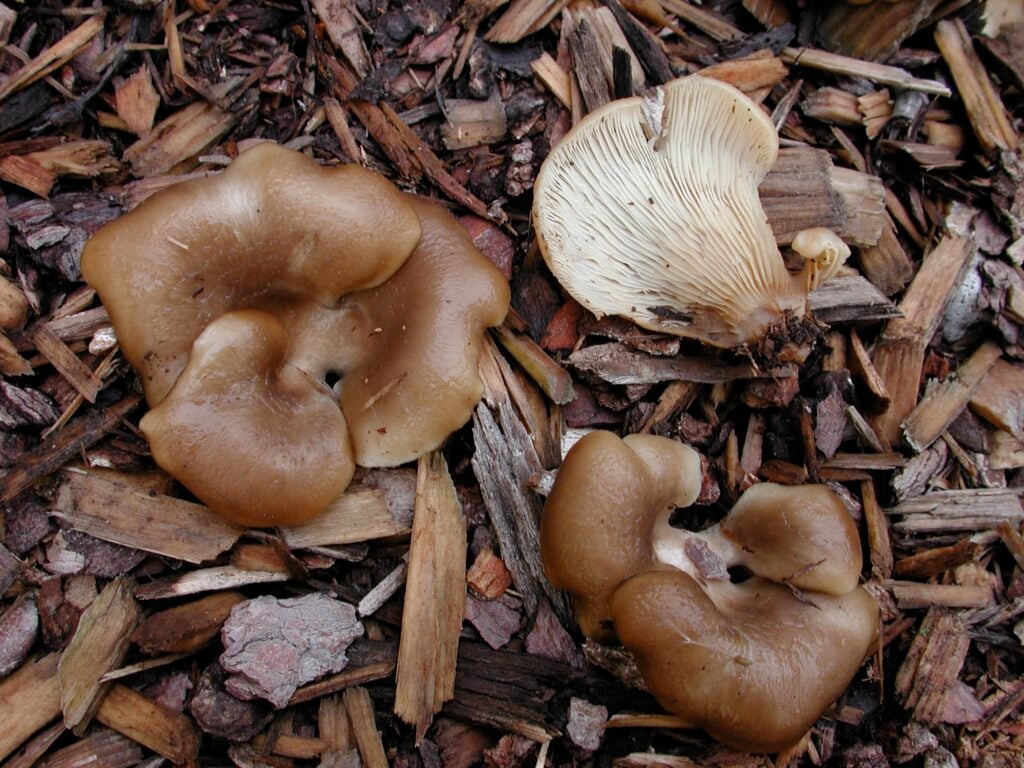
That’s a term we came up with, [biologist George Barron] and I. I was reading a nice coffee table book on carnivorous plants — you know, pitcher plants and sundews and Venus fly traps. And I said to myself, well, these nematode-trapping fungi are basically carnivorous mushrooms because they’re doing the same thing that carnivorous plants do. Carnivorous plants produce sugars from photosynthesis, but they’re growing in generally very nutrient poor habitats, so in order to get things like nitrogen and phosphorus and potassium, they trap insects and digest their bodies. My fungi are decomposing lots of cellulose in rotting wood, so they’re getting lots of carbon — lots of energy — but no meat, so to speak. The meat in their diet is literally these microscopic animals that are swimming by.
If you see the forest as just a big patch of green, well, when you get closer to it, there are individual trees, and on the trees there are little grey-green patches or sometimes orange patches. Those are lichens that are growing on the bark. And then in the lichens are little animals running around and then there are fungi that are eating the little animals. There’s a whole lot of complexity in the ecosystem and fungi are a big part of that.
We think there may be as many as two or three million species of fungi, but we’ve only named about 200,000 of them. That gives you an idea of how much we know about the fungi that are out there. Thanks to genetic sequencing, we can recognize many, many more species. At the classification level, we find that things we used to think were really different are not so different after all. Puffballs, for instance, are actually quite closely related to the store-bought Agaricus or button mushroom.
PCR, polymerase chain reaction, is the process that allows scientists to multiply copies of DNA, and then you’re better able to sequence it. It really has changed our knowledge of fungal groups and their evolution. With things like birds and mammals, there weren’t all that many different species hiding among them, because they’re pretty easy to tell apart morphologically, but with microbes and fungi, there’s lots of diversity hiding out there that we hadn’t recognized based on the morphology that was available. Previously, looking through a microscope and seeing spores that are slightly longer or slightly fatter or skinnier, it was almost a gut feeling that this might be a different species. With DNA sequence data, you know that this one with slightly fatter spores is in a whole different branch of the phylogenetic tree. So at the species level, it really cleaned up our act.
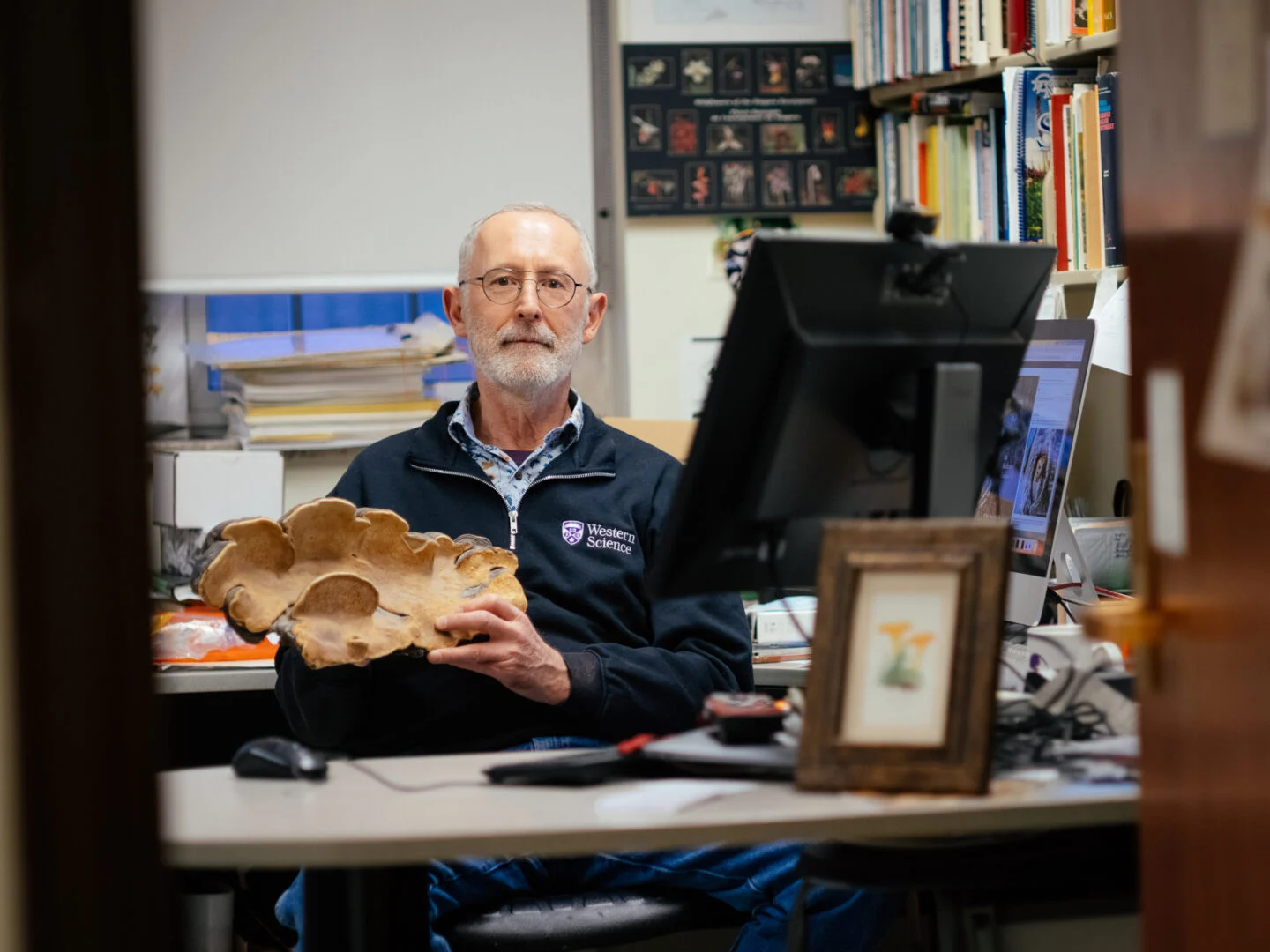
I get 60 students a year in my mycology class, and they’re all really excited. But of course, they do want to grow up and get jobs. I would love to have a world where there are 60 jobs a year in mycology in Canada. We’re now making a Styrofoam replacement with fungi. We’ve got lots of medicines that are derived from fungi. There are all kinds of biotechnological things you can do with fungi, so employing people in the field of mycology wouldn’t be just for the fun of finding strange new organisms, it would actually be quite practical. But of course, the economy doesn’t work that way yet.
As we discover fungi literally in our own backyards, that tells us a little bit more about the workings of soil and decomposition and nutrient cycling and things that are important to us when we think about climate change and the comings and goings of carbon dioxide. Other fungi may produce compounds which are useful to us in medicine or agriculture or another industry. They may be part of what keeps our forests ticking, so it’s good to know who’s out there and what they’re doing.
This story is from the May/June 2026 Issue
Science & Tech
As fungi bloom into the mainstream, a research station hidden in the B.C. Rainforest aims to uncover some of the mysteries of mushrooms

Environment
The fun guy behind the mushroom hunt that became North America’s largest fungi bioblitz

Wildlife
As a deadly disease threatens the species’ existence, bat conservationists rush to find an antidote before it’s too late

Environment
Robert Courteau, the former chef behind FungiQuest, discusses his passion for mushrooms and the goal to map every species of fungi on the planet