Science & Tech
Traverser les tempêtes de l’Arctique au bénéfice de la science
Zen Mariani présente le programme pionnier de « Polar Night Experiment » (PONEX), ainsi que d’autres enjeux atmosphériques dans le Grand Nord
- 1922 words
- 8 minutes
Science & Tech
Zen Mariani explains the ground-breaking Polar Night Experiment, plus more atmospheric stakes in the Far North

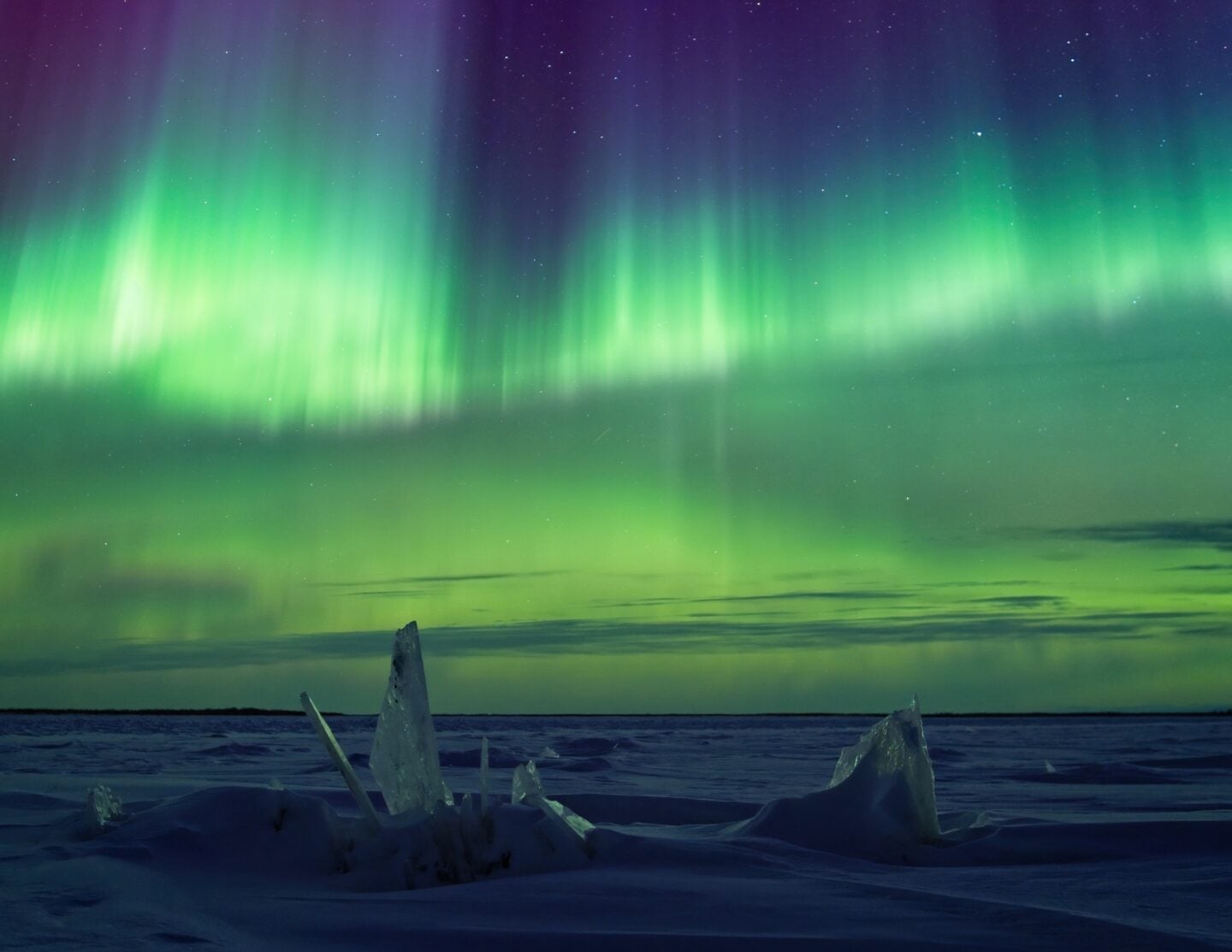
It’s the peak of winter in Inuvik, Northwest Territories. The wind howls, and the thermometer reads -55 C, a temperature so extreme that “everything keeps breaking.” Your mission? Brave the elements and fly through the storm clouds during the intense dark of a polar night to collect atmospheric data.
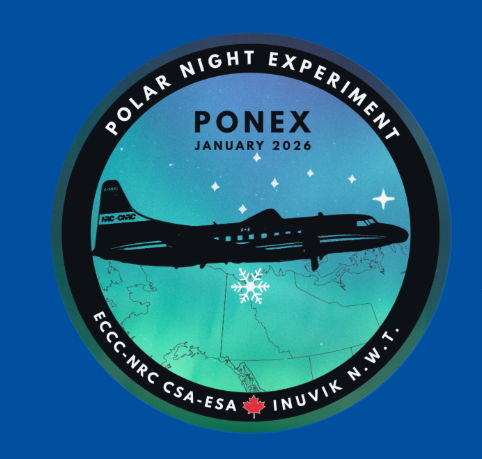
Those were the parameters for the Polar Night Experiment (PONEX), a pioneering scientific campaign launched in January 2026 in close partnership with the National Research Council, using ground-based observations and research aircraft flights, with the agency’s Convair 580, to collect data and measurements for researchers to better understand how polar processes influence weather patterns across the globe. This knowledge would, the scientists hoped, help them to improve climate modelling and weather forecasting in the polar regions.
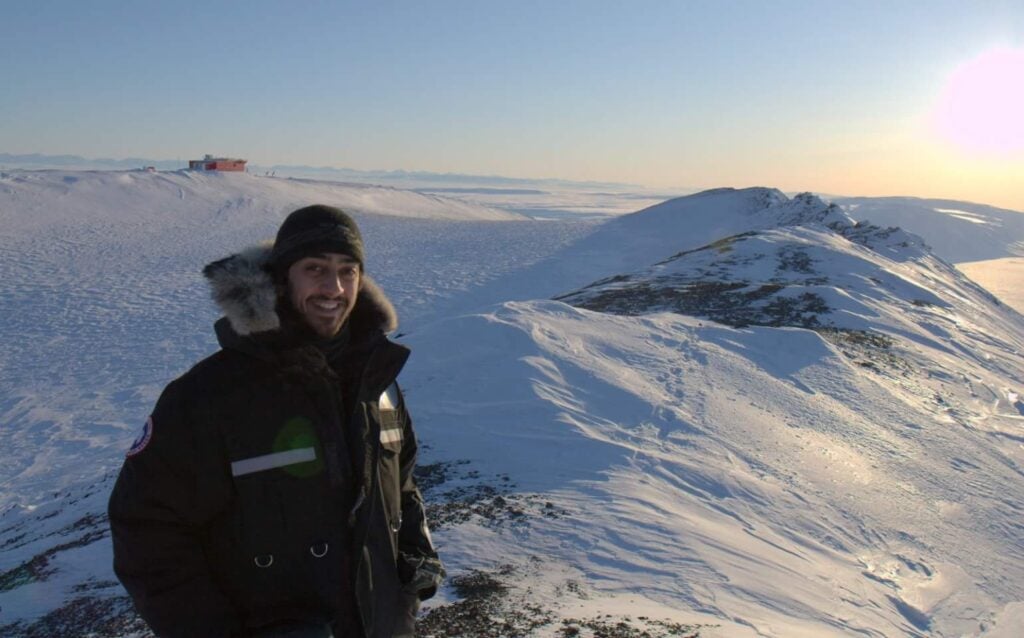
Zen Mariani, a research scientist at Environment and Climate Change Canada, co-led Polar Night Experiment alongside fellow ECCC research scientist Alexei Korolev and Natalia Bliankinshtein from the National Research Council Canada. They belonged to a team of some 40 scientists from around the globe who donned Arctic parkas, insulated boots, balaclavas and windproof mitts as they headed out.
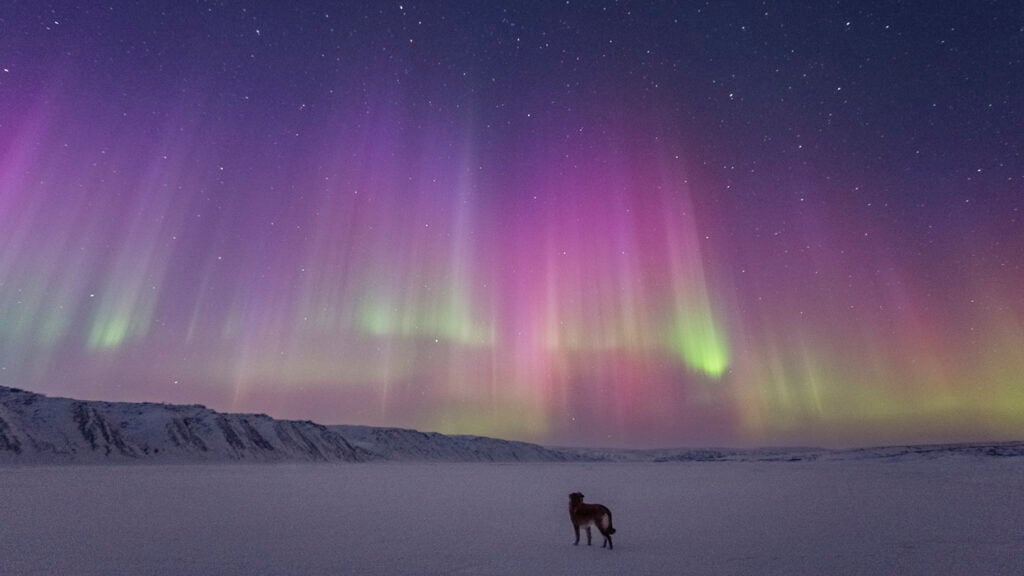
Working in complete Arctic darkness made this scientific mission even more extraordinarily difficult. It’s also what made the Polar Night Experiment a first-of-its-kind campaign. Scientists have collected Arctic measurements of this nature during the day before, says Mariani, but never during polar night “when it’s the absolute coldest, darkest period of time. … We’ve just never done this before.”
Because conditions are so difficult, the polar night is one of Earth’s least understood atmospheric environments. That’s also what makes it so intriguing to scientists. How does the atmosphere behave when complete darkness coincides with severe temperatures? What are the cloud and aerosol dynamics?
To figure these things out, “you need to take measurements from the surface, and you need to get in a plane and literally fly through the clouds — fly right through the storms and the clouds and the severe weather,” says Mariani. While up in the skies, he collects valuable data throughout the invariably bumpy ride.
Once back on the ground, researchers compare the real polar night measurements to their previous computer models to see how they jibe. It’s all part of a process of improving their understanding of what’s going on up there.
The mission was a huge collaborative effort, says Mariani, bringing in an international cadre of scientists intent on testing their high-tech instruments in real-world experiments.
Because conditions are so difficult, the polar night is one of Earth’s least understood atmospheric environments. That’s also what makes it so intriguing to scientists.
Of course, this is the Arctic, so things did not go exactly according to plan. Still, a lot of great data was collected before the campaign was cut somewhat short due to technical failures. “This just speaks to working in the harsh Arctic environment,” says Mariani. “It was very cold, very challenging. Things are going to break.”
Despite the setbacks, the Polar Night Experiment still achieved several key goals, Mariani explains. “I’d rather do something difficult, but that has a high impact, than just sit back and do something easy,” he says. “So that’s why we we’re out there.” Gaps in our understanding of atmospheric physics and chemistry need to be addressed.
The bulk of the measurements were recorded, and researchers are now checking to make sure they’re accurate. Once that’s done, scientists from around the world will incorporate the Polar Night Experiment data into their many research projects.
Moonlit cloud-surfing isn’t Mariani’s first Arctic rodeo, just the most recent quest. His fascination with the Arctic was sparked in his university days when he was exposed to atmospheric physics while studying at the University of Toronto under atmospheric physicist Kimberly Strong, who led a program at the Polar Environment Atmospheric Research Laboratory in Eureka, a research base on Ellesmere Island, Nunavut.
Working with Strong opened his eyes to all the research taking place in the High Arctic, while the analysis of satellite data, emissions of trace gases and pollutants showed him how interconnected this remote region is to the rest of the world.
In this early research, Mariani worked with a prototype instrument measuring infrared radiation: how much heat is entering or escaping the Earth’s surface near the North Pole. That’s how he came to be so cognisant that changes happening across the globe are accelerated in the Arctic. A heating Arctic increases the amount of water vapour in the air, which, in turn, holds in more heat, which heats the surface more. “It’s a positive feedback loop,” he explains.
As part of his current work with Environment and Climate Change Canada, Mariani looks at meteorological processes — weather and cloud formations — and how they affect both Arctic residents and Arctic infrastructure.
“Clouds are the greatest uncertainty in our climate models,” he says.
When scientists try to predict how the Arctic climate will change in 20, 50 or even 100 years, they remain uncertain about the impact of changing clouds and aerosols.
In recent years, the increasing number and power of atmospheric rivers hitting cities and towns along Canada’s West Coast has regularly made the news cycle. (As the carbon load in the atmosphere heats the planet, the air holds more moisture and heat. Since 1980 alone, that has made atmospheric rivers more frequent, larger and moister.)
Though these West Coast atmospheric rivers are expected (though no less impactful), Mariani focuses on the atmospheric rivers that have begun hitting the Arctic with increasing frequency. Communities like Iqaluit are not built to withstand flooding and extreme levels of rainfall, he says. Meanwhile, Tuktoyaktuk, a Northwest Territories-based hamlet on the edge of the Arctic Ocean, faces the threat of being washed away, pounded by the waves at the same time as its permafrost melts away.
Rare weather events are simply becoming more common everywhere, says Mariani, who notes that the Far North is particularly affected. “It’s catastrophic,” he says of the situation facing residents of Tuktoyaktuk. “And it’s very expensive. You can’t just pick up and move, right? So it’s a huge problem.”
He calls the climate changes in the Arctic a wake-up call for all Canadians and, indeed, people around the globe. “In terms of the overall picture of climate change on a global scale, the Arctic is the canary in a coal mine,” says Mariani. “You can kind of use it as your early warning system, if you will.” The people living in the Far North will suffer, but the changing climate has global implications for everything from air quality to sea levels.
But knowledge is power, and Mariani is confident that the atmospheric work he and his colleagues are doing will help governments to make informed policy decisions around everything from emissions regulations to infrastructure needs. And as the Northwest Passage opens to shipping, he knows captains and crew will need reliable weather forecasting and sea-ice predictions.
“It really does tick all the boxes,” says Mariani as he underlines the importance of Arctic atmospheric research.
“The Arctic is the canary in a coal mine. You can kind of use it as your early warning system, if you will.”
Another fascinating collaboration Mariani is involved with sees Environment and Climate Change Canada teaming up with the Canadian Space Agency and a consortium of 14 Canadian universities and government departmental agencies on a new satellite mission dubbed High-altitude Aerosols, Water Vapour and Clouds or HAWC. The preliminary work for the mission, now underway, includes a series of explorations to improve our understanding of how clouds, water vapour and aerosols influence Earth’s weather patterns and climate. Together, the three form a complex, interconnected system, and understanding how they interact is key to better predicting climate change and improving weather forecasts. This, in turn, will help scientists to advise policymakers on how and what we all need to do to better prepare for extreme weather events and their effects, including storms, floods, droughts and poor air quality.
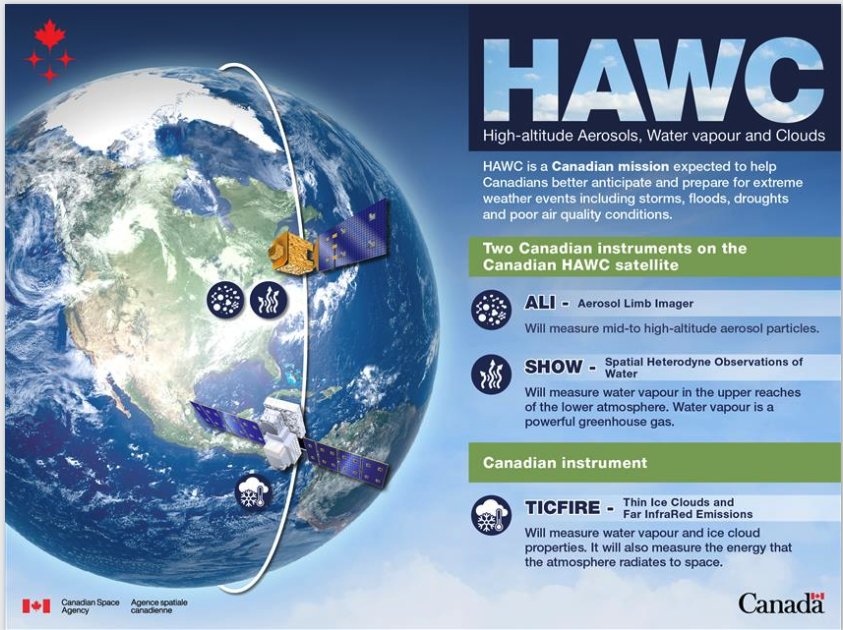
The satellite mission, scheduled to launch no earlier than 2031, will use three Canadian instruments: the Aerosol Limb Imager, an instrument designed to measure mid- to high-altitude aerosol particles, the Spatial Heterodyne Observations of Water imaging system, which measures water vapour in the upper reaches of the troposphere (the lowest layer of the Earth’s atmosphere), and the Thin Ice Clouds Far-Infrared Emissions instrument, which will measure water vapour, clouds and the energy that the atmosphere radiates to space. The data they gather will be made freely available to scientists, students, developers and the public with the idea that the data will spark innovative research and drive new ideas to better manage the risks brought about by a rapidly changing climate.
“It’s going to provide some measurements that are ideally suited for the Canadian Arctic,” says Mariani, who says scientists lack these kinds of data from the Far North.
That said, as important as it is for western science to uncover the secrets of the atmosphere in the Arctic, it is equally powerful to engage and gather knowledge from the Indigenous Peoples who live there and have a deep understanding of the environment. “It’s hard work,” says Mariani. “There are a number of really big questions that we’re trying to answer.” What happens in the Arctic has consequences for the entire planet. The Far North is speaking to us, and the ambitious missions by Environment and Climate Change Canada and its partners will allow us to listen, interpret and act on what the region is saying.
This story was created in partnership with Environment and Climate Change Canada.
Science & Tech
Zen Mariani présente le programme pionnier de « Polar Night Experiment » (PONEX), ainsi que d’autres enjeux atmosphériques dans le Grand Nord
People & Culture
Depending on whom you ask, the North’s sentinel species is either on the edge of extinction or an environmental success story. An in-depth look at the complicated, contradictory and controversial science behind the sound bites
Wildlife
In the Hudson Bay Lowlands, polar bears have reigned supreme. Increased sightings of a new predator have everyone on high alert.

Environment
Polar lows are particularly challenging to forecast due to their small size and short lifetime