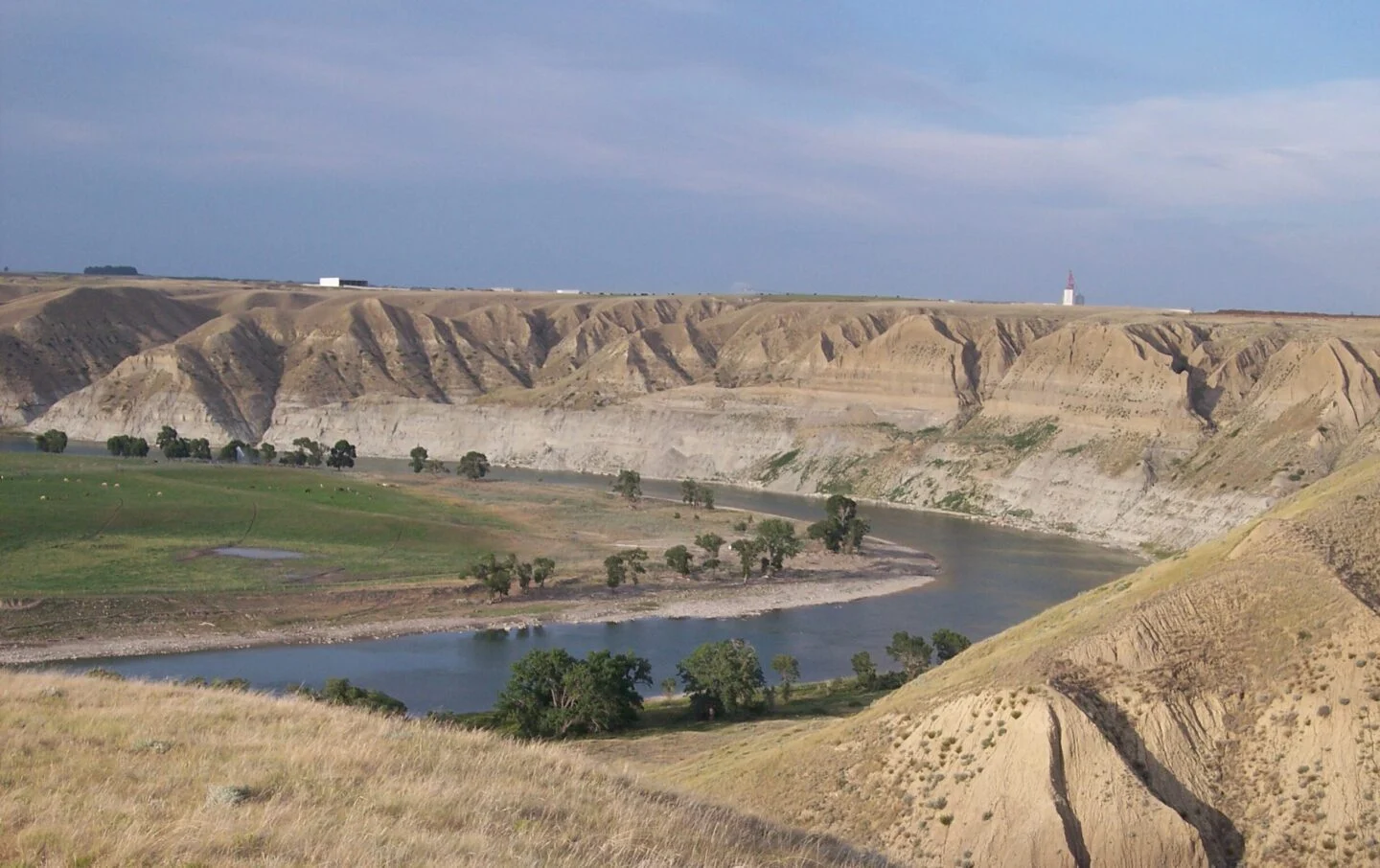
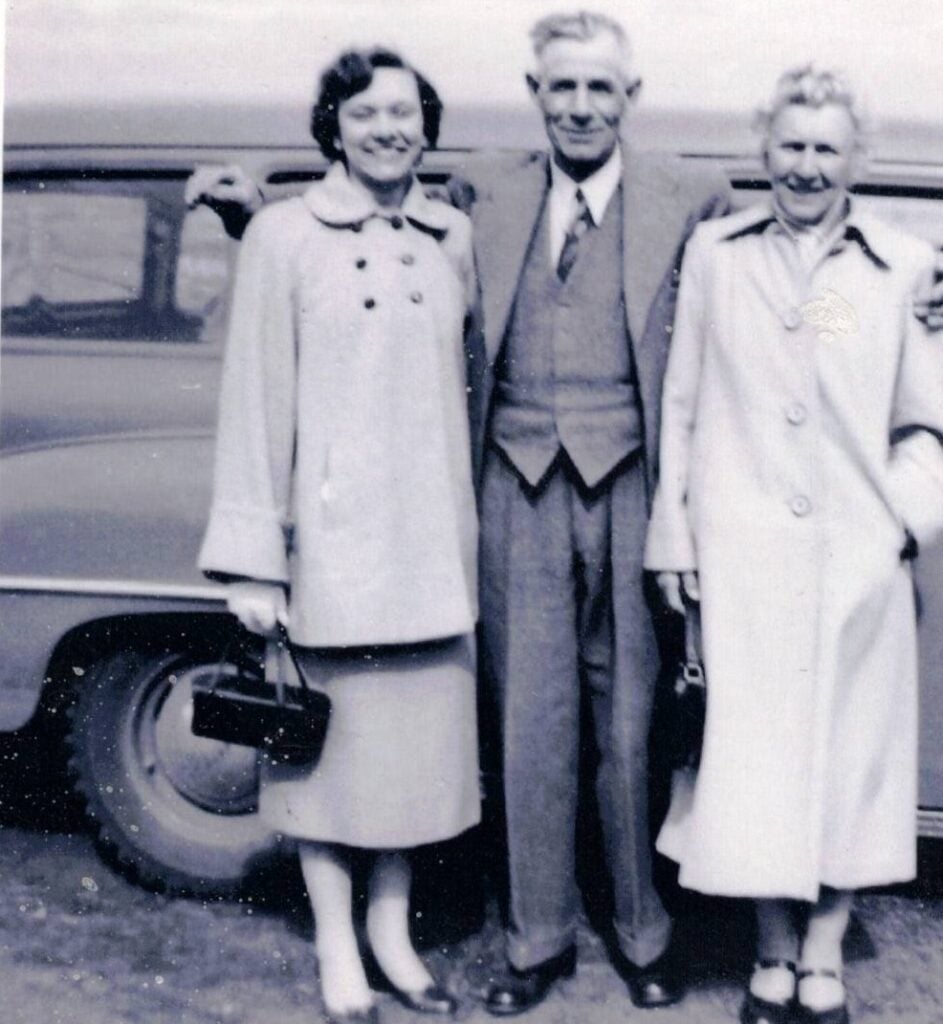
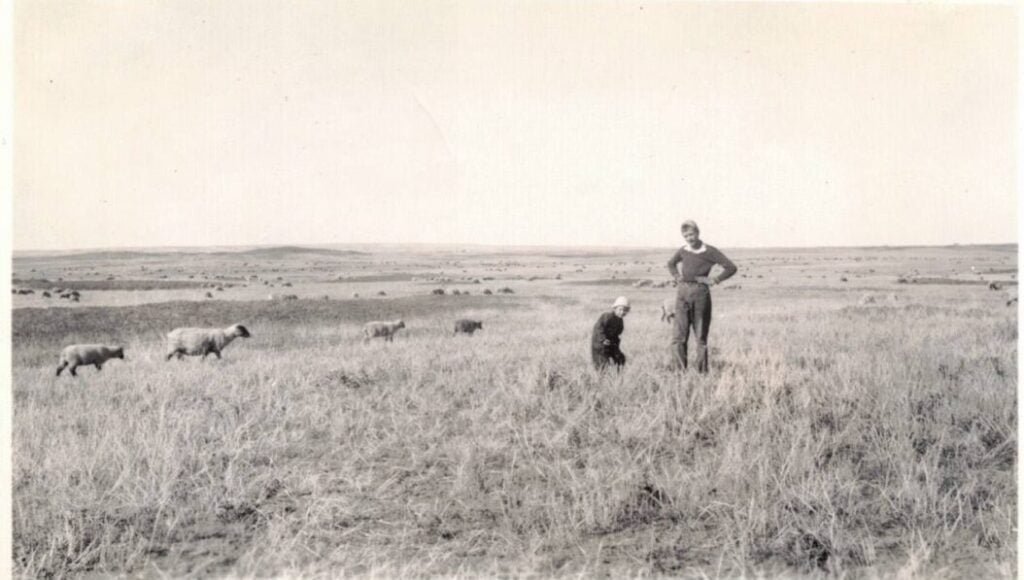
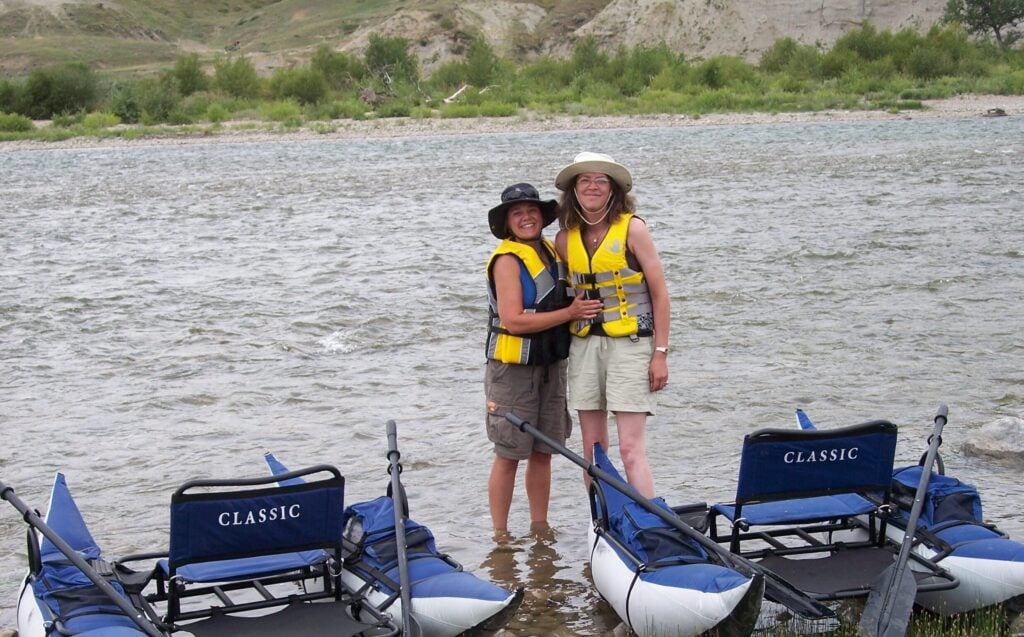
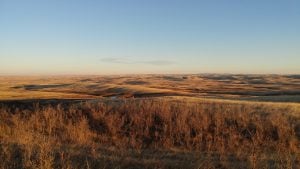
Glover’s brother, Brian, never fulfilled his hope to one day build a home on this patch of prairie, the way Walter had done on his farmland a generation earlier. Still, he and Glover visited the land often. “My brother was like my grandfather,” Glover says. “He was very industrious.” Brian brought in two shipping containers to serve as makeshift shelters where they would spend the night. Whoever woke first had to start the generator and make their morning coffee. The generator also powered the outdoor shower Brian had rigged up, so they didn’t have to bathe in the river alongside the water snakes.
These days, Glover doesn’t visit the property as often as she’d like, “although I think of it every day,” she says. In addition to engaging with the wildlife and natural beauty the land offers, Glover’s family also had to endure unwelcome discussions with energy companies bent on exploiting the property for material gain. They have always believed the true value of the place cannot be measured by the number of solar panels, wind farms, energy substations or power lines the property can accommodate, “but rather what can exist or remain intact as a result of a lack of human exploitation,” Glover says.
Over the last 18 years, as Glover’s parents and both of her siblings have passed away, she has become the sole owner of her family’s beloved pastureland. She never married and has no children to bequeath the land to — “I’m the only one left,” she says — but refused to sell. Glover always feared a buyer wouldn’t regard the land as her family had: as a place to be kept pristine. “I was never going to allow things to happen on it that wouldn’t be consistent with our family values,” she says. Glover didn’t want the land to become a hunting ground or trapline. “I don’t want anybody to kill anything,” she says. And she abhors the thought of ATVs screaming over the native prairie grasses.
The land, as she sees it, isn’t for people at all. “These unique lands existed long before we did, and we were taught that our ownership of it is an honour and is temporary,” Glover says. “We consider ourselves caretakers of the property during our time here.”