Travel

Serious racing, serious fun: Inside the St. Maarten Heineken Regatta

On the dual-nation island of Saint Martin/Sint Maarten, one of the Caribbean’s biggest sailing races blends high-stakes competition with culture, history and coastal adventure

  • Apr 08, 2026
  • 1,238 words
  • 5 minutes
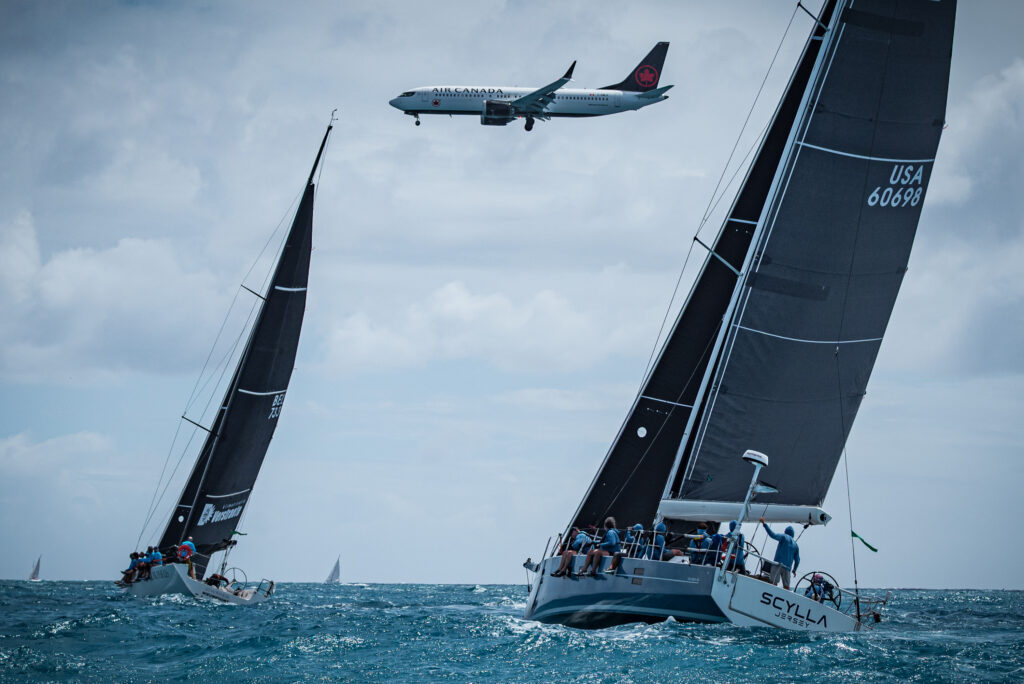
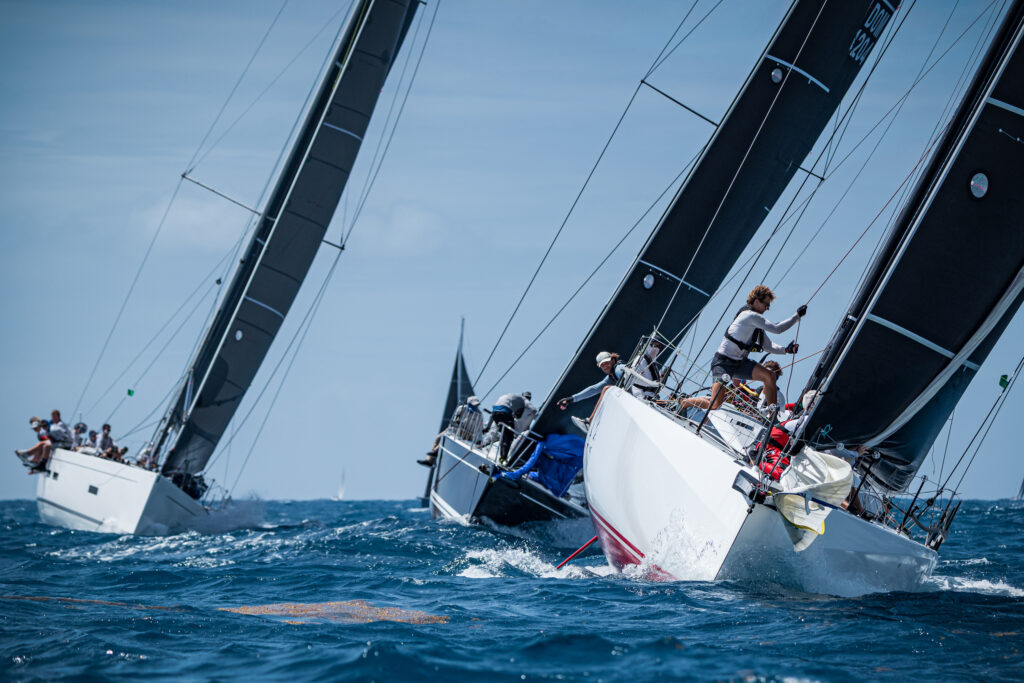
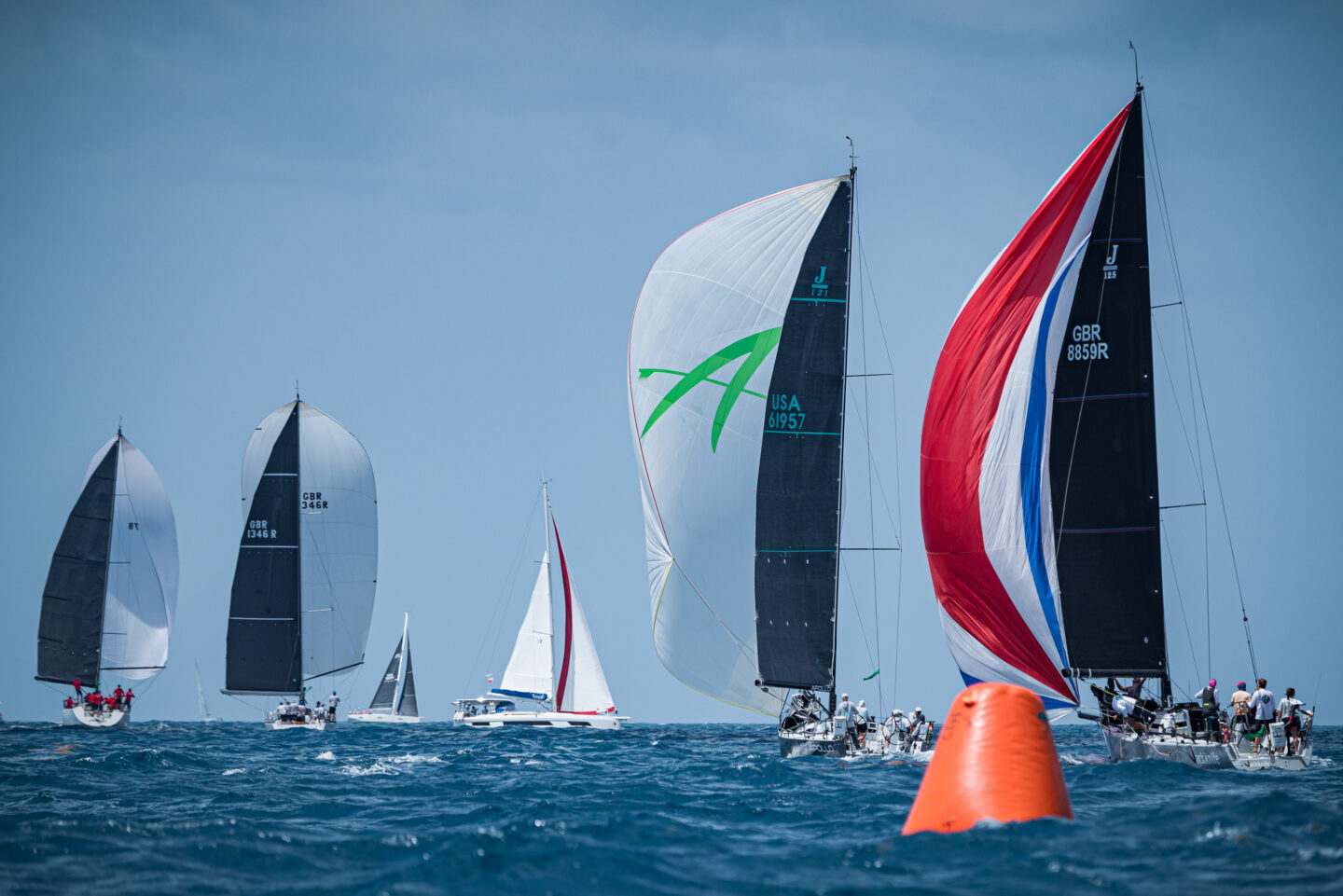
Powered by easterly trade winds, more than 100 boats from around the world race along the coast during the 2026 St. Maarten Heineken Regatta. (Photo: St. Maarten Heineken Regatta/Laurens Morel)
Expand Image
Advertisement
Advertisement
Live Net Zero Email Service

Seen from above, the Caribbean island of Saint Martin/Sint Maarten looks like a crêpe slapped carelessly onto a hot pan. Its coastline is scalloped, a succession of bays and points perforated with lagoons and inland ponds, and its tiny land mass is covered in irregular, rounded lumps.

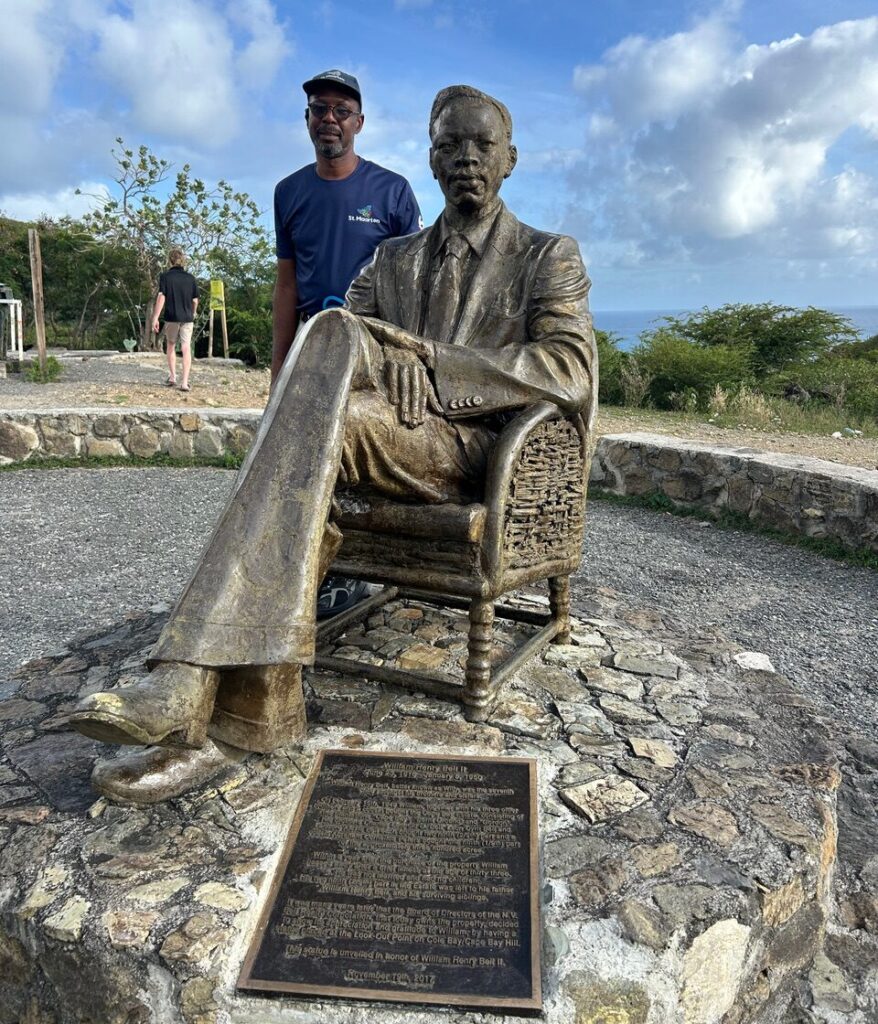
William Bell, a tour guide in St. Maarten, stands beside the statue of his great-uncle, William Bell II. (Photo: Naomi Buck)
Expand Image

Atop one such lump, Cole Bay Hill, on the island’s southern coast, is the bronze statue of a man. Seated proudly in a suit and tie, his long legs crossed elegantly, he gazes westward, indifferent to the wind whipping past him as chickens peck at his feet. Nearby, a plaque encrusted in sea salt identifies him as William Bell II, owner of the approximately 121-hectare estate surrounding him. Bell’s story, like that of his island, is one of transformation.

In 1949, he, his three older brothers and a cousin  — whose grandparents had been born into slavery — bought three plantations from their original Dutch owners, and ran them as farms. They donated the milk from their cattle to the local schoolhouse. 

Over the last century, Saint Martin/Sint Maarten — like much of the Caribbean — has transitioned from an economy based on agricultural export to one driven by tourism. Today, Bell’s bronze likeness overlooks the sprawling settlement of Cole Bay, power and desalination plants, seaside resorts and hotels and a coastline dotted with sailboats, cruise ships and tankers.

Each year, on the first weekend of March, the view from this lookout is particularly spectacular. For four days, fleets of sailboats race down the coast, their sails gleaming in the bright Caribbean sun. The St. Maarten Heineken Regatta is one of the biggest warm-water sailing races in the world, and a major draw for sailors and tourists alike.

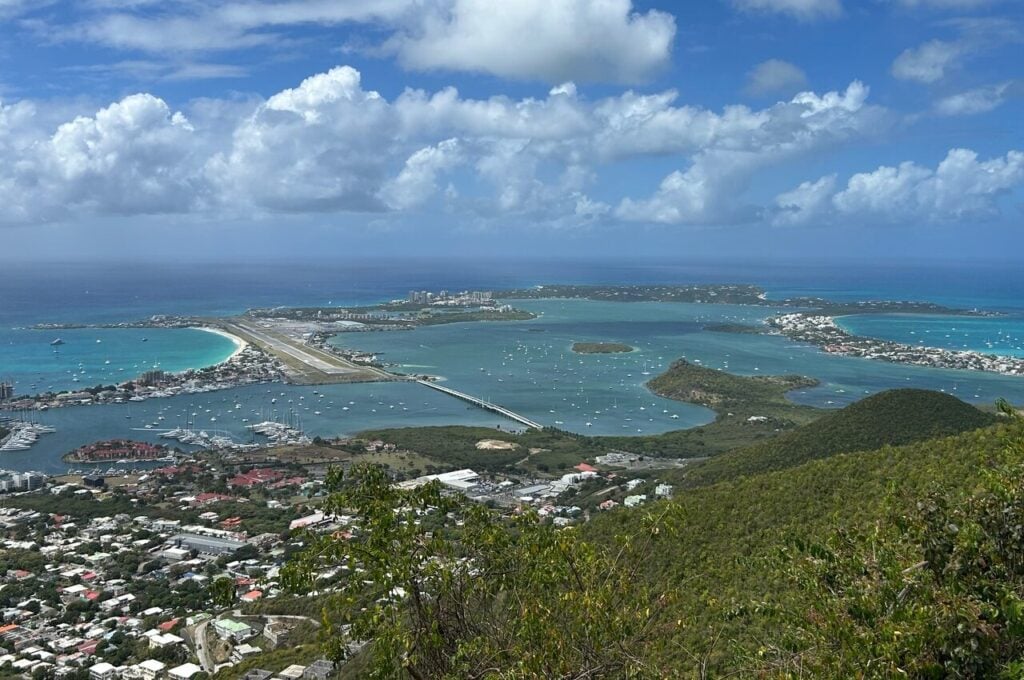
Overlooking Simpson Bay Lagoon in Sint Maarten with the famous Princess Juliana International Airport runway in the distance. (Photo: Naomi Buck)
Expand Image
Competitors navigate choppy waters off Sint Maarten’s coast as an Air Canada flight passes overhead. (Photo: St. Maarten Heineken Regatta/Laurens Morel)
Expand Image

The beauty of a place lies in the eye of the beholder. For seafaring Europeans of the Renaissance, the attraction was commercial: Saint Martin/Sint Maarten’s inland ponds were treasure troves of salt, the indispensable preservative and flavour-enhancer. In the mid-17th century, the kingdoms of France and the Netherlands drew a line across the island and divvied up the spoils. The border — marked only by flags and signs — persists to this day, separating French Saint Martin in the north from Dutch Sint Maarten in the south.

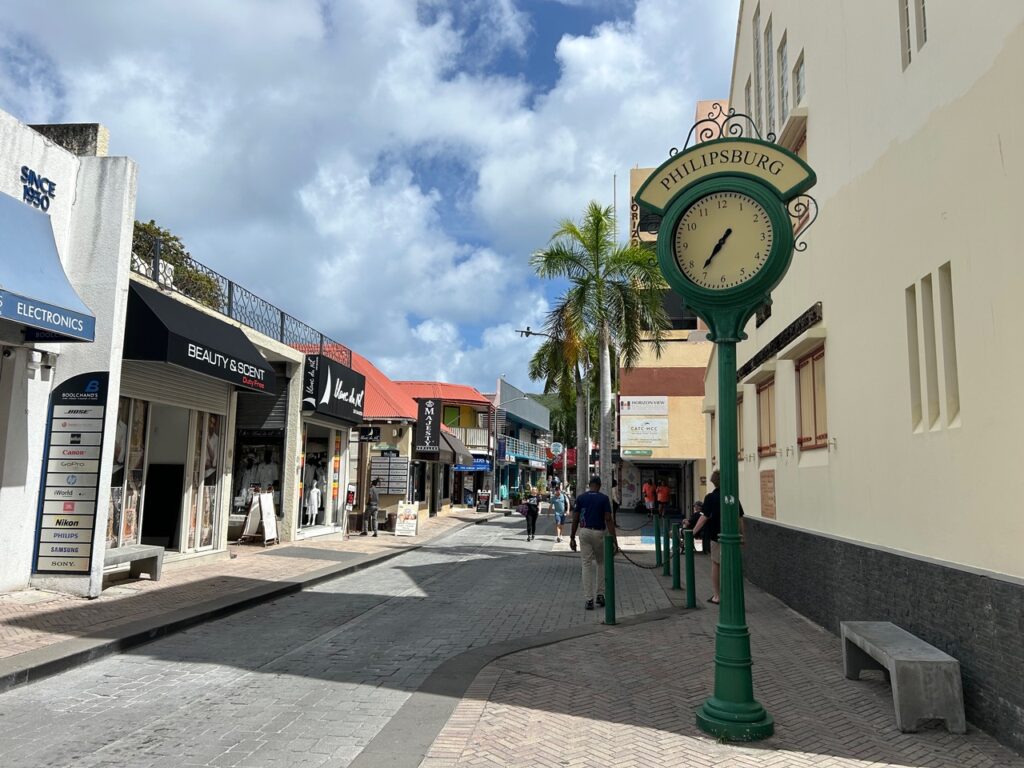
Philipsburg, a popular destination for cruise ship passengers because of its lively duty-free shopping district is also the capital city of the Dutch side of Sint Maarten. (Photo: Naomi Buck)
Expand Image

More recent visitors, however, have discovered other forms of richness on the island: a vibrant mix of European and Caribbean cultures, a coastline studded with long sandy beaches, and a varied topography that catches the trade winds and offers sweeping vistas.

“I was hanging out in the Caribbean on a boat,” says Robbie Ferron, a Dutch South African who arrived on Sint Maarten in 1979, “and I got stuck here.”

At the time, there was no competitive sailing culture on the island, but the conditions were ideal: steady easterly trade winds swept in off the Atlantic coast, while Simpson Bay Lagoon, the Caribbean’s largest lagoon, served as a safe haven for boats during hurricanes. In 1980, Ferron and a clutch of other sailing enthusiasts founded the Sint Maarten Yacht Club and hosted the island’s first regatta — it drew just 12 boats. Around the same time, Ferron set up shop as a chandler purveying boat parts and equipment out of the back room of a house near Philipsburg, Sint Maarten’s capital.

Today, Ferron’s company, Budget Marine, is the biggest of its kind in the Caribbean, and the regatta he founded is a fixture on the international sailing calendar.

From seasoned professionals to first-time racers, crews navigate winds and crowded start lines during the four-day event. (Photo: St. Maarten Heineken Regatta/Laurens Morel)
Expand Image

The competition consists of multiple events, including one around-the-island race and several “stadium races” designed to give onlookers on shore an exciting show. This year, 113 boats representing 38 countries took part. 

Divided into 15 classes, the boats range in size from massive superyachts and monohulls to 20-foot trimarans, crewed by a mix of professional racers, yachting families and curious initiates. The variety makes things colourful — and, at times, a bit chaotic.

Donning a bright blue regatta shirt, sunglasses and zinc sun protection that has dulled his face to a ghostlike white, Elliot Levy braces against the swell as he scans the crowded assortment of boats moving every which way across Simpson Bay. One of the regatta’s six international judges, Levy has been stationed aboard a spectator boat, surrounded by an odd mix of local journalists, photographers and paying guests who are clustered around the boat’s open bar. Levy is trying to make sense of the starting line, marked by two flagged committee boats on either side of the bay, which has been somewhat impeded by a Dutch tanker anchored in the middle of everything.

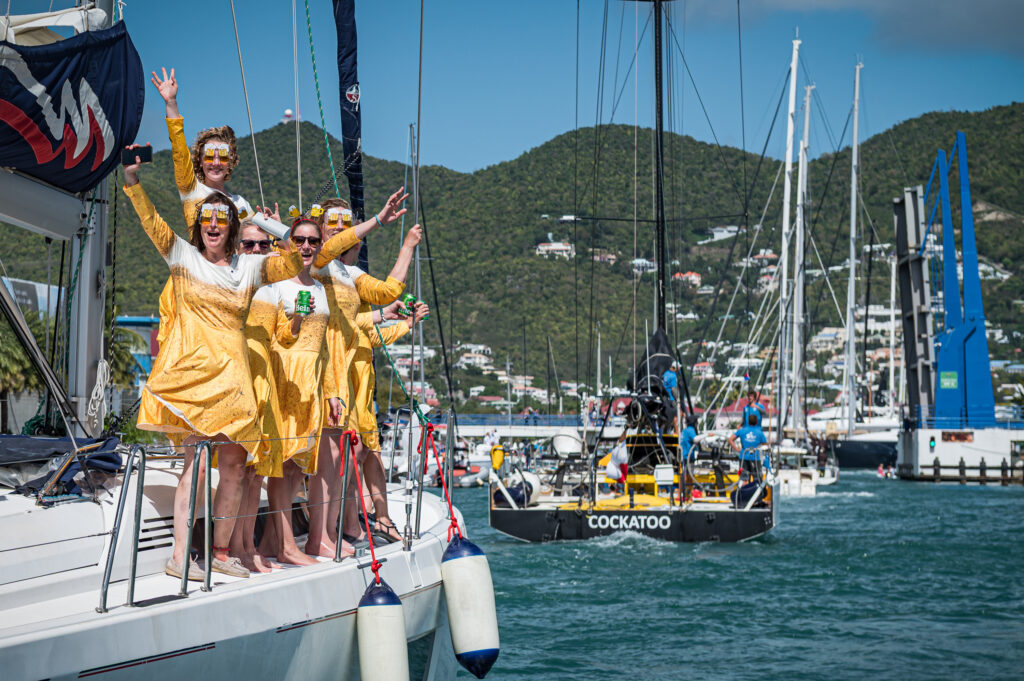
Beyond the racecourse, the regatta is as much about community and celebration as it is about sailing. (Photo: St. Maarten Heineken Regatta/Laurens Morel)
Expand Image

Levy, a 57-year-old Venezuelan who now lives in Florida, officiates sailing races around the world. Though the St. Maarten Heineken Regatta is not one of sport’s most significant competitions, Levy makes a point of coming whenever he can.

“It’s just really fun,” he says, as the first class of boats flies across the start line. Sponsored by the Dutch brewer since 1983, the regatta has built its brand on the slogan “serious fun”: racing by day, partying by night.   

Levy, who grew up sailing boats off the Venezuelan coast, describes the ocean as his playground. While he doesn’t compete himself, he understands the sport from the inside. “It’s all about physics,” he says, explaining the complex interplay between speed and direction and all the tactical calibrations involved: the distribution of weight, the angle of the reach, the timing of a tack, the trim of the sail.

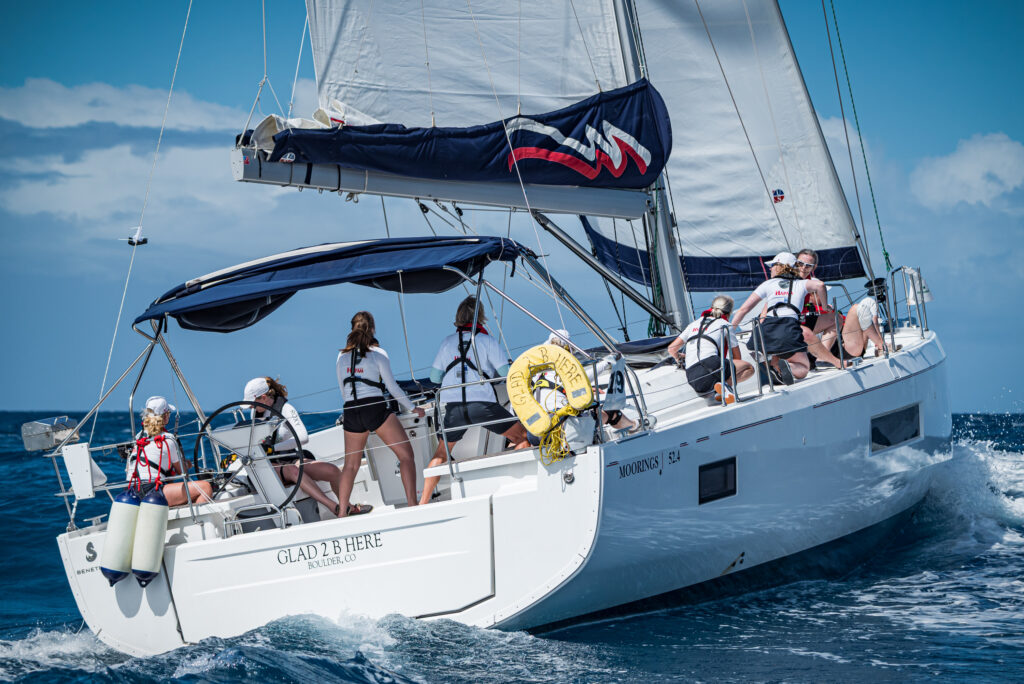
But ambition in this race varies greatly. “We just wanted to prove that we could do it,” yells Caroline Klaver above the live music pounding off the main stage at the regatta village. Klaver’s crew of 10 women, all dressed as tall glasses of beer, is gathered in a gaggle, waiting for the final prize-giving ceremony to commence. Ranging in age from 28 to 68, they’re all graduates of the Nyenrode Business University in the Netherlands — and as Klaver points out, only one of them, the skipper, really knew what she was doing on board.
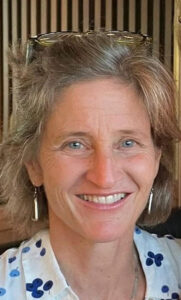
All graduates of the Nyenrode Business University in the Netherlands, the 10-women crew of GLAD 2 BE HERE brought enthusiasm over competition to the regatta. (Photo: St. Maarten Heineken Regatta/Laurens Morel)
Expand Image

“This was all about girl power,” says Klaver, a mother of three who has taught high school economics and served as an alderman on her local town council. For the duration of the regatta, the 10 women lived aboard the boat they chartered, a bareboat monohull named GLAD 2 BE HERE. “We finished last,” she says triumphantly of the race around the island, “but we learned a lot!”

For spectators, the race is an opportunity to get to know the island. At just 87 square kilometres, Saint Martin/Sint Maarten is smaller than most provincial parks in Canada and can be explored by car from end to end in a couple of hours by anyone willing to adapt to local traffic standards. (There is rumoured to be one traffic light on the island, but we never saw it.) The drive reveals glimpses of lively villages and remnants of the past: abandoned plantations overgrown with scrub and cacti, desiccated salt flats, and a linguistic potpourri of French, Dutch, English, Spanish, and the Creole blend known as Papiamento. 

With 36 beaches accessible to the public, a dip in the salty waters of the Atlantic or Caribbean is always within reach. And atop the hill overlooking Cole Bay, next to a pig that snorts around in the thorny underbrush awaiting food donations, you can pay your respects to William Bell II.

Advertisement

Help us tell Canada’s story

You can support Canadian Geographic in 3 ways:

Live Net Zero Email Service

Related Content

Travel

Tall ship sailing in the Caribbean: a sustainable alternative to mega cruises

Bucket List columnist Robin Esrock visits the British Virgin Islands in search of pirate lore, Caribbean sunsets and a greener future for cruising

  • 1564 words
  • 7 minutes

Travel

The Essential Itinerary: Anguilla, “a true gem of the Caribbean”

A slow, sun-soaked journey through this tropical island’s famed beaches, eclectic food scene and pristine landscapes, where luxury is understated and tranquillity is the norm

  • 1771 words
  • 8 minutes

Travel

Martinique: Exploring the Caribbean’s “island of flowers”

Renowned for its world-class beaches, ecotourism and historical sites, this tropical paradise exudes relaxation, making it the perfect destination to unwind and escape from everyday life

  • 2882 words
  • 12 minutes

Travel

Growing from griot: Redefining what it means to be a Caribbean-Montrealer

A second-generation Haitian chef is using food to tell a story of heritage and identity in Canada

  • 855 words
  • 4 minutes
Advertisement
Advertisement