People & Culture

Puppies at work: Inside Canada’s avalanche rescue dog training program

At a remote mountain camp in B.C., Canada’s avalanche rescue dogs learn the skills and form the bonds that might mean the difference between life and death

  • Published Dec 15, 2025
  • Updated Dec 17
  • 2,196 words
  • 9 minutes
As a volunteer national not-for-profit organization, the Canadian Avalanche Rescue Dog Association trains and maintains a network of highly efficient avalanche search and rescue teams across the country. (Photo: Canadian Avalanche Rescue Dog Association)
Expand Image
Advertisement
Advertisement
Live Net Zero Email Service

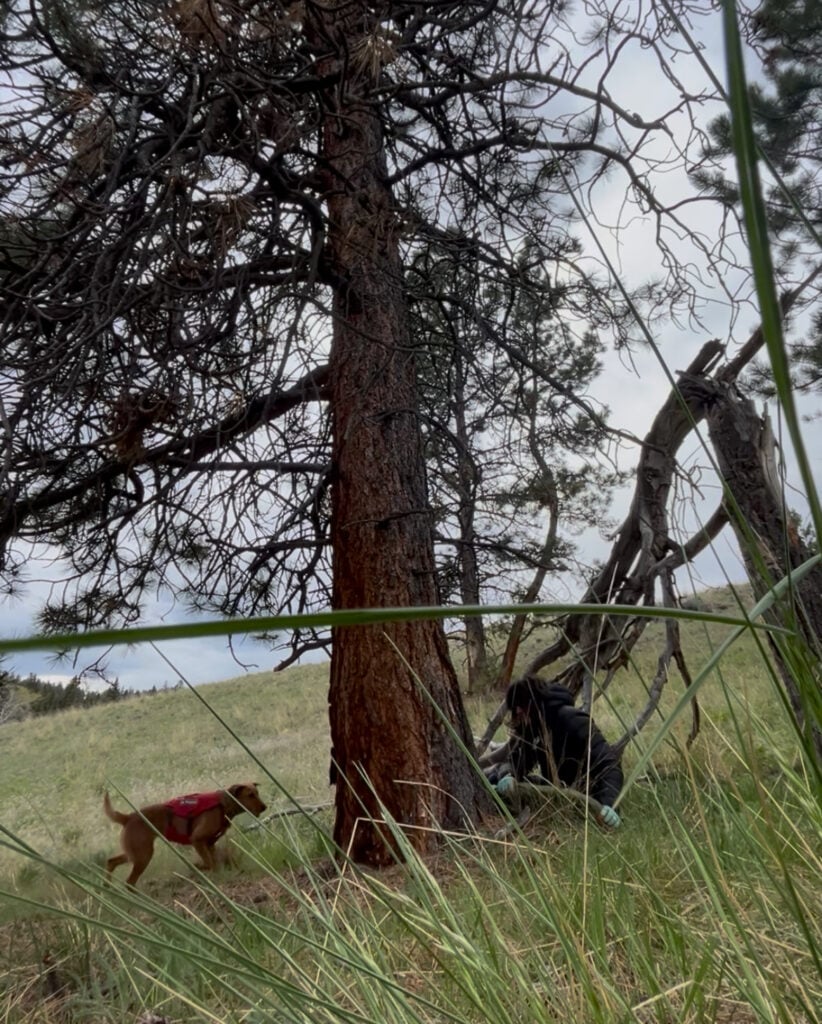
The tattered green cashmere sweater in my hands is stretched taut in anticipation of action, just as I’d been instructed. I can hear the wind blowing in the trees and my heart beating in anticipation of my four-legged pursuer. Crouching low, I lean back against a pine tree just outside Merritt, British Columbia, and wait for the breeze to transport my zesty, three-day camping odour into the nose of Milhouse, a two-year-old Labrador retriever and avalanche rescue dog-in-training. 

The sweater also holds the scent of Milhouse’s owner and trainer, Jimi Martin, a Whistler-Blackcomb ski patroller with a degree in neuroscience and a penchant for crossword puzzles. Together, our combined aroma will hopefully lure Milhouse to find me, a journalist playing quarry in a Canadian Avalanche Rescue Dog Association training exercise.

Writer Sarah Everts hides from two-year-old Labrador retriever Milhouse. (Photo: Sarah Everts)
Expand Image

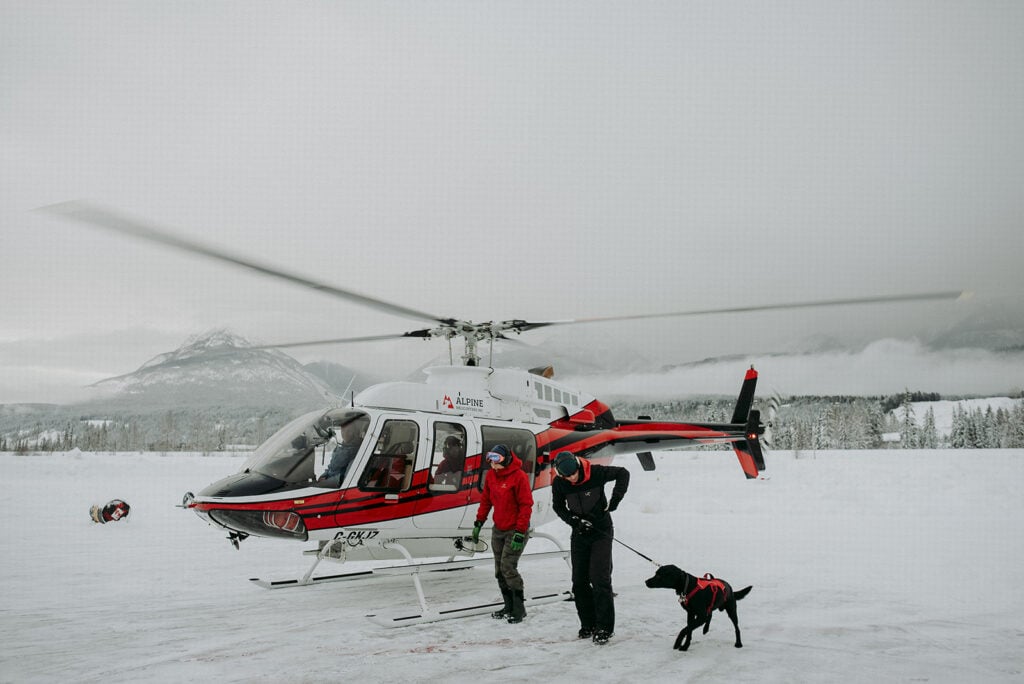
Certified avalanche dogs can detect human scents through snow, separating them from the cacophony of odours from nearby search and rescue crews. The canines are trained by their owners to stay calm and focused amid mayhem, often travelling by helicopter, sometimes hanging by long-line, to reach terrain too complicated for a landing. “We currently have just shy of 30 operational avalanche dogs and another half dozen in the training pipeline,” says Kyle Hale, president of the Canadian Avalanche Rescue Dog Association, the national not-for-profit organization responsible for training dogs and handlers for avalanche search and rescue across Canada.

Each spring, his association hosts a training weekend to assess new recruits and sharpen the skills of returning teams. It’s where aspiring avalanche canines are initially assessed for entry into the nearly two-year program and mid-level trainees like Milhouse build endurance and learn new skills. Veteran avalanche dog teams also attend the training weekend to refine their techniques and reconnect after busy winter seasons. In May, some 25 handlers (and about as many dogs) from across Western Canada congregate for the weekend at an off-grid camping site outside Merritt, B.C. Plus one journalist and her tent.

The first thing I did upon arrival was volunteer to be a human quarry, a person who hides so the canines can practice their search-by-sniffing skills. Some people go to the mountains to find themselves; I wanted to be found by a puppy. 

Common breeds among avalanche dogs include Labrador retrievers, German shepherds and border collies. (Photo: Canadian Avalanche Rescue Dog Association)
Expand Image

Growing up in Ajax, Ont., Martin noodled around on a Canadian Tire snowboard on nearby hills and got hooked on snow sports. After university, he spent time in Radium, B.C., to connect with the mountains and an uncle he idolized, who also happened to have an avalanche dog. That path ultimately led Martin to become a ski patroller at Whistler Blackcomb and a part-time coroner for the province. The latter gig, exposing him to the toll of B.C.’s opioid and mental health crises, pushed him to the brink of burnout. “The day that Mili [Milhouse] passed the CARDA assessment test, I resigned from the coroner job to make time for training,” he says. “This is also a way to give back to the community, and it’s an add-on skill for my ski patrol work. And like everyone else here, I really love dogs.”

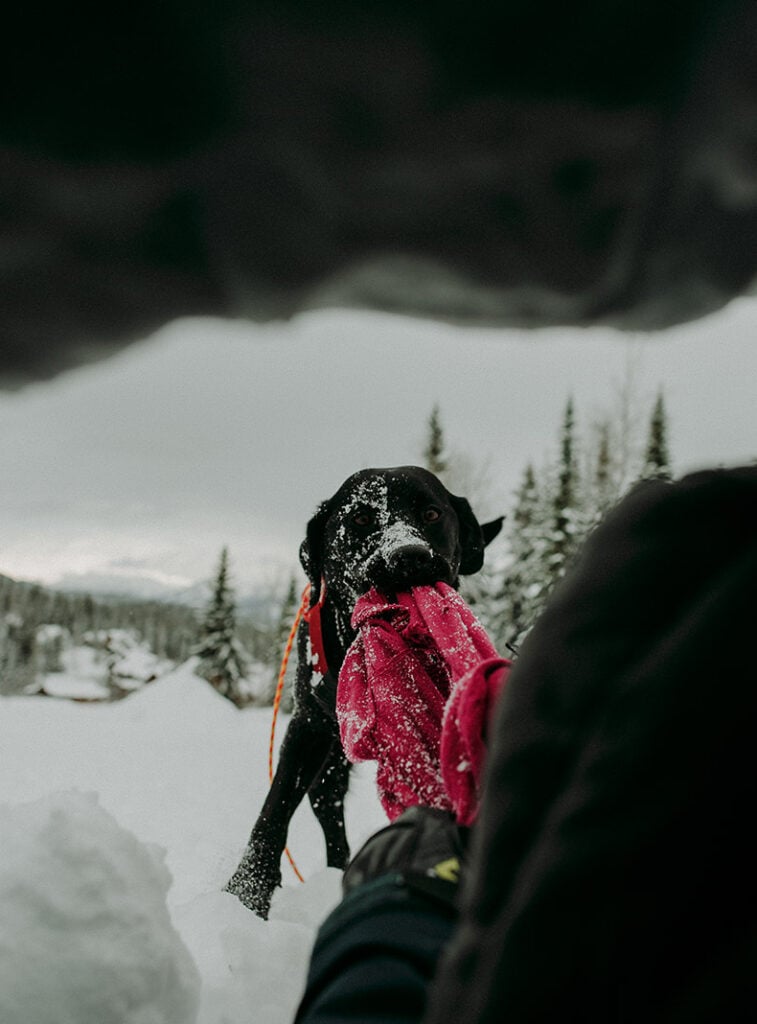
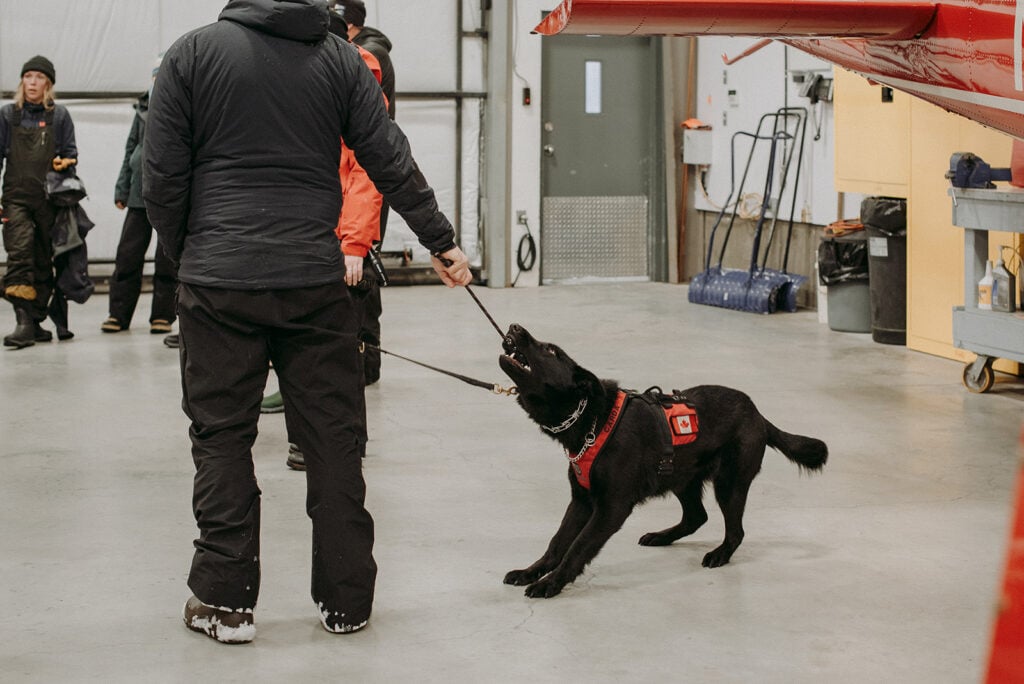
When Milhouse finds me after about 15 minutes, my task is simple: use the sweater to “play the best game of tug ever,” as instructed by Hale. Playing “tug” is the dog’s reward, the cornerstone of the Canadian Avalanche Rescue Dog Association’s positive-reinforcement training strategy. 

Training avalanche dogs is a huge commitment. Handlers must be dedicated, passionate and open-minded. (Photo: Jena LaRoy/IG @jenaleephotographs)
Expand Image

Avalanche rescue dogs trace their roots to the 18th century, when monks trained dogs to help lost travellers through the snowbound St. Bernard Pass between Italy and Switzerland. But the modern era of avalanche dog training began after a 1938 avalanche in the Bernese Alps that killed 18 people. As rescuers retrieved the bodies from the Schilthorn disaster, a pet dog unexpectedly tracked down one of the buried victims. Two years later, Switzerland launched the first official avalanche dog program, which reached Canada nearly four decades later. 

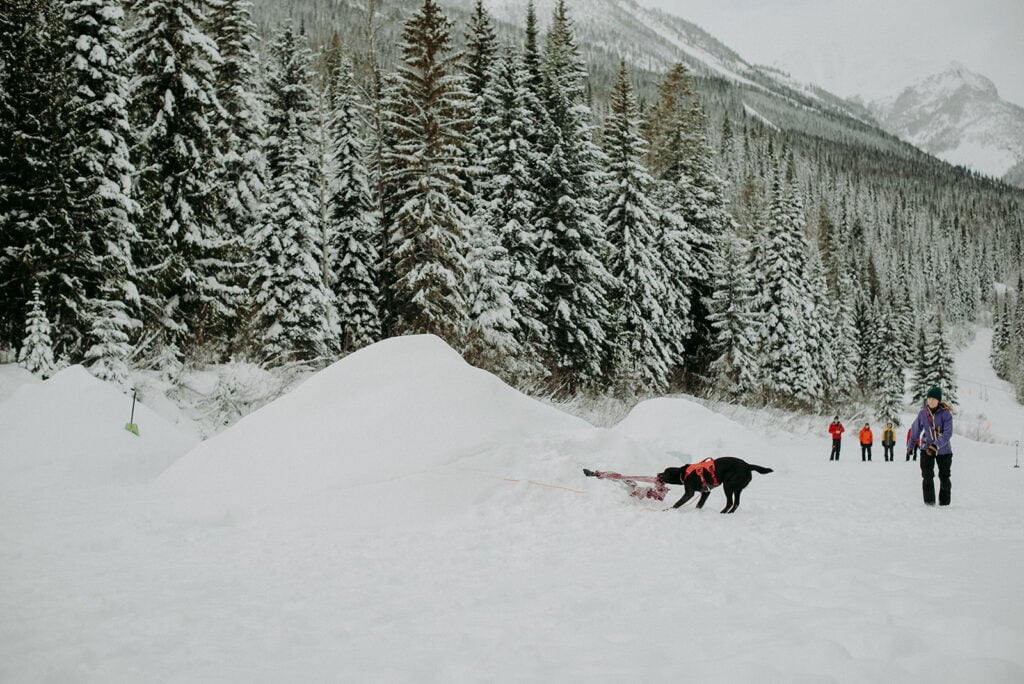
In the winter months, dogs are trained to locate and dig out buried quarries. (Photo: Jena LaRoy/IG @jenaleephotographs)
Expand Image

In 1978, Whistler Mountain ski patroller Bruce Watt was partially buried in an avalanche. Thankfully, a ski patrol buddy spotted Watt’s arm above the snowline and dug him out. Using a single ski as a probe, Watt then helped locate and revive a second buried patroller. “We were lucky,” says Watt by a campfire, “but it was very sobering.”

Still reeling from the earlier death of his best friend, John Cleland, who died in an accidental fall on the mountain, Watt found solace in the work that followed. “We didn’t do therapy back then. So the avalanche dogs became my therapy.” Together with Fernie ski patroller Rod Pendlebury, Watt founded the Canadian Avalanche Rescue Dog Association in 1982, now a volunteer-led organization that trains civilian avalanche dog teams; the RCMP then tests and certifies them.

After 10 minutes, individuals buried in an avalanche have a slim chance of survival. A live find often results in international news, such as when an avalanche dog near Piedmont, Italy, found a lone backcountry skier trapped beneath the snow after a remarkable four hours and 40 minutes of burial.

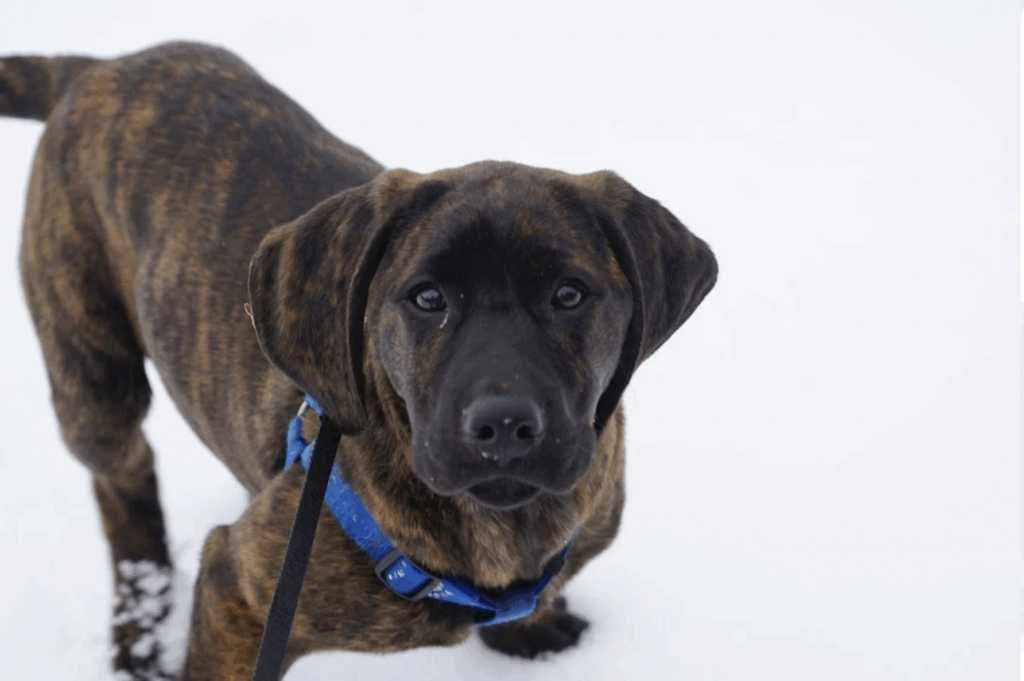
Labrador retrievers, German shepherds and border collies are common breeds among avalanche dogs, but any young canine that passes a three-part tug drive, prey drive and hunt drive assessment is welcome into the program, says Gwen Milley, a longtime trainer who coheads the association’s puppy assessment. Dogs often fail the assessment test because they lack “an innate and strong desire to tug,” says Milley, which is fundamental for success.

Playing tug is the dog’s reward and is fundamental to the organization’s positive-reinforcement training strategy. (Photo: Jena LaRoy/IG @jenaleephotographs)
Expand Image

A person’s survival depends on the size of the avalanche and depth of burial, says Hale, as well as the density of the snow, which can have the consistency “of concrete.” The odds improve if a trapped person is wearing a transceiver or is skiing in a group where someone who has escaped calls for help or begins digging. Inflating an avalanche airbag from a backpack can also help by keeping them near the surface, making them more visible and providing a pocket of air once deflated. Hale explains that an avalanche dog is one of many tools that can buy time.

Dogs can search an area of snow in under 30 minutes that would otherwise take a group of 20 people hours to clear by walking shoulder-to-shoulder and inserting probes into the snow at regular intervals to check for bodies. Even so, finding a person alive in an avalanche is extremely rare, even with dogs on call; Canada has only one recorded instance of a live recovery by an avalanche dog: in 2000, handler Robin Siggers and his dog Keno rescued an avalanche victim in Fernie, B.C.

About a dozen avalanche dogs are sent out annually, according to the Canadian Avalanche Rescue Dog Association, and they’re most often called in to help recover the bodies of people caught in backcountry avalanches. Dog teams are also called to ensure unexpected avalanches within the bounds of a ski resort haven’t trapped any clients, as most people at a resort don’t carry transceivers or avalanche airbags. Whistler Blackcomb, for example, has seven avalanche dogs on its roster.

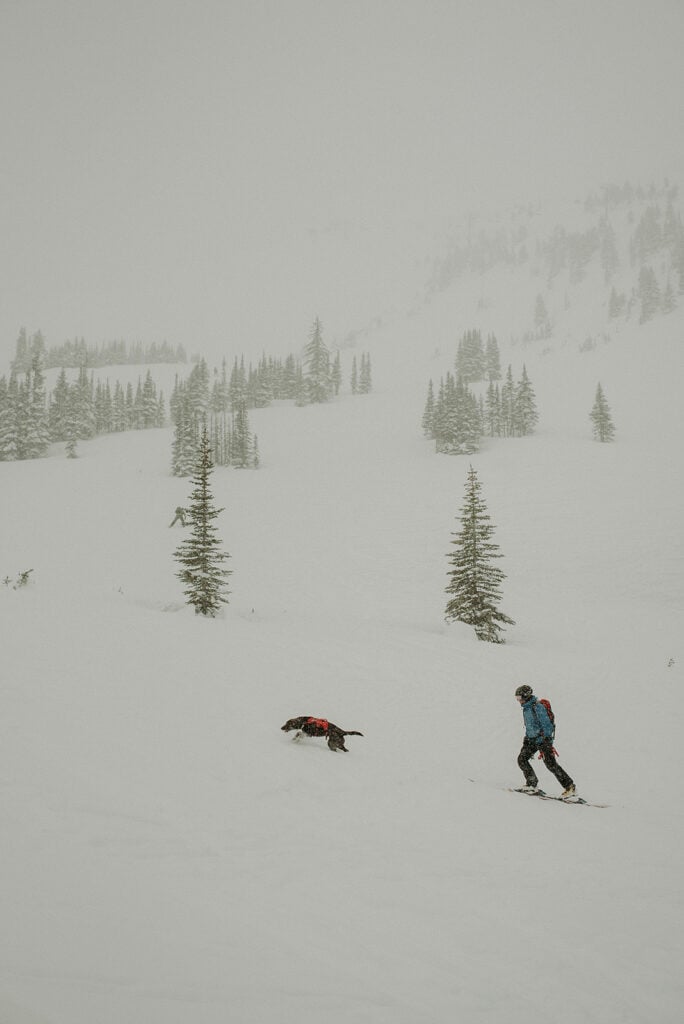
Each year, about a dozen avalanche dogs are sent out — most often called in to help recover the bodies of people caught in backcountry avalanches. (Photo: Jena LaRoy/IG @jenaleephotographs)
Expand Image

Although the number of people in extreme snow sports isn’t tracked officially, Hale says more people are entering the backcountry to ski, ice climb or snowmobile, either on their own or with tour companies. “You go to places that a decade ago you were by yourself, and there’ll be five, six, seven cars in that same parking lot,” he says. 

In addition to his role leading the rescue dog association, Hale is the search and rescue manager for the local Golden and District Search and Rescue and heads the mountain safety program for Kicking Horse Mountain Resort. “From a ski hill perspective, you definitely see a lot more people at the resort in backcountry touring gear. Fifteen years ago, it was pretty niche to be at the mountain with skis that you could walk in. And now it seems like everybody has a touring setup.”

“We’ve seen an exponential increase in [backcountry] user days in the last 20 years,” Hale adds, “but have had flatline in avalanche fatality statistics. So we’re doing a good job on the public communication piece [about carrying transceivers and other safety equipment], but there’s still definitely a need for a search and rescue capacity.”

During the winter, dogs in training locate quarries hidden in mounds of snow. Once the dog finds the buried human’s location, it starts digging. This serves two purposes: it allows the dog to double-check that the odour is coming from that spot, and digging starts the rescue process. To pass the final avalanche dog test, trainees must locate a selection of hidden quarries within 45 minutes in the challenging winter mountain terrain of snow, slopes and trees. “During the spring, summer and fall, when the weather is milder, our training goal is to push the dog’s search endurance to 1.5 hours,” says Hale. “Then they’ll be conditioned for the much harder winter terrain.” That’s why my game of quarry was being made intentionally longer. Martin had deliberately started Milhouse in the wrong direction, ensuring the canine would need to navigate the smells of evergreen trees, grassland and alpine flowers before my own. 
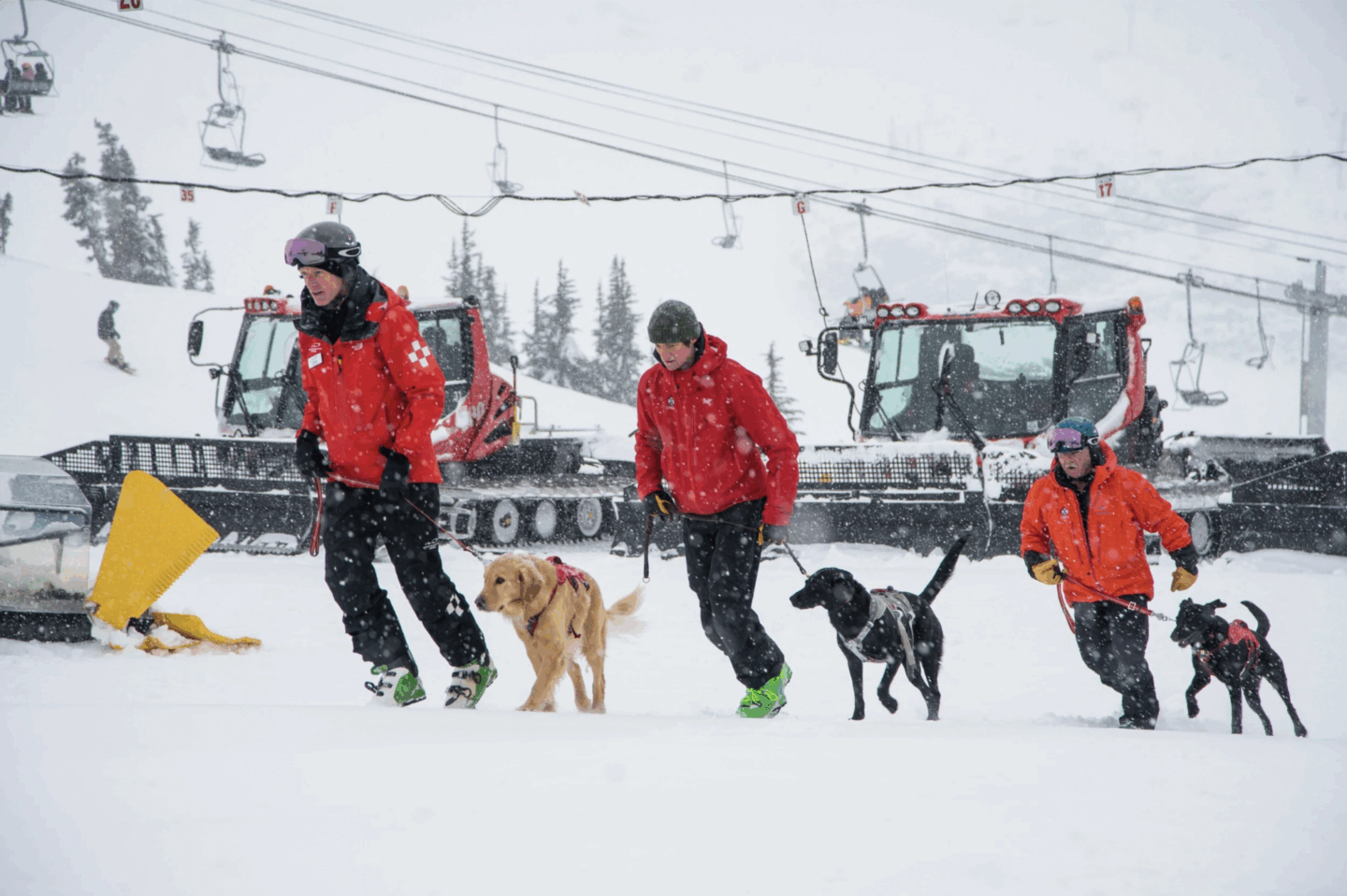
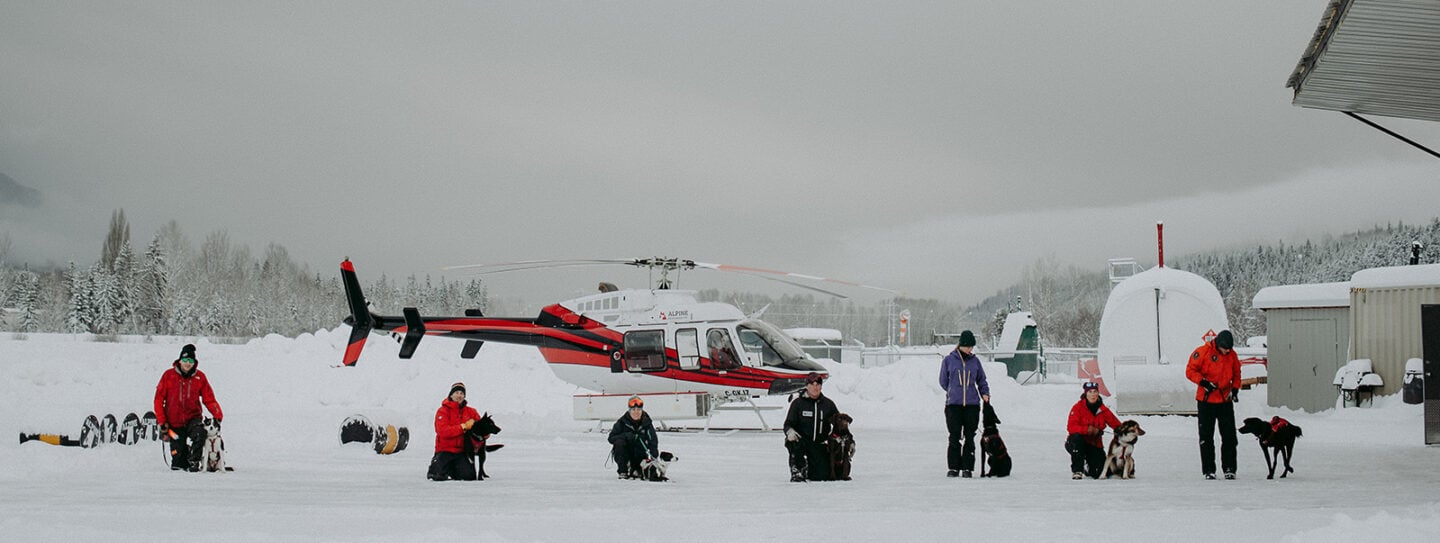
Canines are trained to stay calm and focused amid mayhem, often travelling by helicopter. (Photo: Jena LaRoy/IG @jenaleephotographs)
Expand Image

To say dogs are superior smellers to humans is a colossal understatement. Humans have a small membrane at the top of our nasal passage with odour receptors that can detect scent molecules in the air. In comparison, a dog’s nose has an intricate, three-dimensional smell-detecting structure called a turbinate. This nasal structure boasts 220 million odour receptors, compared with our paltry six million, and it also helps dogs process odours continuously as they breathe, not just during an inhale, as humans do. Canines even have a vomeronasal organ that detects scent in water. Compared with humans, the olfactory power of a dog clearly reigns supreme.

Just weeks before the Merritt training, a search dog named Barrett located a body 154 feet underwater in Okanagan Lake after a massive mudslide. Wind also plays a crucial role in all canine searches. “A light to moderate wind creates the best scent cones to help dogs zero in on a target,” explains Jennifer Coulter, instructor coordinator for the Canadian Avalanche Rescue Dog Association. Handlers spend a lot of time thinking about the wind and it how affects the size and shape of a scent cone — and thus the ability of dogs to track the source. Obsession with scent cones also leads to good-natured joking about people keeping their own scent cones to themselves, particularly after a few days of off-grid camping.

Amid the camaraderie within the community, avalanche dog training can be challenging. “I knew it was going to be a lot of work to train an avalanche dog, but it was significantly more work than I expected. Sometimes all-consuming,” says trainer and ski patroller Lisa Roddick. “But it’s also been super rewarding. I also didn’t realize that I’d like it as much as I do — or that I’d become such a dog nerd.”

As superior smellers to humans, dogs have an intricate, three-dimensional smell-detecting nasal structure called a turbinate, which boasts 220 million odour receptors. (Photo: Jena LaRoy/IG @jenaleephotographs)
Expand Image

In addition to time and effort, handlers spend about $20,000 on course fees, veterinary bills and dog equipment to become certified — a substantial investment that doesn’t yield a financial reward. Most avalanche dog handlers are volunteers on search and rescue teams or have day jobs in a snowy place, often as ski patrollers, paramedics or avalanche forecasters. “It can get expensive,” says Hale. “So ideally, the employer helps you break even on costs.” But investing the time and energy to train an avalanche dog also doesn’t guarantee certification. 

Dog trainer Axel Obeth made a tough call with his first avalanche-dog-in-training. “Ayla had high energy and high drive,” says Obeth. “She was searching for 20 to 30 minutes, but it was hard for her to stay focused for longer than that.” After almost two years of training, Obeth withdrew Ayla from the program.

As time stretches on in my hiding place within the pine trees, I begin to question my tugging game. What if Milhouse finds me boring? I think. Spending time around creatures with an enormous imperative to please has clearly rubbed off on me. As I suppress a chuckle about this insecurity, I hear the rumble of an approaching dog going full throttle. I ready my grip on the green sweater as Milhouse’s sweet russet-brown face suddenly pokes around the tree trunk. She pauses for a second, tilts her head and, with a look of self-satisfaction, makes a beeline for the sweater, tail wagging with gusto.

Without hesitation, I begin to jump around with the enthusiasm of a deranged toddler, calling out “Good girl!” on repeat while Milhouse tugs with all her might. “You can, um, stand down now,” says Martin a few moments later. As Milhouse brings him the sweater and receives an extra dose of affection, I feel a flush of euphoria. Playing tug with an avalanche dog really wasn’t rocket science. But training an avalanche dog? That takes rigour, endurance and an intangibly precious bond between a dog and its human.

Advertisement

Help us tell Canada’s story

You can support Canadian Geographic in 3 ways:

Live Net Zero Email Service

Related Content

People & Culture

The Nunavut Quest dogsled race is revitalizing a once-threatened tradition

Inside the 500-kilometre dogsled race across the High Arctic with the qimuksiqtiit who are sharing their knowledge with the next generation

  • 2681 words
  • 11 minutes
The spiny dogfish made history when it was certified as the world’s first sustainable shark fishery in 2011

Wildlife

The great green shark hunt 

Can British Columbia’s spiny dogfish make the grade as the world’s first “sustainable” shark fishery?

  • 3319 words
  • 14 minutes

Exploration

A bridge of ice

Ken Hedges of the 1968-69 British Trans Arctic Expedition reflects on the perilous and ground-breaking journey

  • 3217 words
  • 13 minutes

People & Culture

New Land Expedition: Magic polar travel with dogs

The New Land 2013 expedition is following the route of Norwegian explorer Otto Sverdrup across Ellesmere Island,…

  • 465 words
  • 2 minutes
Advertisement
Advertisement