Wildlife
Unpacking the mystery of grizzly bears in Wapusk National Park
In the Hudson Bay Lowlands, polar bears have reigned supreme. Increased sightings of a new predator have everyone on high alert.
- 5236 words
- 21 minutes
Wildlife
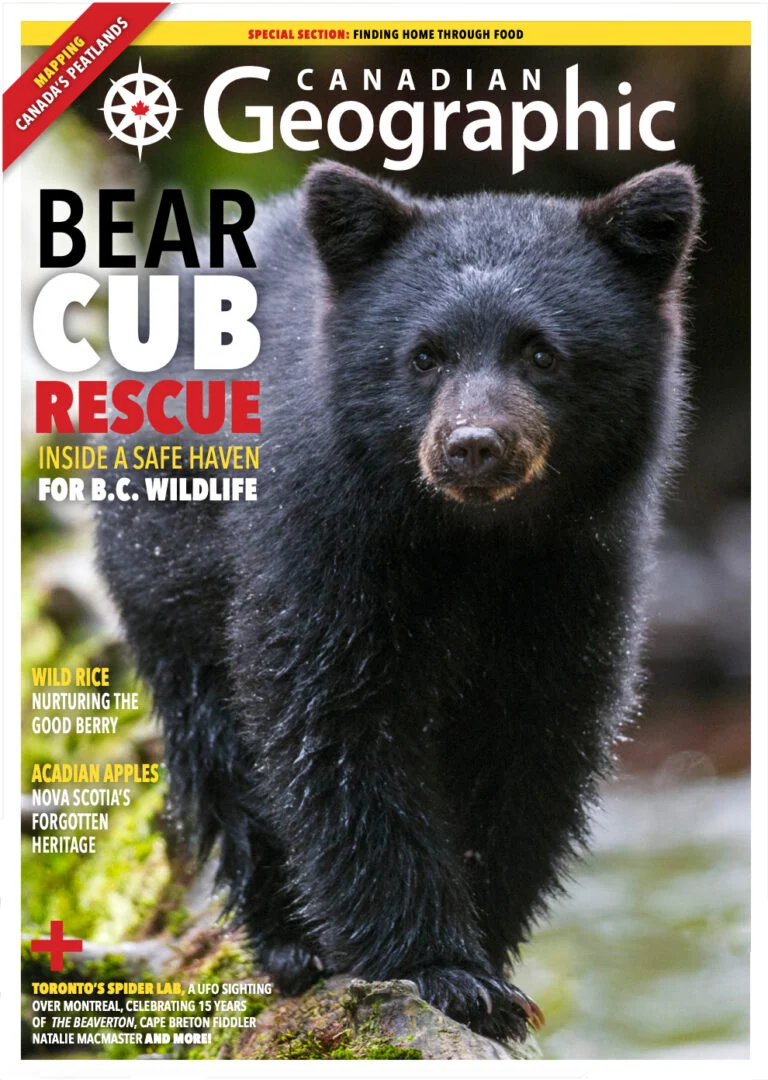
The Northern Lights Wildlife Society in Smithers, is rescuing more bear cubs than ever before. Can the landscape still support them?

In 2018, the François Lake wildfire swept through a swathe of British Columbia’s interior, leaving behind a vast cemetery of grey-white trees. A ghostly forest, but not a forest of ghosts. A ghostly forest, but not a forest of ghosts. Watched over by these eerie sentinels, the landscape, now humming with butterflies and bees, is carpeted by tiny white flowers that will soon erupt into wild strawberries. Fireweed, raspberries, dandelions and rose bushes — fertilized by ash and nurtured by sun no longer impeded by shadowy trees — also burst forth from the earth. All perfect bear food.
In the distance, a solitary moose, another sign of the landscape returning, stands close to a small, round lake. “They’ll have a good time scaring the ducks,” Angelika Langen of Northern Lights Wildlife Society in Smithers, B.C., says with a broad smile.
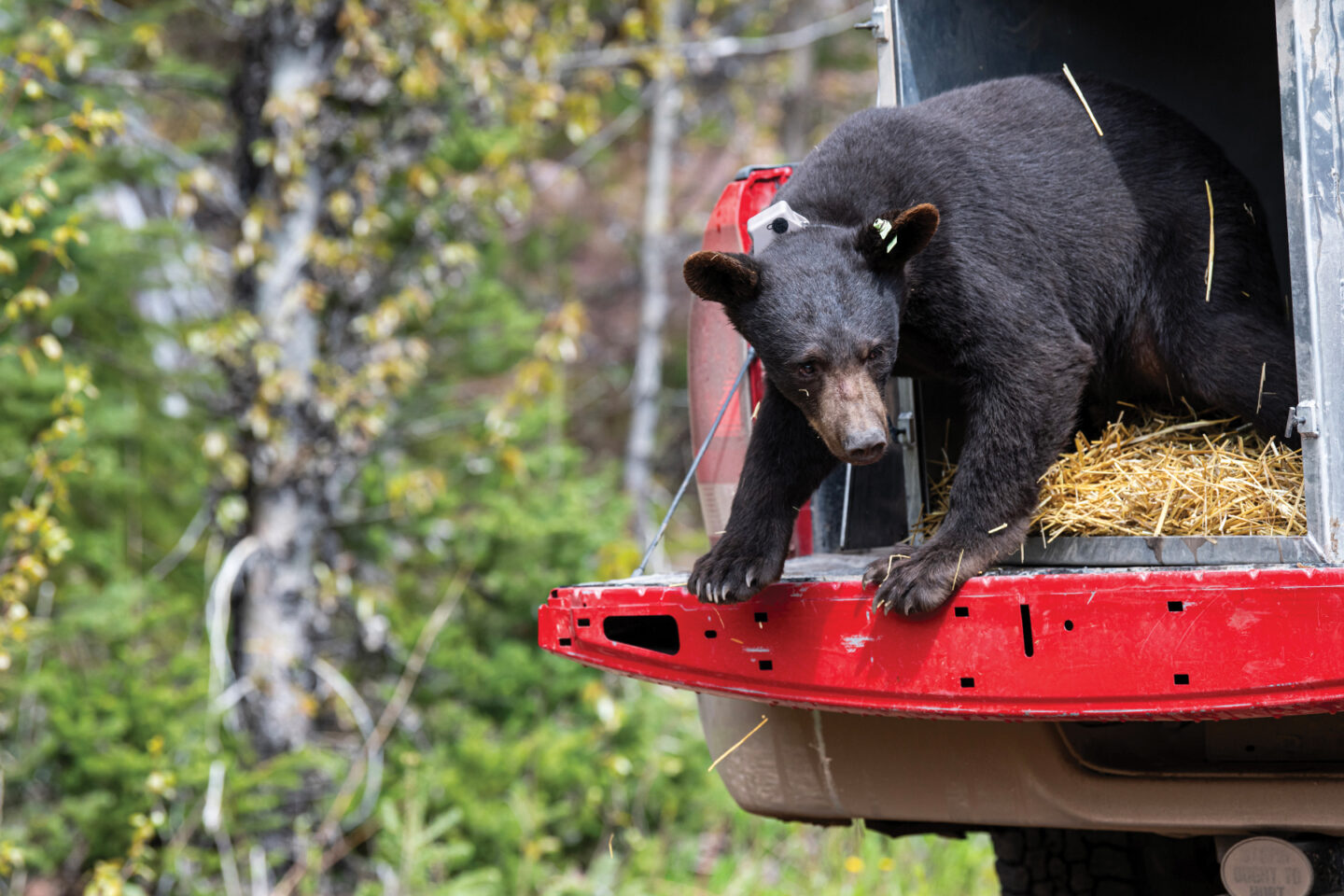
“They” being four yearling black bear cubs — two wearing GPS collars — just released from their metal crates after travelling three dusty, bumpy hours on the back of a truck. This haven is ideal for the youngsters not only because of its verdant cornucopia but also thanks to a lack of competition from other bruins. Driven out by the wildfire, many animals have yet to return here, Langen says.
When the crate doors open, three of the yearlings — Rose, Madame Min and Figaro — bolt as if ejected from a cannon. Rose scurries up a nearby tree then descends quickly, annoyed that the slender young pine isn’t high enough to provide a sense of security. Burly Kocoum, who managed to slip his GPS collar during the ride, takes his time ambling out of the crate, sniffing the air curiously before vanishing into the undergrowth. “It’s amazing how they just disappear into the wild,” says Langen.
For her, releasing rehabilitated yearling black bear cubs each spring never loses its thrill.
Langen and her husband, Peter, have been rescuing, rehabilitating and rewilding black bear cubs in British Columbia since 1990 and grizzly bear cubs since 2007 from their roughly 90-hectare spread. Run by a large contingent of volunteers and grad students as well as a handful of staff, the centre provides a fresh, highly varied diet to orphaned cubs, ensuring the bears are vigorous, fat and sassy upon release. The bears stay for up to 18 months in 10 expansive enclosures that include winter dens made of lumber, straw and branches, with natural enrichments such as logs and pools. To ensure the animals don’t become habituated to humans, only a few people feed them.
Rose, Madame Min, Figaro and Kocoum are just four of 124 cubs released back into the wild last spring — a big jump from 75 the previous year. Drought and marauding wildfires meant the centre rescued a record number of starving and orphaned cubs in the fall and early winter of 2023 to rehab for a 2024 release.
The burgeoning number of bear cubs coming into Northern Lights’ care is worrisome and brings into question whether an increasingly climate change-scarred landscape can adequately support the young bruins in their new incarnation. In the wild, cubs aged 16 to 18 months already face a mortality rate of about 50 per cent. Will Rose, Madame Min, Figaro, Kocoum and the others have the same chance of survival? Or do their grim beginnings foreshadow a less successful life?
Across British Columbia, climate change-linked drought, biblical infestations of grasshoppers, evaporated streams, tinder-dry forests that explode into infernos and intense heat have roiled the landscape, especially in the past decade. In 2021, the village of Lytton reached a Canadian record high of 49.6 C, before being incinerated by wildfire. Last year, more than one million hectares burned, making 2024 B.C.’s fourth worst year on record for wildfires. The heat and drought have taken an enormous toll on wildlife, with many species, including bears, unable to find the forage they need to survive.
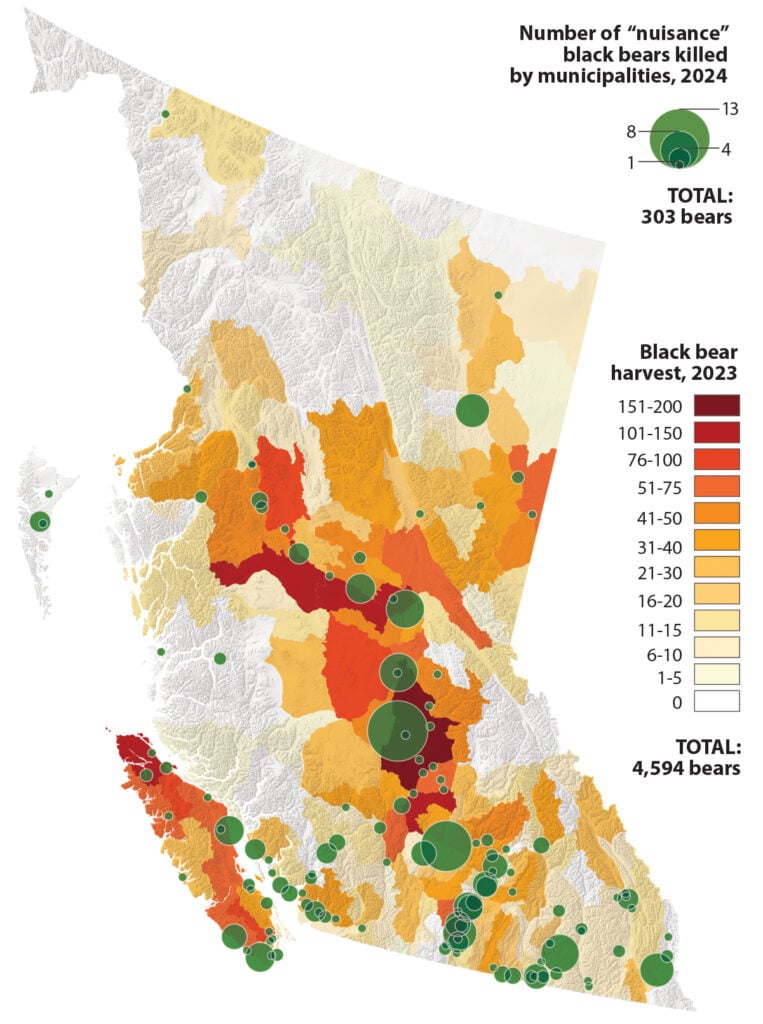
Hungry bears oftentimes follow their noses into towns and cities, particularly in autumn when their appetites turn voracious in preparation for winter hibernation. In 2023, drought and wildfire led to a disastrous wild berry crop, a primary summer food source supplementing usually fish, nuts and roadkill. Mother bears, brazen in their famished desperation, descended into populated mountain valleys to gorge on fruit trees and garbage. Suddenly they became nuisance bears, shot by locals or conservation officers and leaving behind terrified cubs too young to care for themselves. (That year, the province’s conservation officers killed 603 black bears, the second highest number on record in a decade.) Hungry mother bears also perished after colliding with vehicles while trying to navigate busy roads and highways in their quest for food.
Do the cub’s grim beginnings foreshadow a less successful life?
The cubs were as affected as their mothers, as they normally chow down alongside mom when they’re not nursing, devouring berries, roots and salmon in an effort to reach about 23 kilograms — enough to sustain them through a long winter snooze. When Langen and Northern Lights volunteers were contacted by wildlife officers, citizens or municipalities to rescue cubs across the province that fall and winter, two orphans weighed only six kilograms — the size of a large housecat. The average weight was a meagre 15 kilograms, Langen says.
The following spring, after the malnourished cubs had been brought back to health, Langen began collar- ing them to find out how they fare after release. Through a collaboration with the provincial government and Emma Bialobzyski, a University of Victoria graduate student in the department of geography, 42 of the 124 cubs were fitted with state-of-the-art, lightweight GPS tracking collars.

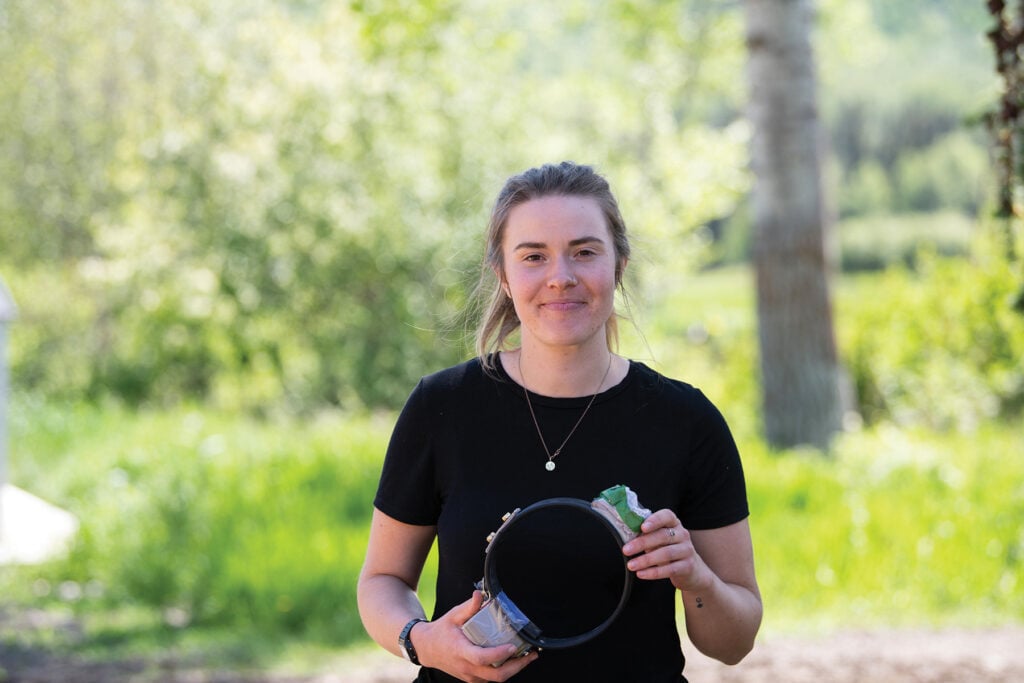
Costing $70,000, the collars are giving Langen and Bialobzyski a better understanding of the bears’ territorial needs and survival rates — helping the team at Northern Lights better prepare new bruins to thrive in the wild. Some of the critical information gleaned will include where and how far the bears travel, how large a home range they require and whether they end up close to human habitation. The collars are designed to fall off after 64 weeks, and so data collection finishes between September and October.
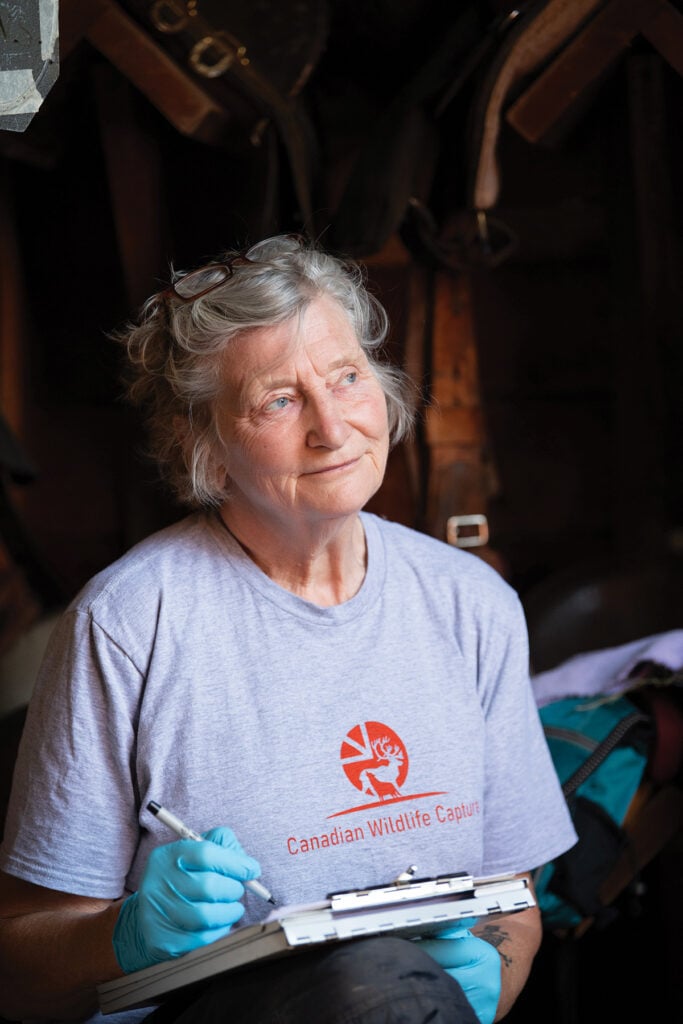
Veterinarian Helen Schwantje helped Northern Lights collar last year’s black bear yearlings. The bruins were sedated with a quick jab of anesthetic to the hindquarters, using a syringe and needle attached to a long pole. As soon as the bears went under, they were placed on a handling blanket and weighed. Schwantje checked the bears’ mucous membranes, took their temperature, recorded their heart rate, withdrew blood and plucked hair for genetic evaluation. Northern Lights staff then took nose-to-tail, girth and neck measurements. “We do the measurements to assess if they grow at the same rate as a normal healthy bear, to determine if it’s worthwhile to rewild,” Schwantje says.
Once the collars were on, they were checked for proper sizing: there should be room to comfortably put two fingers under the leather with some give. This way, it won’t slip over the bear’s jaw while also allowing enough room for growth. Wild animal monitoring technology has advanced significantly since they were developed in the early 1960s. Years ago, collars would cut into bears’ necks. Other unsuccessful efforts included internal implants, subcutaneous implants and ear-tag transmitters, all of which had significant drawbacks.
Unfortunately, 18 of the collars were too big for the young bruins, says Bialobzyski. The team could use only the small and medium-size collars, which resulted in an uneven sex ratio. Only 13 female bears, which are smaller and require a smaller home range, were collared, compared with 29 males.
Despite the challenges, the collaring initiative is still a golden opportunity for conservationists to learn more about bear rehabilitation. It’s “unusual for biologists to work on juveniles, [so] having a group like this is pretty unique,” says Schwantje, B.C.’s wildlife veterinarian emeritus who is globally respected for her decades of research on wild sheep and caribou. It’s a “tremendous data set.”
Schwantje sees the collaring as vital to determining whether Northern Lights’ rehabilitation efforts truly prepare bears for success in the wild. “Are we helping them, or just feeding them?”
Normally, cubs spend from one to two years with their mothers, a learning experience that “you can’t replace. We don’t know how they learn from their mom. We would need a camera to follow them 24/7,” she says.
Schwantje also ponders whether the youngsters’ early deprivations will affect survivability. Most of the cubs were starved, orphaned and injured and it is uncertain whether they’ll grow into normal, healthy adults, she says.
The entire team hopes the collaring effort and data collection will answer another critical concern: will the cubs whose mothers were killed as nuisance bears follow in maternal paw prints and gravitate toward easy backyard pickings? “Will they simply get into human-bear conflict?” asks Schwantje. “Is it more humane to euthanize them?”
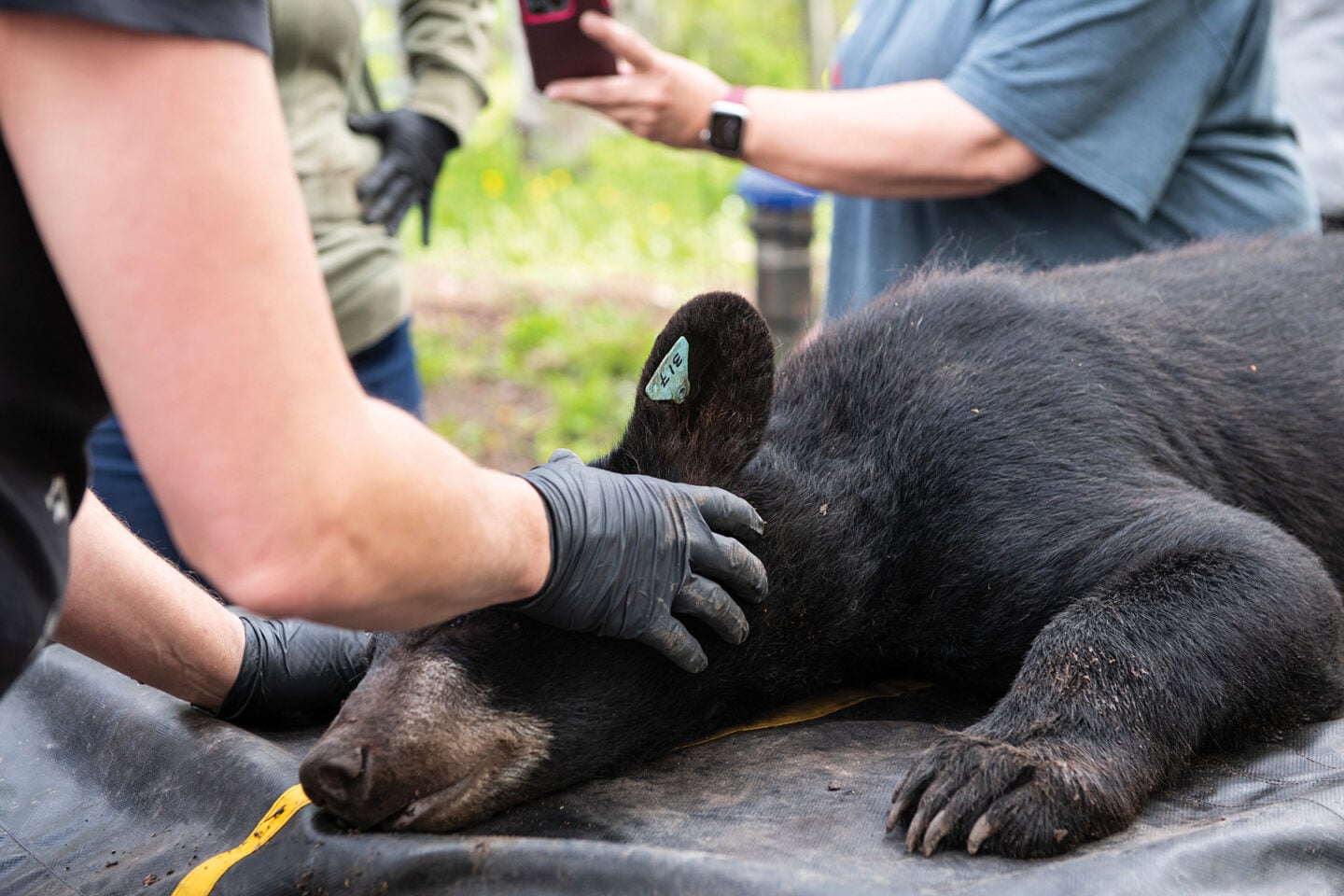
The data gleaned from collaring is larger than Northern Lights — it may be critical for black bears’ future in B.C.
In 2022, Parks Canada released a warning that black bear populations across the country are being “depleted as a result of habitat destruction, over-hunting, international trade and human ignorance.” And although the provincial government considers the black bear population to be stable, it warns that the animals are under increasing pressure from development such as farms and hydro reservoir proposals and from traffic deaths, poaching, logging and the collapse of salmon stocks.
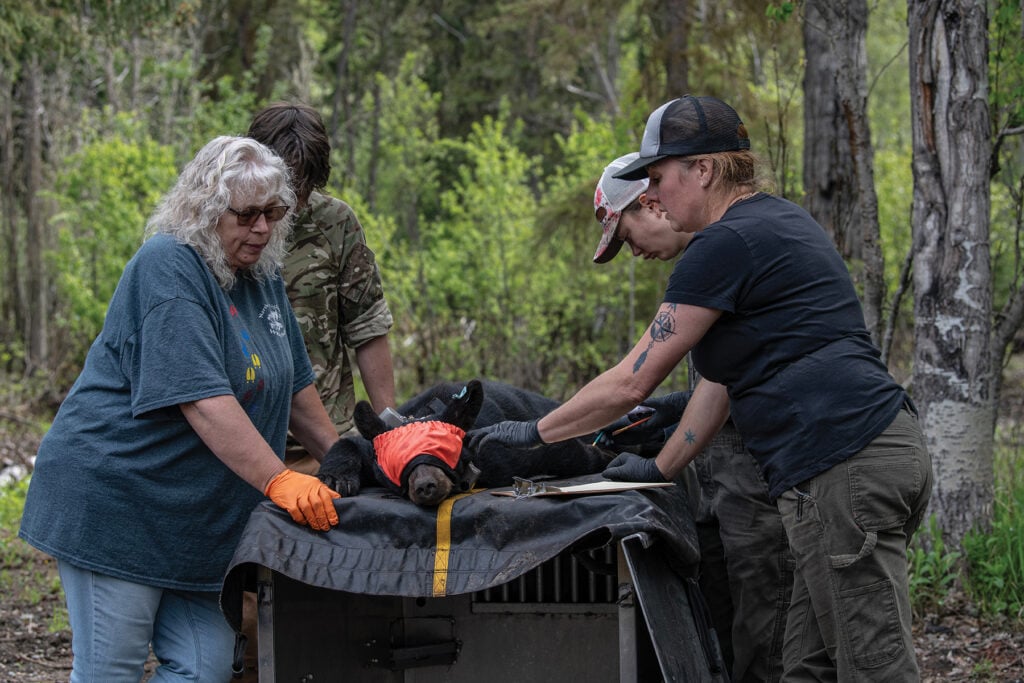
But B.C.’s provincial Ministry of Water, Land and Resource Stewardship admittedly has little data on black bear population changes. Ministry spokesperson Katie Norris estimated B.C. black bear numbers at 120,000 to 160,000, but the numbers aren’t certain, as black bear population surveys aren’t prioritized because the province doesn’t recognize them as at risk, Norris wrote in an emailed statement.
Barb Murray of B.C.’s Bears Matter, her advocacy platform that opposes trophy hunting and seeks to preserve habitat, wants to see an end to the province’s spring black bear hunt, held from April 1 to June 15, right around the time females are out foraging with their newborn or yearling cubs. Weighing from three to five kilograms, the tiny cubs are extremely vulnerable and perish quickly without out mom. While it’s illegal to hunt mother black bears, Murray says most hunters can’t distinguish male bears from females, and if a mother bear detects danger, she will hide her cubs in a tree or bush and draw attention to herself.
“The killing of adult female black bears that are supporting dependent young is a concern of the B.C. government,” Norris wrote. “Hunters are prohibited from shooting a black bear that is less than two years old or any bear that is in its company (i.e., the sow).” Norris noted the hunters are provided with “guidance” on distinguishing females from males.
According to a 2020 technical report by Garth Mowat, a large carnivore specialist with B.C.’s Ministry of Forests, Lands, Natural Resource Operations and Rural Development, not only are black bear populations likely on the decline, but females are, indeed, being shot, “often misidentified as males.”
“Anecdotally, many hunters have reported seeing fewer black bears in southeast B.C. over the last two decades,” Mowat wrote.
But beyond hunting, black bears are being killed as they enter municipalities in search of food. In Prince George, at least 76 bears were killed in 2023, more than double the previous yearly average of 35. Part of the problem, says Langen, is that Prince George “planted crab apple trees in the boulevards, and the fruit brings the bears in.”
In Smithers, where Langen lives, 24 bears were killed that year. Langen recalls one resident who refused to remove the apples from her tree or install a fence. Instead, the woman shot the bears that came to her yard.
Easy access to a high-sugar food source like tree fruit also artificially fattens the females, sometimes causing mothers to birth three to four cubs at a time instead of the usual one or two. “This raises the number of bears that actually can’t be properly sustained by the amount of food that exists in the wild,” Langen says.
Langen says that there is an easy solution to these “nuisance bears”: eliminate fruit trees from communities or put unscalable fences around them. She started a program last year called Bear the Responsibility, to edu- cate people and municipalities on how to co-exist with bruins and how to deter bears from visiting fruit trees when they ripen in the fall, thus lowering the need to shoot the animals.
There’s evidence these deterrents work. Nelson, B.C., for example, urges citizens to pick the fruit off trees before ripening, to knock off spring blossoms to prevent fruit growing or, ideally, to replace fruit trees altogether. In 2023, Nelson reported only one bear fatality, down from 21 the previous year.
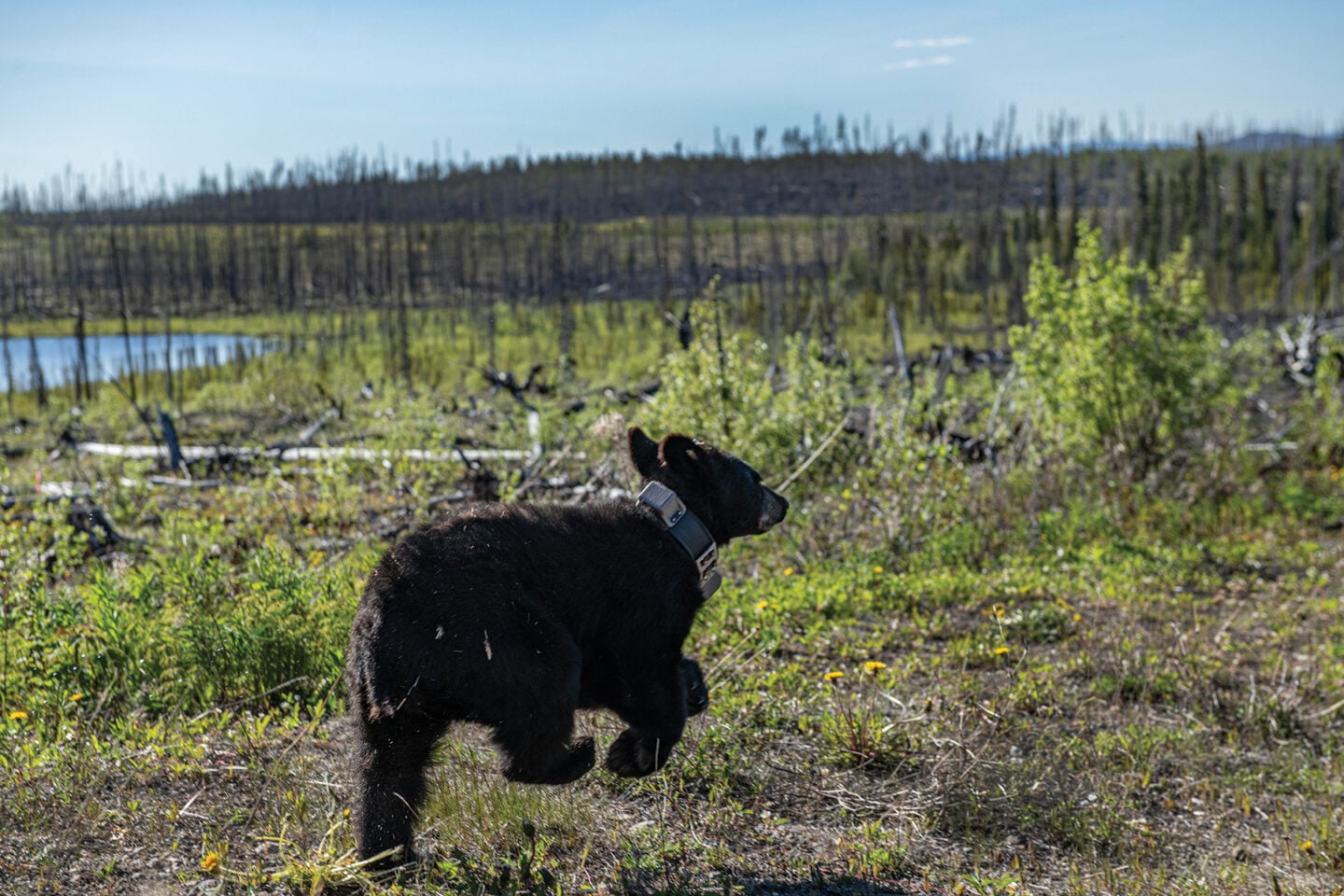
Bialobzyski is now sifting through the data streaming in from the collared yearlings released last spring. She and the Northern Lights team are working to understand how far the bears venture away from the places they’re released, and why.
Yearling black bears are currently freed at least 25 kilometres from any site where there is human activity. Some only ever travel 10 kilometres from the area, while others go much farther.
One collared black bear yearling released north of Prince George immediately set out on a 250-kilometre odyssey to a remote mountain range. “It’s truly amazing to see that,” Bialobzyski says. “What’s driving her to these remote areas and away from the habitat that we released her in?”
As for the yearlings released at François Lake? The fate of Kocoum and Figaro is unknown, as these young bruins were released without GPS collars. Rose and Madame Min’s collars are still being picked up by Bialobzyski — a reassuring sign that they’re surviving. After the release, the two youngsters went their separate ways and “appeared to move normally throughout the active season,” Bialobzyski says. Both snuggled into a den for the winter, and are still being tracked, beating the odds and helping to ensure a future for B.C.’s black bears.
This story is from the September/October 2025 Issue
Wildlife
In the Hudson Bay Lowlands, polar bears have reigned supreme. Increased sightings of a new predator have everyone on high alert.
People & Culture
Depending on whom you ask, the North’s sentinel species is either on the edge of extinction or an environmental success story. An in-depth look at the complicated, contradictory and controversial science behind the sound bites
Wildlife
Humans and bears are sharing more landscapes now than ever before. As we continue to invade their world, will we be able to coexist?
Wildlife
Salmon runs are failing and grizzlies seem to be on the move in the islands between mainland B.C. and northern Vancouver Island. What’s going on in the Broughton Archipelago?