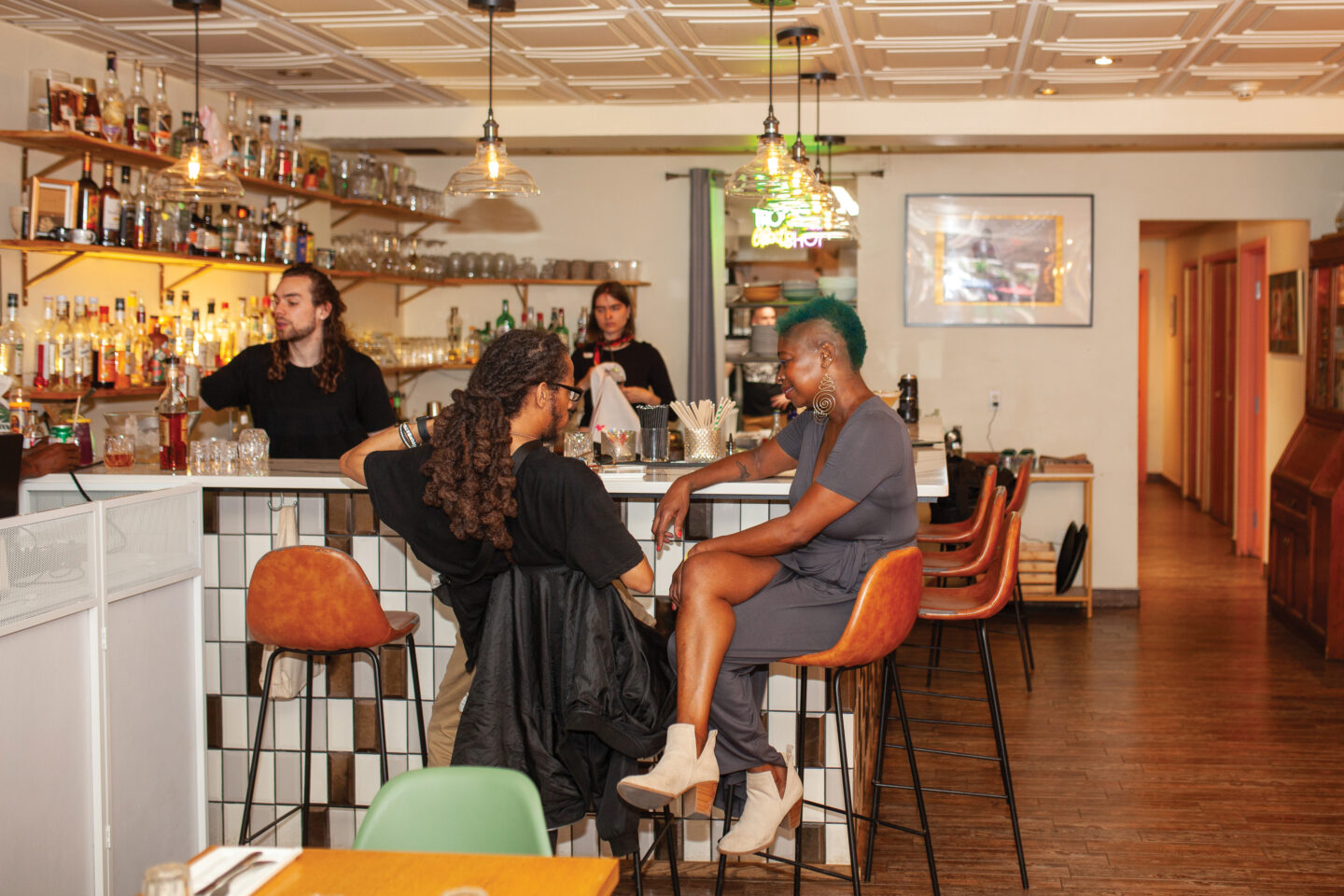
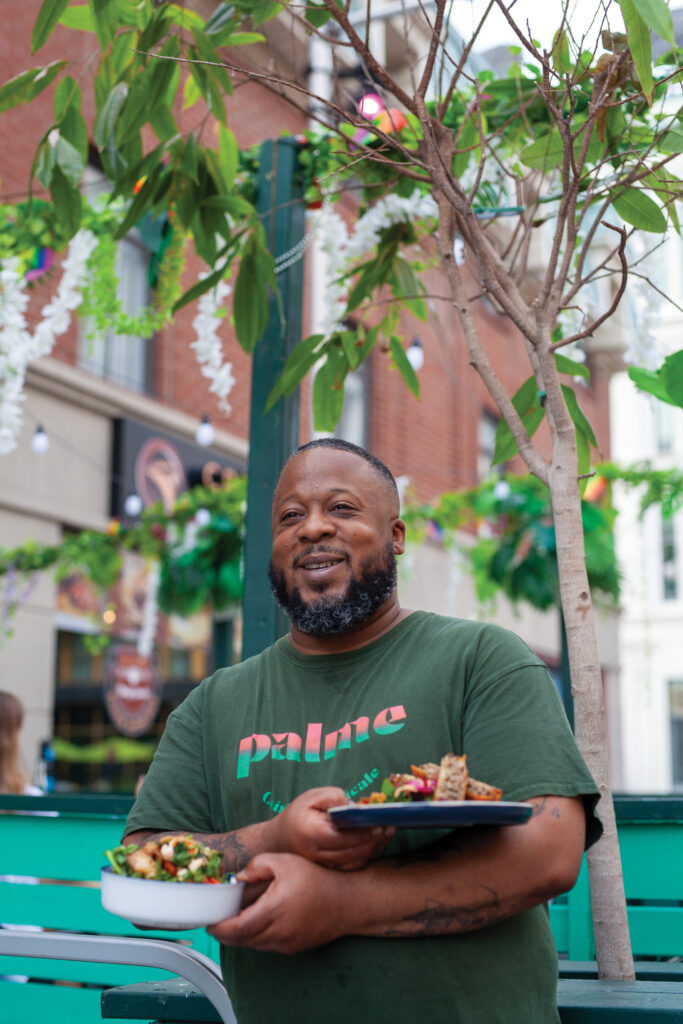
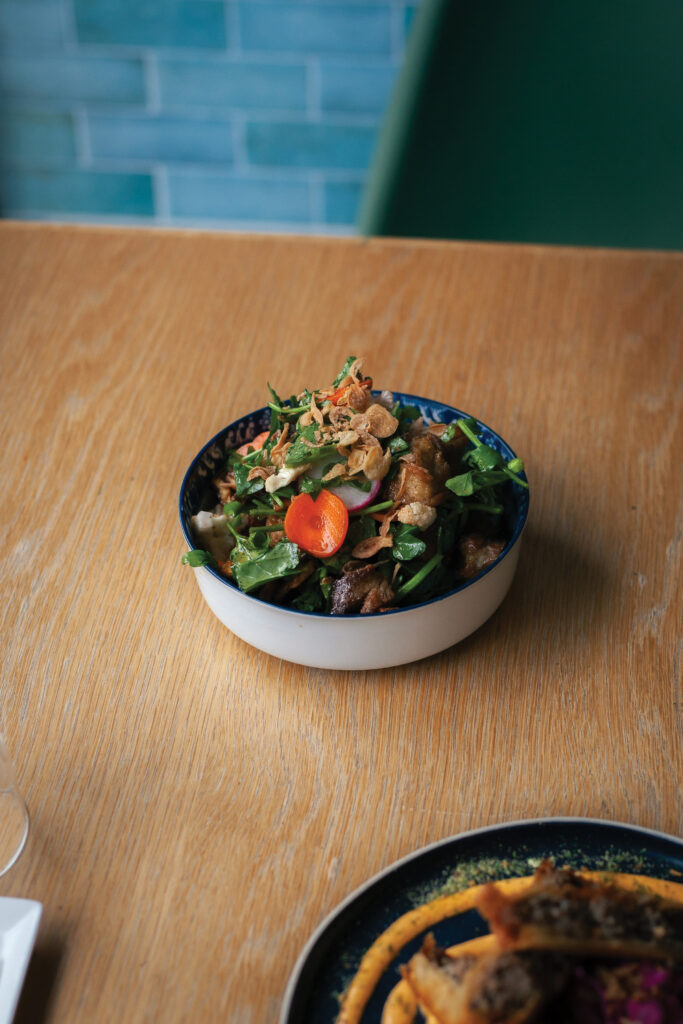
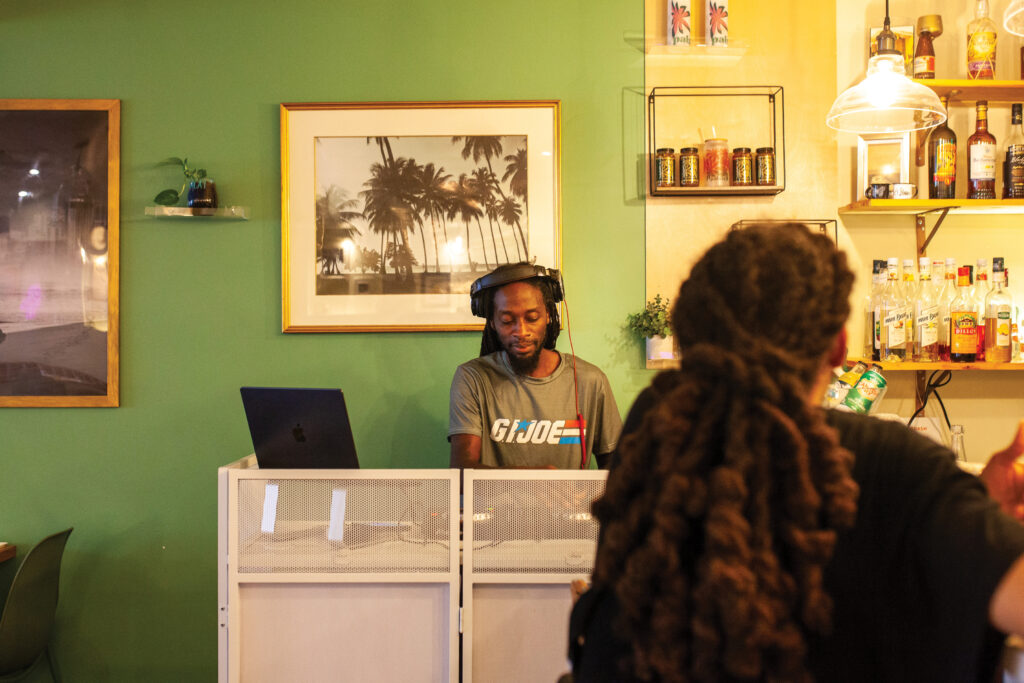
Like the music, the plates here — griot, jerk chicken, accras, ceviche — pull from across the tropics, each one reworked with unexpected touches drawn from the chef ’s own inspirations. Hence the name: Palme is an homage to countries where palm trees can be found, from the Caribbean to South America, parts of Africa and Southeast Asia — all regions that shape the restaurant, and the communities it’s grown to serve.
The restaurant’s atmosphere and culinary leanings form a point of cultural exchange that reflects the second-generation reality of its Haitian chef Ralph Alerte Desamours and his Bahamian-French Canadian partner Lee-Anne Millaire Lafleur: how their heritage, upbringing in Montreal and travels coalesce to create something new. For Desamours, culture was always close. Born in Montreal to Haitian parents, home was where he first learned to cook.
“My Haitian roots begin with my family, my grandmother and the way she taught me how to cook a Caribbean cuisine,” Desamours says. “My mom is a great cook as well, and I learned a lot from her, too. It’s how I learned all the basics.”
But while his own culture was always close, so was everything else. Growing up in the Montreal borough of Saint-Léonard, myriad cultures and the polyphony of their languages surrounded his own: Québecois, Italian, Arabic, Vietnamese, Portuguese. That early exposure set the tone for his career later in life, including stints at everything from French restaurants and high-capacity arena kitchens to a four-star Westin resort in the Cayman Islands.
When Desamours and Lafleur returned to Montreal in 2017, however, they wanted a space of their own to build on the legacy of the places they knew growing up. For the chef, that meant long-standing Haitian institutions like Méli-Mélo in Villeray and Restaurant Steve Anna in Saint-Michel, both fixtures since the mid-1980s. Instead, Palme would be more than a place to eat. It would be an experience — a space to gather, exchange, and reflect on the lives they’d lived.