
Environment
Canada’s greenest prof
Vancouver might just be home to the greenest building in the world. Meet the geography professor who brought it to life.
- 2598 words
- 11 minutes
Travel
Five times saltier than the ocean, Little Manitou Lake lets visitors float, soak and heal in mineral-rich waters

Ten times saltier than the ocean and devoid of any large marine life, the Dead Sea is the lowest elevation on Earth, reaching about 430 metres below sea level. Located between Jordan and Israel, this natural phenomenon in the Great Rift Valley is where bathers float effortlessly in the salty waters, then slather themselves with dark, mineral-rich mud renowned for its cosmetic benefits. Having visited the Dead Sea on several occasions, I’ve found the buoyancy to be remarkable, the detoxifying mud to be effective, and the surrounding desert to be beautiful. Now, what if I were to tell you that the Dead Sea is actually a saltwater lake, and we have a similar one right here in Canada?
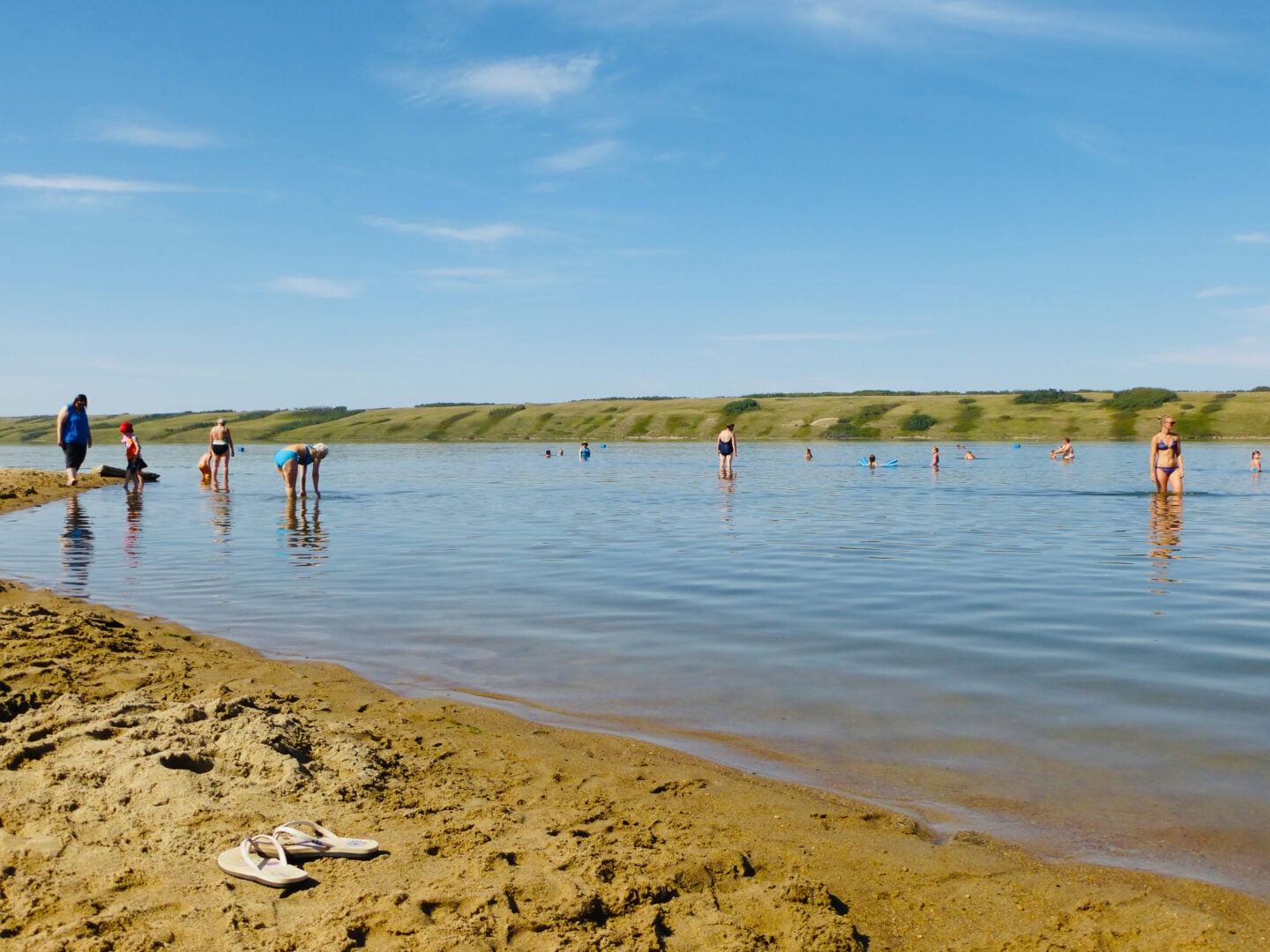
I’ve driven 90 minutes southeast from Saskatoon to the town of Watrous (population 1842) to visit the Manitou Springs Spa Resort, overlooking Little Manitou Lake. It’s a modest counterpart to the luxury spa resorts that line the Dead Sea, but the draw here is much the same: bathers come from near and far for the opportunity to float in a saline lake, smear themselves with healing mud and soak in therapeutic springs for a variety of ailments. The surrounding scenery is also quite lovely, in the warmer months, anyway.
Twelve thousand years ago, a receding glacier trapped a lake at the bottom of a valley in what is now south-central Saskatchewan. Contained within the valley’s walls, the lake water was further prevented from seeping into the rivers thanks to pressure from groundwater aquifers. Geologists refer to this as a “closed-basin” or “endorheic lake,” which means the water drains into seasonal swamps and equilibrates (or balances out) through evaporation. The Dead Sea is also an endorheic lake, as is the world’s largest inland body of water, the Caspian Sea. Neither are actual seas because they’re surrounded by land, and they lack a direct natural connection to an ocean.
After millennia of constant evaporation, Saskatchewan’s 13.3 square kilometre Little Manitou Lake has water up to five times saltier than the ocean, and it’s loaded with minerals like magnesium and potassium. With an average depth of 3.8 metres, there are only five other lakes in the world with similar deep, salty waters. In the millennia to come, evaporation will continue to decrease the lake’s depth, while gradually increasing its salinity.
The First Nations have revered this healing lake since the early 1800s, naming it after the Great Cree Spirit, Manitou. Their histories speak of young men abandoned at the lake, possibly suffering from smallpox. After bathing in Manitou Lake and drinking its waters, their symptoms improved dramatically, and they reunited with their tribe in full health. Word of the lake’s medicinal properties spread, attracting others seeking relief from fevers, skin conditions, arthritis, fatigue and other ailments. By the early 1900s, the nearby town of Watrous had become a hub on the Canadian Northern Railway, allowing visitors from Saskatoon and Regina to access the healing waters. By the late 1920s, the adjacent village of Manitou Beach had bathhouses, hotels and dance halls, including the popular Danceland, and remains one of Canada’s last remaining dance halls.
The waters of Little Manitou Lake cannot seep away, unlike the boom of railway visitors. Tourism changed, airlines replaced passenger railways, visitors disappeared, hotels shuttered, and Watrous became an agricultural hub. When it opened in 1983, the Manitou Lake and Spa Resort promised to draw tourists back to Manitou Beach, positioning itself as “Canada’s Carlsbad.” A well-travelled marketing ace might have used “Canada’s Dead Sea” instead.
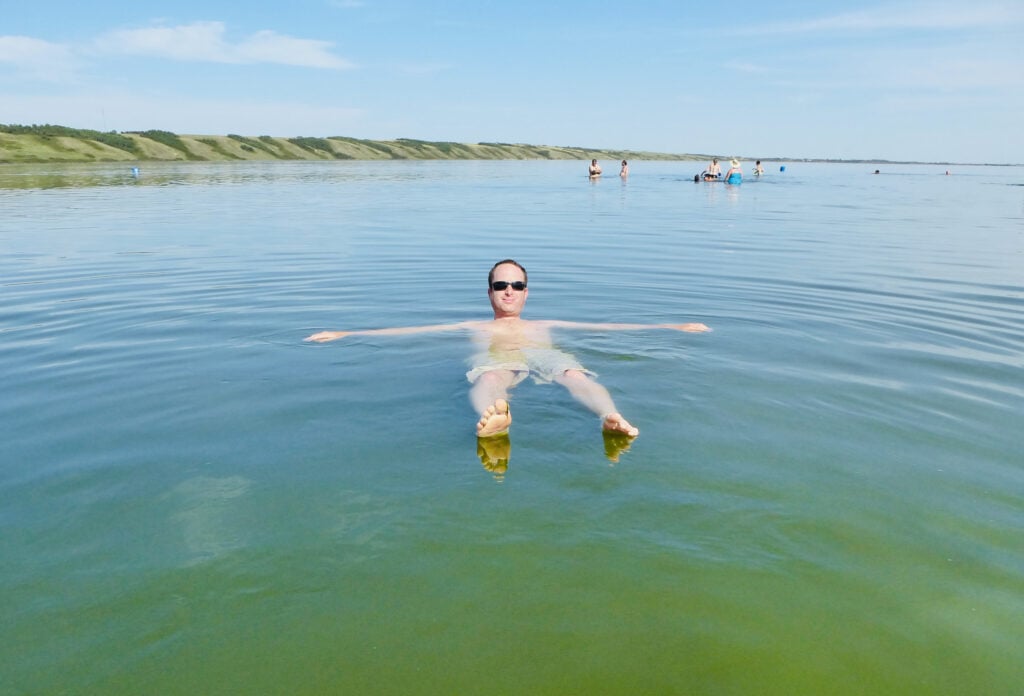
Entering one of the three designated public beaches, I slowly wade into the water. The big prairie sky is clear and the sun is hot, but the rooibos tea-coloured water is a lot colder than expected. It’s certainly a lot colder than the actual Dead Sea, which is, after all, located in an actual Middle Eastern desert. The lakebed is slippery underfoot, and I’m surprised to see brine shrimp darting about, safe from hungry fish that cannot live in such salty water. Locals are tanning, and kids are gathering sticky green weeds from the water to make wigs on the beach. Once it gets deep enough to lie back, I hold my breath, take a dip, and float on my back, just like the Dead Sea.
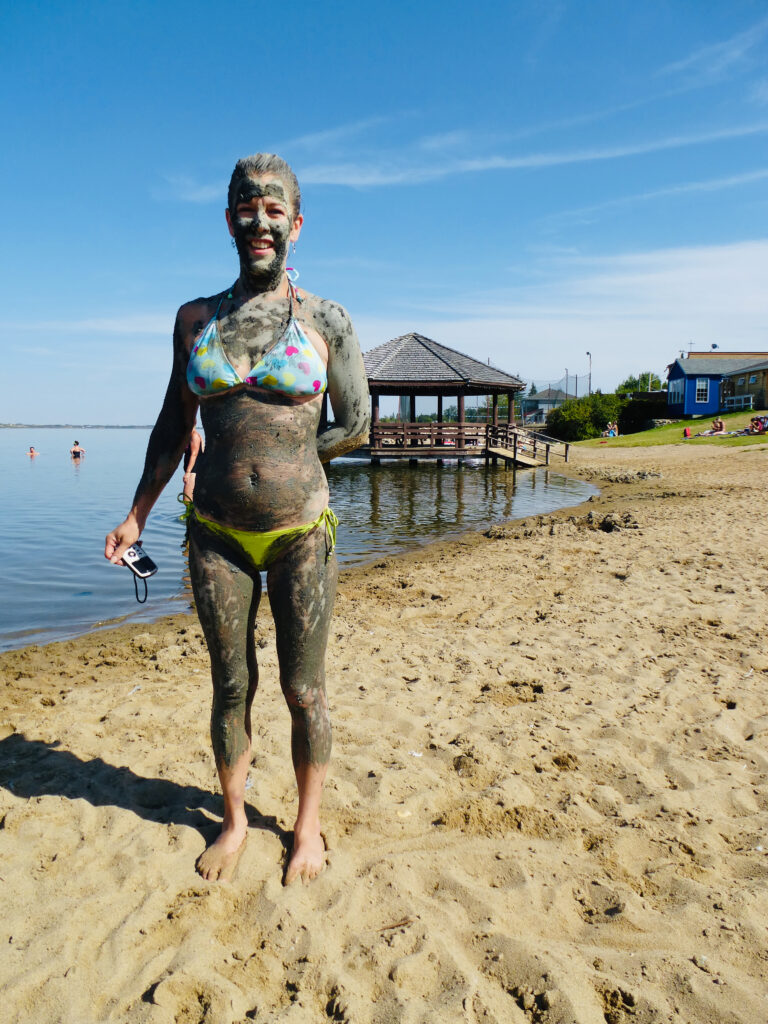
Back on the beach, I slather myself in Manitou mud – a wellness fortune waiting to happen. Considering that just 60 ml of Dead Sea Mud currently sells for $17.95, the opportunity is ripe for a Canadian wellness entrepreneur to market Manitou Mud globally. As with Dead Sea mud, I feel the drying dark goop extract toxins from my skin, and washing it off, I feel shiny and rejuvenated.
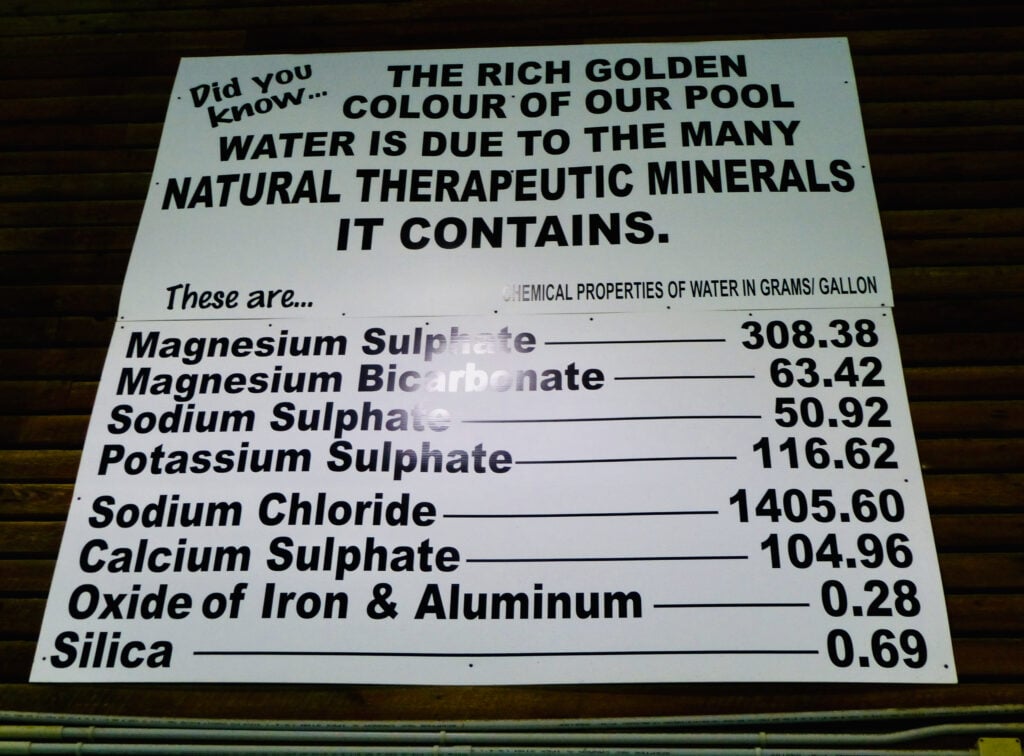
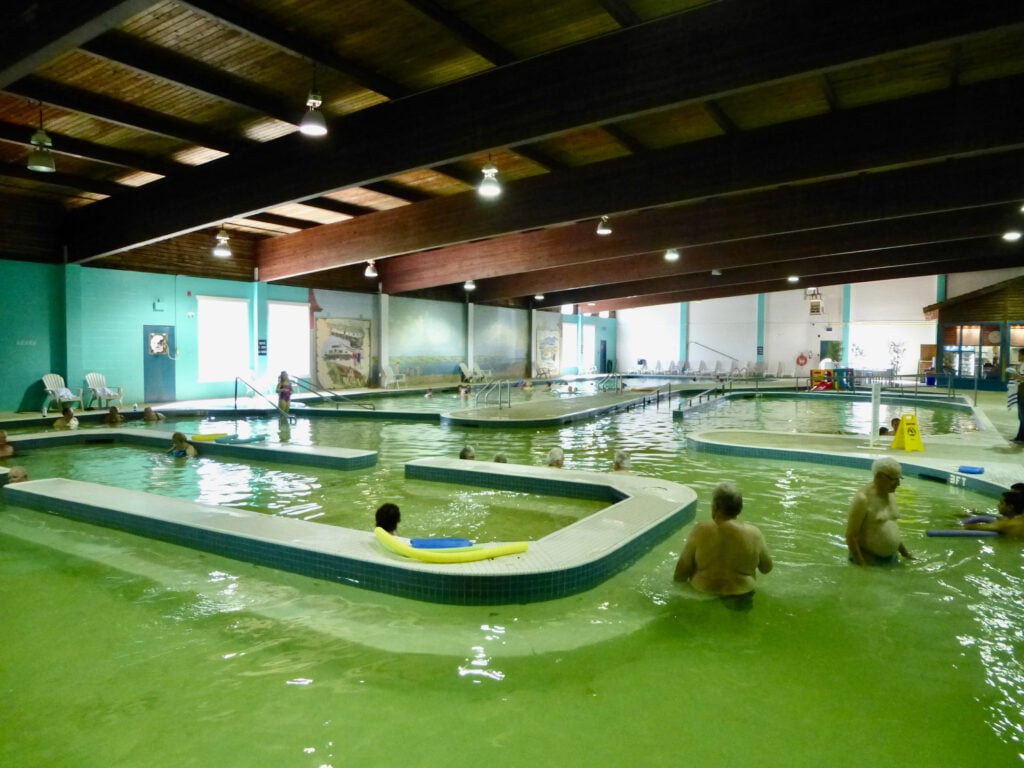
Named among the Top 50 Spas in North America by Spas of America, the Manitou Springs Mineral Spa claim their waters share therapeutic properties with the Dead Sea, and the Czech Republic’s most popular spa destination, Karlovy Vary. There are hot, warm, and cool pools, all of which are mineral-rich in magnesium, which helps regulate body temperature and skin tone. Plus, antibacterial potassium; sulphate to aid your nervous, blood, muscular, and lymph systems; calcium for your skin; silica for skin tone, bone and nail growth; and sulphur for aching joints and collagen synthesis. It makes for a good soak, followed by a great nap in my hotel room, and a fine, lakeview dinner at the hotel’s Water’s Edge Restaurant.
The Dead Sea itself is shrinking at an alarming rate, losing approximately one meter per year due to factors including industrial mineral extraction and climate change. It’s also 15 per cent shallower than it was just 50 years ago. Conversely, Little Manitou Lake’s lack of drainage has posed flood risks for the residents of Manitou Beach. In 2016, additional berms were installed to protect residences and businesses from overflow after a previous five-metre barrier was flooded. After many years of drought, I expect everyone is relieved that the rains returned in the summer of 2025. Yes, Canada has its own Dead Sea, and like so many things in Canada, it modestly floats along, welcoming visitors with a smile, inviting us all to relax without much fanfare beneath a big, beautiful sky.
Environment
Vancouver might just be home to the greenest building in the world. Meet the geography professor who brought it to life.
Travel
Soak up the summer sun and nostalgic vibes at one of these seven Saskatchewan beach resorts. (Yes, you read that right!)
Travel
Canadian Geographic’s Bucket Listed columnist Robin Esrock explores domestic tourism, national pride and the evolution of Canadian travel in the third edition of his bestselling book, The Great Canadian Bucket List
Travel
Two award-winning travel journalists discuss why family travel, even the kind that pushes us outside our comfort zones, is one of the most powerful investments we can make