Travel
Into the hills of Andalucía
Journey beyond the cities to discover white villages, ancient traditions and some of Spain’s most celebrated culinary experiences
- 3081 words
- 13 minutes
Travel
Wild landscapes, Celtic traditions and quiet villages reveal a lesser-known side of Spain
As the daughter of a Spaniard, whose summers unfolded on the beaches of northern Spain, I thought I was familiar with the country’s many splendours. From childhood strolls in Madrid’s Retiro Park to the bustling heart of Puerta de Sol, I loved the capital’s energy just as deeply as Spain’s blustery northern coastline. Later, as a university exchange student at the University of Granada in the south, I fell under the spell of the Alhambra, the Islamic fortress, and the city’s labyrinthine alleys.
After years of exploring my father’s homeland, I was convinced Spain had no surprises left for me, until I visited Galicia.
Tucked into the country’s northwestern corner, Galicia is an autonomous community defined by 1,500 kilometres of coastline, a unique language, a fishing-based economy, and a Celtic-infused culture. (Galicia, in fact, derives from the word Gallaeci, the Roman name for Celts.) The region is best known for its iconic Camino de Santiago, or Way of St. James, a renowned pilgrimage that has attracted pilgrims across northern Spain for centuries. Today, the route remains popular among tourists and peace-seekers who wish to visit what is believed to be the tomb of St. James in Santiago de Compostela’s Cathedral.
And while most enjoy this historic trail, few international visitors venture into the interior to Ribeira Sacra, where coastal inlets known as rias shape the landscape of fishing villages, lush forests, and beautiful beaches.
That is where my adventure begins – in Spain’s magic green corner.
The seven-hour flight from Toronto to Porto, Portugal, is seamless. From there, I join four fellow travel writers on a bus bound for Spain, travelling 200 km north across the mighty River Mino and into the hills of Ourense Province in Galicia.
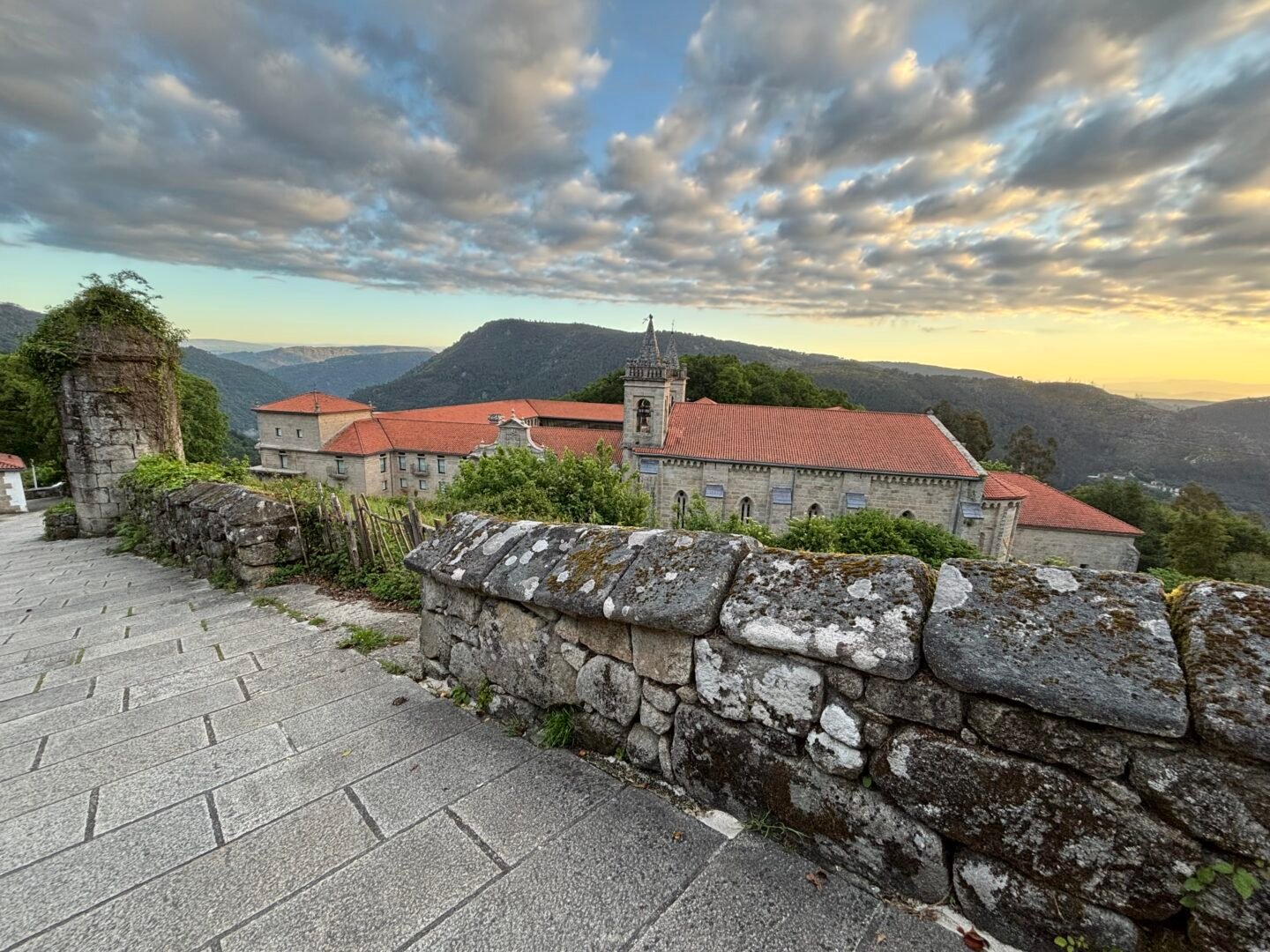
As our bus winds its way up ever-narrower roads flanked by ancient groves of oak, fern, cork, and chestnut trees, we gradually ascend to the crest of a hill. With every turn, my excitement grows. When we finally arrive at the breathtaking Monasterio de Santo Estevo de Ribas de Sil, I can’t help but smile. A deep sense of warmth and peace washes over me as I take in the monastery, perched dramatically in the hills with a stunning view of the River Sil canyon unfolding below.
Built between the 12th and 18th centuries, the Benedictine monastery still boasts three stunning cloisters and a Cathedral. However, in 1836, the structure was abandoned when the Spanish government expropriated monasteries and convents, and turfed out the monks and nuns. In 1923, it was declared a national monument of interest, restored, and converted into the Parador de Santo Estevo in 2005.
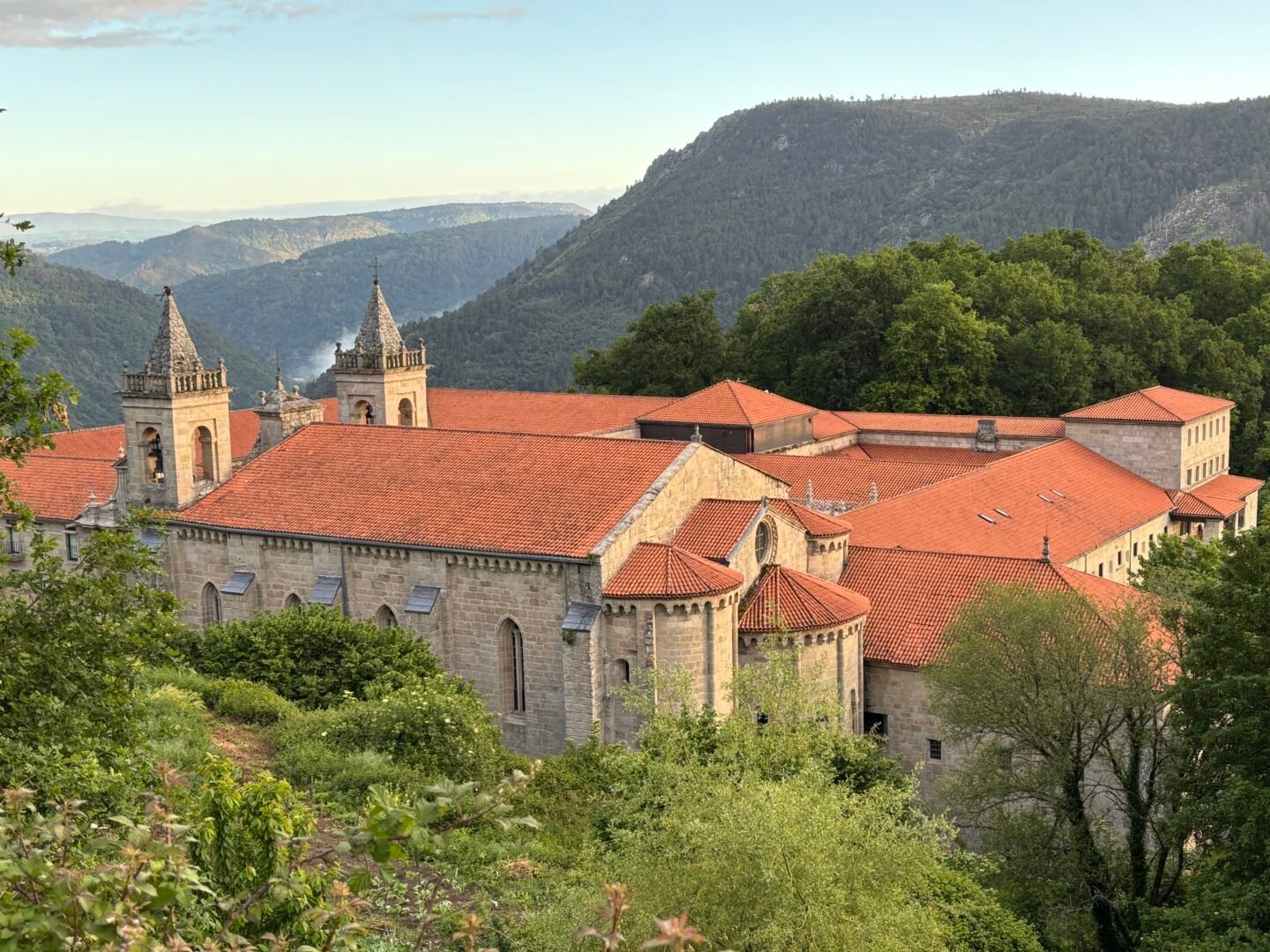
Named after the Spanish verb parar (to stop), Paradores are a uniquely Spanish form of accommodation: luxury hotels set within historic convents, monasteries and castles dotting the countryside. In the early 20th century, the government implemented a strategy to preserve historic buildings and promote tourism in remote areas. These lovely hotels offer a glimpse into Spain’s remarkable architecture, history, and traditions, with the added benefit of modern luxuries, including pools, spas, tennis courts, and fine dining.
That sense of wonder lingers throughout the property. When I enter the Parador de Santo Estevo, a deep serenity emanates from the six-foot-thick granite walls and grand cloisters. My room, once a monk’s cell, is a haven of tranquillity, with rough granite framing my window, a tiny doorway, and a comfortable bed. I open the wooden shutters for a fantastic panorama of the hills and valleys beyond. A tiny bird perches on my window ledge, looks me square in the eye, then flies off into the forest, as if daring me to follow. I feel like I’m in the middle of nowhere. No wonder this region was a favourite of hermits and monks.
For a country that is grappling with over-tourism, Galicia feels welcoming in contrast to areas like Barcelona, where locals have been holding protests and spraying water pistols at visitors.
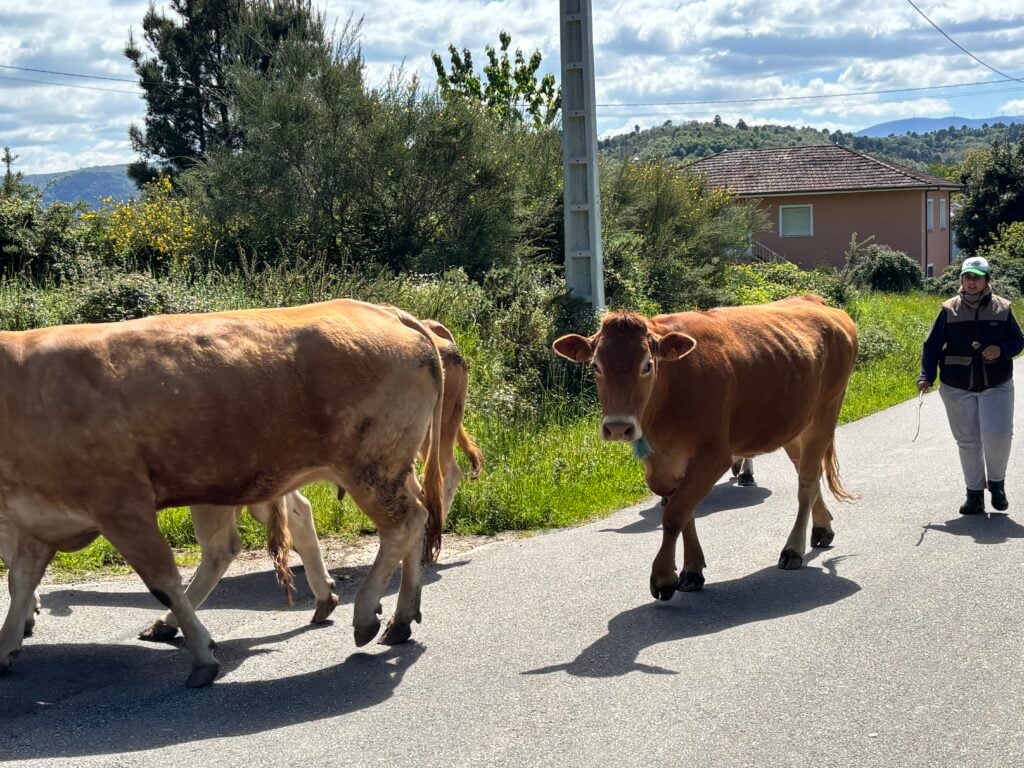
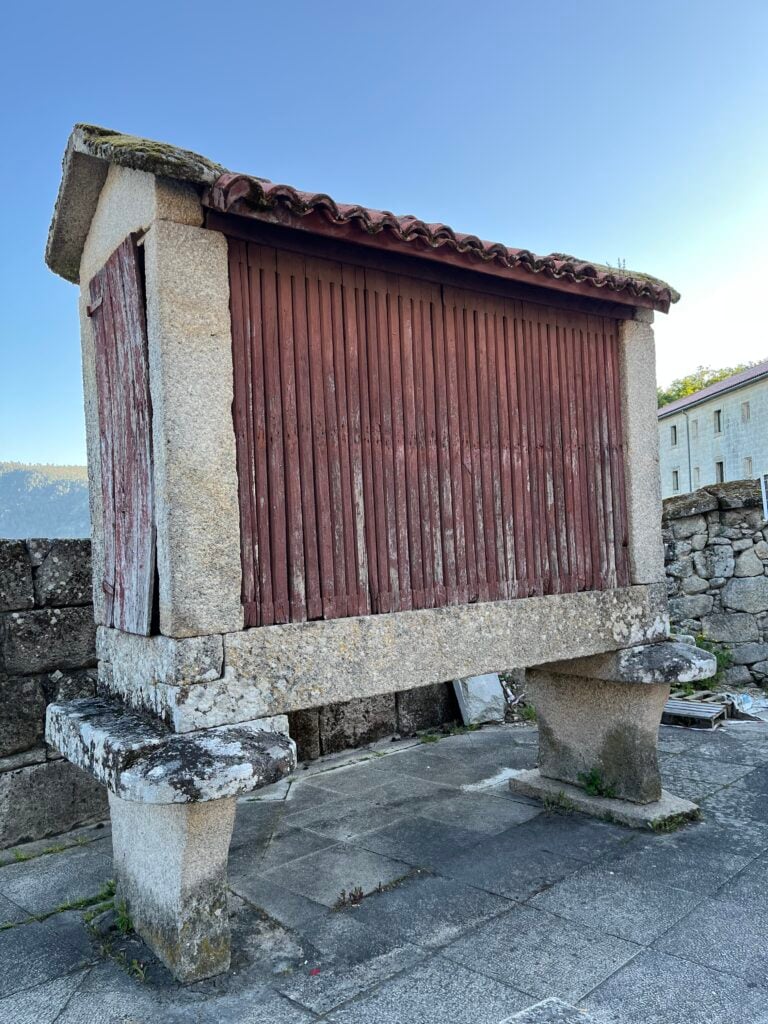
The interior of Galicia is predominantly rural, featuring a landscape dotted with stone granaries on stilts (horreos), crosses (cruceiros), and manor houses (pazos). You can amble about at a leisurely pace, visiting hidden Romanesque monasteries in the hills (there are 18 in this area), the largest concentration in rural Europe.
“Here, there is a special energy, breathe it in and enjoy,” says Maria Chamadoira, a Gallega and our expert guide. “The smells and sounds of nature soften our hearts. This is the hidden Spain.”
Galicians regard the forest as a mystical place. Oak groves, called fragas, are considered sacred, reflecting an ancient Celtic tradition. But Chamadoira warns us to be careful at night: While no bears roam the forest, wild boars do. And on foggy nights, locals say the Santa Compaña (Galician for Holy Companion) may appear – a ghostly procession of unsettled souls said to lurk in the dark.
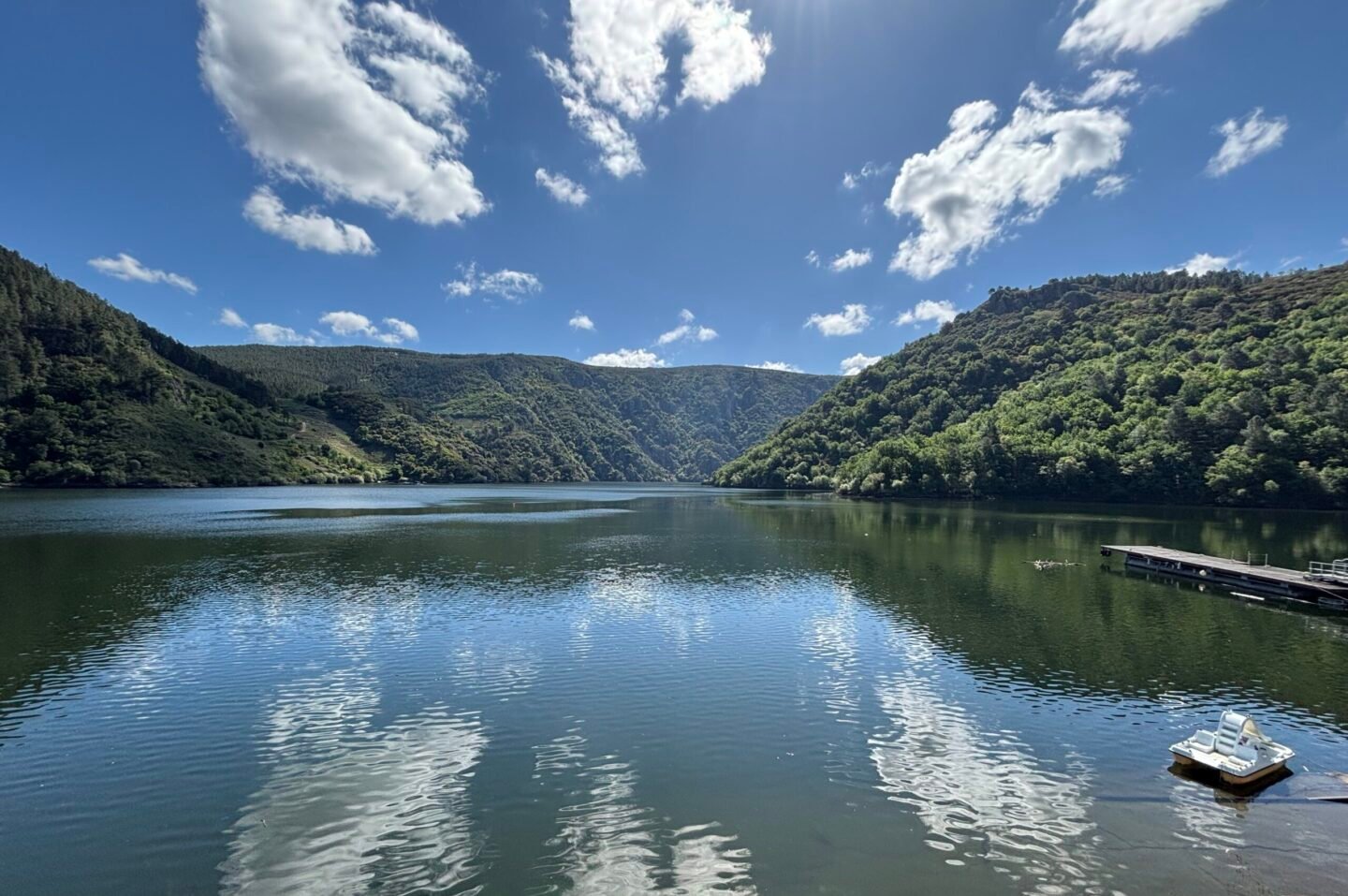
The next morning, having safely evaded any ghostly encounters, we board a boat at the Santo Estevo pier down the River Sil Canyon. It is early May, and with few tourists in sight, the majestic cliffs towering 500 metres into the sky are in clear view.
“Spain is known for sol y playa (sun and beach), but the interior of Galicia is the heart of this province,” says Xoan Fraga, our boat captain, who serves us wine from the Mencia grape and mica, a delicious sponge cake with a crusty top.
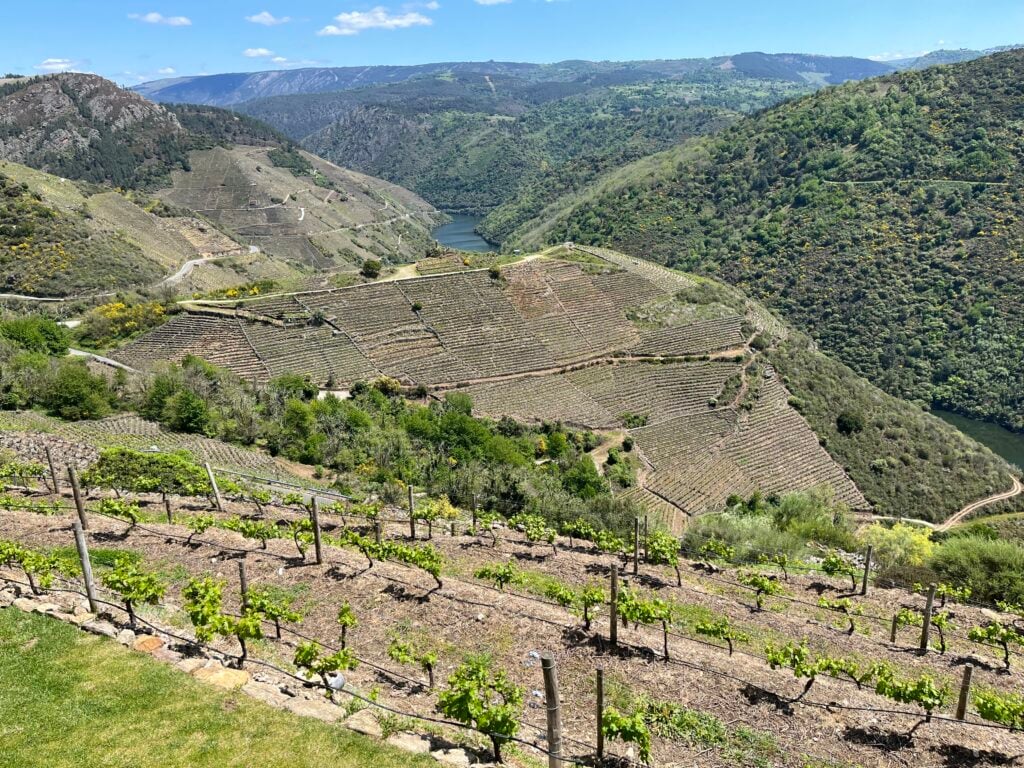
Approaching the shoreline, I take a second glance at what appears to be a pile of rocks. But upon closer inspection, I realize it is, in fact, a small vineyard, meticulously terraced by hand on a steep slope.
Spain has many wine-growing regions so Galicians can choose from a wide variety of wines. Chamadoira explains that locals are proud of the grit and determination it takes to maintain these vineyards. Because of the extreme (sometimes perilous) conditions in which grapes grow, these vineyards are known as heroic viticulture. Farmers plant, prune and harvest by hand, building dry-stone terraces into the hills known as socalcos that have a 35-metre incline. The grapes yield less fruit, but the wine is more concentrated and deliciously fresh
We stop for a traditional Galician lunch at Adega Algueira, where we enjoy jamón, crusty bread, empanadas (handmade pies filled with seafood), croquetas (small, deep-fried rolls with tasty fillings), and veal marinated in Mencia wine with chestnuts.
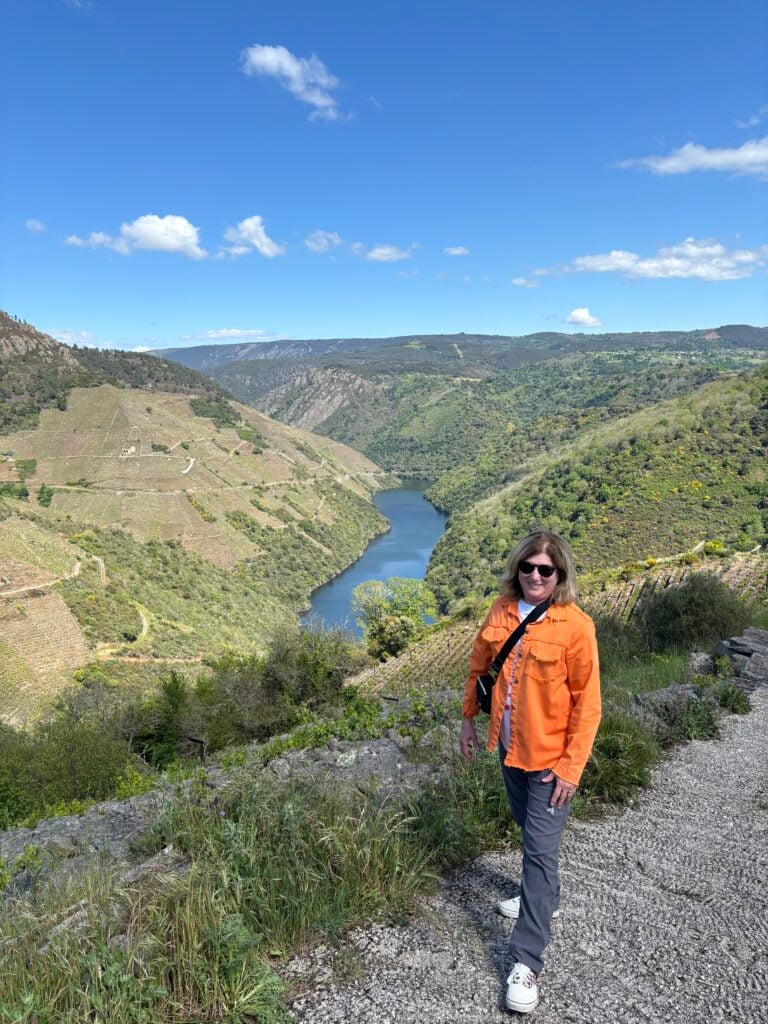
Adega Algueira’s garrulous manager, Suso Soniera, feigns disappointment in our feeble appetites. “Madre Mia. Nobody has eaten anything. I even gave you smaller portions,” he says. “We Galicians love to eat. We are known for our gastronomy. But it’s not just the food, it’s the way we live. I live on a farm with my own sheep and lambs and rabbits and plant my own garden.”
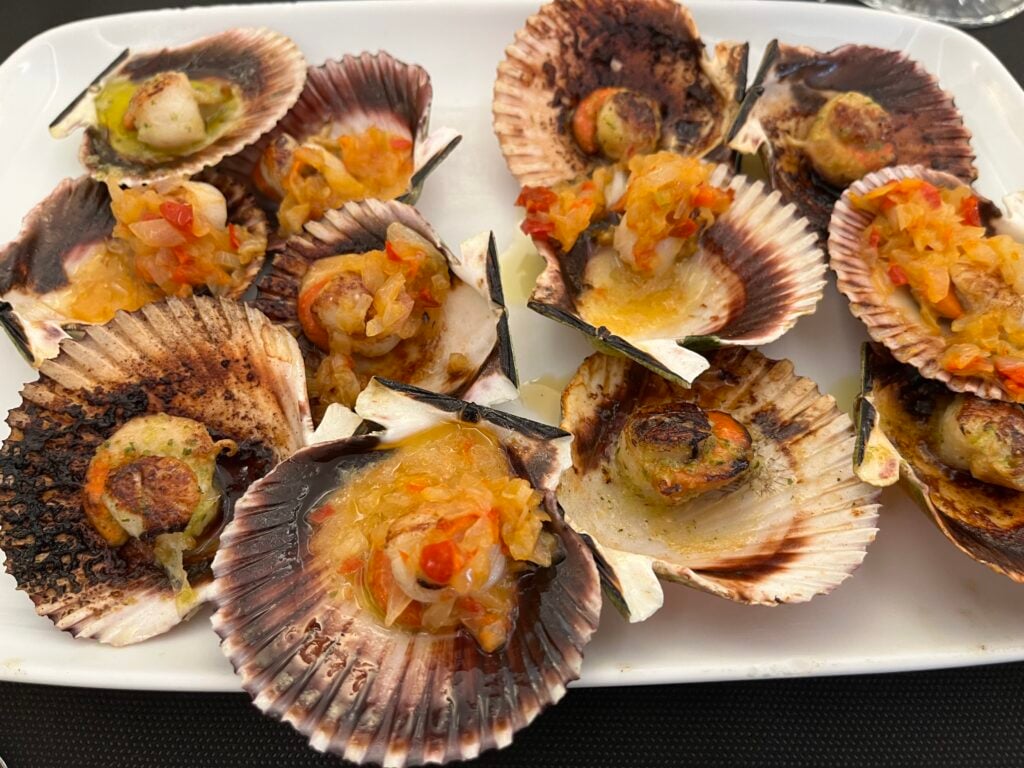
Galicians have a deep love for fish (especially cod and hake), and an even greater passion for seafood. Goose barnacles, oysters, squid, clams and scallops baked in their shells with ham and onion all feature prominently on local menus. Mussels are farmed on ropes suspended from wooden rafts that float in estuaries, gently swaying beneath the surface until harvest. And, of course, pulpo a la Gallega, boiled octopus served with olive oil, salt and paprika. The passion for this dish has even spawned a saying which loosely translates as: Galicians love octopus so much, they have the head of an octopus.
Suso brings out flan, a caramel custard, for dessert, and orujo, a pomace brandy.
Worried I will explode if I eat another morsel, like Mr. Creosote in Monty Python’s The Meaning of Life, I politely decline. Suso laughs and invites us to come again when our stomachs are empty.
In the afternoon, we drive to the nearby Benedictine Monastery of Santa Cristina de Ribas de Sil, hidden in a chestnut and oak forest. The air smells of damp soil, pine needles and tree bark.
Founded in the seventh century, the secluded setting was ideal for monastic life. Today, the monastery is uninhabited and utterly serene. I admire the elegance of the Romanesque church with a simple doorway framed by columns and a bell tower. I can even see the remains of a kitchen and monk cells. It feels like a holy place; modern-day pilgrims have left blessings and offerings in a tree near the entrance.
“The monasteries have been here forever, but we had to discover them because so many were abandoned,” says Chamadoira, noting the monastery was restored in the 1980s.
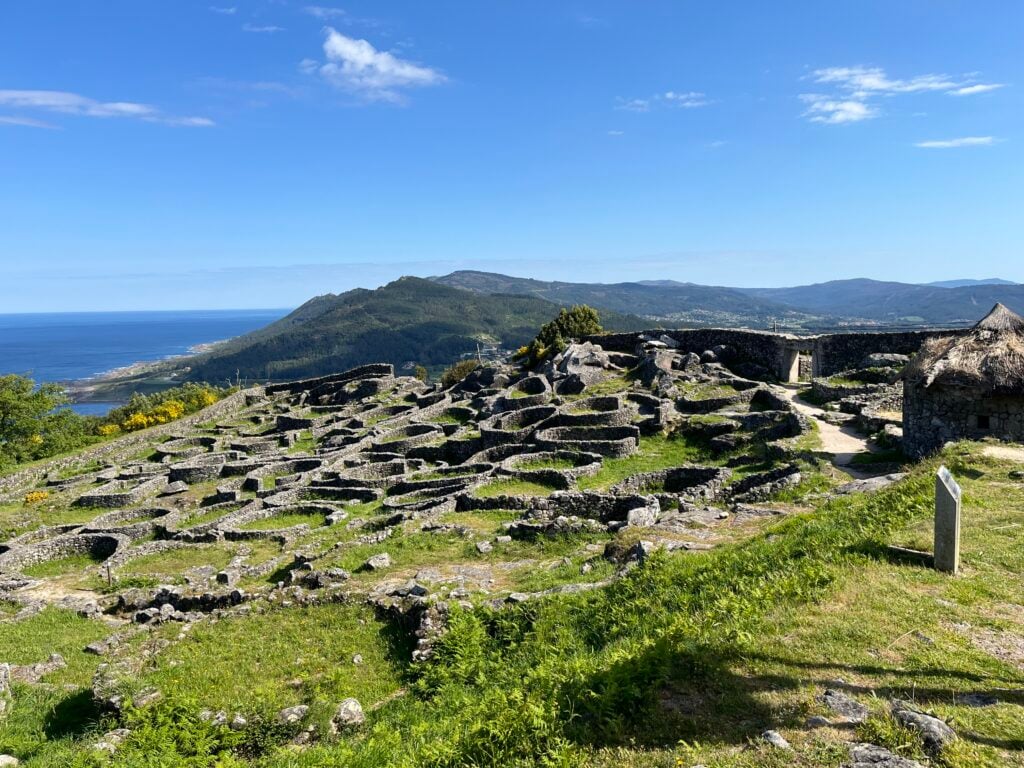
The next day, Monte Santa Trega awaits us. Standing at 341 metres, this hill is situated at the mouth of the Mino River, located between Portugal and Galicia, offering spectacular views of the Atlantic Ocean.
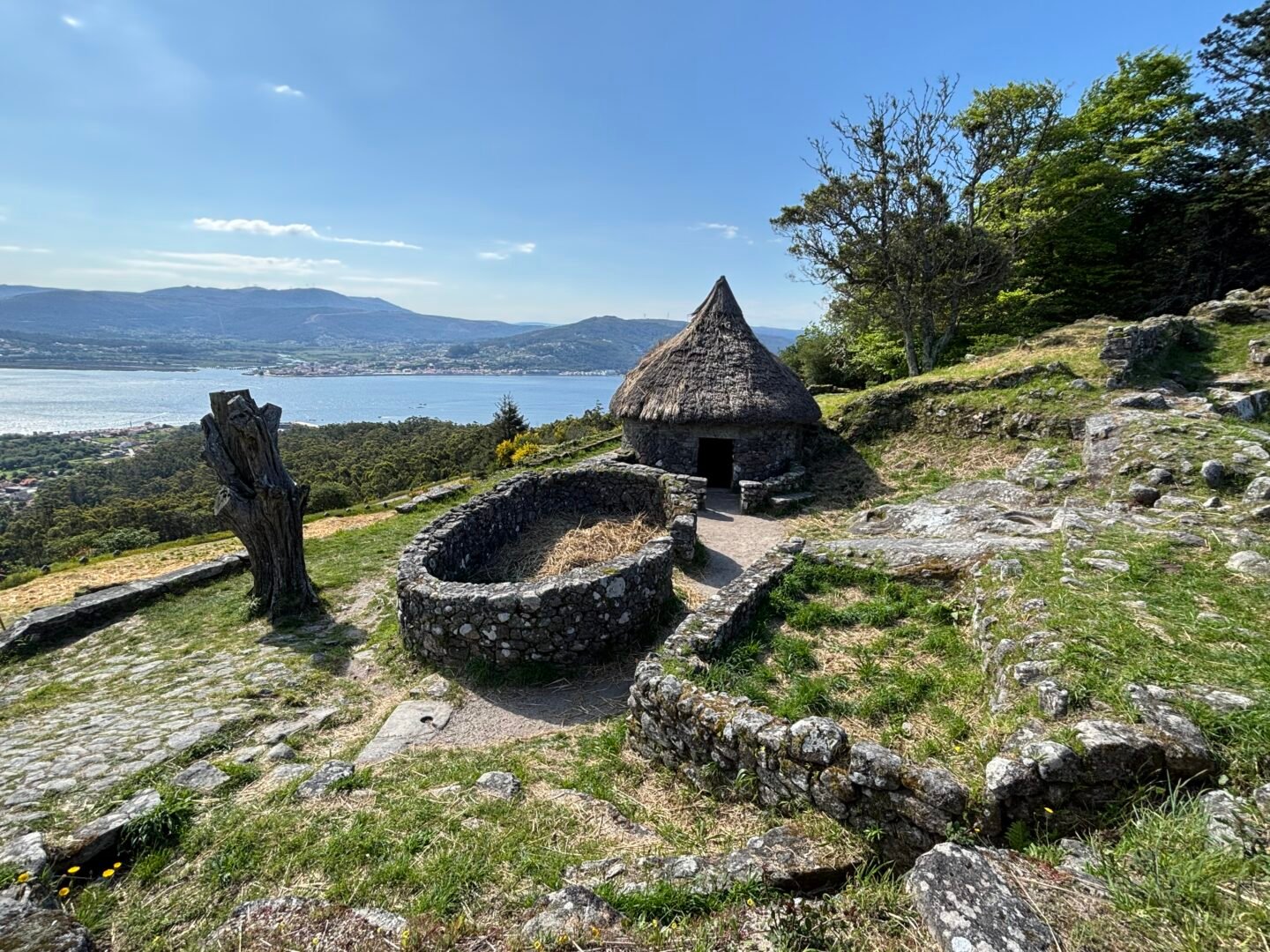
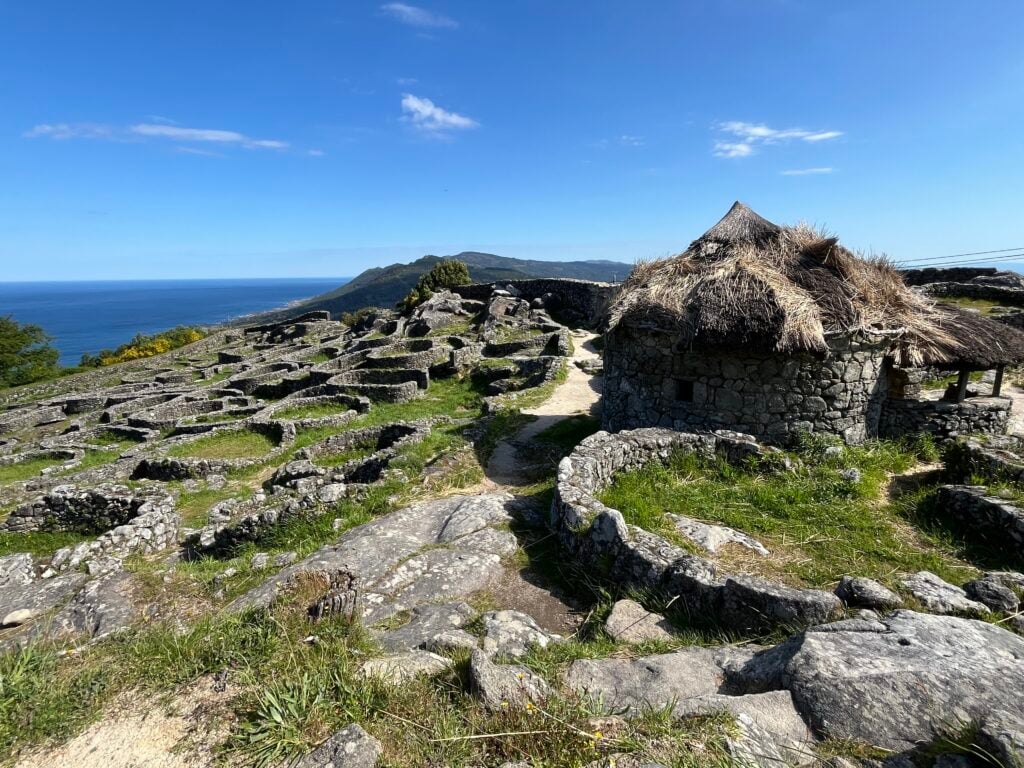
At the peak is an ancient site straight out of The Lord of the Rings: circular stone remnants of houses from a Celtic hillfort settlement, known as a castro, dating back to pre-Roman times. For decades, locals considered this mountain sacred. However, in 1913, historians uncovered hundreds of these dwellings, which featured roofs made of straw, wood, and clay, revealing a complex urban layout with drainage systems and housing.
Roman glass and coins from the site are on display at a museum, where a boisterous class of Grade fours are visiting from the city of Vigo. Invigorated by this mystical place, they run around the hilltop, inspired by the lives of those who lived in the stone houses so many years ago, watching and trading by the sea.
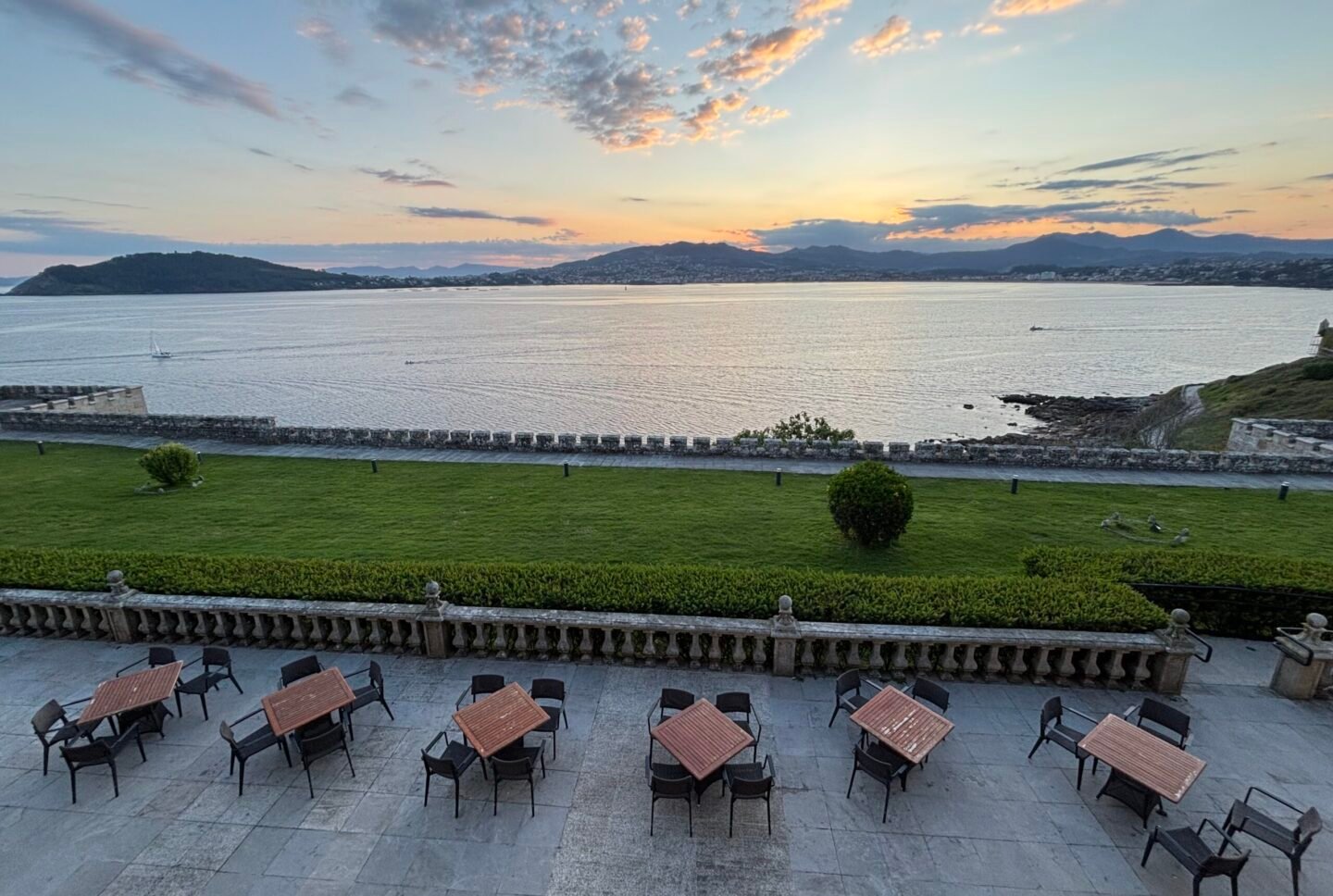
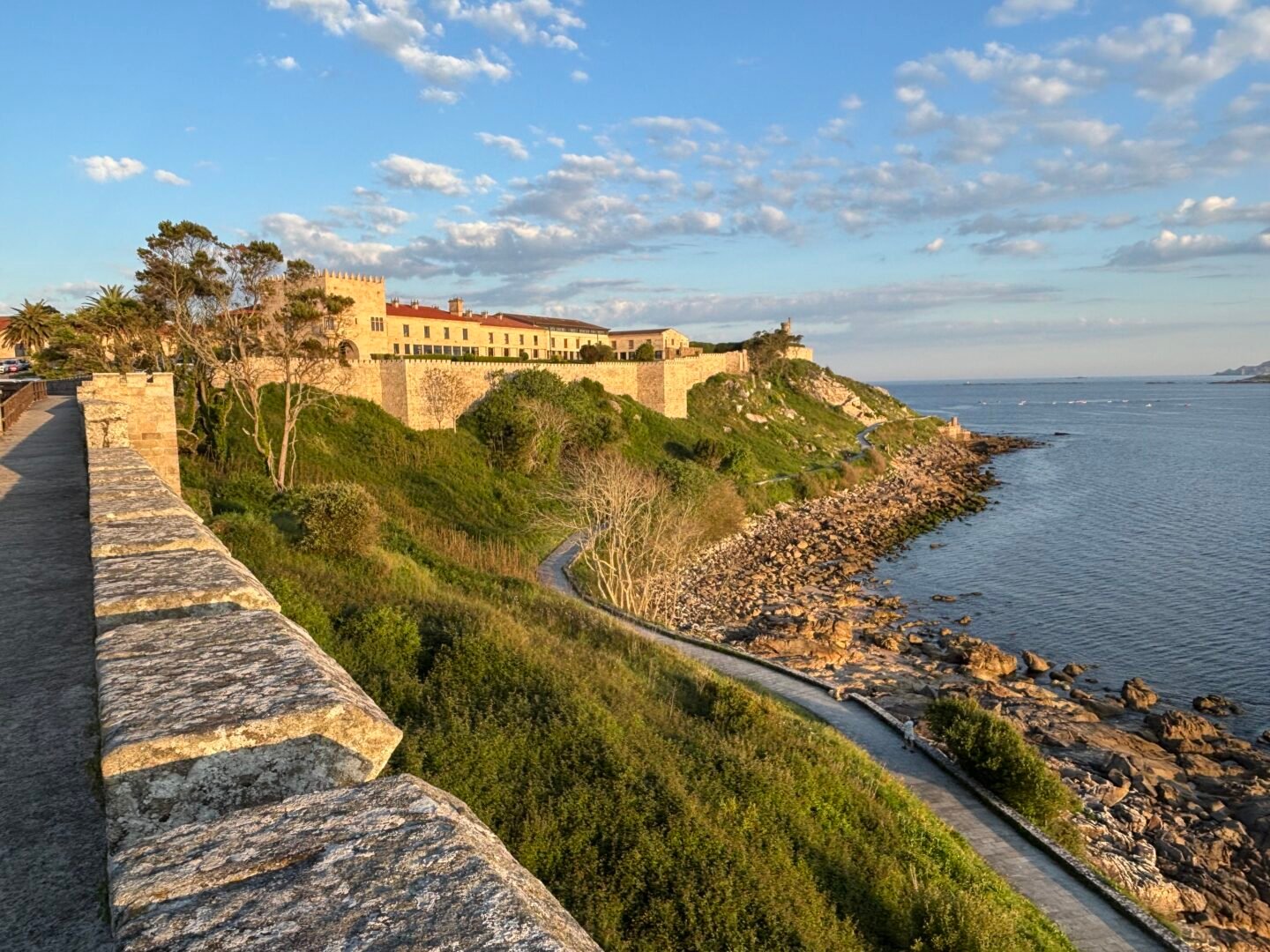
Driving 40 kilometres north, we head to Baiona. This port town is known for a replica of La Pinta, one of Columbus’s caravels, which landed there in 1493. Overlooking the sea is another beautiful Parador, Parador de Baiona, surrounded by defensive walls.
For all the history, I am excited for an afternoon visit to the nearby Cies Archipelago, part of the Maritime-Terrestrial National Park of the Atlantic Islands of Galicia, a diverse ecosystem home to multiple bird colonies, as well as beaches, dunes, cliffs and marine caves.
We take a private boat for the half-hour journey to the North Island, where the stunning Playa de Rodas awaits: turquoise water, fine sand with bits of ancient quartz that glint in the sun and dunes with pines towering beyond.
With no cars, hotels, or fancy yachts, Cies feels like a desert island, complete with a back story of treasure buried at sea by the legendary Sir Francis Drake, who once hid out in the archipelago’s secluded coves.
This relatively unknown gem may have remained under the radar, except for a 2015 column published by The Guardian, which declared Playa de Rodas one of the top 10 beaches in the world. While Spaniards are proud of this designation, it has inevitably led to over-tourism.
In 2017, the Spanish National Park authority introduced strict regulations to protect the park. Today, only 1,800 visitors are permitted a day, from May 15 to Sept. 15. After that, the cap falls to 450. Visitors need a QR code from the regional government’s website and must follow strict rules: no fires, loud parties, fishing, or leaving garbage behind.
“We are not a beach, we are a National Park,” says Pablo Marino Lustres, who runs a local travel agency. “We encourage people to visit in the off-season instead of just in summer. This is a treasure, and we must protect it.”
This approach seems to be working. While some visitors frolic on Rodas Beach, which links the Northern Island to the Middle Island, we see few people on the scenic footpath that leads to Pedra da Campa in the interior. After a climb through pine forests, we arrive at a stunning hilltop for a panoramic view of the cliffs plunging into the Atlantic Ocean, the islands stretching out in the sea, and yellow-legged seagulls circling above, furiously guarding their nests.
On the walk back, I take a quick plunge in Rodas Beach, which sits at about 18 degrees Celsius (cool for locals but not for a Canadian!). Already, I am plotting my next visit.
Our final day in Galicia is spent driving 120 km north from Baiona to Santiago de Compostela, where, yes, we finally encounter crowds, crowds, and more crowds. Mostly pilgrims, carrying walking sticks and backpacks, boots dusty after days on the trail. The Camino’s final destination is the Cathedral of Santiago de Compostela, a stunning architectural masterpiece.
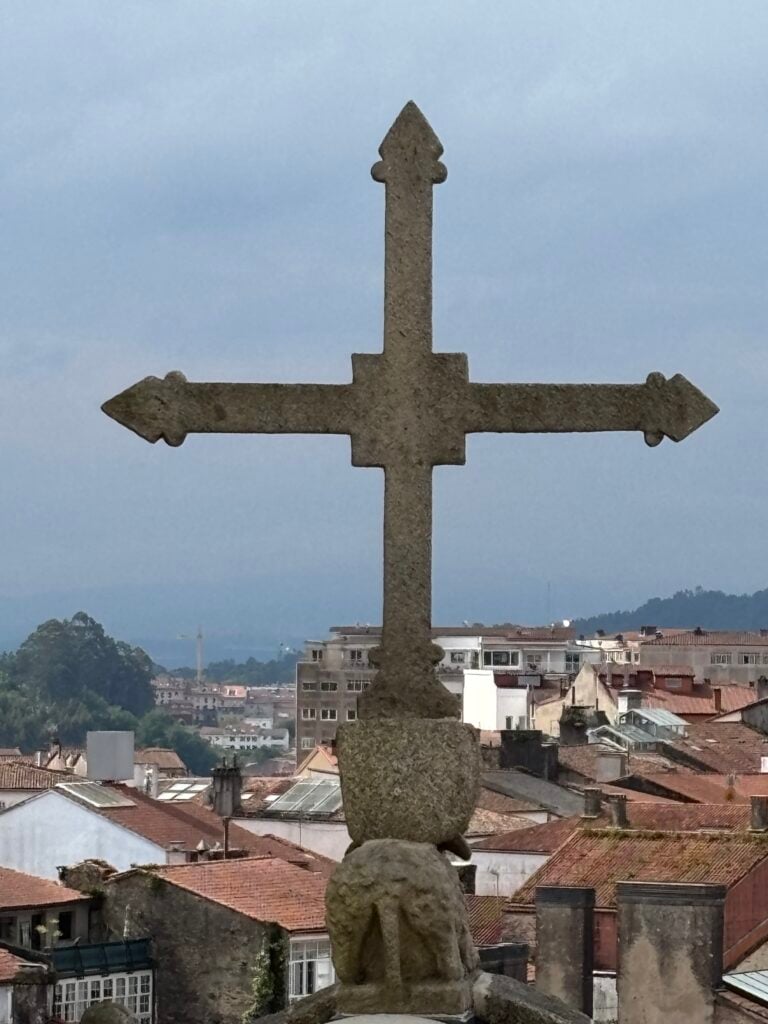
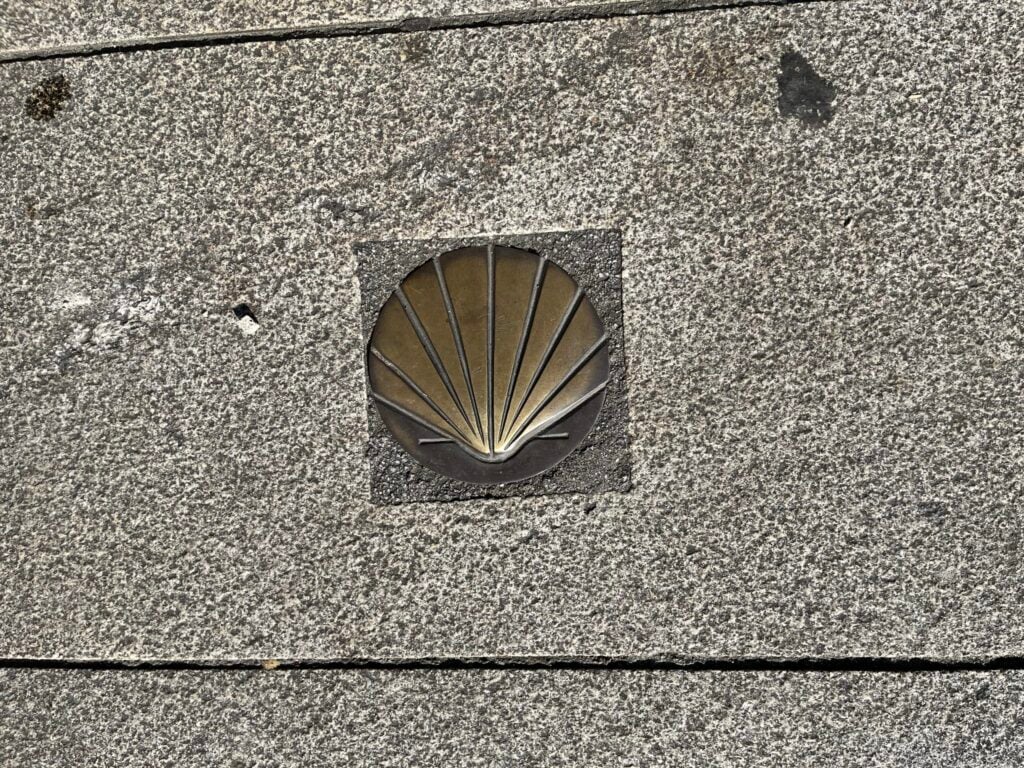
Through the museum, we visit the Cathedral’s rooftop, which offers an incredible view of the Plaza de Obradoiro, where we can take in a bird’s-eye view of the pilgrims. Some collapse in laughter, others in tears, worn out, but elated, to have completed the Camino after days of walking through winding paths, forest and villages that make up the pilgrimage. Many wear clothing bearing the image of a scallop shell (the Camino’s most iconic symbol), due to the seashells found along the route that mark the journey on sidewalks and streets.
According to Santiago’s Pilgrim’s Office, 2024 saw an impressive half a million “Compostelas”, a number that is only growing. To receive a certificate of completion, pilgrims must walk the last 100 km of the Camino to Santiago (or cycle or ride a horse the last 200 km) and present a pilgrim’s passport with stamps collected along the way from churches or albergues, hostels offering basic accommodation for pilgrims.
I wonder if walking the Camino is really as difficult as it seems. “It’s not for the faint of heart,” says an American pilgrim in her 60s. “At one point, my feet were bleeding and I was ready to quit. But, when you finish, it is worth it and you feel a real sense of accomplishment.”
“For some, it is spiritual journey. But for others, it isn’t about religion, so much as humanity,” says Carmen Pita, Promotion Director for Galicia Tourism. “You feel you are not alone. It is an opportunity to help or be helped. It is your Camino, and it means something different to everyone.” Pita has walked the Camino twice and encourages more Canadians to take on the adventure.
Throughout Spain, France, Portugal and England, there are nine different Caminos. People from all backgrounds and around the world participate, fostering camaraderie and a shared respect for the journey.
When I tell my Spanish cousin how much I enjoyed Galicia’s treasures, some more hidden than others, she begs me not to share my enthusiasm with the world. “There are too many tourists in so many parts of Spain,” she says. “I want to retire in Galicia. I feel like it is the last place left that tourists don’t know about. The hidden Spain.”
Travel
Journey beyond the cities to discover white villages, ancient traditions and some of Spain’s most celebrated culinary experiences
Travel
When you visit Madrid and Valencia, you won’t just see Spain — you’ll feel it
History
The first floating of the recreated 16th-century Basque whaling ship brings a little-known chapter of Spanish and Canadian history full circle
Wildlife
Penguin expert Pablo García Borboroglu and wildlife filmmaker Bertie Gregory share insights into the latest installment of National Geographic’s hit “Secrets of” franchise