Travel

 Inside the Calgary Stampede

Robin Esrock heads to Alberta to discover “The Greatest Show on Earth”

  • Published Jul 18, 2024
  • Updated Aug 14
  • 1,008 words
  • 5 minutes
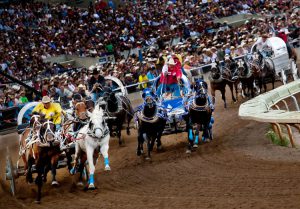
The Calgary Stampede features some of the world's toughest competitors in the World's Largest Outdoor Rodeo. (Photo courtesy Calgary Stampede)
Expand Image
Advertisement
Advertisement
Live Net Zero Email Service

It took me three visits to the Calgary Stampede to fully appreciate why they call it “The Greatest Outdoor Show on Earth.”

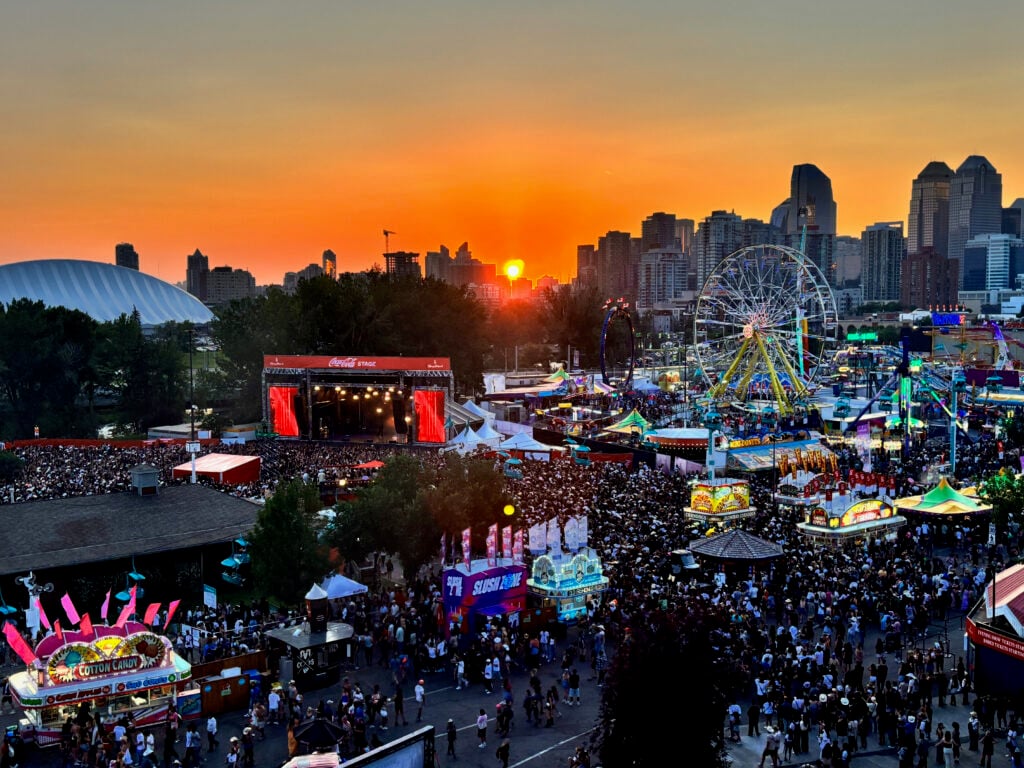
Nearly one and a half million visitors pack into Calgary, Alta.’s Stampede Park for a 10-day festival with a staggering array of moving parts. There’s an action-packed fairground centred around the Midway, lined with vendors selling everything from smoked ribs and cheeseburger-flavoured ice cream to cowboy boots and lemonade buckets. The Midway also hosts carnival games and free daily performances: large marching bands, soaring freestyle motorcycle wizards, boisterous buskers, and canine trick shows. Flowing with overpriced fried food and barrel-fresh root beer, it’s a spectacle for all ages, centred around GMC Stadium and the world’s richest rodeo.

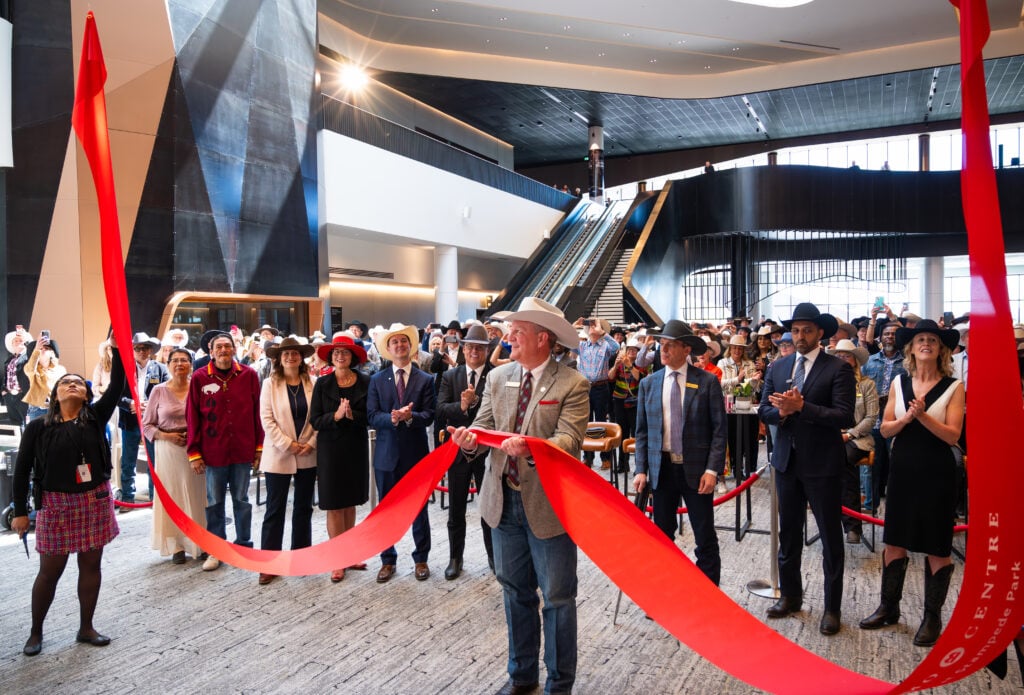
The grand opening of Calgary’s BMO Centre at Stampede Park. (Photo courtesy Calgary Stampede)
Expand Image

We enter Stampede Park in the shadow of the Saddledome, a stadium hosting big-name concerts throughout the festival. To our right is the BMO Centre, its steps lined with a full regalia marching band blasting a summer swing. To our left is an exhibition from Canada’s military, where excited kids line up to scramble into tanks and armoured vehicles. Rides are howling with elated screamers, speakers are blasting music, and even with a helpful event app, knowing where to begin is tough. Perhaps we should start with some history, entering the Elbow River Camp to find a chorus of friendly welcomes and two dozen colourful tipis piercing a big, blue prairie sky.

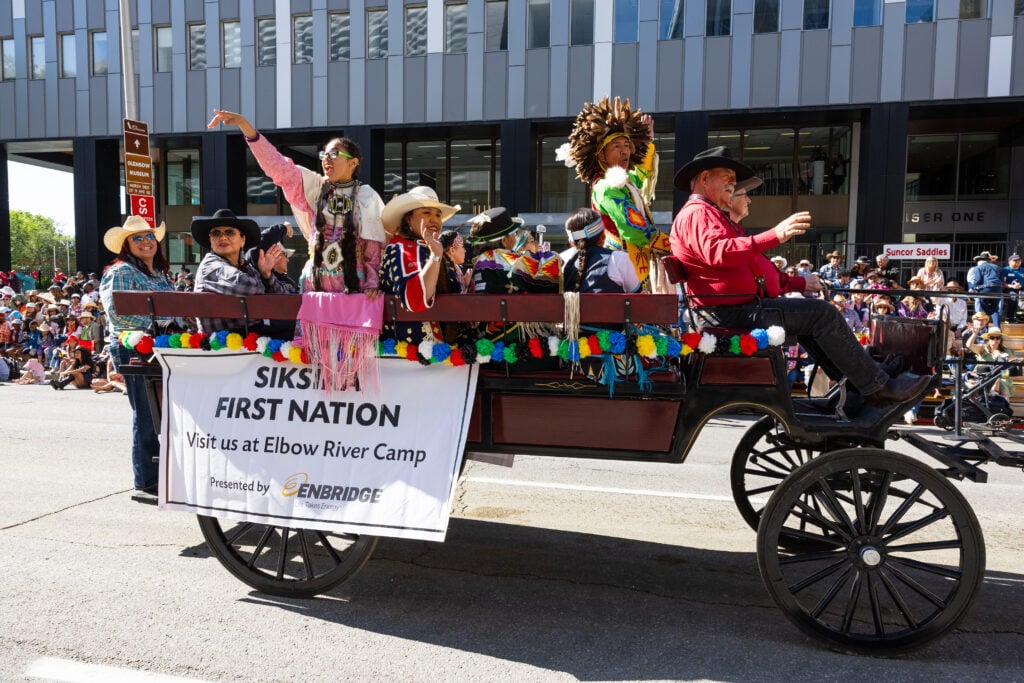
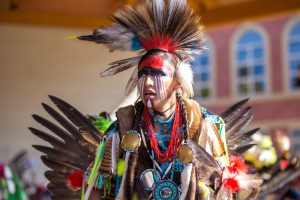
First Nations peoples have been integral to the Calgary Stampede since its inception in 1912. Stampede founder Guy Weadick recognized that any celebration of Alberta’s land and ranch culture must include the Indigenous bands who form a major part of it. Weadick battled racist federal authorities of the day to ensure that Treaty 7 Nations led the inaugural street parade, a Stampede tradition that continues today. Amber Big Plume, an on-site cultural interpreter, tells me how exclusions were made in the Indian Act to allow First Nations to celebrate their traditions at the Stampede, a 10-day reprieve from repressive government policies. Today, visitors are encouraged to interact with diverse participating nations, hear their stories, and engage with their history. Inside a tipi, under the approving eye of an elder, an 11-year-old Siksika girl tells my 11-year-old daughter about the significance of the beaded costumes on display. It’s a sweet, sincere moment of cultural connection. Inside the Elbow River Camp, pow wow drums provide a soundtrack of hope.

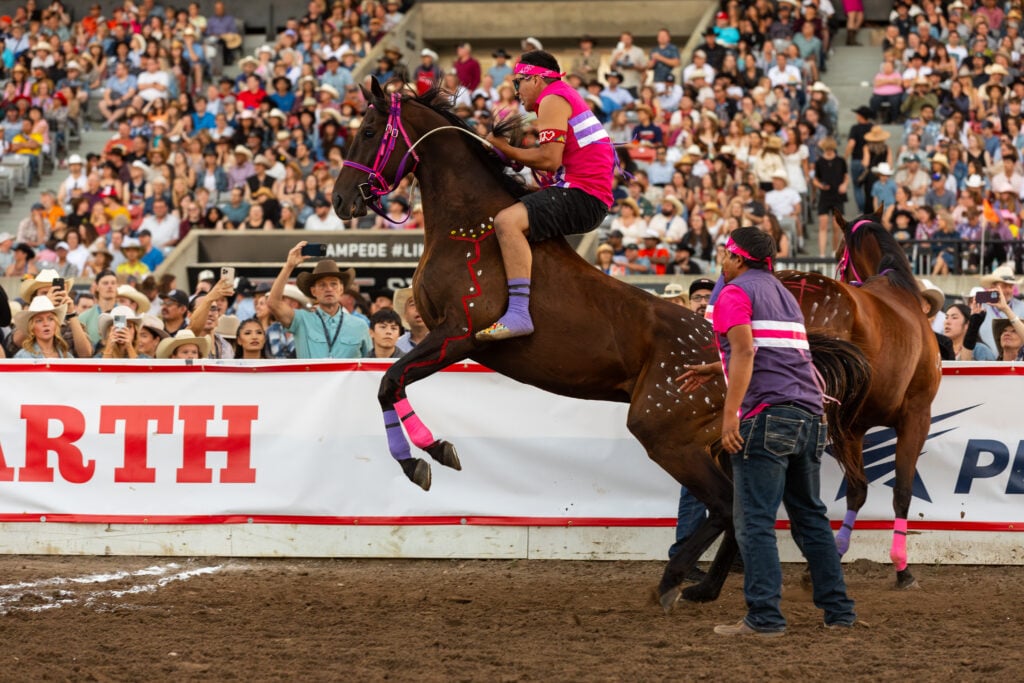
Indigenous relay races have riders swapping horses between each lap. (Photo courtesy Calgary Stampede)
Expand Image
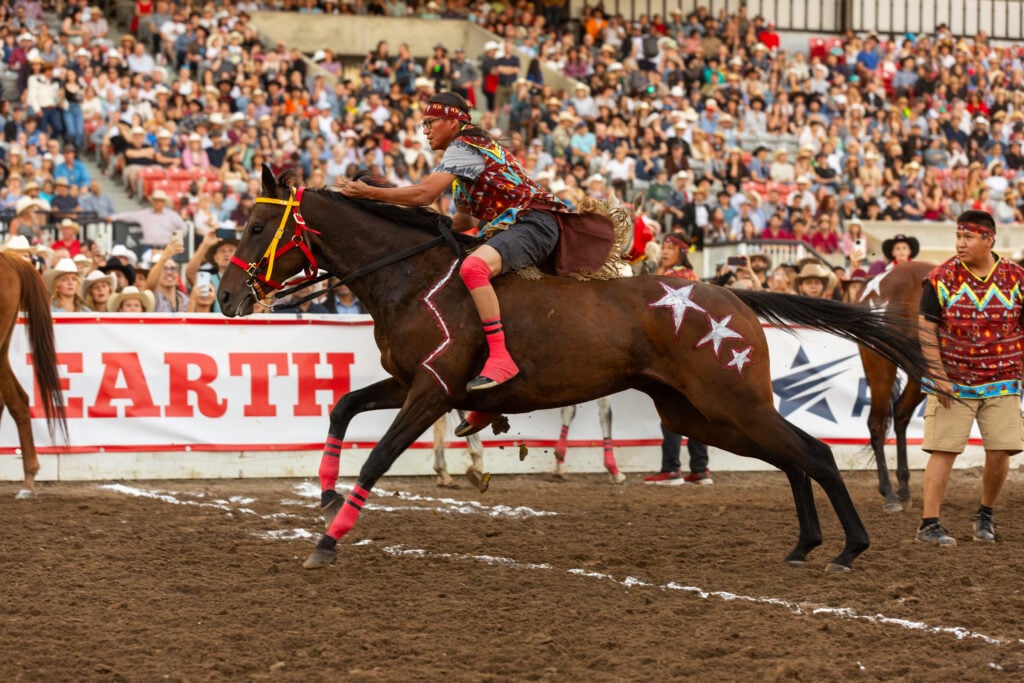
An Indigenous relay racer competes bareback on a horse. (Photo courtesy Calgary Stampede)
Expand Image

Canola seeds are better than slime. My kids make this conclusion inside the Nutrien Western Event Centre as they dip their hands into a large barrel of seeds, learning about Canada’s homegrown cooking oil in the process (the word “canola” is derived from “Canada” and “ola,” a low acid oil). They run deep into the cavernous centre for a hands-on education in grain production and cattle farming. Then, learn about chickens, eggs, horses, beekeeping, pigs, goats and sheep. As urbanites, my family gets our food in boxes and packages. This aspect of the event is a rare opportunity to learn about agriculture and understand the cost, process and effort behind our food, introducing us to some of the hardworking folks who make it all possible.

Since the founding of the Calgary Stampede, Treaty 7 Nations have lead the inaugural street parade. (Photo courtesy Calgary Stampede)
Expand Image

The divide between food production and how we consume it is perhaps felt most acutely inside the world’s richest rodeo. Like many folks born, raised, and living in a city, I was apprehensive before my first visit to the Rodeo. I believed in many myths, which you can read about in the text box below. Then I went backstage to meet the Rodeo riders, animal owners, organizers and vets, all demonstrating a profound and sincere respect for the animals they work with. I certainly witnessed the physical impact of the sport: powerful broncs and bulls gleamed with health, but riders were painfully hobbling, limping, and receiving medical attention. 

Rodeo exists as a time-honoured celebration of an agricultural lifestyle, a mostly harmless (for the animals anyway) contest between those that farm and the animals that sustain them. Just like I’ll never quite get folks who drive large pick-up trucks, cycle between cities or spend 18 hours smoking a brisket, I’ll never quite understand what it takes to live and work with agriculture. Yet, I can appreciate where they come from, ask respectful questions with an open mind, and admire the spectacle. As for the nightly Grandstand Show that follows the chuckwagon races, over the years, I’ve seen it evolve from a community talent show into a world-class, big-budget concert with Cirque du Soleil style acts, popular Canadian musicians, immaculate choreography, and one of the most memorable fireworks displays you’ll ever see.

A beautiful sunset along the Calgary Stampede's Midway, a hub of activity. (Photo: Robin Esrock)
Expand Image

But wait, there’s more! Miniature pony shows and entertaining livestock auctions, Indigenous contests and space cowboy circuses, a massive indoor market with clothing, unique home appliances, toys, candy, and products, a stylish art exhibition and gallery sale featuring some of the most talented visual artists in the country. Several big concert venues sandwich intimate live music stages, wine tasting and cooking classes, rope making, rollercoasters, and dog and pony shows. All of this runs concurrently with the Rodeo itself. It’s a lot, and we haven’t got to the booming party tents like Cowboys and Nashville North, heaving into the early hours with dancers and drinkers sporting their finest boots and hats. Then, there are the events outside Stampede Park, like the street parades, patio parties, and free pancake breakfasts served daily in Fluor Rope Square.

Thousands of volunteers from all walks of life make this happen every year: generous sponsors, overworked organizers, performing kids, hopeful vendors, friendly courtesy car drivers, cultural ambassadors, spirited performers, and the welcoming citizens of Calgary itself. Above all else, the greatest outdoor show on Earth is an overwhelming display of Alberta’s farm-to-city community spirit.

Advertisement

Help us tell Canada’s story

You can support Canadian Geographic in 3 ways:

Live Net Zero Email Service

Related Content

People & Culture

The cowboy exclaims: The ballad of an ageing vaquero and his troubled horse, Bunny

The ultimate goal of vaquero horsemanship is to produce a “finished” horse: an exceptionally responsive animal that is a true partner to its rider

  • 2524 words
  • 11 minutes
Chuckwagon racing

Travel

A hundred years of rodeo

Capturing the spirit of the Calgary Stampede on the eve of its centennial

  • 2043 words
  • 9 minutes
Harland Smalleyes, a dancer representing the Stoney Nakoda and Blackfoot First Nations, performs during the 2017 Stampede

People & Culture

Photos: A celebration of First Nations at the Calgary Stampede

Beyond the rodeo and the chuckwagon races, the Calgary Stampede is one of the country’s longest-running public celebrations of Indigenous cultures

  • 858 words
  • 4 minutes

Environment

Biodiversity by design: A birds and bees tour of Calgary

Alberta’s largest city has a lofty goal to restore some of its roadsides, boulevards and other open spaces to a more natural state. Here’s a look at some biodiversity-friendly projects already underway. 

  • 1910 words
  • 8 minutes
Advertisement
Advertisement