Wildlife
Plight of the bumblebees: How commercial pollination is putting wild species at risk
A journey into the wild and not-so-wild world of bumblebees and the unintended consequences of domestication
- 4946 words
- 20 minutes
Science & Tech
A group of scientists are learning more about bees — by fitting them with tiny trackers
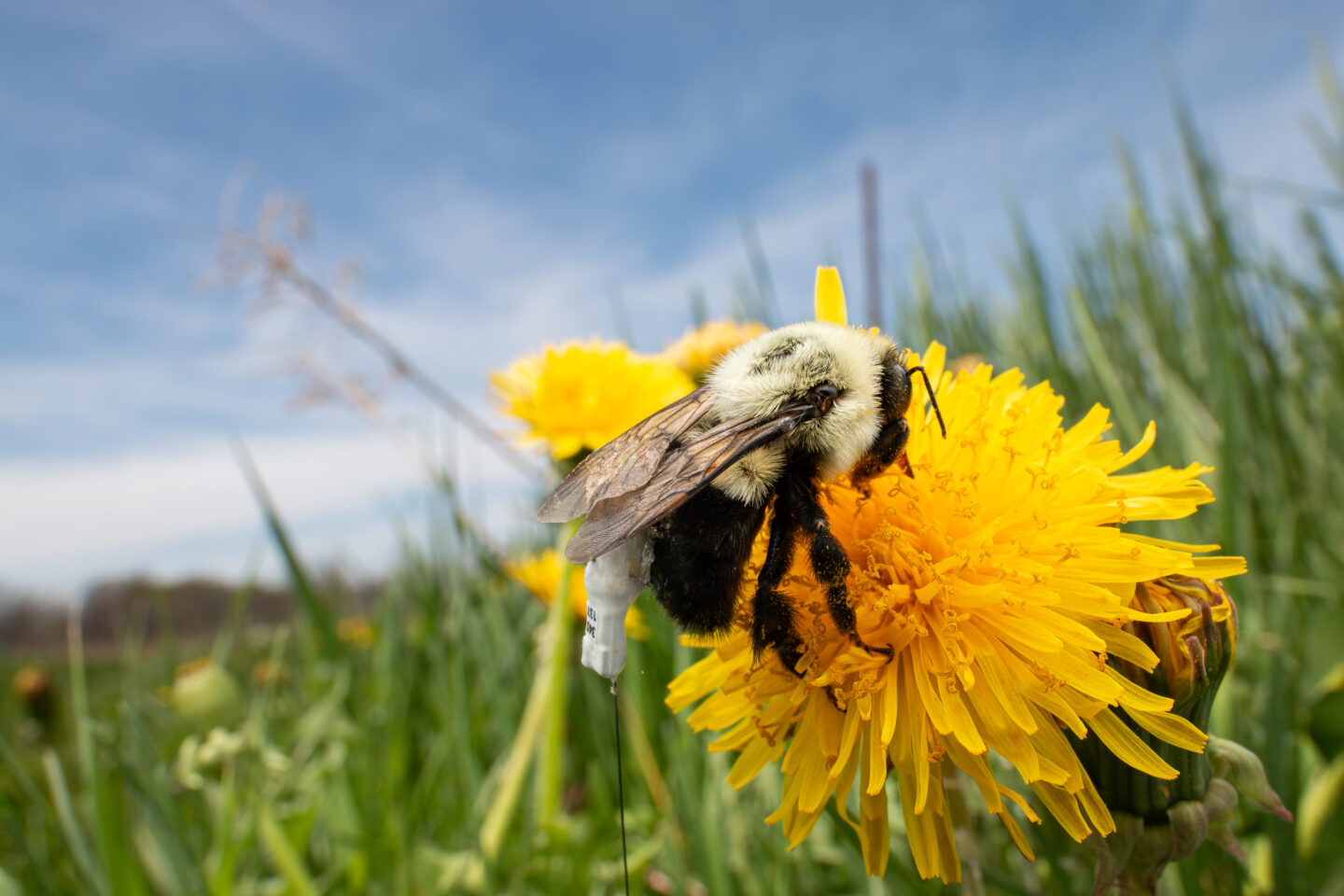
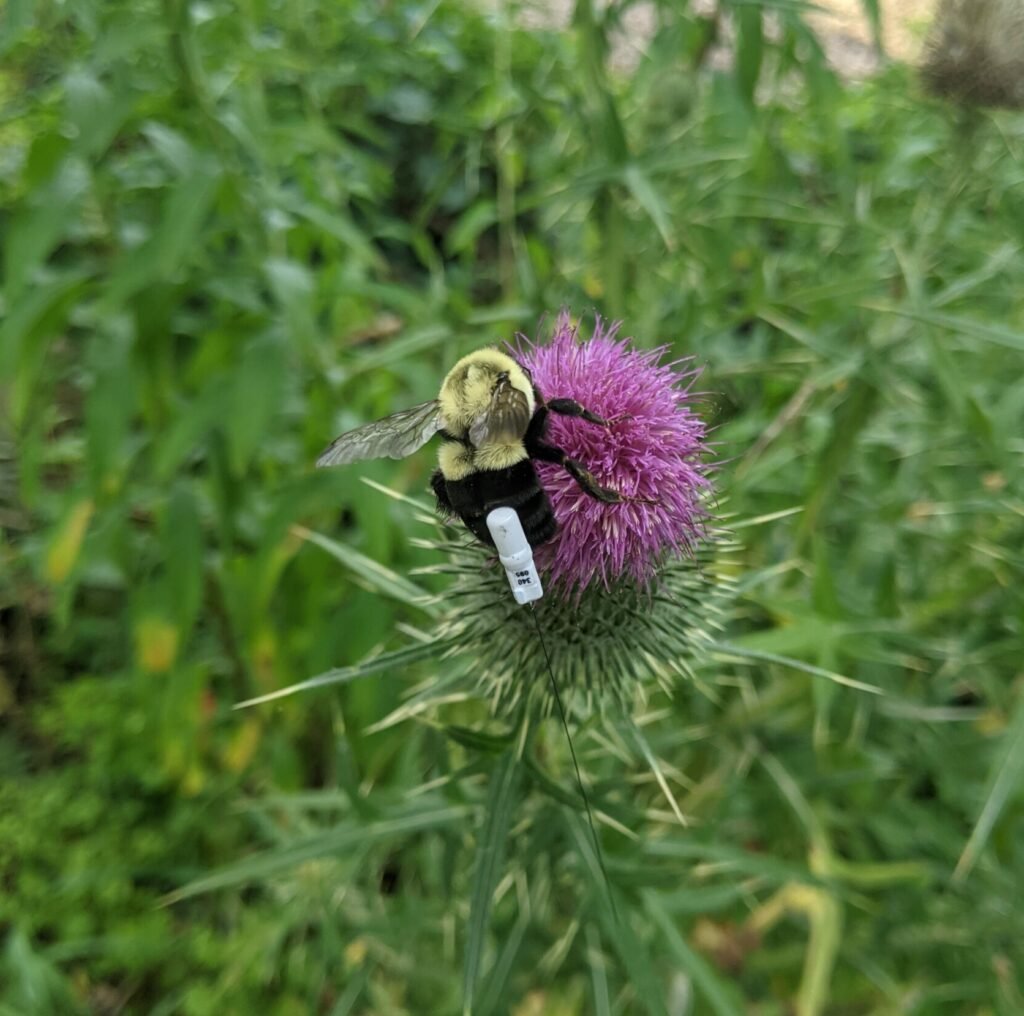
In a grassy meadow in Cambridge, Ont., blooming with native plants and surrounded by forest, a low hum fills the air. It’s a warm spring day and fuzzy eastern bumblebee queens are hard at work gathering pollen for the colony. But take a closer look and you’ll notice that some of them are wearing… backpacks?
These backpacks are actually radio trackers — a tool used by post-doctoral fellow Amanda Liczner of the University of Guelph to learn more about the bees’ movement, behaviour and habitat choices. Surprisingly, as Liczner will tell you, there’s a lot we still don’t know about bumblebees.
While we do know bumblebees need flowers, we don’t know much about where they nest, how far they fly to disperse or where exactly the queens overwinter. We also don’t know much about how pesticides affect bees’ movement. This lack of information, says Liczner, makes it tricky to provide specific conservation recommendations.
Enter the backpacks. Since a GPS collar, normally used for tracking larger species, wouldn’t fit on a bumblebee, Liczner’s team instead attached tiny trackers to the queens’ abdomens. Her team chose eastern bumblebees, the largest and most abundant bee species in the region that’s also commercially available. Since they started this work in 2021, Liczner and her team have carried out a series of experiments on both wild and farmed bees.
Once attached to a queen, the tiny backpack transmits radio signals to an array of 44 radio towers which, like cell phone towers, triangulate the signals to record precise locations. Liczner can then download the data from the towers to figure out how the bees are spending their time.
So far, the team has made some interesting discoveries. In experiments focused on how different pesticides affect bee movement, the scientists learned that while using newer classes of pesticides may not kill bumblebees, “we are finding it’s changing their flight behaviour — and it’s doing it significantly and in weird ways,” says Liczner. For example, pesticide-treated late-season queens, which would usually be resting and building up energy reserves for the winter, were moving “all over the place,” potentially burning up the fat stores they need to survive the winter.
What’s more, 30 per cent of flights, no matter the experiment, are at night. That “blows everyone’s mind,” says Liczner. “And it’s at all times of night!” This is important and potentially concerning information, she says, because some regulations allow farmers to spray pesticides between dusk and dawn, when bees were previously thought to be inactive.
In late summer 2023, Liczner and her team were able to follow the backpacked queens to their hibernation spots, where they burrow into the ground to spend the winter. When the queens emerge, unfurling their wings in the spring sunshine, Liczner hopes to be there to learn more from this understudied species.

This story is from the May/June 2024 Issue
Wildlife
A journey into the wild and not-so-wild world of bumblebees and the unintended consequences of domestication

Environment
A Garden for the Rusty-Patched Bumblebee: Creating Habitat Gardens for Native Pollinators is an inspiring and practical guide that will help gardeners create habitats full of life and learn about what is needed to take action to support and protect pollinators

Wildlife
To save the bees, we first need to understand them — and recognize their value independent of their role as pollinators

Wildlife
In this beautifully illustrated book, readers will learn about the essential role of the bumblebee, honeybee and yellow jacket wasp in the Xsan ecosystem