Dan Aykroyd offers me another generous pour of vodka, and who am I to refuse? We’re sitting outside a corral of trailers in the bush outside of Grande Prairie, Alberta., and the conversation has turned to dinosaurs. Beyond his comedic talent, Aykroyd is a huge dinosaur nut and a key fundraiser for the Philip J. Currie Dinosaur Museum. The award-winning, $34 million facility, which opened its doors in 2015, sits adjacent to Pipestone Creek, one of the densest fossil beds anywhere in the world. It is final resting place for thousands of hadrosaur, tyrannosaur, nodosaur, plesiosaur, and pterosaur fossils. Although, as my five-year-old son Galileo reminds me, plesiosaurs and pterosaurs are not actually dinosaurs; they are marine reptiles that swum and flew during the time of the dinosaurs. “Gee, Dad, don’t you know anything?”
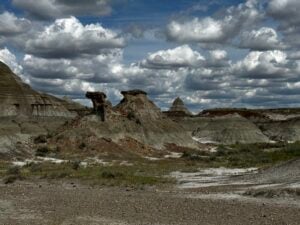
I do know that Canada is a global dinosaur hotspot. Sixty-five million years ago, the landscape was full of rivers, swamps, marshes and seaways. Sweltering humidity ensured lush plant life, which attracted large herbivores and the meat-eaters that preyed on them. Rivers and streams washed over animal carcasses in the floodplains, burying bones in sediment and creating ideal conditions for fossilization. Millions of years later, glacial erosion scoured away the top layers of soil, exposing new fossil beds to the delight of palaeontologists, amateur and otherwise. Scientists, farmers, students, miners, hikers and even kids have stumbled across remarkable dinosaur finds, most famously in and around the arid landscape of Drumheller, Alta., but further afield too.
In 1991, a high school teacher discovered a giant T. rex skeleton while canvassing the badlands near Eastend, Saskatchewan. Nicknamed Scotty, this 13-metre-long, 8,800-kilogram beast is the largest T. rex ever discovered. It took years to safely remove it from its sandstone tomb, but today you can meet Scotty face-to-face at the Royal Saskatchewan Museum’s T. rex Discovery Centre in Eastend. Not to be outdone, the Canadian Fossil Discovery Centre in Morden, Manitoba will proudly introduce you to Bruce, who holds the Guinness World Record as the largest publicly displayed mosasaur. Bruce sounds affable enough, except this 13-metre-long, 80-million-year-old marine reptile swum at the very top of its food chain, devouring anything in its path as it prowled the inland seas that covered what is now the Canadian prairies.
Eighty million years is a flash in the pan as you head further east. Canada’s oldest discovered dinosaurs are long-necked Triassic-era plateosaurs, which were found in the Bay of Fundy. Their 200-million-year-old fossils await you in Nova Scotia’s Fundy Geological Museum, which also offers hands-on fossil walking tours into the bay, and even an overnight fossil tour on horseback. Dinosaur buffs in Toronto know all about the Age of Dinosaurs Gallery inside the Royal Ontario Museum, which features many complete mounted dinos, including Gordo, the largest real fossil skeleton in the country, and one of only three barosaurus on display in the world. There’s also six complete original fossil hadrosaurs, a stegosaurus, and an exhibit about the intriguing Bone Wars between two overly competitive American paleontologists. Dino bones are big business, with a full skeleton worth millions of dollars.