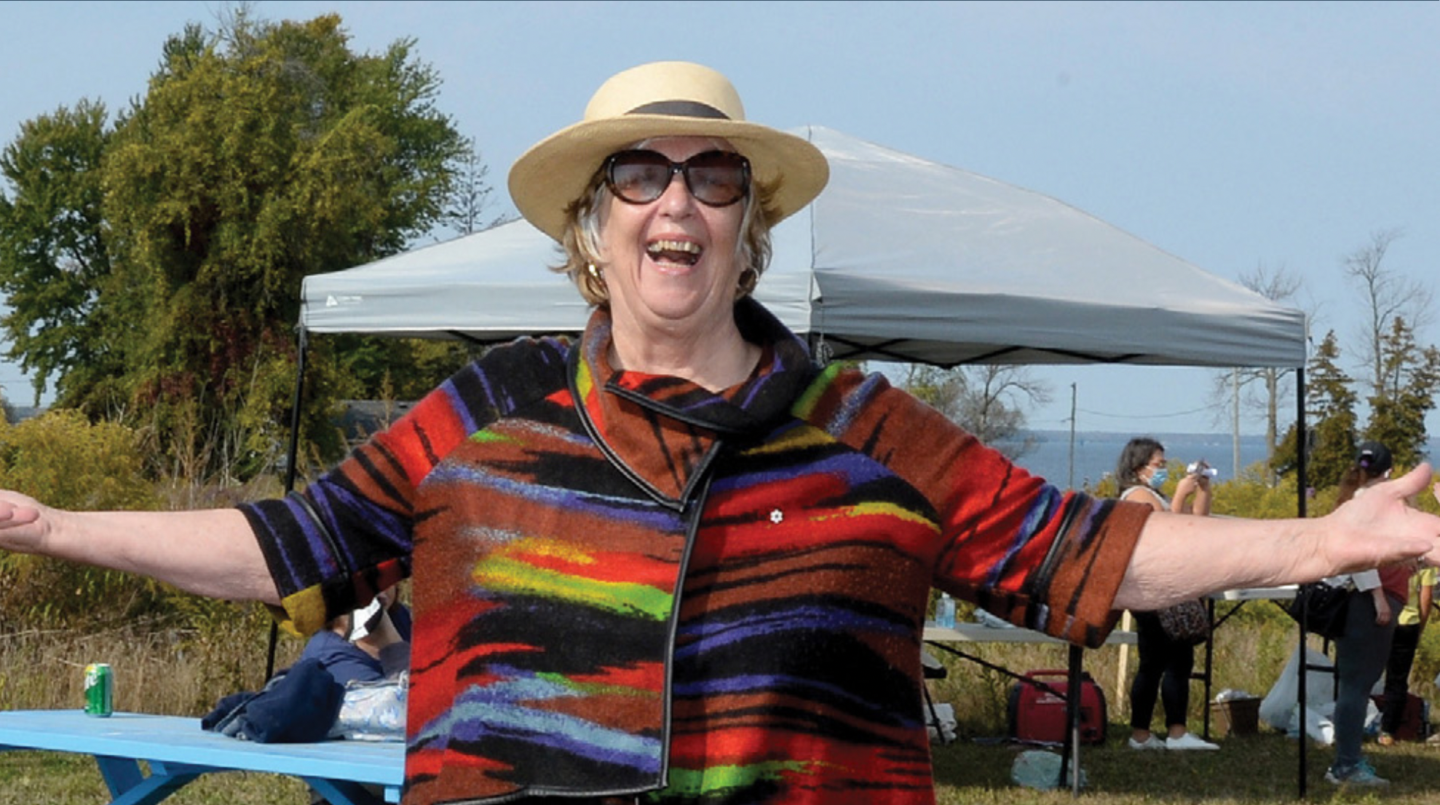
When Annabel Slaight was eight years old, all she wanted for Christmas was a child’s printing press to start a neighbourhood newspaper with her friends. Add to this a love of nature, nurtured at her family’s cottage on the shores of Lake Simcoe, Ont., and her future career path was clear. Now a member of the Order of Canada, a leader in conservation and the co-founder of popular children’s science magazines OWL, Chirp and Chickadee, Slaight’s passion for nature, and publishing, has never waned.
On getting into children’s publishing
When I was about eight, I started a little street newspaper. We had a circulation of 25. When I went to high school, I started another little newspaper. I told my father I’d like to be a journalist, and he said, “Well, you need to either be a nurse or a schoolteacher because if you don’t get married, you need to look after yourself and you may not be able to earn enough money as a journalist.” When I came back to live in Canada [after teaching abroad] I got a job at an architectural magazine and ultimately became the editor. When the architectural magazine wasn’t doing so well, the owner of the magazine said, “Well, Annabel, what do you want to do?” And I said, “Maybe we should start a kids’ magazine; we need some in Canada.”
On OWL, Chirp and Chickadee
The challenge with publishing for kids is they keep growing up. You can only hold an audience for three or four years. The idea was to make a chain of [magazines] so you would start kids with Chirp when they were young, and then they’d graduate to Chickadee, and then they’d graduate to OWL.
On connecting children with science
I would put connecting kids with science, connecting kids with technology and connecting kids with art as three equally important components of leading a life that connects to nature — and recognizes that you’re part of an ecosystem. We are very much influenced by Indigenous land-based knowledge — the world is going to be a better place when we are all linked to the world we live in.
On the future
One new project I’m working on makes me very hopeful. Future Chicken is a multi-platform initiative for kids ages six to 10, and it has several fundamentally important purposes. One, its whole philosophy is connecting kids to nature, the wonder of that and encouraging it. Two, helping kids feel better about what the future holds because there’s a lot of gloom and doom out there. If people are taking positive steps, including kids, it doesn’t have to be so gloomy. It’s a timely initiative at a crucial moment when we need to be doing things about climate action and making the world a positive place. The whole thing is all starting off over again, exactly the same as when I was eight, which is a little printing press getting kids together to help the neighbourhood grow, and it grew to be something bigger than it was. Each time, it just gets bigger and bigger.
– Interview by Anabella Klann Harrington