People & Culture

Winter breakup: The race to predict the Yukon River thaw

Since 1896, Dawson City residents have been placing bets on when the Yukon River will break in the spring — a tradition that marks the start of life returning to the Klondike

  • May 14, 2026
  • 659 words
  • 3 minutes
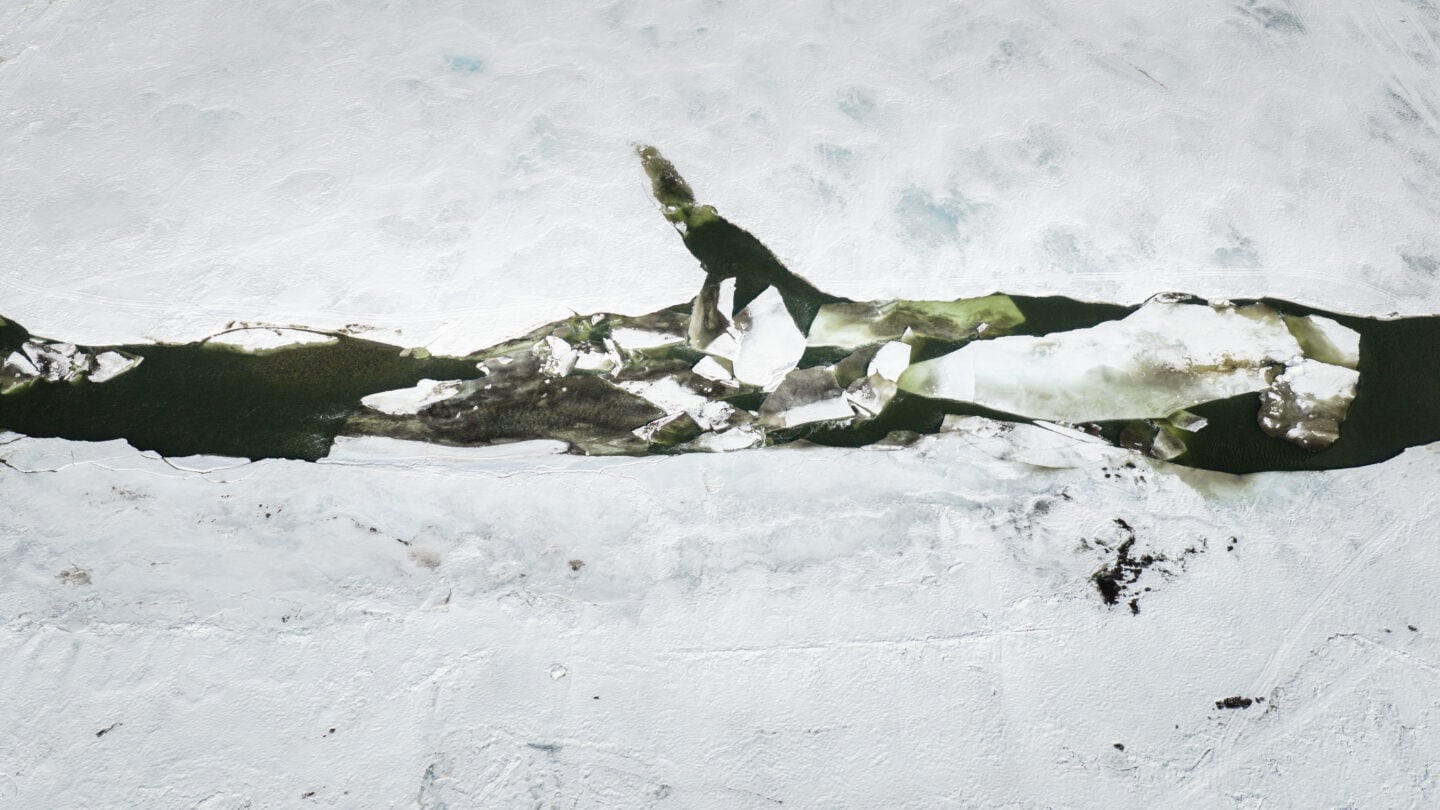
Massive slabs of river ice move downstream during the annual Yukon River breakup in Dawson City. (Photo: John Howland)
Expand Image
Advertisement
Advertisement
Live Net Zero Email Service

At precisely 3:15 p.m. on Tuesday, May 5, the sound of sirens echoed across Dawson City — this was when I first learned about the city’s famed ice pool tradition

Alex Somerville, the former director of the Dawson City Museum, was giving my wife and me a tour of the building when we heard the sirens. Within seconds, swarms of people were heading to the river. We quickly joined, following Somerville’s direction to merge with the crowd. What we were about to witness was one of the North’s most anticipated annual events, and one of Canada’s most enduring: the annual Yukon River Breakup.

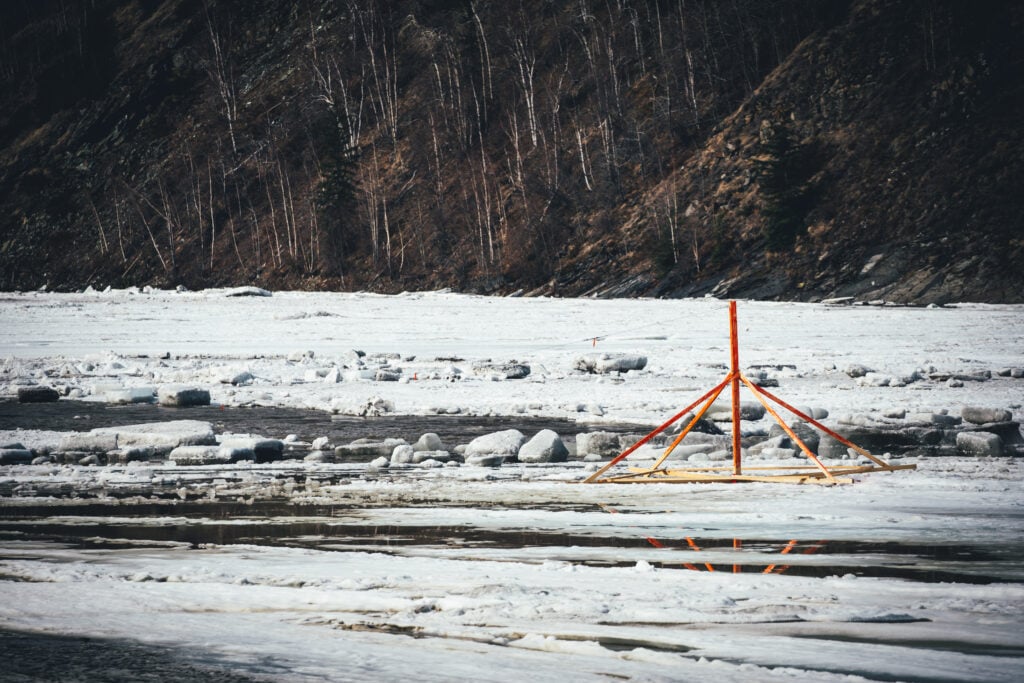
A wooden tripod is placed on the ice and tethered to a building, when the tether breaks, the clock stops. (Photo: John Howland)
Expand Image

By 1896, the Klondike Gold Rush was quickly turning Yukon’s Dawson City from a ragtag tent town into the largest city between Seattle and Winnipeg. Around the same time, its citizens were placing bets on when the ice on the Yukon River would break up, opening the river to seasonal boat traffic. This betting system continues today. People buy tickets to bet on when the river ice will break — their guesses are down to the minute.

Thousands of dollars are riding on when that precise moment will be. Participants can enter a lottery to pick the exact minute the ice broke up, and the river opened. The winner gets half the total, and the Imperial Order Daughters of the Empire distributes the other half to local charities.

To accurately measure the “winning” time, a wooden tripod with a cable attached to a clock is placed on the ice near the Dänojà Zho Cultural Centre. When shifting river ice moves the tripod, the cable stops the clock, marking the precise moment of breakup in a tradition that dates back to 1896.

The Breakup is a major event in Yukon, marking the end of seven months of winter and the unofficial start of the tourist season, when Dawson’s population swells to three times its year-round 2,000 residents. But this is nothing compared to the gold rush days that saw its population swell from a small First Nations fishing camp in 1896 to a boomtown of 30,000 people two summers later.
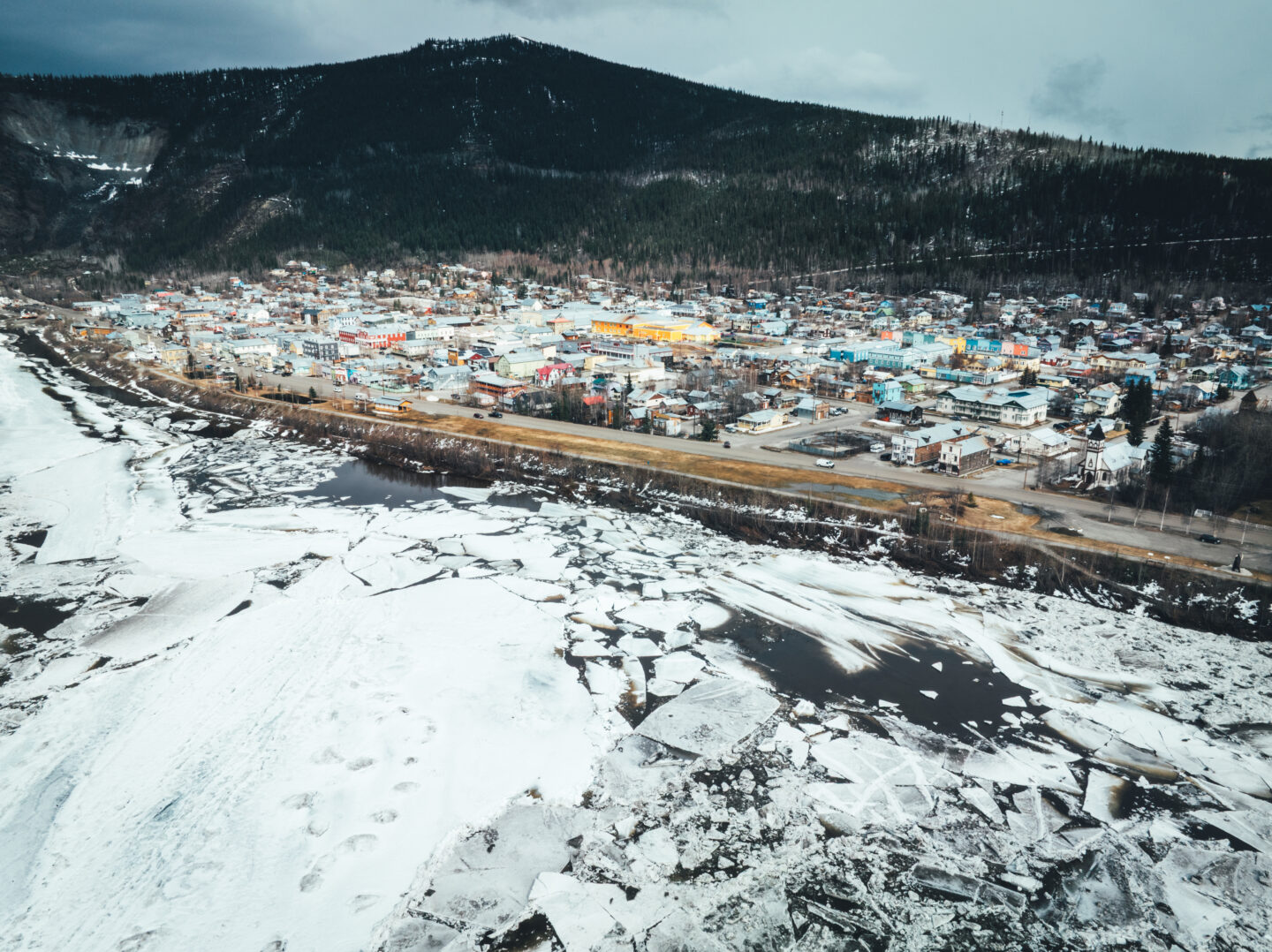
Spring breakup sends ice surging through Dawson City, marking the unofficial arrival of summer in the Klondike. (Photo: John Howland)
Expand Image

But this year’s river breakup was different: a long, bitterly cold winter, a warm spring and high snowfall triggered a rapid melt, swelling the Yukon River faster than usual. Even so, it was not as catastrophic as 1979, when the river burst its banks and flooded Dawson’s streets, already water-logged by thawing permafrost. The levee built in the aftermath protected the town during another major breakup in 1998, whose high water levels were comparable to this year’s breakup.

But we knew none of this on Tuesday, May 5.

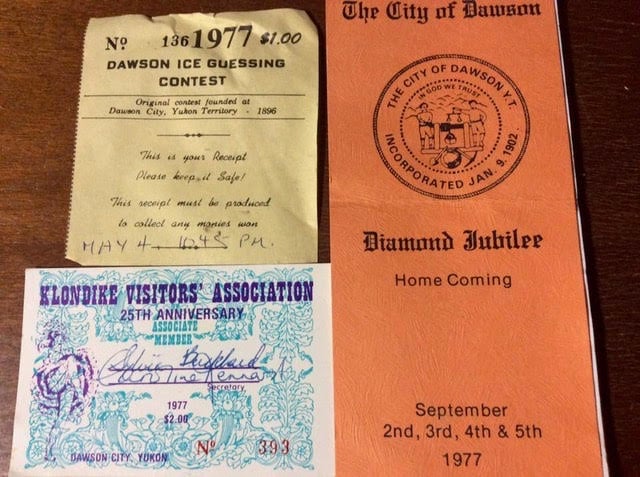
Memorabilia from Dawson City's Diamond Jubilee year (1977), including an ice guessing contest ticket. (Photo: Sylvia Burkhard)
Expand Image

The ice broke up; the river swept it away, and by the next morning, it was essentially clear of ice. We saw the ferry boat to the Top of the World Highway being fitted out for its first crossing, and the S.S. Keno, a national historic site, being polished for the anticipated flood of tourists arriving after the May long weekend. That was Wednesday.

But by Thursday morning,  the strangest thing happened. We went to the riverbank and were shocked to see the entire river was packed with rushing, heaving blocks of ice, some more than six feet tall.

What happened? An ice jam downriver had caused a massive eight-kilometre-long pileup back in Dawson City. Trees along the river banks were snapped like sticks by the force of the ice, and flowing among the ice blocks were logs that had been trees hours before with long, thick branches, now stripped clean for the journey downriver to the Bering Strait 2,100 kilometres away.

By Friday morning, the ice was largely gone, the river was open again, and summer could begin once more in the Klondike.

Advertisement

Help us tell Canada’s story

You can support Canadian Geographic in 3 ways:

Live Net Zero Email Service

Related Content

Coniferous trees lean at different angles in the snow

Environment

Arctic permafrost is thawing. Here’s what that means for Canada’s North — and the world

Permafrost thaw is widespread, accelerating and irreversible. With it comes visible effects on the ecology, hydrology and landscapes, and communities of the North.

  • 2683 words
  • 11 minutes

Travel

The spell of the Yukon 

An insider’s account of the modern-day gold rush

  • 4210 words
  • 17 minutes

Environment

Climate change is affecting vegetation in Yukon. What should we do about it?

Yukon-based ecologists uncover four main patterns influencing changes in Yukon and address how outcomes can be improved

  • 1621 words
  • 7 minutes
A retrogressive thaw slump on Qikiqtaruk-Herschel Island

Environment

The big thaw

Arctic permafrost is thawing. What does that mean for the North — and the rest of us? 

  • 1323 words
  • 6 minutes
Advertisement
Advertisement